A guide to investing in Canadian stocks

Back in 2013 Warren Buffett surprised many investors by setting his sights on Canada. He purchased shares in the Canadian oil giant, Suncor Energy Inc and by the beginning of 2015 this firm had replaced the US company, ExxonMobil, as Buffett’s largest energy holding. He also bought a sizable stake in Restaurant Brands International - the Canadian fast food company which owns Burger King. The Oracle of Omaha is not the only one who sees Canada as a good place to invest. The Economist’s Business Environment Rankings have consistently placed Canada amongst the most investor-friendly countries in the world. Many readers will therefore be pleased to learn that we will be providing in depth analysis on Canadian stocks as we go forward. We’ve put together this guide to give an overview of the reasons for investing in Canada and also explain how investors can get involved.
Why invest in Canada?
Dynamic Resources Sector
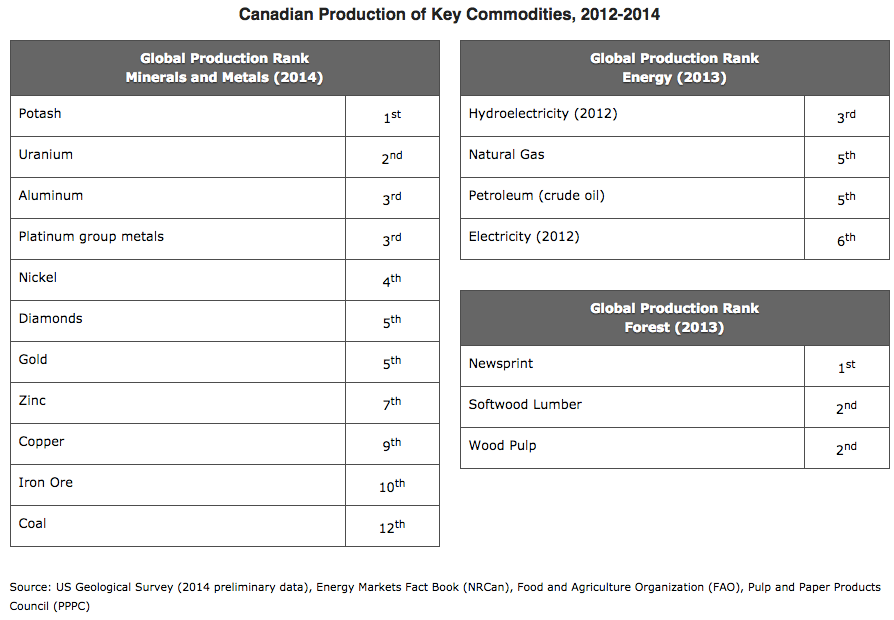
Canada is richly endowed with natural resources. Bitumen -which can be upgraded to synthetic crude oil- is found in abundance in the country’s oil sands. Indeed, Canada has the largest oil reserves in the world after Saudi Arabia and is currently the fifth largest producer of crude oil and gas. However, it wasn’t always that way. After the second world war the skeptics believed Canada's oil sands would never be developed commercially. One of the companies which proved them wrong was Great Canadian Oil Sands Limited (which later merged with Suncor Energy). During the 1960s the company acted as a pioneer in Canada’s petroleum industry when it received government approval to operate plants in Fort McMurray. Over the decades the firm has grown into the fifth largest energy company in North America. Another major energy company based in Canada is TransCanada. It generates enough electricity to power 11 million homes and in 2014 it delivered 20% of the natural gas consumed in North America. Both of these giants trade on the Toronto Stock Exchange. Beyond energy, Canada ranks among the top-three global producers of softwood lumber and wood pulp, and a leading producer of potash, newsprint and platinum group metals. A number of publicly traded Canadian companies benefit from this. For example Canfor and Interfor are both amongst the largest lumber producers in the world.
Vigorous Banking Industry
Canada has a vibrant financial sector. The World Economic Forum’s global competitiveness report has consistently identified the country’s banks as the ‘soundest’ in the world. In addition, the International Monetary Fund recently outlined that ‘Canada’s banking system is well capitalised, has posted another year of strong profits, and continues to show low nonperforming loans, also owing to high prudential standards and rigorous supervision.’ These factors help to explain why Canadian banks came through the recession much stronger than many European counterparts. Between 2007 and 2014, the market cap of the Top 5 Toronto based banks grew by almost 50% while the four largest London based banks saw their capitalisation decreased by 0.5%. Some of the largest banks listed in Canada include the Royal Bank of Canada (RBC) and TD Canada Trust.
What is the main Canadian stock exchange?
The main stock exchange in Canada is the Toronto Stock Exchange (TSE) - the seventh largest exchange in the world by market capitalisation and home to just under 4000 companies. The TSE operates two markets: the Toronto Stock Exchange (TSX) and the TSX Venture Exchange (TSXV). The listing requirements are different for both segments. Oil and gas companies - in addition to industrial, tech and R&D firms - must list on the TSX with a market cap of at least $4m. It is generally easier for these firms to list on the TSXV. No minimum market cap is required, although firms must have a public float of at least 1m shares. Listing requirements also vary on an industry by industry basis. For example, there are ‘property requirements’ for oil and gas companies hoping to list on the the TSX; firms must have at least $3m of ‘proved developed resources’. No such requirements are needed for industrial, tech and R&D companies. The full listing requirements are outlined in the TSE’s Guide to Listing, which can be found here.

What are the main Canadian stock indexes?
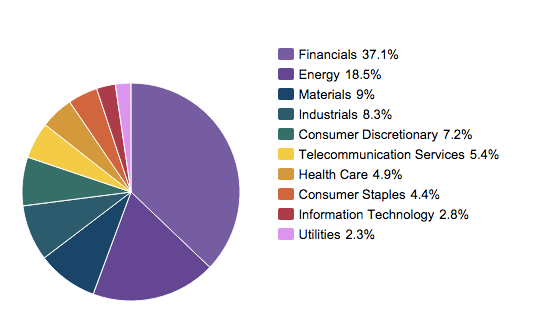
The headline index for the Canadian stock market is the S&P/TSX Composite. This covers around 95% of Canadian stocks. We can see from the pie chart below that the index is heavily weighted towards the financials, energy and materials industries, as one might expect given the strength of Canada’s banking and resources sectors. Investors that were interested in tracking Canada’s blue chip companies may want to check out the S&P/TSX 60 which comprises 60 large companies listed on the Toronto Stock Exchange. In addition, the S&P/TSX Completion covers members of the S&P/TSX Composite Index that are not included in the S&P/TSX 60 Index.
Which brokers provide access to Canadian stock markets?
The list of brokers who cover Canadian stocks is quite long and includes the following companies:
- AJ Bell Youinvest
- Hargreaves Lansdown
- TD Direct Investing
- Interactive Investor
- DeGiro
- Redmayne Bentley
- Sucden Financial
- Daniel Stewart
- Saxo Bank
- Killik & Co
- Interactive Brokers
- Charles Stanley
- Stocktrade
- Share Centre
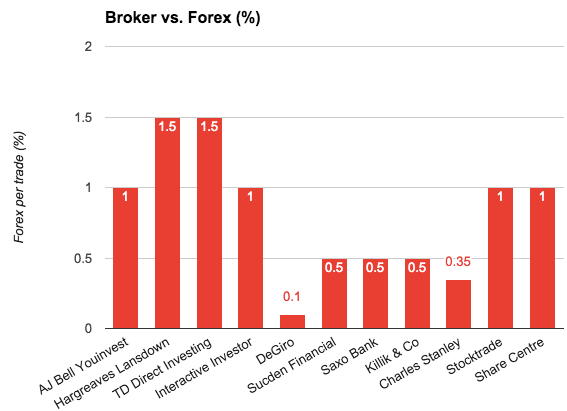
A large number of brokers provide access to Canadian stocks. We’ve put together these charts so that users can compare commission charges across different brokers.

Do UK investors pay tax on Canadian stocks?
Non-resident investors do not usually pay capital gains tax on ‘a security that is listed on a recognised stock exchange’ and ‘the share of the capital stock of a corporation’. There may be exceptions if an investor owns more than 25% of a company, or more than 50% of the fair market value of the firm’s shares derives from property situated in Canada. These details are further outlined by the Canada Revenue Agency here.
Dividends paid by Canadian firms to non-residents are typically subject to withholding tax at the rate of 25% of the gross amount of the dividends. However, this rate drops to 15% for UK shareholders due to a taxation treaty.
Conclusions
Canada has strong finance and resources industries and major companies like Suncor Energy have caught the eyes of investors like Warren Buffett. We will soon be providing StockReports and StockRanks for Canada stocks. We hope that these will help readers identify further investment opportunities in Canada. We will also be exploring which Canada stocks qualify for the GuruScreens. If any investors have any experience in the Canada markets do please feel free to leave your own opinions below.
Disclaimer
This is not financial advice. Our content is intended to be used and must be used for information and education purposes only. Please read our disclaimer and terms and conditions to understand our obligations.
4 comments
The Top Canadian stocks could surely be included fairly cheaply?
It is ridiculous for SP to publish this article and still yet -- after all the promises on this or that -- not have Canadian stocks on the platform. I've just paid my second year on SP and am getting fed up with the promises of jam tomorrow. The 'planned dates' keep getting lengthened and it is starting to contravene legislation.
There are more things I could say, but for now c'mon Ed!
Hi Globetrotter. I don't think we've ever made any promises or planned dates on Canadian data? I've certainly not. We're working on Canada, Australia, India, Japan, Singapore, Hong Kong and South Africa at the moment. But I won't be committed to a shipment date as I've made that mistake before with the SmartMoney product. It's better to underpromise and overdeliver !
All I can say is that we've got plans for Level II, Smart Money, more international data, funds and more goodies that I can't disclose. But I won't commit to dates... we're rebuilding the whole platform to support all this excitement, and it's a massive project.
Any news on when Stockopedia will cover Canada ?