Caledon Resources Plc Annual General Meeting, Part One

Caledon Resources Plc (LON:CDN) is a company with a bad track record for overpromising & underdelivering on production from its Cook coking coal mine in Queensland, Australia. This may, however, have created a fascinating investment opportunity. Caledon’s current market cap in no way reflects the company’s realistic potential, based on its existing and currently profitable Cook mine and its planned and larger Minyango mine. Whilst there will undoubtedly be some dilution for shareholders before that potential is fully realised, the current shareprice is, in my opinion, overstating the risk and underestimating the potential reward for investors. In 5 years time, Caledon could be a mid-tier coking coal producer with a valuation expressed in £bn’s rather than the £10m’s.
In this article I will document the AGM held on 30th June. In a second article, I intend to set out my investment thesis, and discuss how it interrelates with that for Polo Resources Ltd (LON:POL) (which currently owns over 25% of Caledon’s stock and was in takeover talks with Caledon which had to be aborted due to market volatility).
Caledon delivered a presentation at the AGM which I refer to below [ref] Caledon 2010 AGM Presentation http://www.caledon.com/Images/FileManager/224.ppt [/ref] .
My comments/thoughts are shown italicised in the text. I have included a glossary to explain some of the technical coal mining terms/concepts at the end of the article.
Disclosure: I currently hold investments in Caledon & Polo that are meaningful relative to my portfolio.
Meeting Environment & Formal Business
Mark Trevan (MD) chaired the meeting and was accompanied by Peter Seear (operations), Manesh Kotecha (CFO) and Jeremy Gorman (secretary). The meeting was relatively sparsely attended, with just a couple of other PIs and some advisors.
The formal business was dealt with in the usual fashion with just one question from me concerning Resolution 7 [ref] Notice of AGM 2010 http://www.caledon.com/Images/FileManager/Notice1.pdf [/ref] [ref] AGM 2010 Circular http://www.caledon.com/Images/FileManager/Letter1.pdf [/ref] . The resolution disapplies pre-emption rights over ~25% of the shares currently in issue. The AGM Circular states:
Resolution 7 (which will be proposed as a special resolution) will empower the directors to allot ordinary shares in the capital of the Company for cash on a non-pre-emptive basis:
- in connection with a rights issue or other pro-rata offer to existing shareholders.
- (otherwise than in connection with a rights issue or other pro-rata offer) up to a maximum nominal value of £271,915, representing 54,383,000 ordinary shares of 0.5p each, being equivalent to approximately 25 per cent. of the ordinary shares currently in issue.
This authority will expire upon the expiry of the general authority conferred by Resolution 6, unless previously revoked or varied by the Company in general meeting.
The directors will only use such authority where it would be in the best interests of the Company to issue ordinary shares other than to existing shareholders. Whilst the Board has no current intention of utilising the authority provided by Resolution 7, it is seeking a level of authority to issue new ordinary shares otherwise than to shareholders by way of a rights issue or otherwise on a pre-emptive basis which is greater than in previous periods on the basis that:
- if the possible merger between Polo Resources Limited (“Polo”) and the Company as announced on 27 April 2010 does not proceed, the Company may need to undertake an institutional or other equity fundraising to cover its repayment obligations under the loan facilities provided by Polo and to finance the Company’s working capital requirements; and
- a fully pre-emptive process such as a rights issue would involve materially greater cost and time to implement with the consequential additional risk that funds will not be secured as and when required.
The authorities provided by Resolutions 6 and 7 will be in substitution for all existing authorities available to the directors.
Since the circular was published the merger has been called off [ref] Announcement regarding termination of merger discussions with Polo http://fool.uk-wire.com/cgi-bin/articles/201006241444272020O.html [/ref] and the loan terms amended as follows:
On 27 April 2010, Caledon and Polo announced the execution of two loan facility agreements ("Loan Facilities"). The first agreement, a short term credit facility for up to £18 million to Caledon to be used, if required, to aid funding of the repayment of Caledon's 8.5 per cent convertible loan notes due 5 July 2010, has been amended so as to reduce the maximum principal sum available to the aggregate of 1) the lesser of £14.5 million or such lesser amount as is equal to the outstanding principal amount of the Loan Notes due to be repaid on 5 July 2010 from time to time and 2) the facility fee payable under the agreement. The remaining principal terms of this loan are unchanged.
Caledon announces an amendment to the second agreement, which is a credit facility for up to A$4 million to Caledon to be used, if required, in the potential lodgement of a bid bond associated with the Wiggins Island tonnage allocation process. The second facility has been amended such that it will be available for drawdown immediately and up to and including 30 September 2010, as opposed to 1 June 2010, and will mature on 31 October 2010, as opposed to 30 September 2010.
(The first of these loan facilities also expires 31st October 2010 [ref] Merger talks announcement http://fool.uk-wire.com/cgi-bin/articles/201004270700058348K.html [/ref] )
Caledon will almost certainly have to raise funds to be able to repay the loans to Polo as they fall due. Naturally, I am very concerned that an equity placing at current highly depressed prices would damage the interests of current private investors in Caledon. I made this concern clear to Caledon’s directors and pointed out that other smallcap companies needing to raise funds at a time when their share price was under pressure have also made open offers to their existing shareholders, so that they could participate on the same terms as institutional investors and not be disadvantaged (notably Aminex (LON:AEX) [ref] Aminex placing & open offer announcement http://fool.uk-wire.com/cgi-bin/articles/200906300700147342U.html [/ref] ). Whilst this route costs more management time & effort & some additional fees, that should not be a major consideration, relative to fairness. Caledon has plenty of time to put such a structure in place before October, should it wish to do so but other options are also possible.
Under questioning, Mark Trevan stated that Caledon’s Board had not yet decided how it would repay its debt to Polo. I find it surprising that the Board did not have contingency plans for such an eventuality.
I note that in the AGM Result announcement [ref] AGM result announcement http://fool.uk-wire.com/cgi-bin/articles/201006301527205607O.html [/ref] Caledon have also arranged for existing 2013 47.5p convertible notes to be listed. This could be a precursor to issuing more of those as a less dilutive method of raising the necessary funds to repay Polo, which I would applaud.
Presentation
After the formal business, Peter Seear delivered the presentation that I have referenced above.
Geography & Coal Resources
Slide 3 shows the location of the Tantallon sheep station (outlined in white) in relation to the Minyango exploration licence, part of which is outlined in red. The extent of the entire T-shaped licence is shown in the next slide. I do applaud the company for acquiring the Tantallon land in February 2009 [ref] Quarterly report referencing Tantallon acquisition http://fool.uk-wire.com/cgi-bin/articles/200904230700120156R.html [/ref] , though it was lucky that the sheep station was up for sale at an opportune time for Caledon. The size of Tantallon – 24km2 – helps put a scale on the map.
The Tantallon property is an ideal location to build the access portal/drift for a future mine at Minyango. I asked where the coal that had been discovered and was to be mined was located in relation to Tantallon. MT explained that it intersected and was immediately to the north of the property, in the lower middle portion of the “T”. The benefit of acquiring the land now is that it avoids a potentially much costlier purchase in the future, when a vendor will know that their property is crucial to the development of a substantial mine and demand top-dollar. There was enough coal in that area alone for 25 years of mining.
Slide 5 builds on slide 4, showing the wash plant zone (the small square in the middle left of the diagram) and the Cook licence (the rectangle located below and to the right of the wash plant). Within the overall licence area the part of the Cook mine that has been mined so far (and is currently being mined) is shown and also shown in an enlarged view on the right hand side of the slide. Note that the current mine has now been mined for 40 years – but only a small part of the potentially mineable resource at Cook has so far been accessed.
Production & Operations
Slide 6 shows Caledon’s recent production history and forecast for the second half of 2010. As I mentioned in the opening of this article, Caledon has a poor track record for delivering on production expectations, so it will not be surprising if the market is sceptical of the forecast sudden jump in 2H production. However, number of key points emerged in the presentation (and in my questions afterwards), which do support at least some increase in 2H:
- Operations are continuing in parallel in the older northern workings as well as in the more efficient new south workings. The northern workings are some 4km distant from the pit bottom, which obviously impacts transportation of personnel, consumables and coal to and from the face. These operations will continue throughout 2010 and into 2011, with the north being progressively sealed up as mining operations complete on old panels.
- During 2009, staffing was run down due to low coal demand. Now that demand has improved, additional staff have been recruited again (in a tight labour market, see “manning” curve on slide 6). These new staff will have been less productive in the first half of 2010, due to training & familiarisation. PS noted that even experienced mine staff have to be trained in H&S and operating specifics of the Cook mine. This will likely increase cost/t beyond normal levels in 1H10.
- During 1H10 all work in the south was on primary extraction, more efficient secondary extraction can be employed in 2H10 (see glossary below for definitions).
- The above three factors mean that more areas of the mine can be exploited simultaneously than was previously the case.
- New roof mounted coal conveyors have been installed in the south workings, whereas older conveyors were floor mounted. This modern technique significantly improves productivity because the area beneath conveyors needs to be cleaned periodically to remove a build up of coal debris, which is a potential fire/explosion hazard. It is much easier/quicker to clean beneath a roof mounted conveyor, thus reducing downtime.
- Additional expertise has been brought in to improve Cook’s operating efficiency.
I also note the appointment of Stephen Bywater (see reference to termination of Polo offer below):
“Mr Bywater has a distinguished career in the resources industry as evidenced by his former role as Chief Operating Officer of Rio Tinto Coal Australia where he oversaw seven mining operations, producing 60 million tonnes of coal per year.”
His expertise should help ensure that operations are conducted as efficiently as possible and help ensure that Caledon’s track record of delivery on expectations improves.
Coal Pricing
The outlook for coal pricing is critical to the investment case for Caledon. It should be noted that the Cook brand of coking coal is recognised and described as “semi-hard”. It generally trades at a small discount to the price for premium hard coking coal (which is the quoted coking coal price).
Slide 8 shows recent historic and forecast pricing. Within the last six months, coking coal contract pricing has been set quarterly, rather than by previous annual negotiations. This seems sensible as, during the crisis, even though high priced contracts had been negotiated for the 2008/9 year (the pricing year ends in March), those contracts were not honoured by consumers, so the old system meant that increasing demand was slow to feed through into price increases for delivered coal but a pricing collapse had a very rapid impact.
It should be noted that the average cost/tonne of coal sold from Cook has generally been well below US$120 (this figure includes royalties payable on sales). Hence, at current and forecast pricing, Caledon should remain strongly profitable and operating cashflow positive. It would take a very severe collapse in the coking coal price (or a sharp rise in costs) for Caledon to slip into losses, as it did in 2009. I intend to discuss this further in the second part of this article.
Whilst one might be concerned that a slowdown in China might lead to steelmills (the principal consumers of coking coal) reining in production & hence demand for coking coal, here is an informed view: http://www.fnarena.com/index2.cfm?type=dsp_newsitem&n=8BC51A71-D2D3-2284-4AC261E334BDA436
...While global steel production rates may come down further in the shorter-term, Credit Suisse suggests one positive for the market is Chinese per capita steel consumption is still well below western levels and so should continue to increase over the medium-term.
The other positive in this regard is Chinese money supply growth, as this is expected to be in the order of 15-20% over the next 12 months. Having looked back through previous cycles, Credit Suisse notes there are no periods when China's steel output contracted significantly while money supply was growing at such a rate.
Even if there is a decline in the growth rates for steelmaking raw materials, Credit Suisse notes it will be off a very high base, which means both iron ore and coking coal prices should remain at elevated levels.
Deutsche Bank agrees, continuing to rate coal as a preferred commodity sub-sector given an expectation current infrastructure constraints in both Australia and China remain an issue for coal markets until at least 2013.
While any weakening in global steel demand could result in some weakness in coking coal later this year and into the first half of 2011, Deutsche expects pricing will remain biased to the upside given elements of scarcity in the market and ongoing import demand growth in regions such as India and Brazil.
According to Deutsche, Chinese met coal import demand may mature over the next few years, but this still suggests solid buying as its forecasts call for an increase from 45 million tonnes this year to around 65 million tonnes in 2015. Any slowing of growth in the Chinese market should be offset by growing demand from both India and Brazil as both nations lack domestic supply sources...
Coking coal prices remain well below the peak of US$280/tonne reached in 2008.
Q&A
The remaining slides from the presentation are self-explanatory, so I’ll move on to questions raised after the presentation. Please note that answers are not verbatim but as per my notes/interpretation.
Q1. I noted that whilst resources had been increased in the annual report [ref] Caledon Annual Report 2009 http://www.caledon.com/Images/FileManager/223.pdf [/ref] , there was no mention of reserves.
A1. PS stated that these were unchanged since last reported at 24Mt – ample at the current production rate of < 1Mt p.a.
Q2. A significant resource increase in the Castor seam was reported. With operations currently being conducted in the lower Argo seam, will this resource be accessible in the future?
A2. The increase is in areas that have so far not been mined, so current operations do not impact accessibility of this resource.
Q3. Until the Wiggins Island coal terminal (WICT) [ref] Wiggins Island project description http://www.wict.com.au/ [/ref] [ref] Status of Caledon’s involvement in Wiggins Island http://fool.uk-wire.com/cgi-bin/articles/201005260700165388M.html [/ref] is developed, what is the maximum tonnage that the current Queensland infrastructure allows Caledon to ship annually.
A3. 700-800kt. So the 2H projected output is the maximum that can be shipped, until at least 2013.
Q4. What are the implications of the termination of the shareholder relationship agreement with Polo, as stated in the RNS relating to termination of merger talks?
A4. The shareholder agreement simply relates to Board representation for Polo. No changes to Polo’s current representation (S. Dattels & D. Weill) are currently envisaged.
Q5. What is the planned CAPEX for Cook in 2010 and 2011?
A5. Only sustaining CAPEX of A$5m p.a. is envisaged. This is good news and augurs well for positive FCF (free cashflow)
Q6. I asked some questions relating to Wiggins Island but because confidential negotiations are ongoing, no answers could be given beyond the statement in the RNS on the status of Caledon’s involvement referenced below. I did, however, establish that if Caledon receives its tonnage allocation as expected, it will be able to conduct its own coal marketing, outside the current agreement with Xstrata. [ref] See para 12.3, p88 of Caledon ASX prospectus for details of marketing agreement with Xstrata http://www.caledon.com/Images/FileManager/213.pdf [/ref]
Q7. Will rail capacity be available, as well as the new port capacity at WICT?
A7. The same industry negotiating team that is negotiating WICT is also negotiating capacity expansion of the Bowen Basin rail network. This should be available simultaneously with WICT. The track between Caledon’s line to Blackwater and Gladstone only requires relatively minor upgrades (additional passing places) to increase capacity.
Q8. What mining method will be employed at Minyango?
A8. Shortwall mining will be used, with development using a similar Magatar system to that deployed at Cook. But hopefully benefiting from the experience gained at Cook, where getting the best out of the system has been a painfully slow process.
Q9. Is the capacity of the current washplant sufficient for Minyango, as well as Cook?
A9. The nameplate capacity is 3.5Mt p.a. An ultrafine processing circuit will need to be added.
Conclusion
That concludes the first part of this article, documenting the AGM. In the second part, I will analyse:
- Profit forecast
- Valuation
- Impact of Australia’s proposed MRRT (fka “Henry Tax” or RSPT)
- Relationship with Polo
- Risks
Glossary
|
Magatar |
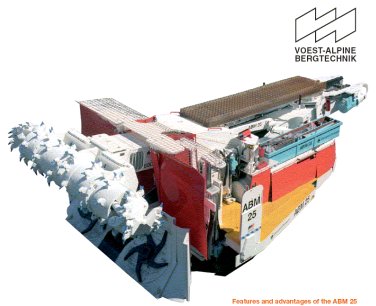
A proprietary mining method that uses a combination of an ABM continuous bolter-miner (of the type illustrated below) and a flexible conveyor to mine more efficiently than using a shuttle car system.
|
|
MRRT |
Minerals Resource Rent Tax |
|
Primary Extraction |
Extraction of coal whilst developing roadways. Roofing needs to be installed in this mode to ensure stability. This is particularly crucial in the Cook mine where minor faults render the ground unstable and extensive roof bolting must be performed for protection. |
|
Secondary Extraction |
Once roadways have been developed, mining can work its way back out, by mining under remote control either side of the roadway. These “sumping cuts” don’t penetrate particularly deeply either side of the roadway and hence do not need roof bolts installed. Areas that have been fully mined out this way are progressively sealed off for safety as work progresses backwards. |
|
Shortwall Mining |
A form of underground mining that involves the use of a continuous mining machine and movable roof supports to shear coal panels 150 to 200 feet wide and more than half a mile long. |
|
WICT |
Wiggins Island Coal Terminal |
Disclaimer
This is not financial advice. Our content is intended to be used and must be used for information and education purposes only. Please read our disclaimer and terms and conditions to understand our obligations.
4 comments
Thanks Mark - appreciate the effort as always
And I'll second (no third) that.
AA
Hi Mark once again thankyou for all your hard work...and sharing it with us.
First rate article Mark. Thank you very much indeed.
T