Can SDI Group become the next High Flying compounder?

Last week’s look into Judges Scientific led some to ask how to identify similar companies. Scientific Digital Imaging (LON:SDI) shares some striking similarities - but does it match up to Judges’ stellar Quality attributes?
On the face of it, SDI Group (as of today, formerly Scientific Digital Imaging) presents itself as a promising GARP candidate with compounding potential. SDI’s share price has nearly doubled in 2019. Over a three year span, this AIM-quoted small cap’s shares have grown at a compound annual rate of almost 59% (from 15p to 60p).
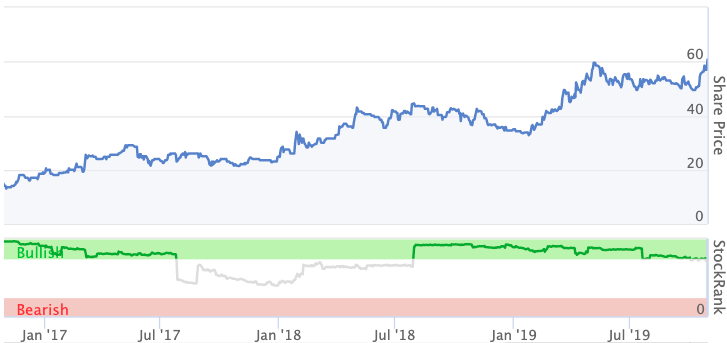
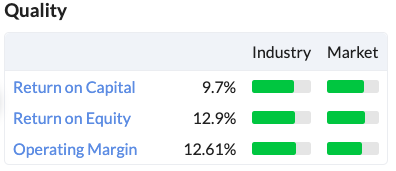
Despite this rapid growth, the company is still firmly in small cap territory with a market cap of £59m and a forecast PE ratio of just 15.9x (making for a PEG of 0.8). For this price, you get a small, growing company with attractive returns on capital:
The group’s encouraging share price growth is due to the successful execution (so far) of its ‘buy and build’ strategy. SDI acquires and develops companies that design and manufacture digital imaging and sensing and control products. These products are sold to a variety of end markets ranging from astronomy to art conservation.
It appears to be a bountiful hunting ground. In its FY 19 report, management said ‘Market demand for digital imaging and sensors and control technologies remains strong and is being driven primarily by increased worldwide investment in higher education and a growing trend towards automation and in-process measurement.’
In its most recent AGM statement, SDI added that trading in the new year has so far been comfortably in line with expectations. A more detailed half-year review can be expected in December.
Here’s what SDI seeks to buy:
- High quality, profitable businesses, with established reputations and customer loyalty in global markets
- Niche, small/medium sized companies with relevant scientific, technology or medical products
- Either stand-alone or bolt-on to existing businesses
- Available at a reasonable price
- International growth potential
- Motivated management teams already in place. Preferably owner-managers
This acquisitive growth is bolstered by organic growth within its subsidiaries.
SDI unlocks the latent value in acquired operations by bringing scale benefits to the table (including synergies with other like-minded businesses and more favourable financing terms), along with the potential for geographic expansion.
The group claims that ‘by lowering the cost of capital of businesses we acquire and by facilitating their profitable growth, our business model has demonstrated that it can provide good returns to shareholders and can be scaled into the future.’ SDI Group’s share price performance suggests a growing appreciation for the stock.
Its high Quality and Momentum Ranks mean that, as well as having a similar strategy to Judges, it shares the same ‘High Flyer’ factor style.
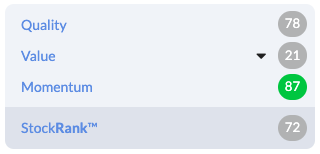
Whether it can match the acquisition discipline, free cash flow generation and long-term sense of stewardship of Judges remains to be seen. If it can do this in the years ahead, then SDI might well be the next high QM compounder.
The story so far: not all plain sailing
Since listing in 2008, SDI Group has sought to execute its buy and build strategy, but it has not all been plain sailing. For a long time, SDI was stuck firmly in micro-cap territory. It was just too small to be of interest to most investors. Its illiquid shares and narrow investor base failed to gain traction.
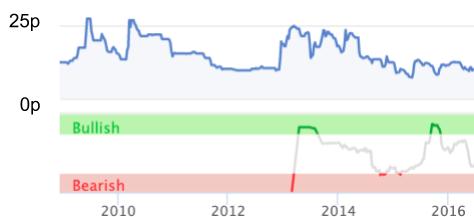
Critically, the group did not yet have the scale, balance sheet strength or funding power to present itself as an attractive acquirer.
What’s more, by FY 2011, SDI was loss-making and was struggling to make acquisitions amid a tough trading environment (although it continued to invest in research and development throughout this period). The group cited reduced government spending and consequent reductions in grants and research budgets.
Shares were marked down as the company shelved its acquisition ambitions to focus on returning to profitability and improving its cash position. It was at this point that SDI restructured. Dr Phil Atkin, who was a founder of the company, stepped down and Mike Creedon was appointed Managing Director.
Trading remained tough going into FY 12. There were signs of recovery, however, with cost-cutting and investment beginning to bear fruit. Creedon became the CEO - where he remains to this day. By the end of the year, SDI had built ‘a stronger base upon which to build’ and was optimistic of further improvement.
By FY 13, the group was celebrating its best set of results since 2009. The group was once again offering competitive products at competitive prices. On the back of improving sentiment, the group conducted an £850k equity fundraise to enable a loan note repayment and to reinvest in operations.
The reorganisation was complete and SDI was once again in a position to acquire new businesses.
Right on cue, in FY14 the group bought Opus Instruments for its Digital Imaging arm. In-house product developments provided further trading momentum, while management continued to reduce the company’s cost base.
In FY15, SDI raised another £500k to help finance its acquisitions as budgets in Life Sciences recovered. It raised £2.5m the following year, to help in the acquisition of Sentek, further diversifying the group’s revenue streams. According to the group, it was now in an ‘excellent position for continued growth through increased revenue and the potential for further acquisitions.’ Over the next four years, SDI’s share price would grow from around 7p to 60p.
SDI again tapped shareholders for cash in FY 17 to the tune of £3.2m as it bought Astles Control Systems and paved the way for two additional purchases in FY 18. It created further headroom by refinancing its bank debt with a new £3m committed facility, which was further increased to £5m in FY 19.
And 2019 was by all accounts a banner year for SDI, with five acquisitions for £6.7m and surging revenue and profit figures. The acquisitions have so far been funded by a mix of cash from operations, cash from shareholders and debt.
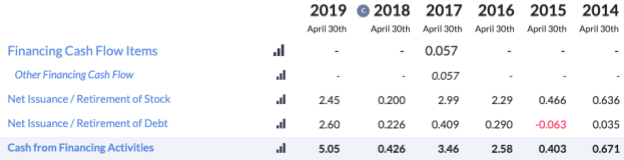
You can see from the cash flow statement below that the group is a serial raiser of equity capital:
What makes SDI Group so attractive?
Like Judges, SDI Group stands to gain from a valuation mismatch between small, private companies and larger listed ones. This goes some way to justifying SDI’s share placings as it uses its own expensive shares to buy cheaper private companies, which then stand to get marked up in value. Corporate activity has clearly ramped up in recent years and the company is confident that it can continue to find growth opportunities.
According to the team, SDI is on its way to becoming the buyer of choice in Digital Imaging and Sensors and Controls in much the same way Judges is in Scientific Instruments. In the company’s own words, ‘An important element of our strategy is that we are known to be a good acquirer, able to help sellers to achieve a sale quickly and easily, and without surprises.’
This certainly seems to be backed up by last year’s record haul of five acquired companies. You might wonder if this pace is too fast, but management says that these five acquisitions contributed £1.3 million of revenue to the Group in FY19 and it expects them to continue to be earnings enhancing in FY20.
Once acquired, SDI entrusts subsidiary management teams with the day-to-day running of their firms. In giving support and investment, SDI then provides these businesses with a solid foundation for future growth that would not be possible as a small, standalone private entity.
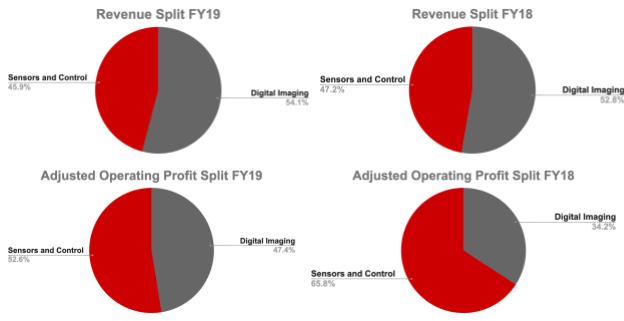
SDI believes there are many opportunities within this market - not just in the UK but also in Europe and the US, particularly if they enable the geographic expansion of existing businesses. It currently owns 16 brands split across these two segments: nine in Digital Imaging and five in Sensors and Controls.
FY19 performance was really powered by a bumper year in Digital Imaging. This mix could change depending on how future acquisitions pan out, but the chart below really shows how Digital Imaging drove performance:
How does SDI Group compare to Judges Scientific?
SDI may operate a similar ‘buy and build’ strategy as Judges Scientific, but there are differences between the two companies.
Here’s a side-by-side using the ‘Compare’ tool:
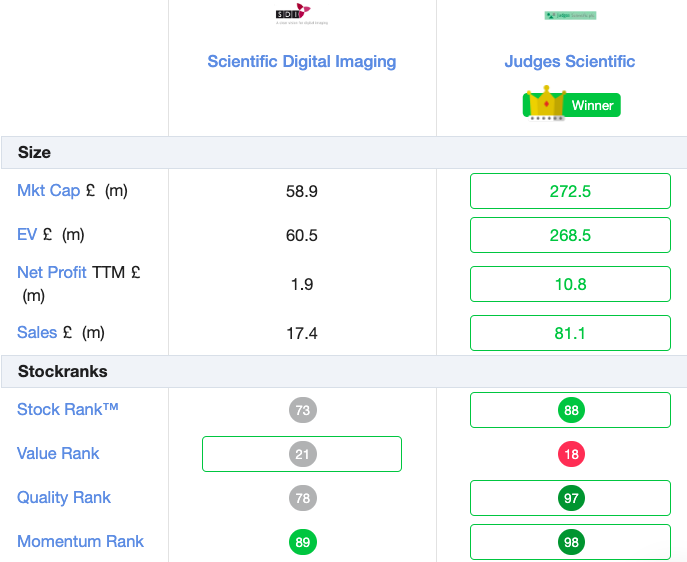
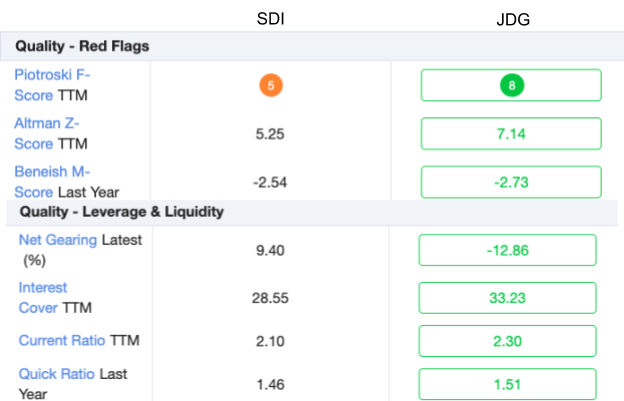
Stockopedia shows a clear preference for Judges Scientific as things stand. This is in part driven by Judges’ superior financial safety and strength, as we can see below:
SDI Group is smaller and it focuses on slightly different niche markets. Its management has less ‘skin in the game’ - but they have proven their value by turning around SDI’s fortunes over the past decade or so.
Here are the director holdings, taken from the group’s FY 19 report.
Board member | Number of shares | Cash value | % ownership |
Ken Ford, Chairman | 1,450,000 | £870,000 | 1.49% |
Michael Creedon, CEO | 311,924 | £187,154 | 0.32% |
Isabel Napper, NED | 35,472 | £21,283 | 0.04% |
David Tilston, NED | 90,000 | £54,000 | 0.09% |
Jon Abell, CFO | 59,608 | £35,765 | 0.06% |
Perhaps more weight should be attached to the CEO and Chairman’s holdings, given the important role they play in the company’s strategy. Though not exceptionally large, these are not inconsequential amounts of stock to own. It should go some way to ensuring they are aligned with shareholders.
Another obvious difference is the rate of expansion - SDI has really put the pedal to the metal in terms of acquisitions recently. When you consider that SDI is pursuing a more aggressive acquisition policy than Judges and is currently around a fifth of the size by market cap, it starts to look interesting as a GARP candidate with the potential to compound earnings.
However, growing at pace does then raise questions as to whether SDI is exercising the same level of discipline and rigour in terms of acquisition criteria. Much of SDI’s future growth depends on its ability to integrate and expand these recent acquisitions.
What’s more, compared to Judges’ miserly approach to equity dilution, SDI has not been shy to raise funds by increasing its equity base. Here’s a side by side - we see a striking difference in attitude towards share count.
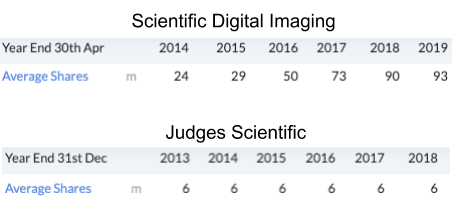
These diverging approaches to shares in issue is a key point to consider for prospective long term shareholders. A company that continues to issue shares dilutes your holding and diminishes your percentage ownership over time.
Now that SDI appears to be reaching a new level of scale and financing power, it will be interesting to see if the company ceases to rely quite so much on equity placings. This would be a positive development.
After all, if Judges is worth £280m today, what’s to stop SDI from reaching that kind of scale from its current £55m market cap?
Risks and threats
There are a number of risks and threats facing SDI Group, the most important of which is the ability to successfully execute on its buy and build strategy. Finding appropriate companies is one thing, buying them at appropriate prices is another. Continuing to successfully integrate and expand them is another still. Spinning plates comes to mind.
In 2017, Judges brought in Mark Lavelle from Halma to be its chief operating officer. At some point, SDI might have to make a similar move. If that happens, the calibre of that appointment might have a bearing on future performance.
For now, the Group says it spends significant time and energy in identifying acquisition opportunities and monitoring the pipeline. Post-acquisition, the Board discusses integration progress, monitors financial performance and tracks the return on total invested capital of all of its businesses.
Comparing SDI’s CFO, capex and free cash flow per share figures on the group’s StockReport provides a quick way to get a sense of management’s capital allocation skill. It does not match up to Judges’ peerless free cash flow generation but it appears to be on a rising trend:
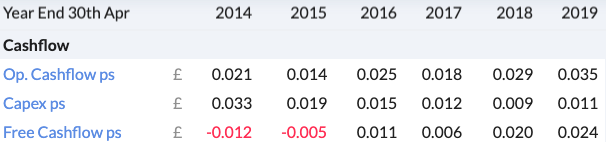
On a free cash flow basis, Judges is actually cheaper than SDI. You would expect the latter’s free cash flow to improve over the next couple of years though, as it works on addressing the low hanging fruit of its most recent acquisitions.
This cash generation is useful in guarding against competition and technological obsolescence, as well. As long as the group is strongly cash generative, it should be able to invest in R&D and retain key staff members.
Another point to bear in mind is SDI’s exposure to US Dollar and Euro currency fluctuations against Pound Sterling. A relative devaluation of the Pound results in exchange gains and an improvement in competitiveness, whereas a revaluation has the opposite effect. Recent results have been flattered somewhat by the devaluation of sterling. This could reverse in future.
Conclusion
SDI Group is smaller than Judges Scientific and is cheaper on a range of metrics, including Slater’s PEG ratio - a classic measure of how much investors are paying for the promise of future growth - and it is when viewed as a ‘growth at a reasonable price’ stock that SDI looks most attractive as an investment.
In terms of financial strength, acquisition track record, free cash flow generation and overall quality, it does not quite live up to JDG’s exacting standards - yet - but management appears to have done a good job so far, and the group has ample time and opportunity to prove itself. That said, history is littered with value-destroying acquisitions. Buy and build strategies can go wrong, so it is not without risk.
One point that clearly differentiates the two companies is their attitudes towards shareholder dilution. While Judges keeps a tight rein over its share count, SDI has nearly quadrupled its number of shares in issue over the past five years. In fairness, the funds raised have helped drive the company’s strategy and consequent share price growth.
It would be positive to see SDI kick on from here and continue to scale up with minimal further dilution. Another positive sign would be to see the board increasing their own holdings in the company.
SDI is bigger than it was five years ago, with a stronger balance sheet, a more diversified revenue stream across multiple geographies and has a more liquid shareholder base. Its subsidiary companies continue to establish a track record of profitable growth, which should translate into more free cash flow.
All of these factors make SDI an attractive acquirer, which bodes well for its stated strategy and gives this stock the potential to be a high QM compounder.
Disclaimer
This is not financial advice. Our content is intended to be used and must be used for information and education purposes only. Please read our disclaimer and terms and conditions to understand our obligations.

15 comments
Another SDI (LON:SDI) acquisition announced today. The company Chell makes instrumentation for Aero Engines and Formula 1 and is expected to contribute £0.6M in EBIT, (7% of SDI forecast earnings) in 2021. This forms another part of SDI's Buy and Build strategy and makes it their 10th acquisition in 4 years. I hold.
Chell video here for lovers of shiny metalwork.... https://www.youtube.com/watch?v=KFTEE2dwzvE
Interesting too that SDI (LON:SDI) have made four acquisitions this year and that Judges Scientific (LON:JDG), with a similar buy and build model in a similar business segment have made none since 2017.
Is one being overly cautious and missing opportunities and the other more reckless?
Hi Jack, really excellent article. Thank you.
Hi Jack
I really enjoyed this article. as well as the one on Judges Scientific (LON:JDG) (which unfortunately I don't have a position in).
I, too, was at the Manchester ShareSoc evening at which Mike presented. He said a couple of things that you touched on in your article that may be of interest.
Firstly, Mike does all the due diligence himself (as Metatron pointed out he is an accountant by training). Not only does this have the benefit of saving significant fees, it also allows him to really get to know the target company. I know that as time goes on this may get harder for him to devote his time to DD. but presently this seems to reduce the risk somewhat of making a bad acquisition.
Secondly, you mention that $JDG brought in Mark Lavelle from Halma (LON:HLMA) to be COO. Mike didn't mention the person by name, but Sdi (LON:SDI) also utilise the services of an ex-Halma employee to sniff out target companies. I think may be on a consultancy basis rather than them being on the payroll. Mike clearly sees JDG and Halma as role models for him to emulate, and where better to go than someone who has first-hand experience of Halma.
I hold SDI.
Thanks for the insight phoenix (and metatron). The one thing I couldn't find when looking at Sdi (LON:SDI) was any kind of online presentation... With £JDG, their videos were a valuable opportunity to get an impression of the CEO and team.
SDI did a share presentation to ShareSoc members in Manchester last month.The CEO an accountant Mike Creedon had whatever else a high level of emotional intelligence and one would imagine he was very good at man management .
I was already a shareholder but instinctively I believe any accountant who has high emotional intelligence is worth following.Part of Warren Buffett's success is that he is both brilliant at numbers and at reading other people
Agree that the SDI CEO is impressive. I listened to him at the last Mello and I thought he was well grounded. I was also struck by the enthusiasm and support of the audience, many of whom I assume were shareholders.
Excellently researched Jack , a great read, Thankyou
Thanks JK
I'm a holder. Minor niggle with the name change to SDI - it seems their web address stays the same at scientificdigitalimaging.com and I see that sdi.com and sdi.co.uk are already taken, as are sdigroup.com and sdigroup.co.uk.
The first chapter in any book about starting a business will say to check your proposed business name to ensure the web address, trademarks, etc. are available. Changing to a name where the web addresses aren't available seems daft to me. Maybe they have a plan.
Yes, I didn't realise a name change was on the cards, it meant a few last minute changes to the article... I suppose if most of the brand value is in its respective subsidiaries the domains being taken doesn't matter as much, but still.
Sounds like one to take a punt on with a stop loss
A very timely article for me. I have taken holdings in both SDI and Judges recently. I think they are a good mix. Judges has the track record, and stronger finances. SDI I hope will grow in to something similar, and if it does, it's share price will rise more over the next few year probably than Judges
Great article and echoes my sentiments to SDI exactly. I have been a holder of Judges in the past and sold out far too early (early £20's). I have been invested in SDI since 2017 with an entry price of 22p. I see it as an entry level Judges, and in the past 3 years management have done a tremendous job. I expect free cash flows to improve substantially over the next 3 years, leaving the business self funding and at some point paying a dividend. For me its a long term hold.
no yield