Contrarian breakouts - value stocks on the move

Bull markets can be a mixed blessing for value investors. On one hand, a rising tide of prices can quickly propel undervalued stocks back to their intrinsic valuations (and beyond), which is exactly what a value junky wants. But the problem is that the pool of mispriced stocks soon dries up. And that makes it difficult to recycle capital back into the market. With that in mind, it's interesting that two of the best performing guru-inspired strategies tracked by Stockopedia this year are both value-focused contrarian approaches. It suggests that despite the bullish conditions there are pockets of value out there… and the quality is there too, if you look carefully.
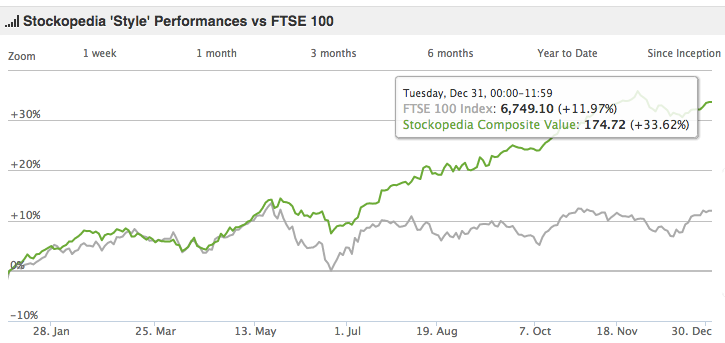
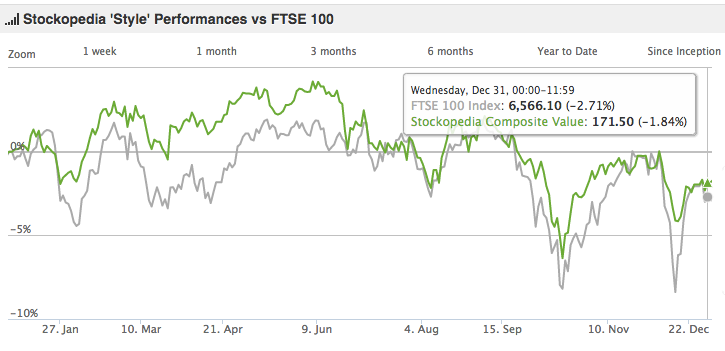
To get an idea about how racy conditions affect value, just take a look at 2013 (in the top chart). Back then funds flowed freely into small and mid cap stocks and value strategies were some of the big winners that year. But in 2014 there were far fewer good quality value opportunities around and the same strategies undershot the market. This sort of pattern is familiar to academics - researchers from Cass Business School examined it in detail here.
Where is the value?
Opinions are divided on how far up the bull curve the UK stock market is, but many would agree that 2015 has got off to a reasonably positive start. The FTSE 100 has been hitting new highs and the FTSE All Share is up by 6.2%. But two of the value strategies we track at Stockopedia are easily outpacing them:
- The David Dreman Low Price to Earnings and Low Price to Book screens are both up by 24.5% and 21.4% in 2014
- The John Neff Value screen is up 15.6%
 What makes these strategies interesting is that they riff on the concept of contrarianism. John Neff, a highly regarded US fund manager, made his name as a contrarian value investor although he preferred the term “low price-earnings investor". He focused on buying good companies with moderate growth and high dividends while they were out of favour, and then selling them once they rose to fair value.
 David Dreman took a similar view. In his book Contrarian Investment Strategies, he acknowledged that he looked for shares that nobody else wanted and was willing to act against prevailing market trends. Dreman wanted unloved and overlooked stocks in beaten down sectors at knock-down prices. He felt that it was precisely these sort of shares that would bounce back when the mood of the market changed. To find them, Dreman's strategy focuses on the cheapest 20% of stocks in the market based on value measures like price-to-earnings, price-to-book and price-to-cash flow. But he also prioritised quality factors like above average earnings growth, net margins and return on equity.
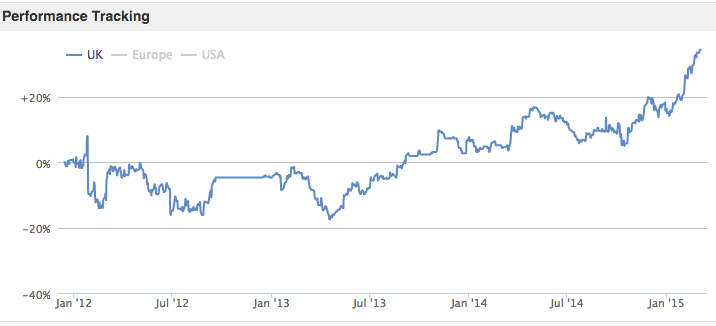 After a strong market run, you might expect these contrarian strategies to be struggling to find reasonable quality stocks at cheap prices. But that hasn't been the case. The strong first quarter performance of the David Dreman Low Price to Earnings strategy benefited from positions in companies like XP Power, Berkeley Group and Plus 500. To emphasise its contrarian nature, it has also held controversial insurance claims processor Quindell - buying the stock at a low in January and riding the subsequent bounce. The John Neff strategy (see chart) has also seen strong performances from the likes of 888 Holdings, Dillistone and Pace.
Are these stocks really contrarian?
One of the common features of these companies (with the exception of Quindell) is that they all had StockRanks in the top 20% of the market back in January - and many still do. StockRanks sort each stock across their fundamental company quality, share valuation and price and earnings momentum. Higher ranking stocks are more likely to share the Quality, Value and Momentum characteristics that have been found to drive returns over the long run. You can visit the StockRanks Portal here. Companies like Berkeley, Plus 500, 888 and Pace all ranked above 95 / 100.
Take a look at the shares currently qualifying for the David Dreman Low PE screen, and it's hardly an extensive list. But the generally high StockRanks for these companies is encouraging, and there are some reasonable yields here, too.
Name | Mkt Cap £m | Quality Rank | Value Rank | Momentum Rank | Stock Rank™ | Yield % |
2,650 | 87 | 85 | 28 | 78 | 4.38 | |
3,572 | 93 | 84 | 94 | 99 | 6.82 | |
167.3 | 83 | 76 | 66 | 92 | 3.40 | |
125.6 | 91 | 58 | 68 | 89 | 2.63 | |
815.7 | 91 | 68 | 99 | 99 | 4.94 | |
3,360 | 64 | 54 | 99 | 88 | 3.46 | |
2,484 | 70 | 63 | 98 | 94 | 2.56 | |
360.4 | 97 | 69 | 27 | 72 | 6.54 |
Contrarianism is a badge of honour for many value investors. And the performances so far this year of the David Dreman and John Neff strategies - which target good companies at cheap prices - suggest that it's an approach that uncovers value opportunities, even in bullish conditions. The fact that many of these stocks rank well for their Quality, Value and Momentum highlights the element of contrarianism in the StockRanks. In other words, many investors overlook quality (“boring"), value (“risky") stocks - which lends an opportunity to those prepared to take the opposite view.
To find out more about Stockopedia's StockRanks, why not catch up with our recent webinar. You can click here to see our library of investing ebooks and see our Subscription Plans to take a two-week free trial to Stockopedia.
Disclaimer
This is not financial advice. Our content is intended to be used and must be used for information and education purposes only. Please read our disclaimer and terms and conditions to understand our obligations.

3 comments
Yes I bought some at 164p but sold out too early. Most shares have a bottom and bounce back even the bad ones seem to. A few others that have bounced back ASOS and Xaar.
Think you mean 2015 has started well?
Yes I agree about buying out of favour shares, there are plenty more you have not mentioned, for instance Tesco, ECM, Serco, IRV, IOM, CCL, most of these have recovered quite well, some like CCL and Tesco are up over 40%, yes canbe be tricky finding the bottom but 40% in a few months in a FT100 company can't be bad?
herbie,
Oops - thanks for spotting (time flies...!)
Absolutely. Funnily enough I bought Tesco as a wildcard for my in-house Stocko fantasy fund in early Jan. They laughed in the office... but they're not laughing now !