Covid-19 Sector Reviews: Telecommunications

Over the last decade, the Telecommunications sector has gone through a period of rapid structural change. The development of new communication systems, such as Voice over Internet Protocol (VoIP), by the world’s largest and most innovative technology companies, has chipped away at the revenues generated by the traditional Telecoms stalwarts.
The impact of intense cross-sector competition has led to the Telecommunications sector being one of the worst performing sectors over the last 5 years. The FTSE All Share Telecommunications benchmark has fallen by a staggering -61.86% over this timeframe, as opposed to a -4.18% fall in the FTSE All Share. This has similarly been reflected across the world, with many large Telecoms operators diversifying their operations into other sectors to try and cope with the unfavourable market dynamics.

However, after a lacklustre performance for the best part of this decade and a prolonged period of secular stagnation, the development of 5G communications could change the fortunes of many companies within the sector. An excellent research paper published by IHS Markit estimates that the total 5G value chain will contribute $3.5 trillion in output and support over 22 million jobs in 2035. In fact, over the period from 2020-2035, IHS believes that the total contribution of 5G to world GDP will be similar to an economy the size of India.
In this article, we will explore the impacts of the pandemic on the Telecommunications sector and assess the performance of the industry groups within the sector in more detail. The article will also evaluate some valuation metrics of the industry groups and take a closer look at some of the top-ranking stocks in the sector, highlighting how these companies have responded to the pandemic and what may possibly lie ahead.
Performance of the Industry Groups

Of the two industry groups within the broader Telecommunications sector, the Fixed Line Telecommunications industry has fared far worse, with the benchmark almost halving since the start of the year. The benchmark tracks the performance of BT, TalkTalk and Telecom Plus and the former two have suffered from an accelerated deterioration in performance since the outbreak of Covid-19.
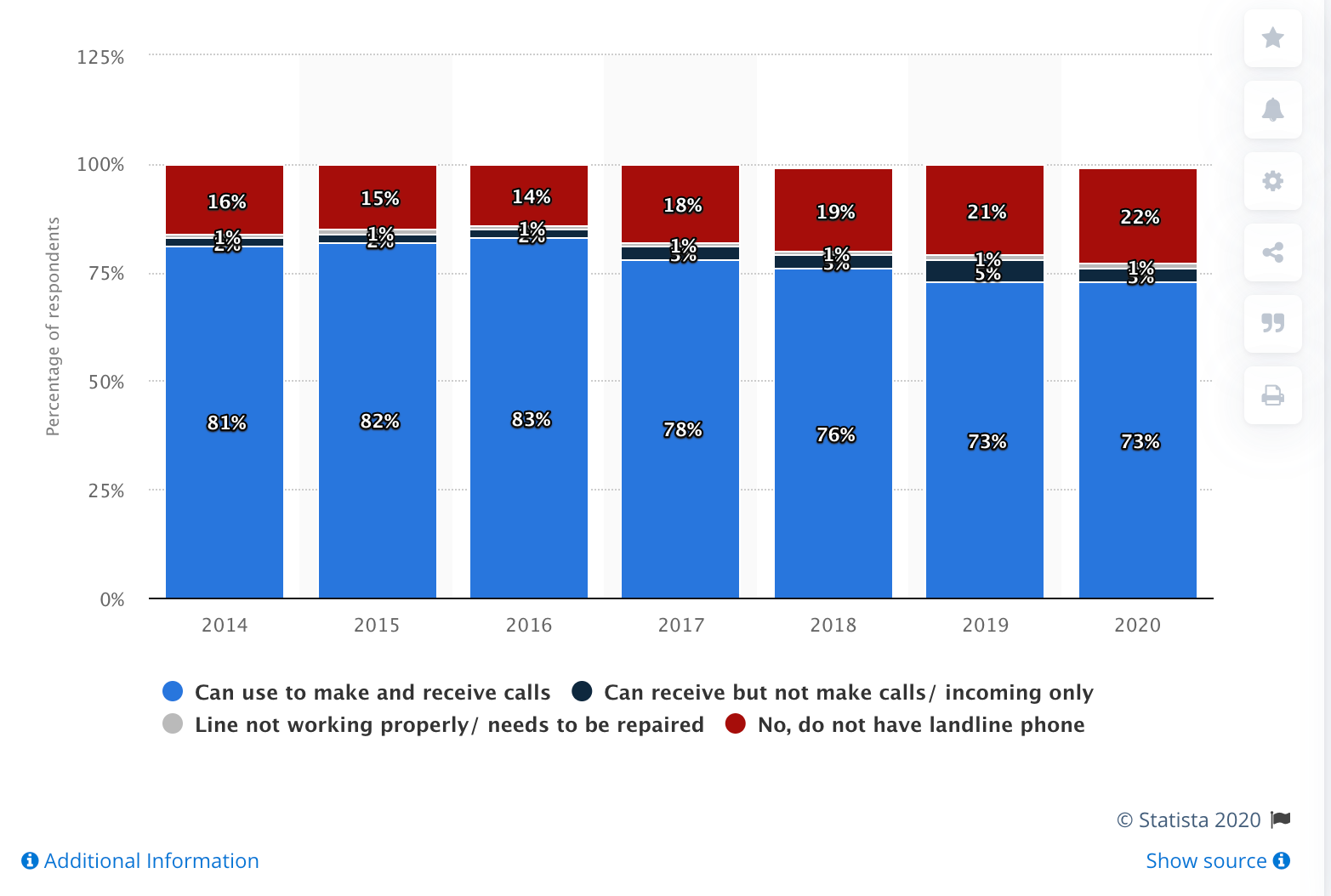
In recent years, fixed line telecommunications companies have suffered from the shift away from landline telephones to other means of communication. According to research carried out by Statista, the number of households in the UK with a functioning landline telephone has fallen from a high of 83% in 2016 to 73% in 2020. This trend has been accelerating worldwide, with fixed-line subscriptions globally reaching a peak of 1.261 billion in 2006, which has since fallen to around 931 million in 2019.
It seems as though the pandemic has only acted to further exaggerate these trends. Consumers are increasingly cost alert, trying to reduce outgoings wherever possible and fixed land lines are an obvious target, with most consumers now using smartphones. With many businesses and call centres closed as a result of the lockdown, the need for fixed land lines has also diminished for enterprises.
BT’s most recent quarterly results for the 3 months to 30 June 2020 showed that revenues and earnings had fallen by 7%. TalkTalk has experienced similar declines in its latest Q1 results, citing the impact of Covid-19 and the “ongoing industry-wide declines in Voice usage exacerbated by lockdown”.
Whilst the Mobile Telecommunications industry has performed substantially better than the Fixed Line Telecommunications industry, the FTSE All Share benchmark has still drifted -26.99% lower since January. The likes of Vodafone, Airtel Africa and Helios Towers have also been victims of the lockdown. Revenues from roaming charges and data packages have been particularly affected whilst consumers were stuck at home.
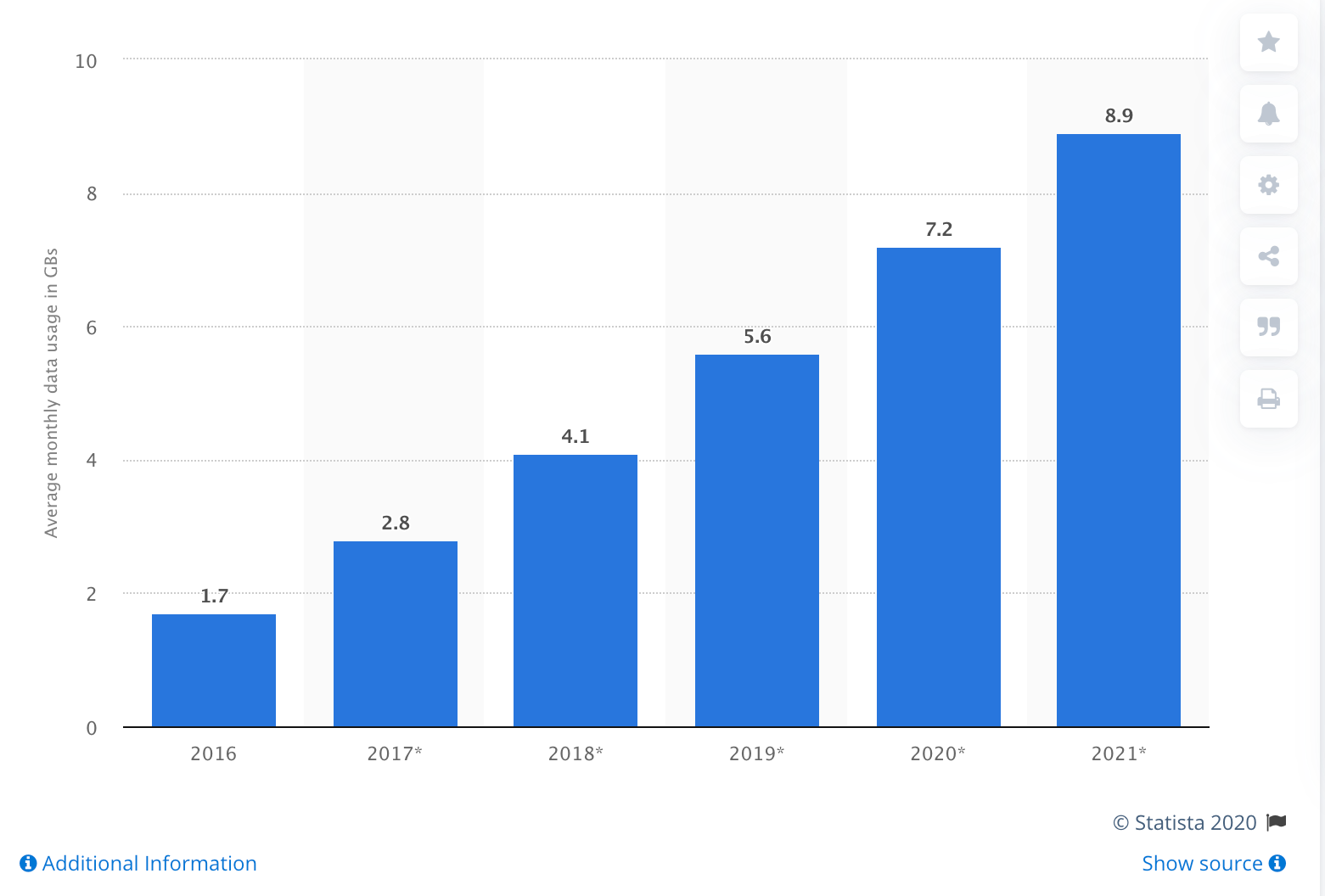
However, the impact seems to have been relatively minor overall, with Vodafone reporting a small contraction of 1.4% in total Q1 revenues and Airtel Africa even reporting a 6.9% revenue increase. Data usage has picked up quite quickly and is continuing its upward trend in consumption. According to Statista, global smartphone cellular data usage is expected to still reach 8.9GBs per month by 2021.
It’s interesting to note that BT’s Mobile Network data company, EE, stated in a report from February to May that there had been a 45% increase in traffic for Apps, which were primarily used to communicate. These apps, such as WhatsApp, Skype, Houseparty, Teams and Zoom will likely require faster and more reliable networks moving forward. Furthermore, the popularity of fitness apps on the go and online supermarket shopping has created additional spikes in data usage, which may support more long-term growth drivers for the industry.
Valuation of the Industry Groups
| Industry Group | |||
| Median Ratio (Forecast) | Fixed Line Telecommunications | Mobile Telecommunications | |
| P/E Ratio | 13.34 | 15.59 | |
| EPS Growth | 0.64 | 5.68 | |
| Dividend Yield | 3.92 | 8.45 |
As could be expected, with such falls across the Telecommunications sector, the median P/E Ratios look rather compelling. There isn’t a large difference between the Fixed Line Telecommunications and Mobile Telecommunication providers with the median forecast P/E at 13.14 and 15.59 respectively.
However, whilst the Fixed Line Communications sectors is slightly cheaper, the Mobile Telecommunications industry will see much higher growth rates. The median forward EPS Growth currently stands at 5.68% as opposed to a paltry 0.64% for Fixed Line competitors.
It is worth bearing in mind that growth could be set to accelerate for both industries in the coming years though. There is an ever-growing need for reliable network infrastructure and full-fibre connectivity, both Fixed Line and Mobile Communications companies have a key role to play in supplying and managing this key technical infrastructure network, which may become the pinnacle focus of economies in the decades to come.
From an income perspective, the Mobile Telecommunications sector does seemingly offer much better prospects. A median forward dividend yield of 8.45% will beat returns on most assets at the moment. However, the notoriously precarious balance sheets of Telecommunication stocks mean that investors should thoroughly assess dividend safety before taking on any positions.
Telecommunications: The Top-Ranking Stocks
In this next section, I will take a look at the top 3 ranking stocks from the Telecommunications FTSE All Share sector benchmark.
Telecom Plus (LON:TEP) – Fixed Line Telecommunications
Share Price: 1,371.5p
Market cap: £1.09b
StockRank: 93
FTSE 250 listed Telecom Plus, which trades under the Utility Warehouse brand name, is the UK’s only genuine multiservice provider. The company engages in the provision of energy, broadband, landline, mobile and insurance products to its customers. Bundling all these together makes it simpler for its customers to obtain these essential services and the company now has over 650,000 household and small business clients.
In the company’s full year report, which ended 31st March, it reported that revenues had grown 8.9% to £875.8m and adjusted profit before tax has also risen by 8% to £60.8m. Due to the resilient performance, Telecom Plus announced that it would be increasing its full year dividend by 9.6% to 57p a share, whilst many competitors in this sector are slashing theirs. Recent trading since the 21st April update has also been strong, with the company citing that churn rates have reduced from the levels seen at the height of the lockdown.
Following on from the annual report, the CEO, Andrew Lindsay said: “Our results this morning show record sales, earnings and dividends, clearly demonstrating the resilience and strength of our business model.” In addition to this, the company highlighted the strength of the company’s balance sheet and commitment to future dividend payments.
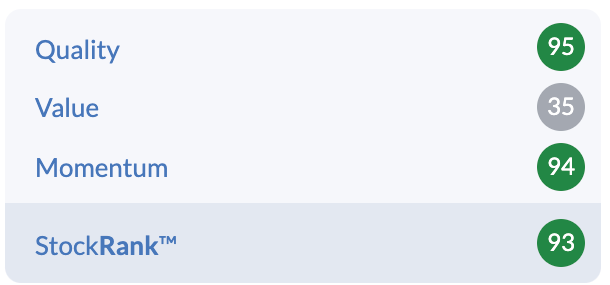
The unique business model which Telecom Plus operates seems to be working well for the business. The share price is up 42% from its March lows, after publishing its record results and the fundamentals look strong. The strong price and earnings momentum has given the company an overall Momentum Rank of 94, whilst a Quality Rank of 95 is a testament to the company’s ability to generate returns for its shareholders.
Airtel Africa (LON:AAF) – Mobile Telecommunications
Share Price: 60.5p
Market cap: £2.19b
StockRank: 77
Airtel Africa, which only floated on the London market in June last year, is one of the leading providers of telecommunications and mobile money services in Africa. It operates in 14 countries across the continent and offers mobile voice and data services, in addition to mobile money services to its customers. In July 2020, the customer base reached 111.5 million.
Many companies in the Telecommunications sector have faced declining sales and earnings over the lockdown period. However, Airtel Africa has managed to defy this trend, reporting a 6.9% growth in revenues and a 7.9% increase in earnings in the quarter ending 30 June. Operating profit has also improved and the company’s rising free cash flow generation has enabled it to reduce its net debt to underlying EBIDTA position to 2.2x.
The company CEO, Raghunath Mandava, made the following comments in the quarterly update: “The business showed its resilience even during these unprecedented circumstances with all key business segments - voice, data and mobile money, and all regions - Nigeria, East Africa and Francophone Africa contributing to growth.”
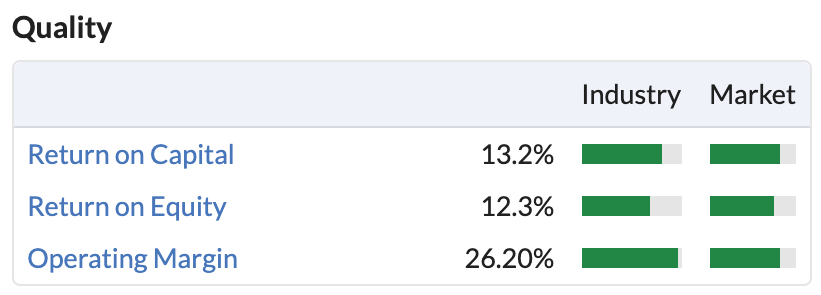
Fundamentally, Airtel Africa scores quite well across its quality metrics and particularly well on valuation ratios. The company’s overall Value Rank stands at 92, whilst it maintains returns on capital employed and equity above 12%. The company’s operating margins of 26.2% are also exceptionally high compared to peers in the Telecommunications Services market. In addition to this, the company currently pays out a 9.5% forecast dividend yield, which is covered 1.37 times by forecast earnings.
The company’s debt position, whilst improving, still remains a concern though. A current ratio of 0.67 means that the company cannot meet its short-term obligations from its current assets, and this could potentially lead to dividend cuts, equity dilution or asset sales in the future.
BT Group (LON:BT.A) – Fixed Line Telecommunications
Share Price: 104.7p
Market cap: £10.09b
StockRank: 61
FTSE 100 listed blue-chip BT Group is one of the world’s leading communications services companies, providing products and services in around 180 countries. BT is currently the UK’s largest provider of consumer fixed-line voice and broadband services and owns EE, the UK’s largest mobile network operator. The company has also ventured into Sport Pay TV in recent years and now offers businesses security, cloud and networking services.
On the back of disappointing results and an announcement of the suspension of dividend payments, BT shares recently plummeted to 11-year lows. As previously mentioned, revenues and earnings for the company’s first quarter were down 7% and outlook for the year has estimated that revenues will be down 5-6% on last year.
However, despite the financial impacts of Covid-19, the company has continued its progress on meeting its strategic objectives. Philip Jansen, the Chief Executive of the company, provided an update on this progress in the quarterly update, stating that “We reached an important milestone with 3m FTTP premises now passed, welcomed Ofcom’s consultation on our rural FTTP build proposal, and have now deployed 5G to 100 towns and cities. Together with continued improvements in customer experience and our modernisation programme, we are positively positioned for the future.”
Indeed, the development of 5G infrastructure, faster broadband speeds and the continued surge in data usage puts the company in arguably one of the strongest positions it has been in for years. There are many hurdles the company must still overcome, most notably costs associated with the 5G and full-fibre roll out after restrictions over the use of Huawei equipment. However, with lockdown measures relaxing, sports recommencing and communication systems speeds becoming increasingly imperative to societal functions, the future looks more promising.
BT’s current fundamentals give it the typical characteristics of a contrarian stock. The valuation is particularly interesting. The Price to Free Cashflow ratio is currently 4.7, implying that the company is undervalued when compared to its level of free cash flow generation. The company also looks very cheap compared to what it owns (Price to Book Value) and what it earns (Price to Sales).
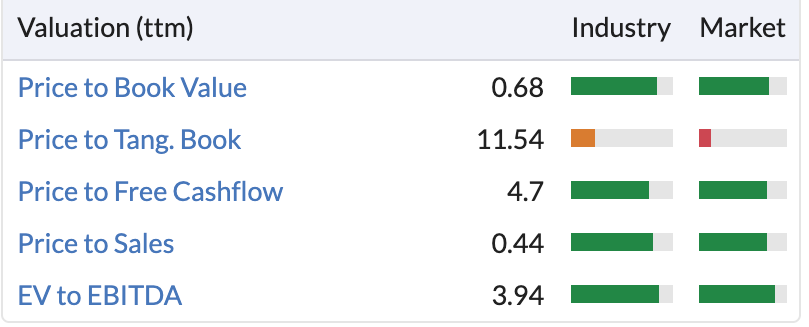
Once again, the debt profile of the stock remains a concern, with net debt almost twice the value of the company’s current market capitalisation. Furthermore, momentum is an issue and it could take some time for sentiment to change.
Conclusion
The last 10 years have kind of been a lost decade for the Telecommunications sector. There was a point where it looked as though the Telecoms giants would rule the world, but the wrong bets were made and after intense competition and scrutiny by industry regulators, the sector ended up losing out to big tech.
Whilst struggles across the sector remain, Covid-19 seems to have actually renewed the importance of the Telecommunications sector. Fast and reliable communication systems are pivotal to the way we work and what we have come to expect for our standard of living. With more people working from home and customers increasingly reliant on communication systems for all aspects of life, the accelerated development of 5G infrastructure couldn’t come at a better time.
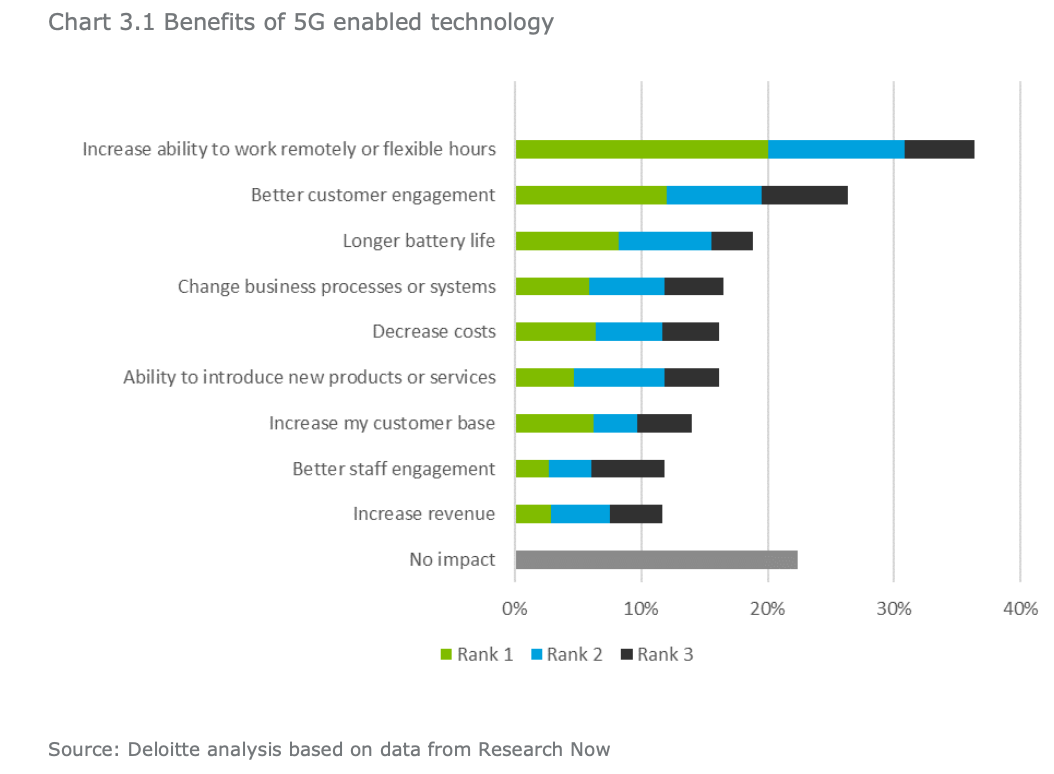
Research by PwC suggests that with 5G, mobile networks will become up to 100 times faster and have around 1,000 times the capacity they have today. It won’t just be our phones or our laptops that we will use for communications either. Cars, TVs, smart homes, medical devices, payments systems, augmented and virtual reality, to name a few, will all require faster, ultra-reliable data at lower latencies and a lower cost per bit.
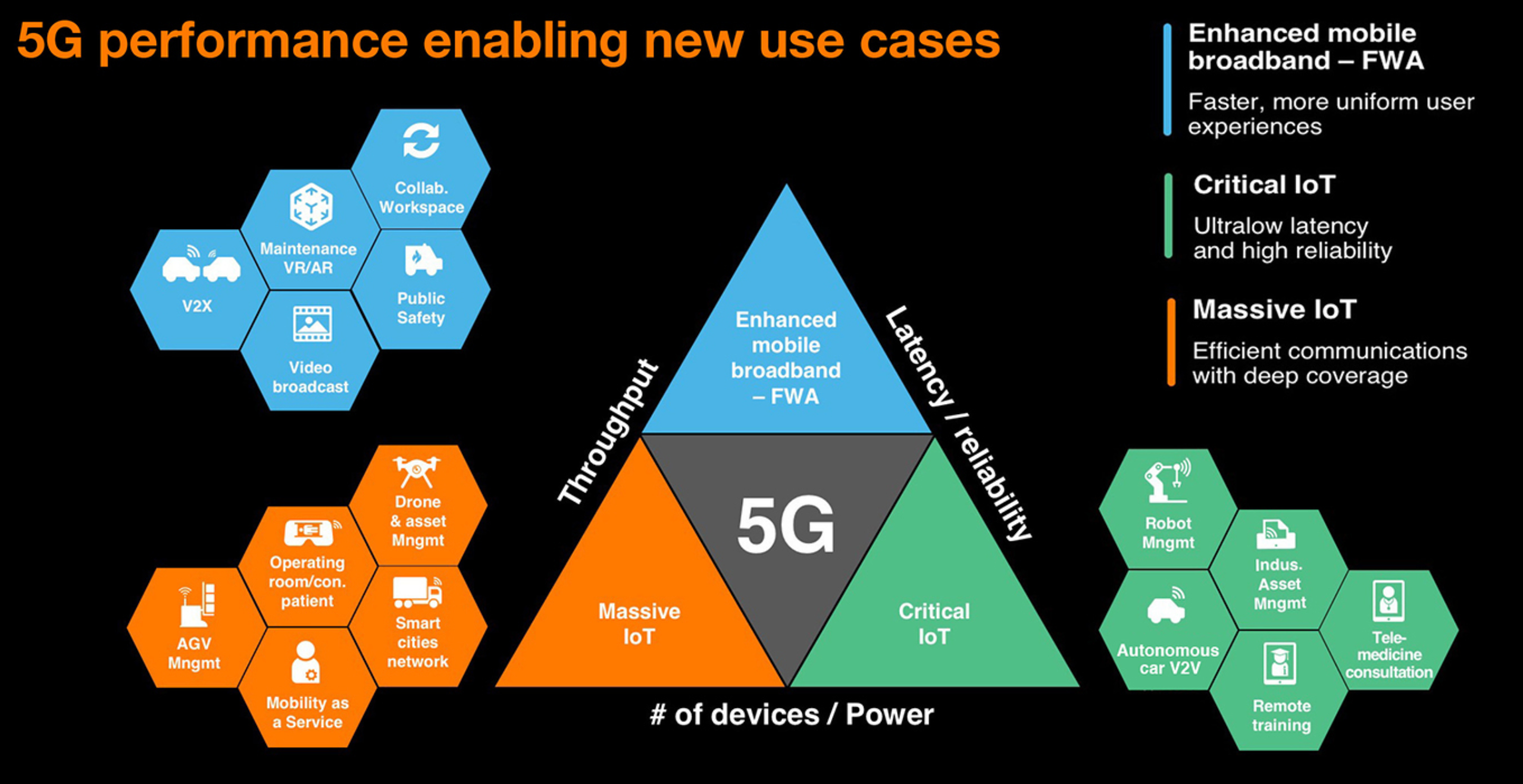
Source: Orange Business Services
All these ground-breaking new technologies will depend on the infrastructure developments carried out by the Telecommunications industry. If the Telecoms giants do get this one right, then the fundamental picture for the sector could be set for the next 10-15 years.
Stay safe and safe investing!
Disclaimer
This is not financial advice. Our content is intended to be used and must be used for information and education purposes only. Please read our disclaimer and terms and conditions to understand our obligations.
10 comments
Thanks Keelan. This is very relevant for me considering Telecom Plus (LON:TEP) and Airtel Africa (LON:AAF) are my two biggest holdings. I have held Telecom Plus (LON:TEP) for about 12 years after Robbie Burns personally recommended it to me, and I have to say, it's done very well over this time.... I'm about 500% up and the company's interesting model seems to do well both in good and bad economic conditions.
I have been very optimistic about Airtel Africa (LON:AAF) prospects, living in Africa myself and having travelled to the continent extensively over the last 20 years. Everyone in urban Arfica wants to own a smart phone and buying talktime is a spending priority. Also, access to digital financial services is a massive, largely untapped market as most can't get a bank account, and get money transferred from relatives abroad or in different cities. Airtel is getting strategic in this regard with its new partnerships with banks and big money transfer companies. The big African cities are literally transforming every year into modern commercial hubs (e.g. there are 10 shopping malls within 10 minutes drive of my house in Lusaka.. crazy).
However, I would be very interested in what you think about Abtan's analysis of Airtel Africa (LON:AAF) ability to generate cash in the discussion section. He is far less optimistic about their financials and ability to maintain dividend, despite reasonable top line growth.
Thanks in advance!
4G's range is 10 miles, 5G's is about 1500 feet - correct me if necessary. I can see this working in cities, but how will it become provincial without relying on a massive fibre backbone? The transmitters would be on every 2nd lamp post (600ft).
T-mobile say a transmitter can cover an area of "hundreds of square miles" but there's a little bit of sophistry here when a 5.7mile radius works out at a hundred square miles, and an 8 mile radius is "hundreds of square miles" i.e. 200sqm.
These frequencies are also more susceptible to adverse weather conditions. They don't reflect and bend like lower frequencies - it's straight lines only, and could struggle to penetrate a sausage roll (only relevant if that's where you keep your phone)
Not sure I'm totally in on 5G being ubiquitous unless Starlink enters very-very-very-low earth orbit.
I'm very curious to hear how it might work though so very happy to be corrected on any of my premises.
I agree I see 5G as being for the the cities only.
4G's range is 10 miles, 5G's is about 1500 feet - correct me if necessary. I can see this working in cities, but how will it become provincial without relying on a massive fibre backbone? The transmitters would be on every 2nd lamp post (600ft).
T-mobile say a transmitter can cover an area of "hundreds of square miles" but there's a little bit of sophistry here when a 5.7mile radius works out at a hundred square miles, and an 8 mile radius is "hundreds of square miles" i.e. 200sqm.
These frequencies are also more susceptible to adverse weather conditions. They don't reflect and bend like lower frequencies - it's straight lines only, and could struggle to penetrate a sausage roll (only relevant if that's where you keep your phone)
Not sure I'm totally in on 5G being ubiquitous unless Starlink enters very-very-very-low earth orbit.
I'm very curious to hear how it might work though so very happy to be corrected on any of my premises.
The telecoms have been traders' territory for the past two years or so.
Most are listed on New York so I was able to make constant comparisons.
Fundamentals are similar. Some have too much debt. Dividends are an item.
I bought and sold the U.S., Chinese and U.K. incumbents but the Brazilian (VIV) and Singapore ones had interesting moves too.
It was an attempt to get away from B.T.'s reputation for poor service, copper wiring and pension deficit but buying when the stock was oversold and selling soon afterwards provided as good profits as those with a better reputation.
VZ and T and CHU and CHL, even TEF have all contributed but investors are generally suspicious and you cannot hold for long. I thought the Chinese advantage of not having to remove Huwaie components would help. It avoided the drops seen in BT and VOD, helped NOK and ERIC but did little for CHL, CHU and CHA.
All in all a bit of a minefield and not a Value alternative to Nasdaq Hi-Tech.
Welcome any views on Singapore Telecom?
.........SGAPY on New York.
Stockopedia does not pick up the ADRs ending in 'Y'.
From another data base fundamentals do not stand out. Growth rate is negative, Morningstar thinks it is fully valued. Earnings yield 7,26. P/E 13,78. Dividend poor.
Average daily volume is the killer only 81 937.
Turning to the chart.
In a 5 year downtrend.
Buying in May 2019 saw a price rise from 22$ to 26$.
Buying in March 2020 from 16ish to 20$.
Presently 16,53$
DYOR especially if you have access to the Singapore market (Z74 XSES)
Do not know their position on 5G, Huwaie.
Is the author aware of Gamma Communications? Shares are up about 500% over the past 5 years and the company is a beneficiary of COVID-19. It would have been interesting to understand how this telecom company managed such a good performance when the sector as a whole performed so badly.
I was going to make the same point - Gamma is a great company (as is Telecom Plus). They have been able to serve the SME market in a way that <all> of the network operators have utterly failed - primarily by employing bright people, having good IT and a great customer service culture. (I work in a tangentially related industry so come across them reasonably often). I just wish I owned some shares in them - every time I have looked at them, I have judged them to a be a little too expensive and every time I was wrong!
5G will need lots of antennas.. so is MWE sending out a powerful signal?