Games Workshop and Augean: record-breaking figures and a stealth upgrade?

Two companies we have covered recently released trading updates this week. Games Workshop (LON:GAW), the Adventurous Mid Cap High Flyer, probably needs no introduction. It seems like the market is more on the fence with Augean (LON:AUG) at current levels, however. Even Stockopedia rates it as Style Neutral. The shares have barely moved despite a strong (albeit brief) trading update - is there an opportunity here?
Games Workshop: another set of record-breaking results
(Please note that I have a long position in GAW.)
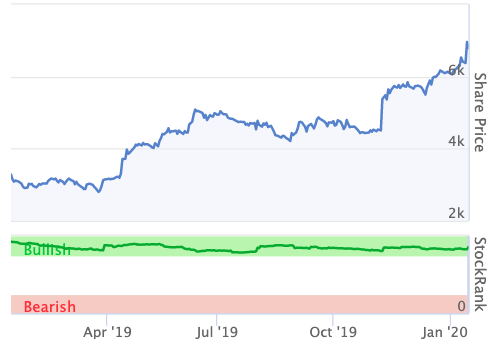
The Games Workshop share price has been spectacular over the past five years. This shows no signs of slowing down: its half-year statement for the six months to 1 December 2019 set new records for sales and profits and drove a c10% to new all-time highs. Shares have more than doubled over the past year and are up by nearly 18% since we wrote about the company in November.
Revenue was increased by 16% to £145.6m and operating profit grew by c40% to £57.1m, while basic earnings per share jumped up by 44% to 145.9p. The group has developed a happy habit of breaking records. Nothing lasts forever, of course, but for now there is no reason to assume this trend cannot continue.
Digging into GAW's figures
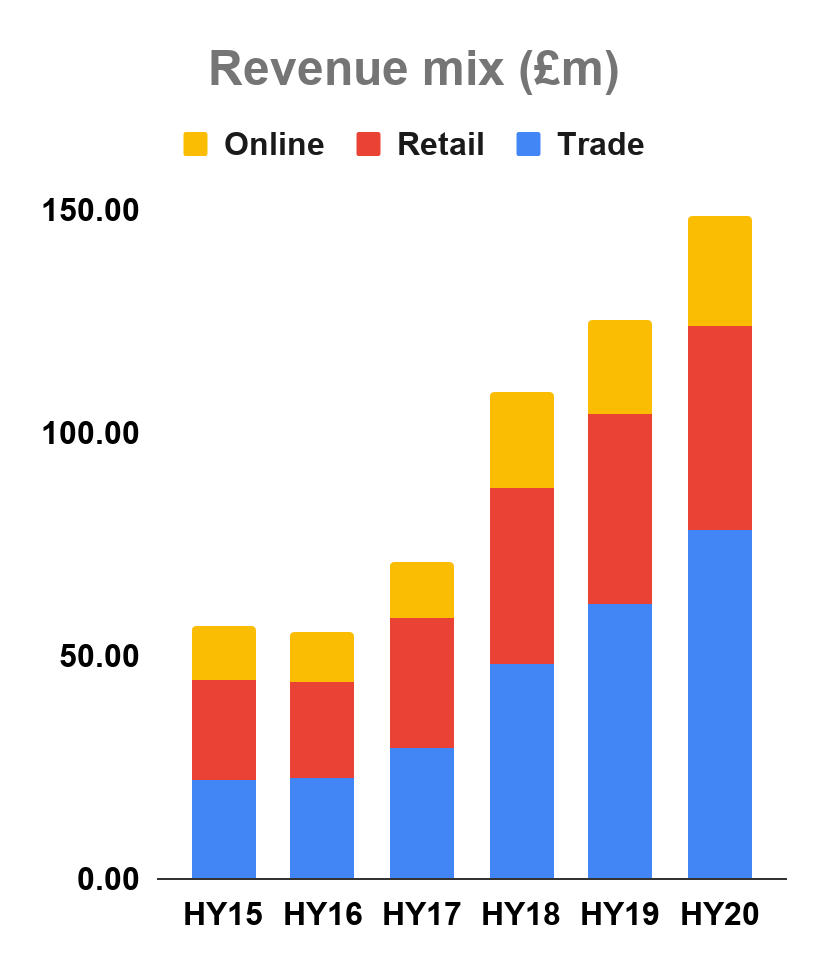
Perhaps the most encouraging thing about the announcement is that revenue increased most in the channels with the highest operating margins (Trade at c40% margin and Online at c64% margin). As a result of this, gross margin improved by 2.5% to 69.4% and the group’s operating margin pre-royalties rose by 4.5% to 32.7%.
Running through Games Workshop’s operating divisions:
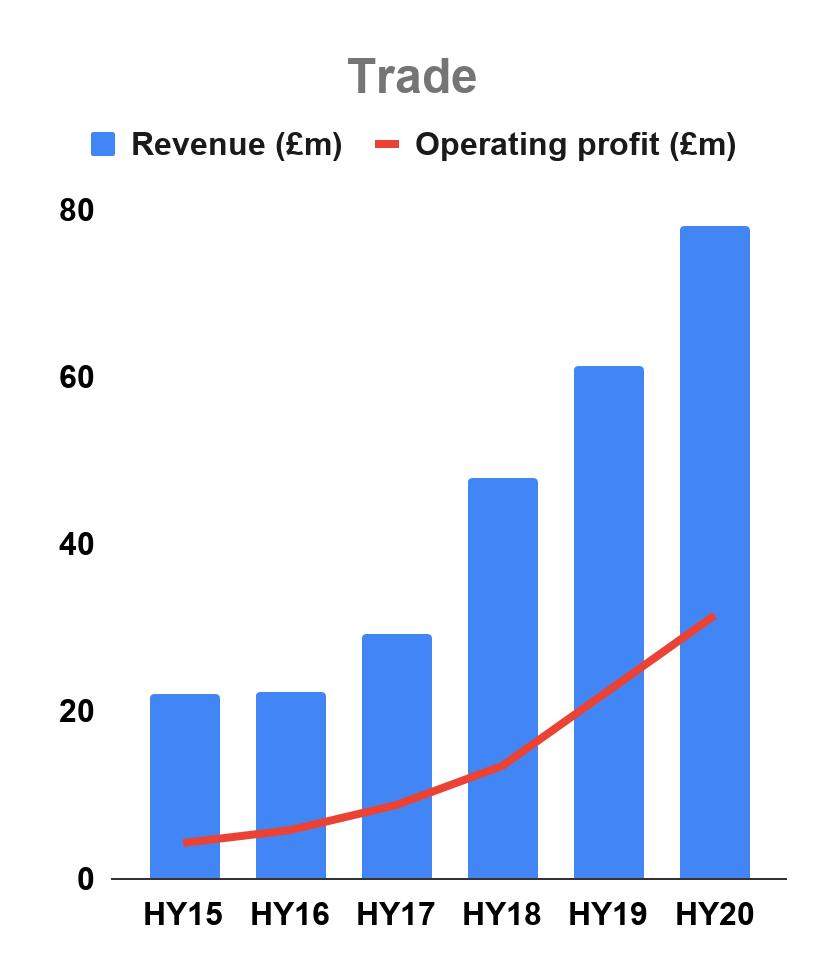
Trade sales grew by 27% to £78.1m with growth in all key countries. Net trade outlets increased by c.200 accounts and management notes a trend of more independent outlets selling Warhammer products online. This division has been the primary driver of Games Workshop’s transformation.
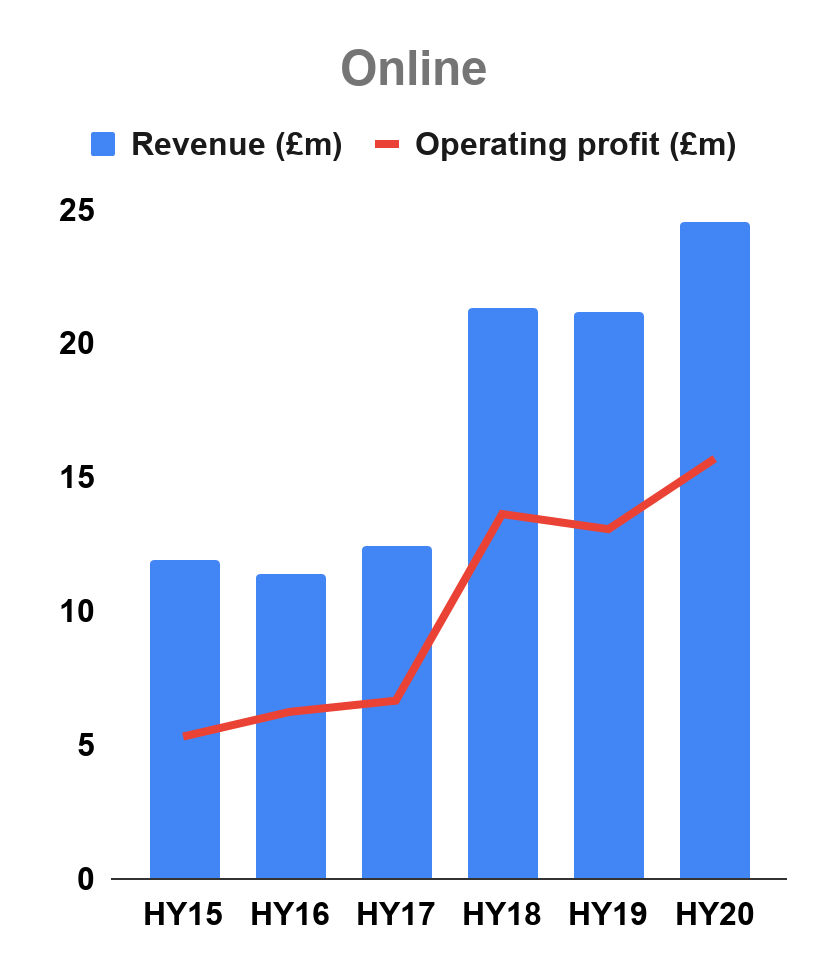
Online sales grew by 15% to £24.5m. The group continues to invest in a better experience for customers, with a particular focus on personalised content and ease of navigation.
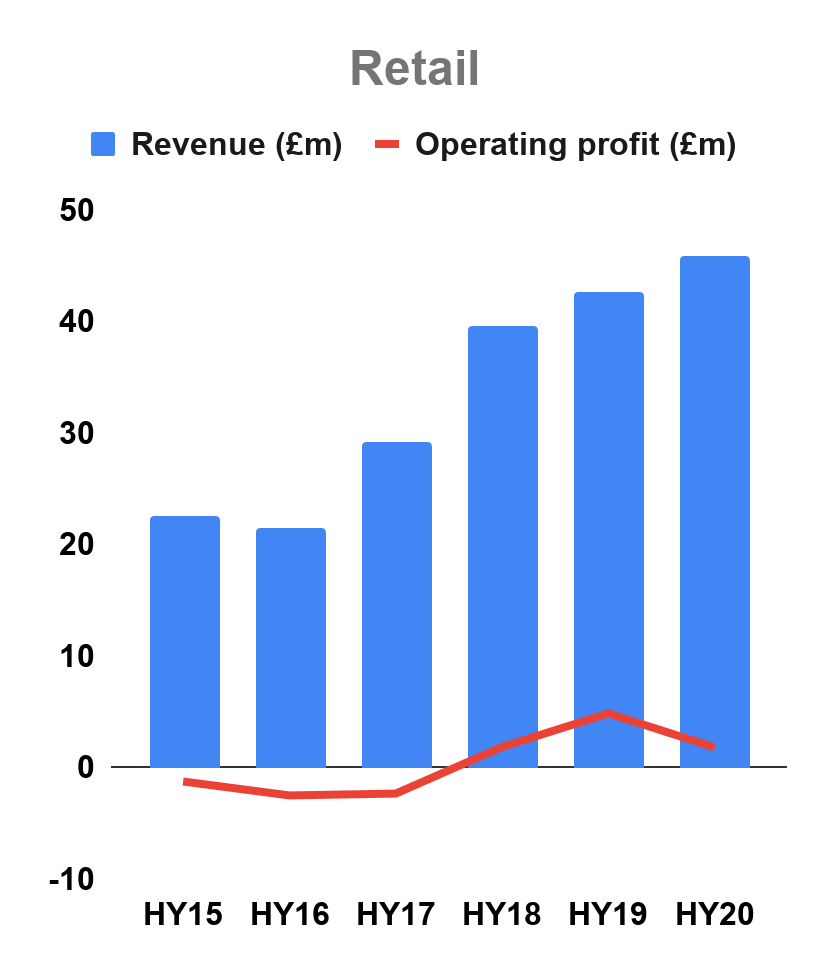
Retail showed growth in all countries. However, while revenue rose by 7.5% to £45.8m, operating profit fell from £4.8m to just £1.8m. The group acknowledges that “as always it is a challenging environment” in this arena.
It is worth remembering that this division was loss-making and the source of much doubt around the company from at least the first half of FY14 through to the first half of FY17, when the group’s shares were range bound between 500-600p. Although the shift from multi-person to single-person sites appears to have made Retail more profitable, it is possible that this division might one day return to losses.
It’s certainly the costliest division to run: it accounted for 53% of total group operating expenses in the period. The good news is that Retail makes up a smaller and smaller proportion of revenue these days.
Royalty income had probably its most substantial six months of trading ever, nearly doubling from £5.5m to £10.7m (+94%). Given management actions in recent years to ease its licensing guidelines and encourage partnerships across all media formats, I’m expecting royalty income to be a larger part of the mix in future.
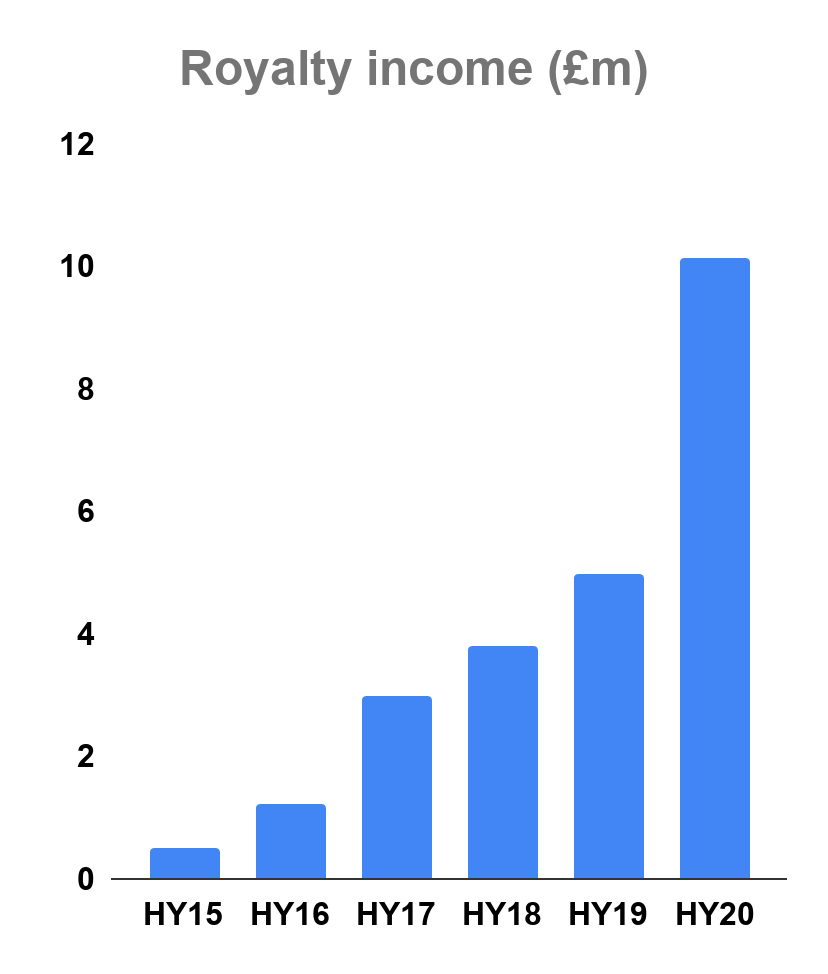
The current growth rates and overall potential in Trade, Online and Royalty income more than make up for the Retail performance, in my view. As a result of this tilt towards higher margin revenue growth, net cash generated from operations has increased from £27.9m to £42.8m, and free cash flow in the period was up from around £17m to just under £30m. The group’s already stellar ROCE improved from 96% to 111%.
All in all, this latest set of trading figures is once again ahead of expectations. If GAW can keep up the good work in Trade, Online and Royalty income, future revenue growth could be extremely profitable, especially given its relatively low variable costs and operational gearing.
Given these results, is there an opportunity here for those that remain on the sidelines? Or are Games Workshop’s shares finally priced correctly?
How cognitive biases help fuel the Momentum factor
No doubt the Games Workshop share price has been strong, but I think this type of situation can still be an opportunity for potential investors. This is because we are slow to acknowledge the scale of improving prospects.
A key study into the Momentum factor was carried out by researchers George and Hwang in 2004. It shows the closer a stock's current price is to its 52-week high, the stronger that stock's performance in the subsequent period. It also finds that nearness to the 52-week high is a much better predictor of future returns than past returns to individual stocks. On average, it seems, the trend really is your friend.
My view is that these findings are due to some common cognitive biases…
Anchoring is an information-processing bias which ends up in us being slow to adjust our expectations. When people have to estimate a number, they tend to rely on some “anchor” figure which they then adjust up or down to reflect subsequent information and analysis. We tend to cling to this anchor.
You might interpret the George and Hwang study as showing investors using the 52- week high as an "anchor" that is more heavily weighted in the decision-making process than new positive information. Investors then underreact when stock prices approach the 52-week high, with the surprising result being that stocks near their 52-week highs tend to be systematically undervalued.
Anchoring is closely related to the conservatism bias, which is simply when people overweight past information and inadequately incorporate new information. They are reluctant to modify their beliefs. Again, it makes people slower to adjust expectations.
Together, these two biases might explain a lot of the power of Momentum. Analysts and market participants struggle to adequately incorporate new information and changing prospects. It takes time for perception to catch up with reality.
Is this happening at Games Workshop?
Games Workshop upgrades: scope for further surprises?
The two brokers that currently cover Games Workshop have consistently raised their earnings per share forecasts in the past year. This pattern fits in with the idea of people in general being slow to update their views.
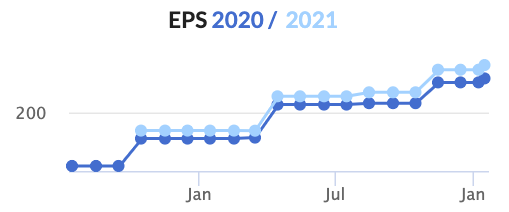
Taking a quick look at Edison’s latest revised report on the company, we can see the FY20 and FY21 net income forecasts have been bumped up by 3% to £95.56m and £101.30m respectively.
These figures are based on projected FY20 revenue of £286.36m and FY21 revenue of £300.78m, implying profit margins of 33.7% for both years.
Below I have taken Games Workshop’s half year revenue as a percentage of full year revenue from previous reporting periods and used the average to take a stab at FY20 revenue. It is crude, but more complex models sometimes just create an illusion of precision and certainty anyway.
Half year revenue as a percentage of full year revenue | |
One-year average | 48.8% |
Three-year average | 47.72% |
Five-year average | 47.78% |
So, let’s say on average, over the past five, three and one-year periods, half-year revenue has made up 48% of full-year revenue. Making the simple assumption that HY20 will comprise a similar proportion of full-year sales, we get an FY20 revenue figure of around £303m (£145.6m / 0.48).
This would be comfortably ahead of revised forecasts of £286.36m. Similarly you could take the HY EPS of 145.9p and extrapolate FY EPS of (145.9 / 0.507 =) 287.77p, by using the HY19 and FY19 EPS proportions. This makes for a revised forecast PE ratio of 23.59 times.
Alternatively, we could go back to the hypothetical FY20 revenue figure of £303m and apply FY19’s 32 percent profit margin (given the revenue mix so far though, it should be better). This gives us FY20 net income of £97m, which is still ahead of revised estimates.
Dividing this by HY20’s weighted average number of shares of 32,530,000, gives you FY20 EPS of 298p, equating to a revised forecast PE ratio of 22.76 times.
All of this is a roundabout way of saying don’t bet against Games Workshop surpassing revised FY expectations. It will be interesting to see if the company can get close to these figures.
Augean: a stealth upgrade?
A quick word on Augean as well, which Paul covered here. This update was much shorter and had no trading figures, but it is encouraging nonetheless.
The group says that “trading has continued to be strong through the final quarter and it expects, subject to audit, to report adjusted PBT for the year ended 31 December 2019 at least in line with recently upgraded consensus market expectations of £18.4m.”
To my mind, this suggests that shareholders should be optimistic about Augean’s short-term trading prospects. For those that are interested in the company, it is worth noting that its share price is more or less unmoved from when we last covered it in December, despite this latest update sounding suspiciously like a profit upgrade.
Given its changing structure over the years, Augean does have a track record of adjusted figures. This can put some people off but I feel that adjusted figures for entities with evolving operating structures and families of subsidiaries should, by and large, be taken in good faith. That’s not to say we shouldn’t perform some checks, though.
As you can see below, Augean’s adjusted figures have been both above and below the reported profit amount, meaning management is not afraid to relay a less profitable underlying figure when it thinks this is the case.
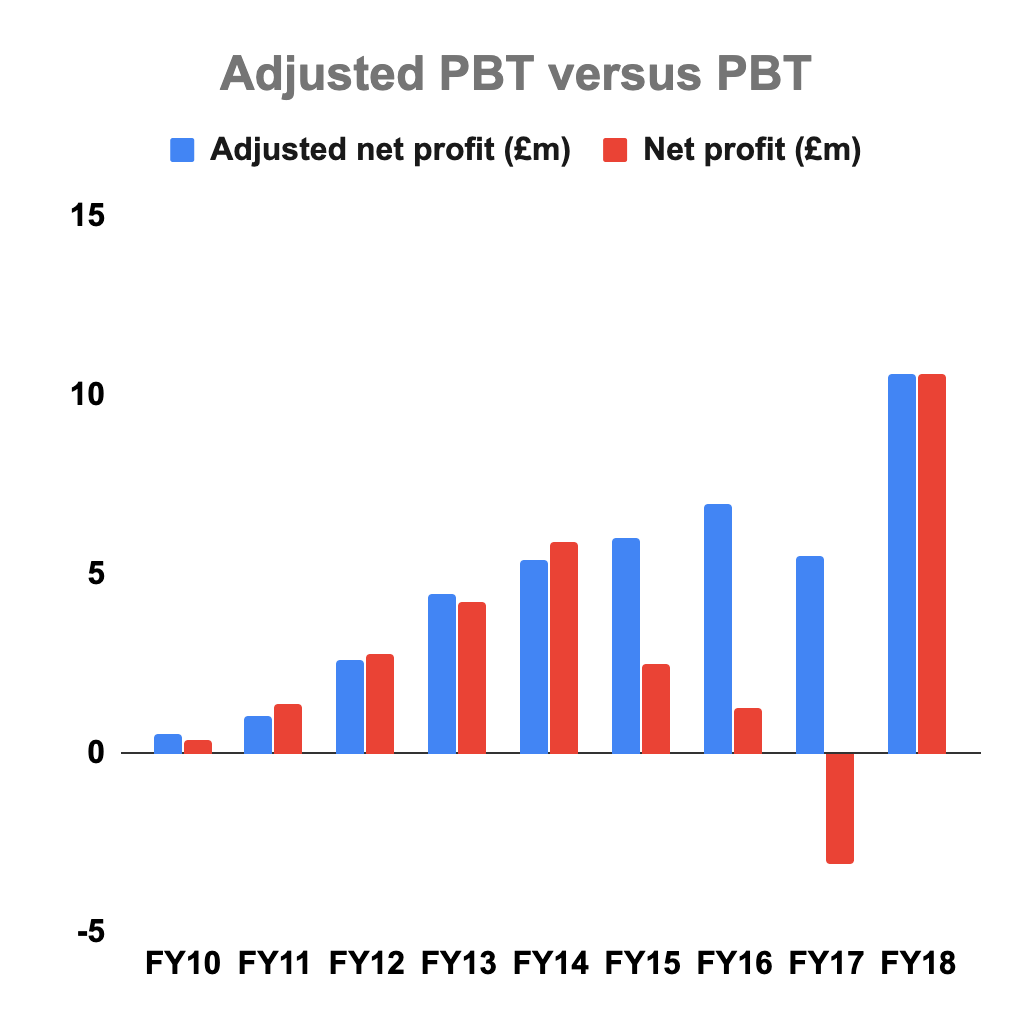
We can see in the chart above that Augean has adjusted its profit figures pretty much every year for the past decade - a symptom of its constantly evolving operating structure. The gap widened dramatically in FY16 and FY17 but jumped back up in FY18 for its first set of unadjusted results in a decade. FY19 will presumably see a return to adjusted figures, given its tax liability payments.
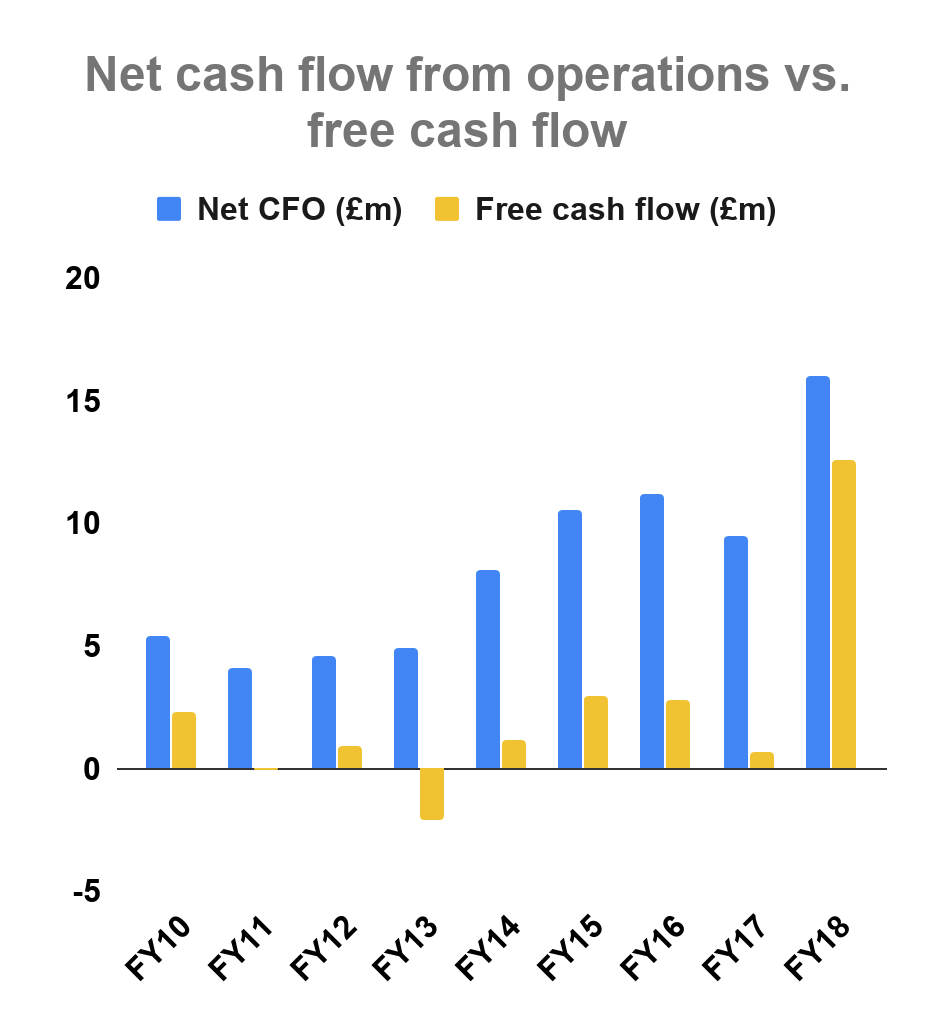
The good news is cash doesn’t lie. You can see below that cash flows have been increasing, although there is no doubting the group’s operations are quite capital intensive.
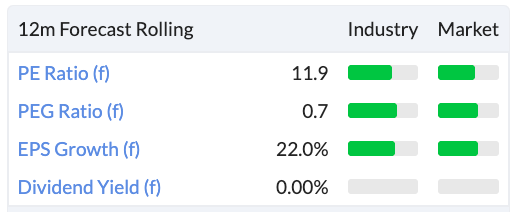
All in all, this latest trading update is encouraging. As the group’s shares haven’t really moved, there could be an opportunity here. Given the group’s history of adjustments, I’d like to be more familiar with its history before buying. On the face of it though, the group’s shares are undemanding especially in light of this positive update.
Disclaimer
This is not financial advice. Our content is intended to be used and must be used for information and education purposes only. Please read our disclaimer and terms and conditions to understand our obligations.

7 comments
Comment in today's "Times" for those interested/invested:-
https://www.thetimes.co.uk/article/games-workshop-delivers-a-heroic-tale-for-the-modern-age-of-investing-xsb6ws3dz?shareToken=602395743af0d3f9b419cd98b92edd14
Digging a bit deeper, seems this will appear as an exceptional item in the December figures. They are still disputing the tax and the first hearing at the tribunal is soon. There is still about £4.6m that HMRC are reviewing. If they paid these amounts then Corporation Tax will be reduced. This tax issue is the only reason I have been put off investing.
The issue with Augean (LON:AUG) is the disputed tax bill which could amount to around £40m I understand, if it losses this dispute then it will wipe out several years profits. I think that is why the share price has been held back.
Hi Herbie,
Augean (LON:AUG) announced last December that they will be paying off this £40m HMRC bill using existing cash balances and an upgraded banking facility. This should remove that uncertainty.
Some similar matter could arise in future, but as I understand it management has now resolved the existing £40m dispute.
My reading was that nothing had been resolved, except that Augean decided to pay the disputed liability in order to avoid further interest accruing. The underlying dispute rumbles on.
Thanks Jack for that information I was not aware that it had been settled. Don't the profit and debt figures need adjusting to reflect this?
If you deduct £40m off the profits then the figures don't look so good. Also going forward they will have to pay the landfill tax every year.
Herbie - that seems to be the crux of the problem. Until the matter is determined we don't really know what the real historic profitability was. Nor do we know how future profits will be impacted as clearly Augean and HMRC have differing views on the tax liabilities.
Presumably, if the directors are viewing the assessments as unjustified they will view the payment as contingent on the eventual outcome.