Hunting for compounders - Kape Technologies

Kape Technologies (LON:KAPE) , it’s fair to say, divides opinion. On the one hand, it’s growing at pace, but on the other it is majority-backed by a colourful billionaire and comes with some pretty hard-to-decipher accounts.
At a recent Mello Bash, I was asked to look into this mid cap technology stock and owner of the CyberGhost VPN brand. Either this is a great investment opportunity in a high growth market, or it could go badly wrong.

My initial view is that Kape Technologies is probably well-placed to grow for many years to come. It will do this via organic investment and acquisitions. Given that, I think it is probably attractively priced at 17.2x forecast earnings and 4.1x forecast sales.
But I qualify my view due to accounting issues which I have so far failed to resolve. And because of that I continue to rule it out as an investment.
There’s no two ways about it: Kape’s accounts are hard to understand. Perhaps Kape holders on the site can give some insights.
As I see it, underlying performance is obscured by:
- The recent shift in strategy and reporting segments,
- Subsequent material acquisitions,
- Adjusted cash flow accounting,
- Adjusted EBITDA measures, and
- Accounting for contracts.
Complicated accounts put me off. It seems I’m not alone - the Mello panel quickly identified these issues and the company was deemed a clear majority ‘Sell’ in the eyes of the c500-strong audience.
It would be great to get some views on this one because if these doubts over the accounting can be legitimately explained, then we are probably looking at a high growth company that is being discounted by the market due to it being in the ‘too difficult’ tray (or worse) for many investors.
Kape: a brief summary
Kape is a digital security software provider that focuses on protecting consumers and their personal data as they go about their daily digital lives. These security products are designed for big, growing global consumer markets.
The group has successfully transitioned to a SaaS model and boasts strong revenue visibility and EBITDA growth. With its focus on customer service, Kape is also achieving strong customer retention of around 80%.
Its operating segments are Digital Privacy and Digital Security.
- The Digital Privacy market is a fast growing area and the COVID pandemic has increased internet usage. The VPN market exceeded $25bn in 2019 and is expected, by Global Market Insight, to reach some $70bn in 2026.
- The Digital Security market is more mature but still very big, with projected market revenues of $170.4bn expected in 2022 (Source: Gartner, Wandera).
Given the above, a forecast PE ratio of 17.2 in the Growth & Value box looks very attractive. But note the vastly different price to free cash flow metric further down.
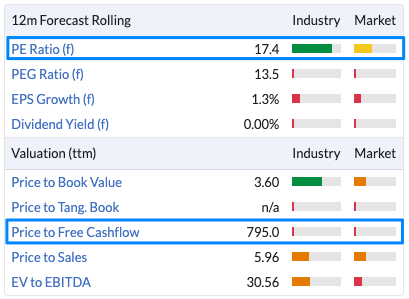
Admittedly this compares forecast and trailing twelve month data, but it still draws attention to differences between cash flows and earnings figures reported by management, in my view.
The story so far
With its digital marketing background, Kape drives value from acquisitions by stripping out costs and scaling up the amount of leads received by its acquired products. It does this with the customer acquisition-focused tech stack it has developed.
It’s an important part of Kape’s growth strategy, and it seems to have worked well so far.
Kape has completed five acquisitions in around four years, with more on the agenda.
A brief history:
- The group IPOd in 2014 as Crossrider, valued at $250m. Crossrider specialised in digital advertising.
- In 2015 the group reported a drop in adjusted EBITDA and the CEO resigned.
- 2016 was a year of restructuring, and current CEO Ido Erlichman came on board
- In 2017 it was renamed Kape. Kape acquired Cyberghost, where it has since increased revenues from $5m to an anticipated $40m this year. It also made good progress in transitioning towards a pure SaaS model
- The acquisition of Intego in 2018 brought a strong cyber security research team into the fold, which has subsequently been expanded. Zenmate was also acquired.
- In 2019 the group merged with PIA, one of the leaders in the US digital privacy market. So far, 30% of new PIA sales have come from Kape’s user acquisition platform.
Kape has managed to grow subscriptions up to 2.4m in short order. Granted it has done this via a series of acquisitions, but that is testament to the buoyant and growing market this company focuses on.
Accounting quality
Tracking segment performance over the years is hard due to the fact that Kape has only recently begun to report results across Digital Privacy and Digital Security.
So, digging through the accounts, we immediately come up against a lack of comparability.
Depending on which side you fall, this will probably strengthen your existing view of Kape as either a bargepole stock or a high-risk high-reward company in transition.
For what it’s worth, here is the segmental performance I have been able to assemble.
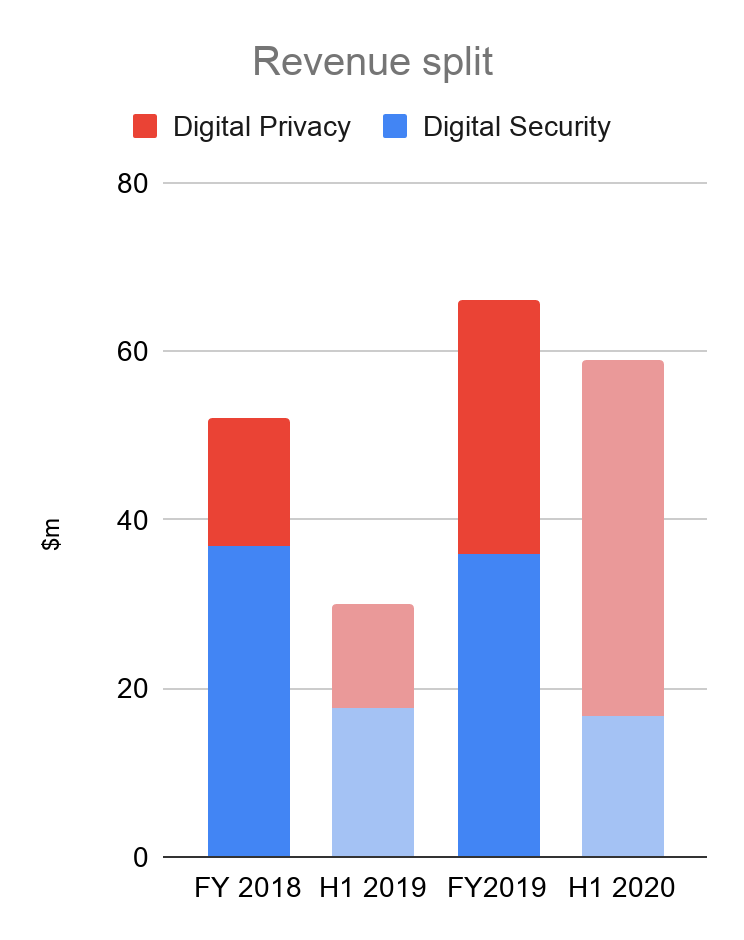
You can see the group’s recent big acquisition of PIA now skews Kape much more towards the fast-growing Digital Privacy segment.
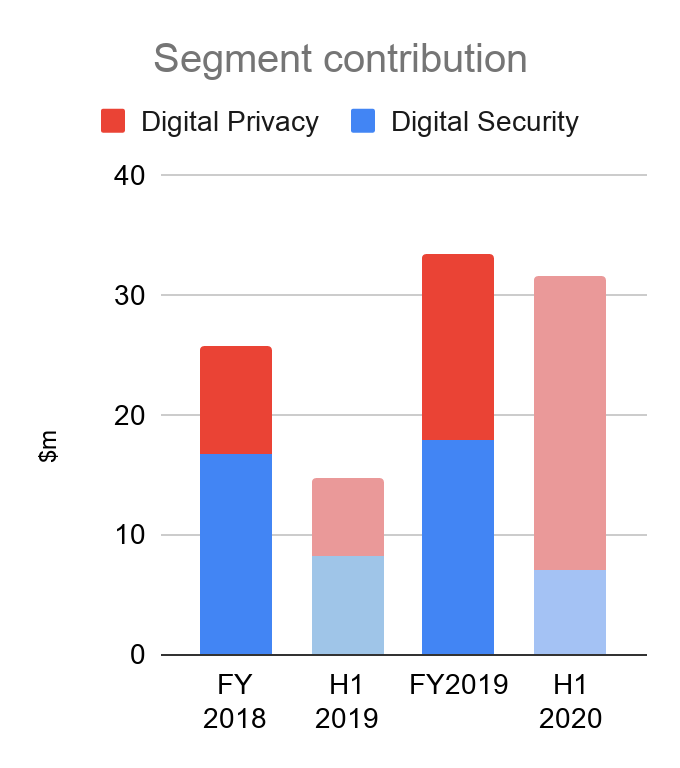
There’s no denying the growth trajectory looks good, but we already have two complications: a recent large acquisition and a lack of historic comparability across accounts.
Accounting issues
And if you dig into the accounts, you find more questions.
Adjusted EBITDA
Reading through management commentary, you will find multiple references to adjusted EBITDA. This measure of profitability has hovered around the $10m mark for much of Kape’s operations so far.
So finding on the Financial Summary that Kape has generated a net loss for every year except 2019, might come as a surprise. This important fact could have been more simply and forthrightly conveyed to shareholders over the years, in my view.
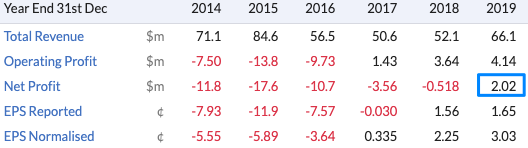
It’s true that the direction of travel in net profit has been on a pretty steady path upwards, but still, the ‘adjusted EBITDA’ figures used by management are a long way from the profits attributable to shareholders.
Here are the adjustments between adjusted EBITDA and operating profit over the reporting periods measured as a percent of total adjusted EBITDA:
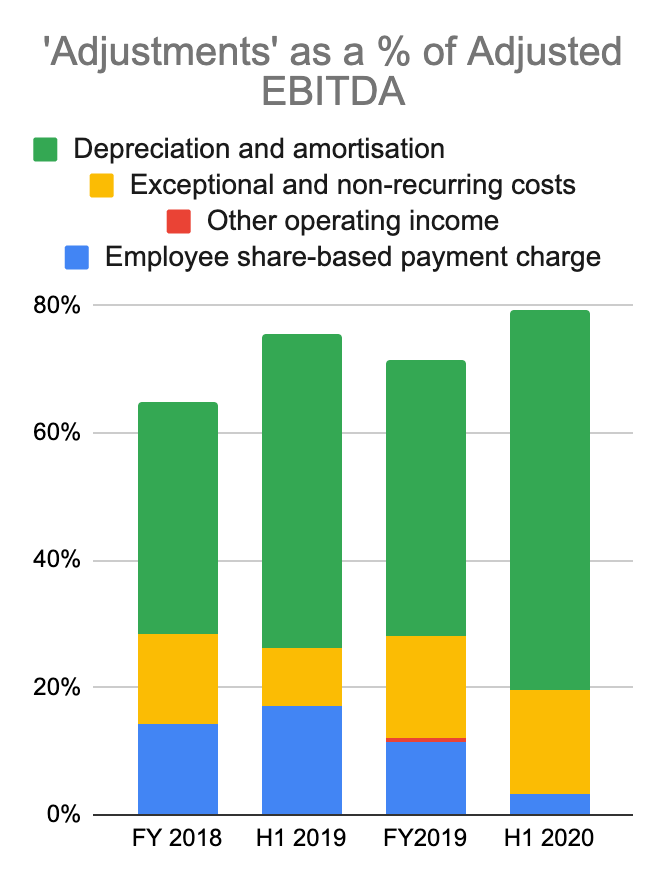
There is a constant stream of ‘exceptional and non-recurring costs’ - likely due to Kape’s acquisitions. And increasing depreciation and amortisation charges mean the gap between adjusted EBITDA and operating profit has grown.
It could be that Kape is approaching an inflection point, and that cash flows and operating profits will soon reduce that gap to adjusted EBITDA. But for now it makes me slightly uneasy.
Adjusted cash flow
We also have ‘adjusted cash flow’ after ‘adding back payments that are one off in nature’. Surely cash is cash - it either swaps hands or it doesn’t.
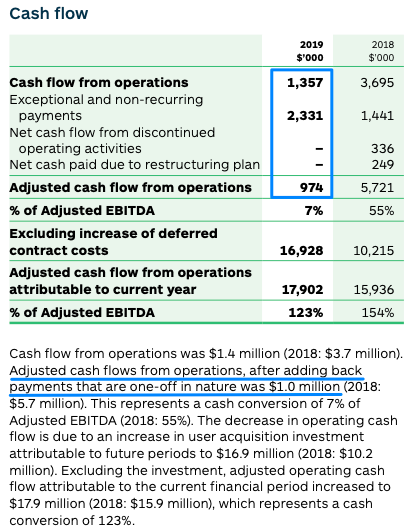
In the FY19 accounts, Kape refers to cash conversion, which is a good measure to follow. But the definition of cash conversion here is ‘adjusted cash flow from operations as a % of adjusted EBITDA’. And these two figures are adjusted in different ways.
And, what’s more, in 2019, even this adjusted cash conversion figure was just 7%. So Kape prefers to use an adjusted adjusted cash flow figure by excluding the ‘increase of deferred contract costs’.
This amounts to some $16.93m and takes FY19 adjusted cash flow of just $0.97m up to $17.9m.
This, of course, gives Kape a much nicer looking cash conversion of 123%. Needless to say it is this heavily adjusted figure that is used as the headline ‘cash conversion’ in the management commentary, often with no qualification as to how it has been calculated.
In fact I’m still not sure the adjusted calculation of cash flow for 2019 even makes sense.
Source: 2019 Annual Report
We start off with $1.357m of CFO in 2019 and a positive $2.331m of exceptional & non-recurring payments. That should make for an adjusted CFO figure of $3.668m, not $0.974m.
The 2018 column adds up on the basis that a positive exceptional and non-recurring payments line is added back to CFO to arrive at adjusted CFO of $5.721m.
Even though management notes that ‘Cash flow from operations was $1.4m’ in 2019, this was in fact an outflow. So negative $1.4m plus positive $2.3m gets to the $0.974m adjusted figure.
If we then head over to the actual cash flow statement in the 2019 accounts, we can confirm that this is a $1.4m outflow.
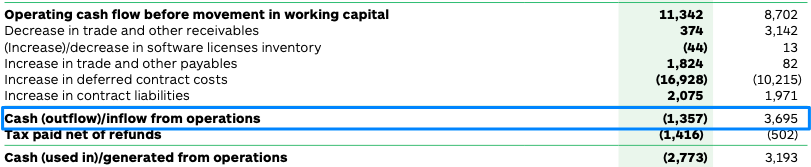
Everybody makes mistakes, and a forgotten minus sign might not indicate anything sinister, but I would still expect it to be spotted by a management team that cares about its accounts and communication with shareholders.
And then there are the deferred and capitalised contract costs themselves. But, again, I’m running out of time and space.
Suffice to say that there are about $29.34m in assets and $35.31m in associated liabilities on the balance sheet regarding contract costs. For what it’s worth, the independent auditor does say it found no material issues on this matter in its review.
Focusing on Quality
It could well be that Kape’s combination of trading momentum, internal investment, acquisition pipeline, and the wider VPN market growth is just so potent that this company will continue to grow successfully in the years ahead.
But there’s a reason I have never looked at it closely before and that is because of the low Quality Rank and other quality flags on the StockReport.
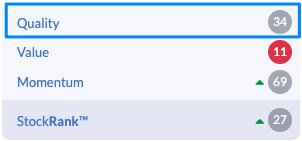
So it’s nice to see that, after going deeper into the accounts, I do agree with the Stockopedia algorithms. Other issues stand out as well - all falling under the umbrella of the Quality factor.
Low returns on capital
There are a few categories in which management can deploy a firm’s capital. It is worth bearing in mind that acquisitions - and particularly large acquisitions - are often flagged as a potentially value destructive form of capital allocation.
Kape has spent over $159m on its M&A strategy so far, with more to come.
And it is hard to miss Kape’s poor returns on capital. What’s more, the operating margin looks to be heading in the wrong direction, although the lack of data does make it tricky to extrapolate these trends.
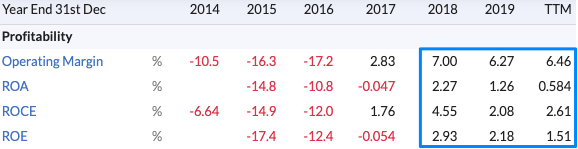
While it is still early days in Kape’s strategy of growing quickly into a digital security and privacy firm of substantial scale, these metrics raise questions about the use of capital so far.
That said, big projects can take a while for the related returns to come through. So we could see improving returns in future.
Poor cash generation
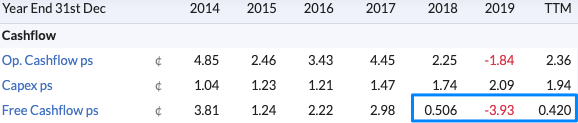
The company says it is reaching an inflection point in terms of profits and cash flows, and if it can successfully integrate PIA and make an additional substantial acquisition soon, then historic cash generation will likely be a poor indicator for the future.
Nevertheless, the signs are there in the Financial Summary:
Low F-Score
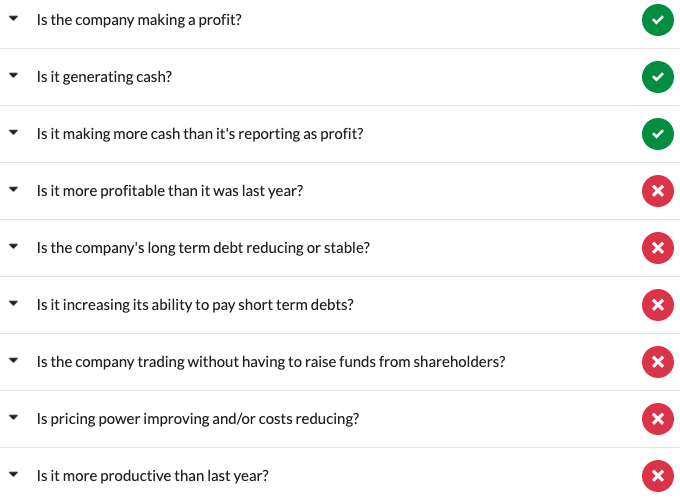
The Piotroski F-Score is a nine-criteria financial health scoring system developed by financial academic Joseph Piotroski.
Kape scores just three and fails to pass checks regarding increased debt, the recent placing, and faltering margins.
Short screen
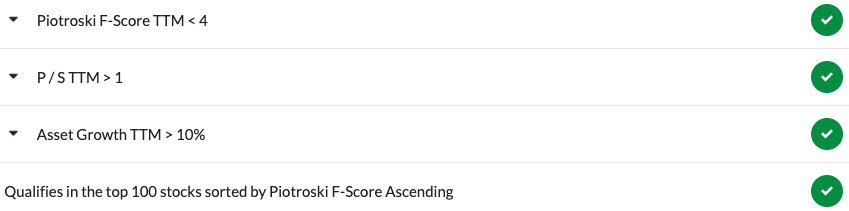
Kape qualifies for James Montier’s 'Unholy Trinity' Screen.
This short screen uses the price-to-sales ratio to find companies that appear to be overvalued based on their revenues. It looks for signs of low quality by finding stocks that score less than 3 out of 9 on the Piotroski F-Score of financial health.
Finally, Montier looks for companies where asset growth could be excessive, based on the theory that management teams can be inefficient capital allocators.
Goodwill and intangible assets
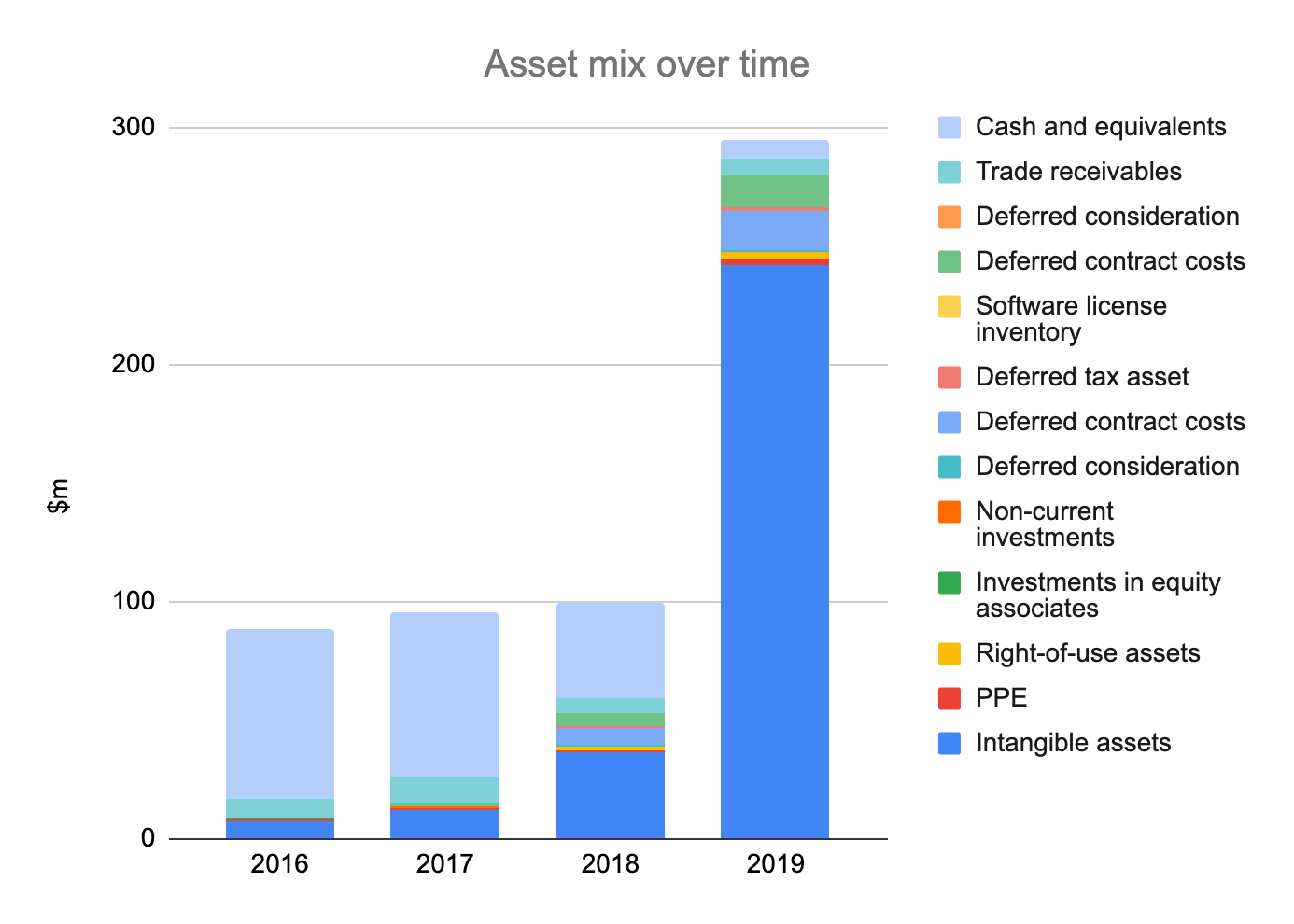
On that note, I think the rapidly changing and expanding asset mix is something to keep an eye on. Note how dramatically this has changed, and how intangible assets (in dark blue) have ballooned post-PIA merger.
Conclusion
If you’re still reading, well done.
On the whole, I still think it is likely that Kape will grow rapidly in the years ahead.
The strategy sounds good: buy and develop in-demand, subscription-based digital privacy and security products, strip out duplicated costs, and then use Kape’s user acquisition tech stack and digital marketing expertise to drive a step change in leads and subscriptions.
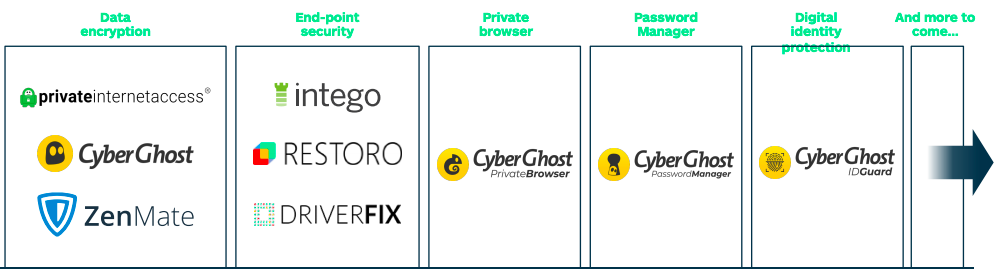
Internal product development is increasing as profit and cash generation show signs of reaching an inflection point. The group has a strong line up of new product launches including password managers and private browsers.
The forecast market growth is phenomenal, heading towards $70bn by 2026 for VPNs alone. And, at 17.2 times forecast earnings, Kape looks to be attractively priced given its organic and acquisitive growth prospects.
But ultimately I don’t think understanding its accounts should be so hard, and I’ve seen enough to rule this one out for now. Good luck to holders though and counterpoints are very much appreciated.
Disclaimer
This is not financial advice. Our content is intended to be used and must be used for information and education purposes only. Please read our disclaimer and terms and conditions to understand our obligations.

14 comments
Insiders holding more than 60% . I am not concerned with accounting. As long as the growth story is continuing, I will hold it tight and buy more. Target price 240p end of year.
Wow. Just wow!
If that works, you should definitely write a guru book on the investment strategy.
Hi all,
My view on the capitalising of the marketing (client acquisition) costs, thus flattering profits over cash flow, mirrors that of other comments here. However I would add that an 80% retention rate is not that fantastic and it is clearly a competitive market, getting more so over time. Unless the retention rate goes up or the cost of client acquisition goes down then cash generation will remain elusive. Thanks for pointing this out Mello Monday and Leon. I didn't do my homework properly and have sold out for an undeserved profit.
Best, Peter
Hi all,
A really good piece and have very much enjoyed reading the comments. Ive been a holder of various Israeli tech based stocks since 2015 and its clear that Mr Sagi is a 'king pin' in the country and backs various organisations.
I've held (and still do hold) £plus, 888 Holdings (LON:888) and £kape. I did hold £xlm but no longer. Before discussing £kape any further, i just have a couple of observations.
I've attended Mello (although not a subscriber to the covid annual pass) and met Leon Boros & a number of the Mello/Stockopedia guys a few times - all very impressive and respected.
The first thing i would say is that many seem to distrust Israeli tech stocks - I appreciate a few may have been dodgy in the 80s/90s but i havent come accross one yet. Im also a student of David Ryan/Minervini and have attended his Master Trader Program etc
Everyone was very negative about £plus a few years ago - I bought a lot (i run a concentrated portfolio of 4-9 stocks max) at c240p - they are now above 1300p and have paid out much more than my initial stake in divis alone. The Company is a massive cash cow.
888 Holdings (LON:888) - Israeli mgt, based in Gib, major competitor to Playtech and gaming is their Forte, growing like crazy and in the US with partnerships with Caesars and power the World Series of Poker brand amongst others. The company is a massive cashcow.
Xlmedia (LON:XLM) - Met previous CEO a number of times, attended their investor presentation and held them all the way from 60p to over 200p but was far too late in selling them. They were a massive cashcow but got nailed by Google from an SEO perspective and also cookie tracking, industry consolidation, reduced marketing budgets nailed them. Im far from convinced i'll buy them again as its very clear that regardless of anything else - a seo ranking penalty from google and they are crippled - so its a firm no from me.
Regarding £kape, its a completely different company since 2017, its growing like crazy, is acquiring customers (ironically in a similar manner to plus500) ie expensive acquisition cost but lifetime value results in profitable customers.
The relatively recent volatility was because certain individuals knew about the capital raise at 150p - which was massively over subscribed btw. So its not a stock us punters are going to know much about via RNS's etc - thus price action is key.
I hold about 20% of my SIPP in £kape. I believe in the story, bought at c80p following reading a write up in SCSW. Given exposure to US, i expect them to grow significantly and may even list in the US. I'd buy a load more if they went south of 160p as they are likely to do more capital raises in future and they've already said they are going to do another acquisition in H1 21. Its not a stock for the faint hearted but Im a buyer.
My other major holding that fits my criteria at present is £BOO. I bought it following their ESG scandal in July last year.I know Paul and fellow stocko subscribers really like it and thus it also fits the criteria i like.
Digitally led, strong growth no major overheads such as shops, pension liabilities, and high volumes of staff, offer strong cash generation and high ROCE (learned that from Terry Smith's most recent book).
I know the accounts for £kape dont show that yet - but in my opinion, the lack of the clear accounting story, results in market inefficiency and creates opportunity for others. I will hold until growth slows.
All my own thoughts and best of luck to all.
If I could try and shed a light on what is going on here - you need to read the accounting policies note in the Annual Report and its starts to become a bit clearer what they are doing. Firstly, they sell services to customers for extended periods for say 2 years or three years. In terms of revenue recognition, it would appear that most of it is reasonably straight forward and the value of a three year contract would be recognised "straight-line" over the period i.e. a third, a third, a third in each year as the contract runs its course and this is not unreasonable.
However, the snag comes with what they are doing with cost of marketing and selling to secure those customers and contracts. Here the argument appears to be that at the very least these costs will be similarly spread over this same period and that goes against the accounting concept of prudence and more conservatively recognising costs as they are incurred. Furthermore, there is also reference to renewal rates being used to assess the appropriate carrying value and any required impairment of these costs, which would suggest to me that they may be further extending the period over which these costs to reflect lifetime customer value, based on the probability that a customer will just renew their contract for a further 2-3 years.
Suffice to say, as a holder who was sitting on a 70% gain having picked up the shares on the day the PIA acquisition was announced, it was not a difficult decision to sell my holding this week. Big thanks to Jack and Mello bash panel for bring this to my attention and hope this is helpful to other holders....
There is no such thing as the "prudence concept" in accounting. That died long ago as International Standards moved to fair value accounting. You're actually not allowed to be prudent anymore.
SSAP 2 died many years ago.
Since I posted yesterday I have read your piece again twice and unless I missed it you do not refer to the $100m Capital Raise which resulted in a $72m pay out to the previous owners of the PIA business which Kape bought in 2019. Would this transaction have a lot to do with the very complex and hard to understand Accounts?
Thank Jack. Your pieces are always well worth a read. I like the saying "Sales are vanity, Profit is sanity, and cash is king." So, if there is a trend of rising profits (whether reported or adjusted) but a decent free cash flow never seems to materialize, then I will remain skeptical about the reality of the profits.
Hi Jack. Interesting note, thank you. I watched their Capital Markets investor presentation last summer and was interested in the business. A lot of it was focused on the PIA business they'd bought in the US where it was explained that PIA had good product but was not really growing, so a key strategic rationale for KAPE to do the acquisition was to apply KAPE's (apparently better) existing user acquisition processes to drive growth in PIA - the subsequent RNS announcements last summer gave some info on how PIA was doing in growing users post-acquisition but I note more recently they have gone rather quiet on the detail of that growth in PIA specifically. So that, plus the fact the CEO still hardly holds any shares despite finally buying in during the recent placing, makes me sceptical now too.
Thank you Jack for that very thorough review. I held Kape Technologies (LON:KAPE) until the Mello evening. As you say there were some strong words used about the financials. As one of the earlier commenters here said, if the experts there At Mello cant understand the REAL profitability of the organisations, what chance do we have. I also sold all my holdings on Wed at a small loss, and slept more soundly. I have been a holder of a number stocks which Mr Sagi has been involved in. One was Xlmedia (LON:XLM) which I believe he was instrumental i setting up, and which traded up to over 200p before it fell off the shelf as mcuh fo the business fell away. Another was Playtech (LON:PTEC) which was doing very nicely. I had the shares at a SP of £10 at one time; Mr Sagi's company sold down its shareholdings in large sections which were readily snapped up by institutions at the time. Then the cash cow of the company, the Asian betting organisation 'managed' through a single main distributor, literally fell to bits and the company which for years had been - and in many ways still is - the gold standard provider of gambling software - fell very quickly. It changed from being my most profitable holding to my least quite quickly. It is recovering but it has been a hard road. So all in all, I am a sucker for my 3 entries into his world. All 3 have had good times, shown significant expansion, BUT there have been really big question marks and painful events in their recent history. So for me there wont be a fourth entry into that world.
"One of the really annoying side effects of using VPNs is you tend to get blocked from media sites like BBC, youtube etc."
I am not sure that this applies to all VPNs. There is a VPN for every situation depending on whether it's privacy, streaming etc that you favour.
Reviews of the leading contenders for VPNs can be found here. It's been a while since PIA has been mentioned.
It's a big potential market, but don't be surprised if the bulk of average users eventually use a browser based VPN as already developed by Firefox.
Jack I watched your presentation on Monday having recently bought an Annual Pass for Mello .I was really put off by Leon Boros who I hold in very high regard. He was very clear he would not touch it.
At 2.50 today I sold my entire position and when I read your report later I felt vindicated. Prior to building the position I have just sold I had done well on £KAPE first time round having bought in 2019 and sold in late April 2020.
I got out this time for a minuscule loss and only time will tell but I have learnt if in doubt sell while you can. Thank you for a really forensic dissection of the accounts .
On the usage side, its been pretty mixed. When I first started using their PIA it was very good, and customer service was ok too. Both seemed to deteriorate over the year. I thought it might have had something to do with having anti virus software from AVST. Turns out they have been in the process of upgrading their equipment. At least I can use it again now and all the messages about needing to confirm my identity have stopped.
You have a choice of connection through many different sites around the world which is quite fun. At one stage I could only connect via Australia. I started getting bombarded with adverts from Australia. I have to say this didn't happen from connections around Europe or America.
One of the really annoying side effects of using VPNs is you tend to get blocked from media sites like BBC, youtube etc. So I have to disable it and remember to reconnect when I want to go back to being hidden, for financial transactions etc. Governments are also not very keen on these because they fear it hides many criminal activities.
I have had many discussions about how necessary a VPN really is. Its a bit like insurance . Sort of scared into having it. Cant say I ever had a problem before I started using one.
Its a fast moving market. Nearly all providers offer massive deals 70% off (only if you sign up in 10 seconds) . There are at least 700 different brands out there and recently free ones are appearing.
Kape have obviously seen this coming and are now bundling up with their own anti virus software.
Having had Avst for years and recently trialed their aptly named 'Hidemyass" Vpn I will probably switch to them on renewal. There was an issue with AVST last year, they got pinged for selling data traffic from their customers and having sold Jumpsot the side shoot for this purpose to ASCL for 35 million, they had to buy it back and close it down after a tech mag pointed out there might be a conflict of interest! no, surely not.
Its a huge market, but becoming a very crowded market place. Have made a few bob from trading Kape this year. I can't see that happening again this year and most of all if you guys can't quite get to grips with the accounts, not much chance for the rest of us. Very grateful to you for reviewing and making me think a lot harder about it!
Tried to trade it a few times and now given up. Prior to Teddy (the main shareholder shoving in $72mn to pay off the acquisition of PIA), the company's sentiment was pretty poor languishing around 150p. Prior to that, their autumn TU was pretty good - yet it was a pump and dump job. They then presented for U.S investors, saw a pick up of circa 10%-15% on the SP , after I sold off at a small loss. Sentiment started to change after the $100mn placing which Teddy, via another company put in $72mn. Stlll does not seem to be able to get pass 220p!