Is Craneware (LON:CRW) at a turning point?

Last week’s offer for Micro Focus International (LON:MCRO) means that another well-established UK tech stock is likely to end up in North American ownership.
Micro Focus isn’t the first UK tech stock to succumb to a bid this year. In June, UK healthcare software group EMIS (LON:EMIS) (I hold) recommended a 1,925p per share bid from US group UnitedHealth to shareholders – a 49% premium to the prevailing share price.
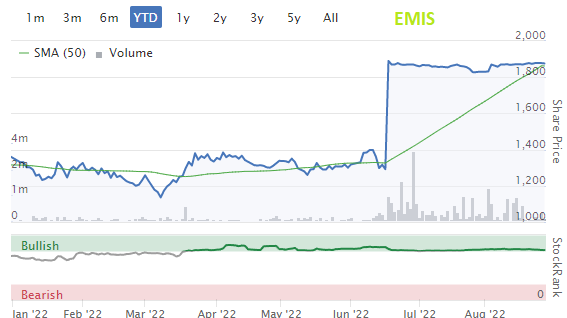
EMIS sells software that’s used by GP surgeries and elsewhere in the NHS. Jack gave a good overview of the business back in May.
With the EMIS deal expected to complete later this year, I’ve been looking for similar stocks I might choose to replace this healthcare software group in my portfolio. I reckon that fellow AIM software firm Craneware (LON:CRW) could be an interesting choice.
Craneware (LON:CRW)
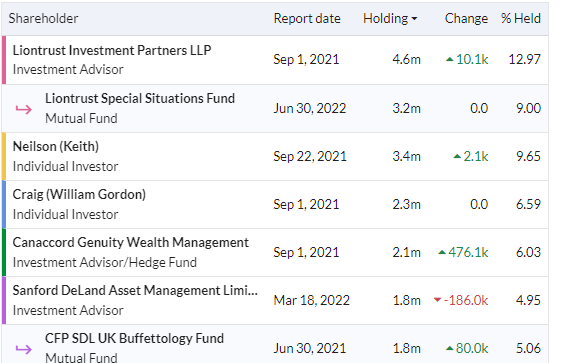
Craneware was founded by Gordon Craig and Keith Nielson in 1999. Neilson remains CEO and both men still have material shareholdings:
The company’s original product was the Chargemaster system. This helps US hospitals to accurately itemise and bill all of the chargeable services and products used by patients during their stay.
Craneware’s product range has since expanded significantly, but the company’s focus on helping US hospitals to maximise revenue and price accurately hasn’t changed.
The company expanded further last year when it acquired US firm Sentry Data Systems for $400m. Sentry appears to offer similar services for pharmacies to those that Craneware provides in hospitals.
I think it’s interesting to note that Craneware increasingly positions itself as a data company rather than a software firm. One of the selling points for the deal, according to the release, was the “commercialisation opportunity” for Craneware’s Trisus product suite that would come from access to Sentry’s 147m unique patient records.
In the past, I’ve been attracted to Craneware’s high margins and recurring revenues, but discouraged by the stock’s strong valuation. That’s less of a problem now.
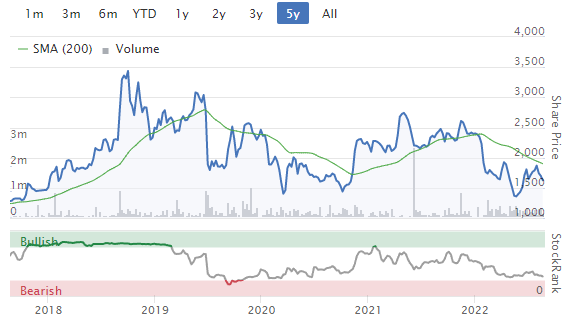
The group’s earnings stalled in 2018, which seems to have triggered a comprehensive de-rating of the stock:
However, broker forecasts suggest that Craneware's earnings are now expected to hit new highs, helped by the contribution from Sentry:
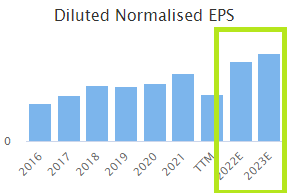
Craneware’s P/E has now fallen from a 2018 peak of nearly 50x earnings to ‘just’ 20x rolling forecast earnings. Could this be the right time for new investors to consider taking a position in this former high flyer?

Stockopedia’s algorithms remain cautious:

The shares have performed badly on a one-year view. But a high quality score and rising earnings seem to suggest a potential opportunity, in my view. Let’s take a closer look.
Value: cheaper than it looks?
Craneware shares don’t seem to offer much in the way of traditional value.
According to Stockopedia data, the stock trades on a trailing P/E of 37, with a dividend yield of just 2%. Other valuation metrics aren’t very favourable, either:

However, I think the acquisition of Sentry means that historic stats are of limited use. Sentry’s 2020 revenue and EBITDA were $92m and $23m respectively. The equivalent figures for Craneware were $71m and $25m, so this deal has effectively doubled the size of the business.

I think we need to look forward for a more realistic idea of valuation. Craneware’s 2021/22 financial year included an 11-month contribution from Sentry. Although the accounts haven’t been published yet, the company has issued a full-year trading update:
- Revenue +119% to $165.5m
- Adjusted EBITDA +85% to >$50m
- Net debt $63.1m (1.25x EBITDA)
The results are said to be in line with management expectations, so my guess is that we should be able to rely on broker forecasts for adjusted earnings of 85 cents per share.
Assuming Sentry’s performance was unchanged from 2020, then my sums suggest Craneware may have delivered organic revenue and EBITDA growth of around 7% last year.
These results price the stock on 22x FY22 forecast earnings, with a prospective dividend yield of 2.2%. That might be affordable for me, assuming I can unpick the apparent collapse in Craneware’s profitability.
Quality: still there?
Craneware’s QualityRank of 73 appears reassuring. However, some of the figures on the company’s StockReport suggest to me that this quality score could be at imminent risk of a downgrade.
First of all, profitability seems to have fallen off a cliff since the Sentry acquisition closed in July 2021.

Craneware’s fundamental health score is also very low:

The key question is whether these metrics will start to improve again when the first full-year set of accounts including Sentry is available. On balance, I think they will, at least to some extent.
Profitability: Historically, Craneware has converted around 75% of EBITDA to operating profit. That suggests operating profit of at least $37m for FY22, implying an operating margin of nearly 23% – close to historic levels.
The other profitability metric I’m interested in is return on capital employed (ROCE). The picture is complicated here by the Sentry acquisition.
According to Craneware’s half-year results (31 Dec 21), the acquisition of Sentry required the creation of $232m of goodwill and a net addition of $205m of intangible assets such as customer relations and software.
By my estimate, capital employed in the business has risen from $72.5 to $489m. Based on my estimate of an FY22 operating profit of $37m, this suggests ROCE of 7.5%.
Investors have differing views on how or if ROCE should be adjusted to neutralise the impact of acquisitions. There’s not space to explore this subject here, but one metric that can be useful for comparing acquisitive and non-acquisitive companies is the Greenblatt ROC. This is available in the screener and excludes all goodwill and intangibles.
F-Score: Craneware’s F-Score of 3/9 looks dire, but I think results have been distorted by the share placing and (modest) amount of debt used to fund the Sentry acquisition.
I think Craneware remains in good fundamental health and would expect to see this score improve as the acquisition falls out of the TTM numbers.
Conclusion
I can see a lot to like with Craneware. My main concern is that the Sentry acquisition is being used to mask a lack of underlying organic growth.
Combining these two businesses seems to make sense, but it’s not yet clear to me whether it will lead to an acceleration in organic growth for either division.

One possibility is that performance will improve as the impact of the pandemic on hospitals recedes. However, if organic growth doesn’t improve, I think there’s a risk that Craneware shares could continue to re-rate onto a mid-teens multiple that would provide a more attractive dividend yield.
On balance, I’m not quite convinced that Craneware shares offer enough value to tempt me to buy. But I think they're getting close.
As always, I’d love to hear your thoughts – please let me know what you think in the comments below.
Disclosure: At the time of publication, Roland owned shares in EMIS.
Disclaimer
This is not financial advice. Our content is intended to be used and must be used for information and education purposes only. Please read our disclaimer and terms and conditions to understand our obligations.

1 comment
Craneware is a good company. But I wouldn't buy it until the share price has finished falling.