Isaac's Thread - High Yielding Shares & other stuff

Bull markets are born on pessimism, grow on skepticism, mature on optimism and die on euphoria. The time of maximum pessimism is the best time to buy and the time of maximum optimisim is the best time to sell.
Sir John Templeton
Aviva (LON:AV.)
-Price 326.9
-Forecast Yield 7.71%
- Forward Cover 3.02
-Forward PE 4.3
BP (LON:BP.)
-Price 530.2
-Forecast Yield 7.04%
- Forward Cover 1.82
-Forward PE 7.6
United Utilities (LON:UU.)
-Price 521.5
-Forecast Yield 6.58%
- Forward Cover 1.7
-Forward PE 8.97
Scottish & Southern Energy (LON:SSE)
-Price 1082
-Forecast Yield 6.5%
- Forward Cover 1.49
-Forward PE 10.3
Severn Trent (LON:SVT)
-Price 1128
-Forecast Yield 6.29%
- Forward Cover 1.42
-Forward PE 11.21
Royal Dutch Shell (LON:RDSA)
-Price 1779.5
-Forecast Yield 6.25%
- Forward Cover 1.81
-Forward PE 8.86
National Grid (LON:NG.)
-Price 618
-Forecast Yield 6.23%
- Forward Cover 1.55
-Forward PE 10.38
Vodafone Group (LON:VOD)
Price 134.5
-Forecast Yield 6.01%
- Forward Cover 1.91
-Forward PE 8.73
British American Tobacco (LON:BATS)
Price 2033
-Forecast Yield 5.58%
- Forward Cover 1.54
-Forward PE 11.66
Glaxosmithkline (LON:GSK)
Price 1167
-Forecast Yield 5.53%
- Forward Cover 1.86
-Forward PE 9.69
Astrazeneca (LON:AZN)
Price 2879.5
-Forecast Yield 5.37%
- Forward Cover 2.58
-Forward PE 7.22
----------------------------------------------------------------------------------
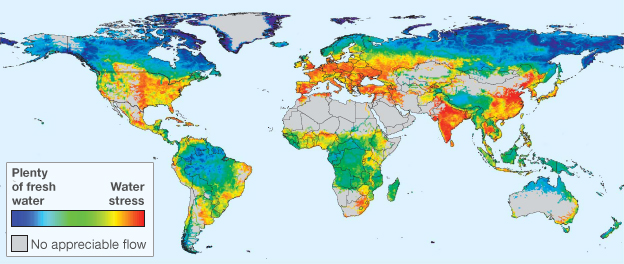
http://www.bbc.co.uk/news/science-environment-11435522
Investment Greats: Ben Graham
Philosophy
Graham's approach is based on the principle that, while markets are not good at pricing investments, over the long term the true value of businesses will be revealed. "In the short run, the market is a voting machine but in the long run, it is a weighing machine".
'Mr Market', as he described the emotional and irrational marketplace, sets share prices that you may not agree with, based on your fundamental analysis of a share's value. When Mr Market's price is sufficiently below your assessment of the share's value, you have the opportunity to buy with what he referred to as a 'margin of safety'.
Allowing yourself this margin of safety is in stark contrast to the 'greater fool theory' (note the lowercase 'f'), whereby people buy shares regardless of valuation in the hope of finding someone to buy them later at an even higher price. It's all about risk and reward.
Risk can also be mitigated to an extent by buying a portfolio of shares, so that even if some companies go bust, the overall return may still beat the market.
Selection criteria
In the mid 1970s, Graham and his colleague, James B. Rea, refined his ideas into ten criteria for selecting a portfolio:
1) earnings yield at least twice the AAA bond yield;
2) price/earnings ratio below 40% of the highest P/E ratio the stock had over the previous five years;
3) dividend yield of at least two-thirds the AAA bond yield;
4) share price below two-thirds of tangible book value per share;
5) share price below two-thirds of net current asset value per share;
6) total debt less than tangible book value;
7) current ratio greater than two;
8) total debt less than twice net current asset value;
9) earnings growth over the previous ten years of at least 7% per annum; and
10) a maximum of two annual earnings falls of 5% or more over the previous ten years.
If you want to trawl for shares meeting these criteria, ADVFN has filters that facilitate this; you can see the results of a recent search I did in this article. Finding shares that tick all these boxes is quite difficult, but tests 1), 3), 5), and 6) were deemed to be the most important.
The following were considered sell signals:
1) share price up more than 50% since buying;
2) share held for more than two years;
3) company stopped paying dividends; or
4) profits fell enough to make it overpriced by 50% or more on the earnings yield criterion.
http://www.fool.co.uk/news/investing/investing-strategy/2009/04/17/investment-greats-ben-graham.aspx
Books to Read
Investment Strategy:
Security Analysis - Benjamin Graham (HEAVY READING This is the old testament from the 'Dean of Wallstreet')
The Intelligent Investor - Benjamin Graham (HEAVY READING The New Testament)
Value Investing Made Easy - Janet Lowe (Easy read to see if you agree with the strategy)
The Rediscovered Benjamin Graham - Janet Lowe (Easy read with some late interviews that were interesting. I like this book.)
The Warren Buffett Way - Robert G. Hagstrom (Easy read and interesting examples of some of WB's great investments)
Buffettology - Mary Buffett and David Clark (An interesting slant on things. Easy Read)
The Essays of Warren Buffett - Warren E. Buffett (From the annual reports of his company Berkshire Hatherway. Fascinating).
Common Stocks and Uncommon Profits - Phillip A. Fisher (Regarded as an investment classic. Fisher was one of the greatest growth stock investors. Buffett says he's 85 % Graham and 15 % Fisher, which is a real compliment).
One Up On Wall Street - Peter Lynch (Peter has a gift for making it all sound simple. I think this book extols the benefits of understanding brands).
Management:
The Real Warren Buffett - James O'Loughlin (Buffett is so much more than an investor. What he has created in the management structure and culture of Berkshire Hathaway is truly unique).
Fraud:
The Smartest Guys In The Room - Bethany McLean and Peter Elkind (How it can all go wrong. The ENRON scandle. (A riveting read. You couldn't make this up).
Accounts: Interpreting Company Reports and Accounts - Geoffrey Holmes and Alan Sugden
History:
The Great Crash 1929 - John Kenneth Galbraith (Easy read. I think it's important to understand bubbles, crashes and investment history statistics. It may stop you being panicked out of a sound investment one day or help you avoid investing during the later stages of a bubble cycle).
The BZW Equity-Gilt Study (Facts and figures going back to 1918 on Equities, Gilts and the Cost of Living Index. Great for looking at corelations).
The Death of Inflation - Roger Bootle (Bootle saw the change coming 10 years ago, while inflation was still raging. He's a genius economist imo).
A Very English Deceit - Malcolm Balen (The South Sea Bubble and an excellent account of how London's financial power house started in the early 1700's. Insurance companies and share traders in coffee shops, no less).
20 years of dividends and still going strong
Here's its pick of 20 UK companies that have at least held their annual dividends since 1990, together with their forecast payouts for financial years 2010, 2011 and 2012:
| Name | Sector | Price (p) | Dividend 2010 | Dividend 2011 | Dividend 2012 |
|---|---|---|---|---|---|
| Vodafone Group | Mobile Telecoms | 180 | 8.3 | 8.9 | 9.5 |
| Royal Dutch Shell | Oil & Gas Producers | 2,145 | 107.2 | 111.2 | 118.0 |
| Tesco | Food Retailers | 403 | 13.1 | 14.9 | 16.0 |
| Schroders | General Financials | 1,851 | 34.0 | 37.0 | 40.0 |
| Serco Group | Support Services | 553 | 7.2 | 8.0 | 8.8 |
| Meggitt | Aerospace & Def. | 349 | 8.6 | 9.2 | 10.0 |
| Cobham | Aerospace & Def. | 209 | 6.0 | 6.6 | 7.3 |
| Derwent London | REITs | 1,552 | 29.4 | 32.1 | 35.0 |
| PZ Cussons | Personal Goods | 360 | 5.9 | 6.4 | 6.9 |
| Spirax Sarco | Engineering | 1,843 | 41.2 | 45.3 | 49.8 |
| Halma | Electronics | 340 | 8.5 | 9.1 | 9.8 |
| Close Brothers Group | General Financials | 858 | 39.0 | 39.0 | 39.0 |
| Brown N Group | General Retailers | 280 | 10.8 | 12.3 | 13.5 |
| Rathbone Brothers | General Financials | 1,150 | 42.0 | 42.0 | 42.0 |
| Greggs | Food Retailers | 480 | 17.5 | 18.6 | 19.9 |
| Daejan Holdings | Real Estate | 2,781 | 74.0 | 74.0 | 74.0 |
| AG Barr | Beverages | 1,150 | 23.1 | 24.5 | 25.7 |
| Cranswick | Food Producers | 850 | 25.0 | 27.5 | 30.2 |
| Oxford Instruments | Electronics | 617 | 8.4 | 8.8 | 9.3 |
Disclaimer
This is not financial advice. Our content is intended to be used and must be used for information and education purposes only. Please read our disclaimer and terms and conditions to understand our obligations.
334 comments
Isaac,
It takes a few minutes to read TJH's thread on TMF. It took 25 years to produce the data.
One needs to take one's natural temperament into account, before considering a strategy that one is going to adopt, AND STICK WITH.
You are right when you say: The problem with most investors is they lack patience to sit tight with an Investment. Experience, of course, is the best teacher.
Theorising is always a financially safe proposition (ignoring the opportunity cost). At some time, it's best to stop flitting (intellectually or in practice) between strategies.
While I agree with ee about where we are with the level of company's dividends, he refers to the time having passed for the strategy as a decent trade. TJH and others might be inclined to say that today is always the right time to start.
We are all to be found somewhere along the risk spectrum, and identifying where that is, is most beneficial.
Buffy
ee,
Have you looked at TJH 25 year HYP performance? The capital value is up 1400% in that period and the income is up 400%.
http://boards.fool.co.uk/year-end-summary-12525484.aspx?sort=whole#12525484
Have you read The Dividend Investor by Rodney Hobson?
In his book he talks about EPS, Yield, Dividend Cover, gearing, Interest cover & cash flow.
For interest cover Rodney says the following :
Interest on loans is paid before dividends, therefore investors should work out how much cash is left over before pay dividends so we need to work out the interest cover, i.e. how well profits cover interest payments.
This can be worked out by EBIT/ Interest paid
Obviously the cover that is acceptable to a defence stock would be different to say an engineering company where earnings are more volatile.
One can also stress test the above ratio for different interest rate environments to work out whether a company can continue to pay dividends.
What the above demonstrates is the returns on offer even during times of high interest rates. One is not suggesting investors should pile into any old HYP, clearly one needs to do more due dilligence then simply looking at the headline numbers.
I've held Soco for 8 years. The first few years were great, but the last 5 have been terrible. I knew the score in 2007, either TGD will come in and if it failed the price would drop but with a takeover the price would recover therefore it felt like a sensible bet to take at the time. I did'nt anticpate having to wait 5+ years to get a return though.....That was the fatal error that I did'nt consider properly.
The problem with most investors is they lack patience to sit tight with an Investment, they always feel they have to be doing something when most times doing nothing is the best strategy.
So I ask myself what type of strategy can I sit tight and do nothing, for me it is value investing where I see a discount to NAV and an eventual closer of this gap via the form of a takeover or alternatively seeing the same value gap but being paid a dividend to wait for th gap to close.
Clearly I favour the latter.
Nothing wrong with that as a theory. But the past is the past, and I'm not interested in looking at anyone's historic HYP performance any more than I am interested in looking at my own past LTBH performance. The only thing that matters is the future....
...and I am merely suggesting that the dividend story has recently been "done to death" in the aftermath of the financial collapse and record low interest rates - and a normalisation of market valuations will mean that classical dividend-paying stocks will reverse some of their recent outperformance as people find they can do other things with their money.
ee
Ok fair enough - I appreciate your views.
So if one wants to make money in the future then in your view what would you say is the way to go?
Buy loads of BG. and LLOY ?
I wrote a long reply earlier which got lost when the site was down - too late now to rewrite. However, the main view is that I would be focused on company specific growth prospects and recovery opportunities - but probably waiting for a better entry point (though I do have a few BG and LLOY already).
I certainly wouldn't be assuming that the numbers will "tell all" or that one should just aim for high divi payers though - I think the time for that trade has passed!
ee,
I think your arguement of avoiding the HYP stocks is interest rates will rise which in turn will make it more expensive for corporates to fund debt and in turn will reduce their dividends. I don' think the BOE will raise rates for a few years, infact I've recently read they are contemplating more QE.....
Read more: http://www.dailymail.co.uk/money/saving/article-2116059/ANALYSIS-Should-grab-fixed-variable-rate-cash-ISA-2012.html#ixzz1rXMTYZsM
I personally am waiting for the US Fed to move their rates up and I would expect the UK to follow soon after with gradual movements.And the fed has already said
Before leaping to that conclusion, perhaps one should consider the implications of this - also from the FT:
I think we can "look forward" to a reversal of all of those factors. Interest rates will turn higher within the next 1-2 years, with cash returns once again rising above inflation....corporate cost-cutting and underinvestment will drop out of the historical comparisons....and investors will start to "see who has been swimming naked when the tide goes out" as the macro environment becomes more challenging. Traditional dividend payers have had a great run - but the factors that have driven their out-performance are likely to reverse.
As an example, consider Tesco (LON:TSCO) - which I think is now in a strategic bind as its expected sources of growth are now in the process of disappearing. They've done the international diversification, they've done the IT systems gains from Clubcard etc, they've done the promotion of web-based shopping, they've done the squeezing of suppliers and the clever sale and leasebacks of property that have helped to flatter their profits.....
....so the question for Tesco (LON:TSCO) (and many other dividend stocks) is "what next?". And I'm not the only one starting to ask.
ee
Coincidentally, Lex is this morning making a similar point about valuations, due to a reversal in the recent trend of margins:
Quite so.
ee
....so the question for Tesco (LON:TSCO) (and many other dividend stocks) is "what next?". And I'm not the only one starting to ask.
ee, I know what Tesco has done wrong.
I remember an old management saying which we do not hear these days was "people are promoted to the level of their own incompetence."
I think it was a mistake to promote the man who lead Tesco's greatest recent successes, the development of the foreign ventures, and promote him to be CEO of the whole group. He has not been able to repeat his successes overseas, and they may have lost their growth driver. Tesco should have left him where he has outperformed and accepted that it has reached the achievable limit in the British market.
I do not think the current business plan, to increase staffing costs and have a price war, will work. Profit growth and dividend growth will probably end this year. I think it will be an income buy when the price falls further.
MD
Dividend Investing is the way to go IMO
Largest UK companies boost dividends 16%
Dividends from almost 200 of the UK’s largest quoted companies by market value rose by more than 16 per cent in 2011, making it the biggest percentage increase since the credit crunch, according to stockbroker research.
http://www.ft.com/cms/s/0/f691d0cc-8157-11e1-b39c-00144feab49a.html#axzz1rUVu2B4Z
Hi Isaac,
Not having a pop, but you should re-read some of the things you write/endorse :
..."... Back your own judgment with conviction. When in doubt, sell....".....
Look at your postings re Soco management that have graced the Stockopedia board.
As a mildly Aspergers type, I am inordinately confused - and then irritated out of proportion - by people and situations that don't play out as originally (and rationally) expected, based on the original inputs.....
I hope you will understand my confusion.
Let's hope for some news tomorrow that will make sense to both of us
ATB
http://www.telegraph.co.uk/finance/personalfinance/investing/9140062/UK-economy-may-not-recover-for-more-than-five-years.html
Scott - £198k win on the bank job, 4 times winner....Lucky guy. Do you want a financial advisor? :-)
Top 30 best paid managers

https://images.stockopedia.com/user-images/node-64658-090312-managers.jpgIsaac, very useful table of footie managers, thank you.
Next time I meet someone winging about business CEOs' bonuses, I will quote it.
MD.
Jseth
FTSE is down about 500 points or about 10% since that post, my timing may have been incorrect but I'd rather be a buyer here then a seller so my bullish stance remains unchanged.
If you bought stocks at 5861 FTSE then time in the market will show you make money...IMO.
http://www.stockopedia.com/content/isaacs-thread-high-yielding-shares-other-stuff-41086/?comment=276#276
That was 6 months ago this week, I thought I'd make a date in the diary...some of us have diaries that look that far ahead! ;-)
For the record, the FTSE closed at 5,362.94 on Friday evening :0)
What comes next? Mr Isaac Jekyll, or Mr Isaac Hyde?
Best,
JS123
x
Two trades
I've dumped my LLPC reluctantly. My reason for buying these in the first place was the ords had a good rally and the prefs did'nt move and I think good chance of LLPC paying out next year. These rallied 20% in Nov and with the Ords falling back significantly the last few weeks, I knew it was only a matter of time before LLPC would follow, which is what happened today.
I have no idea what is happening with the banks and I don't think the market does, the numbers look good on the face of it though so I can see myself buying back LLPC in the future and will look to buy ords of banks but I think there is still loads of time before a bull market starts in these.
I put the proceeds into EMG, I want to get a bigger dividend next week and I think these are also very good value.
I also dumped my holding in Sterling Resources again reluctantly, I think these have further to run in the months ahead when Breagh production starts but as things stand adding to my Soco holding makes more sense as I can see a 50-100% upside from here in Soco over the next year, whereas Sterling possibly 50%? And Sterling is up about 95% so far the last 6 weeks which is a good run..
It really is a breath of fresh air to listen to a sensible individual who has made £2.5 million from the lottery as to how he has invested his money :
http://www.fool.co.uk/money-talk/diary-of-a-lottery-winner-9892.aspx?source=ufwflwlnk0000001
Well the CEO's wife of ADM today bought £8.74m worth of shares!!
That is probably the single biggest share purchase I've seen from a director/director's spouse etc
The CEO now has £343m worth of shares in the company.....
Minimal for ADM as well....although I expect both to continue having loads of volatility based on what happens in Europe.
I am comfortable picking up stock though in the current environment, the numbers look good. If I included numbers + emotion I too probably would'nt want to buy,
I think it is just a case of waiting on both taking nice dividends with the expectation that the price can go anywhere in the short term.
Minimal for AV apparently, although on the downside alot of its general insurance business originates from Europe so possible downturns there. But sovereign debt exposure is pretty small from what I've read.
What sort of European sovereign debt exposure for AV and ADM ? ;)
ADM has managed to grow it's Revenues and Customers every single year since 1993 - that is an awesome stat :http://www.admiralgroup.co.uk/about/financial_growth.php
Just bought some ADM and AV.
I don't think the ADM statement is that bad, profits to be at lower end of expectations if Q4 does'nt improve. It is still a good quality company to own IMO and I've taken advantage of todays falls to lock in an 8% yield.
http://www.investegate.co.uk/Article.aspx?id=20111109070000H1948
Maynard Paton also highlighted ADM a week ago, at 30% cheaper it must be a better bet :-)
http://www.fool.co.uk/news/investing/2011/11/02/a-no-brainer-stock-for-this-euro-mess-market.aspx?source=isesitlnk0000001&mrr=0.17
I've also bought back an old favourite which I last sold at £4.49 in March this year, Aviva.....I think it is worth locking in the 8%+ yield again.
I will use my dividends and income to further top up on these and buy other stocks as the opportunity arrives.
Now is the time to be drip feeding money into the markets IMO especially dividend paying stocks where you get paid to wait.
I have no plans to sell my LLPC - I hope to hold these a long time and collect dividends...
From LLOY results today...
Wow! :-)))
I actually like RBS over LLOY as it is the cheapest on a P/b of 0.18! And a market cap of £13.6bn.
I am not looking at it from an individual bank perspective of which bank holds what amount of exposure to Europe, because if Europe blows up then I expect even those banks with little exposure to be hit perhaps just as bad!
So in effect I am treating it as a ONE bank scenario.
I think the reality is if the banks are going to get through this mess & recover then it probably makes more sense to buy the cheapest of the lot & just hold on as your likely to make the most money in that scenario and if it does'nt work you will probably lose as much. I don't see UK Gov wanting to hold RBS on it's balance sheet so nationalisation just seems out of the question.
I don't think it is impossible to see an RBS go up 3-4 bag over a 10 year period which would put it on a £40-55bn valuation. But what kind of regulation and taxes this industry will face over the next few years is not yet clear. But a 3-4 bag return seems attractive.
Re price-to-book ratios, I wouldn't rely on them at all. RBS has probably got more conspicuously-rubbish assets on its balance sheet than the others. You'll recall it used to be thought that a PBR of less than one indicated cheapness.......but that was in the days when people believed bank balance sheets!
However, it isn't expensive and I think Hester will eventually sort it out and it will get refloated at c.50-60p at some point (nb - it will need a damned good following wind for any float to get enough private investment in!). A doubling seems a decent buy and hold bet - though the timescale is very uncertain.....and it could get even cheaper first.
Erm I wouldn't be exchanging Soco for RBS or Lloyds personally ,,,,maybe HSBC/Standard Chartered at a real push...
Fangorn
I don't plan to. What I said was :
I.e. If Soco sold up I would put some of my funds into the banks so it won't be a case of swapping Soco for a bank.
Although the banks are cheap what I can't quantify is when they will be more reasonably valued, but I suspect when that is obvious the price will be a lot higher. It would be easier to take a stake in the near future if they paid a dividend as then waiting won't be such an issue.
I suspect you'll be waiting a while on the dividend front. As, unfortunately am I, given i hold both!
The sooner they both return to decent profitability the sooner they should resume paying 80% of their profits out in dividends (great way for government to get some much needed cash in!)
I own a few Lloyds, bought at just over 50p on the pullback from the highs earlier this year. The CEO's illness seems a significant blow, as Lloyds continues to be in need of culture change and clarity of purpose for the different brands. Although I regard the recent Euro-inspired falls as largely unjustified in the case of Lloyds (I bought in part because it has negligible exposure to the Eurozone risks by comparison with the others), I don't think I'm going to be rushing to add at present - even though it may well work out fine...and even though I've been thinking about adding at recent levels.
RBS is a slightly different case, because they seem to be coming out of the woods and sharpening their brand strategy and market prescence (reviving the NatWest brand?). However, they are still more exposed than I would like to further global macro issues - more shrinking to be done first?
I wouldn't swap SOCO for either of them on the terms that seem likely to be offered by the market....until there is an external development. I don't think there is a rush just yet - bank reratings look a little way off.
ee
Yes, it was quite a shock Antonio going on medial related leave.
I think the problem with Lloyds, unlike RBS and the latter's exposure to Europe, is that the former is over geared to a economic recovery in the UK. I personally don't see this happening for a while. The HBOS acquisition is going to be one hell of an ask to turn around and this will weigh on Lloyds form many years to come.
A pity as Lloyds used to be a conservative superbly well run bank. I've been a shareholder for many years(as well as a long standing account holder with the bank) and have nibbled several times on the way down..but have not fared well at all. HSBC has been a rock and it is them that I'll continue to invest in - the Eastern promise, the decent dividend, and a strong balance sheet. Admittedly they've been fairly active in the CDS side(presumably punting rather than back to back client trading) but I'm not aware how significant their exposure is in Europe.
RBS do seem to be turning things around but they are indeed still far too big.Share your sentiments here.
I'm more inclined to swap my Soco holdings for a several stakes in some Canadian and Colombian oilies myself. The former paying 6% or so, the latter which DJP has been discussing recently.
F2
Hmmmm, but weren't you completely negative on markets only a couple of weeks ago? (Then again, my memory isn't what it used to be).
Anyway, you can realise some of your soco investment any time you want. Click the mouse and you're done.
I know you'll say you want the "full" takeover price but that's the market and that's opportunity cost.
Ask yourself, "do I think the banks will provide a better and lower risk return over xxxx years". Simple as that. If you think they will, click away.
I suspect that this is the core of your Soco frustrations. You want Ed and Roger to sell up/divest SV at precisely the right time to benefit you. It aint going to happen or else by pure freakish luck. You also feel frustrated because other stocks you've liked have done better.
This is the "problem" we've all faced over the relatively recent history. All I can say is "suck it up. That's the game."
MAN Results were an Interesting read, as was the Cantos Interview....I plan to hold for a while yet,. I don't understand why the market has rated it so poorly, but it suits me just fine - I can wait for the mood to get better& even add to my posiition especially if they pay a 9-10% dividend.
I have to admit for me it is very tempting to make very LONG term Investments in the likes of Barc, LLOY and RBS.
When anyone looks at the cold blooded numbers these banks look very cheap.
Sentiment is on it's arse and is unlikely to improve soon - which is exactly the time to be buying these stocks.
These things go in cycles and one day in the future the banks will again be profitable and will make ALOT of money again.
Infact I really can envisage that we all look back at the current environment and wonder why we were'nt buying shedloads.
There are clearly uncertainties, but does anyone really believe RBS/LLOY/BARC is likely to go bust at this stage of the credit crunch? I just think if they were to go bust it probably would have happened by now.
I just can't see why the businesses won't be around in 5-10 years time. I think if one does invest here they have to take ateast a 5 year view and with buy backs and dividends I think there could be extraordinary returns to be made over a LONG period of holding.
Infact If I could realise some of my Soco Investment I could see some of my money going into the banks. I mean RBS is trading at a p/b of 0.18, BARC at p/b of 0.35 & LLOY at a p/b of 0.43 - Very Cheap.
Fortune favours the brave - And I like Risk.
Investment is a long term game and looking for very long term Investments, the banking sector would definetly be on my radar.
Interesting to read your comments on Prudhoe Isaac. Came to similar conclusions myself and decided to hold off for the time being.
Markets looking very sickly this morning. Running a tad late, so was shocked to see SOCO down 10%!
Not your normal utility but International Power (IPR) has been a good steady growth stock over the years and, with GDF having taken a stake, it's opportunities are likely to increase.
Utilities low risk? Really? With government controlled pricing etc who would bet against another windfall/profiteering tax or a harsh pricing formula or two (all very politically favourable). Then there's Nat Grid with its tens of Billions of debt for investment and its habit of raiding the market for new cash. How secure the div?
Safest of all would be SSE imo as its just been incredibly well managed over the years. Utilities? You can keep them.
Fangorn
When I Invest in stocks I don't just look at yield alone, I do asses othe risk factors and try to gauge the outlook of the underlying stock and whether it can maintain dividend payments and potentially have some growth thrown in.
With VOD I see growth as well as a decent dividend for a long time come, I think VOD is a stonking cash cow & when opportunistic times come to pick up cheap stocks one should fill their boots IMO.
As for BP Prudhoe Royalty trust, well I have taken a brief look. It yields 8.7%, not bad but when you take a deeper look as to how it works and the risks involved it kinda makes sense as to why you get an above average yield because of the extra risk.
Your essentially buying a single oil asset, prudhoe bay. This field has been producing for the last 30 years and the company estimates the field to continue producing for another 12 years, 2024. Maybe most of the Oil has been produced and the field will go in decline at some point in the next 12 years? Hard to say.
When you look at the long term share graph i.e. the last 10 years there has hardly been any growth in the share price in a period when Oil prices have gone up by 1000%. Maybe they have paid stonking dividends? As shareholders made 1,369% between 1997-2007.
If we were in 1998 then I would probably Invest, but to Invest now is not so attractive as I don't expect oil prices to rise 1000% in the next decade. Maybe they will double at most from current levels?
I'd rather own BP equity which offers growth as well as rising dividends over the next few years IMO. Dudley said cashflow is expected to grow by 50% by 2014 and has indicated higher dividends.
Owning an utility paying 6% is lower risk then owning prudhoe bay trust paying 8.7% IMO, I don't think the 2.7% extra return justifies the risk IMO.
I've taken a bit of risk by putting EMG into my HYP, but if it works then I can see significant returns in terms of yield and growth, I'd rather buy now though when sentiment's on it's arse & they have a very good balancve sheet.
It will be interesting to see what they do with the Dividend on Wednesday, markets expecting a cut so even a hold should see a decent rally.
I concur on the absence of interest rate rises for a while. And your approach, of buying decent yield stocks is similar to my own - any thoughts therefore on that BP Prudhoe Royalty trust I mentioned -decent divi there. Only missing Tobacco stocks myself, as have Pharms, Utilities amd other blue chip high yielders.
Intend to siphon off cash to blue chip divi payers over the next two quarters myself on market weakness.
Yes Lloy prefs.
Keep buying dividend paying stocks is my theme, I need to get exposure to utilities, pharmas, tobacco stocks when they get cheap.
I want to buy more yield stocks, once it is obvious bonds are in a bear market I can see a big influx of cash into dividend paying stocks and these yields being driven lower.
I just don't see higher interest rates for a long time, with hardly any pay rises and inflation the one of the few ways to get a 'pay rise' is to invest in dividend paying stocks that increase their yields annually.
I especially like the blue chip stocks that have an economic moat and pays decent dividends.
I think equities will be one of the best performing asset classes over the next 10 years. I also think it makes sense to buy certain non-commodity related stocks for a long term view.
I seriously want to buy into VOD if the price drops back. I think this is a brilliant company with excellent growth prospects & dividends.
I presume you mean Lloyds Bank Prefs?
LLPC - The ords were up over 10% yesterday but the prefs hardly budged. Today the penny dropped and the prefs had a decent rally.
Worth looking at for differentials in stocks.
I'll be doing the same Isaac. Nibbling on high yielders.
LLPC?
LLPC....the penny drops :-)
thanks Fangorn
I think yield should be a very important part of ones portfolio. Just look at how the high yielders that offered extraordinary dividends have done in recent weeks, especially when you look at Aviva, Braemar, Halfords, Sainsburys, BAE systems etc
They have bounced back swfitly.
So when we have the next big market crash I think I will continue to look at buying high yielders as they tend to bounce back strongly.
Talking of high yielders, any thoughts on BP Prudhoe Bay royalty trust.
Off lows I see, last week when it hit $96.18 - stonking yield, quarterly payment.
http://www.google.co.uk/finance?cid=657657
Bought a load of LLPC - Have been waiting a long time to get into these. I think the time is right....LLOY up over 25% since their lows, LLPC only up about 10% - Any news of payouts restarting in 2012 will see a swift bounce.
Either way I am happy to hold LLPC for a LONG time adding to my Income.
BMS also doing very well since I bought a few weeks back. Very happy with this one.
repo
I have no view without looking at it in detail hard to comment.
I've bought a few EMG today, Euro bailout feels a bit like TARP bail out a few years ago. Think EMG should recover, nice divi, p/tb of 1, cash on balance sheet, forward pe of 7.7, directors bought shed load of shares in recent months etc
Very happy to take 9% dividend to wait it out - Results next week and ex-div a few weeks later, NICE.
Should soon follow the banks and Insurance companies IMO.
An excellent article by PYAD : Your investing style evolves as you get older.
I very much enjoyed reading this article because I can relate to the following.....
However I don't think I am quite at the same stage in my investment career as PYAD just yet...
...although my dividend portfolio is still in it's infant stages of growing overtime into a much larger elephant in my portfolio.....
http://www.fool.co.uk/news/investing/2011/07/21/evolution.aspx
If there is one writer on TMF I enjoy reading consistently it has to be PYAD.
BAe is looking nice at 301(missed the sub 300p the otehr day.)
Concur about Sainsbury.
Have been nibbling at AV, Bae, RSA etc all year when market wobbles present a gift entry point.
Good article Maynard : http://www.fool.co.uk/news/investing/2011/07/19/your-ready-made-expert-income-portfolio.aspx
Interesting analysis of holding the HYP shares most commonly held by 'expert' funds & thus avoiding the fees. They seem to have missed AV., BA. & NG. also trading at attractive valuations with decent yields.
It is also interesting to look back at the first post and compare the prices of the HYP with the FTSE 100.
May 2010 the FTSE stood at about 5400. Today the FTSE stands at 5800. An approximate 7.5% gain for the past year.
However rough approximations the HYP has performed as follows :
Aviva up 20%
BP down 13%
UU. up 15%
SSE up 31%
SVT up 26%
RDSB up 26%
NG. down 4%
VOD up 15%
BATS up 35.5%
GSK up 14%
AZN up 5%
The figures above are only capital growth and excludes the avg 6% dividend of the portfolio at the time of purchase. NG. with the dividend is slightly up, BP. is down due to exceptional circumstances. But being the only stock down after adjusting for diviedends is hardly a bad result compared ot the overall market performance of the FTSE 100.
SSE and BATS were the best performers - two defensive stocks.
When the price is right I think it would be worth adding IMT to the portfolio, even SBRY is yielding 4.8% which is respectful for a supermarket on a single digit PE.
It is my view every Investor should hold FTSE 100 high yield defensives & keep adding to them when the opportunties such as now present themselves. I will continue buying High Yielders during depressed markets & reinvest the income.
I think the return above from the HYP is respectful, especially if all one needs to do is go to Digital look, filter for FTSE 350 high yielders and then just buy and re-visit the portfolio every 6 months to check the performance. Easy.
With the exception of a handful of stocks, the majority of the hyp port above are defensive stocks.
R.I.P
http://www.youtube.com/watch?v=BXHlO_f_Uqc
That will be a reminder to me not to click on this link again.
Fwiw imho the markets in general are going higher and the current blip is a buying opportunity. Too much fear and too many people prepared to raise cash and wait on the sides thinking there is about to be another big crash as QE2 ends.
Time will show how wrong they are. The consensus is wrong time and time again.
People will think I'm talking nonsense because price declines in the market's make them feel 'comfortable' to stay in cash and be bearish etc.
But over the coming months people will see that I am actually correct.
The way these events play out is suddenly markets grind higher and the consense get's left behind as they completely miss the bottom and they scrabble to buy in taking the markets even higher. It really is funny how this pattern always repeats itself and it always seem to fool people over and over again.
The commodity weakness is temporary imho, it is my view that commodities/markets will make new highs this year.
For the recod the FTSE closed at 5861 this evening.
Dyor
Similar view here, Took a position a week or ago though - nice quality company, 30 drugs in pipeline working their way through phase 3 trials I remember reading somewhere. One to tuck away from my point of view.
Took a position in GSK today for the first time in a while - not just for the dividend but the capital growth I'd expect to see from current levels. I wouldn't be surprised to see 10% in a couple of months.
Good interview with Alpesh Patel
http://www.fool.co.uk/money-talk/the-outlook-for-india-7505.aspx?source=ufwflwlnk0000001
I got out of Interserve because I initially overlooked the intangibles on the balance sheet. I'm prepared to get out of something that I no longer like.
I'm struck with how this statement
"For me Value Investing with a dividend + LOADS of patience is the best way to make money from the stock market."
of yours seemingly contrasts with your investment in Interserve for one, where your patience, or lack thereof, for a rerating was very noticeable.
I'm confused. Are you pursuing a value approach? Or a mix and match approach because you seem to lack consistency.
http://uk.finance.yahoo.com/news/Sorry-investors-no-thing-free-tele-231613121.html?x=0
For me Value Investing with a dividend + LOADS of patience is the best way to make money from the stock market.
20 years of dividends and still going strong
Here's its pick of 20 UK companies that have at least held their annual dividends since 1990, together with their forecast payouts for financial years 2010, 2011 and 2012:
(p)
2010
2011
2012
http://www.fool.co.uk/news/investing/2011/02/08/dividend-heroes-that-keep-on-delivering.aspx?source=ufwflwlnk0000001
'Jim Rogers Tells CNBC To Change Its Name To CommoditesNBC'
Where has he been hiding for the past two years....?
Jim Rogers Tells CNBC To Change Its Name To CommoditesNBC, Sees Oil At $150, Is Short Nasdaq ETFs, Expects More Governments To Collapse
http://www.zerohedge.com/article/jim-rogers-tells-cnbc-change-its-name-commoditesnbc-sees-oil-150-short-nasdaq-etfs
There is a one-in-three chance that the Bank of England will raise interest rates next week, economists warned last night.
Read more: http://www.dailymail.co.uk/money/article-1353854/Economists-warn-close-rates.html#ixzz1D2RmGHHh
Mervyn King should resign.....As Andrew Sentance said earlier this week these record low rates were put in place as an emergency measure when the banks were imploding etc. The outlook looks much healthier with the banks which appear to be in a much better state. It does'nt make sense to hold rates at 0.5%, they should gradually increase it 0.25 % once every 3-4 months to bring the rates back to more normal levels.
It really does concern me when I read such drivel, it makes me think the country is being run by Idiots? Is he honestly as stupid as he makes out in that article?
Petrol price
http://www.dailymail.co.uk/news/article-1353712/George-Osborne-refuses-responsibility-petrol-price-rises-despite-drop-oil-price.html
I think that should go on every front page of the mainstream newspaper to educate the public. When Oil prices were 50% more expensive then today the cost of petrol was no where near as high it is now...
No idea how long I intend to hold Glaxo .... But the following is interesting :
http://www.fool.co.uk/news/investing/company-comment/2011/02/03/glaxo-sweetens-a-bitter-pill.aspx?source=ufwflwlnk0000001
Decent results from GSK just out, big spike up.
Enhancing returns to shareholders:
- 2010 dividend up 7% to 65p; priority is to deliver
further growth
- Long-term share buy-back programme initiated (GBP1-2
billion expected in 2011)
http://www.advfn.com/p.php?pid=nmona&article=46287213
Yep, its an interesting statistic but perhaps not surprising that people have started to accept the threat of meltdown has passed and their cash is just not providing any income. On the income front - good comments from NG. and SSE, especially re their div increase plans.
What's more interesting is that the instos have almost record lows in terms of equity weights. If they start to move that in then things start to look really interesting, especially when you can expect to see lots of cash being returned via buybacks and M&A.
As an aside, I was at a conference today and the Blackrock Fund Manager was saying how he was very very bullish.
UK market -
Cheap ratings
Exceptionally high overseas earnings component
Very good divs
Strong balance sheets.
That was referring relative to other markets.
Makes you think.
Time to be careful?
http://uk.finance.yahoo.com/news/Private-investors-pile-shares-tele-1535465470.html?x=0
The advantages of a rate hike now, even a small one, is that it would set down a marker that this party isn't going to go on for ever and that the point is to stop people loosing their homes and make the recession less bad. The recession is over now, we're not having permenant virtually zero rates.
The other point is that the pound would start to recover, directly reducing the pound price of comodities and imports in general.
We've had over 3 decades where the fight against inflation has been put ahead of everything else,
Suddenly it seems to be entirely unimportant,
At the same time lets get some perspective on this, the last 2 years have had a 2.5 % vat hike in them, I don't know exactly how that effects the rate of inflation as not everything is vatable, but say 1 % plus of the rate of inflation is a tax rise as opposed to people/companies inflating their prices.
Did you know that a HYP is almost like having your own money printing press?
Stephen Blands video :
http://www.fsponline-recommends.co.uk/page.aspx?u=dvlvid1&tc=LDVLM101&PromotionID=2147067369&
Interesting. For me though capital preservation is important.
My preference is to buy value shares that pay you to wait, but once those shares are back to more reasonable valuations I tend to sell.
Yep & a 0.25% increase will add £31 to a £150k mortgage.
Well for starters it will reduce the speculative money out of the commodtiies market. If the interest rates in the US increased then you would get a stronger $ which in turn means weaker commodities. The main reason Gold is at around $1300+ is because people have lost confidence in fiat currency and think that they can protect their wealth by buying real assets such as Gold.
If interest rates went to 5% in the US do you think gold will be at $1300? I don't.
I also don't think Oil would be close to $100/bbl, perhaps much closer to the marginal cost of production on a stronger $. Although high prices are needed to encourage drilling & researching alternative energy. On a day like today with the protests in Egypt it causes a decent rally in Oil because a lot of Oil passes through the Suez. So could potentially tighten supply & the reason this has such an impact is because the spare capacity is tight. Fix the spare capacity & these events won't have such an impact.
I think the Inflation genie is out of the bottle & there will be more calls for wage increases. This recession has left 20% of grads unemployed, when the eventual economic recovery comes there will be a skills shortage. This will drive wage inflation.
I bought a few GSK today, looking to pick up the final dividend on 9th Feb & ride it back to £13. There is a possibility that it could go lower I know, but still wanted to hold some of these. GSK is one of those businesses the world needs, you can't do without medication & people will pay for medicaition to improve their health & the baby boomers will live longer in some cases via the use of medication which in turn helps the pharmas in general.
Markets have underperformed the last decade. I think it makes sense to build decent holdings in key stocks & be patient especially if they have been amongst the underperformers the past decade :
Just wondering Isaac:
1. Mortgage rates are already much higher on an SVR basis than some might think.
2. How would a rate hike pull commodity inflation back? Its an embedded inflation that is set by economic activity in China/India and elsewhere more than back at home. Putting up rates won't help. In fact, raising rates would lead to higher RPI and more screams from the populace as well as pressure for pay rises. If pay awards start to get out of hand then we've got problems. Thankfully we have excess capacity at the moment.
Interesting times.
http://www.telegraph.co.uk/finance/economics/8282109/MPC-mor...
Mr King warned that inflation is likely to rise by between 4pc and 5pc over the next few months, before falling back next year. He said that inflation has risen to its current level of 3.7pc because of rising import and energy prices and taxes, and that these factors have squeezed real take-home pay by around 12pc.
An interest rate hike would hurt, but can we afford the alternative?
With food and fuel driving the price rises, this is the kind of entrenched and painful inflation that should be worrying homeowners just as much as small, theoretical increases in interest rates.
The average remortgage is about £150,000. An extra 0.25% on a £150,000 loan translates into around £31 extra a month, or around £7 a week. According to the Office for National Statistics, the average household spent (a surprisingly large) £455 a week (with the largest two spends on transport, and recreation & culture) in 2009 (the latest figures available).
The cost of a weekly shop, of filling a car with petrol, insuring the home… none of these are independent from the ability to pay the mortgage or decide a house move or purchase is affordable.
We might think we can’t afford rate rises, but can we afford the alternative?http://www.citywire.co.uk/money/an-interest-rate-hike-would-hurt-but-can-we-afford-the-alternative/a466254/2
The UK government's austerity policy could push the country back into recession, the famous investor and fund manager George Soros has warned.
While the UK government "may be right by embarking on [cuts], I think they will probably have to modify it when the effects are felt," Mr Soros said.
While he had been very positive at first, the policy was "unsustainable".
http://www.bbc.co.uk/news/business-12291527
Yep, Double dip recession is coming.
A shame really that during recessions people tend to go back to eating unhealthy food..........
Talk about sweeping statements.
1. Significant rise in sales due to the coffee offering - hence why Starbucks are hitting back with their £1 filter coffee.
2. A burger or other offering isn't necessarily unhealthy. No worse than many other foods/takeaways and trading down to McD rather than say grabbing a pizza or curry (oh so healthy alternatives).
Just an observation whilst waiting for the market news.
No position in McD and no, I don't eat there but not unknown for the wife to stop off with the kids for a n occassional "treat".
I'm reminded of the times I have read of "Glorious" GREGGS and it's sp over the years but we don't have any os their shops down in the far westcountry. Then I saw one and was amazed that they make money - and I live in pasty country - with what looked like very poor fare.
I've pastry on the brain at present as I help out on a few shoots and lunch consists of a Pasty and Saffron cake.
Very Good
What's Gone Wrong With The State Pension?
http://www.fool.co.uk/money-talk/whats-gone-wrong-with-the-state-pension-7375.aspx?source=ufwflwlnk0000001
Fast food giant McDonald's conquers coffee
The nation's quest for an affordable cappuccino has forced thirsty punters back to familiar haunts such as pubs and even McDonald's.
The fast food behemoth overtook more specialised coffee makers such as Starbucks last year. But ever since the introduction of café-style coffees to the menu in September, lattes and cappuccinos have sold better than the humble filter coffee.
McDonald's UK boss Jill McDonald is even looking at the idea of expanding the range on offer, given that items such as frappés and caramel mochas have done well in the US.
Hot drinks have helped attract 80million customers more in 2010 through the UK's golden arches.
According to Jill McDonald, 90 per cent of the firm's increase in sales has been driven by more customers walking through the door, rather than any increase in the average spend per head.
Read more: http://www.dailymail.co.uk/money/article-1350212/Fast-food-giant-McDonalds-conquers-coffee.html#ixzz1C5c5dBQq
A shame really that during recessions people tend to go back to eating unhealthy food..........
MPC more concerned with inflation than GDP fall, says Bank of England Governor Mervyn King
The UK’s “uncomfortably high inflation” is of more concern to the Monetary Policy Committee (MPC) than the surprise fall in gross domestic product, Mervyn King, the Governor of the Bank of England, said on Tuesday night.
Mr King warned that inflation is likely to rise by between 4pc and 5pc over the next few months, before falling back next year. He said that inflation has risen to its current level of 3.7pc because of rising import and energy prices and taxes, and that these factors have squeezed real take-home pay by around 12pc.
In a speech in Newcastle that referenced both Ken Dodd and Leo Tolstoy, Mr King said that the shock 0.5pc fall in GDP over the fourth quarter of 2010 serves as a reminder of his comment last year that the recovery will be “choppy”.
However, he added: “Of more immediate concern to the MPC is that we are experiencing uncomfortably high inflation.”
The Governor said that there is much “unhappiness” focused on the high rate of inflation.
http://www.telegraph.co.uk/finance/economics/8282109/MPC-more-concerned-with-inflation-than-GDP-fall-says-Bank-of-England-Governor-Mervyn-King.html
“In 2011, real wages are likely to be no higher than they were in 2005,” he said. “One has to go back to the 1920s to find a time when real wages fell over a period of six years.
http://uk.finance.yahoo.com/news/Bank-England-chief-Mervyn-tele-204338037.html?x=0
I think that sums it up in a nutshell......everyone I've spoken to tells me they are worse off then they were 6 months ago.
Mr King expressed sympathy for savers and highlighted the failure of lenders to pass on cuts in interest rates. “I sympathise completely with savers and those who behaved prudently now find themselves among the biggest losers from this crisis,” he said.
Increase the interest rates, it will allow the prudent to spend more of the 'extra' disposable income which will in turn help the economy.
My view is lenders that were reckless should pay the price for borrowers defaulting.
Anyway what is happening is a slow motion crash of the housing market ....
Osborne is wrong blaming the contraction of the economy due to the weather IMO. ..... I believe we will see a douuble dip.....There was just too much doom and gloom in Q4 & people preparing for job losses & spending cuts.
I think the UK Gov should sell of the lloy & rbs stakes, the share prices of those banks have a better chance of recovering without the government stake and in turn the returns made by shareholders from the increased value could help the economy. As well as the government being able to reduce some of the deficit with the proceeds.
I spoke to a taxi driver a few weeks ago, he described 2011 as being a year of just about surviving.
I think Jim is wrong here. $150 per bbl yes, $200 is stretching it.
Haven't there been several large new discoveries in last 40 years as well? GOM where BP had it's spill, and hasn't BG had some very large finds around Brazil? And the Falklands which are apparently huge.
As to the future - there's the prospects off the Bahamas, and, more importantly, BP's foray into the Artic with Rosneft, a potentially huge discovery right there if what we are led to believe is true.
At $200 per bbl the world economy would shudder to a halt. Just isn't going to happen imv.
Hi Fangorn,
Whilst I think trying to make predictions about exactly where the oil price will be is a mugs game (and/or, in JR's case, something that gets some media headlines), there is another side to this coin besides oil supply/demand. And that is $ inflation. Potentially, the US$ has a long way to fall relative to "real assets", so I don't rule anything out (or in).
Concerning supply/demand, BP's recent outlook is most interesting. Even factoring in Brazil etc, they see little overall oil production growth over the next 20 years, with most of that growth coming from Iraq & Saudi. If one takes out Biofuels and NGLs from slide 26, oil production is seen growing from ~86mmbbls/d today to ~91 mmbbls/d in 2030. Of course, that assumes that the "Twilight in the Desert" scenario isn't true, or matters will be much, much worse!
Must admit, the significance of Iraqi production growth (~3x that of Brazil) does lend fuel to the flames for the conspiracists view of the real motivation for the invasion of that country and toppling of Saddam...
Cheers,
Mark
Oil price to break $200, says Jim Rogers
On oil, Rogers said: 'The surprise is going to be how high the price of oil stays and how high it goes, because we have had no major elephant oil discoveries in over 40 years. Known reserves of oil are declining. It is not good news. Unless somebody discovers a lot of oil very quickly, prices are going to go much higher over the next decade.
'The price of oil is going to make new highs. It will go over $150 a barrel. It will probably go over $200 a barrel.'
Read more: http://www.thisismoney.co.uk/markets/article.html?in_article_id=521598&in_page_id=3#ixzz1Bh2g9m9y
http://www.bbc.co.uk/news/business-12235196
".......many policeman are underpaid in relative terms imv."
I have my doubts about that, and it's not just the pay to consider. One acquaintance has recently retired from the police aged 49 on full pension after (I think) 21 years. At the same time a friends son, a fit, healthy and intelligent graduate, has been trying to get into the Met for a couple of years without success. And did I hear that about 10% of the police force is on sick leave at any one time. Is this some kind of occupational disease, maybe called ineffective management?
As far as politicians are concerned, I think I heard it stated that their pension benefit would cost 30%+ of salary to fund.
One needs to look behind the headline pay figures when evaluating remuneration. The sneaky bits matter a lot imo.
fuiseog
I don't think the problem is MP's getting 65k personally, although it certainly contributes. What is the problem is overpaid public sector workers full stop. A tube driver gets 40k per year +pension + benefits for a 35 hour week(and they always seem to be on strike!) Clearly unsustainable. Many in local government get overpaid. At least 200+ BBC executives are on 6 figure salaries. The list is endless. All the time our soldiers and many policeman are underpaid in relative terms imv.
The public sector wage bill needs to be slashed. A subsequent benefit of this would be a reduction in pension liabilities.
People drone on endlessly about overpaid bankers - the facts are most bankers are on 50-70k average(many are back office earning alot less, it is after all,only the stars on the 6 figure salaries) YET they also work 60+ hours a week minimum. And the stars getting 6 figures, particularly those at Goldman Sachs work 70-80 hours per week(yes that includes burning the oil at weekends)
Read more: http://www.dailymail.co.uk/news/article-1348516/Unemployment-Almost-1-5-young-Britons-jobless.html#ixzz1BcfT26un
What a disaster........I actually feel very sorry for these kids. 2011 will be the year where people all over the country feel the pinch.
I don't think the Coalition government will survivve the 5 years. The Lib dems will start to fight back & a general election is likely to be called in the next year or two IMO.
I can't believe politiains on average get paid £65k a year. Is there not about 300 or so MPs in the UK ?
300 * 65,738 = 19.721m
The Prime Minister has announced that he will be taking a salary of £142,500.
Cabinet ministers receive a salary of £134,565 (including MP's salary of £65,738).
http://www.parliament.uk/about/faqs/house-of-commons-faqs/members-faq-page2/
What a waste of money. Why can't the UK just have 100 MPs ?
I think what the British public need is transparency in terms of how much money gets spent in what areas and the public should get to vote as to what they think is necessary & what should be cut.
I am now also convinced there are bigger falls to come in the housing market, the economy feels like it is going to get worse and just speaking to normal average and in some cases reasonably well off people they are all going to feel the pinch and confidence will weaken causing prices to drop.
Hi Isaac,
Just a little tip, if I may be so bold... it's always a good idea to check your facts rather than guessing (I often learn a lot through fact-checking):
http://en.wikipedia.org/wiki/Number_of_Westminster_MPs
;0)
Don't forget that besides their role in parliament, MPs are also supposed to deal with matters of concern to their constituents (e.g. injustices those constituents suffer at the hands of officialdom). Some fulfil that role better than others, but if there were only 100 MPs, i.e. 1 per 600,000 population, how much time do you think they'd be able to devote to such matters? IMO the number of MPs we're paying for is a bit of a red herring and the sums involved are tiny in the greater scheme of things.
Cheers,
Mark
Mark
I think the BOE should increase rates gradually. Perhaps 0.25 % every 3-4 months. No point doing what the Fed did a few years ago which was to raise rates by 0.25% each month over a couple of years.
Much better to increase in small amounts over several months. And I think this is exactly what the BOE is going to do. And that is why there has been so much coverage in the media warning to people to prepare for higher rates so they can save and not feel so squeezed when it happens.
0.5% rates are unsustainable in the long term, we don't want another Japan.
frankly the idea that raising interest rates to 1 or 2 % will make much difference is nonsense,
initially I would move rates to 1%, to signal that this party isn't going to last forever, those luck people
paying baserate +.5% will be hit a little, and savers will benefit a little, the pound will go up
a little, as the markets realise that the boe is set on reducing inflation.
any new borrowers will benefit from a baserate + smaller margin, because rates are being set not by base rate but by cost of borrowing, new borrowers are effectively subsidising previous borrowers,
time to start at least contemplating the first moves back to pre boom normality,
K
Spot on Bugs.
Agree with everything you say apart from the last bit.
Interest rates have to rise.
The QE of recent isn't where the "money printing" started - it began with the housing price bubble and subsequent behaviour of the government, banks and populace.
The idea that a house was suddenly worth 10%-20% more each year gained wide acceptance and was the shaky foundation of economic policy - boom and bust was over and the UK was outperforming all other European economies.
The pound is no longer backed by reserves of gold and oil production (free wealth) in the north sea is declining. It's inevitable that the pound must be seen as increasingly unattractive; we have to pay for all those years of false accounting and the only way is devaluation, even if no-one dare utter that word.
The weakness of the pound in your pocket is being felt by many, and now the truth is dawning people's and people can see how badly they have been hoodwinked - but so shocked and bewildered they can barely raise a feeble grumble about petrol prices at £1.30 per litre while the government continues to tax more and more.
The BoE knows that raising interested rates may precipitate the next phase of the disaster, not least of which will probably involve the long-postponed correction of the housing market.
The "average person" in the street will be feeling a lot less well-off and likely experience a real decline in standard of living, whatever happens to the interest rate.
But raising is likely to be the worst of two unattractive choices AIMO.
B.
Have to agree bugs to a greater extent. The surging demand from elsewhere will be the main driver of commodities, some discretionary items are static or falling though (tv's etc) so its core inflation rising really. So much spare job capacity so little scope for wage push inflation (which is a pain that needs high interest rates to kill). Loan and mortgage rates already quite high - look at the margins on them for the banks.
Whilst a rise in UK interest rates could be pretty disastrous for the UK economy in its present state, it could have a short term suppressing effect on inflation by strengthening the GB£. However, longer term, higher interest rates will probably worsen the deficit (by a) slowing economic activity; b) reducing the tax take), which ultimately would lead to the GB£ falling again.
Mervyn is caught between a rock and a hard place. He's a one club golfer, with interest rates being the only tool at his disposal to meet his sole mandate of targetting 2% inflation. How much longer can the MPC do nothing, whilst inflation stays way above target and heads higher? Will the government be brave/shrewd enough to change the BoE mandate, so that inflation can do the job (unpleasant as it may be) of shrinking the nation's indebtedness - i.e. a backdoor default? I suspect that that idea will be morally repugnant to many readers (and government supporters) but seems to me to be the least worst way forward,
Looking at this another way, rising commodity prices reflect a (deserved) fall in the real value of many "Western" currencies - given the extensive "money printing" that has and is taking place. A rise in sterling interest rates might stave off that fall temporarily but would likely lead to a situation similar to that which Ireland currently finds itself in.
That's why my portolfio (and, I suspect those of many other Stockopedia readers) is heavily focussed on companies with "real assets" (mining/oil leases, land) and/or with a high proportion of sales to countries with better growth prospects and healthier economies.
Just another thought that occurs to me, is that the govt changing the BoE mandate would probably trigger a sharp fall in sterling, which would do our exporters no harm at all (but, obviously raise further the price of imported goods and raw materials). Wage-push inflation is a serious risk and once the inflation genie is out of the bottle it is devilishly difficult to control - so there is a careful balancing act to be done.
Cheers,
Mark
Bank of England under pressure to raise interest rates after Inflation rockets
Markets responded to the shock figures by pricing in three rate rises before the end of the year, indicating an increase from the current record low of 0.5pc to 1.25pc. As recently as last month, markets were anticipating just one rise to 0.75pc by the end of 2011.
Simon Ward of Henderson warned the overshoot could get dramatically worse in the coming months. "The headline rate may reach 4.3pc in February, remaining at or above 4pc until late 2011," he said.
http://uk.finance.yahoo.com/news/Bank-England-pressure-raise-tele-4144384286.html?x=0
If we have a stronger £ it will be cheaper to import goods & therefore force down inflation. Commodities are priced in $, so why not have a stronger £ that buys more $ & in effect more commodities?
And those that save money will earn a decent interest & therefore have more cash to get by.
I went to one of those Free property seminars last week talking about how to buy cheap property at Auction & talking about the approach one should take etc.
I still could'nt believe it that they were using examples of individuals who have about 10 credit cards and have managed to borrow about £170K of "free money" to buy a house & do it up & rent it out. So that every month the individual was taking home £100 or so.
The point the guy made was individuals put no money down but were making decent cash flow every month.
I seriously can't believe this type of rubbish is still being talked about....................
Oh and the speaker spent quite a bit of time rubbishing the bankers.............And no I did'nt sign up on their £800 3 day course....
It was surprising to see about 100 or so people attend the event though.....
Lots and lots of media attention in the UK news and press about soaring Inflation.
It certainly won't be comforting for many London commuters with a front page headline on todays evening standard saying "Soaring Interest Rates on the Way"
About time I think.................
I watched Ray Boulger on the BBC news earlier this evening talking about if the BOE were to raise rates it won't reduce inflation as it is driven by commodity prices which is out of our control.
I sat there thinking what a load of nonsense. If the FED/BOE/ECB raised rates then commodity prices would drop. Anyone with a bit of common sense will realise that when you pump billions into an economy then it will cause prices to go up.
It really annoys me that you have these individuals who are overpaid for talking rubbish.
Anyway I've been keeping an eye on the property market, nice to see some houses finally dropping in asking price.
It really escapes me as to why people are REACTIVE to the market. Individuals that could have got x amount for their house 6 months ago have only decided to reduce their house price to x amount. the problem is people won't buy it for x amount now and they will only have to reduce it again!
The housing markets are only going to deteriorate further, it does'nt matter that the government wants to save a bunch of reckless individuals. The markets will take its course eventually and no one can stop it.
Another thing that I find annoying is most people seem to think house prices are expensive but if they can they would still buy.....
I think interest rates need to go significantly higher, banks should continue to rein in lending. Let the housing market drop, lower house prices are good longer term.
If inflation continues to accelerate it will hurt everyone long term, we would all be worse off. No point in saving the housing market & risking an inflationary depression.
I watched Ray Boulger on the BBC news earlier this evening talking about if the BOE were to raise rates it won't reduce inflation as it is driven by commodity prices which is out of our control.
It really annoys me that you have these individuals who are overpaid for talking rubbish.
So you say.
You conveniently forget, there's a huge new demand for raw materials, much of which is coming from China. For decades the "West" grew fat and rich on cheap commodities. Now there's some serious competition.
Fiddle with the interest rate all you like - it still won't change that underlying problem. Seems like a perfectly valid view.
Peter Schiff : http://www.youtube.com/watch?v=Dkjj84RqNIk
Interest rates could go higher then 14-15% hit in 1980, he says interest rates could be 5-6% at the end of 2011
Gerald Celente's Top Predictions for 2011 : http://www.youtube.com/watch?v=AGFj7EeXon0&feature=related
Governments will screw the people by extracting every penny they can - In Europe they call this Austerity. 2011 will be a wake up call for the man on the street where he/she understands the economic mess we are in.
Look for $2000/oz in gold in the not to distant future.
Marc Faber
Oil is going much much higher : http://www.youtube.com/watch?v=92JwzT4qyCo
Jim Rogers - Buy Agriculture : http://www.youtube.com/watch?v=IGlGz2IKnBM
Isaac... I'm predicting broadly sideways movement in the markets for the next 2 or 3 years. Even that might be optimistic. The rise of the last two years is largely thanks to inflation of the money supply IMO and that can't continue. I think the austerity measures being put in place may prove to be insufficient ; many firms, especially financials, have more deleveraging to undergo ; even without deleveraging the debt burden is causing whole states to sway all across the world ; social unrest can't help. I acknowledge the potential flow of money from bonds into equities, but I also predict more bailouts of companies and states this year, and the message so far has been that debtholders get bailed out and equity holders are the chumps... I expect some more sharp dips this year like we saw last summer.
It doesn't say to me not to invest in equities though, but to distinguish more clearly than ever between short- and long-term holds, and to look for quality on sale for my long-termers. What it says to me is... if you're going to buy stocks, get yourself a good chunk that will pay you cash for enduring this grinding readjustment to reality. That's why I'm on this discussion thread and why I hold several of the same companies as you recommended at the top. I bought Aviva, BAT, BP ( so cheap! ), BT, Catlin, National Grid, Shell and Vodafone. Had I the cash I would eagerly add Glaxo and Tesco.
One thing I'm curious about from you guys is your feelings on international dividend-yielding stocks. I've bought Telefonica, AT&T and Microsoft as long-term holds and am keeping tabs on Colgate-Palmolive ( too expensive at present ), Johnson & Johnson, Wal-Mart and others. Besides Telefonica none of these yield much more than the market, but they have as solid a record as one can hope for in growing free cashflows and increasing dividends going back decades. They're the sort of compounding stocks that can keep you smiling through another recession.
I see corporate earnings looking very healthy, I see the market rising and I see governments acting to prop up economies all around the world, but the inflation solution creates an ever more precarious situation and I feel the need to bear it in mind every time I buy a stock.
About politics... I hate them all too and I'll say no more.
Fang, The current yields in the market are not very attractive.
Dow hits highest level since 2008
http://www.telegraph.co.uk/finance/markets/8256308/Dow-hits-highest-level-since-2008.html
FWIW I think markets will go higher for a few more months yet, perhaps peak mid of the year and then end slightly higher then it started towards the end of 2010.
I'm positioned to gain from market rises, If I was pushed for a peak target in 2011 I would go for 6900, which is just below a 15% uplift from current levels. Don't think markets will end the year around those levels though.....
"My strategy is pretty simple, buy something with low downside & massive upside & then just be patient.
20% downside risk with 100%+ upside is how I roll :-)"
So we are moving away from the High Yield strategy I take it then? Because most of the shares you lissted at the beginning of the thread do not have massive upside potential!
F
I think IRV is small beer compared to what SLG & CEO could do in the next 6 months.
Worth reading the sterling thread and the TMF links posted here : http://www.stockopedia.com/content/sterling-resources-51717/?comment=13#13
CEO thread here : http://www.stockopedia.com/content/coastal-energy-200-upside-in-6-months-52306/
My strategy is pretty simple, buy something with low downside & massive upside & then just be patient.
20% downside risk with 100%+ upside is how I roll :-)
http://www.investegate.co.uk/article.aspx?id=20110111070100P819F&fe=1
Here for the contract wins...
interesting to see how far their Middle Eastern exposure takes them. ME and Asia is where all the money is these days....
Interesting update from Interserve(IRV) today
http://www.investegate.co.uk/article.aspx?id=20110111070000P1949&fe=1
Contract win and trading statement.
Happy to continue to hold here, and keep pocketing that divi.....market seems enthused, up 10%!
Success? It’s down to you all the way: Lord Sugar
http://www.telegraph.co.uk/finance/yourbusiness/8240122/Success-Its-down-to-you-all-the-way-Lord-Sugar.html
The politicians are ALL the same, a bunch of lying toe rags. Whether it be Labour, Lib Dem or Conservative.
Atleast with shares, the shareholders can build up a stake and oust directors from the boards as Carmensfella's mate is trying to do here : http://boards.fool.co.uk/i-just-thought-that-with-the-new-year-having-12138296.aspx and then subsequently appoint competent folk who can do the job.
And having the right to vote every five years from a selection of 2 mainstream parties is not power to the people!! Especially when both parties are full of self serving numpties.
I think all these politicians should be sacked and Houses of Parliament should be represented by normal everyday people rather then these incompetent bunch of arses who are so far away from the real world.
Why can't we have a system where every 5 years about 80% of the politicians leave & the people that represent constituencies are ordinary British folk who live in the real world.
E.g. why can't a lawyer spend 5 years of his/her working life in parliament and then go back to their normal profession after 5 years in parliament.
Just think it would be so much different and interesting then the same old crap year after year.
The year of the middle class squeeze: Why 2011 will be toughest 12 months since 1982
The list of pain includes:
Latest figures, from the AA, show the average price of a comprehensive car insurance policy has shot up from £569 to £792 in just 12 months.
To make matters worse, the average price of petrol has hit a record of £1.24p per litre. Diesel is close to a record with the average price per litre currently at £1.28, 5p below the all-time time.
The biggest hit is likely to come when interest rates rise – pushing up the cost of a mortgage for the millions on variable rate deal.
Experts forecast that the Bank of England, which has kept rates at a historic low of 0.5 per cent, will start to raise them this year.
The CBI, the business lobby group, expects they will hit 1.25 per cent by the end of 2011 and 2.75 by the end of 2012
Read more: http://www.dailymail.co.uk/news/article-1343152/The-year-middle-class-squeeze-Why-2011-toughest-12-months-1982.html#ixzz1A1435gGE
Tips in the papers for 2011
The Times, Tempus Tips for 2011
BHP Billiton, BG, Northern Petroleum, Catlin Group, Tullett Prebon, Intermediate Capital Group, Cookson Group, Capita, F&C Asset Management and e2v technologies.
The Telegraph – 2011 tips
Petrofac, Aviva, Avocet Mining, RBS, Barratt Dev., Royal Dutch Shell, Vodafone, Mulberry, Informa, and Bowleven.
The Independent – 2011 tips
African Barrick Gold, Arm Holdings, BHP Billiton, BP, Domino Printing, F&C Asset Management, Morrisons, Rio Tinto, Smith & Nephew and Sports Direct.
Daily Express – 2011 tips
BHP Billiton, Capital Drilling, China Food, Entertainment One, Endace, Johnson Matthey, Fenner, Lloyds, Renovo Group and Unilever.
Charts of last years Best Small cap performers
Well that is the top 10. Don't really fancy posting 100 charts......One thing people will notice is most of the gains have come from 2H/Q4. Does that mean if we can work out which stocks will do well in 2H we can work out what next years multibaggers are likely to be?
What is interesting is one did'nt have to be invested for most of the 1H to make extraordinary gains.
Isaac,
earlier I posted some caution about the markets and you said I was entitled to my opinion, suggesting you disagreed.
However subsequent posts from you seem to support my opinion.
People have been predicting a housing market crash for years. And I suspect many here also thought that was more likely than the sweeping financial disaster which occurred - and in my view is still occuring.
I do not know whether or not house prices will correct next year - there seems to be many incentives not to allow the market to fall. The consequence seems at least from anecdotal view that it's risky and expensive to move unless you really have to. Prices remain high with a relatively small number of transactions.
I think many here are invested in commodities so we have been rewarded and protected from surging prices but many businesses and individuals are not. I can't help but suspect that this will feed through in due course to inflation and a reduction in people's spending power.
It will be interesting to see whether the stockmarket continues to rise - as always share prices tend to represent hope rather than reality, those seeking higher returns may be tempted in.
But is there the real economic power to return to earlier highs, I'm not at all convinced.
Investing in individual companies with low debt, cash and a growth story or outer still seems the only way forward - the FTSE and other indexes simply measure something fairly meaningless - a kind of vote for the average.
Happy New Year
B
Condor Resources Plc
Condor Resources ("Condor" "Group" or the "Company"), the AIM listed Central
American gold and silver exploration company
This stock is up about 2000% in 2010, one of the best performing.
aleoap - Won the stock challenge competition with +469% return in 2010.
http://www.stockchallenge.co.uk/
Interesting to see quite a lof of money is lost in the spread from stockpicdkers in the top 10. Clearly one has to be good at picking small caps to do well in compeitions like these.