Market Musings 080326: In the Fog of War
Report and Video: Investment Strategy Focus March 2026
Heavy Assets in Vogue
The HALO (Heavy Assets, Low Obsolescence) effect: the prevailing theme in the stock market at present is the rotation away from digital assets back towards physical assets. Investors have begun to favour companies and industries where the risk of AI disruption is low to none. Positive on Mining, Building & Construction.
Iran and the Strait of Hormuz: In the Danger Zone
With the Brent crude oil price surging to above $90 per barrel by the end of last week due to the effective closure of the Strait of Hormuz to shipping, the global economy is entering the danger zone.
It is hard to overstate the importance of this narrow body of water between Iran and the Arab states to the rest of the world. 20% of global oil supply and close to 20% of the world’s Liquefied Natural Gas supply passes through the Strait. But it is not just about raw energy supply but also about supply of other essential products linked to energy, such as urea which is the base for nitrogen fertilisers. Over 30% of the world’s urea supply passes through the Strait.
In short, the longer that the Iranian conflict continues and the longer that the Strait of Hormuz remains effectively closed to seaborne traffic, the greater the risk that oil prices exceed $100 and that the world economy goes into recession. For this worst case to materialise, the oil price would need to remain elevated (c. $100 or higher) for a number of months.
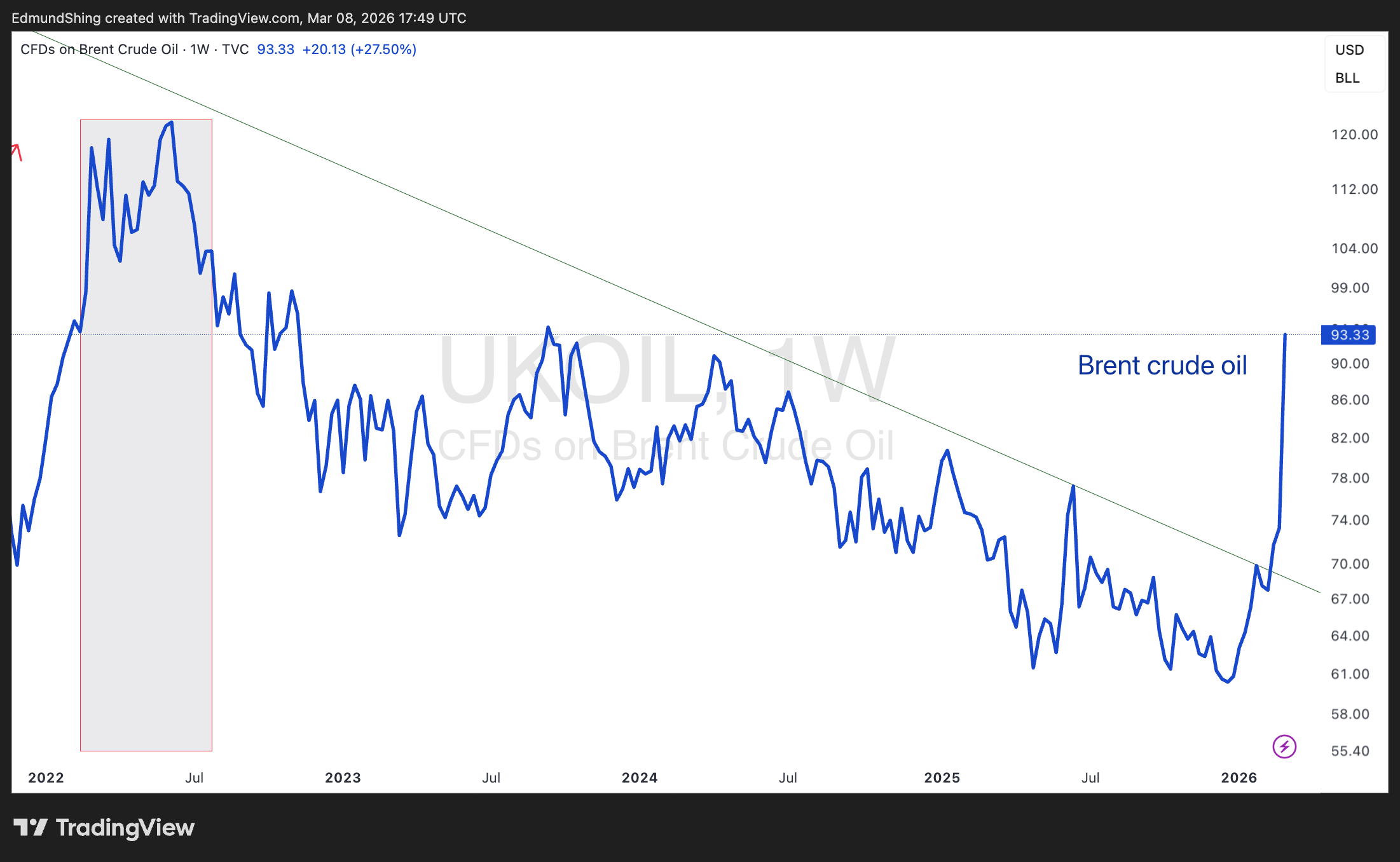
In 2022, the outbreak of war in Ukraine drove the Brent crude benchmark oil price above $100 from the beginning of March until August, triggering a huge surge in global inflation rates and triggering a multi-month bear market in stocks.
The cure for low prices is low prices, and the cure for high prices is high prices
This is an oft-repeated mantra in commodities. In the case of the oil market, it means that the higher the price goes (and stays), the more likely it becomes that the oil price will eventually decline. This is for two reasons:
High sustained prices incentivise oil-producing…