Market Musings 230526: Small can still be beautiful

Market Musings 230526: Small can still be beautiful
Podcast this week: Is now a good time to invest in bonds? (click title to listen)
The US/Israel-Iran conflict has driven up Brent crude prices to USD 91/barrel (December futures) and USD 115/barrel (spot). Diesel and jet fuel costs have surged more than 50%, triggering demand destruction in industries such as aviation. Rising oil prices have spilled into broader inflation, with US core CPI at 3.8% YoY and core PPI at 5.2%, exceeding expectations. This inflationary pressure has pushed bond yields higher, with US 10-year Treasuries rising from 4.4% to 4.6%, German Bunds from 3.0% to 3.1%, and Japanese yields from 2.5% to 2.8%, driven by persistent inflation uncertainty.
Higher yields are putting pressure on equity valuations, particularly in the US where the S&P 500 and Nasdaq 100 indices are showing signs of weakness after a strong Q1 rally. Meanwhile, corporate bond yields have surged, with European investment-grade bonds at 3.8% (up from 3.2%) and US yields at 5.5% (up from 4.9%), offering higher long-term return potential. Whether the Strait of Hormuz remains closed (risking recession and supporting bonds) or reopens (easing inflation and aiding bonds), the current environment represents a compelling entry point for fixed income, particularly European investment-grade corporates.
While Tech leads the way, Small-Caps and Industrial Metals are strong
Since the lows of mid-March following the start of the Iran conflict, global stocks have recovered impressively to hit new year highs, led by the Technology sector. AI mania is alive and well, driving strong momentum in semiconductor makers in the US, Asia and Europe.
US and Europe Technology: +25% and +16% YTD

I will be interested to see how the Tech sector reacts once the jumbo SpaceX, OpenAI and Anthropic IPOs hit the US stock market later this year. Will there be rotation out of existing tech stock holdings into these new entrants?
Small-Caps quietly outperform
Aside from the obvious tech momentum trade, there are other areas of the stock market that are outperforming with little obvious fanfare. In the US and Europe, small-cap stocks have almost silently achieved new highs this year, in spite of the continued drag on the global economy from continued geopolitical tensions around Iran, Ukraine and now also Cuba.
US small-caps ahead of the S&P 500 index this year

While mega-cap US tech stocks continue to power ahead, the S&P 500 has lagged US small-caps at +9% for the year to date, versus +15% for the S&P Small-cap 600 index. This is notable as small-caps have consistently lagged the S&P 500 since the start of this latest bull market back in October 2022. Perhaps the trend is finally shifting back in favour of small-caps? Certainly today small-caps trade at a historically high valuation discount to large-caps, at 16x forward P/E for US mid and small-caps versus 21x for the S&P 500.
European small-caps are also experiencing a mini-renaissance this year in spite of the relatively morose economic backdrop: the MSCI Europe Small-Cap index has progressed 9% this year versus +6% for the large-cap STOXX Europe 600 index. Once again, European small-caps trade at a discount to European large-caps at present, while historically they tended to trade at a higher valuation than for large-caps given their higher earnings growth rates.
European small-caps also lead large-caps in 2026
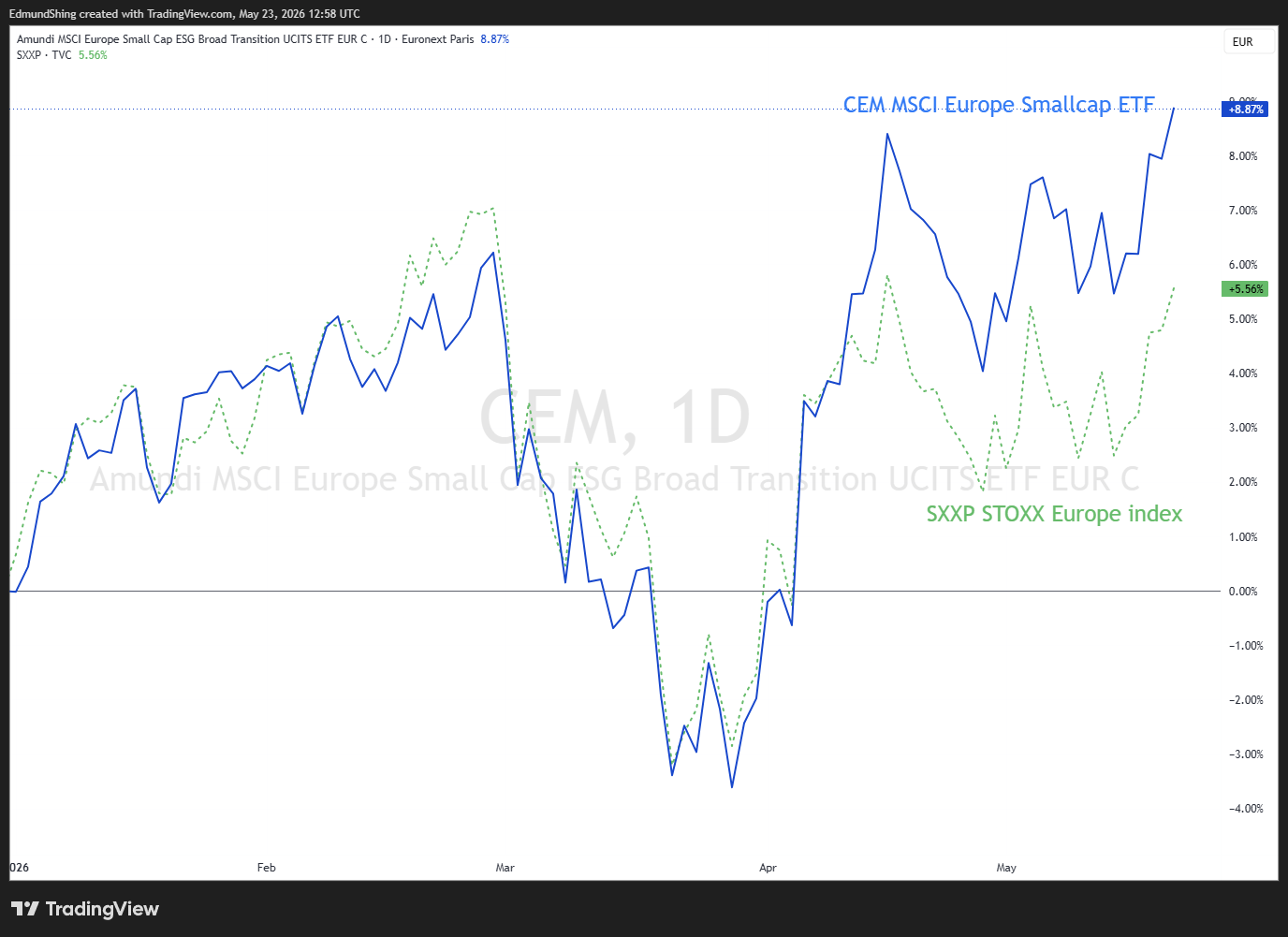
Over the last 10 years, European small-caps have comfortably beaten large-caps, delivering 118% over this span compared with 83% for large-caps.
But why should small-caps outperform now? Cheaper valuation is interesting but not a reason on its own. Rather, the industry composition of the small-cap indices is helping, as they have a relatively higher weighting of Oil & Gas stocks (7% for European small-caps versus 4% in large-caps) as well as a heavy bias to industrial sectors.
In any case, small-cap exposure in stocks is a useful diversification away from a heavy concentration on technology and in particular on AI mania, and could benefit from any upturn in domestic economies on the back of any calming of Middle East conflict and easing of energy supply disruption.
Industrial metals power upwards, led by aluminium
The second powerful momentum trend that is perhaps indirectly related to technology and defence demand is to be found in industrial metals, including copper, zinc and nickel. But the pick of the bunch today remains aluminium (the green line in the chart below), given the continued shortage of global supply from the Gulf states due to the continued closure of the Strait of Hormuz.
Industrial Metals (in blue) continue to hit new highs, above their 2022 peak
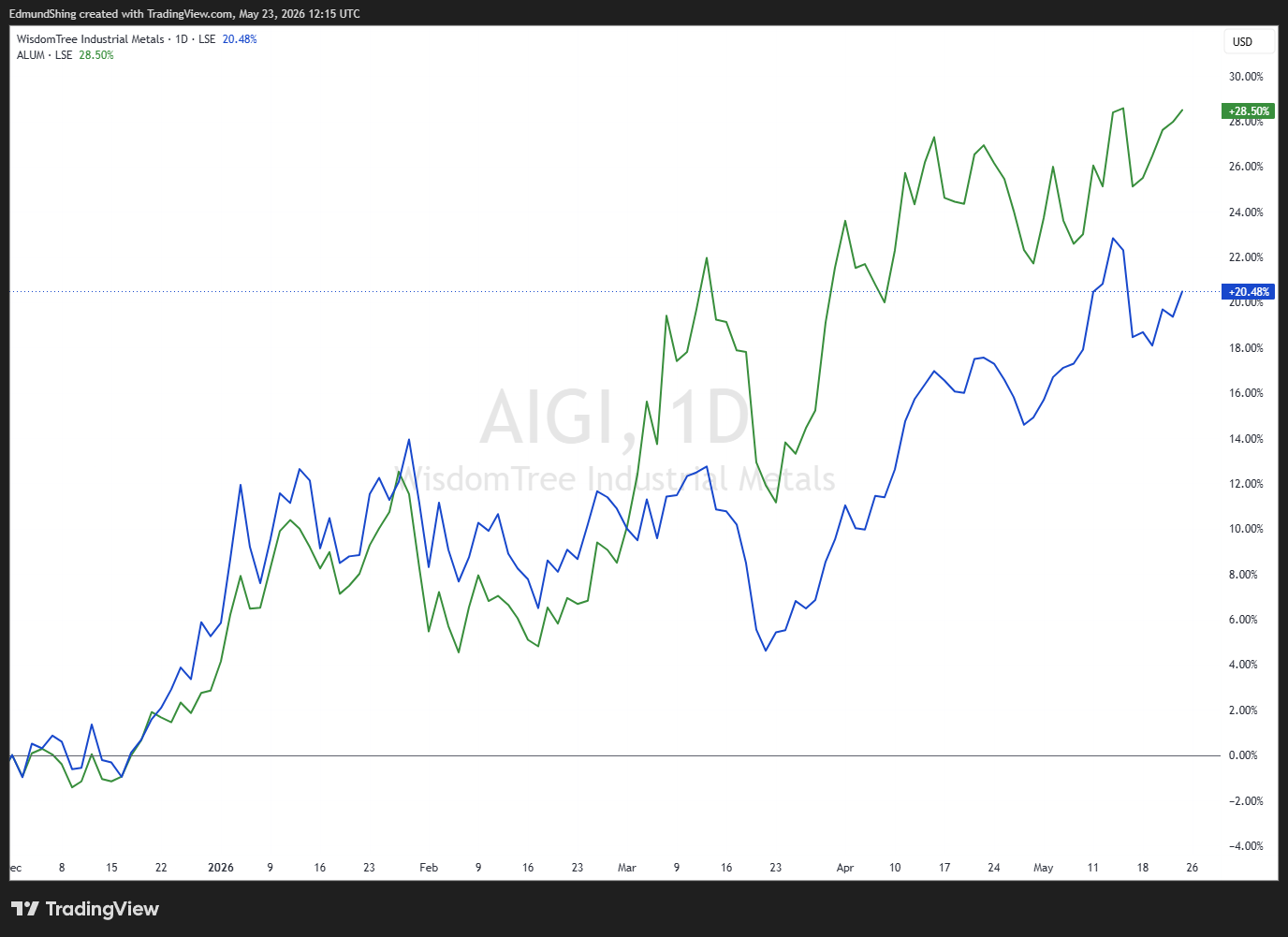
A key source of demand growth for these industrial metals comes from infrastructure demand especially linked to AI data centre electricity needs and to demand for batteries in the case of nickel.
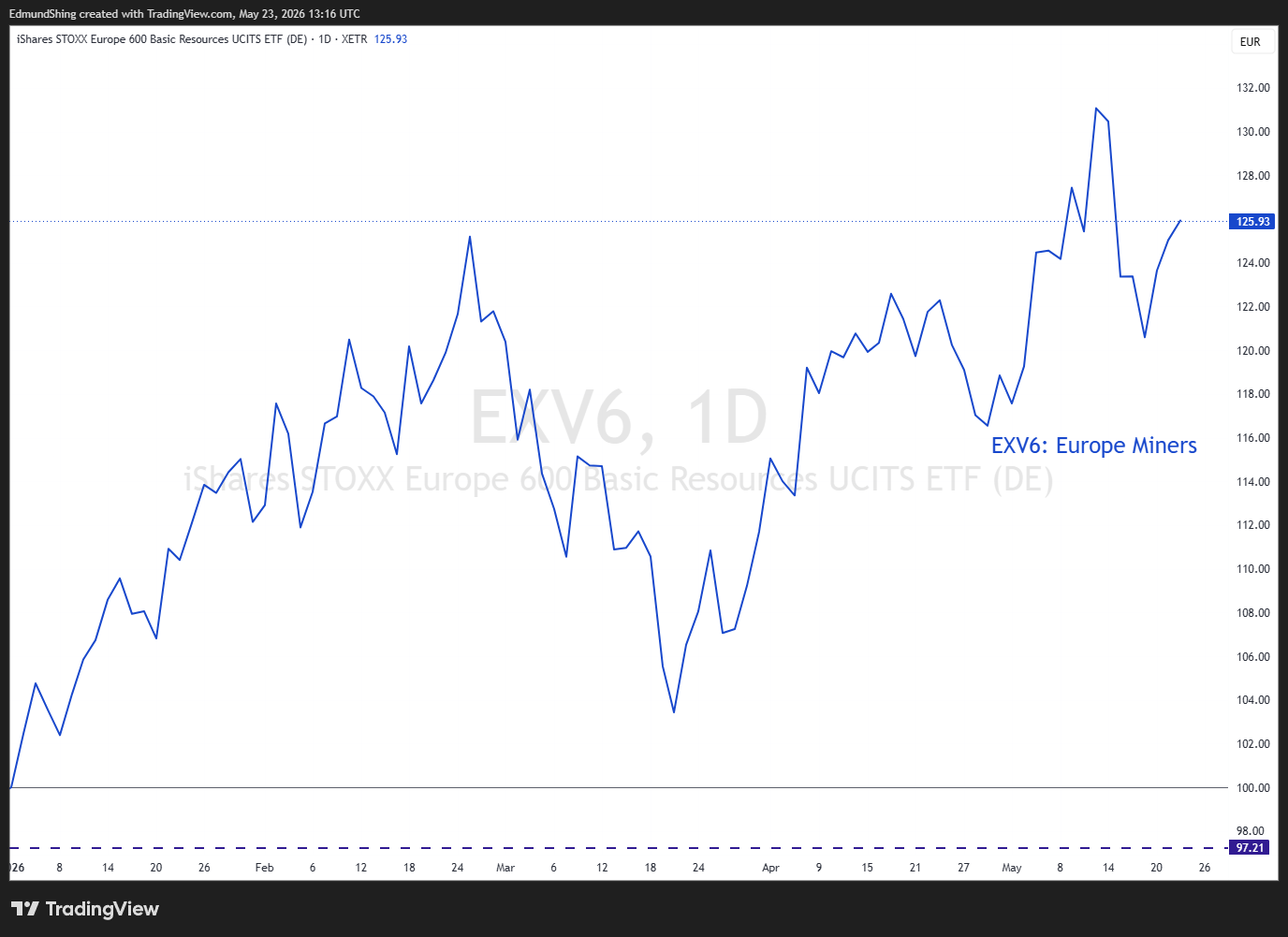
Of the the related mining companies, European-listed miners such as BHP and Rio Tinto continue to show the strongest positive momentum.
European Miners gain
I personally remain convinced that we are in a commodity supercycle, powered by geopolitical tensions, historic under-investment, deglobalisation and the AI investment boom. All of which should underpin profit growth in the global mining sector, so long as these mining companies keep their investment discipline and focus more on paying higher dividends, share buybacks and merger & acquisition activity rather than investing heavily in new mining capacity...
Have a great week
Edmund
Disclaimer
This is not financial advice. Our content is intended to be used and must be used for information and education purposes only. Please read our disclaimer and terms and conditions to understand our obligations.
5 comments
Edmund — really interesting piece as always.
I had one question on the bond side. With today’s signs of progress on reopening the Strait of Hormuz, the case for inflation easing does look stronger. But if talks were to stall again and energy stayed expensive for longer, wouldn’t that risk keeping inflation higher than expected and make bonds behave less reliably as a diversifier? We’ve seen periods where both equities and bonds come under pressure at the same time when inflation is the main problem.
On the equity side, I’m with you. The small‑cap outperformance is interesting given the valuation gap, and the industrial metals trend feels very real with the demand coming from power infrastructure, data centres, defence and EVs. The miners with discipline look well positioned. I’ve added some exposure myself and tend to favour BHP, but the broader theme you outline makes sense to me.
I find the volume on the podcasts to be a little low.
But the content is useful.
Aluminium. Rio Tinto. Not to be sneezed at then. I 'm always waiting for your insights Edmund. So thanks again.
Thought provoking as always Edmund. We would be intellectually poorer without your and others input on diverse subjects
Much appreciated post (And link to the podcast)
Real class Edmund expressed with a simplicity going beyond the quality.I could read these all day long every day.Rob