Market Musings 270626: Time to diversify away from Tech

Market Musings 270626: Time to diversify away from Tech
Podcast this week: The importance of having a smart Strategic Asset Allocation
(click on underlined link)
Bonus content: 2026 Updated Investment Themes
Why tech-heavy investors should consider diversifying now
The current stock market narrative has been centred around two key themes:
1. The Iran conflict and closure of the Strait of Hormuz.
2. The AI investment boom
Given the recent memorandum of understanding and ongoing negotiations between the US and Iran to find a long lasting peace in the Gulf, near term risks due to a lack of oil supply look to have diminished.This is clear from the oil market reaction, with the Brent crude oil price falling from nearly $120 barrel to $74 at present.
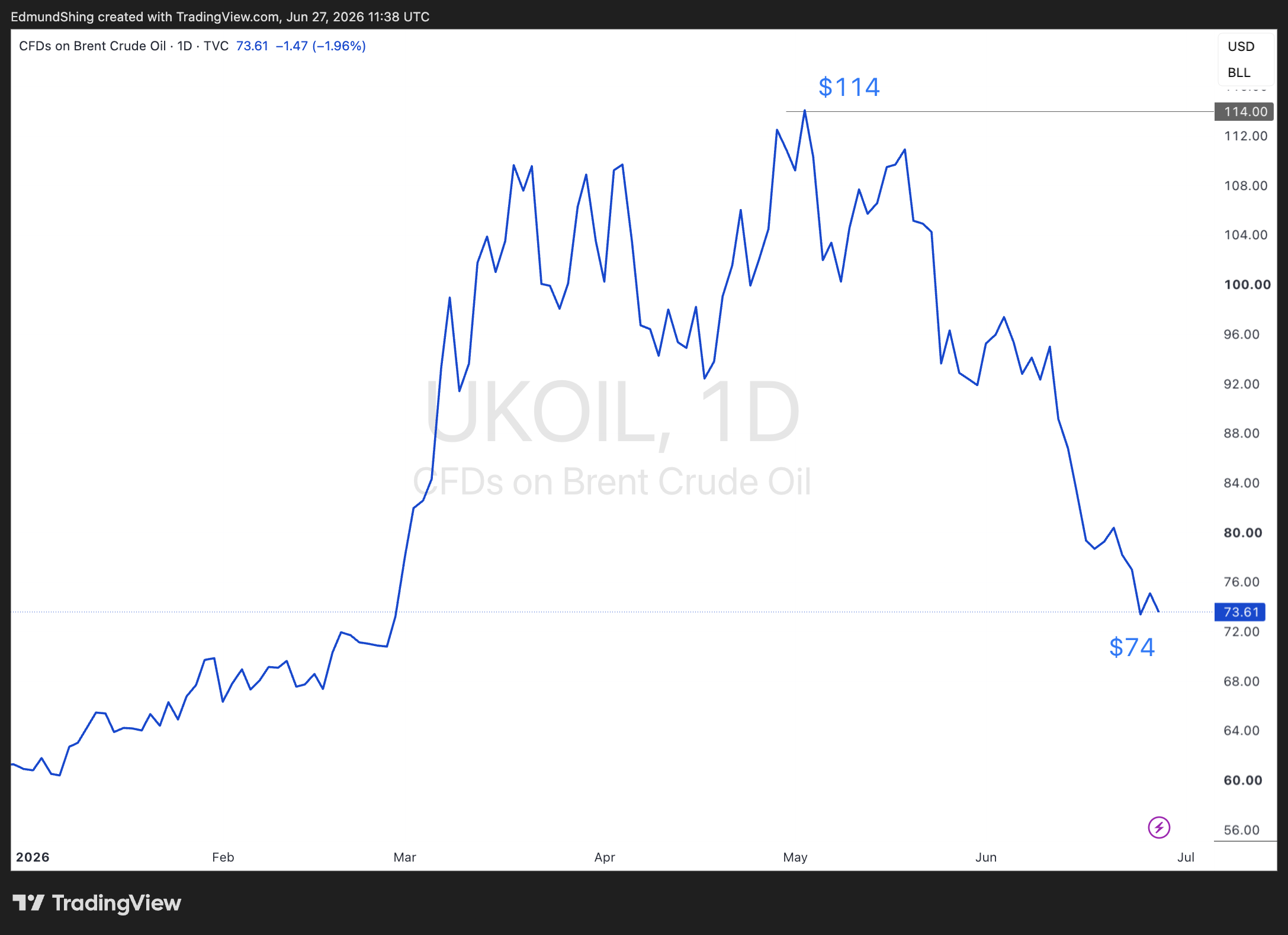
As one might expect, the energy sector is unwinding its March rally on the back of this decline in oil prices. However, some sub sectors are holding up better than others, notably the Refiners such as Valero Energy, Marathon Petroleum and Phillips 66. While crude oil prices have fallen by nearly 40% from the conflict peak, the price of refined product such as petrol and diesel have fallen but by far less, implying that refining margins remain abnormally high, given the ongoing crunch in supply of these refined products around the world.
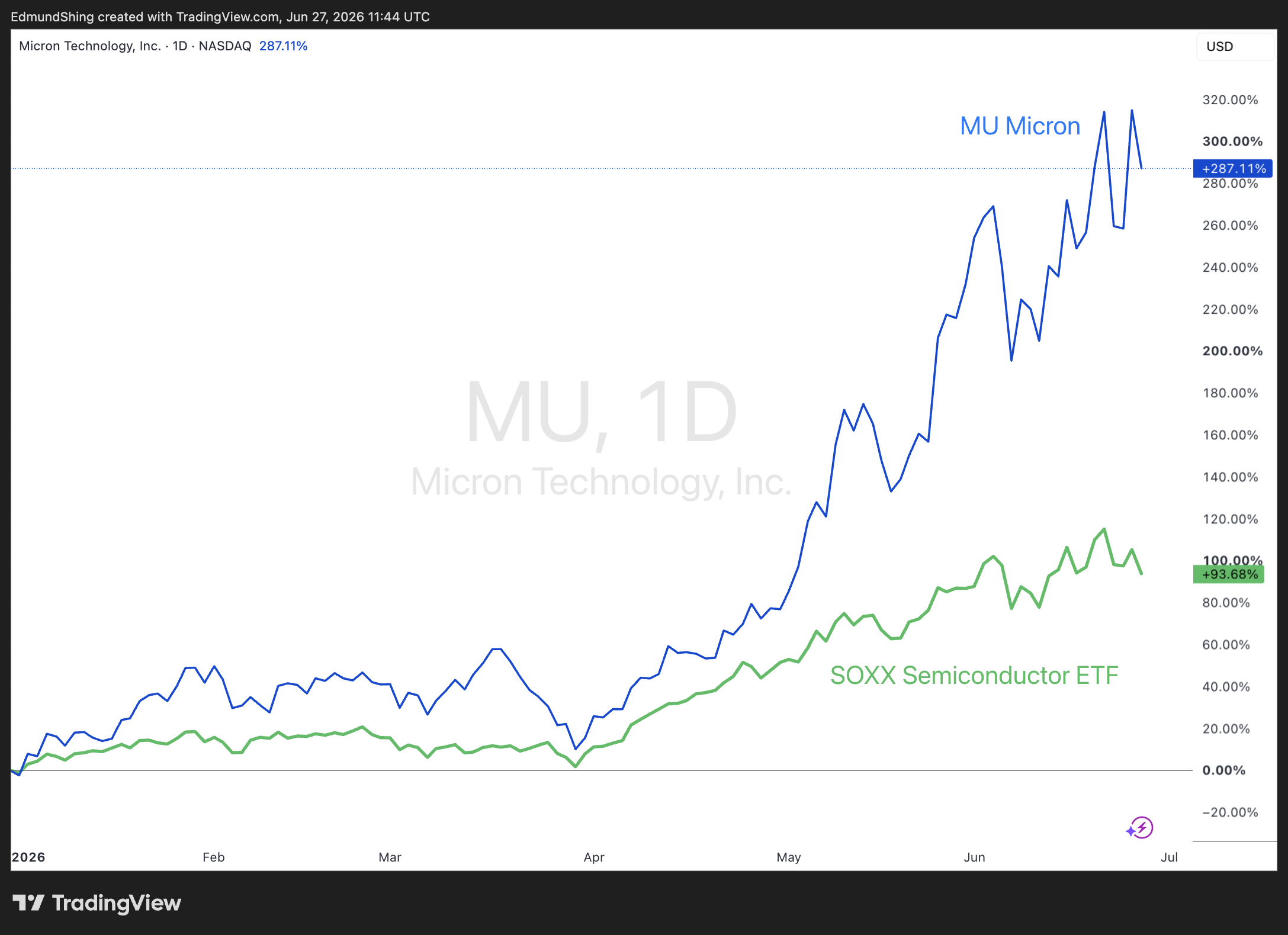
Focus therefore switches to the second theme, the ongoing investment boom related to artificial intelligence. Hyperscalers such as Google, Meta and Oracle have all announced ever-increasing investment plans for new AI related data centres, both for this year and indeed for 2027. No surprise then that earnings results for AI-related companies in the semiconductor space in particular continue to be so strong. Micron, the memory chipmaker, is just the latest example of this AI-related demand boom flowing through not only into higher sales and revenues, but also into far higher profit margins and therefore earnings.
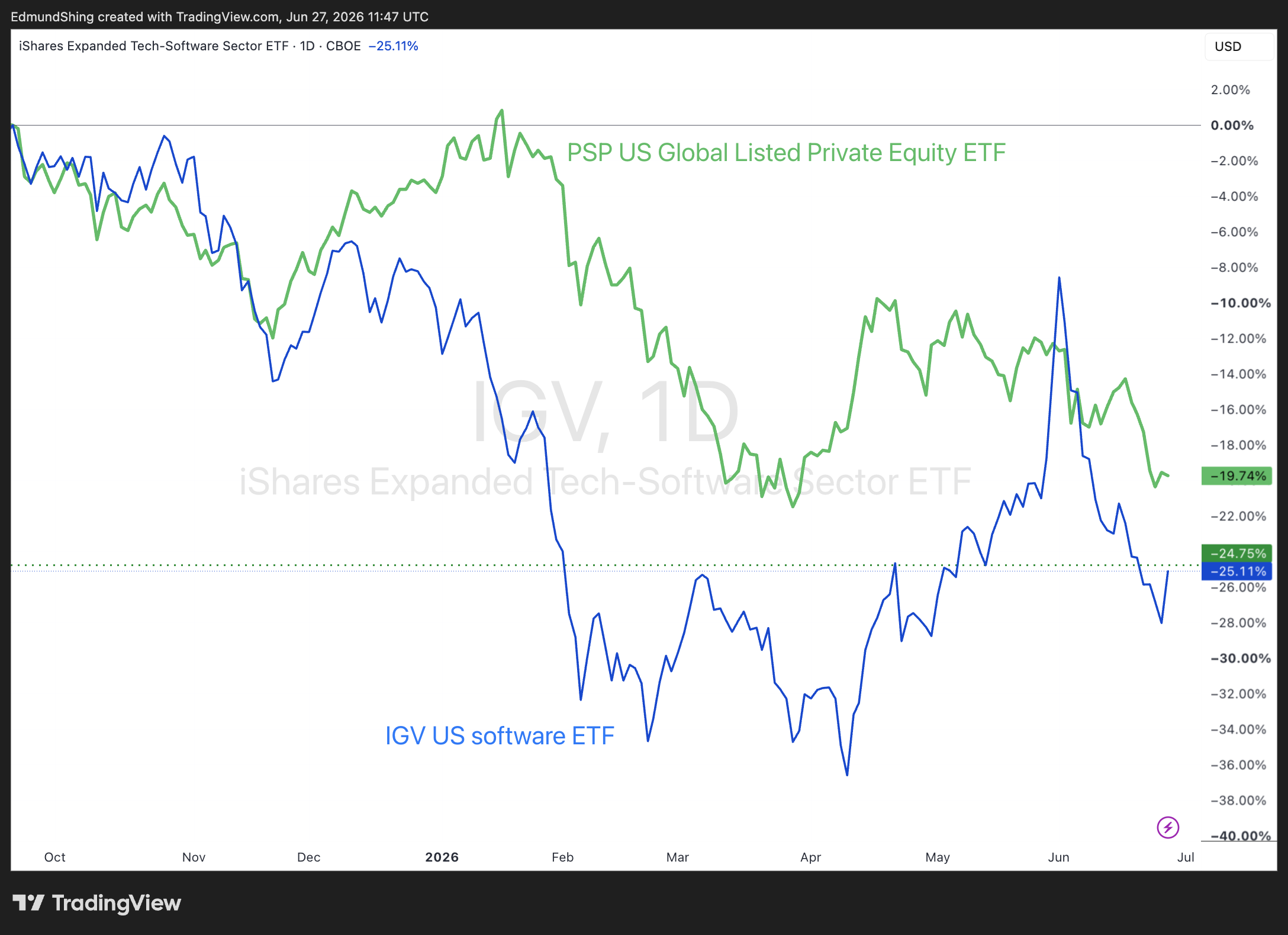
However, If you thought that this AI investment was lifting all technology boats, you would be wrong.Two areas stand out to me within the broad technology sector as suffering from relative weakness, for different reasons.
Firstly, the software sector continues to suffer from the perception that AI coding tools such as Claude Code will enable companies to develop their own custom software at very low cost. This could thus reduce demand for Software As A Service (SAAS). The performance of the IGV US software ETF has been particularly painful, down over 25% from its November 2025 height. These concerns over the software sector do not just infect the listed software companies, but also both private equity and private credit funds, as these funds hold average exposure output of 20% of asset to the software sector.
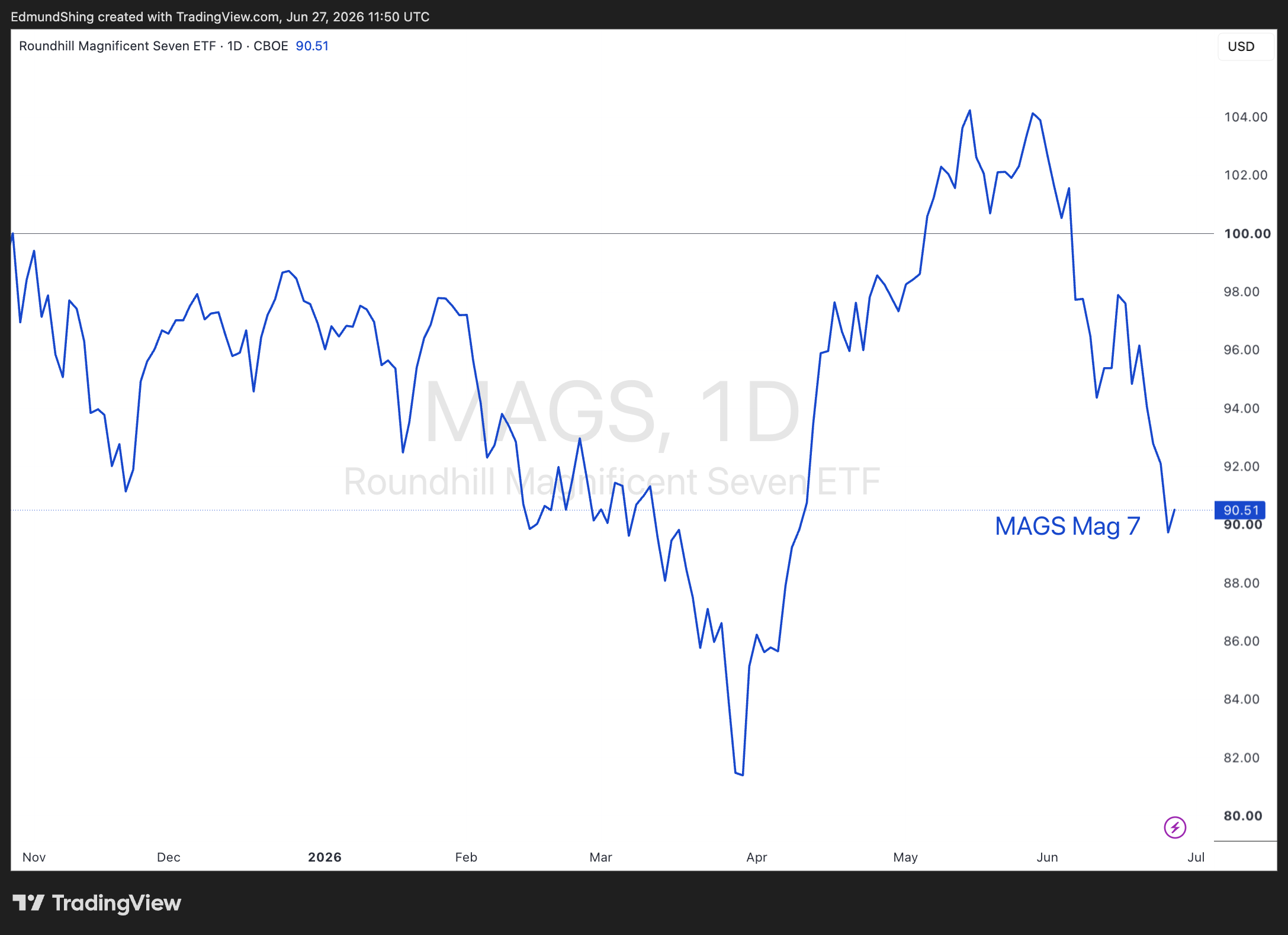
Secondly,The high spending hyper scale such as Google, Meta, Amazon, and Microsoft (who are the dominant cloud computing players in the US) have also underperformed the broader US stock market since November 2025. They are transforming their business models from formerly low investment, high free cash flow oligopolies to highly capital intensive, low free cash flow companies. The question is: are they as valuable today with this new (potentially risker) business model as they were with the previous asset-light business model?Clearly, investors have their doubts judging by the under-performance of the Magnificent 7 group of Mega-cap tech stocks over the last seven months.
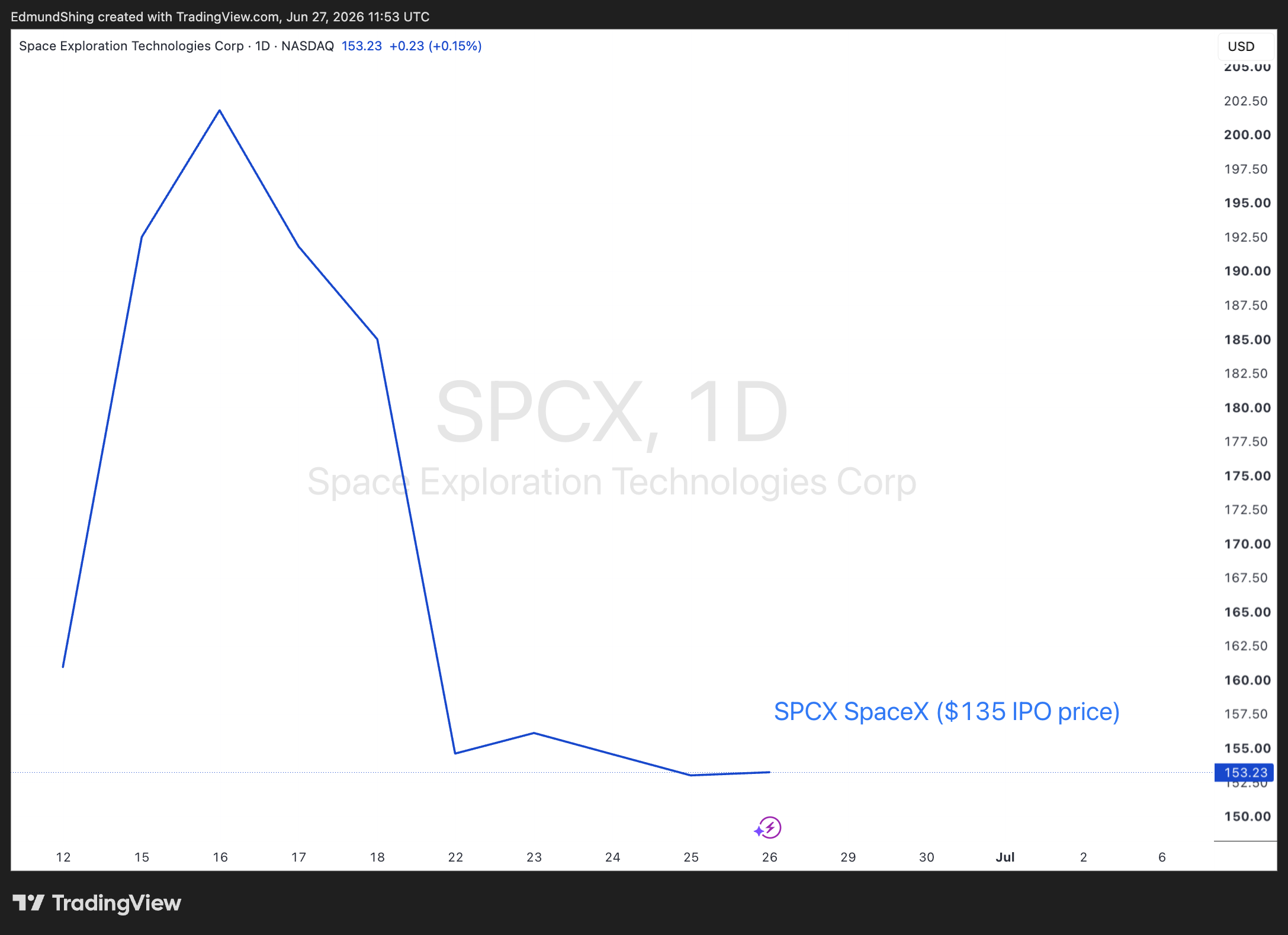
What adds more pressure to these hyperscaler companies are the IPOs of heavily loss-making privately-held AI giants, notably SpaceX which likely to be followed by Anthropic and Open AI. Investors are likely to have a much greater choice of AI large language model providers in the listed equity space as of next year. In the short term, keep in mind that under 5% of SpaceX stock is currently listed, but that the rolling expiry of stock lock-ups of large private equity and venture capital fund investors (as well as SpaceX employees) will progressively release the majority of SpaceX stock onto the stock market over the next few months.
But the real question which I feel investors are glossing over for the moment is: what if these LLM providers engage in a price warIn their quest for profitability? Up to now, most users of these LLMs have had access either for free or via a fixed price monthly subscription. But even this monthly subscription does not cover the true cost of running these models. Companies such as Anthropic and OpenAI are thus moving to a more typical volume-based revenue approach, For their enterprise customers, which is leading to a huge increase in AI LLM bills for large users such as Amazon, Uber, and even Microsoft.
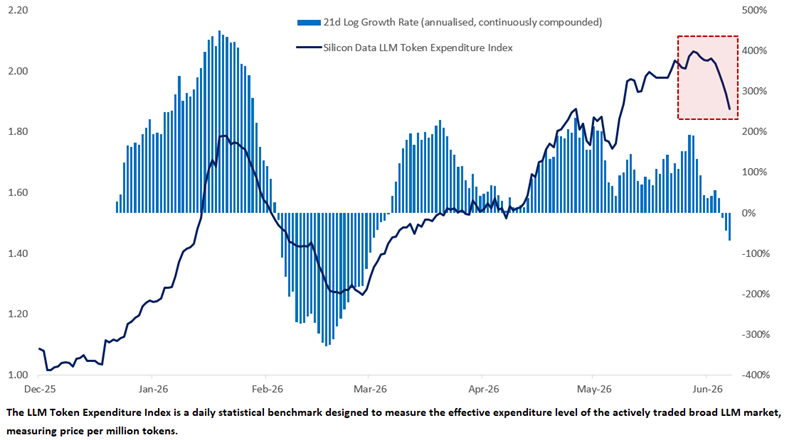
In my view, it is likely that these business customers will begin to restrict access to these LLMs and also restrict usage in terms of token volumes, in order to try to cap future cost inflation.This in itself may challenge the path profitability for the operators of these LLMs, particularly as there is not only price competition in the US but also from Chinese models such as those provided by DeepSeek and others. The Silicon Data LLM Token Expenditure index suggests that the LLM price per token is already starting to fall, potentially underlining emerging price competition between these LLMs.
For now, the market remains enamoured of the "picks and shovels" approach to AI, principally via the semiconductor sector and companies such as Nvidia for processors and Micron,, SK Hynix and Samsung for high bandwidth memory. Even here, I have my doubts that the currently high earnings growth and profit margins for these memory makers can be sustained over the medium term. Optimists will tell you that this is a new paradigm for this formerly cyclical sector, and that companies such as Micron today have large barriers to entry. I am less sure of this in the longer term given the memory makers' historic inherent cyclicality. In the past, this has led to more manufacturing capacity being brought online which then kills pricing. Again here there is potential for Chinese chip manufacturers to weigh on the pricing and profitability of these memory makers over the medium term.
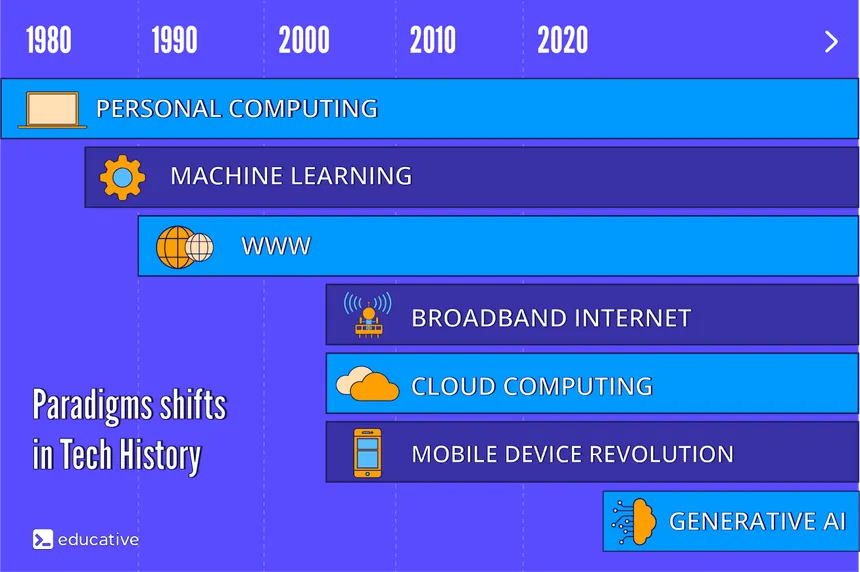
My conclusion regarding Artificial intelligence is the following: we may well be an investment bubble which in many ways is entirely rational.This is typical of any large disruptive technological shift in the broad economy. It is very likely to lead to widespread changes in the way we work and live. And most importantly, we know that investment bubbles can last for a lot longer than anyone can possibly imagine.
However at the very least I would suggest that for those investors already heavily exposed to technology and who already hold sizeable gains thanks to the long-term out performance of this sector, at least consider reducing their exposure at this point and diversifying into other markets and other sectors.This is simply good risk management practice.
Which sector would I advocate investing in today?I remain convinced of my thesis that we are in commodity cycle, WhereSupply remains constrained for a whole host of key commodities within the industrial metal space for instance.I am thus keen on investing in the mining sector globally particularly companies with exposure to industrial metal key industrial metals such as copper aluminium and tin.
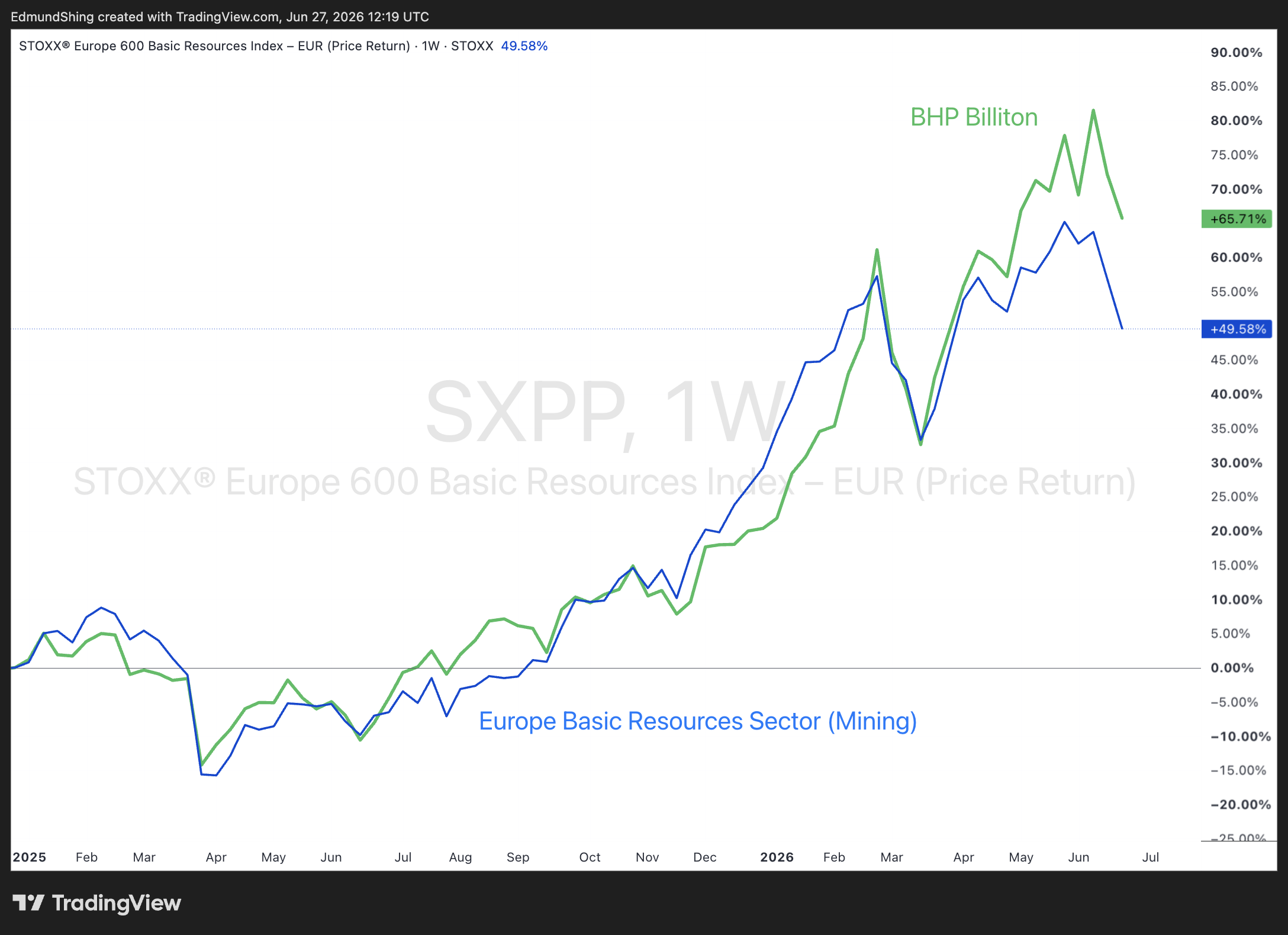
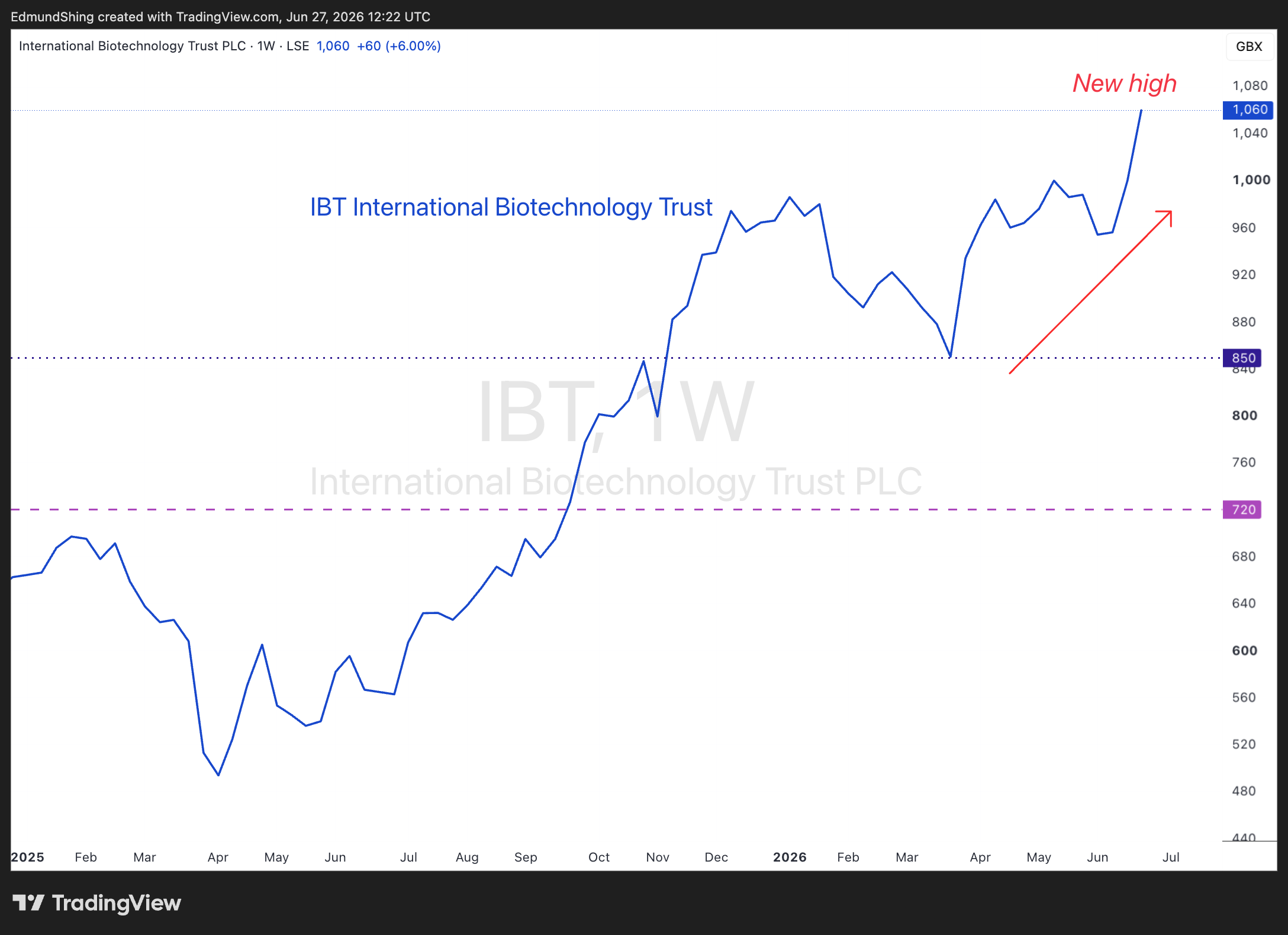
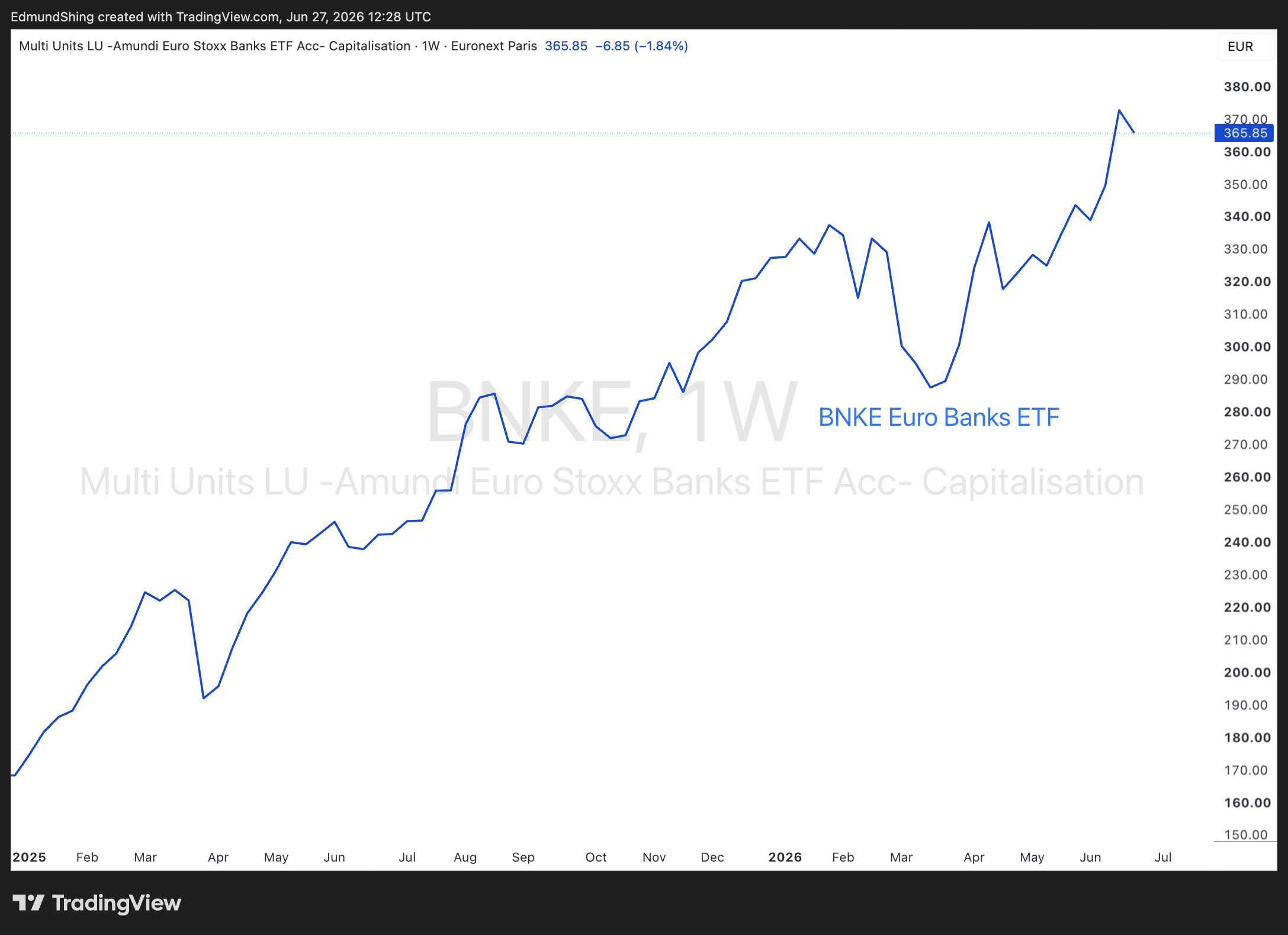
SecondlyI advocate exposure to those sectors which will become become beneficiaries of the productivity gains they can be unleashed by AI.This includes Healthcare (more specifically biotech), Financials in brackets more specific banks particularly in Europe), as well as the industrial sector which should benefit more broadly from the AI investment boom.
And when building a data centre, one needs not only semiconductor chips but electricity supply, water supply, a huge amount of basic commodity such as steel and concrete, and also a massive amount of electrical equipment such as transformers and cooling systems. This will be a general boom to the to the Capital Goods sector, particularly electrical equipment.
Bon weekend
Edmund
Disclaimer
This is not financial advice. Our content is intended to be used and must be used for information and education purposes only. Please read our disclaimer and terms and conditions to understand our obligations.
9 comments
Do you see the current pullback in commodities as a buying opportunity then?
Interesting article Edmund, thanks. I agree about the danger of having a big IT holding currently. I like the "picks and shovels" approach to AI but looking at Funds & ETFs taking that approach be aware they've already done very well in the last few months, so a lot of their future gains are already priced in.
It's also worth bearing in mind that if you've got a broad portfolio you might have a lot more IT exposure than you realise, e.g. if you have a US Market Tracker, general Asian funds or Global Emerging Markets, Global Growth, etc. then IT stocks and AI related stocks are now very dominant in them. The Korean Kospi Index sometimes moves +or-10% in a day now as SK Hynix and Samsung go in and out of favour...
Biotech does seem to have recent momentum after a long quiet spell. I'd also look at Genomics - they will both be AI winners as companies in these industries are using AI to accelerate drug discovery and reduce it's costs. The Biotech Growth Trust has a good and consistant track record (BIOG).
Great stuff as always Ed, any chance of an update on your diversified etf porttfolio that you ran a series on a year or so back.
Thanks Ed for a thought provoking article.
I agree with the commodity , infrastructure and related theme. My choice here is Caterpillar , a company that benefits from the expanding cycle. A much smaller version of that in UK is Keller. Both have done well recently and may continue the course for years ahead.
Excellent! Many thanks Ed and please keep these market musings coming.
Thank you for another excellent article Edmund. As a pivot to the industrial sector are you looking here at the US or Europe? I am currently looking at an ETF with focus on US data centre build out : PAVE (Global X U.S. Infrastructure Development ETF)
What are your thoughts on this?
Yes a big fan of that ETF. You could also look at FGRD First Trust which is focused on infrastructure buildout in the US around electricity...
Will do. Thanks for your prompt reply.
There is a GBP version of this - PAVG