Mello 2019 Day Two - Gervais Williams and The Fulham Shore

Last week I had the good fortune of being able to attend the Mello conference.
Mello is quickly becoming the biggest day in the retail investor’s calendar. According to David Stredder - the event organiser - attendance was up by 11% this year and the Tuesday was its busiest opening day ever. What’s more, over 31% of the investors had never been to a Mello event. So if you’ve never been before do come to the next one.
I’ve typed up my notes from the speeches and panels I attended. Gervais Williams’ talk (towards the end of the notes) was a particular highlight.
David Page and Nick Wong, The Fulham Shore Plc
(Please note that I have a long position in FUL.)
After a cramped, bad-tempered, delayed 50-minute tube journey, I got to this one a little late. It’s never fun being the guy that bursts into a room halfway through a presentation, bumping and sidling along rows of seats, whispering ‘Sorry’ to people as they hug their knees to their chests to let you past...
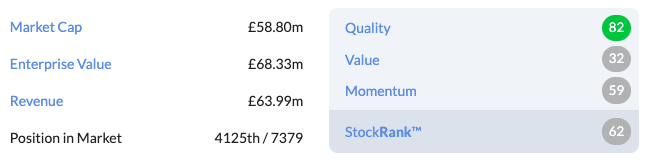
Fulham Shore (LON:FUL) is a small cap Leisure stock made up of two brands: Franco Manca and The Real Greek. The former attracts a mixed crowd of typically (but not exclusively) 16-35 year-olds, while the latter attracts more female diners. It has recently launched a loyalty program for its customers.
The Board owns around 50% of the shares and friends and family hold another 25%. It’s safe to say management has a lot of skin in the game.
Operations - management plans to keep debt down by funding site openings with operating cash flow.
FUL’s food sourcing expertise allows it to generate good margins despite offering its product at a lower price point than many of its competitors. It is a low-cost operator.
The group has its Half-Year results out in December and is comfortable with analyst forecasts of £8.5m EBITDA (HY18: £4.1m). It will comment on its plans for the next three years or so in these results.
Q&A
What makes Franco Manca different?
Big chains freeze their product (cheese, dough, etc.). Franco Manca makes everything on site. It has a short menu of seven pizzas.
Leases?
FM sites have around a 2.5 year payback. They generate £250k of profit per year and cost £700k to set up. Landlords are in a terrible place right now and FUL is seeing rents being offered for 30-40% less than they were a couple of years ago. Operators are threatening CVAs (Company Voluntary Arrangements).
FUL used to an average lease length of 25 years but now it’s around 13 years. You get better tax breaks if lease length is less than 15 years.
Price points?
The low price points at Franco Manca and The Real Greek means these brands have ‘big untapped potential’. A new owner might want to come in and leverage prices. They are a big believer in honest pricing as opposed to discounting, which damages brands.
Cost pressures?
Back in the day, labour used to be 28% of sales and food was also 28%. While food costs have trended down, labour costs have gone up quite a lot. The living wage is going up by about 4.5% per year. The group saves money with its food sourcing and its site selection (smaller, busier units - too many operators go for larger sites and get trapped).
The casual dining market
The market has changed and there is less demand for really big brands. If you were starting today in the UK, you wouldn’t go to 450 sites like Pizza Express, you would go to 200 max. The group has around 50 Franco Manca sites and 17 The Real Greeks. Management also sees ‘a great global opportunity’ for the two brands.
Jeremy Martin & Simon Retter, Horizonte Minerals
Stockopedia is good at finding cheap, profitable stocks but some have said we lack coverage of mining companies.
With this in mind, I attended the Horizonte Minerals (LON:HZM) presentation. This group is a pre-revenue South American nickel mining play that has yet to be built - hardly your classic Super Stock, but interesting nonetheless.
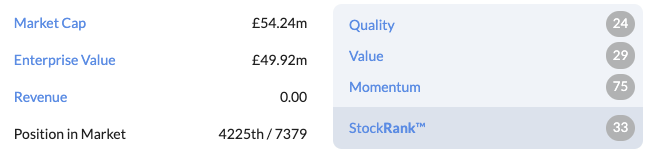
Horizonte has two nickel projects in Brazil, both in one of the county’s foremost base metals mining districts. This is important for keeping future production costs low, as most of the transport infrastructure is already established.
Araguaia is construction-ready and is being part-financed through a royalty arrangement with Orion Resource Partners, who have come on board as a strategic partner. Orion describes Araguaia as ‘one of the leading nickel development projects globally’.
Vermelho - the group has just concluded its preliminary feasibility study here. Previous owners Vale spent $200m on developing the asset before offloading it for $8m (after acquiring a company with a very similar asset that it chose to prioritise).
The Araguaia development is classified as development-ready and has an estimated net present value of $1.2bn. The Vermelho site has a net present value of $1.7bn. The company has a cash position of around $30m and continues to find funding for its two high-quality nickel assets.
There are favourable tailwinds for the Nickel price - exchange inventories have fallen to their lowest level since April 2012 and demand is set to increase due to the growing Electric Vehicle Battery market. Demand is now outstripping supply and in the year to date, the price per tonne of nickel has increased.
On average new nickel mines take 8-10 years to come into production from early-stage exploration.
Pre-revenue mining is not an area I know much about. Some holes in the ground are just holes in the ground, but others do become highly profitable mines. Horizonte appears to have two assets of proven quality in a developed mining district. The trick now is to lock in funding to continue their development.
Ed Croft, What Went Wrong at Woodford?
Ed gave a run-through of our research into the Woodford Equity Income Fund (WEIF):
Woodford made his name at Perpetual, where he made some big, correct calls. He shunned ‘.com’ stocks, backed unfashionable tobacco and got out of banks early.
2012 was a sign of things to come when NW’s decision to invest $252m in speculative US biomass conversion group Xyleco ruffled feathers at Invesco’s US headquarters. Corporate governance steps were taken to prevent Woodford from taking more risky bets.
Two years later, Woodford leaves Invesco. At Woodford Investment Management (WIM), there is no structure in place to block Woodford from pursuing more aggressive investments - but arguably this isn’t how its funds are marketed to investors.
In 2014, Woodford says ‘I believe I can find enough safe, reliable, attractively valued companies to build a portfolio which, in aggregate, can deliver an attractive long-term risk-adjusted return.’ At this point, the WEIF is made up of 76% large caps. Nearly a quarter of the fund was in safe, defensive healthcare stocks.
By 2016, the WEIF was more focused on early-stage healthcare startups and had become more of a single bet on this sector. Speculative and Highly Speculative stocks had doubled to more than 25% of the portfolio.
By 2017, Woodford was massively committed to speculative and unlisted stocks. The outflows began this year, continuing through 2018 and 2019. In this final year, Woodford attempted to restructure the WEIF but it was too little too late. The private holdings turned the fund into a liquidity trap, leading to its closure.
You can see the original webinar below. Here is the slide deck.
Gervais Williams, Is Britain Still Great for Investors?
Gervais Williams (GW) started off by painting a sobering picture of a Great Britain slowly slipping down the leaderboard of top 10 global economies. India will most likely overtake us as it is growing faster. France could also overtake us depending on exchange rates, in which case we would be down at number 7.
The London Stock Exchange is already only the seventh-largest in the world (behind NYSE, NASDAQ, Tokyo, Shanghai, Hong Kong and Euronext). Since 2008, there has actually been a decline in inflows to the LSE.
Since 2016, the FTSE 100 and the S&P 500 have diverged in terms of free cash flow yield with the FTSE becoming markedly cheaper. Currently, the S&P is on a c4% FCF yield and the FTSE is on c7%. The main driver has been the devaluation of sterling.
Because of the above picture, GW thinks the UK is probably overlooked right now.
Over the last 30 years, stock markets have become more correlated. Around the world, the constituents and proportions of indices are becoming more alike the world over. ‘Globalisation may have led to monoculture investing.’ This correlation may mean investors are unaware of their risk concentration.
Companies that have taken on debt in the current low interest rate environment will at some point need to roll over debt. This means they run the risk of having to go back to the banks to refinance at a time when banks might be less willing to lend.
Growth and Momentum themes have become dominant. More and more IPOs are loss-making. Data from Quartz shows that in 2018, nearly 83% of US IPOs were not profitable. Lower-for-longer interest rates have changed the picture and driven a massive appetite for loss-making growth stocks.
There is an awful lot of risk in the global economy right now and fund managers have to be really attentive to the downsides of an investment. Perhaps the biggest theme is quantitative easing. The cheap growth that QE has encouraged has led to poor capital allocation. World cumulative total factor productivity growth is stagnating or has even been in decline since 2008, according to data from Macrostat.
If world growth is stagnating, then big caps won’t grow. Investors are currently too invested in big caps and will have to move into small caps for growth. Small caps can grow when the world is not growing.
Globalisation has passed and nationalism is the dominant theme.
China is reliant on overseas borrowing and is now investing in infrastructure projects with negative cash paybacks.
Another theme: investors are now not just wanting to be ethical but to be investing in companies that are positively impacting in the future.
The AIM market is a particularly healthy index for small caps. Around three-quarters of AIM companies (market-weighted) are profitable and cash generative. Around two-thirds are dividend-paying. Because of this quality, AIM could prove to be quite resilient in the years ahead.
Brexit is still having an impact - buyers are holding off in small and micro caps, therefore this area is trading at a discount. Going forward, GW expects both sterling and the UK to recover - although a stronger sterling has a negative impact on the FTSE 100.
Conclusion
Mello continues to set the standard in terms of providing retail investors with the chance to catch up with quality small caps and experienced professional investors. What's more the social aspect of the event really is second to none. With investing by nature often a rather solitary pursuit, the role Mello plays in strengthening the community is invaluable - long may it continue.
Edit - here are some links to additional coverage:
Ben's notes on Day One.
piworld's video coverage.
Disclaimer
This is not financial advice. Our content is intended to be used and must be used for information and education purposes only. Please read our disclaimer and terms and conditions to understand our obligations.
5 comments
Is there any scoreboard of subsequent performance of companies that present at Mello events?
I've a rusty notion that someone used to do this for the companies that spoke at the Mello dinners in Beckenham.
An excellent review and there were another 57 companies presenting at the event. This also highlighted how there is something to interest everyone at Mello and they are growing in popularity by providing what investors want to see. The next two day company event will be on the 20th and 21st May and there will be a one day Trusts and Funds event on Tuesday 19th May.
Fulham Shore (LON:FUL) make about £0.7 million profit on a turnover of £64 million.
I listened to their presentation at Mello last week and don't recall a single mention of anything about strategies to increase margins to a reasonable level.
Perhaps this is one of those companies where passion about the quality of the product will result in long term growth and an eventual increase in profits. However I shall probably pass on this one.
That's an understandable view to take. With Fulham Shore (LON:FUL) executing its rollout from a small base, it has historically had a fair amount of adjusting items in its accounts. Like you say, it comes down to whether or not you think the estate that is being built today will drive profits in future. The company is beginning to generate a fair bit of cash.
The proof, as they say, will be in the pudding (or pizza).
As a diy investor Mello gives me an incredible amount of up-to-date market intelligence and is excellent value. Even, in my case, with massive travel costs I always get a payback....and more. The analysis job on Woodford Equity Income by Ed Croft was a masterpiece and not to be missed.