My Market Themes: Sat 25/01/20

1. Risk management: Possible market correction ahead?
I had mentioned in last weekend’s article that I was getting nervous about the strong momentum in global stock markets. Well this weekend, I am getting even more nervous over the short-term risk outlook.
Friday ended poorly in the US for the S&P 500 index – Admittedly, a pullback of 0.9% on the day is hardly anything to worry about for now, a mere blip on the end of a strong bull run since August 2019.
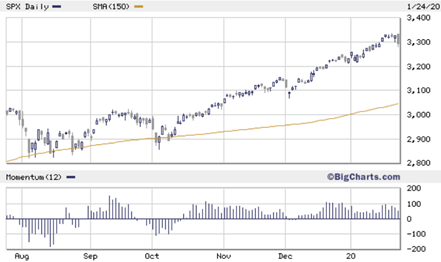
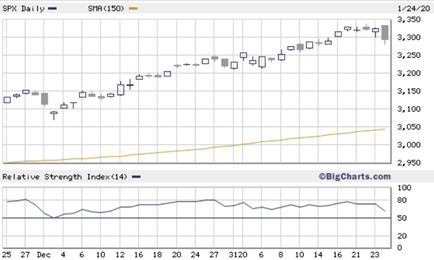
However, zooming into the last 2 months to get a better picture of the candles, we see a bearish engulfing candlestick pattern, generally signalling reversals in trend. This is combined with an RSI reading that had been in the overbought area (above 70) but now falling back.
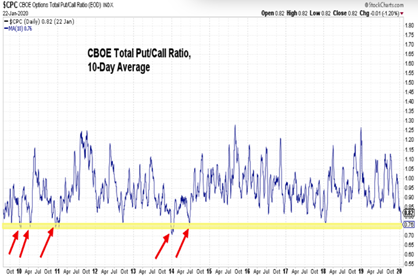
All of this tallies with the signs of investor complacency that have been multiplying of late, including the CBOE put/call ratio which had reached historic lows (close to levels where stock market corrections had previously occurred), highlighting that investors were overwhelmingly buying “bullish” upside calls and not buying “bearish” downside puts for hedging.
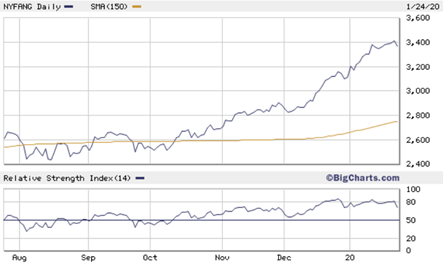
Given the recent strength in global stock markets, led by US tech stocks (see the 35% surge since October in FANG index below, which includes Google, Tesla, Facebook, Netflix, Amazon and Apple), it is perhaps not a bad thing to see a small pullback here, so as to remind investors that this is not a one-way street.
The spread of the Chinese coronavirus may be the excuse to trigger a wider stock market correction in the days ahead – keep your eyes on the Chinese and US stocks market over next week.
2. Where to hide in a stock market correction? Answer 1 = Bonds
The natural place to hide if one is worried about a stock market correction is the bond market. Normally the classic answer would be in sovereign bonds, e.g. UK gilts (as in the Vanguard UK gilt ETF VGOV in yellow in the chart below), but given the ultra-low yields on offer here, we may stretch as far as investment-grade corporate bonds.
In the corporate bond space, one useful ETF to consider is the iShares Core GBP Corporate Bond ETF (SLXX), which currently yields 2.4% and which has outperformed UK gilts over the last year, rising by 11% (to which one can add the yield for a total return of 13%).
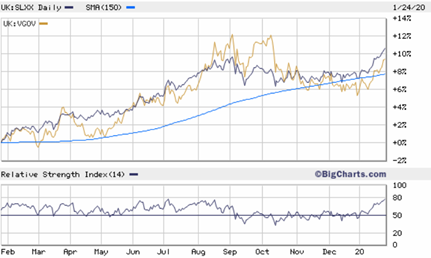
In the absence of a recession, corporate bond default rates should remain very low, and indeed should remain very much in demand given the lack of relatively safe yielding assets available elsewhere. At least with these corporate bonds, you get a better yield than is on offer for cash deposits.
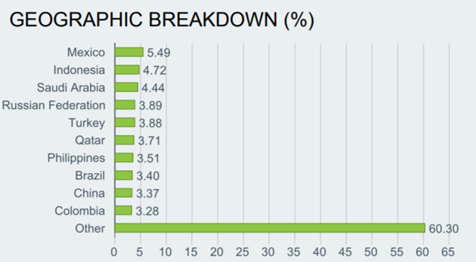
Those who want to stay in some form of bond fund, but are willing to look further afield in search of higher yields, might want to consider Emerging Market sovereign bonds issued in US dollars (to avoid the extra volatility associated with emerging market currencies).
One such fund is the iShares JP Morgan $ EM Bond ETF (SEMB for the GBP ETF), which carries a dividend yield of 4.7% and holds a broad basket of long-term EM sovereign bonds from Latin America, Middle East, Central Europe and Asia. Over the last 1 year total return was strong at nearly 16% in USD.

3. Commodities: Gold is a big beneficiary of virus fears
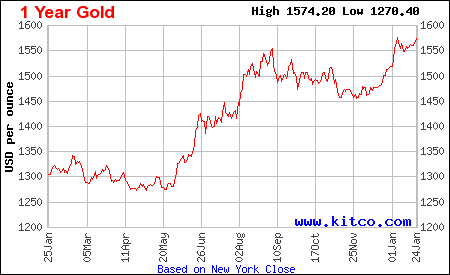
First it was US-Iran tensions, now it is worry that the Chinese coronavirus outbreak will go global. In both cases, gold has been the clear beneficiary in financial markets of these worries. Gold ended Firday at $1572/oz, continuing its bull trend of the last year.
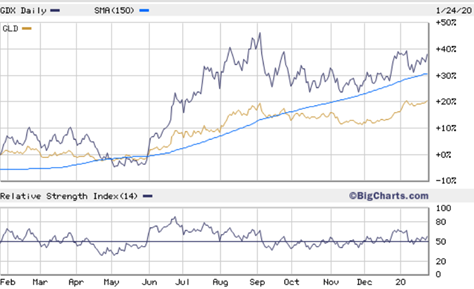
While physical gold is doing well, gold miners (illustrated here with the US ETF GDX) have been lagging of late after a strong spurt in mid-2019. I remain optimistic that gold miners will follow the upwards trend in physical gold, and remain exposed to this sector.
But because junior miners can often be somewhat “spivvy”, to use a technical term, I take care only to look at companies which:
- have operating mines (not just prospects),
- are generating steady free cash flow,
- have net cash on the balance sheet or little debt,
- are inexpensive on the EV/EBIT (or earnings yield) yardstick, and
- which already pay a decent dividend.
Even then, they can be subject to very high levels of volatility, so are not for the faint-hearted or for widows and orphans.
Otherwise, an ETF of gold miners is a good way to go, accessible eg with the iShares Gold Producers UCITS ETF (listed in London in GBP under the code SPGP).
Disclosure: my eldest son holds SPGP
4. Macro: UK surprises to the upside
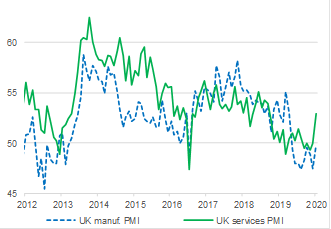
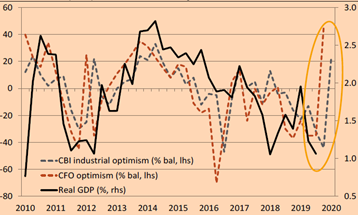
The UK Boris bounce is well and truly underway, at least according to the latest macroeconomic data. January’s services and manufacturing Purchasing Managers’ Indices are both underlining a broad-based recovery in confidence. The PMIs confirm the huge rebound seen in Deloitte’s Q4 2019 CFO optimism reading and the CBI’s industrial optimism survey, all suggesting strong underlying momentum in the domestic UK economy as we start 2020.
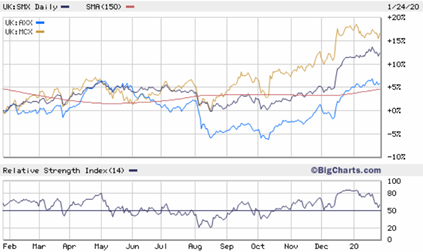
This renewed domestic momentum should disproportionately boost the more domestically-exposed FTSE 250 (MCX = yellow), FTSE Smallcap (SMX = dark blue), and AIM (AXX = light blue) indices. Note how the mid-cap index has led the way since August last year with a yearly gain of over 15%, with small-caps only now starting to catch up since the start of this year.
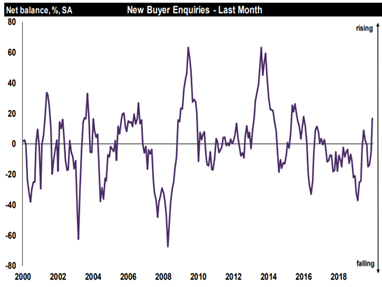
Clearly the better liquidity of the mid-caps has been winning out, but watch out for an accelerated move upwards in the smaller-cap indices on the back of stronger corporate, consumer and property market confidence. Note how according to the December UK RICS survey, more potential home buyers have been making enquiries post the UK election result, a sign of stronger household confidence in an era of low mortgage rates.
5. FX: Sterling taking advantage of a weak euro
This is a subject close to my wallet, as I am paid in GBP but have costs in euros, which has been a sore point since the UK referendum result in mid-2016. The EUR1.30 level remains a distant memory for now, but the stronger UK macro data (see above) has reduced the market probabilities of a Bank of England rate cut, which in turn has strengthened the pound this last week.
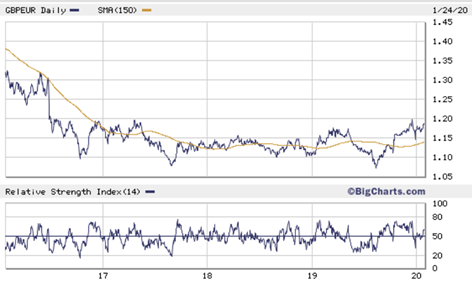
I expect sterling to touch EUR1.20 (or 83p per euro) as it did briefly immediately post the November election result, and then we will see whether there is enough positive macro momentum to drive GBP even further upwards. Clearly, to a large extent this will be driven by sentiment over progress in UK-EU negotiations which start at the beginning of March.
6. Featured ETFs of the week: iShares MSCI UK Smallcap ETF
Of course, for those investors who want to gain domestic exposure to UK stocks, there are a multitude of choices in terms of small-cap funds (such as those offered by Miton, for example) in unit trust or investment trust format.
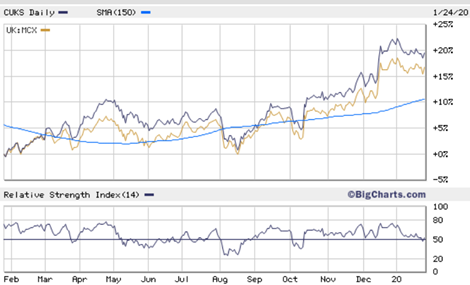
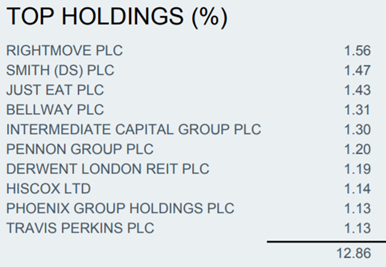
But for a lower-cost alternative to these funds, look at ETFs such as the iShares MSCI UK Small-Cap ETF (code CUKS), which has a big overlap with FTSE 250 stocks and holds 261 stocks, but which has managed to outperform the FTSE 250 over the past year by 3% or so.
If you just want a FTSE 250 mid-cap ETF, then the cheapest would be the Vanguard FTSE 250 UCITS ETF (VMID), with an annual 0.10% total expense ratio.
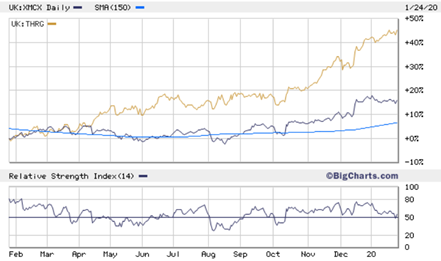
But for true UK small-cap exposure, one is better off delving into the world of investment trusts. The best-performing UK smaller company investment trust over the last 3 and 5 years is the Blackrock Throgmorton Trust (THRG), which has gained an impressive 45% over the last year, and 106% over the last 3 years.
7. Podcasts of the week
My favourites of the last week are the Investors Chronicle podcast with Phil Oakley, and also The Twin Petes (part 2). I also liked Meb Faber’s podcast with Rick Rule, discussing precious metals and mining stocks. All well worth a listen!
IC Companies & Markets podcast: Going flat
The Meb Faber Show: #197 Rick Rule
Have a great investing week ahead,
Edmund (@TheIdleInvestor)
Disclaimer
This is not financial advice. Our content is intended to be used and must be used for information and education purposes only. Please read our disclaimer and terms and conditions to understand our obligations.
3 comments
Thanks for the comments. Prescient perhaps but not enough to stop my portfolio suffering losses in small-cap positions. But I believe that ultimately, in a month or two that we will have better statistics re 2019-nCoV (coronavirus) and potential antiviral treatments.
While SARS in 2003 is not really a good comparison given the different modes of transmission and mortality rates, note that the stock market looked through the SARS impact within 2 months, and in any case it is difficult to disentangle the impact of SARS from the end of the 2000-03 bear market.
Patience will be key over the next 1-2 months, but I am looking for buying opportunities. In the meantime, I expect bonds and gold to continue to perform well short-term, as the obvious risk-off asset classes.
Edmund
Superb stuff keep it coming
For an idle investor you seem to be putting in a fantastic shift. Thanks Edmund, really good reading. Looks like your prediction of an iminent fall is looking prescient.