PZ Cussons: a cheap, improving Super Stock

When I sell a company from my portfolio, I don’t usually look back. But I’m starting to wonder if I should consider buying back into consumer goods group PZ Cussons (LON:PZC), which I ditched in 2024 after it ran into a raft of problems (and lost a lot of money).
The best consumer goods businesses are naturally defensive and can deliver reliable long-term performance and growth over remarkable timeframes. While I’ve been fairly critical of PZ Cussons in the daily report over the last couple of years, recent news from the company – which is a long-term holding of noted private investor and ISA millionaire Lord Lee – has left me feeling much more positive.
A Stock Pitch review provides the ideal opportunity for me to revisit the story and ask whether I should consider another investment in this venerable, family-controlled business.
Share price at the time of publication: 80p
Market cap: £337m
Disclosure: at the time of publication, Roland has no position in PZC.
The Pitch
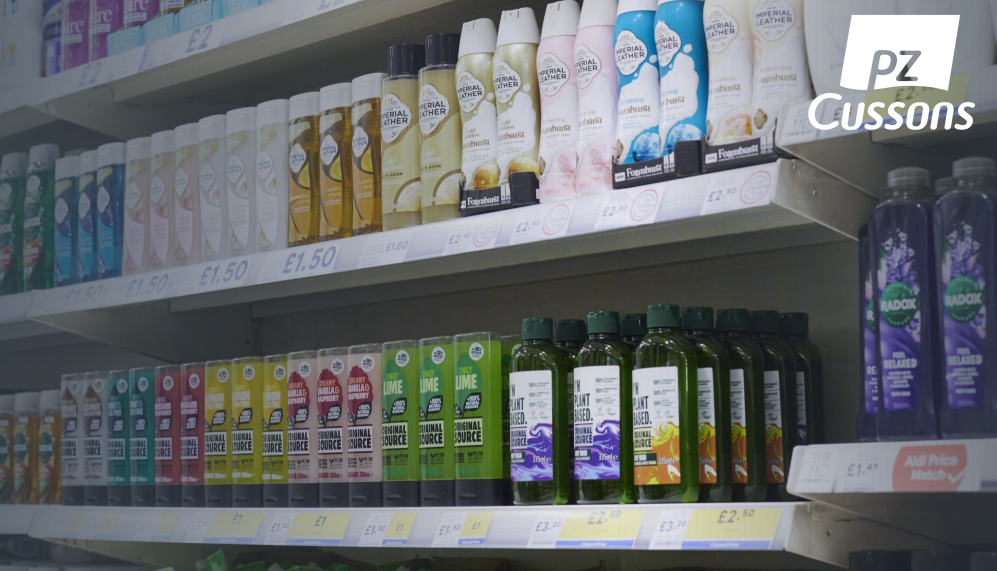
PZ Cussons owns brands including Imperial Leather, Carex, Cussons Baby and many others:
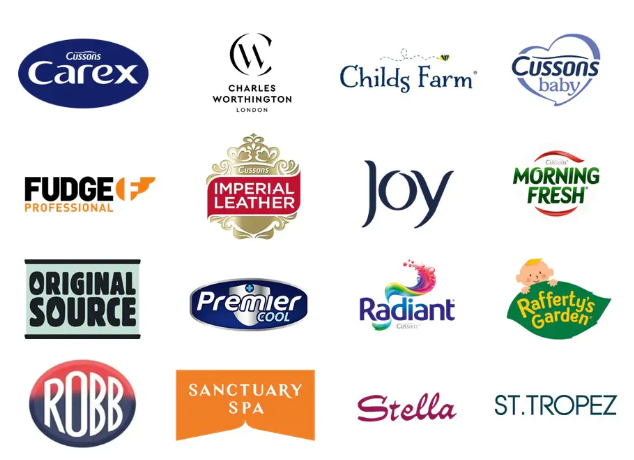
Source: PZ Cussons website May 2026
The group can trace its history back back to 1884, when it was founded by George Paterson and George Zochonis (PZ) as a trading business in Sierra Leone. It’s been listed on the London Stock Exchange since 1953 and merged with Cussons – itself founded in 1909 – in 1976.
Recent years have seen difficulties with underperforming brands, a sprawling cost base and some painful currency losses in Nigeria. However, the company has now tightened its strategy around its core Hygiene, Baby and Beauty categories and refocused on its core geographic markets.
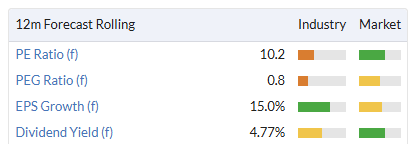
I think the business could be turning a corner, but I don’t think this is reflected in the current valuation; a forward P/E of 10 is unusually low for a branded consumer goods group.
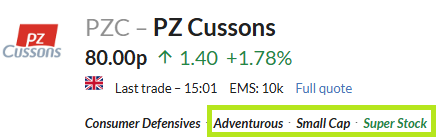
In March, the company guided for FY26 results to be “at the upper end of guidance”. The StockRanks also paint a relatively optimistic picture:
If the company can continue to hit forecasts in FY27, I’d expect the shares to perform well.
The Big Picture
Like its much larger rival, Unilever (disc: I hold), PZ Cussons’s operations are split across developed and emerging markets.
This is partly a reflection of the company’s history, but it’s also a deliberate strategy that’s designed to deliver a mixture of higher margins and cash generation (developed markets) and stronger growth (emerging markets):
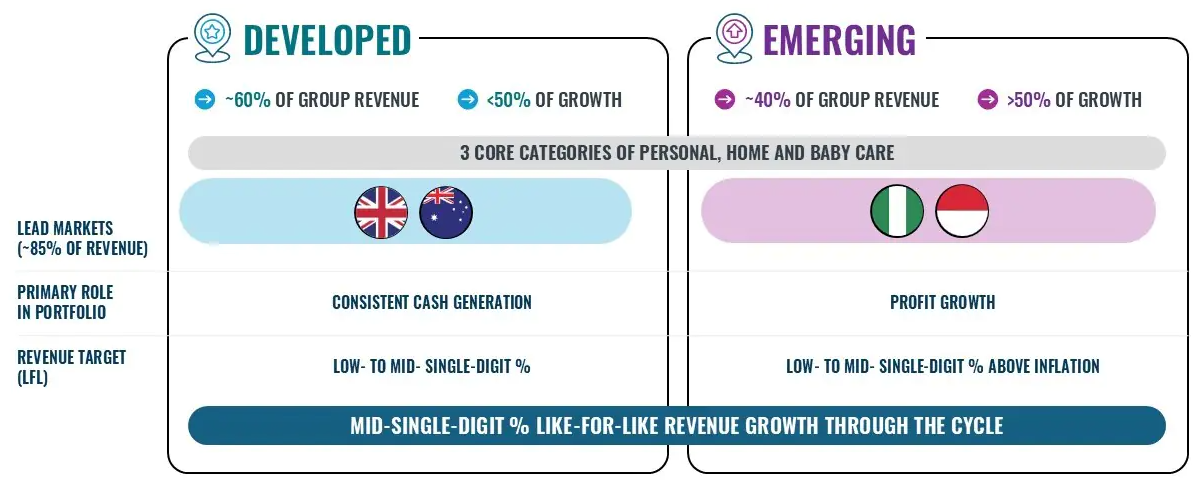
Source: PZ Cussons website May 2026
The newly refocused and strengthened business has a number of attractive characteristics, in my view:
Improved focus: with annual sales of c.£550m, PZ Cussons is not a huge business and shouldn’t try to be everything to everyone. Management has now recognised this. The company has sold non-core businesses and assets, and is now focused on its top brands and core geographic markets, where it has deep local knowledge (UK, Australia/New Zealand, Nigeria and Indonesia). Sales efforts in the US have been outsourced to a partner company – and performance has already started to improve.
Strong brands: the best consumer brands are part of the fabric of life – unquestioning purchases where the product is defined by its brand. PZ Cussons’ brands don’t all meet this ultimate standard, but most of them are deeply familiar and offer the perception of quality at a reasonable price.
Strengthened balance sheet: net debt peaked at £115m in May 2024, but fell to £84m at the end of November 2025. This figure is expected to have fallen to £31m at the end of May 2026 (Singer Capital forecast). Low leverage de-risks the balance sheet and could free up additional cash for shareholder returns.
Tempting value: for most of the last decade, PZ Cussons traded on a P/E of 15 or higher. The current valuation is significantly below this, with a P/E of 10 and near-5% dividend yield. If the company can deliver on near-term forecasts for earnings and improved cash generation, I think the stock could enjoy a re-rating from current levels:
Going Deeper
I don’t think there was anything fundamentally wrong with this business. In my view, the problems and underperformance of recent years were due to a combination of complacency, misfortune and perhaps some errors.
The good news is that most of these issues have now been addressed, in my view. What’s left is starting to look like a much-improved business:
Currency protection: in 2023 the Nigerian Naira devalued sharply as the government embarked on an ambitious economic reform programme. PZ Cussons was caught with a significant amount of cash held in local currency, with little or no hedging protection. The result was a £107m foreign exchange loss that wiped more than 40% off the group’s book value in FY24. The business remains exposed to the Naira, but management now takes measures to reduce the company’s exposure to currency volatility, reducing the scale of this risk.
Profitability: results for H1 2026 showed a marked improvement in profitability, with operating margin rising from 5.4% to 14.9%. This supported a very respectable 12-month return on capital employed of 13.1%. I see double-digit ROCE as a hallmark of a good quality consumer goods business.
Family ownership: the Zochonis family retains a c.30% stake in the business that it co-founded more than 140 years ago. I’d guess the family is likely to carry an influence that should help ensure management remains focused on delivering sustainable, long-term performance and reliable dividends.
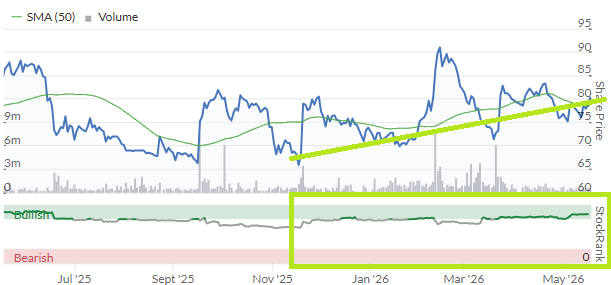
Improving momentum: the market always looks forward and PZ Cussons’ share price chart is starting to show signs of positive momentum, with a nice uptrend forming.
What The Brokers Say
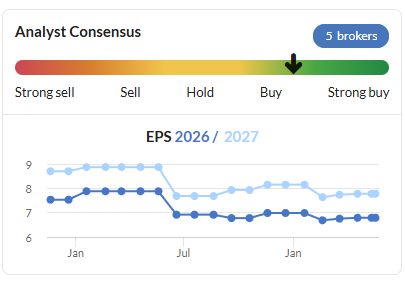
Broker sentiment is largely positive, with several buy ratings and only one hold.
Consensus estimates also appear to have stabilised. March’s third-quarter update prompted a welcome reiteration of forecasts:
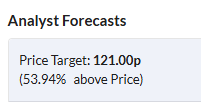
Brokers have an average price target of 121p – c.50% above the current share price. This suggests analysts’ models show a clear pathway to a recovery in earnings and a stronger valuation:
The Bear Case
Risks remain. Some of my top concerns include:
Profitability: PZ Cussons’ returns on capital have always lagged those of larger rivals such as Unilever. One reason for this may be the group’s relatively small size, but large geographic footprint – it’s simply not big enough to enjoy the efficiencies of scale seen in larger groups. While profitability has recovered, it may not improve much further.
Geographic concentration: the business remains concentrated in a fairly small number of markets, notably Nigeria, which accounts for around one quarter of sales. Overweight exposure to Nigeria has proved problematic in the past and this could remain an issue. After all, 10 years ago, commissioned research house Edison published a note titled “Negative FX and emerging market challenges”. It could have been published one year ago, too.
Second-tier brands: the company has impaired some of its acquired brands over the last few years and has tried (and failed) to sell St Tropez. Perhaps some of these brands are just not that good and can no longer justify historic pricing premiums over supermarket own brands. I don’t think this is a big problem, but it definitely could be.
Family ownership: I’m a fan of family-owned businesses. But a controlling stake can also act as a constraint on management, preventing the more drastic changes that are sometimes needed to modernise and develop a business. Taking a more charitable view of Mr Myers’ performance, I might speculate that he was only able to gain support for a widespread disposal of non-core assets when the company’s balance sheet became stretched and the dividend was cut. Dividends are often a key source of income for multi-generational family owners…
The Bottom Line
PZ Cussons has a respected portfolio of consumer brands, with good market share and deep local knowledge in selected markets where it has a long history.
There are clear signs of improving momentum in both share price and earnings but this isn’t yet reflected in the valuation.
While there are risks that this business will continue to struggle with problems of scale, profitability and concentrated geographic exposure, I think many of the issues within the business have now been addressed.
In my view, PZ Cussons is starting to look a much better business than it was a few years ago. If I’m right, I think the shares could prove to be too cheap at current levels.
Disclaimer
This is not financial advice. Our content is intended to be used and must be used for information and education purposes only. Please read our disclaimer and terms and conditions to understand our obligations.

4 comments
This is right up there with the Card Factory recommendations from a couple years ago.
I honestly believe that in another 7 years a well-shaped cup and handle will have formed in the 10-year performance chart. It was a small taster that I bought in PZ Cussons (LON:PZC) at 108 pence and am not tempted to double down.
Investors Chronical just did an interview with Lord Lee and the CEO of PZ on may 12. I do find when you listen to a CEO and an investor in that company, they always seem overly positive and optimistic. But a decent listen to expand on the above.
thats always teh problemn aint it
you want your directors to have a cunning plan - even when they dont they clearly fake one - mush better to look at whats been delivered and go with that - ok i may not distrust what brokers sage - but huge difference between reliable plodders and the accident prone bunch who always think the future is great - but the now not quite so - they are always beating their market.
Perhaps the backup here is the brands - if it evere got to cheap you would have to expect that at some stage the brands might be worth more than the cashflow current management can deliver - ie could a different owner do better job than current mangement ?. Perhaps the only surprise is the lack of mention of Mike Ashley (thats kinda tongue in cheek)
I dont know enough abut managment here to offer an opinion as to whether they are reliable.