RWS Holdings: translating profit into increasing dividends

Summary
- RWS Holdings (LON:RWS) is a mid-cap, AIM-listed provider of technical translation and search services.
- With a StockRank of just 47, this won't appeal to quant investors. The Momentum Rank is 7, reflecting a weak share price and broker downgrades over the last year.
- However, if current broker forecasts are to be belieived, the forward P/E is now 7 with a 8% yield, which will appeal to value and income investors, particularly as the company has a 20-year unbroken record of increasing its dividend payment.
- On the surface, the company's quality metrics are uninspiring. However, this is partly due to how past acquisitions were accounted for. Going forward, these metrics will likely improve to reflect that this is a relatively capital-light business.
- The large acquisitions the company made in 2017 and 2020 have generated scale but at the cost of margins, and this may well be a case of diworsification. However, these deals were done with equity, which was highly rated at the time, so the impact on investors in the business today is minimal.
- Two market fears appear to be holding the share price back. The first is the implementation of the Unitary Patent in the EU, which reduces the need for technical translation. This has undoubtedly been a headwind, but one that has not significantly impacted the business. The second is the increased use of Artificial Intelligence for language translation. The company argues that they are at the forefront of this development and that AI represents an opportunity, not a headwind for the business. As with all new technologies, the reality is probably somewhere in the middle.
- Despite these concerns, the current valuation appears compelling for what has historically been considered a high-quality business. However, difficult short-term trading and a lack of clarity over their ability to meet full year forecasts may mean that cautious investors will want to wait for evidence that the trend of broker downgrades ends before investing.
Profile
RWS Holdings (LON:RWS) is an AIM-listed provider of technical translation and search services. They ensure their client's IP is protected and available across the globe via over 65 locations on five continents. They have an extensive client network and work with over 80% of the world's top 100 brands, particularly pharmaceutical companies, investment banks, law firms and patent filers.
The company was created in 1982 from a merger between M.H. Randall & Partners, a business that translated patents, and Woolcott & Co, a patent search specialist. Former Executive Chairman and still major shareholder Andrew Brode led a buy-in of RWS in 1995. He floated the business on AIM in 2003. He remained Executive Chairman until last year when the board reverted to a more usual corporate structure, with Julie Southern becoming Non-executive Chairman. Ian El-Mokadem became Chief Executive Officer in 2021, and CFO Candida Davies joined in 2022.
The company has been no stranger to corporate action as a listed entity. In 2005, it acquired Eclipse Translations. In 2015, it acquired Corporate Translations Inc. for $70 million in cash. Then, in 2017, the company acquired LUZ, Inc for $82.5 million. Both US-based companies specialise in the life sciences sector. The latter acquisition was partly funded by issuing 12.1m shares.
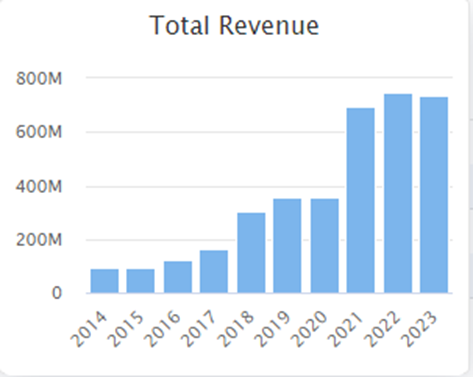
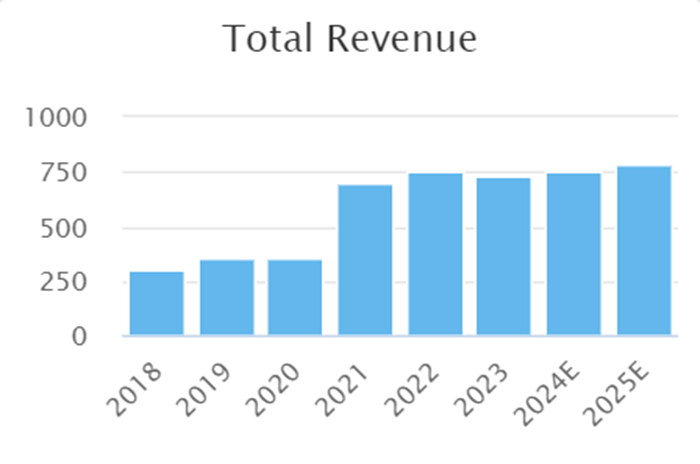
Another major acquisition followed in 2017 when Czech-based localisation provider Moravia was purchased for $320 million. At the end of 2020, they completed an all-share combination with major competitor SDL, creating the world's largest technology and language services provider. The impact of these significant acquisitions is visible in the long-term revenue chart:
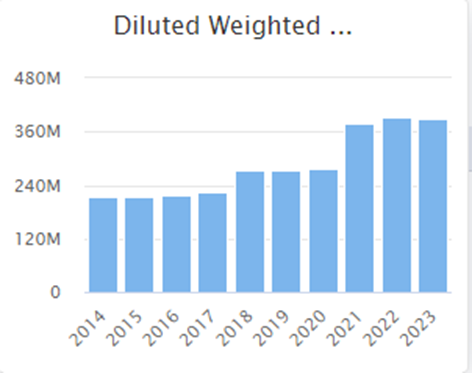
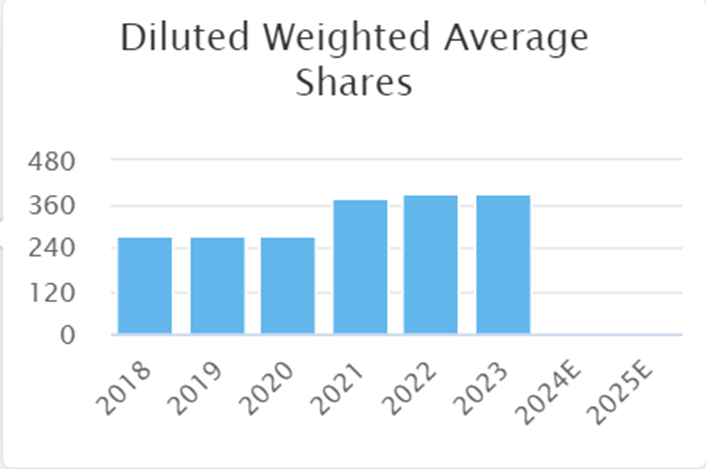
But also in the shares in issue:
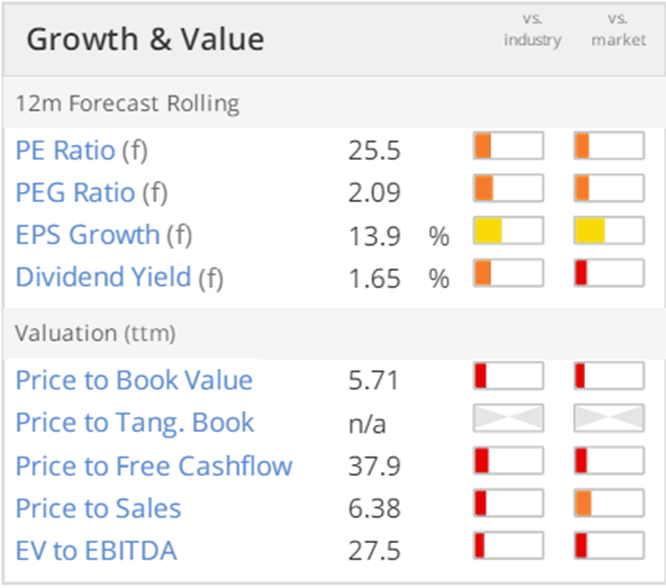
While these acquisitions added scale, they also took them away from their core IP localisation services. With hindsight, this looks to be a case of diworsification as neither of the acquired businesses has shot the lights out. The saving grace has been that the deals were done when their equity was much more highly priced. In 2017, the share price was more than twice the current level. In 2020, more than three times. Here is a snapshot of the valuation metrics from the StockReport shortly before the SDL deal:
Here is what the company does today:
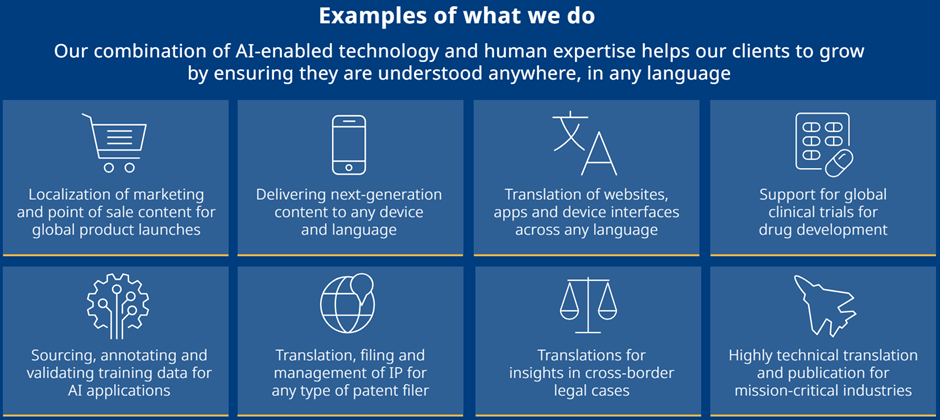
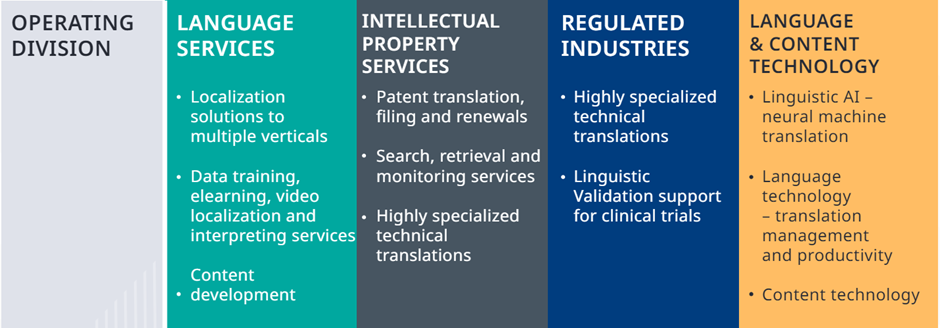
They split their reporting into four segments: Language Services, IP Services, Regulated Industries and Language & Content Technology. This is what these divisions do:
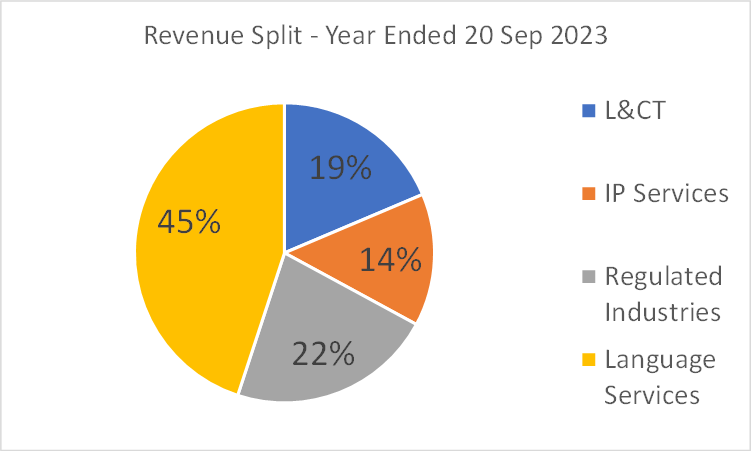
Revenue is dominated by Language Services, with almost half the sales:
But this is the lowest margin part of the business, and Language & Content Technology now generates almost as much operating profit:
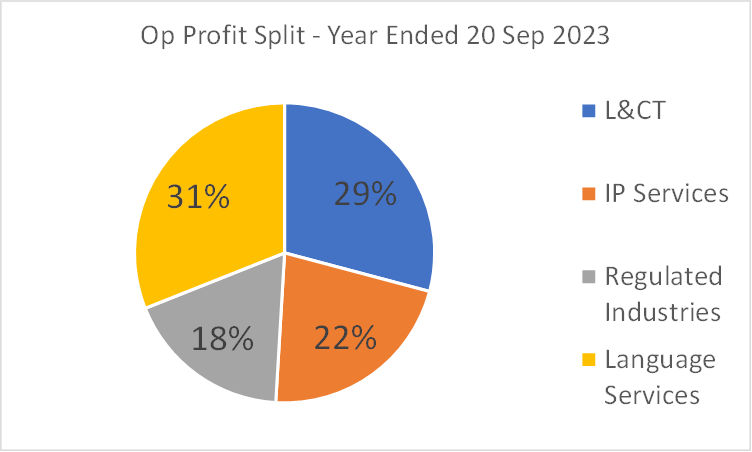
This means that the four parts of the business are roughly split equally in their contribution to operating profit before exceptionals. Here are the operating margins since the business took its current form:
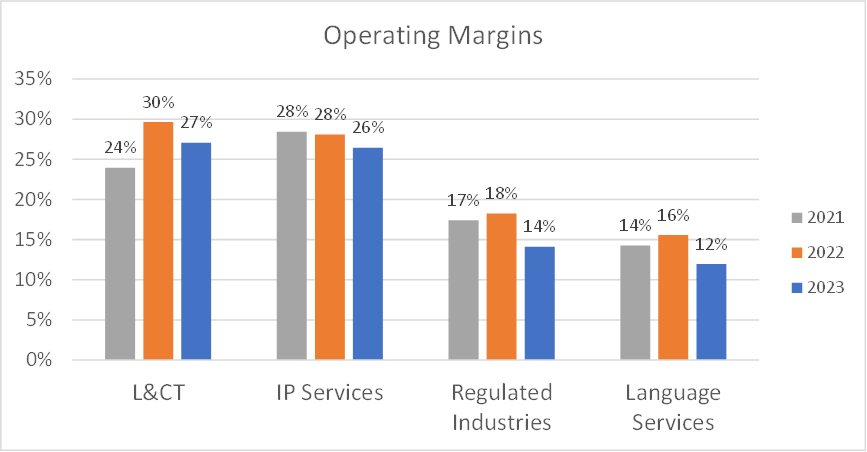
These operating margins show that Language & Content Technology and IP Services are excellent businesses, but all areas of the company experienced margin pressure last year.
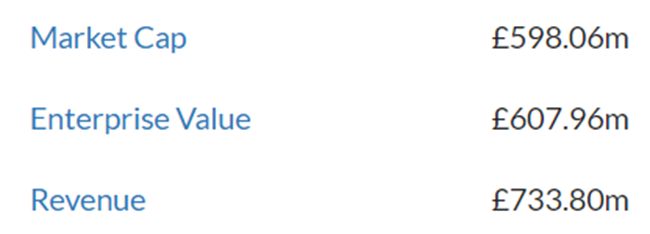
With a market cap of around £600m, this company would be in the FTSE250 if it were listed on the main market. Unusually, there is little structural debt for a company of this size. The company has net cash, excluding lease liabilities.
While not terrible, the StockRank doesn't exactly scream buy:
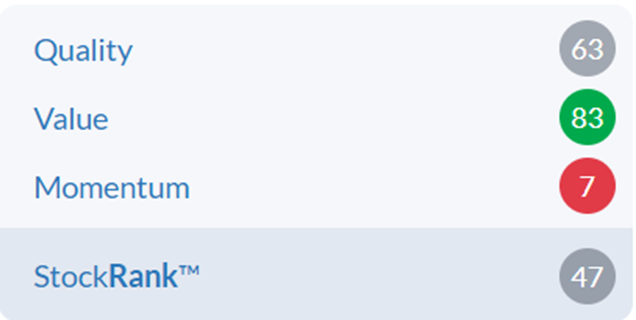
There is no escaping the fact that momentum is poor here and that this company will only attract contrarian investors at the moment.
However, I think there are reasons to expect that both the Value and Quality Ranks may improve in the future, which may drag the Momentum Rank up with them.
The long-term chart shows a fallen star: a stock market darling that has fallen on hard times. The long-term chart also shows how much sentiment matters to share prices. In 2020, this was considered a High Flyer, and many investors at the time would have called this a "never sell" quality compounder:
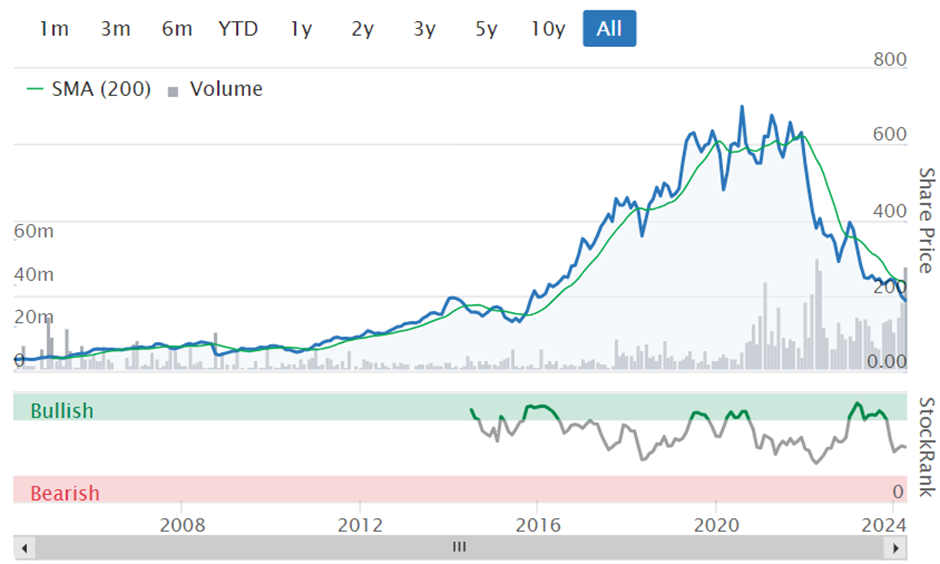
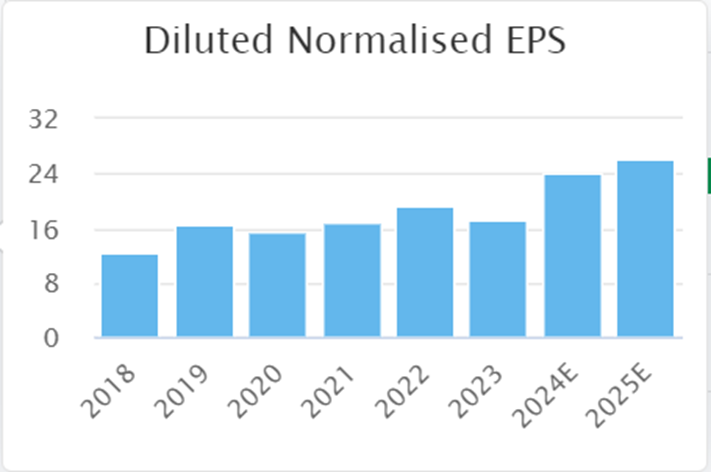
Those who never sold would have faced a painful period. Today, this business has higher normalised EPS, but the rating is far lower:
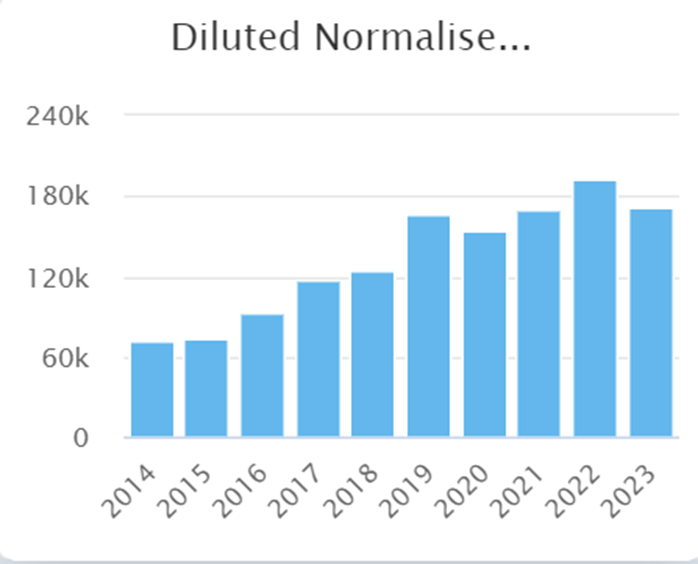
Sentiment has changed so much that, combined with regular increases in the payout, the company is now an income stock yielding around 8%.
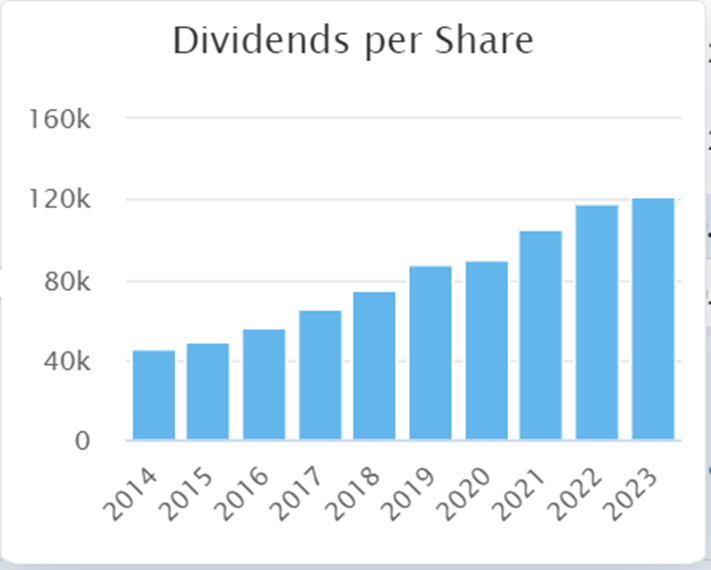
While studies show that investing purely for dividend growth is a poor investment strategy, this company's unbroken record of increasing dividends for 20 years speaks of the cash generation and consistency of performance it has enjoyed.
The company was subject to private equity interest in early 2022, but ultimately, it came to nothing. Presumably, they couldn't meet Mr Brode's price expectations.
Business Model
RWS's business model is to build long-term relationships with some of the largest owners and developers of intellectual property in the world. Through this, they integrate themselves to provide the language transition needs of those businesses using 1,700 salaried staff and over 35,000 freelancers. They aim to provide a more accurate and cost-effective solution than competitors, including by the increasing use of Machine Translation via their Language Weaver and Language eXperience Delivery products. Their translations can deliver any combination of speed, cost and accuracy that customers demand.
Competitive Advantage
The Quality Rank is okay but not outstanding:

Perhaps the biggest challenge with investing in this business is the very low Return on Capital:
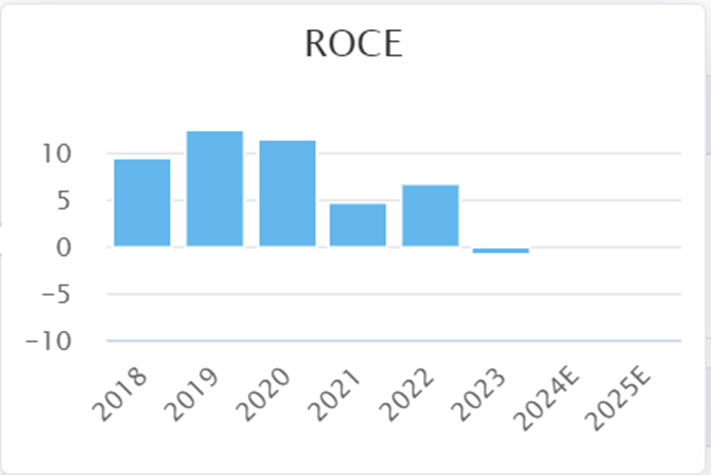
On the surface, these are below the cost of equity for the business, and the recent growth appears to have destroyed shareholder value. Part of this is the difference between Reported EPS and Normalised figures:
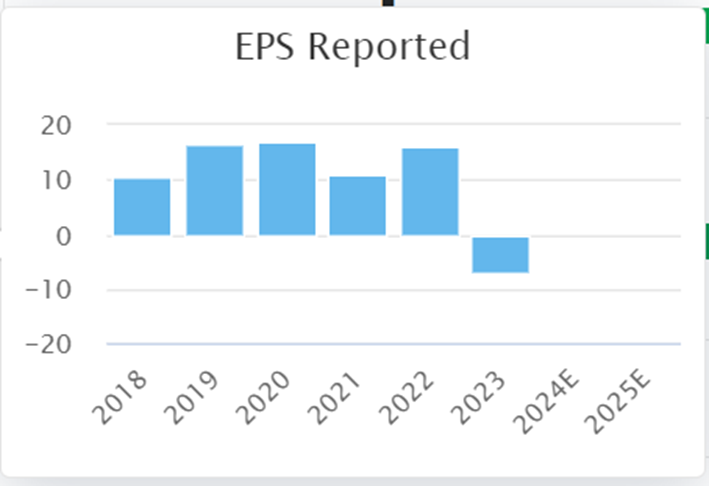
The other factor that is having an impact here is that the vast majority of the capital employed is goodwill, arising from the large acquisitions:
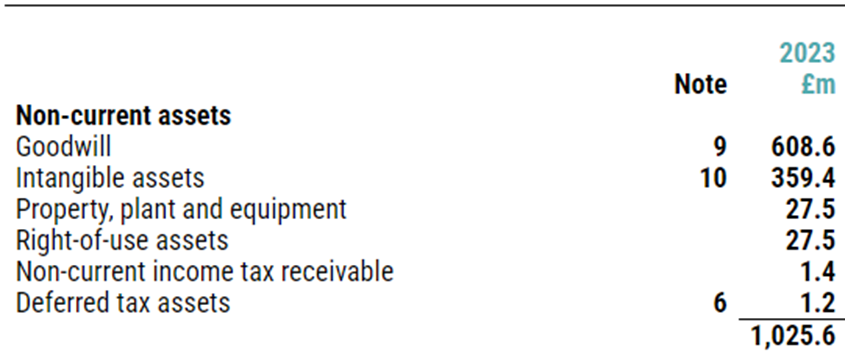
This suggests that the company potentially overpaid for these, as the returns in the following periods have been unimpressive. However, since these acquisitions were paid for using stock that was highly rated at the time, this is less of an issue than it might be.
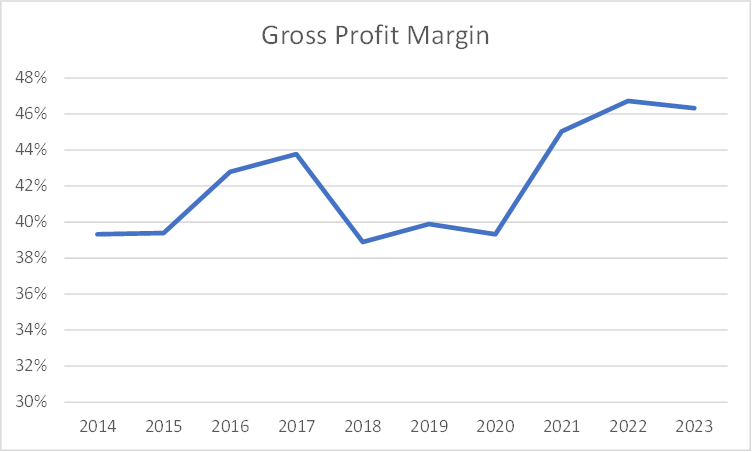
Many investors consider Gross Margin a good measure of competitive advantage, and here there is better news. The current figure of 46% suggests a reasonable moat for this business. Perhaps even more importantly, this figure has been trending up, suggesting that the moat has got deeper rather than shallower over time.
The Quality Rank is also let down by the low Piotrsoki F-Score, which stands at only 4/9.
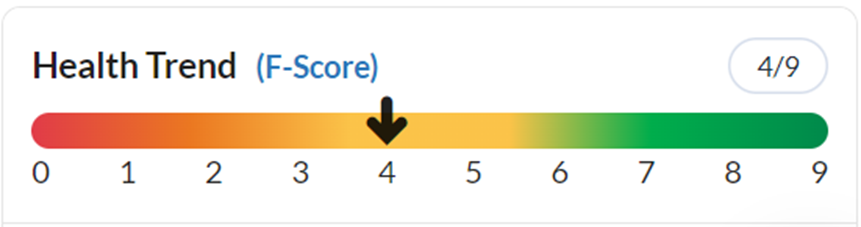
Here are the current five failures:

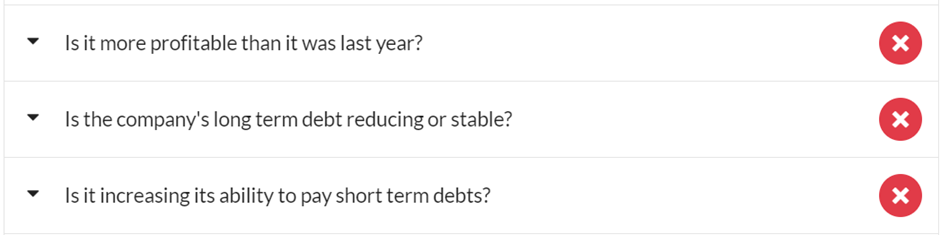

Again, the impairment of intangibles negatively impacts the profitability metric. It also seems harsh that a company with net cash should fail on measures related to its ability to pay its debts. If trading remains in line with current forecasts and there are no further impairments, then we would expect the company to score much more highly on the F-Score in the future, with a corresponding jump in the Quality Rank.
Financials
Growth and Profitability
Stockopedia shows revenue CAGR as a very respectable 19%. However, looking at the details, this is almost all due to the step change from the acquisition at the end of 2020:
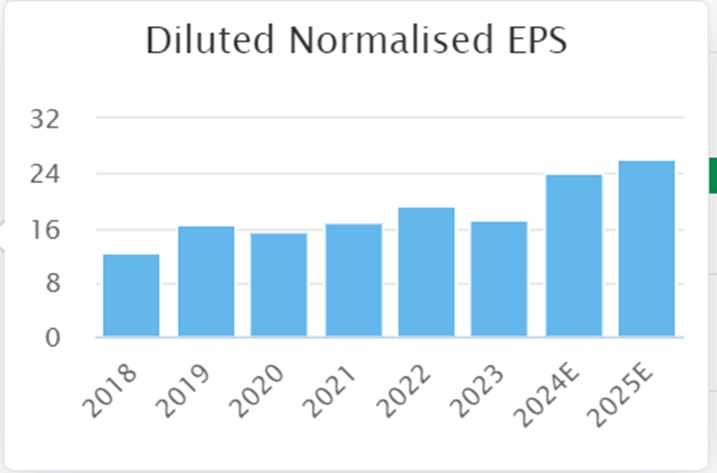
This acquisition barely appears in EPS, which is a much more pedestrian 6% CAGR:
This is not helped by the jump in share count from the last acquisition:
However, EPS growth is looking more positive and is forecast to grow 37% in the future, despite broker downgrades over the last year:
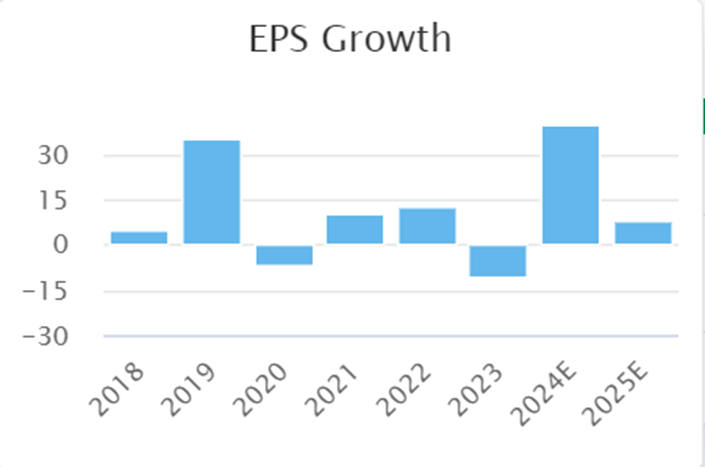
There may be further downgrades to come but it still leaves the company growing EPS. The rapid growth in 2019 saw the shares reach a P/E of over 20, so any sign of higher medium-term growth could see a significant re-rating.
Balance Sheet
Although the current ratio is marked as amber here, 1.59 represents a perfectly reasonable value for this sort of business:
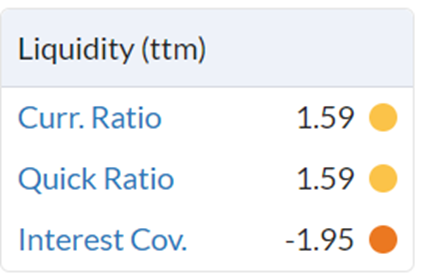
Overall, gearing is very low, and there are no signs of financial distress:
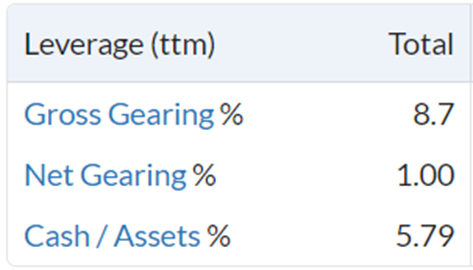
It is worth noting that this business has no tangible assets to speak of. So if the financial situation significantly deteriorates in the future, or profitability plummets, there is little in the way of physical assets to protect the downside. For the moment, the chance of either of those scenarios occurring looks remote.
Cashflow
This is a high cash-generative business, with operating cash flow often exceeding normalised EPS:
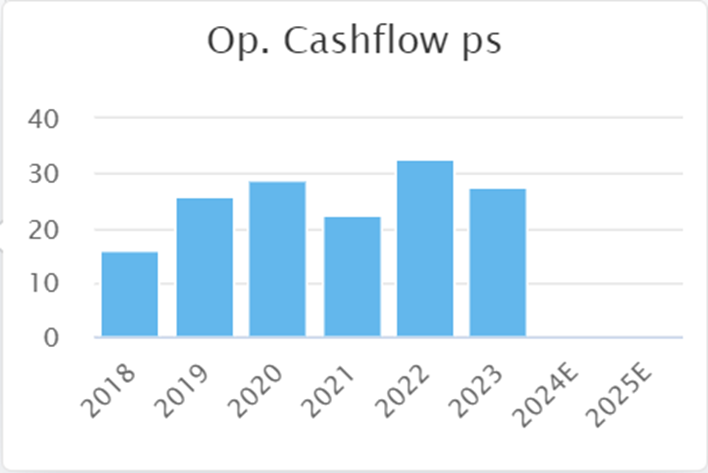
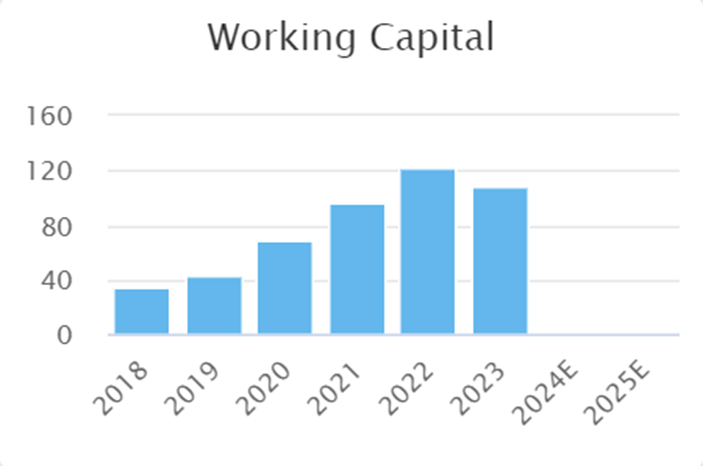
This is despite an increase in working capital requirements over the past few years:
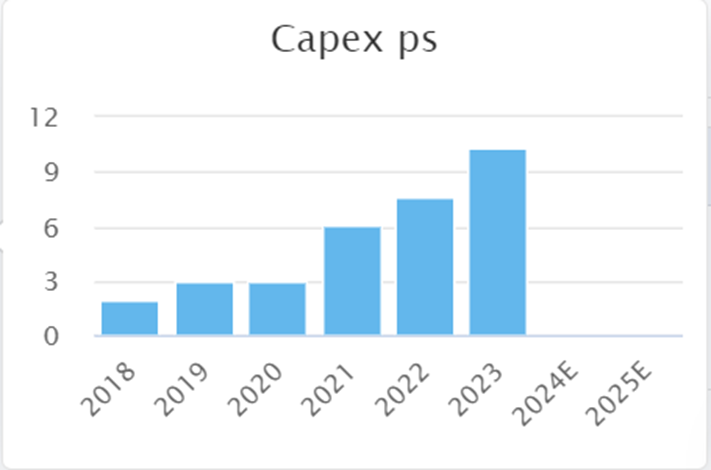
The Capex is almost entirely internally developed intangible assets such as software systems, and even though this has also increased recently, this is still below amortisation.
The result is that the majority of earnings turn into free cash flow:
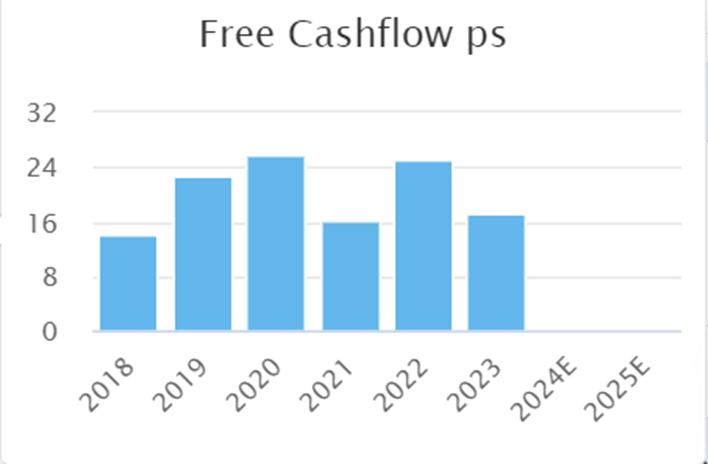
Stockopedia rates the P/FCF of 9 as amber. This perhaps reflects how cheap some UK stocks have become:

However, this will likely improve going forward as free cash flow tracks the forecast rise in EPS.
Dividends/Buybacks
Unsurprising given the record of cash generation, the company has been a prolific dividend payer, with an unbroken dividend record spanning 20 years:
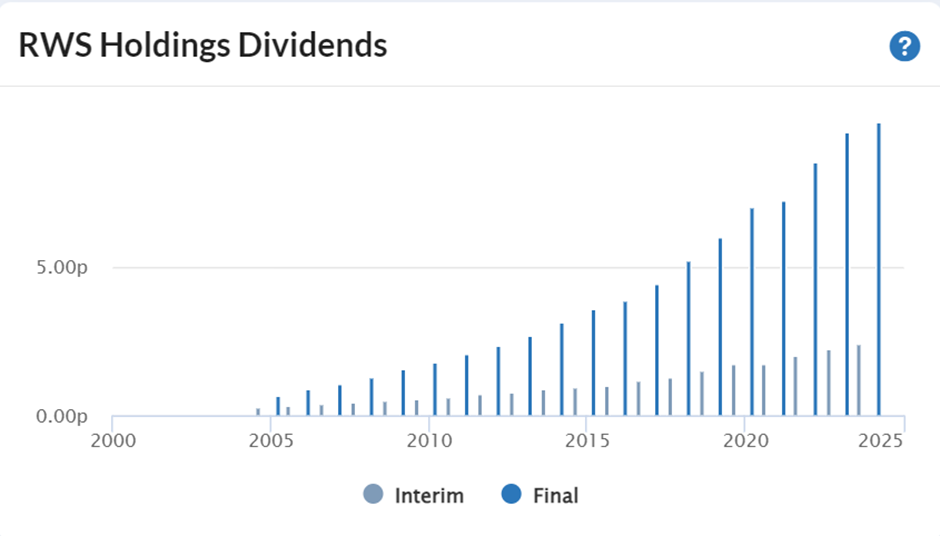
This leads to it now forecast to yield of 8%:

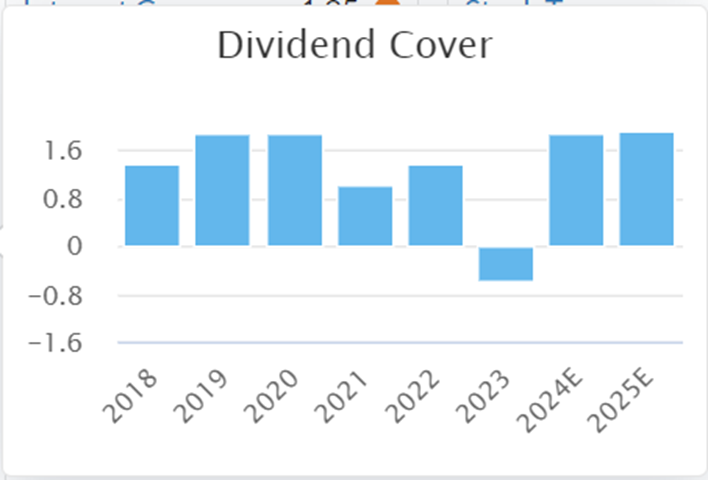
The dividend has been growing at an impressive 10% CAGR recently. However, slower growth in the payout is forecast for the next couple of years. The dividend is well-covered in most years:
The lower dividend growth may be due to management considering the stock cheap and buying back shares instead. The company has spent £50m on its own stock since June 2023. However, on 21 February, this buyback was completed, with the company saying:
The Repurchase Programme has now been closed. Since 14 June 2024 RWS has repurchased 20.8 million ordinary shares of £0.01 each at a weighted average price of 239.2263 pence per share at an aggregate cost of £49.7 million. These shares, representing 5.33% of RWS's issued share capital at the start of the programme, have been or will be cancelled.
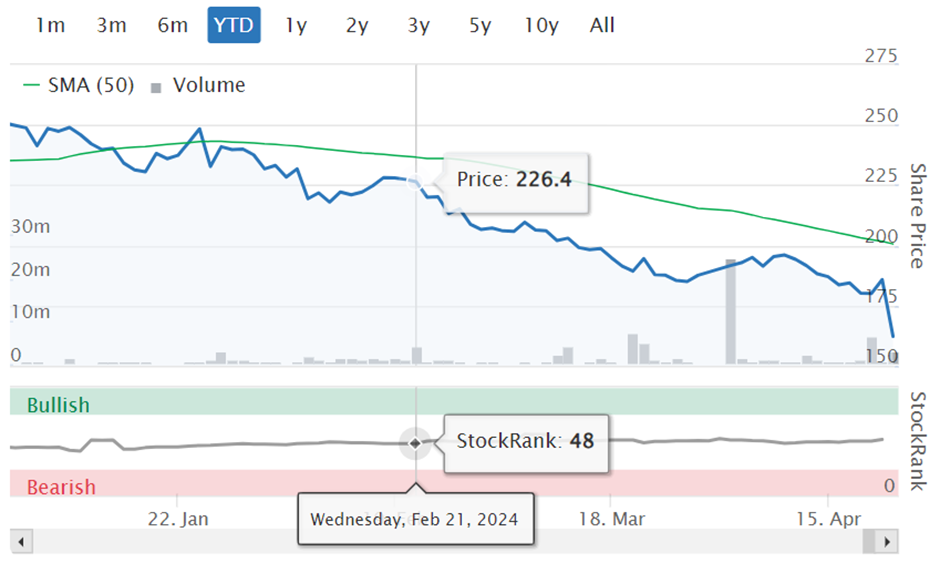
One of the problems with a specific buyback is that when it ends, a ready buyer for the shares is removed from the market, and the price often falls. As it has done here:
I can't help feeling that if such companies were a bit less aggressive with their buying, they would manage to cancel a greater number of shares.
Ownership Structure
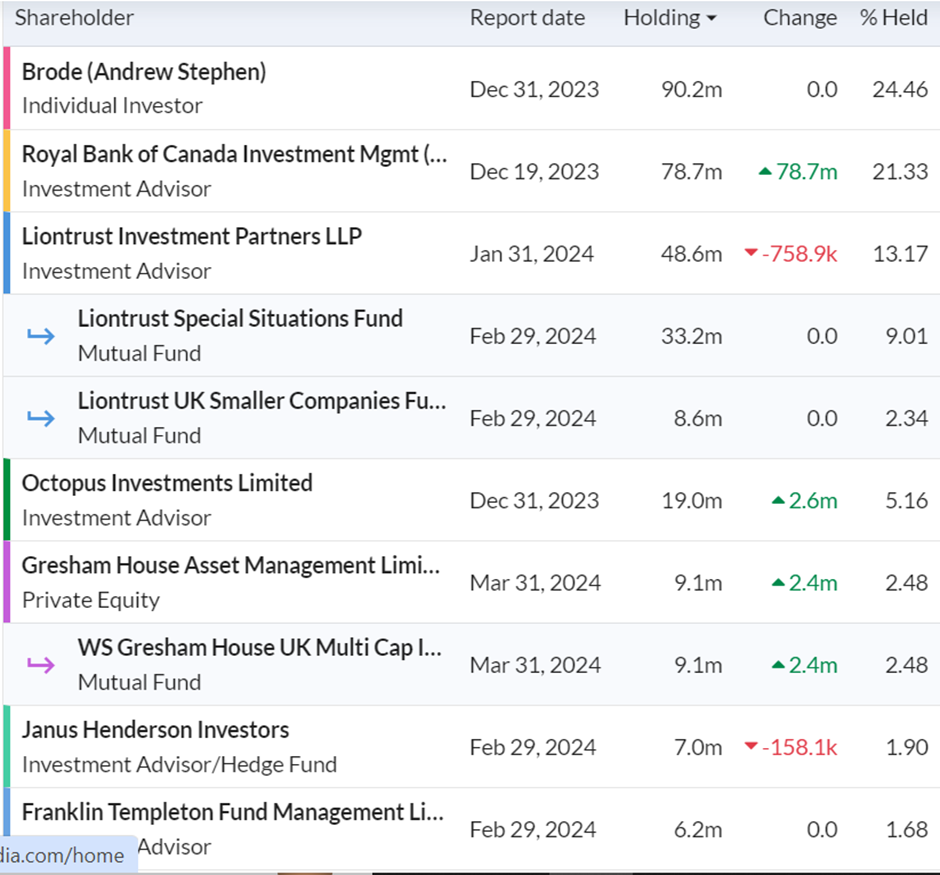
Andrew Brode remains the largest shareholder here, with around 24% of the shares. The rest of the register is the type of institutional holdings you would expect from a midcap company:
Directors have been ready buyers of the shares over the last few years. The CEO has purchased some larger blocks of shares at a significant premium to today's price. However, excluding Brode, their overall holdings are relatively small:
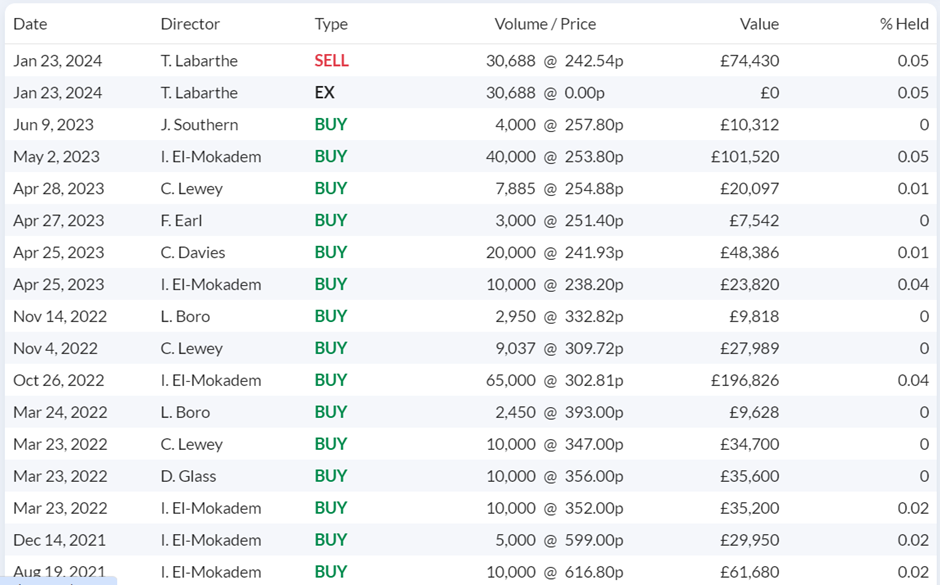
The lack of recent options exercise reflects that few of the board have been at the company for the required years of service for these to vest. However, this year, a director did exercise options and sold the lot, which takes the shine off an otherwise good track record of director purchases.
Valuation
The company is very cheaply rated on a number of metrics:
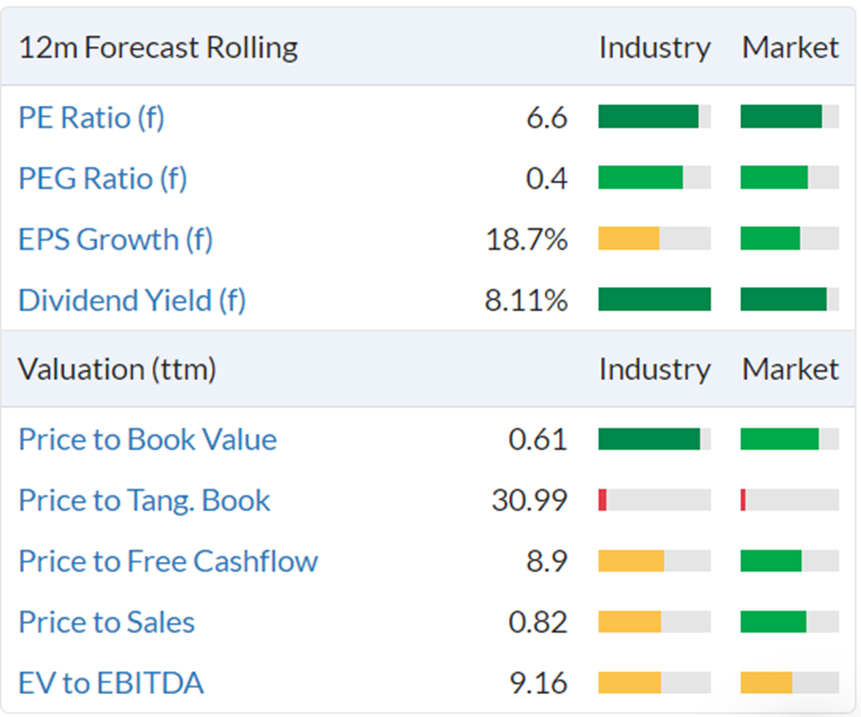
With a forward P/E of 6.6 and a yield of 8.1%, not many companies of this size are as lowly rated. As already described, this is not a tangible book value play, so this provides little downside protection. The price to sales reflects that this is a relatively high-margin business. This means the Value Rank is good but not outstanding:

One anomaly is that the EV/EBITDA measure, as calculated by Stockopedia's data provider, appears to miss that there is a one-off impairment of goodwill in the last results. The company don't provide an EBITDA figure themselves, but my own calculations from the cash flow statement show this to be closer to 4 than the 9 that is in the StockReport:

This means that the Value Rank would be a little higher if this were accounted for differently.
While it is refreshing to see a company reporting Profits, not EBITDA, one black mark against the company is that they have regularly adjusted their reporting of profit for exceptional costs:
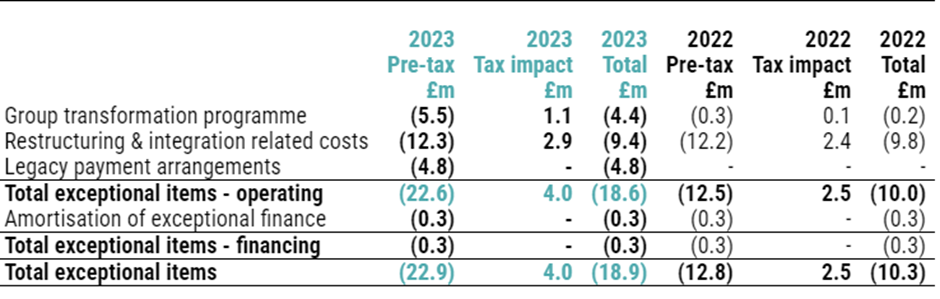
The problem is that none of these looks particularly exceptional. As an acquisitive company, restructuring and integration seem to be a normal part of their business. Given that their major acquisitions have not been particularly impressive, investors may want to make their own adjustments here.
Risks
Unitary Patent
One of the significant changes in patent filing has been the implementation of a Unitary Patent within the EU. This had been discussed for many years and finally came into being in 2022. The big change is that there is now a single patent that provides uniform protection across participating Member States, simplifying and streamlining the patent application and enforcement processes. Seventeen countries, representing about 80% of EU GDP, have signed up to this. Secondly, there is a new court that allows centralised litigation over unitary patents. The most significant impact for RWS is that patents no longer need translation into every language. The EU now says:
The language regime of the Unitary Patent is that of the European Patent Office. Its 3 official languages are English, French and German. No translations will be required at a national level once a European patent is granted and unitary effect is attributed to it.
This implementation initially caused a drop in profits for the company as they reported in early 2022 that:
We are seeing further weakness in IP Services' performance as a result of the recent update from the European Patent Office, which allows clients to delay the granting of patent applications in order to benefit from protection under the Unitary Patent, which is expected to come in to effect in the second half of 2022…
However, in the latest results, they say:
Successfully managed the impact of the Unitary Patent and improved sales effectiveness, giving strong foundation for FY24
The IP Services division represented 14% of Group revenues in the year (FY22: 14%). Revenues of £104.8m were 2.2% lower year on year on a reported basis (FY22: £107.2m) and 4% lower on an organic constant currency basis. Following the introduction of the Unitary Patent ("UP") by the European Patent Office, the division delivered 2% organic constant currency growth in Q4.
While a 4% constant currency revenue decline is not exactly a stellar performance, this part of the business has seen a return to modest growth more recently. It seems the market's worry that this change would have a significantly negative impact was overblown.
AI
The biggest current worry of the market is that AI will become the norm for translation and significantly reduce the costs of translation, meaning that RWS's services will no longer be required. You only have to see some of the AI-translated videos to see how this risk may present itself.
However, the company says it is at the forefront of machine translation and has been issued with over 40 patents. The use of Machine Translation may not be as novel as some of the AI developments out there. However, large businesses are often conservative and unlikely to risk mission-critical technical translations to a fully automated process.
One way RWS are capitalising on the trend for AI is by offering a new Train-AI product. The real value in many AI systems is not the algorithms but the data set on which they are trained. While this might provide additional short-term revenue streams, this looks a little short-sighted to me. Surely, their real competitive advantage in this area is that they have a massive data set of professionally translated documents. It sounds a lot like building a toll road over your moat and charging invaders to use it. Still, scale and first-mover advantage may give them an advantage in this space.
For me, the AI revolution will likely have a nuanced impact on the business. It may impact their revenue as more basic translation needs are met using fully automated tools provided elsewhere. However, it may also decrease their cost base and enable them to capture more of the margins on translation via a hybrid model. It seems to me that AI is equally an opportunity and a threat to the business.
Recent Trading
The company issued a trading statement yesterday, which said:
Organic constant currency ("OCC")¹ revenues declined by 2% in the period, an improving trend compared to the prior year (H1 FY23: -7% and H2 FY23: -5%). Reported revenue is expected to be £350m, down 4% on prior year…
Adjusted profit before tax ("PBT") is expected to be approximately £45m in the first half (H1 FY23: £54m).
This leaves the company in need of a strong H2 to hit their full year forecasts. The outlook statement doesn’t give great confidence that they will achieve these:
Delivery of the Board's full year expectations remains dependent on continuing to successfully leverage our growth initiatives and AI offerings to compensate for ongoing headwinds in some areas.
No doubt this uncertainty is the reason that the shares fell around 13% yesterday. Individual investors need to be wary here, as the company has form for engaging in an increasingly common practice of downgrading expectations via broker notes rather than stating in the trading statement that these have changed. Since individual investors cannot access the broker coverage here, this may put them at a disadvantage. It may well be that there are further broker downgrades that happened in response to yesterday’s trading statement that will take time to appear in the Stockopedia numbers. I’m sure the company would argue that this is the normal way that mid-cap compaies operate. However, such behaviour is a black mark on the company that some may be unable to ignore.
Sentiment
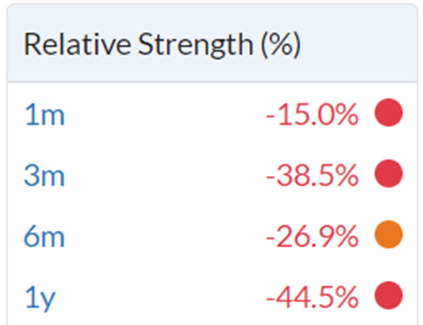
The Momentum Rank is frankly terrible:

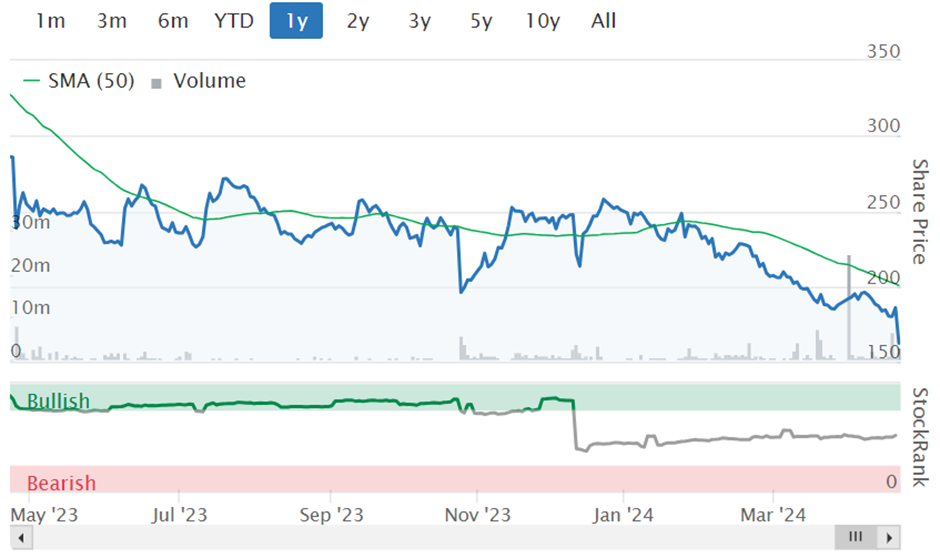
A lot of this is down to the recent weakness in the share price:
The broker consensus has also been trending down, including a small (so far) downgrade in response to yesterday’s trading update:
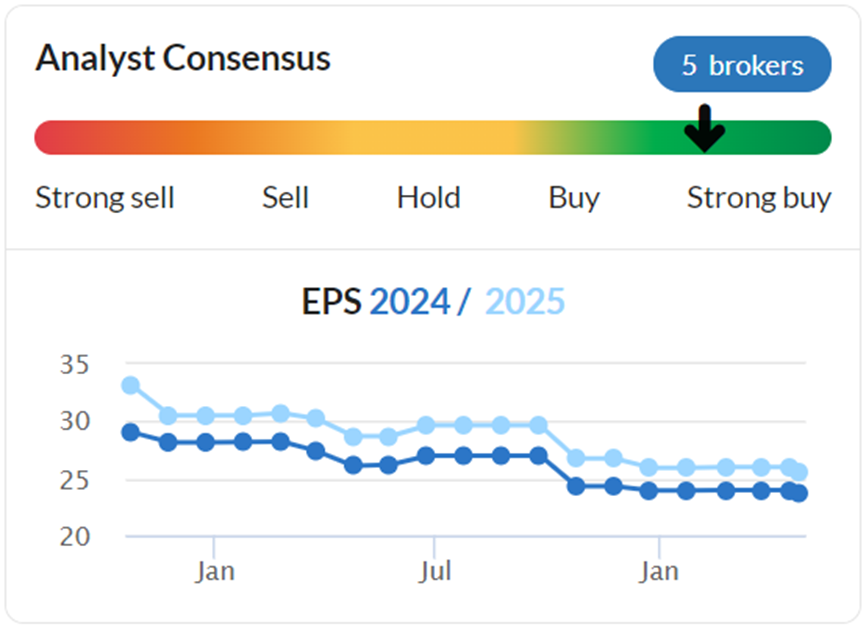
Given that the share price has dropped more than the consensus downgrade, and the presence of the dreaded H2-weighting, many investors will be extrapolating this trend into the future. However, I don't think we can also rule out a large institutional share overhang. Cautious investors may want to wait for signs that this has cleared before investing.
Conclusion
RWS is a testament to how quickly sentiment changes towards a business and how great an impact this has on valuation metrics. A few years ago, this was a High Flyer with a P/E over 20. Today, the shares languish on a P/E of around 7, despite earnings forecast to be significantly higher than back then. Part of the reason for the derating is that the market fears that AI will enable competitors or the clients themselves to do much of the work that RWS does directly and at a lower cost. However, fears over industry changes, such as the EU implementation of the Unitary Patent, have not had the dire impact many have predicted. Although it would be naïve to think that AI won't disrupt parts of their business, they have the scale and customer relations to benefit from it in other parts of their operations.
This has always been a cash-generative business, as their unbroken 20-year record of dividend increases shows. This means that they have the potential to invest in new technology and build increasing scale both organically and inorganically. In light of this, the current rating looks too low to me. However, the lack of clarity over H2 trading will scare many investors off. The cautious will want to wait for signs that the trend for broker downgrades is ending before investing.
[Disclosure: Mark owns shares in RWS Holdings (LON:RWS) ]
Disclaimer
This is not financial advice. Our content is intended to be used and must be used for information and education purposes only. Please read our disclaimer and terms and conditions to understand our obligations.

17 comments
Thanks Mark, always like reading your articles.
Thanks for the article Mark - do you know what the simplest way to find articles from a specific person is eg to find older articles you, or Edmund for example, have posted?
Thanks, Michael
Hi Michael,
Two easy ways, one is to click on my profile, then activity and filter by posts if you want to see everything I've written. Or if you are looking for a specific company then go to the StockReport for that company and then the discussions tab and all discussions tagged with that company will be shown.
HTH,
Mark
Great, thanks Mark
Thanks Mark, this is nothing short of excellent IMO. Long term holder and due to top slicing still well in the black. I have spent my career in tech and my experience of other hype-cycles leads me to agree with you that the negative impact of AI is over done in this case.
I will be adding over the next few days.
One additional point is I think RWS could be a takeover target - the people, content and relationships alone will be tempting for a bigger player at this price.
Great piece Mark!
Apparently there are other translation companies out there owned by private equity because the business is so cash generative and therefore attractive to them. I wonder if RWS has now become a takeover target to PE? After all it is the market leader by size with market leading technology. There must be synergies to a PE buyer??
Hi Chasbas,
It could well be. There was PE interest in 2022 but came to nothing. My impression is that Brode had his eye on the highs of the previous few years, and PE like a 30% premium to keep as much of the upside to themselves.
Recent trends and market valuation of the business may persuade Brode that it would be better off in private hands though. His 24% doesn't completely block any deal but it would be difficult without his support. I'd be pretty sure PE would like to own this business. However, I doubt a deal will be done at a price that all parties think is reasonable.
Mark
Superb analysis Mark, I very much value your content, I think it's one of the best.
I normally agree with most of your ideas but with this one am finding it quite difficult to be contrarian (for all the reasons you list) so will wait and watch.
Thanks again.
Another top quality post by Mark, thank you very much
Probably not an investment for me currently but I hope ed and stockopedia top brass read this comment
Although all staff put out fantastic content I personally gain the most from Mark's output, I would like to see more frequent articles from Mark
As a relative newbie investor the way Mark writes his articles taking you through his thought processes and displaying the relevant info he looks at from within stockopedia is invaluable in learning how to gain the most from the subscription and also how to become a better investor
I think yous offer a free trial here at stockopedia and I feel potential members seeing content like the above if they are at a similar investment stage as myself would find the membership cost as a must
Cheers callum
Very good piece Mark. Thanks very much for this.
I sold out of RWS because (perhaps wrongly) I have been shocked how easy it is for me (without cost) to have a document translated immediately via many different AI companies. I suspect there will always be a need for the services RWS provide, but I think some of the easy margin may be erased. The question is: how much of their business is very sticky because they are perceived as experts and they are doing everything for the client? Often it is a lot better to outsource most of this translation etc. rather than the company doing it for themselves. It might still mean however that they won't return to their former glories.
Mark , once again you have provided us with a fantastic resource for investing, whatever readers thoughts are on this organisation and it's potential.
Articles like this, for me and many others, are invaluable as they provide a detailed analysis which i suspect most of us wouldn't achieve personally. This is why I happily invest my annual subscription with Stockopedia.
As mentioned below, your detailed and thorough analysis really helps paint the picture for or against the investment case and for that i thank you (I'm on the sidelines atm but have added it to my watch list ).
I chuckled at your moat analogies!
Please keep up the good work and good luck with your investment(s).
P
Thank you for your detailed analysis, I think RWS is great British Company with a fantastic offering, as dividend investor I will take the opportunity to add to my holding
Excellent balanced article, Mark
Excellent article Mark, thank you! It is indeed fascinating how sentiment swings. This one is on my deep value watchlist. As you say, some of Stocko’s market ratings are definitely undercooking the value on offer simply because U.K. stocks on many measures are so cheap.
Thank you for that Mark, very thorough and helpful. We hold but thankfully not a large holding, it is currently down about 40% although we have had those good dividends. I've learned to be wary of averaging down but we might stick with them.
Thanks, Mark for an impressively detailed and balanced analysis of RWS Holdings (LON:RWS) .
Excellent report and food for thought. Thank you. One other point is that it should be a good diversifier, it has risk but these risks are quite different from most other companies.