Screening for bargains: 3 UK shares at 52-week lows

Share prices are usually much more volatile than the performance of the underlying business. It’s quite commonplace for shares in even large and mature companies to swing by 20% in either direction during the course of a year.
For this reason, buying shares in good companies when they’re temporarily depressed can be a profitable strategy – hence the popularity of screening for stocks at 52-week lows.
Against the backdrop of this year’s market volatility, I recently dusted off my 52-week low screen to search for potential bargains. In this article I’m going to look at three stocks we’ve rarely – or never – covered in the DSMR.
52-week lows: one sector dominates
I first created this screen in 2023. It uses some simple rules to find potentially businesses that might be interesting and are trading within 10% of their 52-week low share price:

The obvious caveat to any stock screen that highlights companies with falling share prices is that some of them will be falling for a good reason!
For this reason, I’ve used the StockRanks as an initial sanity check, stripping out any companies with a StockRank below 60.
At the time of writing, this screen produces 63 results, although its focus on momentum and price movements means that results change regularly.
>> My 52-week screen is here.
In this article, I’m going to concentrate on companies with a StockRank of at least 80. By focusing on stocks with strong factor scores, I hope to tilt the odds in my favour and narrow down the options to a more manageable selection.
This requirement produces the following list of 21 stocks, which I’ve ordered by StockRank:

Consumer slowdown?
There’s a fairly broad mix of businesses in this list. But one sector dominates, perhaps unsurprisingly:

Investors are concerned that the current macroeconomic backdrop will lead to weaker trading as the year progresses. Just this week in the DSMR, I’ve covered earnings downgrades from Jet2, Warpaint London and Taylor Wimpey, for example.
Not all companies in this sector are suffering though. Indeed, a number of the companies on the list above have recently issued positive or in line trading updates:
Howden Joinery (Trading Update 28/04/26)
Young & Co’s Brewery (FY26 Trading Update 23/04/26)
Ultimate Products (Interim Results 24/03/26)
Pets at Home (I covered this business in a Stock Pitch last week)
AO World (DSMR 10 April 26)
Halfords (DSMR 29 April 26)
3 stocks to consider buying
A number of the stocks in the screen results above are regularly covered in the DSMR.
For this piece, I’ve selected three companies we’ve rarely or never covered that I think are worth considering at current levels. They each operate in different sectors and include a Super Stock, a High Flyer and a Contrarian – three of our four winning styles.
Howden Joinery (LON:HWDN)
This trade supplier of kitchens and bedrooms is well-known as a high quality business with an excellent growth record. Earnings have risen at a compound average of nearly 15% over the last five years, while double-digit returns on capital have supported self-funded growth.
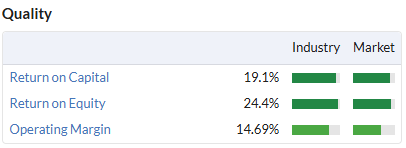
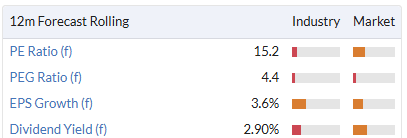
The catch is unsurprising – Howdens rarely looks obviously cheap.
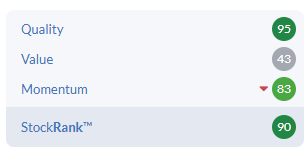
These factors are reflected in the StockRank, with high Quality and Momentum scores but a much lower ValueRank:
Has de-rating created a buying opportunity? Howden’s High Flyer styling is probably deserved, but I think it’s worth looking more closely at the valuation.
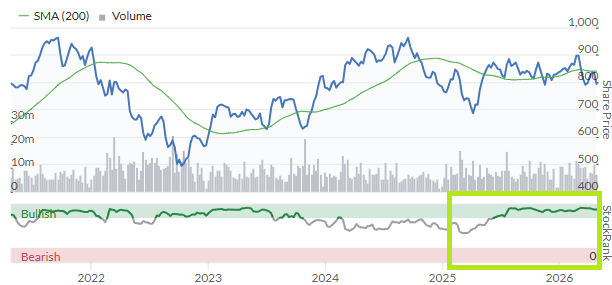
Howden shares have in fact de-rated significantly since the pandemic:
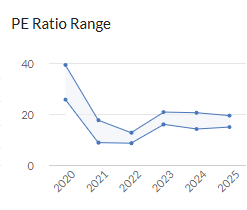
The stock has gone nowhere for five years and the shares now trade at a level first seen in 2021 – while the StockRank has risen sharply since the middle of last year:
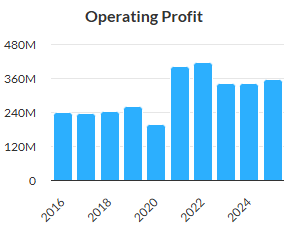
Admittedly, the group’s profits peaked in 2021/22 and have not yet returned to their pandemic highs.
Even so, a more considered look at the valuation suggests to me that Howdens is no longer particularly expensive for a quality business:
One of my preferred valuation measures is a stock’s EBIT/EV or earnings yield. This ‘whole business’ valuation measure neutralises the effect of cash or debt on valuation and reflects the viewpoint of a business owner.
I estimate Howden’s trailing 12-month EBIT yield at nearly 8% – a threshold I use as a rule-of-thumb for value, including in the SIF portfolio.
This figure is matched by a free cash flow yield of 8%, according to the StockReport – also potentially good value.
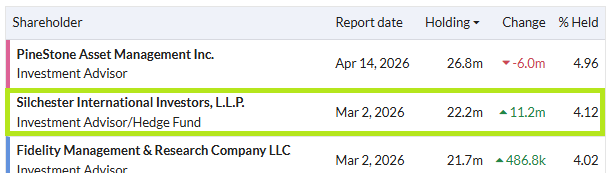
Institutional interest: Howden has also attracted a sizeable investment from specialist value fund Silchester, which recently doubled its position:
Recent trading: the company’s April trading update showed group revenue up by 3.7% during the 16 weeks to April 2026, with international depots outperforming the UK market.
Supply chain conditions are said to remain “robust”, thanks to the Howden’s near-sourced and vertically integrated business model. Hedging on fuel expenses should provide predictability for the remainder of the year and the company expects to open a further 29 depots in 2026.
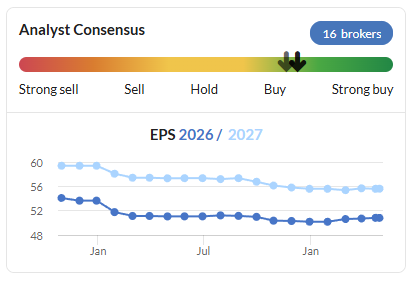
The outlook statement indicates the company is “on track” for 2026, but it may be worth noting the gradual erosion of broker forecasts over the last 18 months. There’s clearly been some weakness in the outlook:
Conclusions
Howden is classed as a consumer cyclical and with good reason. The company sells kitchens and bedrooms to tradesmen, who fit them in private homes. In a serious UK slowdown, this business would almost certainly see a slump in demand.
It’s also possible that cost inflation and other factors will see the group’s previously impressive margins come under lasting pressure.
Despite these risks, I think Howden Joinery’s valuation looks interesting and believe the business could be worthy of further research.
Savills (LON:SVS)
My second choice also has a property theme, but comes from a very different place.
Savills is a global real estate advisor with operations in 70 countries and a track record stretching back more than 170 years. It’s a market leader in many areas, with networks, expertise and data that provide impressive reach and market share.
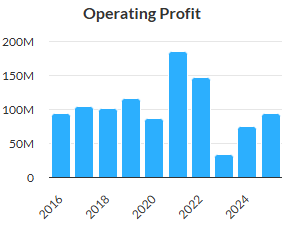
The post-pandemic period has seen mixed trading conditions and led to a period of normalisation that’s saw profits fall before starting to recover:
2025 results: last year saw something of a return to form for Savills, with the group’s transactional and non-transactional business units all seeing growth. This translated into a solid financial performance:
2025 revenue up 6.1% to £2,551m
Pre-tax profit up 14.4% to £101m
Adjusted earnings up 16.6% to 77.2p
Net cash of £168m
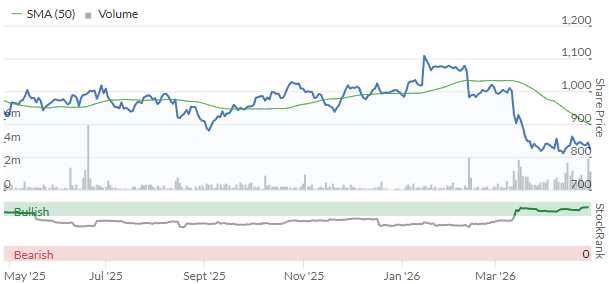
This performance was reflected in a share price recovery, but events in the Middle East prompted a dramatic reversal during the first quarter of this year:
Big acquisition: I would also speculate that some of the share price weakness seen since March reflects mixed views among investors about the acquisition announced alongside March’s results.
Savills is acquiring US real estate investment bank Eastdil Secured for $1,113m (c.£827m). This deal is aimed at expanding Savills’ US footprint and expanding its offering to include “a broad suite of real estate advisory services”.
This is expected to generate a “low-to-mid teens accretion” in adjusted earnings from 2027, with a low-teens return on invested capital that’s “meaningfully ahead” of the group’s cost of capital.
Savills has made acquisitions before and Eastdil may well deliver. But this deal will see the company’s share count expand by 16% and require the business to take on more debt.
In my view, it’s large enough to carry some risk, especially as it’s one of the first big changes made by the new CEO, Simon Shaw (Savills’ former CFO).
Super Stock value? Despite this concern, I think Savills’ valuation has now fallen to a level where it could be attractive.
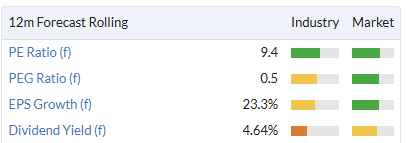
The StockRanks echo this view, with Super Stock styling and an improving set of factor scores:
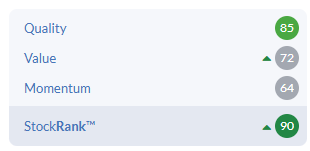
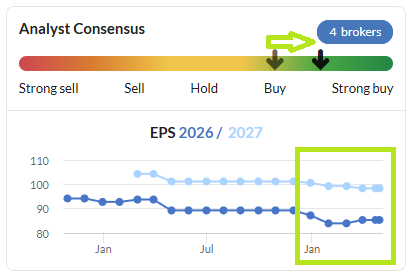
I’d also note the positive and improving broker consensus. Analysts covering the stock currently have a price target of 1,240p – nearly 50% above current levels:
Conclusions
This is a type of business I quite like, as I believe the competitive advantages Savills enjoys are hard – if not impossible – to replicate at such scale.
I’m also attracted by the company’s long history. This is a business that’s been doing the same thing successfully for over 170 years. It’s likely to have developed a durable and successful culture and proved able to evolve.
However, I can’t deny that Savills is currently entering a period of change that could impact performance, both positively or negatively. Potential concerns include:
CEO and CFO are both recent appointees;
A big recent acquisition;
Events in the Middle East may yet have more far-reaching effects, especially if interest rates rise again.
Savills is on my watch list. In broad terms, I think the valuation is probably attractive while the dividend yield remains above 4%. I’d want to do a little more work before pulling the trigger, but I think this is definitely a business with some good qualities.
Princes (LON:PRN)
My final choice is more of a wildcard, for the reason that it’s a very recent flotation.
Food group Princes is known for its range of canned goods such as tinned fruit and fish. It’s actually rather more than this, with a brand portfolio that is far wider than I had previously realised:

Source: Princes Group website 29/04/26
2025 IPO: Princes floated on the London market in October last year and is currently a FTSE 250 member, with a market cap of around £900m.
Prior to its flotation, this business spent around 35 years in the ownership of Japan’s Mitsubishi Corporation. In 2024, it was then acquired by Italy’s Newlat Food group for £700m. Newlat then proceeded to combine Princes’ operations with some of its own brands.
The resulting creation was fast-tracked into an IPO in October 2025.
The flotation has left the group with a £200m+ net cash position and is expected to support the acquisition of additional food brands for the Princes portfolio.
Newlat’s influence remains significant, however. Princes chairman Angelo Mastrolia is the founder of Newlat and remains the majority shareholder in Princes:
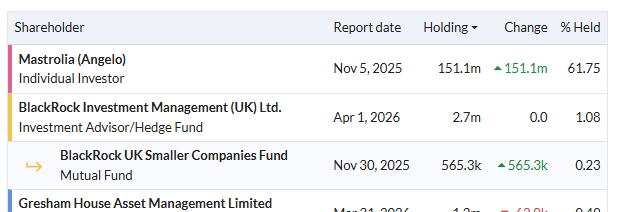
It remains to be seen whether Mastrolia will choose to sell any of his shares when the initial 180-day lock-up expires in early May – that could trigger some price weakness, but would also improve liquidity for potential institutional investors.
2025 results: the combination of Princes’ portfolio with Newlat products prior to the group’s flotation means that last year’s statutory results for last year are not all that useful as a measure of ongoing trading.
Fortunately, the company did provide some pro-forma figures to illustrate the performance of the underlying business:
2025 pro-forma revenue down 6.5%, “reflecting deflationary pressures [...] and the strategic exit from low-margin contracts”.
2025 pro-forma adjusted EBITDA up 22% to £149.5m, giving an EBITDA margin of 7.8%. This demonstrated “the Group’s focus on profitable growth and operational efficiency”.
Pro-forma profit after tax of £61.4m.
Underlying free cash flow of £128m.
I’d like to see a further set of accounts to get a better feel for growth, profitability and cash generation in this business. But these numbers don’t seem terrible to me – an after-tax profit of £61m values the business on 15x earnings, which looks fair (if not cheap) for a defensive consumer goods group.
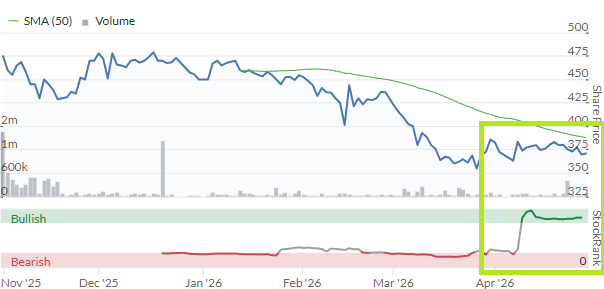
What do the StockRanks say? Princes’ share price performance has been mixed, but the company’s recent 2025 results have received a fairly positive reception from the StockRanks:
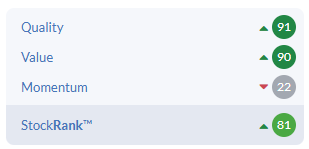
The StockRanks reflect the mix of possible value and quality, but weak momentum, with a Contrarian styling:
Conclusions
Rather like Magnum Ice Cream NV (LON:MICC), whose flotation I covered last year, I wonder if Princes could become an attractive defensive stalwart, capable of reliable dividends and steady growth.
It’s too soon to be sure whether this thesis will stack up, but I think this could be an interesting business to keep an eye on.
Disclaimer
This is not financial advice. Our content is intended to be used and must be used for information and education purposes only. Please read our disclaimer and terms and conditions to understand our obligations.

10 comments
Excellent article Roland, as ever. Very interesting and informative. It's something that I need to take a far more detailed look at, as there are companies that have come up on your list, that I'd never thought about investing in.
Excellent piece and thank you - I am most interested in Howden Joinery (LON:HWDN) but put off by the sector travelling badly. Something needs to be done to give the sector a push and even Lord Wolfeson having a pop at the govt over housing and planning policy. Without a new policy though the sector looks exposed to cost pressure and therefore nothing to push volumes and transactions up. Perhaps a wait and see for now but on the list.
Very informative and helpful for a watchlist. My major concern, in all three instances, is the probability that the UK will go into recession later this year if the war in the Middle East does not end in the very near future. Webster’s comments are entirely apposite regarding the Savills acquisition; I remember only too well the impact on the Midland Bank and it’s employees for years afterwards.
Inclusion of Princes (LON:PRN) comes just as we were told on the news only yesterday that supermarkets are selling a much higher proportion of their own branded goods in preference to named brands .
Thank you for this, it's very useful. I often wonder why companies like Savills (LON:SVS) are never covered on the DMSR, whilst other companies are frequently included. It would be great to see companies like this included on the DMSR occasionally.
Howden Joinery (LON:HWDN) has not been covered on DMSR, for over 2 years.
I'm surprised it has fallen so much.
I would not touch SVS for the moment. The purchase of an Investment Bank (Eastdil) is very worrying; what does SVS know about running a lending operation? Especially one in a foreign country? I can't think of a successful purchase of a US bank by a UK company; only disasters. I recall Midland Bank buying into Crocker Bank which was such a catastrophe. And Midland was a bank, not a firm of surveyors. In the end they had to buy the whole bank in order to offload it to Wells Fargo.
I note that one of the vendors in the SVS deal was Wells Fargo. If Eastdil is so good, why didn't WF buy it? Because they wanted out, I expect.
Hi Webster,
Thanks for sharing your thoughts. I have to admit my biggest concern around Savills (LON:SVS) at the moment is probably the acquisition - it's definitely big enough to impact the whole group's financial performance if it's been misjudged.
Roland
Thank you Roland, excellent article and screen idea.
Thank you Roland, I found that a very interesting read. Your three selected go to the top of our possible buys list as we don't have shares in any of them. Right now I'd like to see a better scenario playing out in the gulf before investing, but an expert comment 'investing should never feel comfortable' comes to mind!