Searching for Turnarounds: Halfords, Marshall Motors, and Dixons Carphone

In the wild months of March and April, plenty of stocks became cheap as markets tanked. There has since been a recovery - but there are still some attractive valuations out there.
One recent example was Gear4music, which repeatedly flagged improving profitability to the market and has just this past week shot up to above the 400p level - so congratulations to any holders out there.
We looked at it here and here. At current levels it feels like the easy money has been made for now. I reckon there are plenty more fish in the sea though - perhaps even in G4M’s own backyard: the Specialty Retailers industry group.
Some simple checks suggest that true long term quality is lacking in this small part of the market though. Of the 38 or so listed Specialty Retailers only three of those companies have managed to consecutively grow earnings for more than the past three years (take a bow Boohoo, JD Sports, and ScS).
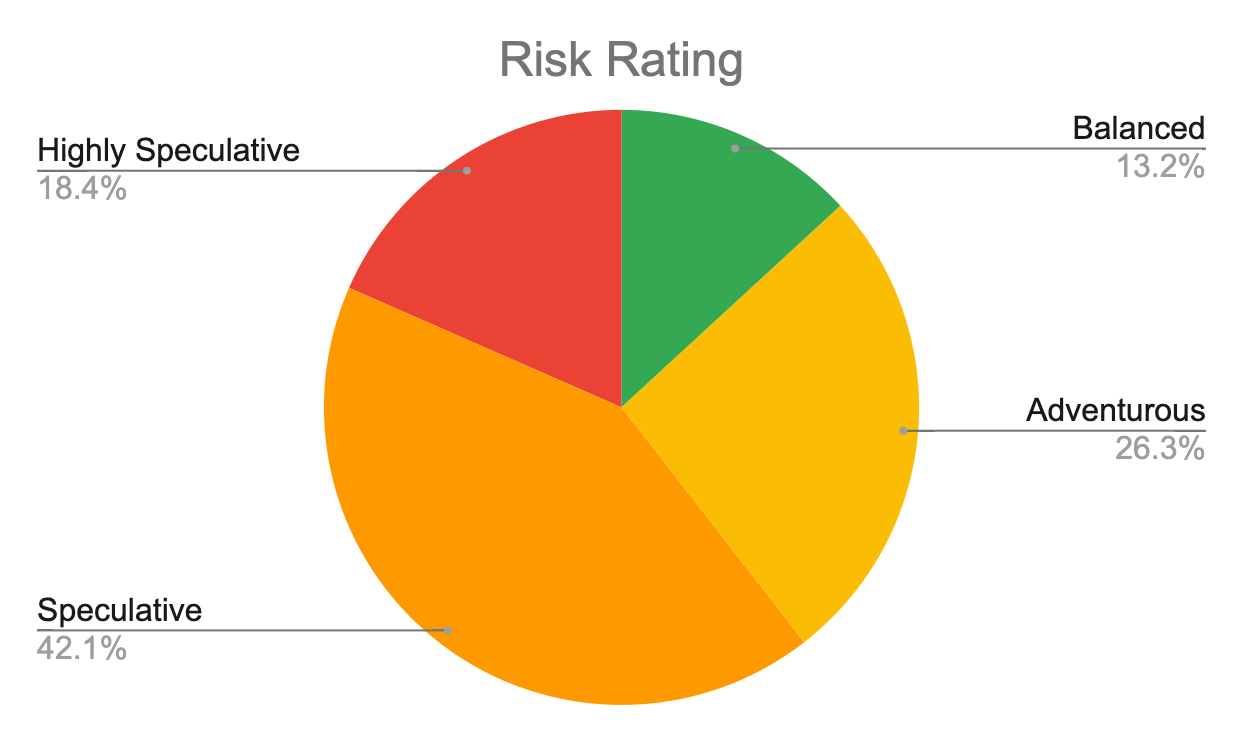
It’s a volatile set, with over 60% of the stocks classed as either Speculative or Highly Speculative.
The Styles also paint a lukewarm picture, with the largest segment being neutral:
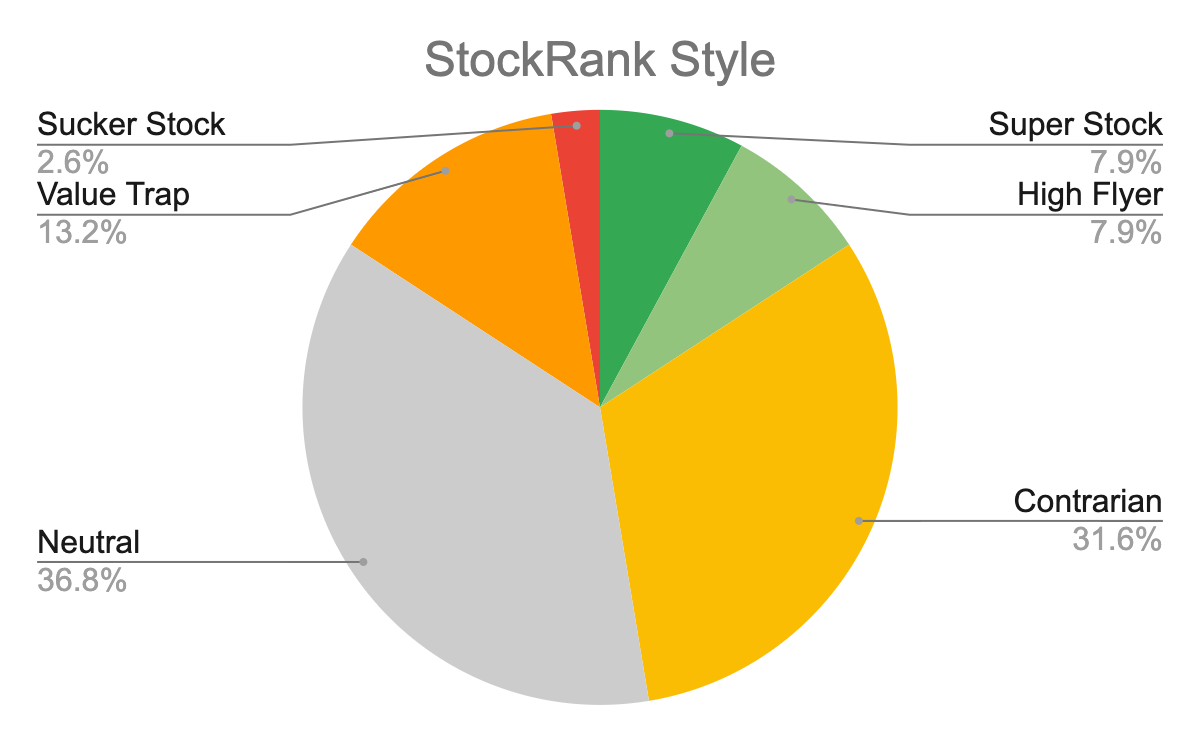
The above is telling me to be quite cautious - clearly, there is plenty of potential to lose money here. In fact, if you look at some quality metrics on a market-cap-weighted basis, it becomes clear that we should beware downside risk.
Large + Mid | Small + Micro | |
Quality Rank | 82.85 | 59.12 |
Long term ROCE | 24.14 | 14.79 |
F-Score | 5.73 | 4.93 |
Z-Score | 5.88 | 1.59 |
Specialty Retailers appears to very much be a group of two halves, with investment risk pooling lower down the market cap chain. True, smaller companies are usually riskier… But I still think in this instance the difference is striking, with the drop in Z-Score a particular concern.
A well-regarded fund manager once said: “When I analysed the stocks that have lost me the most money, about two-thirds of the time it was due to weak balance sheets.” If limiting downside risk is a key part of outperformance, then paying attention to these safety scores must be useful.
That said, the combination of cheap shares, strong trading and improving margins was enough to make G4M treble in three months. Below I’ve looked at some of the highest Value Momentum Specialty Retailers - are there any more G4M-style reratings on the horizon, or is this part of the market just not worth the risk?
Halfords (LON:HFD)
- Share price: 159.59p
- Market cap: 328.14m
- Price to sales: 0.28
- VM: 99
As the UK's largest provider of motoring and cycling products and services, Halfords (LON:HFD) has seen mixed fortunes as a result of lockdown.
The net effect is positive, but it’s worth remembering that Halford’s is halfway through an important turnaround even without COVID as an added complication.
Just look at the five-year performance versus the FTSE All Share:
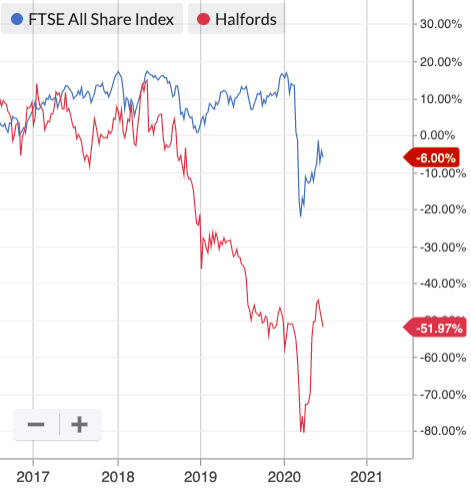
Lockdown really could fundamentally change long term prospects for certain businesses like Halfords though, if we become a society of bike riders.
Some positive momentum there could help Halfords grow sales and improve margins - a combination that often leads to a material rerating.
Track record and outlook
The group’s most recent comments are encouraging.
Our results for FY20 were boosted by better than expected sales in the final weeks of the financial year during the lockdown period. Subject to audit adjustments, we now expect that Adjusted Profit Before Tax, on a pre-IFRS 16 and 52-week basis, will be at the upper end of our previously guided range of £50-55m.
Past performance is less appealing however. Earnings per share have tumbled over the past five years:
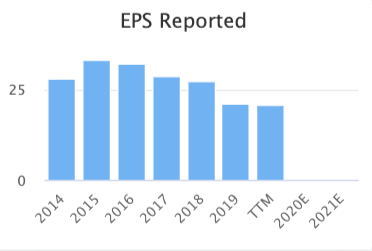
Meanwhile, the group’s operating margin has more or less halved from 8.26% in 2014 to 4.78% as of FY19.
It’s a concerning trend in my view. The StockReport also flags up the company’s tight liquidity:
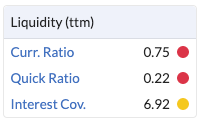
That’s a bit low for comfort. And this trend appeared to be getting worse:
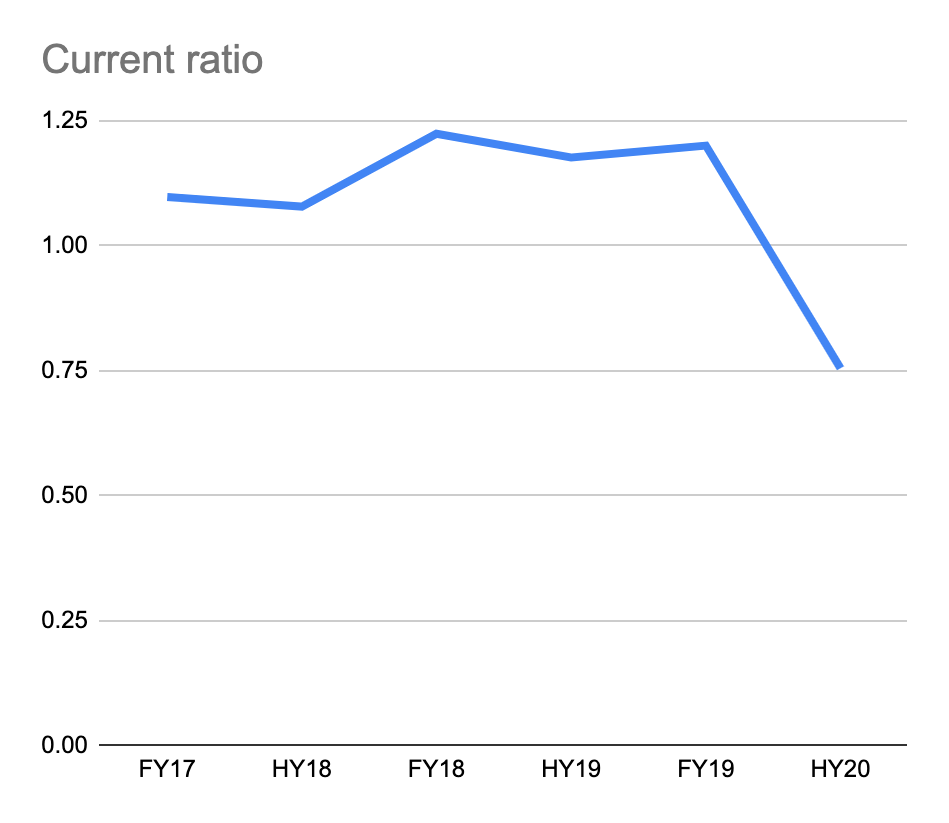
Halfords says liquidity has improved recently. I’d like to see quite a lot more progress on this front before I put money into the company though, especially given the fragile state of things.
Valuation and Conclusion
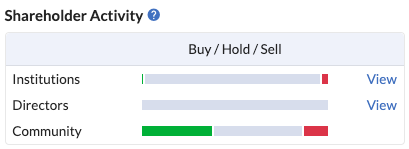
I think this is a mixed bag in all honesty, although I can see a few people have been picking up shares so perhaps someone can present the bull case. The share price has recovered since March though - maybe I’ve missed something?
If you believe COVID-19 is galvanising a structural shift towards more cycling then that could be a pretty powerful tailwind for Halfords.
It looks to me like there is still a fair bit of “turning around” to do here though and, given the precarious liquidity position, I’m happy to wait for the delayed full-year results to come out before I develop my opinion on this stock. It would be great to hear from those that have been buying.
The group is guiding to adjusted EBITDA of £50m-£55m. It’s a big drop from FY19 underlying EBITDA of £98.2m. Assuming £50m and with an enterprise value of £778m, that is an FY20 EV/EBITDA multiple of 15.56. It’s hard to get excited about that type of valuation given the turnaround situation.
Marshall Motors (LON:MMH)
- Share price: 159.59p
- Market cap: 328.14m
- Price to sales: 0.04
- VM: 96
Unfortunately, I can’t say I’m enthused by car dealers...
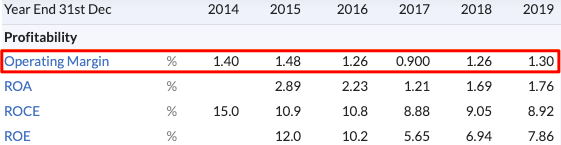
It’s a dangerous part of the market, plagued by low margins. I’m sure there are opportunities that others more familiar with this area can flag up, but I am wary.
Putting those concerns to one side, Marshall Motor Holdings (LON:MMH) does clock in with the second highest VM Rank. It is the seventh largest UK motor retailer, operating 117 franchises across 24 brands.
Dealerships were shut from 24 March but are now reopening. The major question is the pace of demand recovery. I’m just not sure this part of the market offers attractive risk/reward but am happy to hear an opposing view on that.
Financially MMH appears to have weathered the shutdown well with adjusted net debt (excluding IFRS 16 leases) of £3.2m at 31 May, although it expects to report an HY20 loss in August.
Red flags
What is acceptable in terms of liquidity ratios can vary depending on business models. I’m the first to admit I don’t know much about Marshall Motors, but these current and quick ratios are clear warning signs to me:
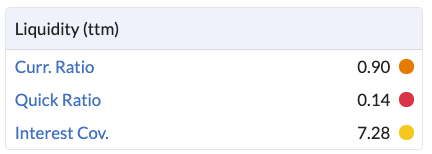
Anything below one and I would want a very good reason to invest. This liquidity position concerns me even more given car dealers’ historically low margins.
Where Marshall clearly falls behind Halfords in my view is cash generation:
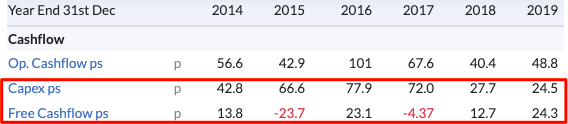
This car dealer has to spend quite a lot to maintain existing operations. This profile, along with its tight liquidity and negative general market trends before lockdown are enough to put me off.
Valuation and conclusion
There’s no doubt that Marshall is cheap according to some measures. It trades at an absolute fraction of the revenue it generates, although this is probably as much a reflection of the dangerously thin margins that most of the car industry suffers with:
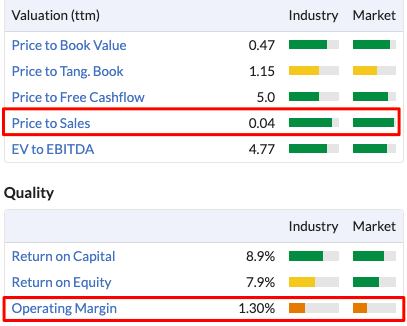
The company just does not have much of a cushion for when things go wrong.
You might have guessed that I’m not tempted. There could be a contrarian opportunity in this space for somebody with an edge in the industry. I’m not that investor though, and all I see here are poor liquidity and profitability metrics, and negative market trends.
Dixons Carphone (LON:DC.)
- Share price: 91.07p
- Market cap: £1,060m
- Price to sales: 0.1
- VM: 91
Dixons strikes me as more interesting.
It is a tech retailer in the UK (26% market share and 60% group sales), Nordics (25% market share and 33% of group sales) and Greece.
DC presents a rapidly changing investment proposition, with an increasing emphasis on online trade. Its transformation looks suitably far-reaching, but execution risk will be key. In all though, there could be a significant opportunity here if it can successfully reposition itself away from a perilous High Street.
The group is partway through a five year transformation plan to improve EBIT margins and generate over £1bn of cumulative FCF. There is plenty of low-hanging fruit, including £200m of cost cutting and £500m of working capital release from legacy handset financing.
Track record and outlook
Year end net debt is expected to be around £300m, which is worth bearing in mind. In its most recent COVID update trading in both the UK&I and the Nordics appeared surprisingly robust, with big spikes in online demand:
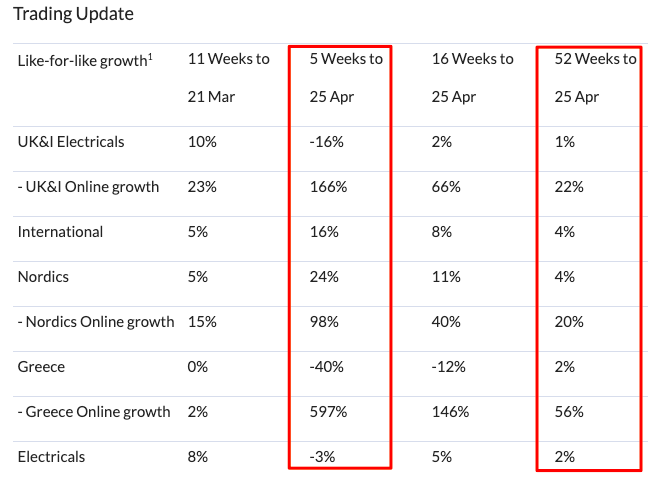
Progress is being made in reducing High Street exposure as well:
During this period, we closed our 531 standalone Carphone Warehouse stores in the UK as the Group took the next step in its transformation as customers change how they buy mobile devices, connectivity and technology.
More work is needed, but I get the impression that a lot of money is being spent on building a sustainable, profitable business here. If that is the case then a material rerating could follow.
Red flags
It seems to me as though Dixons is more consistently cash generative than MMH:

Although it too has very tight liquidity measures:
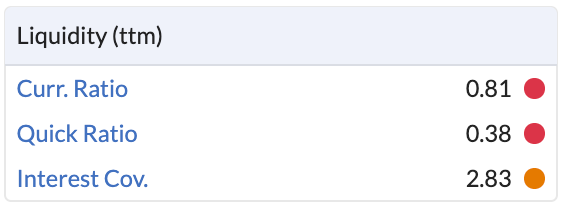
The group also has a pension fund, which is another potential risk. In fact, with an IAS 19 deficit of some £579m (according to the FY19 Annual Report), this is definitely an area to look at in more detail.
Valuation and conclusion
Dixons is currently a Neutral stock but there’s no doubt in my mind: going long DC. right now puts you firmly in Contrarian / Turnaround territory - just look at the five-year chart:
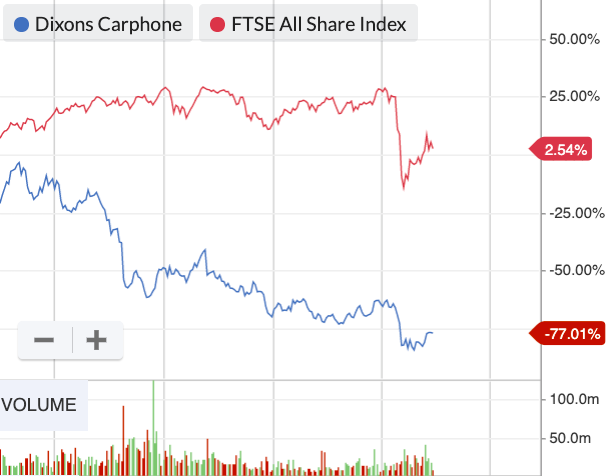
That said, as we’ve seen with G4M, when companies do turnaround in this space, the share price gains can be sudden and extreme. Of the three stocks I’ve looked at here this is the one that stands out due to its ongoing transformation into a more profitable, online business.
There is still plenty of execution risk, but the company has set a medium term target EBIT margin of at least 3.5%. If you apply that to FY21(e) forecast revenue of £8,912m, you get EBIT of £312m - that’s quite a lot of operating profit for a company with a market cap of c£1bn.
To be clear, I don’t think DC will actually generate that level of EBIT in FY21. It’s just a useful illustration of how much profit a fully turned around DC might generate.
If the group can successfully execute its turnaround, perhaps there is scope for something like a doubling of share price on a two year view. That’s just my first take, of course - DYOR as usual.
DC releases full year results on the 15th July and I’ll read the management commentary with interest. It seems the most interesting of the three - but then perhaps you disagree?
Disclaimer
This is not financial advice. Our content is intended to be used and must be used for information and education purposes only. Please read our disclaimer and terms and conditions to understand our obligations.

3 comments
Cant get excited about Halfords either, They have sold a lot of bikes during lockdown perhaps because:
They are open,
Its sunny,
Lots of people have nothing to do,
The roads are quiet
But does getting up in November and competing on the roads with rush hour traffic in freezing rain look so attractive? probably no. So maybe many nearly new bikes for sale on e-bay for Christmas!
Another aspect is that almost everything they sell can be found cheaper elsewhere. Thus I suspect the enthusiasm that fuelled the May stock price rise was a one off.
Of course I may be wrong, I can wait to find out.
Hi Jack,
I'm bullish of Halfords (LON:HFD) for some time now and continued to buy all the way down to £50p low near the end of March. What is there to be bullish about?
In the current market, I ask 3 questions and my answers for Halfords are positive.
Web traffic has increased from 5.3M visits in Feb to 12.3M in May.
valuation model at 5% growth.
(I have a long position. )
DYOR.
BSV
I agree, Halfords have been selling out of bikes for several weeks now with minimal discounting. Before lockdown they also sold out of pricey turbo trainers. People will be buying fewer new cars so that means more sales of parts and servicing to keep older cars going. Staycationers will also be loading up with bike racks, roof boxes etc. E-scooters seem to be everywhere now and Halfords are selling these at full retail. Long queues outside the stores. The next set of results will exceed expectations by a significant margin.