SIF December review: Five stocks, one sale (MOTR, MGNS, BATS, SRE, TEG)

It looks like we’re heading for an unsettled end to the year, given the combination of Covid-19 restrictions and Brexit uncertainty.
With Christmas coming up I’m planning to take a few days off, so in a slight change to my normal schedule I’m going to carry out my usual month-end review a week early. I’ll then follow up with a review of the portfolio’s 2020 performance at the start of January.
March’s market crash triggered something of a buying spree for SIF. Four new stocks joined the portfolio during that turbulent period nine months ago. They’re now due for an initial review against my new selling rules. There’s also one position that’s been held over from January which needs to be checked. Here’s the list of companies I’ll be looking at this week:
Motorpoint
Morgan Sindall
Ten Entertainment
Sirius Real Estate
British American Tobacco
There’s a lot to cover, so without further ado let’s get started.
SIF Folio: December performance
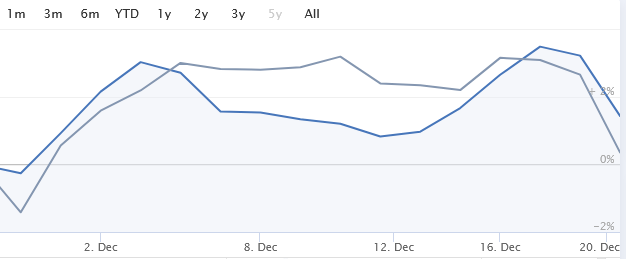
The portfolio has pretty much tracked the wider market so far in December:
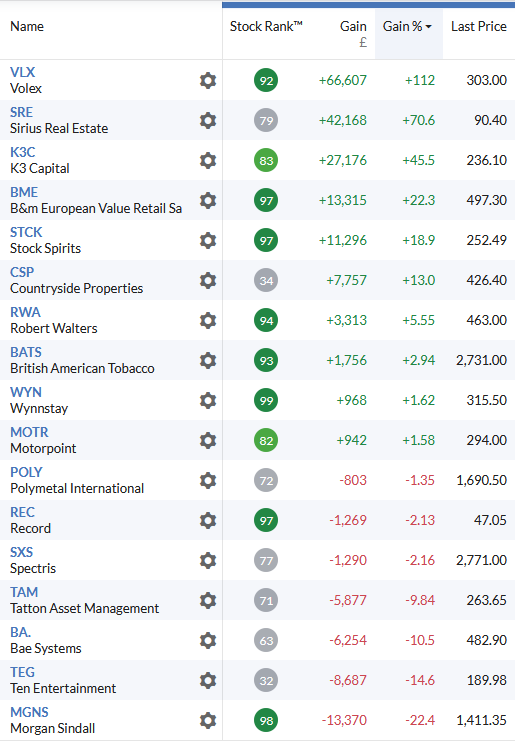
Here’s a snapshot of SIF’s holdings as of 21 December:
Motorpoint Group (LON:MOTR)
This used car supermarket chain has had a strong year despite the disruption caused by lockdown. I reviewed Motorpoint’s recent interim results in my November review, so I won’t repeat myself here.
I remain a fan of this company which passes all the tests in my sell screen, bar one:
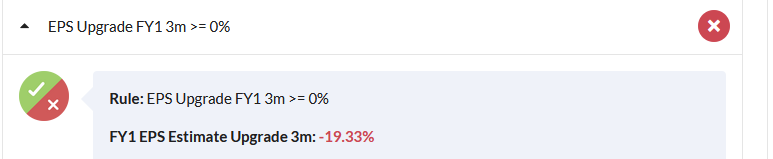
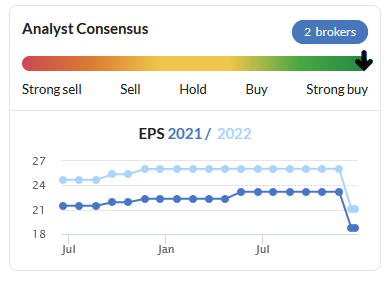
Normally, this would imply that a profit warning had taken place. But that’s not the case here. Instead, I think that reason for this is that the recent resumption of guidance and broker coverage has caused a dislocation in Stockopedia’s record of broker forecasts.
What I’ve found this year is that Stocko’s broker trend charts have shown unchanged forecasts during periods where company guidance (and thus broker coverage) has actually been suspended. When forecasts are resumed, the consensus trend shows a sharp revision, as we can see here with Motorpoint:
I’m not inclined to sell this stock on a technicality when the company is performing well and passes all of my other screening tests. So I’ll continue to hold Motorpoint into the new year.
Verdict: Hold
Total return to date: +2%
Morgan Sindall Group (LON:MGNS)
This founder-led construction and infrastructure group was one of my first buys during the crash. With hindsight I was a little early, but the group’s trading and balance sheet have both proven to be robust, as I hoped.
November’s trading update reported strong trading across the group and an order book of £7.9bn, 5% ahead of the 2019 year-end figure. Profit guidance for the full year was upgraded slightly and the firm confirmed the delayed payment of an unchanged interim dividend of 21p per share.
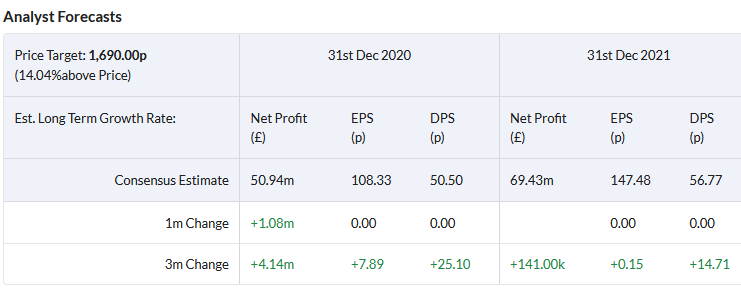
The outlook for the year ahead appears to be positive and the stock looks reasonably valued to me.
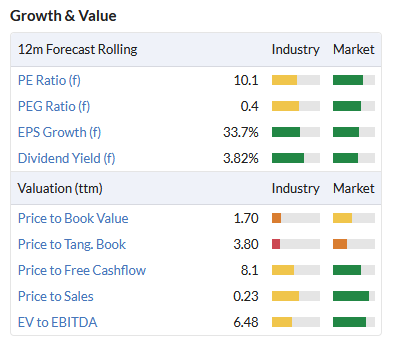
Morgan Sindall passes all of the tests in my sell screen. For the avoidance of doubt, this means that I can continue to hold the stock! I’m happy to do so.
Verdict: Hold
Total return to date: -23%
Ten Entertainment Group (LON:TEG)
The UK’s second-largest ten-pin bowling group was probably the worst of my market crash buys. I didn’t appreciate how bad things might become for leisure and hospitality businesses such as Ten Entertainment.
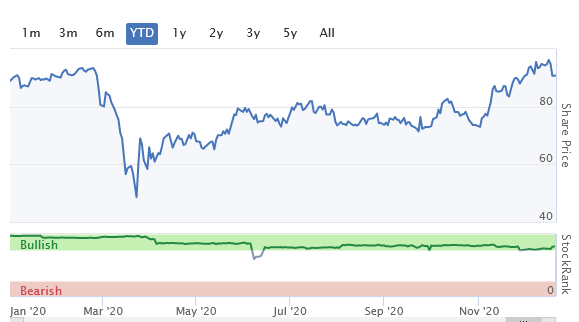
Somewhat miraculously, the buying surge which followed November’s vaccine news has reduced the loss on SIF’s holding to a relatively modest 15%.
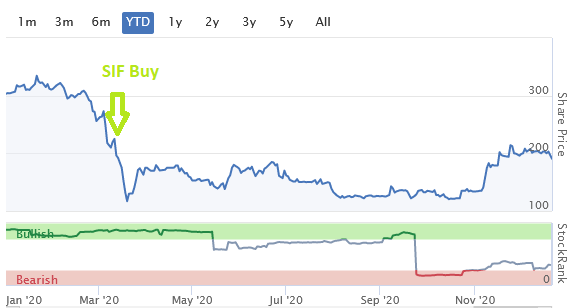
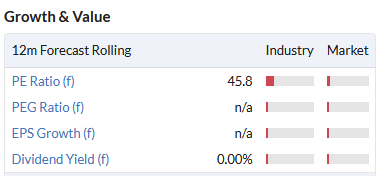
I expect to see a return to normal during the second half of 2021. But that still leaves another six months of potential disruption. In my view, the share price is now fully up with events, on more than 40 times 2021 forecast earnings.
One question for shareholders is whether the firm will need to raise additional funds to survive further lockdowns. As far as I can see, there isn’t any immediate risk of this. In May, the company said monthly cash burn had been reduced to £1.4m per month during lockdown. Based on reported liquidity of “over £15m” on 20 September, I’d guess the company could survive another lockdown if needed.
However, a strong recovery already appears to be baked into the share price. There’s not much room for error or disappointment. Stockopedia’s algorithms appear to agree, classifying the stock as a Momentum Trap.
For this reason and others, TEG fails my sell screening tests on numerous counts. I’m happy to follow the rules and sell for a modest loss. This situation has become more speculative than I’m comfortable with in SIF.
Verdict: Sell
Total return: -15%
Sirius Real Estate (LON:SRE)
German commercial property group Sirius Real Estate has proved an excellent buy, rising by about 70% since I bought the shares in March.
Sirius business parks target SMEs with a mix of industrial, office and storage space. This diversified approach has proved resilient in 2020. The recent interim accounts show good performance so far this year:
7.4% growing in funds from operations
97.3% rent/service charge collection rate for half year to 30 September
Underlying pre-tax profit +33%, excluding valuation gains
2.8% increase in interim dividend
5% increase in NAV per share
Net loan-to-value ratio of 31.6%, down from 32.8% at 31 March 2020.
However, deciding whether to continue holding the shares has been a little more complex.
I try not to make too many manual adjustments to my screening results, but sometimes I find it’s inevitable. That’s been the case here, as Stockopedia’s statutory numbers clash with the industry-specific measures used in analysts’ forecasts.
At face value, Sirius Real Estate fails four of the rules in my selling screen:
Dividend per share growth >0%
Rolling sales growth >0%
Rolling PEG <1.8
Piotriski F-Score > 4
Normally, this would mean I should sell the shares. However, I’ve recalculated these metrics and as far as I can see, Sirius passes on all counts.
Dividend growth: the dividend has been maintained and increased this year. This can be seen on SRE’s dividend history. For some reason, these payouts aren’t currently showing on the StockReport.
Sales growth: Analysts’ forecasts appear to use net operating income in place of revenue. Net operating income is calculated as statutory revenue minus certain property costs. I think we can view it as a proxy for rental income. On this basis, sales are continuing to rise.
PEG ratio: Property companies’ statutory earnings include revaluation gains and losses. But analysts’ forecasts appear to strip these out so that earnings reflect income from letting activity. Excluding valuation gains, I calculate that Sirius has a rolling 1-year PEG ratio of 1.3, within my limit.
Piotroski F-Score: To continue holding a stock, I require an F-Score of at least 5. The StockReport shows an F-Score of 4, but using the alternative measure of revenue discussed above, my sums suggest the F-Score should be 5 (at least).
I’m aware that this all sounds a bit like I’m massaging the data to get the results I want.
I’m really not. I’d prefer not to do this at all, but the reality is that even with good data, screen-based systems can sometimes produce anomalous results.
I’m going to continue holding Sirius Real Estate.
Verdict: Hold
Total return to date: +75%
British American Tobacco (LON:BATS)
After the complexities of Sirius, it’s nice to end with a much simpler business. British American Tobacco divides investors on ethical grounds. You might also argue that it’s a dinosaur, doomed to eventual extinction.
Perhaps. But the reality today is that BAT is highly profitable and cash generative. The shares are also quite affordably valued, on eight times forecast earnings and with an earnings yield of almost 9%.
I often refer to earnings yield - perhaps I should explain this less common ratio in more detail:
Enterprise value (market cap plus net debt) = £110bn
TTM EBIT (~operating profit) = £9,733m
Earnings yield = EBIT/EV = 8.9%
By comparing EBIT with enterprise value, we can see the underlying profitability of a business, regardless of the mix of debt and equity funding that’s in use.
A company with high debt levels might have a low P/E because it’s heavily indebted. To some extent, I think that’s true at BATS. But I still think the shares are attractively valued, given that the dividend is covered comfortably by free cash flow.
BATS passes all of my screening tests for a continued hold, so the shares will stay in SIF for at least one more month.
Although the shares have gone nowhere during my holding period, they’ve already provided a tasty 7.9% dividend yield. This kind of income isn’t easily found at the moment.
Verdict: Hold
Total return to date: +9.7%
That’s all from me until the New Year, so thank you for reading and commenting so generously in 2020. Let’s hope for a better year in 2021.
Trading note: I’ll sell Ten Entertainment Group (TEG) from the SIF folio and my personal holdings after this article has been published.
Disclosure: Roland owns all of the shares listed in the SIF folio.
Disclaimer
This is not financial advice. Our content is intended to be used and must be used for information and education purposes only. Please read our disclaimer and terms and conditions to understand our obligations.

2 comments
Hi Roland
You wrote in detail about your development and the process of what your "Sell" criteria were going to be.
How did you find the actual running of these for the first time, did they perform as you thought and did you find any challenges other than Sirius Real Estate (LON:SRE)?
Thank you
Tommy
Thanks for your regular and structured articles Roland and best wishes for the holiday season. Maybe with a successful trial of their Covid vaccine British American Tobacco (LON:BATS) will get a shot in the arm (pardon the pun) ...