SIF Folio: A rotation to value could favour BATS

This week I want to look at British American Tobacco (LON:BATS) - a well-known FTSE 100 stock that’s a recent addition to the results of my SIF stock-buying screen.
One of the pillars of fund manager Neil Woodford’s post-2000 success was his fund’s investment in FTSE 100 tobacco stock British American Tobacco (LON:BATS) – the owner of brands such as Camel, Dunhill and Lucky Strike.
Woodford identified BATS as a value buy with strong cash flows and an attractive dividend yield. He was right to do so. Between 2002 and the stock’s 2017 peak, BATS gained more than 650%. Not bad for an old-world, mature, and supposedly declining business.
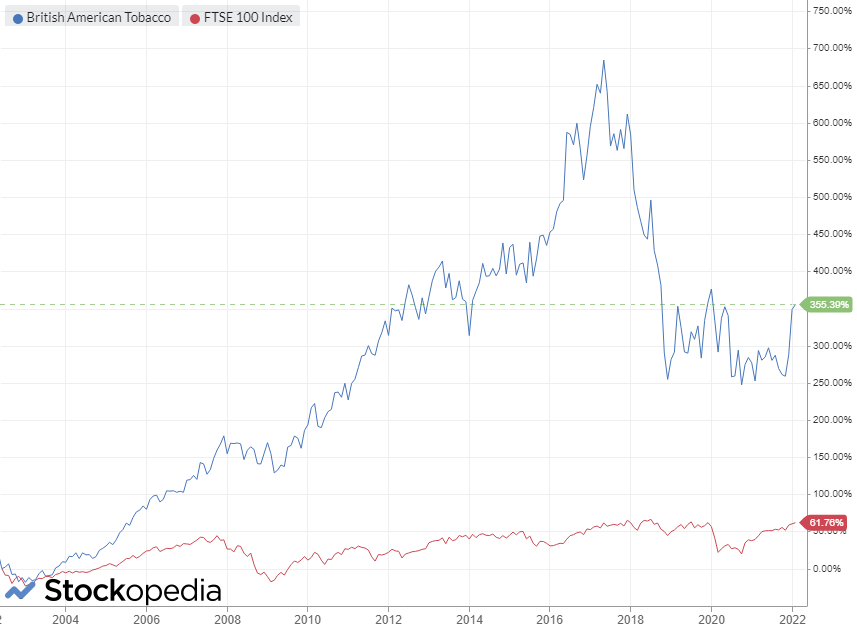
Shares in BATS peaked in 2017. They’ve since fallen by more than 40%, making BATS one of the cheapest shares in the FTSE 100.
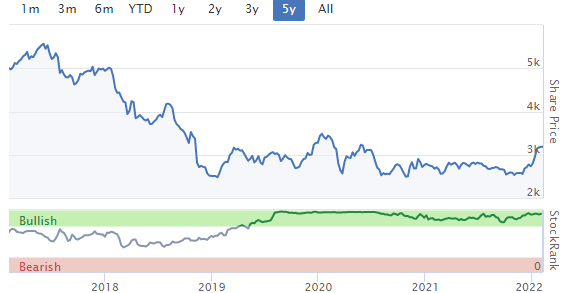
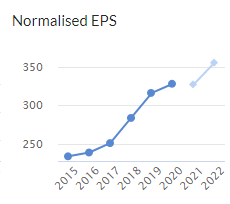
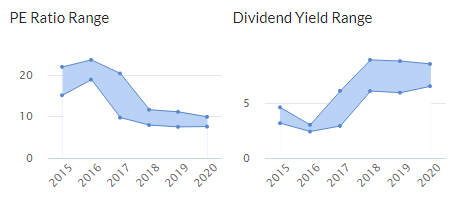
In my view, this decline isn’t fully justified by the recent performance of the underlying business.
There are obviously legitimate concerns about regulatory risk here. BATS’s primary product is extremely hazardous to health and could face further restrictions. The structural decline in smoking rates is also a worry. At what point will smoking become unviable as a mass market activity, at least in western markets?
I don’t know the answers to these questions. But I think it’s possible that population growth in emerging markets might mean that global smoking volumes fall more slowly than expected.
On balance, my feeling is that we might be seeing history repeating itself. Just as old-fashioned value came back into fashion when the first tech boom ended 20 years ago, I wonder if we’re now seeing a rotation from highly-rated ESG/tech stocks into value.
I’ve viewed BATS as a classic value stock for some time now. It seems I’m not alone. BATS’s largest shareholder is now Spring Mountain Investments. This is a vehicle controlled by billionaire Kenneth Dart, who made his name investing in distressed debt.
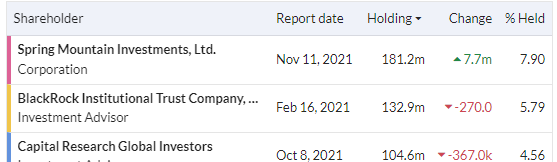
Mr Dart is also the second-largest shareholder in Imperial Brands (I hold), according to Stockopedia data.
What could happen to justify a re-rating of BATS stock? The group’s recent market updates suggest to me that there are several strands to CEO Jack Bowles’ strategy to restore shareholder value:
The core combustibles (cigarette) business is performing well and generating cash to fund debt reduction and support the dividend.
So-called New Category products – led by vaping where BATS’s Vuse brand is said to be the market leader – attracted 3.6m new customers during the first nine months of last year.
New Category products are expected to generate £5bn (c.20%) of revenue by 2025 and are on track to become profitable
BATS appears to be trying to renovate its brand by positioning itself as a science-led business with initiatives such as KBio, a “plant-based” biotech company that’s involved in vaccine and antibody research. However, I wonder if such initiatives are really just a form of greenwashing (‘healthwashing’?).
That’s the story. Now let’s take a look at the numbers to see whether I should add BATS to the SIF folio this month.
British American Tobacco (LON:BATS)
In terms of diversification, I’ve no concerns here. SIF only contains one consumer defensive stock at present, Finsbury Food (LON:FIF) – I’d be happy to increase the portfolio’s defensive weighting.
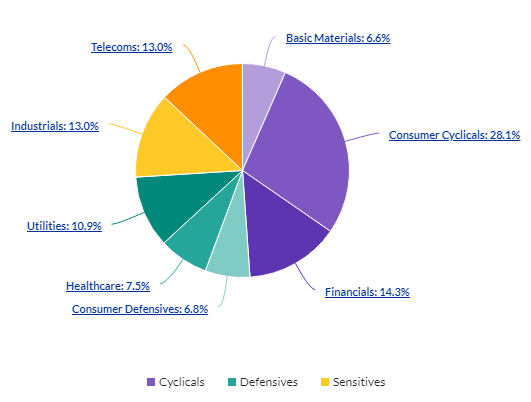
British American Tobacco also scores well with Stockopedia’s algorithms, earning Super Stock status and a StockRank of 93. This suggests to me that the algorithms share my view that BATS could be poised for a period of strong performance.
Value: cheap but indebted
ValueRank: 81/100
British American Tobacco shares certainly look cheap at face value. The stock trades on 10 times trailing earnings, with a historic dividend yield of 6.6%. This business also boasts a respectable earnings yield (EBIT/EV) of 8.5%, just above my threshold of 8%.
This earnings yield is respectable, but it’s not necessarily as high as you might expect, given BATS’s low P/E and its operating margin of 38%. The reason for this is that the stock’s enterprise value is inflated by a hefty debt burden. This is a legacy of BATS’s 2017 acquisition of the remaining 57.8% share of Reynolds American (RAI) it didn’t already own:
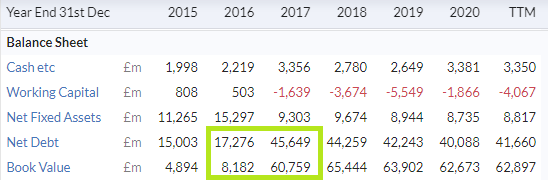
This $49.4bn purchase added some attractive brands to BAT’s portfolio. It also drove a step-change in free cash flow without requiring any additional capex:
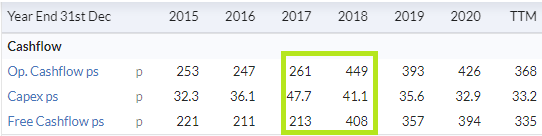
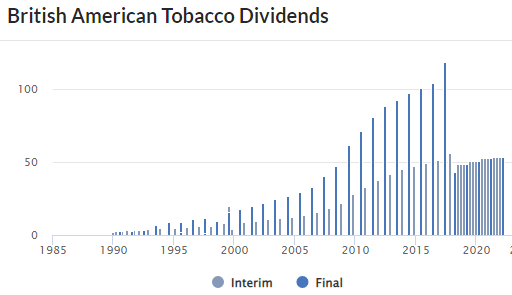
This extra cash flow may have helped underpin BATS’s generous dividend, which does not seem to have been cut for more than 20 years:
However, this mega-deal valued RAI at a demanding 16.9x EBITDA. Today, the combined business is valued at just 10.8x EBITDA. If BATS had acquired RAI for this multiple, then-CEO Nicandro Durantes could have saved almost $18bn.
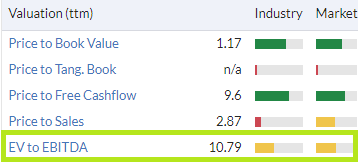
With hindsight, this deal seems to have taken place when tobacco stock valuations were at record highs. Shareholders have paid the price since then, as BATS has struggled to reduce leverage.
BATS’s net debt is expected to have fallen to around 3x EBITDA at the end of 2021. In my view, that’s probably (just) acceptable for a high-margin, cash-generative business with low capex requirements.
However, debt reduction has been hampered by the company’s relatively high dividend payout ratio. Net debt peaked at £45,571m at the end of 2017. Since then, this figure has fallen by around £1.4bn per year to c.£40bn. Broker forecasts I can see suggest a similar rate of decline over the next couple of years.
My view: I can live with BATS’s sluggish debt reduction, assuming the company’s profits edge higher in line with forecasts. On balance, I think the stock’s valuation remains potentially attractive.
Quality: not straightforward
QualityRank: 56/100
British American’s QualityRank of 56 is significantly lower than its value and momentum scores. I can see a couple of likely reasons for this.
The first is that when measured using gross margin and return on assets, BATS’s profitability fell slightly last year. Liquidity also worsened slightly, reflected in a weaker current ratio. These factors have driven the stock’s F-Score down to 6/9.
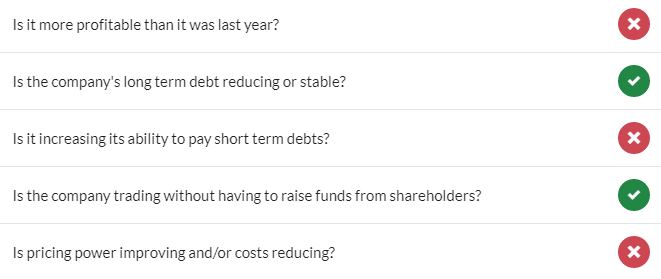
I think that another reason for BATS’s relatively weak QualityRank score is that by some measures, it’s not that profitable.
The group’s 38% operating margin is obviously very high. But BATS’s return on capital employed has been depressed by the steep valuation paid for RAI.
Taking control of RAI meant that BATS had to consolidate 100% of the US firm’s assets onto its balance sheet. This required BATS to add £72bn of assets to its balance sheet, including £34.3bn of goodwill, representing the implied premium paid for RAI’s brands on a 100% basis.
As a result, BATS’s capital employed rose from £27.9bn in 2016 to £125.5bn at the end of 2017. The impact on the group’s profitability metrics is clear:
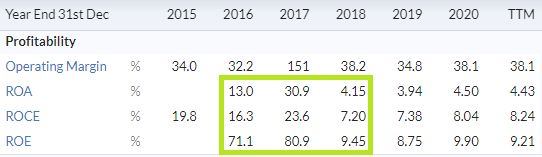
My view: BATS should be a high-ROCE business, but expensive acquisitions have damaged this potential. Nevertheless, the group’s high profit margins and strong cash generation remain attractive to me from a quality perspective.
Momentum: BATS has got its mojo back!
MomentumRank: 97/100
Big Tobacco has demonstrated Houdini-like survival skills over the last half century. Without getting into a discussion about ethics, I think the same thing may be happening again.
The stock has been a strong performer recently and broker forecasts for the year ahead are increasingly bullish. This translates into an exceptionally strong momentum score for BATS stock.
Price momentum: Since the end of last year, BATS’s share price has risen from 10-year lows of c.2,500p to around 3,200p. That’s a gain of around 25% in less than two months. Despite this strong gain, Stockopedia’s momentum indicators suggest that the stock’s price momentum may still be strong:
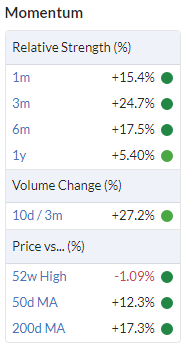
Earnings estimates: City analysts cut their earnings forecasts for BATS at the start of last year. Since then, consensus numbers for 2021 have been remarkably stable, while 2022 forecasts have edged higher:
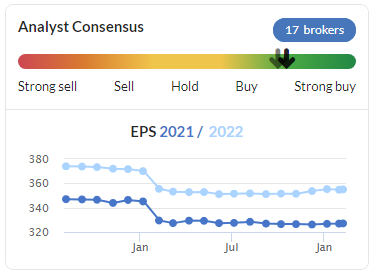
The numbers imply eps growth of 8.5% in 2022 and price the stock on nine times forecast earnings. In my view, that’s a cheap rating for a cash-generative, growing business. A forward yield of 7% is an additional attraction.
My view: Although BATS’s share price has leapt sharply higher this year, the shares are still trading below pre-pandemic levels. I don’t see any good reason for this at the moment, so I’d suggest the recent rally could have further to go.
My decision
British American Tobacco satisfies all of my screening criteria and adds some welcome defensive exposure to the portfolio. I think the shares are probably still good value, based on recent performance and the near-term outlook.
I’m going to add BATS shares to SIF and my own personal holdings this week, after this article has been published.
Disclosure: At the time of publication, Roland owned shares of Imperial Brands and Finsbury Food.
Disclaimer
This is not financial advice. Our content is intended to be used and must be used for information and education purposes only. Please read our disclaimer and terms and conditions to understand our obligations.

24 comments
i think it's fair to say much of this companies future and growth depends on the success and growth of the vaping business. As market leader it is currently in a great position but my worry is its ability to hold on to this status. It doesn't seem to be too difficult to make tobacco vape juice. Building and maintaining a vape brand amongst such a constant threat of high quality cheap competition is going to be difficult. I'm not convinced in the long term it will be possible.
dodge 1664 that’s a valid point. Much comes down to how popular its new generation of products such as tobacco heating and vaping will be. Incidentally, my understanding is that they are far less harmful and antisocial than traditional tobacco products and eliminate the issues associated with passive smoking.
Currently, some 19% of the world’s adult population smoke tobacco - around 1.1 billion people. Assuming that a significant proportion of these would welcome a less harmful alternative, the potential market for its new products is huge. It’s aiming for £5 billion in revenue from its new category products by 2025 and 50 million consumers of its non-combustible range by 2030. Of course, there will be new customers, rather than established smokers, who will choose to take up the new products simply because they choose to do so. I choose to drink wine. Is it “Good” for me? In moderation, possibly. But I choose not to vape or use e-cigarettes.
Aside from managing its debt, I would suggest the big question is whether its new products will be widely adopted. The figures suggest that this is likely to be the case. Its revenue from vaping products increased by 50% from H1 2020 to H1 2021. While its total revenue from non-combustibles increased by 19.5% over the same period. Some 11.8% of its total revenue is now derived from non-combustible products. It’s not a jam tomorrow proposition - it has some 16.1 million consumers for its non-combustible product range. It’s also worth mentioning that it reported strong growth in its e-commerce revenue, up 77% for H1 2021 compared to H1 2020. So it’s developing new routes to market.
Basically, I believe that its core business is in slow decline. While its new products have a substantial upside. Both in terms of attracting established tobacco smokers to adopt something that is almost certainly less harmful. As well as gaining new customers who would have likely taken up smoking. Around that, it has superb distribution channels and a demonstrable ability to build brands. More broadly, I believe that tobacco companies, just like oil companies, are part of the solution rather than the problem. Moving consumers to products less damaging to health than tobacco will require a great deal of effort and persuasion.
As I said, I enjoy wine and I have weighed up the issues involved. Such as those impacting my health. On balance, I think it’s worth it. Maybe we need to accept that most of us are willing to take a degree of risk in search of pleasure. If that is the case, then I would suggest the real issue is how to mitigate that risk for all concerned. While accepting that prohibitions in other areas appear to have failed.
well the final results are out, and it doesn't look too bad. But once again I've been frustrated trying to establish how much money they're losing on new categories.
Yes, I agree. The company reported a reduction in losses of “nearly £100 million” for its New Category products. However, rather annoyingly, it seems to give no indication of its total losses for this segment. That said, it points to it going into profitability by 2025. While over the last year, revenue from the category increased by over 42% compared to 2020. I have simply glanced over the figures but, on balance, there seem no nasty surprises. And I noticed that the ratio of floating to fixed-rate debt is now 10:90 on a net basis. So any surprising hikes in interest rates should present few problems. Although the rise of just 1% in dividends seems a little stingy, it has also announced a share buy-back programme which should help to put a floor under the share price.
First ever post, and I can't say I haven't been tempted to buy BATS but ultimately I can't for the ethical reasons others have highlighted. I have come across numerous cases of ill-health, disease, death and disfigurement as a result of tobacco to make it a non-starter for me. And I was a smoker until I was 30. On other sites I've had pushback from people arguing about the ethics on investing in Facebook, Lockheed Martin or Pfizer, and (ignoring the fact that I don't have any shares in these either) I see their point but there is literally no upside to tobacco. Yes, people take pleasure in it. They take pleasure in cocaine too. I'm sure it's a great investment but so was investing in cotton plantations in the Old South.
the big unknown is how much profit they'll make from e-cigs. I note that Supreme already makes a profit, while BATS and IMB don't.
As Roland points out, although British American Tobacco (LON:BATS) is highly indebted, it’s paying down that debt at a reasonable pace and is still generating significant free cash flow. Moreover, most of its debt is on fixed rather than floating interest rates (As of the 30th June 2021, the ratio of floating to fixed was 15:85 on a net basis). While its average debt maturity is some ten years. Importantly, it estimates that it has a maximum of £4 billion of debt maturities in any one calendar year. Putting that into perspective, in 2020, it paid some £4.745 billion in dividends - it’s very cash generative and global. In my view, managing its deleveraging is its biggest financial challenge. But it appears on top of the situation. And it’s buttressed by a sizeable amount of cash and revolving credit facilities.
For sure, its core markets are mature. But they are also very high margin and have significant barriers to entry. While its new category products appear to have a huge upside - that includes the provision of Cannabidiol (CBD). But it’s doing it without the hype that surrounds many companies in the cannabis sector.
As for the ESG issues. This obviously limits the numbers of potential investors and so impacts its share price. And I can understand the concerns that some investors may have. But I am unsure how far ESG priorities should stretch. Are mining companies to be avoided because of their impact on the environment? What about tech companies such as Tesla and Apple and their use of materials that are extracted by mining companies (And artisinal miners)? Wealth inequality is a major global issue but I can’t recall the last time I heard of investors boycotting companies because of over-generous executive pay. It seems only of late that institutional investors have managed to raise the gumption to reject remuneration recommendation reports at AGMs.
And yes, I am an investor in British American Tobacco (LON:BATS) . And no I don’t smoke.
Longvalue. On the subject of miners, I don't know if you remember an Indian mining company called Vedanta I think it was. They were accused of chucking indigenous people off land they had lived on for years because it had valuable resources underneath it. I mentioned the C of E (the richest organisation in the UK. I'm not sure it still is after the 2008 crash)There was an outcry about their investment in that company and several others. Their main defence seemed to be blissful ignorance as their funds are managed obviously. Otherwise it would all be squirrelled away making Benedictine and other such delights.
Rio always seems to be in trouble somewhere in the world as do most big miners. Some economies are greatly enhanced by their resources but inevitably it comes at a high price for local people but not always. It shouldn't need to if governments did their jobs properly and fairly.
In the case of tobacco companies, they seem to be killing off half their customers annually according to WHO stats, but manage to replace the carnage with new ones still. More worryingly are the 12% (1.2 million) killed by manslaughter through negligence , the passive smoke inhalers trapped in cars and rooms while others poison the air for them.
Smoking is also different in that it would appear that most people who do it now would rather not, which is quite hard to understand for a non smoker. It used to be seen as sophisticated and a clever thing to do. Stylish, social, even glamorous. Apart from killing people who partake, it makes your clothes stink, it makes your hair stink, it makes your breath stink. The reality is it is stupid, pointless and selfish. I sympathise with addiction, most of us will suffer from it in some kind or in some form at some stage. Now we spend a fortune trying to cure yet another manmade disaster.
There are many arguments against many sectors and some of the negatives are overcome or effects reduced. Generally companies are very keen to clean up their images , lower their carbon footprint and change the world for the better.
I can't see any such mitigating circumstances for the tobacco industry.
Alternatively you could look at Altria ($MO) in the US. 8% yield and without the debt issues. No emerging market upside and a history of blowing money on investments but appears management now content to manage cash flow generation from declining business. And boy do they generate cash.
Some very interesting points and when it comes to investing as in many things in life what you decide to invest in is a personal choice and if holding a share goes against your own morals or just what feels right to you then don’t hold it
My dad died of lung cancer and on a personal level I will never own a tobacco company or for that matter a company that makes alcohol or a betting company I have watched lives destroyed by both
Whether holding tobacco alcohol or betting companies fits your own morals or feels right is a decision only you yourself can makes
Hi Bullhead,
My dad died of lung cancer last year so it is still raw.
The accounts of companies are not just numbers on pages. They are the monetary valuation of the actions they have taken in the real world and people have been affected by these actions (for good or bad).
Buying a share in a company is a vote of approval for their actions so holders need to reconcile whether they approve how a company makes its money. Just because an activity is not illegal does not make it an acceptable way to make money.
Further promoting a company with questionable ethics places a further onus on the promoter to justify their stance.
I’m sorry for your loss Revs8 all I can say is although it will always hurt in time it hurts less but you never forget when I remember people who have have passed I think of a moment or time when they/we where smiling and happy it helps me remember them with a smile
But grief is never easy to deal with so my condolences
On your other points I understand totally were you are coming from
For me for those companies it will always be a no vote
Others have to look to their own consciences
There is more to tobacco companies than BATS and IMB.
Philip Morris (NYSE:PM) and Altria (NYSE:MO) have similar market caps and valuations.
(I hold through an ETF having sold my individual holdings as the prices climbed).
IMB remains the winner on value but has the highest gearing by far.
It is 3rd on quality while MO and PM are the best.
MO is interesting for two reasons. It owns most of Cronos (CRON ) a canabis company. The future is there and the others are interested apparently.
It shows far better gearing than the rest and has the best ROE.
This is a great analysis of BATS and very useful. Thanks, Roland
Hi Roland,
I appreciate the article values British American Tobacco (LON:BATS) from a purely unemotional financial standpoint but is it wise to do this where a company is blacklisted from many pension funds and private investors lists?
You mention that history may repeat itself but I believe that significant investors have changed their outlook. I know of organisations that have explicitly stipulated that their pension funds must not be invested in companies that may be seen to be unethical. There are also many private investors who, like me, wont be buying this share directly. Therefore I question if history can repeat itself.
With regard to exploiting 3rd world countries, I get annoyed that investors talk, without emotion, as if additional profit (and therefore deaths) in another country is OK. We know the problems associated with smoking and should be leading by example not applauding British American Tobacco (LON:BATS) for finding new sources of revenue that exploit someone else's children.
Let us also be honest that Vapes are a new weapon to target new young smokers. There is nothing " healthy" about Vapes and I believe that governments are waking up to what is going on.
In the past tobacco companies used their own "bought" science to counter the clear evidence that smoking leads to increased ageing and premature death. On this point it appears that history may be repeating itself.
Therefore, I am sceptical that history can repeat itself for the tobacco companies. Sure the price may rise as people seek income but there is now a sizeable proportion of the investment world who will not invest at any price. This may be an opportunity for less ethical investors but it also means there is less "weight of money' chasing this share.
Hi Revs8,
On a personal level, I agree with many of the points you make about the past and present behaviour of big tobacco. But SIF does not (at this time) have any ESG rules, so it would be inconsistent for me to rule out companies on this basis.
Indeed, it's worth reiterating that SIF is a model portfolio that's an ongoing experiment. The choices I make are most certainly not recommendations or advice.
Regarding the blacklisting of this stock by fund managers, I'm not sure this will necessarily correlate to a material reduction in the weight of money chasing the shares. The big index trackers will continue to hold British American Tobacco (LON:BATS) and my feeling - although I can't substantiate this - is that there is probably enough unconstrained capital out there to ensure a fair valuation.
More broadly, the only other point I'd make is that while I think the tobacco industry's misdeeds are especially abhorrent, I can find things to dislike in most businesses if I look hard enough.
I think we all have to make our own decisions, which is why I run SIF using purely financial rules.
Regards,
Roland
I think we all have to make our own decisions, "
I can empathise but it is a regulated product. In comparison, alcohol misuse kills millions each year 5.3% of all deaths.
World Health Organisation source : (Key facts · Worldwide, 3 million deaths every year result from harmful use of alcohol, this represent 5.3 % of all deaths. )
linky > https://www.who.int/news-room/...
but because we all love the pub, then alocohol is socially tolerated..
I do see the next generaton prodcuts they develo as being a step in the right direction.
double post
Value for who? https://www.theguardian.com/wo...
Its great that more people in the west are now intelligent enough to make the decision not to smoke, thus reducing some of our completely avoidable already overstretched resources on the NHS. Shame for less regulated countries that some think it is ok to profit from this and that governments dont do more to stop it. In case anyone is in any doubt it does exactly what it says on the packets!
Comparing British American Tobacco (LON:BATS) with Imperial Brands (LON:IMB) using the Stocko compare feature, IMB is the winner.
Not sure about that, British American Tobacco (LON:BATS) is a much better managed company in my view and far more profitable. Crucially it seems to be doing really well on the new reduced risk categories, an area where Imperial Brands (LON:IMB) have really struggled.
Hi John,
That's interesting. From a quick look at the comparison, Imperial Brands (LON:IMB) seems to come out ahead of British American Tobacco (LON:BATS) due to its lower valuation and higher historic ROCE (an issue I discuss above).
On the other hand, BAT scores better for momentum and growth.
Roland
Pleased to read this comment since I have always envied British American Tobacco (LON:BATS) while holding Imperial Brands (LON:IMB) long.