SIF Folio: Cash-rich Serica Energy looks tempting despite short flags

The stock market drought continues. My SIF share-buying screen is serving up just two shares as I write, both of which (Morgan Sindall and Polymetal International) I already own in the SIF folio.
As I often do in these situations, I’ve been tweaking my normal screening rules to see what new stocks might be available in slightly different circumstances. This week I’m looking at dividends.
My normal screening rules require a constant or growing dividend. However, many previously reliable dividend stocks suspended their dividends in 2020. They were then reinstated towards the end of the year.
Broadly speaking, I don’t think this temporary pause is reason enough to rule out a share from consideration for SIF. So I’ve created a copy of my screen in which my rules on dividend yield and growth have been suspended. You can see the screen here.
This rule change expands my selection of possible buys from two shares to 12, at the time of writing:
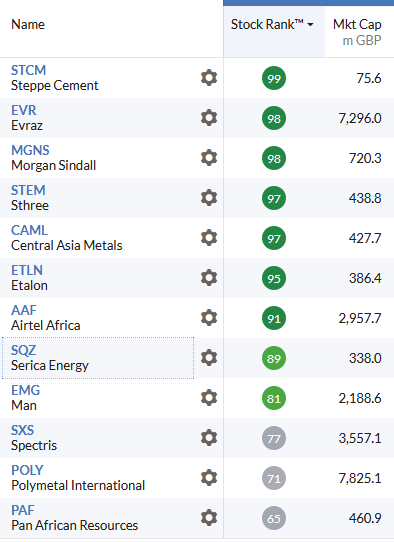
SIF buying screen excluding dividend requirements (18/01/21)
The stock I’ve chosen to look at today is small cap North Sea oil and gas producer Serica Energy (LON:SQZ). The SIF Folio doesn’t currently have any exposure to the energy sector. This is a gap I’d quite like to fill, as I expect to see a recovery in demand after the pandemic.
My view is that in the short term at least, demand recovery will outweigh the growing aversion to fossil fuel producers.
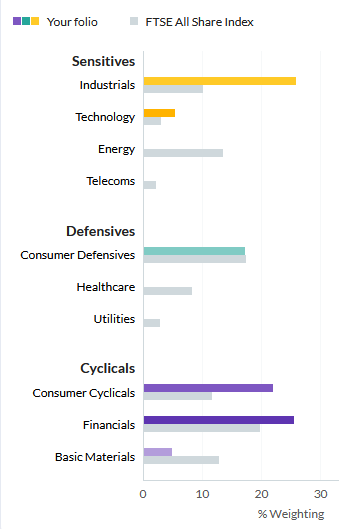
I’ve followed Serica sporadically for a number of years, without ever owning the shares. It’s been my loss. During the 2015/16 commodity sector crash, Serica became an outstanding value play. Investors who bought the stock then enjoyed big gains as the market recovered. Serica then leveraged its cash balance and operating credentials to acquire the Bruce, Keith and Rhum fields from BP.
Almost overnight, Serica became a mid-ranking North Sea producer with substantial cash flows.
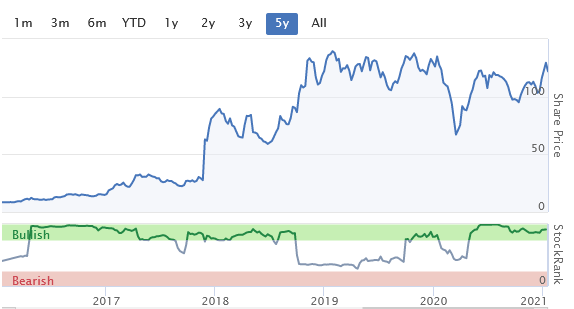
The gains enjoyed by shareholders since 2016 are impressive. But the chart also shows that if we ignore last year’s crash, Serica’s share price has gone nowhere since late 2018.
Serica’s StockRank of 89 and Super Stock status suggest that Stockopedia’s algorithms see a potential opportunity here. I think this could be true, but I can also see some potential risks, as I’ll explain.
Short screen warning?
My stock reviews are normally built around a more in-depth look at a stock’s QVM (Quality, Value, Momentum) factor scores in more detail. Today I’m going to take a slightly different approach.
I don’t see much to dislike in any of Serica’s factor scores, and I’m not sure there’s much need to discuss them at length. Assuming energy demand recovers from H2 2021, then I believe this business can boast of respectable profit margins, strong cash generation and a reasonable valuation.
What I want to do instead is to look at two aspects of Serica that do give me pause for thought. The first of these is something I suspect subscribers who follow this stock will already have noticed:
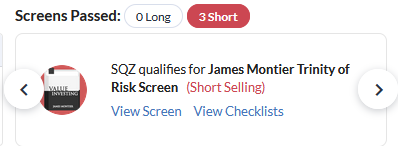
That’s right. Serica qualifies for three of Stockopedia’s (bearish) short screens, but no long screens. I don’t take these screens as gospel, but I do often find them useful for new ideas and to flag up potential problems.
I don’t have the space here to drill into all three of these screen results in detail, but I’ve taken a look and drawn some broad conclusions:
The firm’s revenue and profit history has been distorted by the impact of the BKR acquisition in 2018. I think this is the primary reason for most of these short screen passes.
In my view, the risk of financial distress is lower than these three screen qualifications might seem to suggest
On balance, I don’t see anything in the metrics used by these screens that would persuade me to rule out this stock without further consideration.
This is a fairly sweeping judgement and there may be factors I haven’t considered. So I’d encourage anyone considering this stock to do your own research to understand the numbers behind these screens.
How free is Serica’s cash?
I think it’s fair to say that the single most distinctive feature of Serica’s financial situation is its cash balance. The group’s latest accounts show net cash of £101m at the end of June 2020, unchanged from the 2019 year-end figure. There’s no conventional debt.
For a company with a market cap of £338m, this level of net cash is obviously highly material. At first sight it seems extremely reassuring. Investors should be protected from dilutive fundraisings and low-ball takeover bids (Premier Oil shareholders will know what I mean...).
However, I’ve been wondering whether we need to look at Serica’s giant cash balance in a different way. This is speculation on my part, but I wonder whether Serica might need to maintain an outsized net cash balance. I can see at least two possible reasons for this.
Rising debt costs? I don’t have much insight into debt markets. But over the last year we’ve seen a rush of money into ESG funds and renewables. At the same time, oil and gas producers have increasingly been cast as pariahs.
Reports I’ve read have suggested that the cost of debt funding for fossil fuel activities could rise in coming years. Lenders will want to be compensated for both reputational risk and the possibility they’re lending to companies whose business is in structural decline.
If companies such as Royal Dutch Shell and BP are feeling the need to make aggressive and public changes to their strategies, then I don’t think it’s too much of a stretch to suggest that small firms such as Serica could be hit much sooner by rising funding costs. For context, Premier Oil reported an average interest cost of 8.2% in 2019 -- a hefty burden.
Decommissioning liabilities: Serica isn’t the only small firm that’s bought mature North Sea fields from one of the majors. Most of these deals have included clauses suggesting the decommissioning liabilities will be retained by the seller. However, there’s typically also an element of shared cost that’s hard for any outsider to quantify.
This is what Serica says about decommissioning costs for the BP share of the BKR fields:
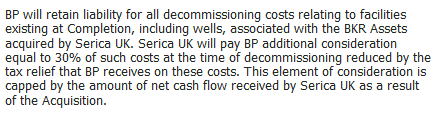
Serica will have to pay BP 30% of all decommissioning costs, excluding any tax relief received by BP on those costs. Serica will also be wholly liable for the cost of decommissioning facilities created since the acquisition. I can’t estimate what these liabilities might be, although an industry expert might be able to do so.
What does seem clear to me is that this unknown burden may need to be reflected in Serica’s equity valuation. After all, I can’t imagine that many lenders would want to advance money to a small-cap oil producer for decommissioning costs. Equally, I’d expect great difficulty raising new equity to meet such costs.
If my conclusions are correct, Serica’s only option might be to build a massive cash war chest against future costs. If that’s the case, then the value of this cash to equity investors is limited. Most of this money may never be available for shareholder returns. Indeed, I’d speculate that some of this cash might not even be available for acquisitions.
To put this situation in context, I think it’s worth noting that Serica’s 2019 maiden dividend of 3p per share equated to a total payout of £8m. That’s less than 10% of the group’s net cash balance and less than 15% of 2019 free cash flow. Most profitable businesses would be more generous than this, in my experience.
My verdict
In fairness to Serica, I should say that my impression is that it’s a well-run company with a strong balance sheet and a decent operational reputation. Looking ahead, the strategy seems to be to expand production through incremental exploration and the acquisition of further production assets.
Taken together, these activities may well extend field lives and generate enough cash to cover decommissioning costs and shareholder returns. In my view, much may depend on the future path of oil and gas prices and the strength of demand recovery after the pandemic.
Analysts appear to be bullish about the outlook. Consensus forecasts on Stockopedia suggest a strong recovery in earnings in 2021. Estimates I’ve seen elsewhere suggest further progress in 2022.
On these measures, Serica stock looks fairly cheap. Adjusting for net cash, the stock trades on around eight times 2021 forecast earnings. The shares also offer a forecast yield of around 2.4%, assuming the 2019 dividend is reinstated in 2021. That’s not bad for a small cap.
Despite the reservations I’ve highlighted above, I think the near-term outlook for Serica is probably quite positive. About 80% of the firm’s production is gas and the Bruce platform is responsible for about 5% of the UK’s gas production. I suspect any structural change in demand is still some years away.
In the meantime, I believe the group should benefit from a post-Covid recovery in energy demand and perhaps further cash-generative acquisitions.
I’ve decided to add Serica to the SIF folio this week. This is one of my more speculative choices in recent times, but I think the near-term downside risks are fairly limited. As always, I’ll buy the shares for the SIF fantasy fund and for my own personal holdings after this piece has been published.
Disclosure: At the time of publication, Roland owned shares in Polymetal International and Morgan Sindall Group.
Disclaimer
This is not financial advice. Our content is intended to be used and must be used for information and education purposes only. Please read our disclaimer and terms and conditions to understand our obligations.

6 comments
hi Ronald, very interesting article, thank you for publishing. I worked for BP on the Bruce project during the transition to Serica. They were a very well organised team and being newer and smaller, didn't seem as tied down with red tape as some of the legacy Oil & Gas companies are. I would say the main risk for me is that the BKR is one field (an aging asset), therefore any unexpected prolonged shutdowns or increase in watercut may impact profit. I feel they are heading in the right direction though with looking to diversify their portfolio.
one factor to look out for is that shortly they will be up for renewal of the USA OFAC license (last granted in 2019). I thought it was 2 years, but looking at the RNS from 2019 it appears to be due 28 Feb 2021.
It was a nail-biting time back in 2019 with Trump and his Iranian sanctions coming into play, this time around it will be a different President and a different agenda re renewables - not sure exactly what Biden's Iranian nuclear policy will be - hopefully the renewal will go through smoothly.
bang, and as if on cue,
https://www.stockopedia.com/sh...
The. OFAC licence has just been extended for 2 years
Hi Roland. Good to see you covering Serica. I accumulated a large holding when they were in the 'cheap as chips' category, sub 20p. I have been dribbling them out ever since and it is still one of my larger holdings.
Serica does have some big growth drivers that you haven't mentioned. The deal with BP over BKR sees Serica, as field operator, split income with BP on a sliding scale basis. From memory, 2021 sees Serica's share rise to 60% and then from next year, it is 100% for Serica. Revenue and profit growth is therefore built in. In addition, there is the Columbus gas / condensate discovery to come on stream this year. This will see a further boost to output and income. Serica is operator and has a 50% share. I don't doubt that some of the cash pile is being used to develop Columbus.
I also don't doubt that Serica is looking for potential acquisitions and deals as the majors look to divest more end-of-life north sea and UKCS assets. BP for one has a lot more assets looking for buyers. I would be very disappointed if Serica hasn't already been knocking on the door. They do have a very good relationship with BP and BP owns 5% of Serica.
For the last two years Serica has been a very dull hold as we wait the next big development. Now could be just the right time to come on board.
The gas price has also been in the doldrums until recently, but is now on the move so cash generated should also increase. Whilst fossil fuels may be out of favour, Britain still needs all the gas it can find to reduce reliance on imports. Gas is an essential bridge fuel to green energy, generating less CO2 than power from coal or oil.
Anyway, that's my two-pennyworth. Happy to stand corrected if any of this is not entirely accurate.
Hi Lord Gnome,
Thanks for your comment. I agree that the proportion of cash flow to Serica Energy (LON:SQZ) from BKR is expected to increase, but I guess this is already reflected in consensus forecasts. Also, given the moves in the oil price, it's not yet clear how much benefit this will provide.
I suppose what I was aiming to convey is that while I'm confident Serica can operate fields profitably, what concerns me more are the unknowable aspects of this new(ish) business model. We're seeing small operators buying sizeable but mature fields from the majors, to run until they reach the end of their lives.
We've not really seen this before I don't think, at least not paired with environmental pressures.
Interesting times...
Roland