SIF Folio: Could Anglo American still be cheap?

The big miners are reporting incredible profits at the moment, thanks to a China-led boom in commodities since last year’s crash. Dividend yields have inflated to match -- my subject today, Anglo American (LON:AAL), has a 2021 forecast yield of 8%.
This South Africa-focused FTSE 100 group is a new arrival in my screening results. It’s also currently one of the top-ranked UK shares on Stockopedia:
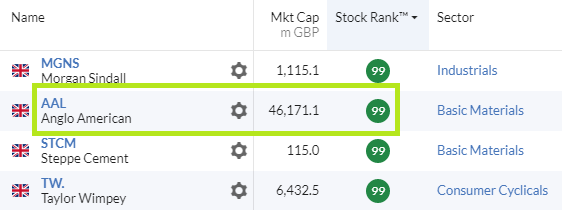
I’ll say now that I won’t be adding Anglo American to SIF because I already hold commodities group EVRAZ (LON:EVR), which produces coal, iron ore and steel. But I will give a definitive answer on whether I’d buy Anglo for SIF if I didn’t already hold a rival miner.
Why is Anglo doing so well?
Anglo has outperformed its FTSE 100 rivals BHP (LON:BHP) and Rio Tinto (LON:RIO) over the last five years:
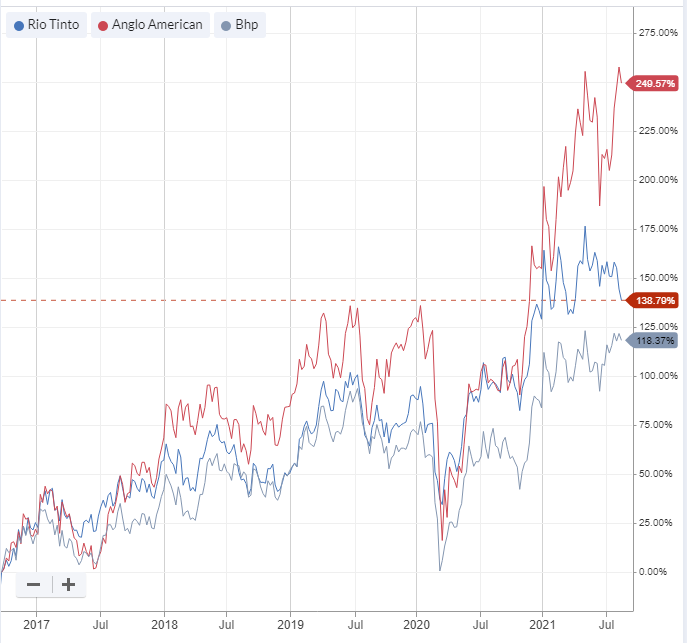
I think that one reason for this is the company’s more evenly balanced mix of commodities. Broadly speaking, Anglo has a greater weighting to late cycle commodities such as copper, platinum and diamonds than Rio or BHP.
We can see how Anglo American’s profit split is significantly different to Rio’s in this table:
Underlying EBITDA (%) H1 2021 | ||
Commodity | Rio Tinto | Anglo American |
Iron ore | 75% | 40% |
Platinum group metals | 0% | 36% |
Copper | 10% | 16% |
Aluminium | 9% | n/a |
Diamonds | n/a | 5% |
Other minerals/coal | 6.5% | 2.5% |
Where next for Anglo?
Anglo American’s performance and valuation metrics certainly look tempting at the moment. How often will you see a single-figure P/E, double digit EPS growth and a 6%+ yield?
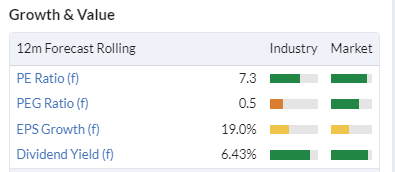
Stockopedia’s algorithms like the shares too. AAL stock currently boasts a StockRank of 99 and Super Stock status.
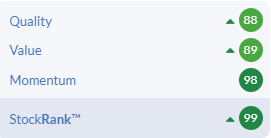
I can see the ongoing appeal of these shares, but I can also see some reasons to be cautious. In the remainder of this piece, I’m going to drill into Anglo American’s QVM scores and attempt to put the current numbers in context.
Disclosure: There is a severe risk that seller’s remorse could distort my views about this business. I bought Anglo shares at prices between 378p and 900p during the second half of 2015. I then sold for 1,100p+ during the first half of 2017. Had I sat tight and done nothing, the value of my holding would have tripled since those sales.
Fortunately, the experience reinforced a key lesson of investing in commodity producers. In my view, we should never be tempted to look at these companies as normal businesses. They are leveraged plays on commodity prices. What seems inevitable today might seem unlikely in 12 months’ time.
With that thought in mind, let’s take a look at Anglo’s factor scores.
Value: the shares are getting cheaper!
Anglo American’s ValueRank of 89 looks encouraging. Although the shares have risen by 70% over the last 12 months, profits have risen even more quickly.
Operating profit for the first half of 2021 was $11.2bn. This was almost double the $6.3bn reported for the whole of 2020.
In total, Anglo has generated an operating profit of $15.6bn over the last 12 months. That gives the stock an earnings yield (EBIT/EV) of 20%. That’s one of the highest earnings yields I’ve ever seen in my SIF screening results.
There is a caveat here - around 28% of the group’s underlying earnings are attributed to non-controlling interests. These are minority shareholders of Anglo’s subsidiary companies.
Adjusting for this, the shareholder earnings yield falls to about 14.5% - still very cheap.
The stock’s apparent value is supported by other key metrics:
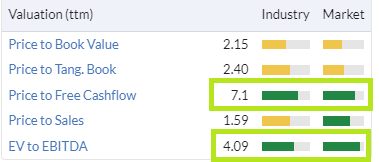
However, to understand Anglo American’s current valuation I think we need to look further back than the trailing 12 months covered by the ValueRank. Fortunately, we can do this by switching to the accounts tab on the StockReport.
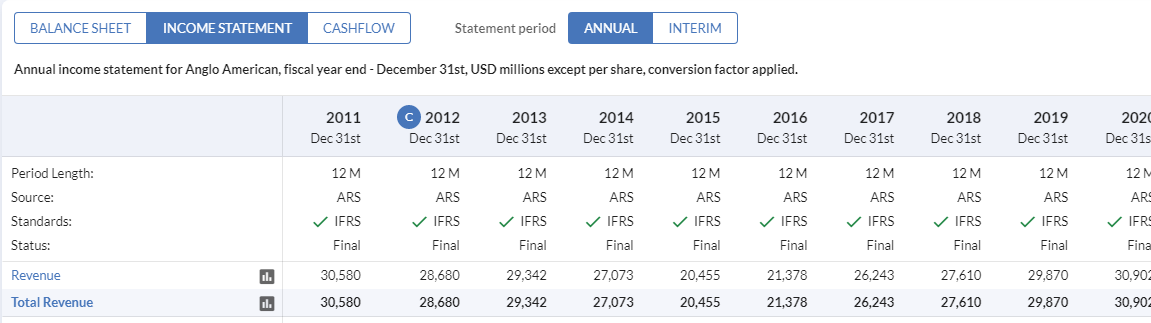
The historical data show us that despite current bumper profits, Anglo is currently a less profitable business than it was 10 years ago:
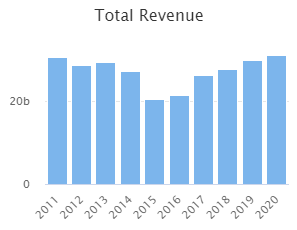
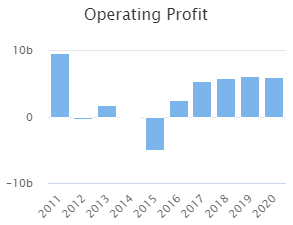
In 2011, the group reported revenue of $31bn and operating profit of $9.6bn.
In 2020, revenue was also $31bn, but operating profit was just $6.1bn.
Broker forecasts suggest that Anglo’s operating profit in 2021 will be $9.7bn. This should match the previous peak from 2011. However, forecast revenue of $44bn (2011: $31bn) means that profit margins are expected to remain much lower than in 2011.
I don’t see much evidence of a structural growth story here. From 2012 until 2020, revenue and profits were both below the high watermark established in 2011.
An alternative way to look at the valuation of cyclical companies is by averaging their profits over 10 years. This is known as the PE10 or CAPE (cyclically adjusted PE).
When I bought my Anglo shares back in 2015, the stock traded on a low single digit PE10. Today, the PE10 is 21, according to Stockopedia data.
In my view, we’re now approaching the peak of another commodity cycle. Anglo American’s share price chart reinforces this view, in my opinion. I don’t see much reason to think this is a more valuable business than it was 10 years ago.
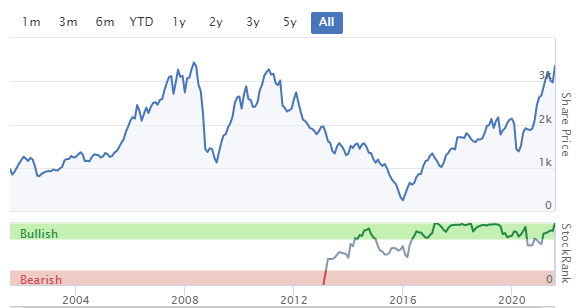
In summary, I agree that Anglo American shares look cheap today. But I think it might be wise to view these figures in a broader historical context. Cyclical stocks always tend to look cheap at the peak of the cycle, when profits are at record highs.
Quality: Great, but still cyclical
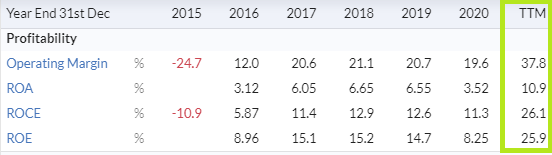
I believe Anglo American’s quality metrics tell a similar story. Profitability has improved steadily in recent years, but this year’s figures look set to be a blowout:
The business is churning out incredible amounts of free cash flow, too.
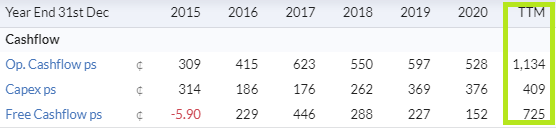
To put these numbers in context, Anglo generated $5.4bn of free cash flow during the first half of 2021. Of this, $4bn is being returned to shareholders through dividends and buybacks. This means that in just six months, the company is returning an amount to shareholders that’s greater than its underlying annual net profit from 2019 or 2020.
However, what makes this situation interesting is that even if Anglo American’s profits do start to fall in 2022, the shares could still offer decent value. Let’s see what the momentum data show us.
Momentum: Strong positive trend
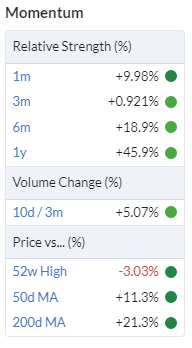
Anglo American’s MomentumRank of 98 reflects a near-perfect setup of rising share price and rising broker forecasts. The figures certainly highlight some strong trends.
Price Momentum: Anglo American scores well here, with a sea of green:
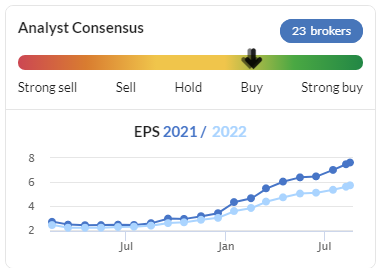
Earnings estimates: I tend to be fairly sceptical about earnings forecasts for miners, which are volatile and mostly just reflect commodity price movements. In my view, the main value of these forecasts is the trends they highlight.
In this case, we can see that earnings are expected to fall in 2022 and the profit gap is getting wider:
My verdict: is it different this time?
Fund manager Sir John Templeton reportedly said that “the four most dangerous words in investing are: this time it’s different”. I agree with this sentiment.
Of course, there are some compelling arguments to suggest that things really could be different this time - or at least that the current boom conditions may continue for longer than expected.
Firstly, miners like Anglo American have maintained discipline on capital spending remarkably well since 2016. They’ve focused on shareholder returns and resisted the temptation to splash out on large new projects or acquisitions.
Second, the global need to cut carbon emissions seems likely to drive a structural increase in demand for copper and some other minerals.
Both of these are convincing arguments, but I’m more swayed by another commodity market adage: the cure for high prices, is high prices.
If commodity prices are high and demand stays strong, sooner or later supply will increase (miners will increase capex) or demand will reduce (buyers will find ways to reduce their dependence on expensive materials).
My view is clear enough. I wouldn’t buy Anglo American for SIF at this point in the cycle. However, I accept that in reality, it may be too soon to turn cautious.
As always, please let me know what you think in the comments. Am I about to suffer the curse of being right, but at the wrong time?
Disclaimer
This is not financial advice. Our content is intended to be used and must be used for information and education purposes only. Please read our disclaimer and terms and conditions to understand our obligations.

7 comments
Hi Roland.
Thanks for the excellent write up. I’ve held Anglo American (LON:AAL) for several years (along with Rio Tinto (LON:RIO) ) as a core holding that keeps churning out a strong dividend stream. As you say it is very cyclical and eminently tradeable on that basis.
I wondered if you or others have any views on the major shake up taking place with Bhp (LON:BHP) (not a holder) ? The spin off of its oil assets into a JV is similar in thought process to Anglo American (LON:AAL) disposal of Thungela - great for ESG credentials but not sure about the financial benefit to shareholders. Also, proposal overnight that Bhp (LON:BHP) will delist from the U.K. and have a sole listing in Australia. Potentially very disruptive as it is one of the largest FTSE 100 companies and will presumably have to be sold by various index trackers, ETFs etc., which could lead to a major sell off in Bhp (LON:BHP) while possibly leading to reinvestment in the other two big miners?
Gus.
The sale of oil assets is not new to BHP. In 2017-2018 it divested itself of 10 billion in shale assets.
Anglo American (LON:AAL) hived off Thungela Resources (LON:TGA) which chartwise is doing well and believe underwritten so support if goes pear shaped, but see coal as being dirty but will be around for many years yet.
I like smaller miners but feel too volatile, the big boys are probably safer plays and the older commodities are going to be around for a long time yet until aliens give us the next step up in technology. Apologies but most of the greenwash out there does just not pass muster aka hydrogen.
in answer to your question, if in doubt do nowt.
Great article Roland. Thanks.
You did better with Anglo American (LON:AAL) than I did. I bought right at the bottom at what turned out to be the end of an extreme mining sector bear market in early 2016 but then sold again for £2.40 not long after. Can’t remember exactly why but preference for non South African Miners was one reason.
It’s interesting that you think we might be near the end of the Mining sector bull market while many commentators think we’re nearer the start. afaiaa there are not many major new mines due to come on stream and if that’s right then supply shortages v electric car/battery etc demand might mean the bulls will be proved right. I hold Evraz (LON:EVR) Central Asia Metals (LON:CAML) Rio Tinto (LON:RIO) Ferrexpo (LON:FXPO) and 3 Mining Investment Trusts, some bought years ago and others during the crash last year, so hope the sector continues to do well.
The dividend yields are extraordinary and income has already paid back a large chunk of the original outlay. Guesswork for now whether the sector will continue to do well and whether the current dip is another buy opportunity caused largely by temporary (we hope) China problems like increased covid cases along with (again hopefully temporary) moves by China to try and put a lid on runaway commodity prices. Or is it the start of a decline? My guess is for further gains.
Hi Ken,
That definitely seems to be the debate at the moment - are we at the start of a new commodity supercycle or midway/near the end of a normal cycle.
I fully accept the argument of structural growth in demand for energy transition commodities (e.g. copper, nickel), but I don't know how the supply/demand balance or cost structures will evolve. I also wonder if miners might soon have to increase capex.
My natural instinct is to be cautious and to mistrust suggestions that it's different this time. But I may well be wrong, of course.
Regards,
Roland
Hi Roland, to share your concern, yes, I have been right but at the wrong time before now but think Anglo American (LON:AAL) will do fine, but as a component of a portfolio of miners. This is where the fun starts! Being a bit of a magpie and catholic in my tastes I have diversified over time to the extent that I now hold shares in 24 mining companies. I wish I had included Anglo American (LON:AAL) as it fits with my preferred companies, those that actually get stuff out of the ground and into the market and pay a dividend, as opposed to explorers. As for the right time to buy, well, you would find it hard to beat the 21st of March 2020. Thanks for your views,
Silver