SIF Folio: Pandemic forces strategy rethink at Aggreko

Most FTSE 350 companies especially appear to go out of their way to cluster their half-year results in the same few weeks of the summer and also on the same few days of each week (Tuesday-Thursday).
I don’t know why corporate bosses are so keen to engage in such groupthink, but I guess there’s safety in numbers. This schedule also ensures that execs’ weekends are not ruined by preparing results or dealing with their aftermath. For hard-pressed analysts and investors faced by a tidal wave of results, it’s not such a favourable setup.
Moving on, last week’s review of Morgan Sindall’s half-year report seemed to generate some interest. So this week I’m going to continue my review of recent results from SIF portfolio stocks with a look at the latest numbers from FTSE 250 temporary power group Aggreko.
Aggreko (LON: AGK)
(Original coverage: 10/12/2019)
The SIF Folio’s rules-based decision in December to buy shares in temporary power provider Aggreko has turned out to be historically badly timed. Since then, the world economy has slumped, triggering a slump in energy demand. Major events such as the Olympics have been postponed. And the oil and gas sector - an important client - has crashed.
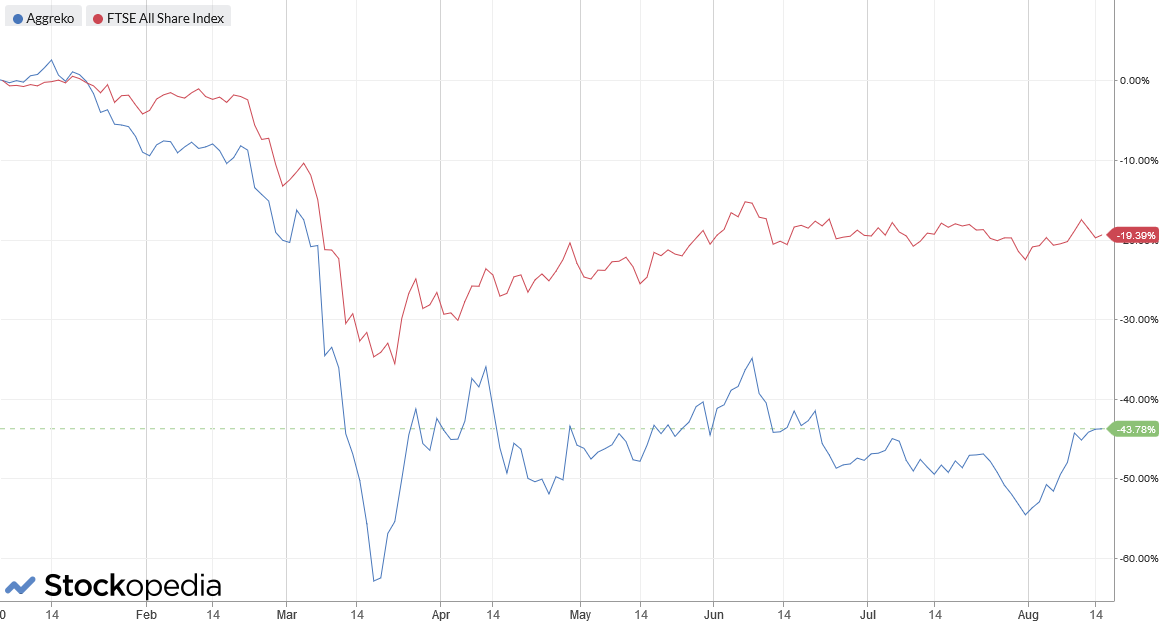
Of course, none of these was obvious in December. But the result is that the folio’s holding in Aggreko is down by more than 40%. The shares have not participated in the general market recovery seen since March. Investors appear to be pricing in a prolonged slump in demand for the firm’s hire fleet of generators:
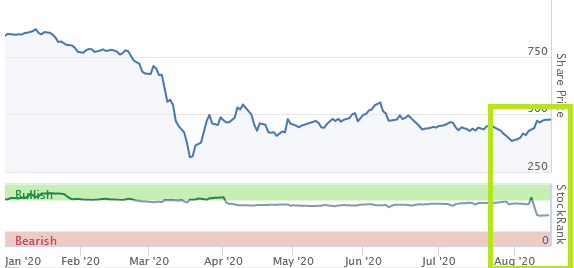
Stockopedia’s algorithms have also cooled on the stock this year. Aggreko’s StockRank was cut again after the algorithms digested its half-year results:
So what can we learn from Aggreko’s half-year figures for the six months to 30 June? I think they show a mixed picture.
Underlying performance: The firm’s continuing operations aren’t doing too badly despite the varying impact of COVID-19 across different sectors.
Revenue down by 12% to £667m
Underlying operating profit down 15% to £64m
Underlying pre-tax profit down by 13% to £47m
Impairment charges totalling £181m
Statutory pre-tax loss of £134m for the half-year period
Dividend - the interim dividend has been cut from 9.4p to 5p per share
Net debt reduced from £584m at 31 December 2019 (1x EBITDA) to £499m at the end of H1 2020 (0.9x EBITDA)
The biggest area of weakness was the oil and gas sector, where revenue fell by 32% in H1. Demand for power solutions from industrial customers also fell sharply, but demand from utilities was relatively stable.
The reduction in net debt is worth noting. As you’d expect the firm has cut or delayed spending where possible, while maintaining a strong focus on collecting receivables. The end result is a significant reduction in working capital. This helped to reduce net debt by 15% during H1.
Two further positives are that Aggreko hasn’t used any government furlough schemes, and that the board feels confident enough to restart dividend payments.
Impairments: Aggreko booked impairments totalling £181m during the first half. The scale and scope of these make me wonder if some might have been needed anyway, regardless of the pandemic. Management seem to admit this, saying that the charges reflected the impact of COVID-19 and the ongoing transition to lower carbon technologies. Here’s how the charge is broken down:
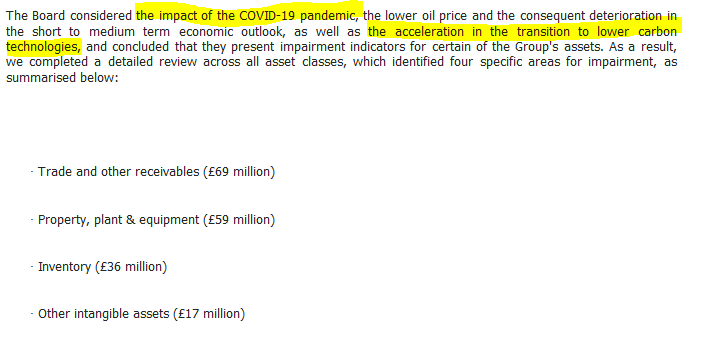
As you can see, there’s a significant acknowledgement of customer bad debts (receivables). Of this, £57m is said to relate to legacy debts in Africa, Venezuela, Yemen and Brazil. Many of these problems have been rumbling on for years. I think it’s sensible to finally write them down to zero.
The bulk of the other impairments appear to relate to reduced demand from the oil and gas and events sectors and to equipment that is now surplus to requirements. Included in this latter category is some equipment in the firm’s HFO (heavy fuel oil) fleet. The firm says the shift to cleaner-burning diesel has been accelerated by the oil price crash, which has reduced the price differential with cheaper (and dirtier) HFO.
Management are promising a strategy update on its HFO fleet in March 2021. Personally, I’m surprised that it’s still such a big issue. I had assumed that the majority of Aggreko’s fleet was already diesel powered or at least on a transition path.
However, I am encouraged by the thorough approach that appears to have been taken. CEO Chris Weston’s view is that the risk of any further impairments “is not material”.
Outlook: A lot of uncertainty remains, but Aggreko has issued guidance for the full year. The firm says that performance is stabilising and expects to report an underlying pre-tax profit figure of £80m-£100m. Based on the H1 figure of £47m, that suggests a pretty flat performance in H2.
For context, Aggreko’s 2019 underlying pre-tax profit was £199m.
Reading the narrative, the two main risks seem to me to be a prolonged slump in demand from the oil and gas sector and a longer-term challenge from the energy transition. I wonder if Aggreko has been caught napping here? We’ll find out more about how the firm plans to reflect its customers’ plans to reduce carbon intensity in March.
My view: After all the dust has settled, Aggreko shares are now trading broadly in line with their book value of 467p per share. I’d argue that this is a fair valuation for now.
The stock’s rolling 12-month forecast P/E of 13.7 looks reasonable to me, factoring in a substantial recovery next year. I’m pleased with the reduction in debt and the reintroduction of a dividend.
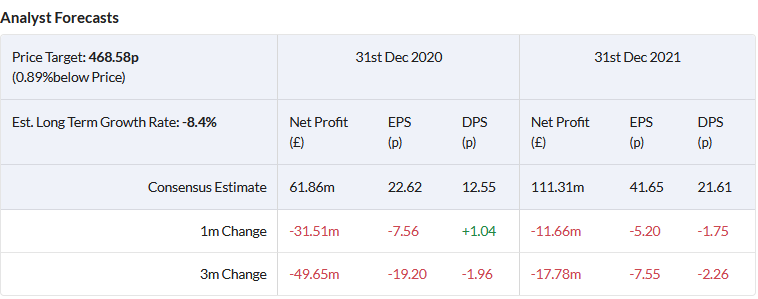
If Aggreko can hit FY21 forecasts and avoid further impairments, I think the shares could perform well on a medium-term view.
I don’t see much near-term downside, so I’m happy to continue holding for now. However, taking a longer-term view I think the impact of the pandemic has highlighted wider risks to Aggreko’s business model. Rather like some of its big clients in the mining and energy sectors, the company now needs to demonstrate how it will reduce its carbon footprint and adapt to newer technologies.
Achieving this while maintaining historic levels of profitability may not be trivial. I think that long-term investors may need to take a fresh view on this when the firm updates the market in March.
Disclaimer
This is not financial advice. Our content is intended to be used and must be used for information and education purposes only. Please read our disclaimer and terms and conditions to understand our obligations.

3 comments
Aggreko (LON:AGK) looks quite attractive and this could be a very good entry point.
BSV
Good stuff Roland. I am a long term holder and loser with Aggreko but I think I will continue to hold based on your analysis. They may even pick up from here. Have you any views on the competition? This is an asset heavy business and others might be exposed.
Hi Berksbee,
I've not done a lot of research on competition in this sector. My understanding is that Aggreko (LON:AGK) was an early leader and remains one of the larger players - but competition has increased over the years. Possibly one reason why ROCE has fallen steadily.
I think there's room for performance to improve, but as mentioned in the article, I can see some risks. As a holder I would choose to wait until March for the group's strategy update and FY results - but please DYOR as always.
Roland