Staffline: a misunderstood market leader

Inspired by its appearance on my screen for cheap growing companies, I have recently bought a small position in this blue-collar recruiter. On the surface, an EV/EBITDA of 3 looks too low for a business forecast to grow earnings by 25% this year. However, they operate in a difficult sector and have faced several challenges in the past. Our shorter stock pitch format is the ideal way to determine whether I've made a mistake or should add to my initial position.
Disclosure: At the time of publication, I hold a long position in Staffline Group.

The Pitch
Staffline (LON:STAF) is an AIM-listed blue-collar recruitment business, and the UK's largest on-site staffing provider, typically placing around 40,000 temporary workers per day across food production, logistics, manufacturing, and driving. The group operates two divisions:
- Recruitment GB is the bulk of the group, generating over £1bn of revenue in the last year. It provides temporary blue-collar workers to a defensively positioned customer base, heavily weighted towards food retail and logistics. The business is the largest on-site recruitment company in its market, with its scale providing a moat in an industry where compliance matters.
- Recruitment Ireland contributed £102.1m of revenue in FY25, providing both temporary and permanent white-collar recruitment services. It holds the largest market share in Northern Ireland, over 20%, and is well positioned in the public sector, including health and social care.
The Stockopedia algorithms rate this as a Super Stock with a StockRank of 86.
- Value Rank 82: It is undoubtedly cheap on a single-digit P/E, but the lack of tangible asset backing and dividends means it doesn't score more highly on this measure.
- Quality Rank 62: While its turnover is large, tiny EBIT margins reflect that much of that is pass-through wage costs. High asset turnover means that the company still generated an impressive 31% ROCE last year, well above its cost of capital.
- Momentum Rank 68: This has been declining recently as the share price has fallen around 25% from its 52-week high. However, fundamental momentum remains strong, with 2025 results coming in ahead of expectations and modest upgrades for future years.
The Big Picture
Staffline is potentially misunderstood by many investors who categorise it with recruiters such as Hays or Page. There is no doubt that permanent white-collar recruitment has been a terrible place to be over the past few years, and there are genuine questions as to whether this type of business has been permanently disrupted by technology. However, Staffline have very little exposure to this type of recruitment. Instead, they provide 30-50 thousand workers each day to over 300 client sites. They supply mostly temporary labour, which enables clients to meet their flexible staffing needs. Dedicated staffline employees based at customers' sites provide management of the temporary workforce, recruitment, training, and shift planning.
These are some of the reasons why they are a very different type of business compared to sector peers:
- Conversion rate: The gross profit-to-EBIT conversion rate is arguably the most important metric for staffing businesses. The group's conversion rate rose 260 basis points to 16.6% in FY25, comfortably ahead of the more normal 10% level of the UK-listed permanent recruiters.
- Outperforming in a tough market: Against a difficult economic backdrop, Staffline grew revenue by 11.5% and temporary hours by 6.8%, despite an estimated market decline of 2–5%. The business is taking market share by providing a higher proportion of staffing needs to existing customers and through significant new contract wins.
- The Employment Rights Act 2025: Despite investor concerns about the legislative environment, this could be a tailwind for the company. Rather than banning zero-hours contracts outright, the Act imposes a compliance burden on aspects such as guaranteed hours that explicitly extend to agency workers. Large, scaled, compliant recruiters such as Staffline are likely to take market share from smaller, less compliant operators in response.
- A compelling valuation: The forward P/E of less than 8 compares very favourably to a recruiter peer group average of around 14x and to through-the-cycle P/E averages of 17–22x for large UK recruitments.
Going Deeper
The share price has almost doubled from the lows at the beginning of 2025:
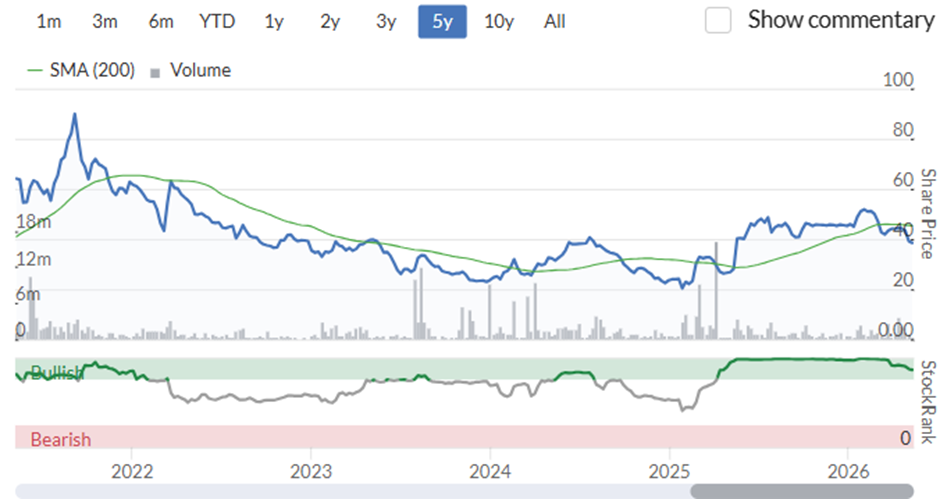
However, several factors suggest this business has further to go:
- A strong start to FY26: The board described a "healthy" new business pipeline, and their brokers note that weekly hours in Staffline GB are already tracking ahead of the prior year. In Ireland, easier comparatives should support that division's recovery. There is also potential for a boost from the FIFA World Cup in June and July, given the group's work for the UK food and logistics sectors. (Food retailers tend to run promotions around this event to drive additional volume.)
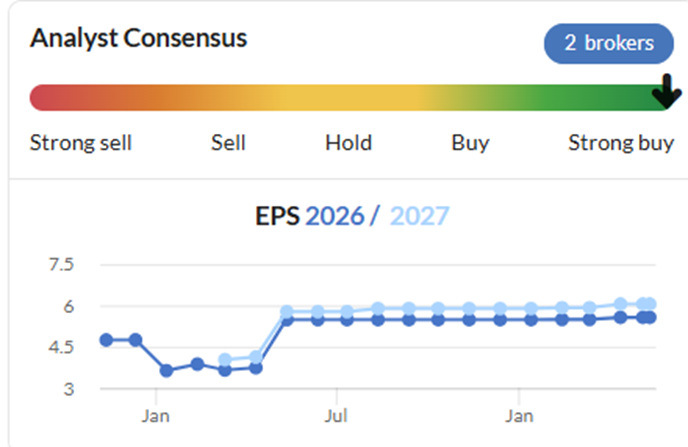
- The Culina contract: In May 2025, Staffline secured a landmark strategic partnership with Culina Group, a leading UK logistics provider. This involved outsourcing 100% of its agency labour requirements to Staffline and onboarding around 1,800 temporary workers. The Culina contract is particularly valuable because it allows Staffline to flex workers across different sectors to match seasonal demand. The contract will deliver an estimated £100m in FY26 and led to a big upgrade in future EPS forecasts when it was announced in April last year:
- Margin improvement: Gross-profit-per-fee-earner rose from £90.0k to £97.1k in FY25. Panmure Liberum expects the group-level conversion rate to increase from 16.6% to 18.8% in FY26 and 19.2% in FY27, as the Culina contract reaches full run rate and the cost reduction programme continues to deliver.
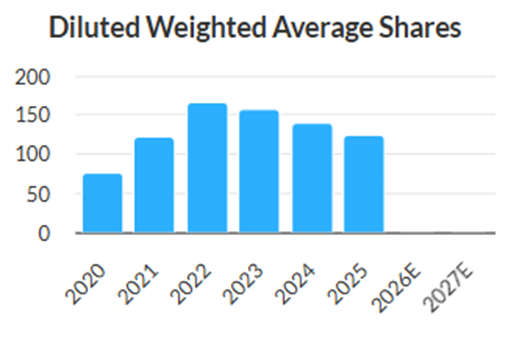
- Share buyback: While the company doesn't currently pay a dividend, its commitment to shareholder returns is reflected in an ongoing share buyback. From the peak in 2022, the share count has been reduced by 30%. When the current share buyback announced with the FY25 results is complete, the share count will have been reduced by a further 4%.
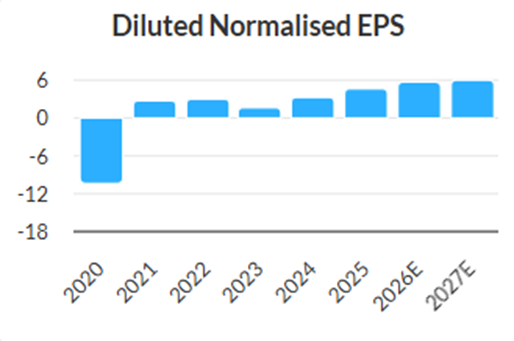
- EPS growth: Diluted underlying EPS grew 52% in FY25 to 4.4p, helped by the share buyback programme as well as operational improvement. Consensus EPS forecasts of 5.6p for FY26 and 6.1p for FY27 imply a further 35%+ of earnings growth over two years, without assuming any market recovery.
- Interest rate cap: From October 2024, they implemented a five-year interest rate collar that protects approximately 80% of its debt exposure (including factoring facilities) when SONIA exceeds 4.75%. In an environment where inflationary pressures are rising and rate cuts have been slower than expected, this helps protect earnings from a key risk.
- Pipeline: The ongoing consolidation among logistics providers is creating further opportunities for Staffline. Volumes with GXO are increasing, and management expects to pick up additional work from the Wincanton integration in H1 FY26. The company has also increased its share at Tesco (taking over large depots at Daventry and Hinkley) and now supplies nearly all of Morrisons' temporary workforce. The Hovis contract should add at least £0.2m to EBIT in FY26.
What The Brokers Say
Both covering brokers rate the stock a Buy and share an identical 60p price target, implying at least a 50% upside from the current share price.
- Zeus uses a DCF-based approach to calculate their price target, also noting that Staffline trades at a 34% discount to the mean P/E of international staffing peers despite significantly outperforming the UK peer group on revenue and NFI growth. Staffline's forward P/E is less than half the full-cycle average for other recruiters, even after adjusting for its lower-margin, blue-collar profile.
- Panmure Liberum uses a sum-of-the-parts approach and also arrives at 60p. They make four key points in their post-results note: the macro backdrop is undeniably tough, but Staffline is taking market share; the Employment Rights Act is a net positive; both divisions are well positioned for growth; and the balance sheet is sound. They also present an intriguing valuation reference point: the March 2023 disposal of Impellam's temporary staffing businesses at exit multiples that, if applied to Staffline, would imply a share price of between 63p and 254p.
The Bear Case
The investment case is not without risks, and it is important to understand why the shares have drifted recently:
- Macro backdrop: The KPMG/REC UK Report on Jobs signalled another marked reduction in demand for workers in early 2026. Job vacancies remain 8.7% below their pre-pandemic level. While Staffline's blue-collar focus insulates it somewhat, a prolonged economic downturn could still weigh on volumes and the ability to grow margins.
- Customer cost squeeze: The National Insurance and minimum wage increases that came into effect in April 2025 are a pass-through cost for Staffline, but customers already feeling margin pressure may respond by cutting back on volumes or driving harder bargains on pricing. The 2025 Autumn Budget included further minimum wage increases that took effect last month.
- Enthusiastic language: In their FY trading statement, management said that "FY 2025 results expected to be significantly ahead of market expectations", which sounds like great news. However, a quick calculation revealed that operating profit was just 6.7% ahead of consensus. Still good news, but perhaps not as significant as management makes out with their choice of language. In the results, they were keen to repeat this phrase, even though it was merely a reiteration of the previously announced "ahead" statement. Perhaps the lady doth protest too much?
- Brokers break the bad news: When they released a trading update in early 2025, they said that operating profit was ahead of expectations. However, they left it up to their brokers to break the bad news that FY25 estimates were being reduced by a whopping 28%. To be fair, it was the brokers who flagged the scale of the subsequent upgrades on the Culina contract. Overall, this is a company where it pays to read the broker coverage carefully, not just management statements.
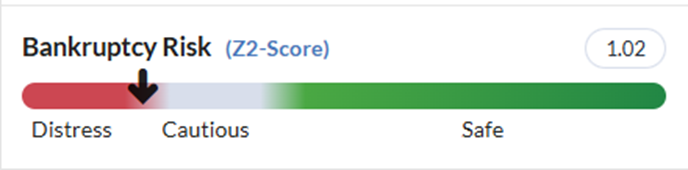
- Working capital concerns: Net cash fell sharply from £9.6m to £1.5m in FY25, driven by an £11.1m working capital outflow as the Culina contract ramped up. When this type of business grows, it requires more cash to fund increased receivables. The Stock report flags the Altman Z-Score on the edge of the "distressed" zone. This is common with companies that have very large working capital balances and no tangible equity, but it is still worth watching carefully.
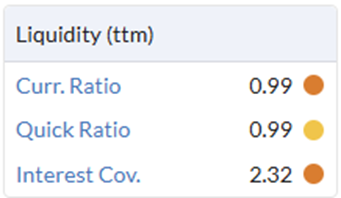
- Hidden debt: Like many in the sector, Staffline makes use of a receivables Finance Facility supporting up to £60m of factoring. They also had customer financing arrangements totalling £66.6m. These are non-recourse facilities, so they don't appear on the balance sheet. These do incur interest on these borrowings, though, meaning that their interest cover doesn't have as much headroom as some would prefer:
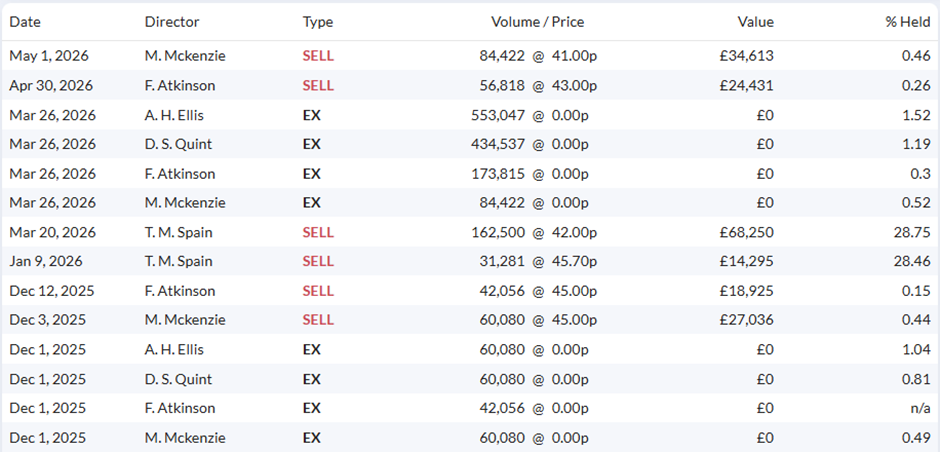
- Mixed management signals: While the CFO and CEO have retained recently exercised options and paid the associated tax, not every director has. And none appear to have bought shares outright in the market recently:
- Regulatory Risk: Staffline was forced to raise £30m from the market in 2019 to rectify significant, historical underpayments of National Minimum Wage (NMW) to staff. I think the company was probably mirroring customer practices, but that didn't prevent them, as the employer, from being liable. While there is no indication that they have similar issues now, if one did arise, the impact could be significant given the number of staff they employ.
The Bottom Line
Staffline is not a glamorous business. Earning a 1.2% operating margin supplying blue-collar workers doesn't sound exciting. However, it is an industry where scale matters, and as the UK's largest supplier of temporary labour, it is embedded in many customers' businesses, enabling it to generate an impressive ROCE well above its cost of capital.
The Culina contract is the key catalyst for FY26 and FY27. If its estimated £100m annualised contribution comes through as expected and the conversion rate continues to improve, EPS growth of 25–30% per annum appears achievable without any material market recovery. The recent Employment Rights Act adds a structural tailwind for the market leader in a sector where compliance complexity is rising. If these growth forecasts are achieved, the shares are unlikely to continue to trade at the current level.
However, it is not without risk. Its balance sheet carries factoring facilities and lease liabilities. Despite its focus on providing labour to defensive sectors, such as food retail, its scale means they are not immune to macro conditions. Management has done well to turn this business around, but they are also not shy about telling us about it; any news requires filtering through the broker's analytical eye.
Personally, with the Culina full-year effect still to play out, a new buyback announced, and FY26 already off to a strong start, the shares look too cheap on a forward P/E of around 7, and I'd look to add if there were further share price weakness. However, given some material risks, it will never be a large part of my portfolio.
[Disclosure: Mark owns shares in Staffline (LON:STAF) ]
Disclaimer
This is not financial advice. Our content is intended to be used and must be used for information and education purposes only. Please read our disclaimer and terms and conditions to understand our obligations.

5 comments
i doubt staffline is misunderstood - the shareprice reflects the facts its well understood - all so easy for shareholders to be diluted out of existence whilst directors can still have their noses in the trough.
its almost the way to run these companies that if its suits make the shareholders take up the pain - bet all the directors are well remunerated in cash terms !
As you make reasonably clear - if the starting point is that you need to use invoice finance when things are running smooth - thats instant hurt for shareholders if anything goes wrong. No one really uses invoice financing if they can help it - perhaps they get a good deal but to me its always been for thoses that cant get proper finance one would expect to see for limited company.
do i want to owen somethihgb with 5% margins when 50% of what io am owed in is not mine in the first place?
Dont get me wrong this wa s adecent buisness back in the day - and seems to have got an element of its mojo back - its just that there is less risky stuff out there. this kind of company can go on a tear though when it has a decent spurt.
Hi rmillaree,
I'm not sure the dilution is any worse than anywhere else in the market these days. Indeed, the buyback has seen the share count plummet in recent years. The big increase in the past is not options, but an old management team cocking up their exposure to their/clients' working practices, and ending up with the bill.
The invoice factoring adds to the risk, but the reason its off balance sheet is they are transferring the risk too. Banks only do this because the likes of Tesco and Morrisons have a very low chance of going bust. It has the benefit that if they had a big drop in turnover they wouldn't need the working capital so wouldn't need the facility. So overall, I view it like any normal leverage , it juices returns to equity but at an increased risk. It doesn't look excessive though, and given the cash thrown at the buyback recently, the management appear to agree.
In terms of margins, I actually did some research on this after someone said one would do better if we only invested in SuperStocks with high margins. It turned out to to be untrue. The low-margin companies beat the high-margin ones. I'm not sure this applies to all stocks, but for SuperStocks that already have reasonable quality and value characteristics it appears to be true. Hence, the margins here don't put me off.
I agree there are many companies less risky, but perhaps few that also have a decent upside and are performing well in current macro conditions. There are still some bear points as highligted in the article, but IMO dilution and margins are not the things to be put off by here.
HTH,
Mark
I have just worked out that the gross profit-to-EBIT conversion rate for Gattaca (LON:GATC) was only 5.6% in 2025, but Hercules (LON:HERC) was 22.5% in 2024.
Hi acdoug,
Gattaca (LON:GATC) and Hercules (LON:HERC) are much more like traditional recruiters, although with big contract rather than permanet exposure, which has helped them in current markets. Hercules certainly haven't covered themselves in glory recently, either.
The point of the article is really that they are not like other recruiters, in that their scale in an increasingly regulated environment gives them a moat that most permanent, white-collar recruiters simply don't possess. So industry comparison don't really apply, apart from to point out that recruiters are not always cheap.
Thank you, Mark. very insightful. I'd be interested to see you do a comparison with Gattaca (LON:GATC) and Hercules (LON:HERC) (when the latter sort out their accounting issues, which must put a question over the CFO's cv claims)