The Slater investing playbook: screening for growth

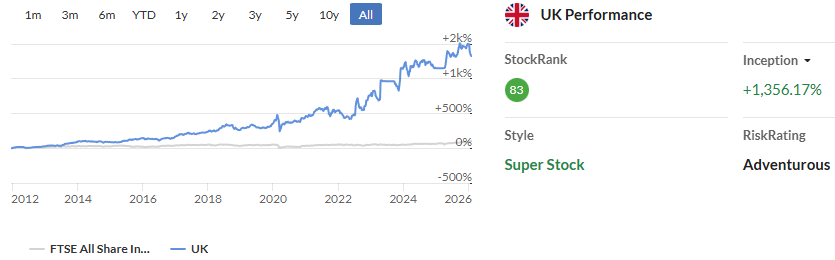
Our Jim Slater ZULU Principle Screen has been the best-performing Guru screen by a large margin since its inception in 2011. This approach is based on the principles outlined by the famous UK investor in his 1992 book, The Zulu Principle – essential reading for all stockpicking investors.
Here's a snapshot of the rules we use in the ZULU screen:

Based on quarterly rebalancing, this screen has generated a 1,350% return (excluding dividends) over the last 14 years. That’s equivalent to 21% annualised:
I know that a number of subscribers have followed this approach with some success. I am also happy to admit that Slater’s ideas also influenced the rules-based strategy I use to run the Stock in Focus (SIF) Portfolio.
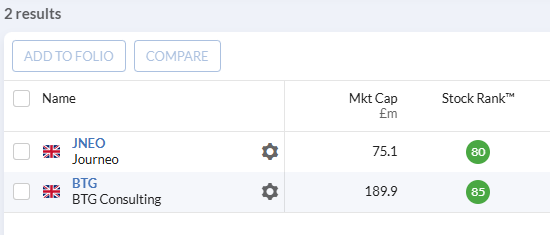
However, investing purely by following the ZULU screen results isn’t without its challenges. Very few stocks typically qualify for this screen at any one time. There are just two at the time of writing, for example:
Building a balanced, diversified portfolio with a sensible number of positions thus requires some discipline and planning, with gradual execution over time and a systematic approach to buying and selling.
These constraints should help to reduce the risk of unsustainable losses. They are also likely to restrict overall returns.
One person who has risen to the challenge of executing this strategy in a sustainable and professional way is Jim Slater’s son Mark Slater. He’s chairman and chief investment officer of UK asset manager Slater Investments.
A professional result
Slater Investments runs three main funds, but its largest and probably most successful is the Growth Fund.
Between its inception in March 2005 and December 2025, the Slater Growth Fund grew to £445m of assets under management and delivered a 607% total return (9.8% annualised). This is nearly double the average return from UK equity funds over the same period:
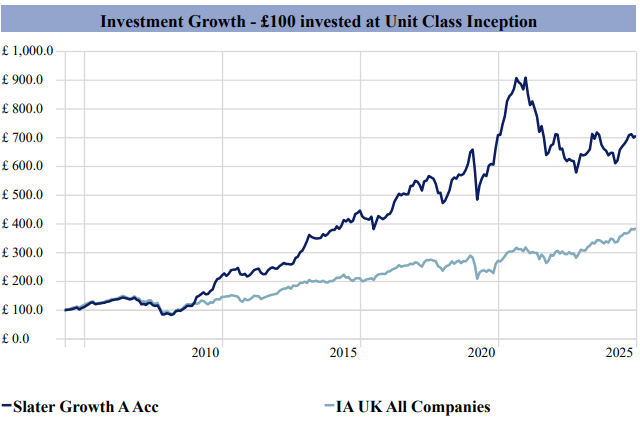
Slater’s Growth Fund has also comfortably outperformed the market. Over the same 2005-2025 period, the FTSE 100 Total Return index delivered a gain of 338%, or 7.3% annualised.
In a graphic example of the power of compounding, it’s worth noting how a modest-sounding 2.5% per year outperformance versus the FTSE has compounded into a 269% outperformance over 20 years. This highlights the value of small gains (or small reductions in costs) over long periods.
Slater Growth: systematic approach
The Growth Fund’s stock selection strategy is based on an initial screening approach, followed by an overlay of active research and due diligence. It’s very similar in principle to many of the ideas we regularly discuss here at Stockopedia:
We run an initial computer screen of our universe that uses a number of relevant criteria including: – Price to Earnings Growth Ratio (PEG) – ESG screening – Sustainable earnings growth – Strong cash flow – Competitive advantage – Pricing power – Positive recent trading statement – Director buying.
I’m not able to get full holding details for the Slater Growth Fund from the company’s website – like many active managers, the fund only discloses its larger positions.
However, Alex kindly extracted a list of Slater Investments’ reported holdings from our databases for me to use as a base for further research. I then refined this further to try and deduce which of these companies is held in the Growth Fund (as opposed to Recovery or Income) – this information is not always included in the regulatory disclosure statements.
My list has 27 stocks, whereas the Slater Growth Fund had 40 holdings at the end of December 2025. This means I know my list is incomplete. I also recognise there’s a risk that some of the companies I’ve included may not be current Growth Fund holdings.
For these reasons I’m not going to publish the full list of companies I’ve produced. Instead, I’m going to:
Look at some key financial metrics for the portfolio as a whole – I’m more confident in these;
Highlight some individual stocks from among the Slater Growth Fund’s major holdings.
Portfolio metrics
I often find it useful to consider the average characteristics of a portfolio to see if they reflect my chosen strategy.
In this case I can see that the key element of the Slater growth approach are directly reflected in the median values of the portfolio shares I’ve identified:
Market Cap | StockRank | TTM P/E | Rolling 1y P/E | Rolling 1y PEG | Rolling 1y div yield | |
Median* | £189m | 60 | 16 | 12 | 0.8 | 3.0% |
*Estimated
For example, the rolling one-year forward P/E is lower than the trailing 12-month P/E ratio. This indicates earnings growth is expected during the current trading period.
The PEG ratio is a measure strongly associated with the Slater growth style. This ratio effectively normalises the P/E ratio to reflect the expected earnings growth rate. The logic behind this is that a stock with a higher earnings growth rate is likely to deserve a higher valuation.
A PEG ratio of less than 1.0x is often used as a benchmark for an attractive combination of growth and value – growth at a reasonable price.
In this case, the median figure of 0.8x in my selection suggests the shares I’ve identified are still valued quite affordably relative to their expected near-term earnings growth.
Slater Growth: 5 top-ranked stocks
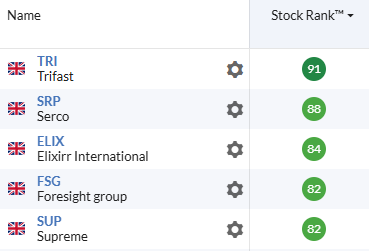
I’m going to finish this piece by looking at the five highest-ranked stocks I’ve been able to identify from the Slater Growth Fund’s current holdings.
Trifast (LON:TRI)
The Growth Fund owns more than 9% of this precision industrial engineering business, according to regulatory filings from July 2025.
I reviewed Trifast in a Stock Pitch last week so I won’t repeat myself too much here, except to note that on paper at least, this stock scores well on a number of valuation and earnings growth metrics:
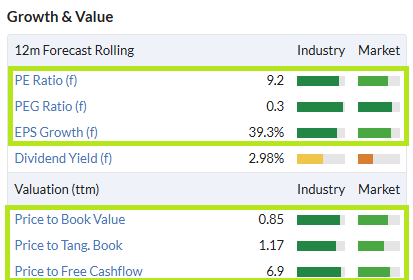
I can see that Trifast could be a good fit for a Slater growth approach, if the fund’s managers believe the company can continue to execute successfully on its turnaround plans.
Serco (LON:SRP)
According to our data, Slater Investments’ last-reported update on its holding of this outsourcing group was in December 2024.
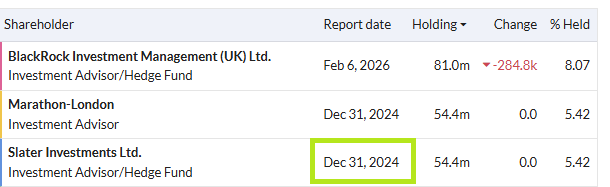
At the time, Serco was trading on a P/E of 9.5 and was styled as a Contrarian pick by our algorithms.
Over the past year, the share price has doubled…
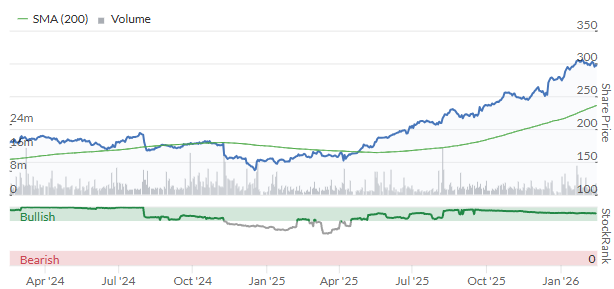
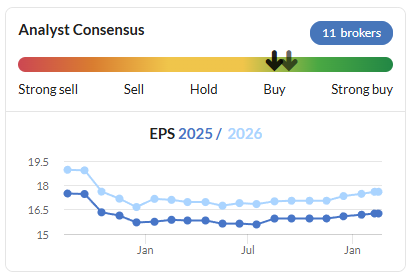
… but FY26 earnings estimates have only risen by 6%:
As a result, Serco has gone from being a Contrarian to a High Flyer.
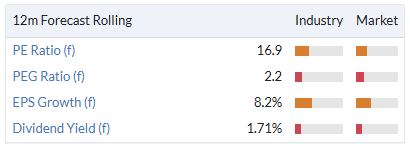
The stock now looks significantly more expensive than it did in December 2024 and has a rather high PEG ratio:
That’s not to say that Serco can’t continue to outperform. But this low-margin business doesn’t look such a tempting buy to me as it did at the start of 2025.
Serco accounted for 4.7% of the Slater Growth Fund at the end of last year. It will be interesting to see if there are any changes to the holding over the coming year, given the change in its valuation.
Elixirr International (LON:ELIX)
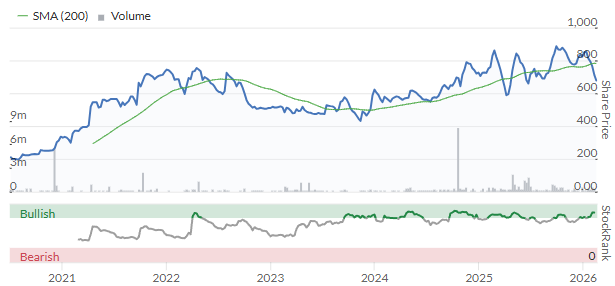
This acquisitive management consultancy business has been something of a success story since its 2020 IPO:
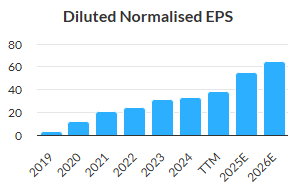
Profit growth has been strong:
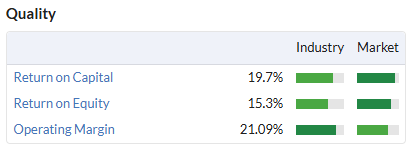
…and quality metrics are good:
According to the original AIM admission document, Slater Investments acquired an 8.8% stake in Elixirr at the time of the IPO.
Subsequently this stake was reported at 6.8% in last year’s Main Market admission document and is currently shown at 6.5% in the StockReport. So perhaps we can conclude that Slater has trimmed its holding at some point(s) following the IPO:
However, the valuation remains reasonable with strong EPS growth forecast and a low PEG ratio:
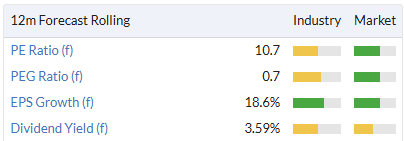
On brief inspection, Elixirr International continues to look like a reasonable fit for the Slater growth strategy.
Foresight group (LON:FSG)
This infrastructure and private equity-focused asset manager was the Growth Fund’s second-largest holding at the end of 2025. Slater is Foresight’s second-largest shareholder after founder and executive chairman Bernard Fairman, with a c.£25m stake:
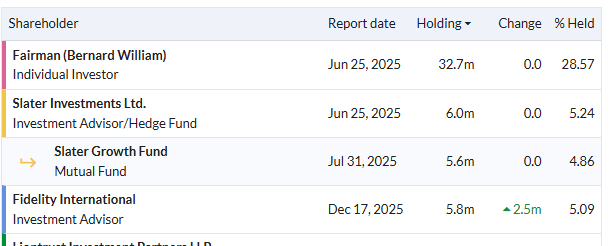
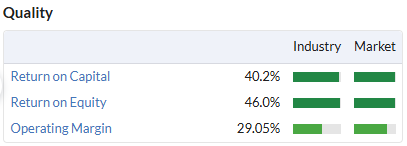
Owner management is an attraction here for Slater, I suspect, as is Foresight’s exposure to unlisted investments and super profitability:
Valuation is also tempting – earnings growth is expected to be c.20% in FY26 and FY27. I would argue that the valuation doesn’t really reflect this strong momentum:
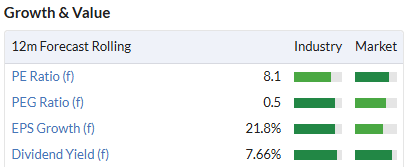
I recently added Foresight Group to the SIF portfolio and to my personal holdings, after the stock appeared in my SIF buying screen. I can see why this business could be a good fit for a Slater strategy.
Supreme (LON:SUP)
This consumer goods group is best known for its core vaping business, but is expanding into branded drinks and wellness-related products.
Last year saw the company acquire the Typhoo tea and Slimfast brands, following the £15m acquisition of soft drinks group Clearly Drinks in 2024.
Supreme is family controlled and boasts attractive quality metrics, but it’s probably fair to say the heavy vaping exposure means it also carries some regulatory risk and is perhaps suffering from a ‘sin stock’ discount.
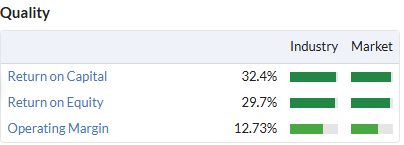
The growing success of the non-vaping parts of the business suggests to me that there is potential for this business to earn a higher valuation over time.
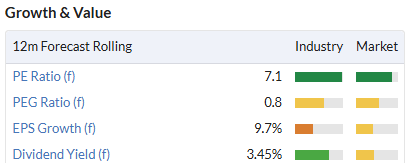
Certainly the current valuation looks quite modest, in my view, given the expectation of double-digit earnings growth over the year ahead:
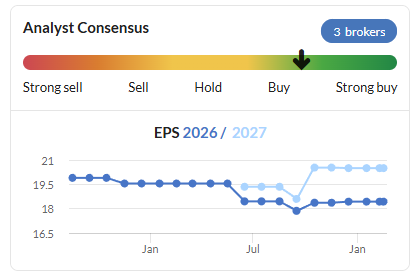
While this business might not be without risk, I can see that Supreme could be a good fit for a Slater Growth strategy. For a broader look at Supreme, Graham’s review in September could also be worth a look.
Disclosure: at the time of publication, Roland owned shares in Foresight Group.
Disclaimer
This is not financial advice. Our content is intended to be used and must be used for information and education purposes only. Please read our disclaimer and terms and conditions to understand our obligations.

15 comments
Whilst the performance of UK stocks in the Jim Slater screen have performed amazingly since inception, if you look at US and Canadian stocks in the same screen, the performance has been much worse. Any insight as to why?
I have long been a fan of the Zulu principle and have a copy on my desk since 1992 when it served me very well. I sold all of my holdings in 1999 before the crash. Not because I saw the crash coming but because there was nothing to buy using Zulu and existing holdings were sold off as their PEG ratios met targets. I then used the funds to buy my house! I began investing again around 2005 and, using the same principles, failed miserably. I began loosening some of the rules to find more buy opportunities - a big mistake. After several years of productive investment trust gains I have recently begun using some surplus cash to 'play'. Whilst I am still a fan of the Zulu principle and have screened successfully for shares like Journeo (LON:JNEO) Elixirr International (LON:ELIX) Supreme (LON:SUP) I think that today's lower growth market isn't suited to Zulu. I will still use the screen but I am finding more opportunities using QMStockranks these days. Also, I find Hoffer's use of itchimoku clouds useful to bank profits in the stocks that I have mentioned and wait for another entry opportunity when/if they show up on the Zulu screen again.
I don't know how accurate Stockopedia figures are, I have reported mistakes on several of these screens, including this one. I'm only picking up some of large errors.
Only one stock now selected, as quarterly rebalanced, it is the stocks on the first day of the quarter, that are actually counting, l wish Stockopedia would show the actual stocks, that have been selected, for each quarter, as well the ones qualifying today.
Hi Roland
Agree it not possible to find the total current portfolio - but you can see what it was at each six monthly report - all are available on the website and from the last published, as far as I can see, neither of the two you highlight are included (JNEO and BTG)
If you look on Citywire or HL you will see the results have been awful - Yes a few holdings such as Foresight have done well - but overall a disaster. For example - over 3 years the fund ranks 221 out of 229 in the sector
Bonehie, I'm afraid you're right; over three years, the Slater Growth Fund hasn't performed too well, yet over 10yrs, and certainly since inception, it's been very strong. It does seem to be improving recently. As a holder myself, I hope it continues that improvement! When watching interviews or reading his reports, I like the sound philosophy of Mark Slater.
DaviHard - Sorry but in investing, it's performance that matters - not talk. Think back - Neil Woodford and many more. Yes Slater growth has perked up recently - but it's still way behind the pack. Look at the figs on HL - Over 3 months 4.39% against Artemis SmartGarp UK - up over 13%
Fair enough. I do think that the fund will prove to be a good choice in ten years' time though and I'm prepared to back it with my money.
What does quarterly rebalancing look like in practice?
I would like to ask the same question. I have tried Zulu Principle investing and after some initial gains the portfolio stagnates. There is plenty of information on how to screen for shares to buy but I can't find any advice on when to sell. That applies to all the screens
Interesting that the Stocko screen delivered 21% and the Slater fund only 9.8%.
I assume this is because the screen was stricter and had only 2 shares at the time of writing.
Which of the requirements would Roland loosen in order to raise the passing number of companies up to say 10. Which seems to be the minimum neccesary for a viable portfolio.
Maybe it depends on your planned holding time. You might build the portfolio slowly adding new stocks when they appear in the screen.
I wonder what Slater’s selling rules are.
To answer my own question. If i increase the PEG to 1, drop the EPS growth to 10%, drop the ROCE to 10% and delete the size requirement, i still only get 4 companies qualifying.
I feel the requirements above fit the description of a profitable high growth company. But there are only 4 in the U.K. This perhaps says more about the U.K. economy than the screen. Slater developed the screen in the high growth 1960's, not the sclerotic 2020's.
Would it be better to hunt in Europe or the U.S. for this type of company?
If you change the PEG requirement to rolling and remove the max market capitalisation requirement you will currently get 17 shares in the UK. The Slater PEG is the most restrictive as it wants 4 periods of growth. However I dont know without a proper backtest facility whether the restrictive nature of the Slater PEG is what drives the performance return.
Interesting.
You may prefer the relaxed SIF screen where markets are low. There is an interesting article by Roland at https://www.stockopedia.com/co... where some of the criteria are made looser. Jim Slater: “… The probable reason for this is that, in these difficult markets with very low interest rates and high valuations, it is necessary to stretch the price-earnings to growth (PEG) limit to about 1.3 and, in that way, avoid losing some of the best shares. …”