The Week Ahead (3-7 Feb): Big Pharma, VOD, ASHM

It was a volatile week in the US, with tech stocks selling off on Monday in response to claims that a Chinese company had developed AI algorithms that needed far less computing power. The rest of the week saw partial recovery. Although it meant that the FTSE100 had a rare week in the sun, outperforming the S&P500.
Here’s what we can look forward to next week:
Economic Calendar
Monday 3rd |
||
01:45 09:00 09:30 15:00 |
China Euro Area UK United States |
Manufacturing PMI |
10:00 |
Euro Area |
Inflation |
Tuesday 4th |
||
15:00 |
United States |
Job Openings |
Wednesday 5th |
||
00:30 09:00 09:30 15:00 |
Japan Euro Area UK United States |
Services PMI |
Thursday 6th |
||
12:00 |
UK |
BOE Interest Rate Decision MPC Meeting Minutes |
Friday 7th |
||
07:00 |
UK |
Halifax House Price Index |
13:30 |
United States |
Unemployment Rate Non-Farm Payrolls |
15:00 |
United States |
Consumer Sentiment |
The key news next week will be UK interest rates. Since the base Rate peaked at 5.25% in August 2023, there have been two 25bps cuts in August and November 2024:
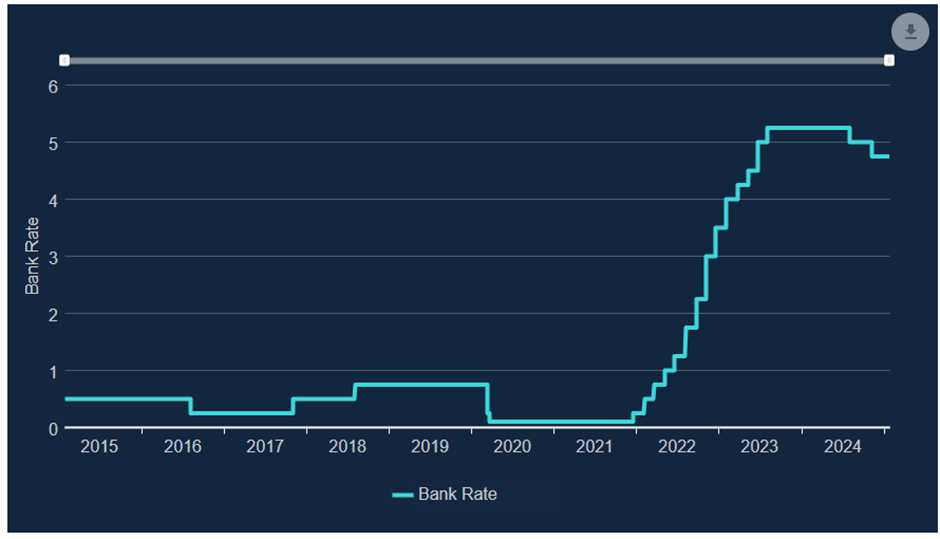
The Bank of England is forecast to make a further 25bps next week.
Companies Reporting
UK Trading Updates |
UK Financial Results |
US Financial Results |
|
Monday 4 Feb |
Entain Vodafone |
Palantir |
|
Tuesday 4 Feb |
DCC Future (AGM) SSE |
Crest Nicholson (Finals) Diageo (Interims) NWF (Interims) |
Alphabet Merck PepsiCo AMD Pfizer Paypal Mondelez |
Wednesday 5 Feb |
Grainger (AGM) | GSK (Q4 Results) Made Tech (Interims) Pressure Technologies (Finals) |
Disney Qualcomm Boston Scientific Uber Ford |
Thursday 6 Feb |
Compass Syncoma |
AstraZeneca (Finals) |
Amazon Phillip Morris S&P Global Honeywell KKR ConocoPhillips Motorola |
Friday 7 Feb |
Victrex (AGM) | Ashmore (Interims) |
Big Pharma
Big Pharma will be in focus next week as we have AstraZeneca (LON:AZN) Finals and GSK (LON:GSK) Q4 Results being reported. Both companies have underperformed the FTSE100 over the last year:
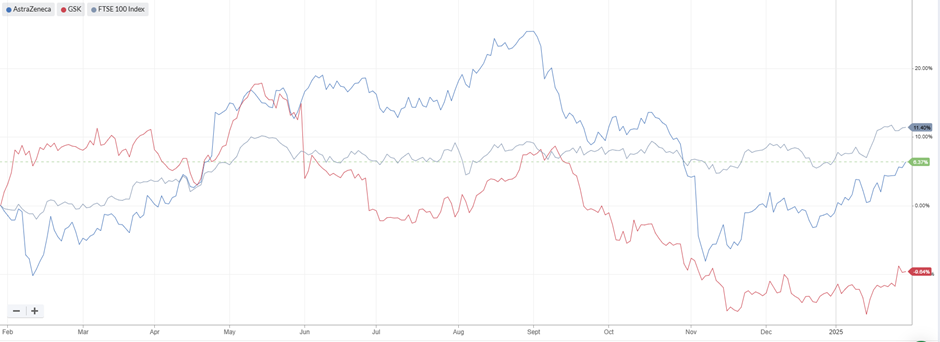
With GSK underperforming by almost 20%. Broker downgrades, particularly to FY25, seem to be the cause:
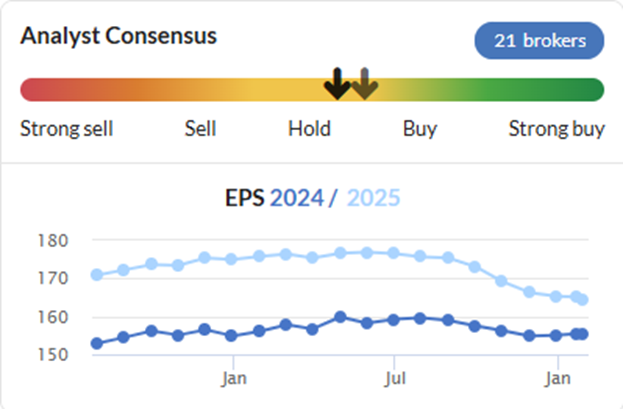
However, despite the trend, EPS is still forecast to grow:
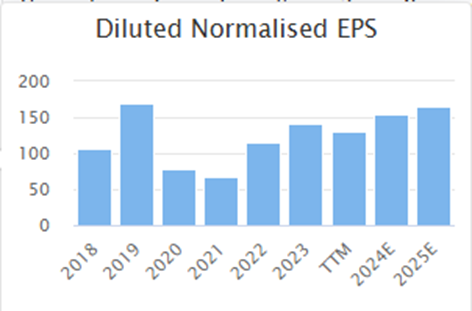
Which makes the FY25 P/E just 8:
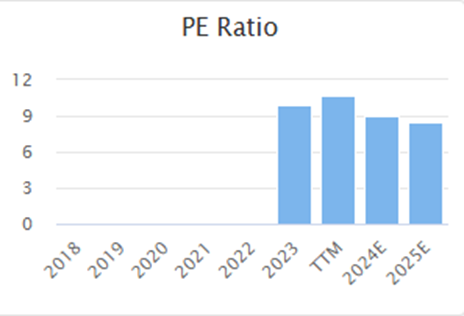
While this is cheap for a large cap, especially in this sector, the dividend isn’t particularly impressive at less than 5%. It hasn’t recovered from the cut in 2022:
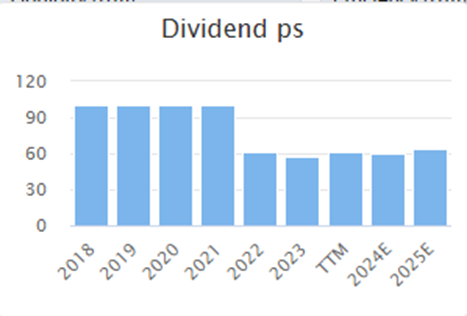
Investors will be looking at signs in this week’s results that the downtrend in 2025 expectations is arrested.
In contrast, AstraZeneca (LON:AZN) has shown rapid growth in EPS over the last few years:
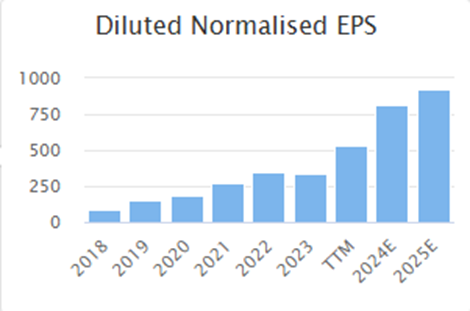
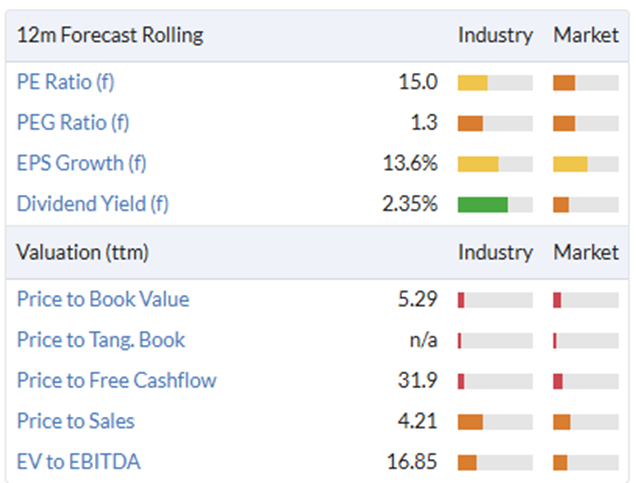
But investors are paying a much higher price for this, with the 2025 P/E of 15. With a forward PEG above 1, investors here will be looking for signs in the upcoming results that these forecasts are conservative:
The broker trend in the recent past shows no clear trend:
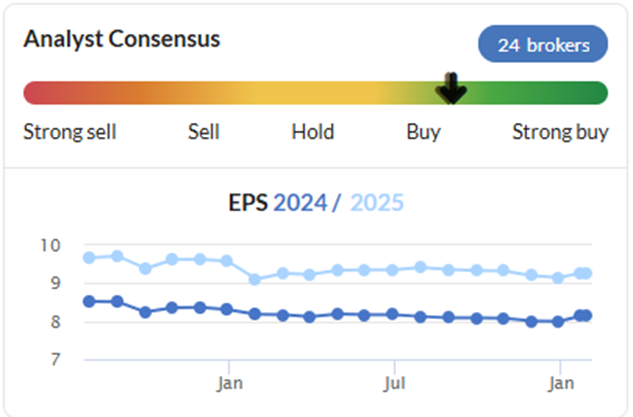
The yield here is a rather paltry 2%, meaning investors must be sure of that continued growth to risk holding.
Indeed, investors interested in this sector may want to cast their net wider, as both Pfizer and Merck are also reporting this week. It is unusual to see US stocks cheaper than UK ones, especially large caps. However, that appears to be the case here:

This means that value investors will be attracted to the low P/E and 6%+ yield of Pfizer, whereas growth investors may be interested in Merck’s PEG of 0.7.
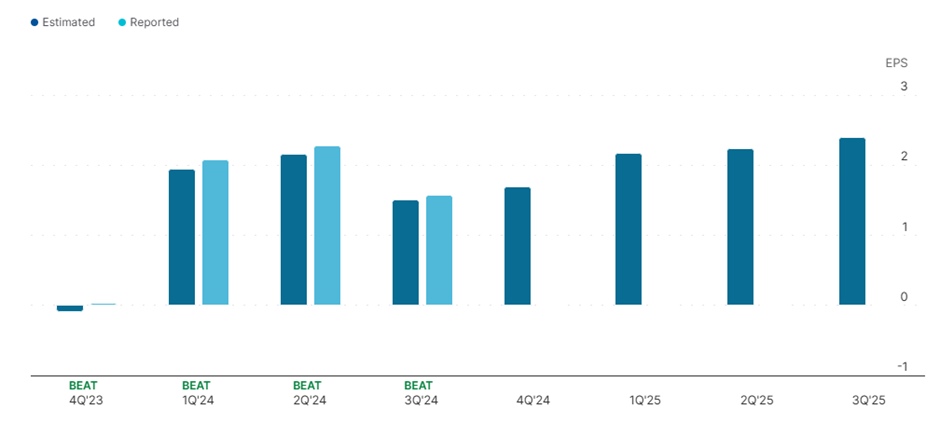
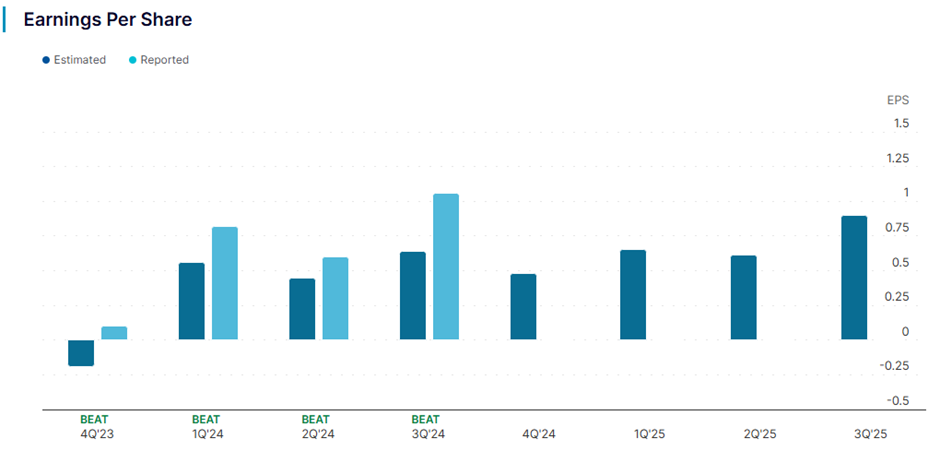
Both Pfizer and Merck have been beating analysts’ consensus recently. Merck by small amounts:
And Pfizer by a reasonable margin:
This hasn’t been reflected in a strong broker trend:
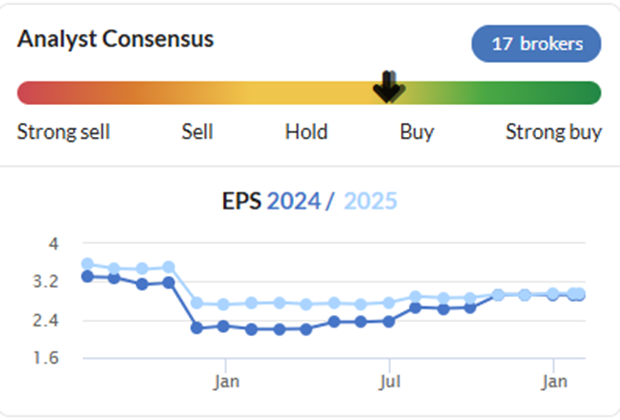
Making these US companies seem even better value compared to their UK cousins.
Vodafone (LON:VOD)
Vodafone is a company that has been plagued with downgrades over the past year:
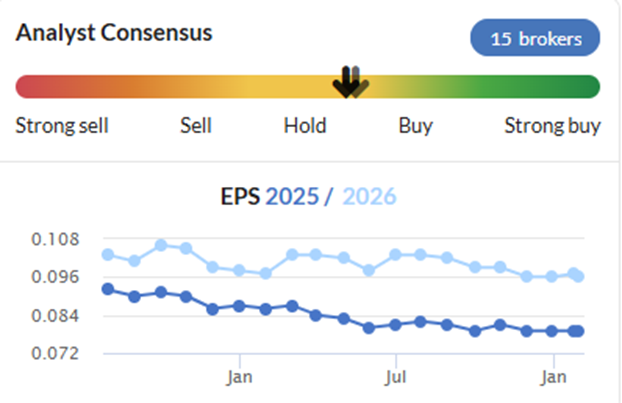
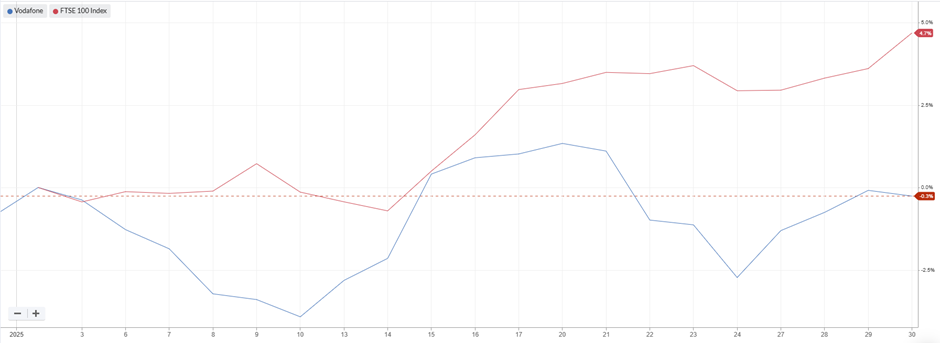
This means it has lagged the FTSE by 5% this year:
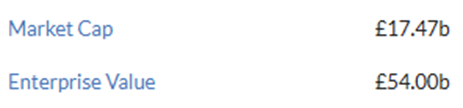
Debt makes up the majority of the capital structure here:
With this debt level, the company will have suffered from higher interest rates and may benefit as rates fall. Despite the high leverage, the company is cheaply rated on an EV/EBITDA basis:
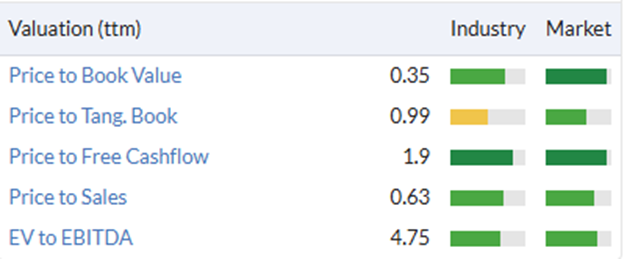
There is even a slight discount to TBV, which is rare amongst UK large caps. Investors will be looking for signs that the downtrend in broker forecasts is reversing or that the forecast cuts to the dividend prove overly cautious:
Ashmore (LON:ASHM)
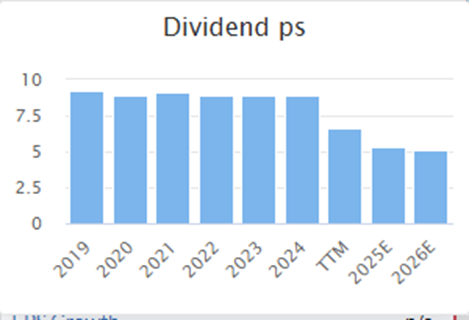
The asset management sector is well-known to many investors, as they often invest in the funds as well as the fund managers. However, one company that often goes under the radar is Ashmore (LON:ASHM) . This may be because their emerging market focus is not always popular with smaller investors or that the company’s rating is not obviously as good value as others in the sector:
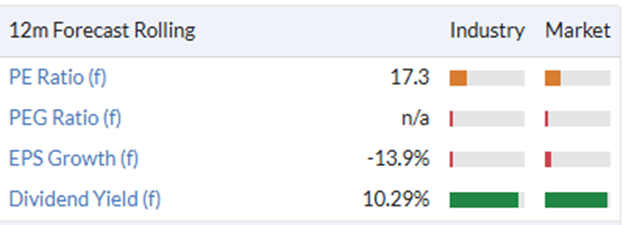
However, there is an important reason for this: the company holds more significant cash balances than most:
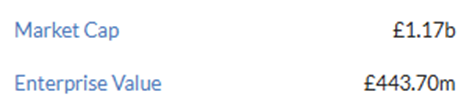
This cash balance has remained largely flat over the years despite the company paying a large dividend, which currently works out to be a 10% yield. Unlike many similar yielding companies in the sector, it has the cash to keep this payout well into the next upswing in AUM. When this cash balance is taken into account, the shares no longer seem expensive:

CEO Mark Coombs owns just less than 30% of the shares, and as he’s 64, so could perhaps be open to offers in the next few years, at least at the right price. After all, a larger business could immediately get back half its money by taking out the excess capital in the business.
The latest AUM is already known as it was released as part of their trading statement on 15 January:
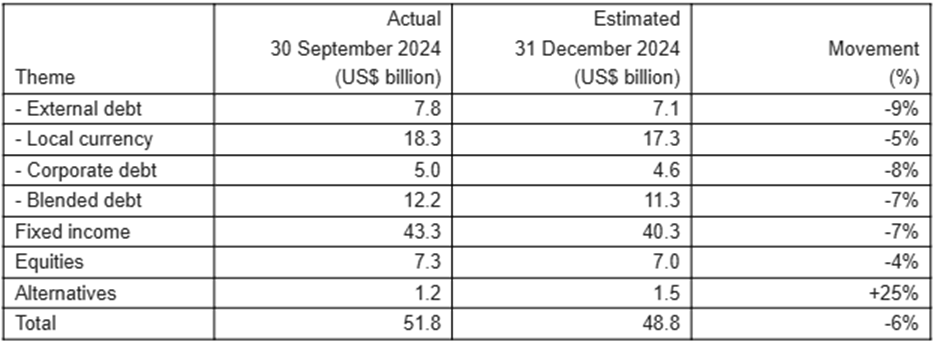
And while they are not immune to the outflows from the asset management sector, the details highlight how diversified they are across asset classes. The company describes how investors are currently underweight emerging markets and that passive management in this more specialist area will be slower to gain traction. So, the company may benefit from better long-term trends than many similar businesses.
This hasn’t helped them in the short term, though, as the downtrend of broker forecasts attests:
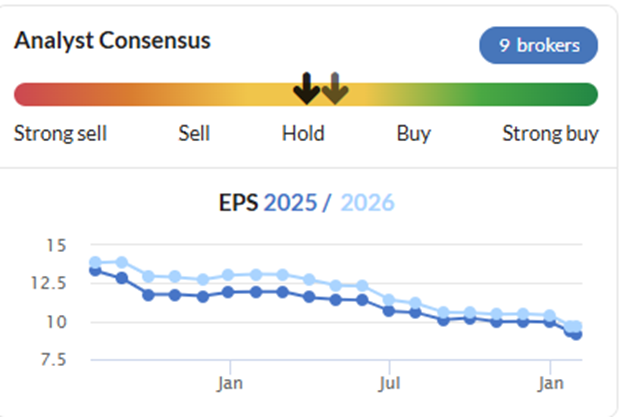
However, the market reacted positively to their trading statement in January despite it causing further broker EPS downgrades:
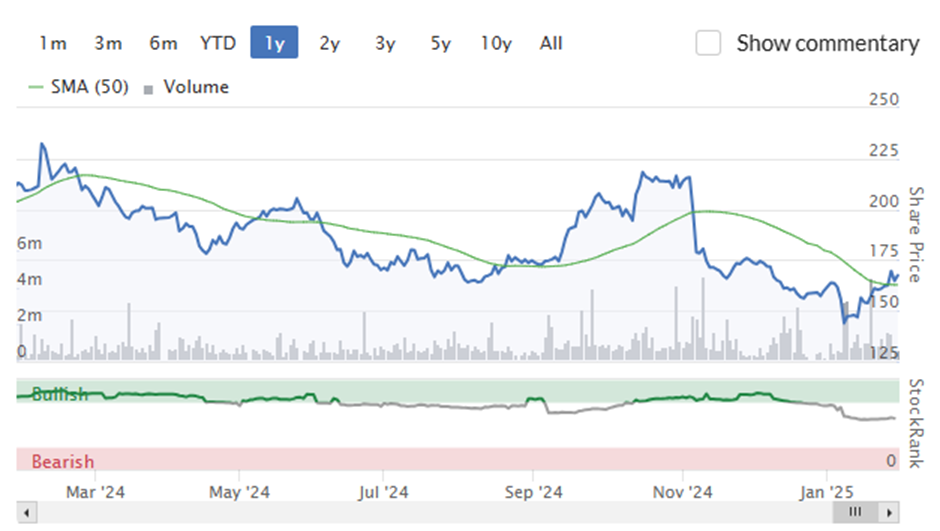
So perhaps next week’s interim results could be a good time to consider this high-yielder that tends to slip under the radar of many investors.
Disclaimer
This is not financial advice. Our content is intended to be used and must be used for information and education purposes only. Please read our disclaimer and terms and conditions to understand our obligations.

1 comment
I really like this section, so well written and full of factual information and analysis.