Welcome back to The Week Ahead. With a long weekend already underway in the UK and an abbreviated week ahead, both company news and economic data are expected to be much lighter than usual next week.
Unfortunately geopolitical news seems likely to make up for any shortfall elsewhere, supporting ongoing volatility. While the VIX ‘fear gauge’ index is still well below the levels seen when US tariffs were introduced one year ago, the trend is definitely higher:
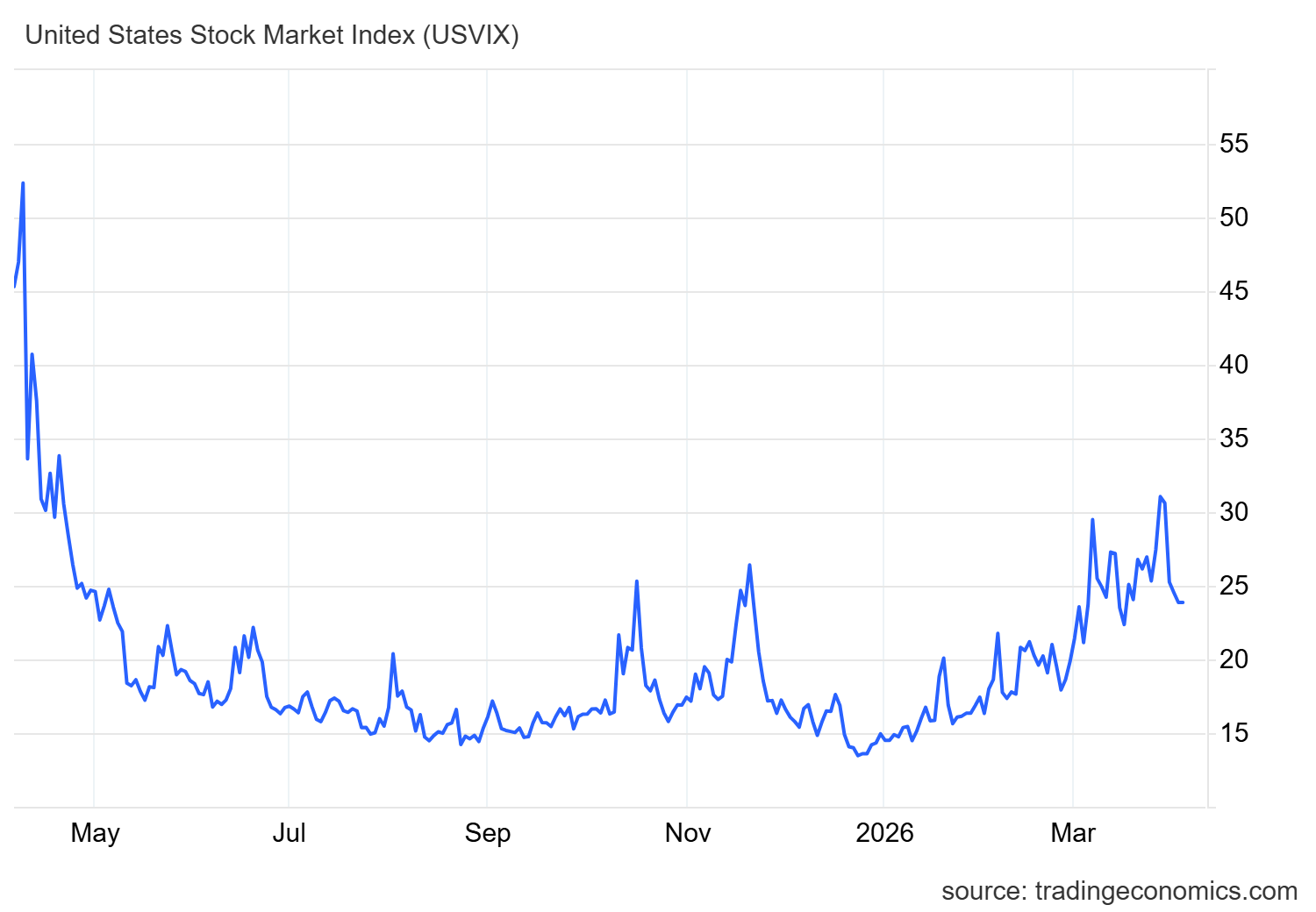
If the Middle East conflict persists, then rising volatility and the real-world impact of the war could lead to a more serious stock market sell off.
After all, despite how it may feel, stock markets have been relatively resilient so far.
While the S&P 500, Nasdaq and German DAX are now down by around 5% so far this year, the FTSE is still in positive territory and most major indices are still showing double-digit gains on a one-year view:
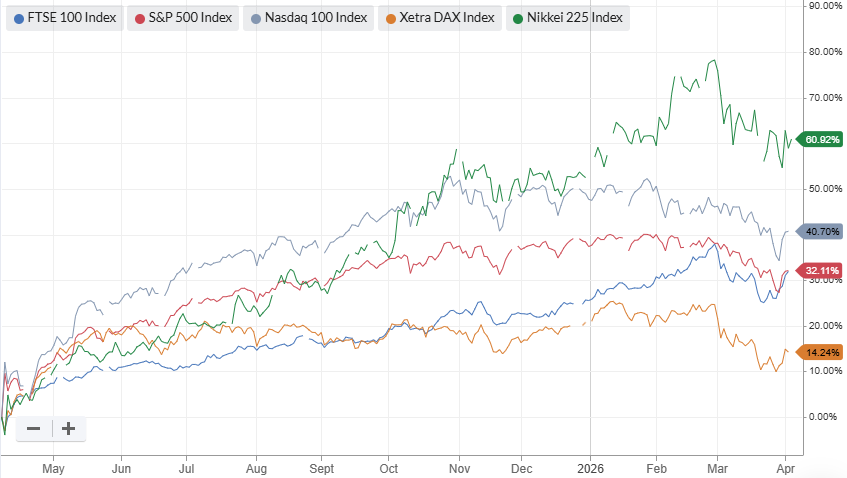
While many defence and oil stocks are obviously on a tear, another reason for this relatively serene progress may be that US Tariffs have proved to be less disruptive to global trade than was expected when they were first introduced a year ago.
Even before the US Supreme Court struck down Trump’s country-based levies in February, many of the President's trade-related threats had been rolled back or moderated. Bloomberg’s Trump Tariff Tracker shows that as of 2 April 2026, only 10 of the 56 tariffs and trade measures threatened since November 2024 are currently in force.
Given this backdrop and the disruption caused by the conflict in the Middle East, it’s not surprising that the revised tariffs announced this week on sectors including pharmaceuticals and metals seem to have been met with something of a shrug.
Commodity shortages?
The price of the cocoa used to produce our Easter Eggs has fallen sharply over the last year. The market dynamics seen in recent years appear to have reversed, with stronger supply and humdrum demand:
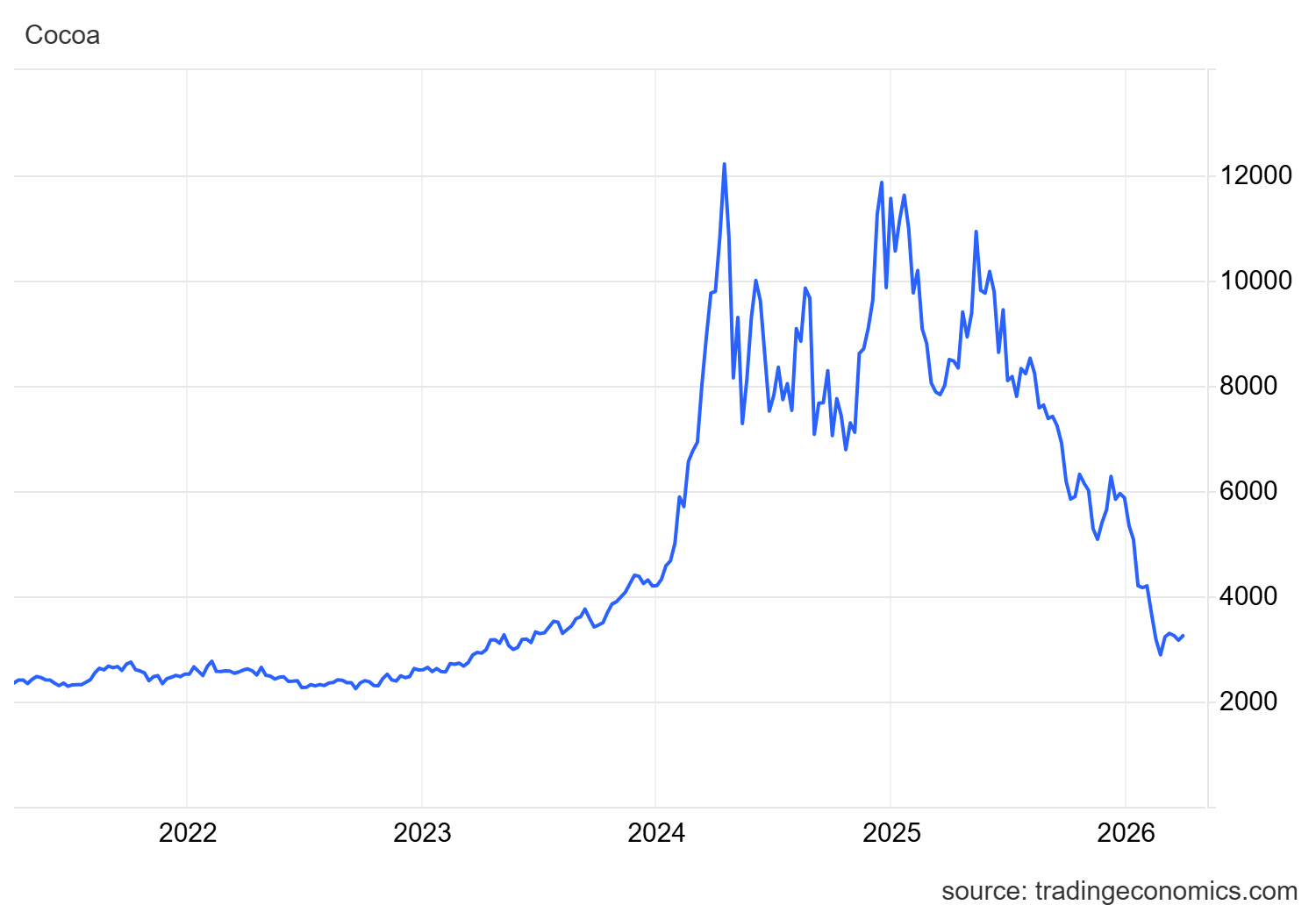
The price we’ve been paying for Easter Eggs doesn’t seem to have fallen, however. Perhaps that’s not entirely surprising when we consider the other cost pressures facing consumer businesses currently.
The most obvious of these right…