Three further small cap SuperStocks to consider investing in

As part of the Stockopedia Strategy Map, I have been taking a look at some SuperStocks, stocks that score highly on all three Quality, Value and Momentum Ranks. Previously, I looked at Severfield (LON:SFR) , Costain (LON:COST) and Tclarke (LON:CTO) . This week I consider Alumasc (LON:ALU) , Ten Entertainment (LON:TEG) and Ramsdens Holdings (LON:RFX) .
Alumasc (LON:ALU)
Profile
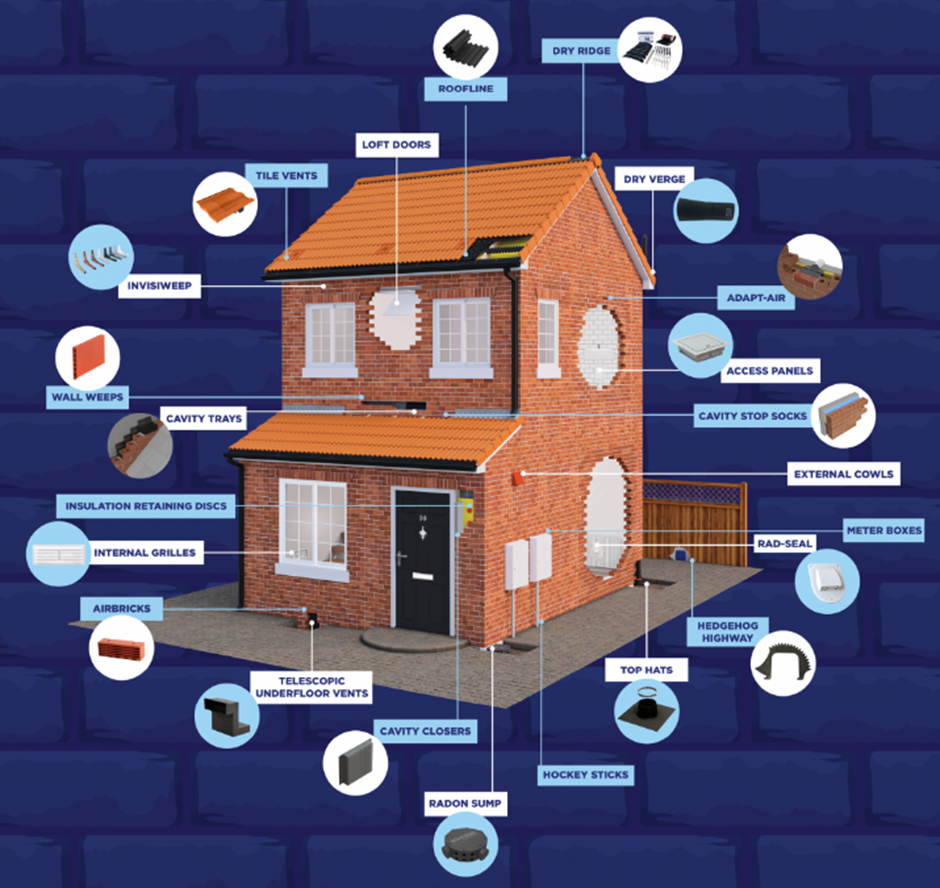
Alumasc is a building products supplier. It operates in three segments. The first is Building Envelope, where typical products look like this:

Until about a year ago, this division also included the loss-making Levolux, which they sold to management for £1.
The second division is Housebuiling Products under the brand Timloc:
The final part of the business is Water Management, where typical products include gutters, downpipes, drainage and access covers. This week they announced an acquisition in this space, buying ARP Group for £8.5m plus up to £1.5m in deferred consideration. ARP specialise in making metal gutters, pipes and fittings. This acquisition will increase the size of the Water Management division by about 50%.
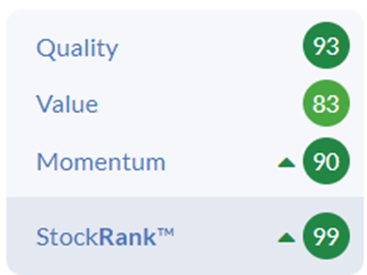
The company has an exceptional 99 StockRank, which is driven by a strong showing in all three Ranks:
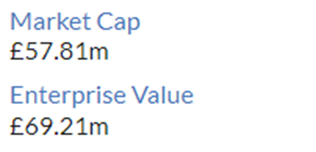
The market cap is £58m. £4.6m of lease liabilities and £6.8m net bank debt make up the rest of the capital structure:
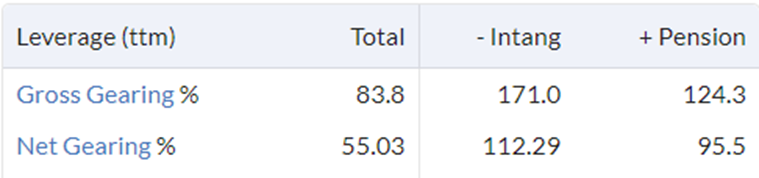
However, these are pre-acquisition, which, if it completes, will see net debt increase by a further £8.5m, making the gearing on the higher side:
However, there doesn’t seem to be any issue with banking covenants, as the company says:
Following completion of the Acquisition, Alumasc’s balance sheet will remain strong, with 30 June 2023 pro-forma net debt representing approximately 0.75x EBITDA.
These figures don’t include a sizable pension deficit, which stands at £8.4m on an IAS19 basis. The company has been allowed to make lower pension contributions of £1.2m per year. However, the deficit has increased recently as the company hasn’t received the full benefit of rate rises due to being hedged with LDIs and having a large amount of scheme assets in equities. As far as I can see, the company does not reveal the Triennial deficit to shareholders in their Annual Report. However, given the more conservative assumptions, a Triennial deficit is usually significantly larger than the IAS19 one.
Overall, assuming the true Enterprise Value post-acquisition is some £20m higher than the figures shown here makes sense.
Quality
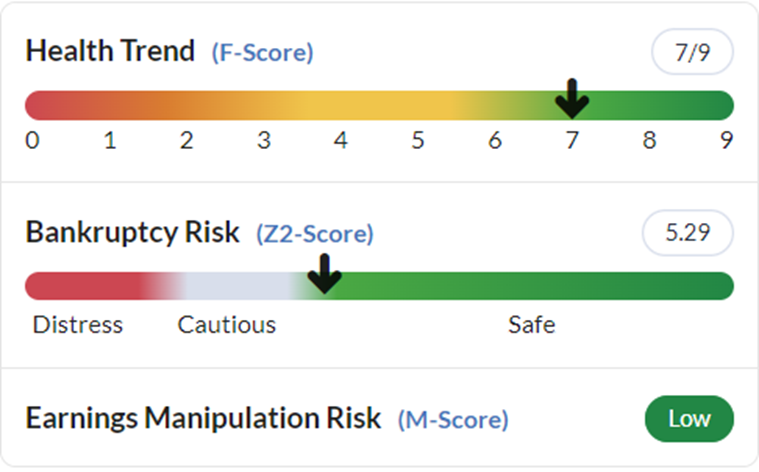
Although this is a company that has a high Piotroski F-Score, low bankruptcy risk and low earnings manipulation risk, the high Quality Rank is not dependent on these measures:
Indeed, the recent Return on Equity here is excellent and well in excess of their cost of capital:
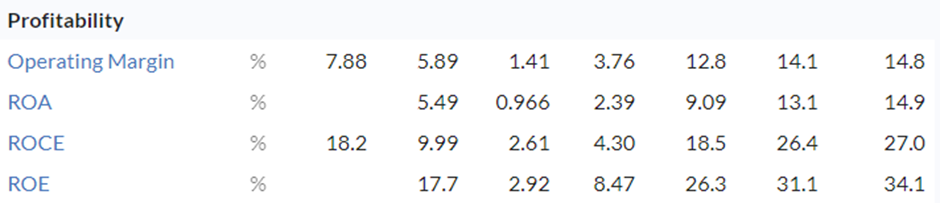
This suggests that the company possesses a reasonable moat, which likely consists of a strong reputation for quality products in several niche areas. However, building products is still a very cyclical industry, and the ROCE variability reflects these swings. As does the share price:
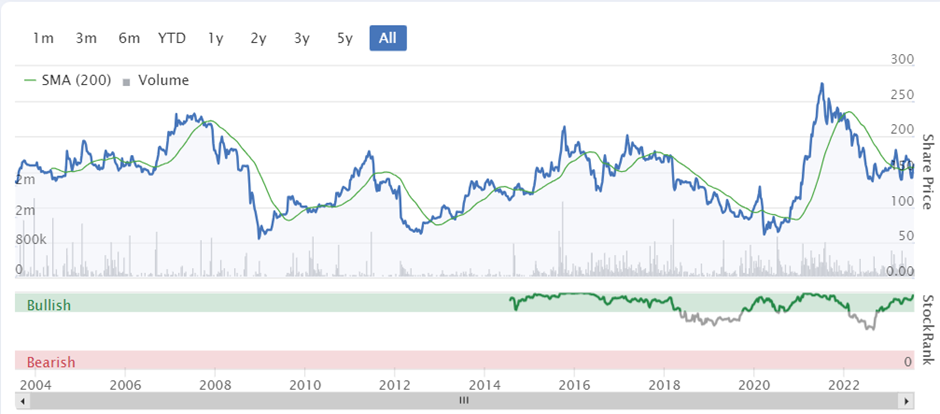
Despite being listed for almost 20 years, the share price has been rangebound.
Value
The Value rank is the lowest of the three here, with the Value metrics somewhat mixed:
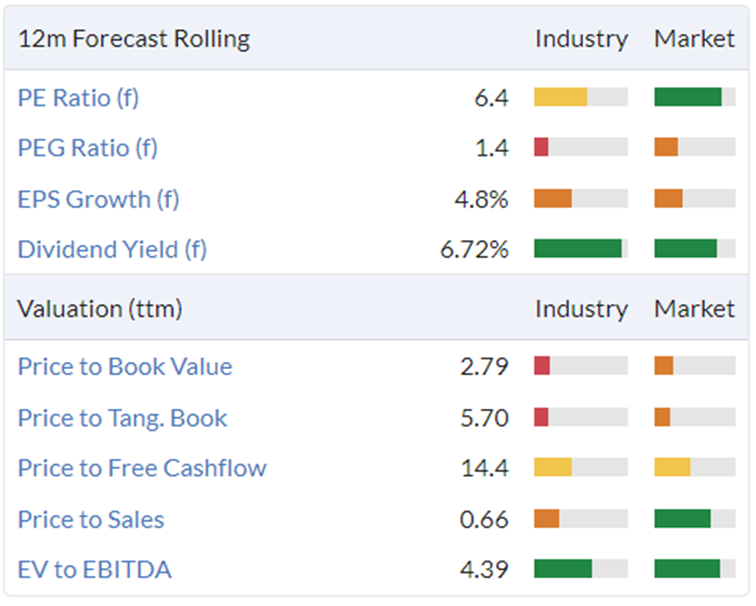
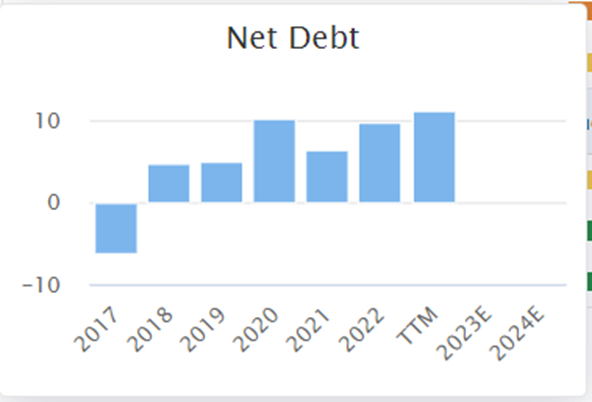
The higher-than-average P/TBV is a function of the high Return on Capital. However, the merely average P/FCF is more worrying. The company often has Operating Cashflow below its EPS. When combined with consistent, ongoing capex, this doesn’t leave a lot of free cash flow:


Part of the reason is the ongoing cash recovery payments to the pension. With the topline largely static over the last few years, this suggests that the return on incremental capital is not as good as the historical values. The company pays a decent dividend, but this is partially debt-funded:
Momentum
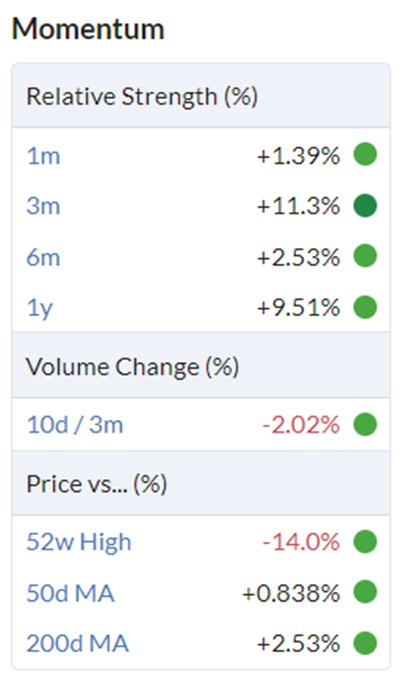
Although none of the price momentum measures are exceptional, there is a pattern of consistent gains over past periods:
Earnings momentum is less clear, with forecasts taking a dip in April before being upgraded back to where they started in July:
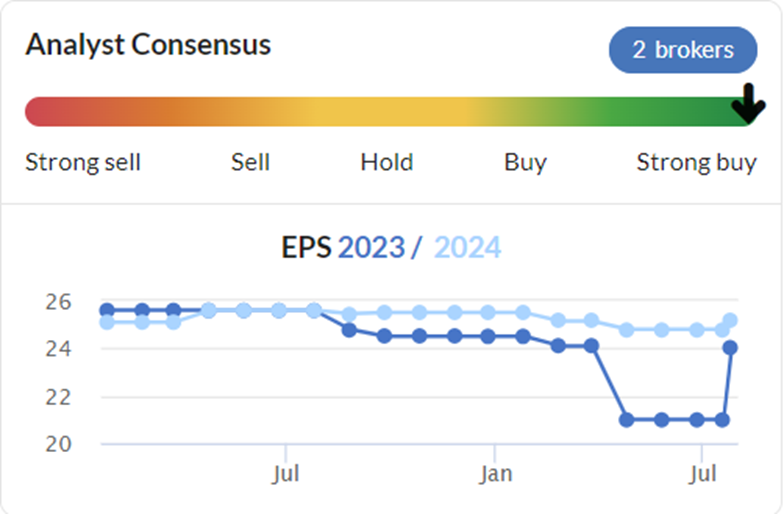
The company gave a full-year trading update confirming that underlying profit before tax from continuing operations will be in line with Board and market expectations very recently. So these expectations should be met in the short term.
Concerns
The company is undoubtedly cheap, although adjusting for the impact of the pension deficit takes the shine off otherwise excellent metrics. The biggest concern
The company’s share price has been rangebound for many years, mainly tracking the cycle of the building trade. Given the higher interest rates for borrowers and the drop in house transactions, this cycle looks far from over. A trading update this week from fellow building products supplier Eurocell (LON:ECEL) this week mentions that:
The latest Construction Product Association (CPA) forecasts published earlier this week predict greater declines for 2023 in the RMI market of 11% and new build market of 19% (previously 9% and 17% respectively), before both markets begin to recover in 2024.
These industry declines are hard for companies to buck the trend, no matter how well run it is. In the last year or so, Alumasc has been willing to take more strategic action. Selling off their loss-making Levolux division and recently buying ARP Group. This sort of action may see them finally break out of their long-term cyclical trading pattern.
Although, in my opinion, there is a risk that they have overpaid for ARP, given the weak outlook. They say:
The acquisition multiple based on the initial consideration is approximately 6.8x, which is expected to reduce to below 5.0x over the medium term, assuming full payment of the earn out consideration, and achievement of expected operating synergies.
These multiples don’t look enticing and are above what Alumasc is trading on. This may partially reflect how cheaply priced UK small cap equities are, but as always with acquisitions, the risk of empire-building or something going wrong remains.
Ten Entertainment (LON:TEG)
Profile
Ten Entertainment Group operates 49 bowling sites in the UK. As well as their core offering as bowling alleys, their sites include additional entertainment experiences, such as laser tag, escape rooms, arcades, pool, table tennis, and soft play. These are complemented by food and drink offerings.
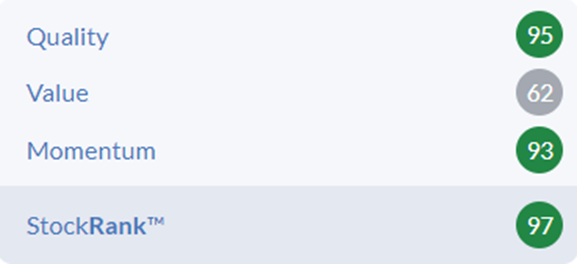
The superstock status here is driven by the QM Ranks, with the Value Rank unexceptional:
The company appears to be highly geared, with an Enterprise Value double its market cap:
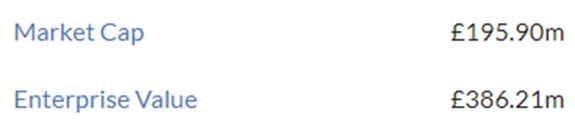
However, since it leases its sites, the Enterprise Value is significantly larger than the Market Cap. Subscribers will know my view on this by now – I only consider net lease liabilities to be a better measure here:
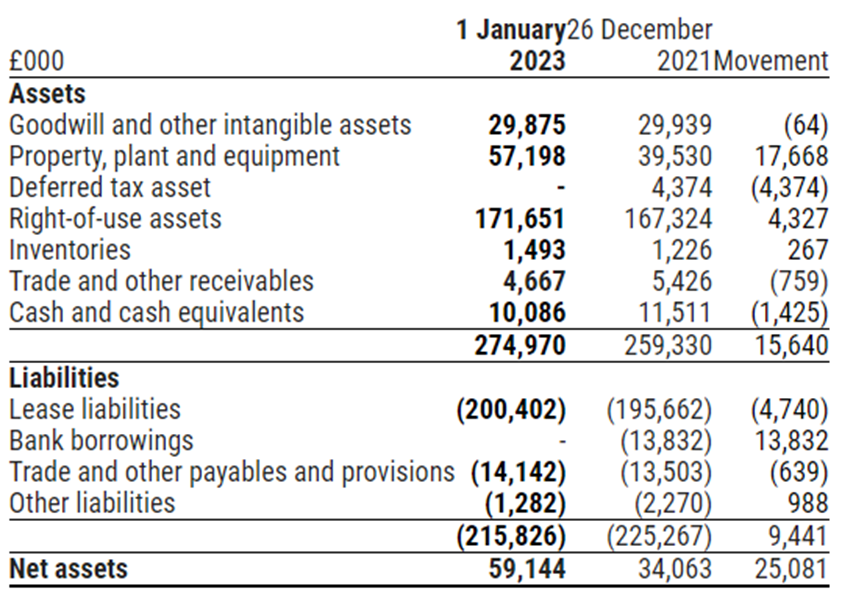
£28.8m of net lease liabilities is still significant and shows that there is perhaps large variability in the profitability of different sites. However, when combined with the lack of bank debt and net cash, this reduces to £18.7m. Not enough to make a big impact on valuation metrics.
Quality
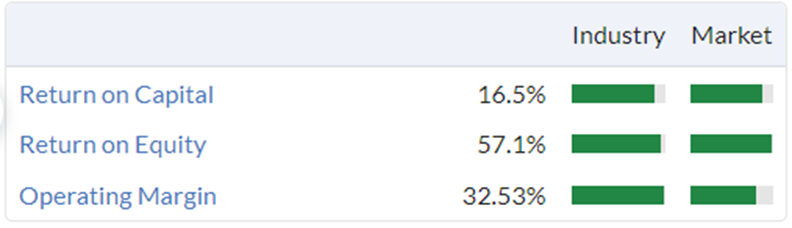
The company has a very good operating margin. Their Return on Capital is not outstanding but is likely above their cost of capital:
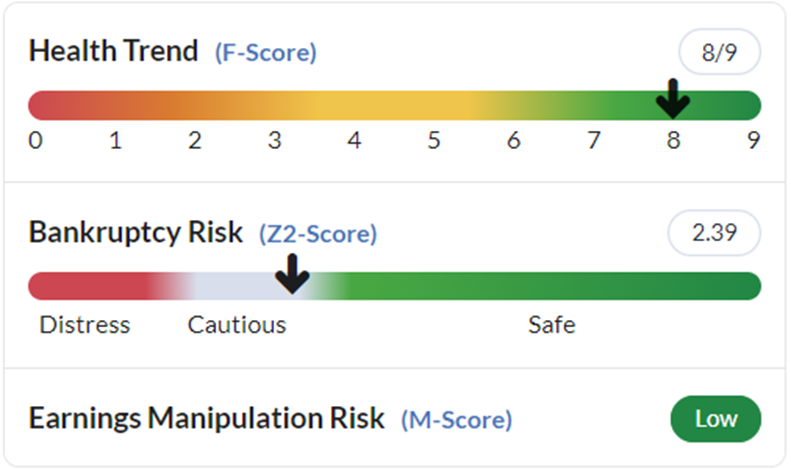
Their Quality Rank is further bolstered by an excellent showing on the F-Score, Z-Score and M-Score:
While all this looks reasonable, the company qualifies for two short screens. So it is worth spending a bit of time checking out if these screens are onto something. The first is the Altman Z-Score screen, and this is the concern:
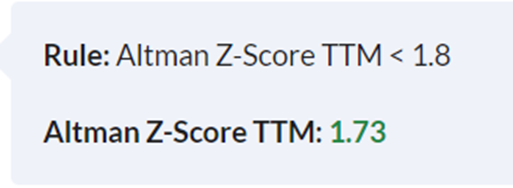
Given this is borderline, and the Z2-score quoted above is more applicable for this non-manufacturing business, I would not be concerned personally.
The second short screen is James Montier’s Trinity of Risk which includes the Z-Score but is more nuanced:
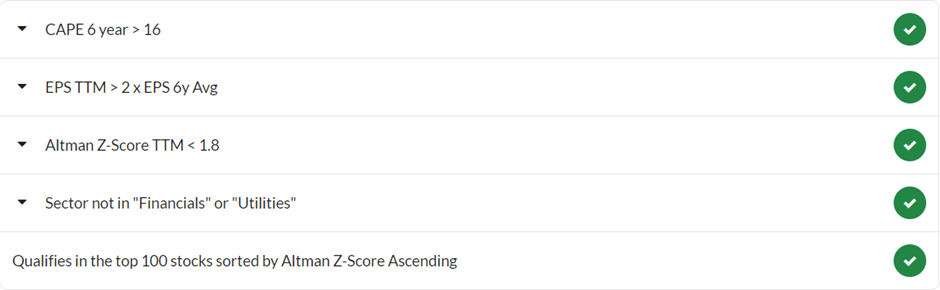
Here the screen is picking up that the company is trading significantly better than it has for the last few years. Given the COVID effect, this is understandable. But it is worth investors looking out for any signs of mean reversion in future trading.
Value
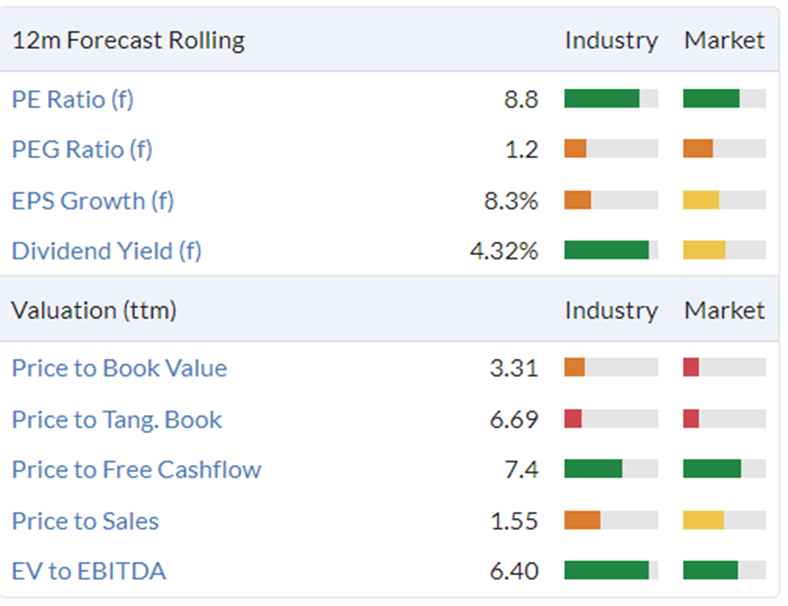
A low P/E and a great P/FCF give this a decent but not outstanding Value Rank of 63:
Since listing in 2017, the share price has been rangebound. However, the company looks much better value today than it did at its last peak in early 2020:
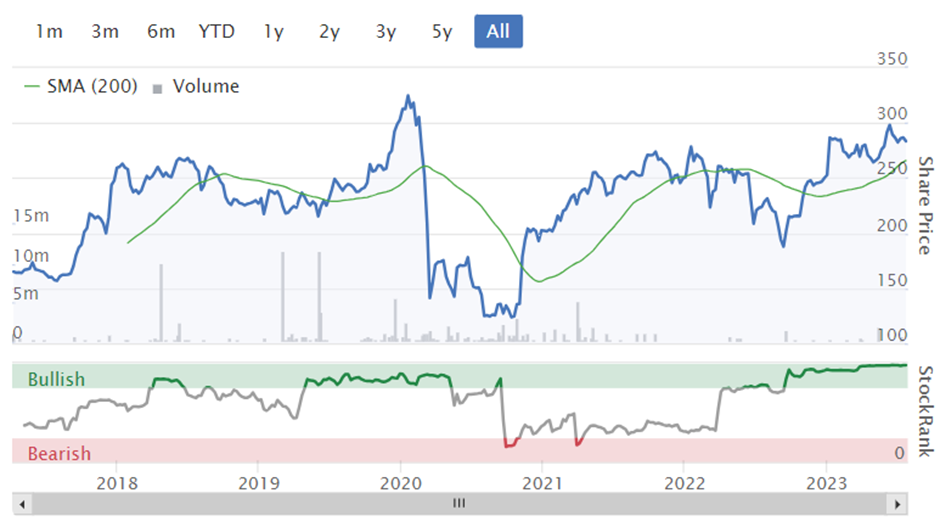
And it is understandable that an experiential business would not do well during COVID.
Again, this company has few tangible assets, so it is rated poorly on P/TBV. But this is the price investors pay for a strong return on capital. The company is highly cash generative, with Operating Cash Flow consistently higher than EPS. Investors need to be a bit careful with the impact of lease accounting here, but with FCF often close to EPS, this is a highly cash-generative business. Growth should be capex light too. With premises leased and a negative working capital model, growth should put little stress on the finances of the business.
Momentum
This is the sort of chart investors like to see for broker consensus, with forecasts being raised over time:
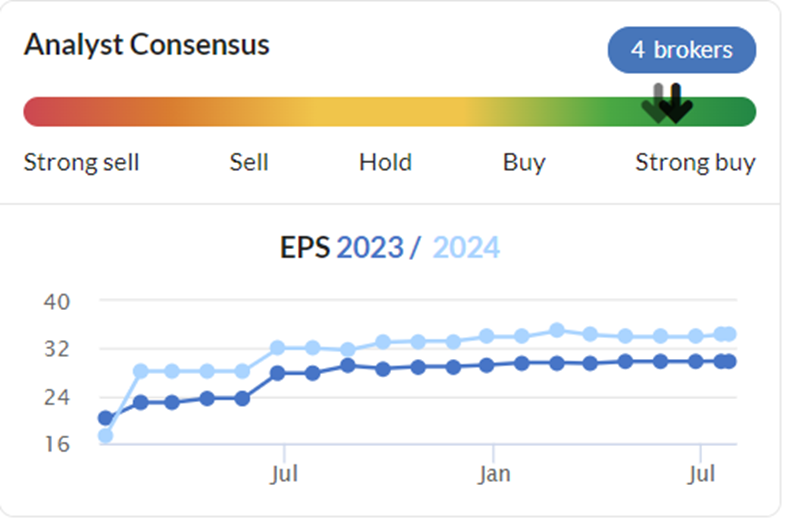
They have been static this year, meaning that earnings momentum may be starting to fade. However, the price action has remained strong over the last year:
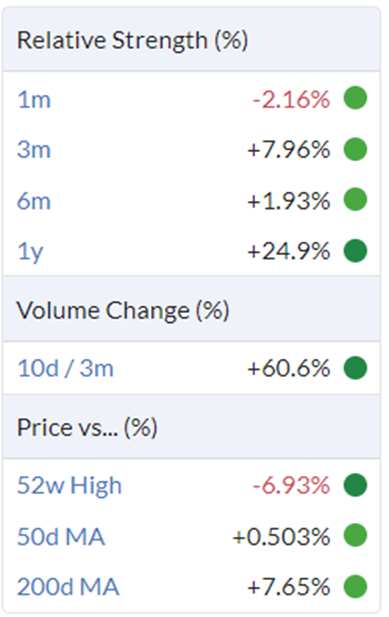
The company is keen to point out that it remains an affordable pastime, with prices remaining unchanged since 2019. Instead, growth comes from increasing footfall together with the roll-out of further sites and the addition of extra revenue-generating games or experiences within sites. As they say in their recent trading update:
As well as the development of four brand new centres for 2023, the Group’s ongoing refurbishment programme has seen seven centres transformed in the first half of 2023, with new games and activities added, resulting in strong sales growth.
Concerns
Experiential businesses are often subject to fads, and bowling may well be one of those that goes out of fashion. However, bowling is only 44% of revenue, with the remaining spend per customer split roughly equally between food & drink and other games, such as pool or air hockey. The company has also been diversifying, adding karaoke, laser tag, soft play or escape rooms into much of its estate. So bowling isn’t the only draw to their sites.
Of course, TEG isn’t the only bowling operator. They are competing with Hollywood Bowl (LON:BOWL) , which has around 50% higher sales. There is undoubtedly a limit to the number of bowling locations an area can support. However, there seems to be little saturation in the short term, with both companies growing nicely. Indeed Ten Entertainment (LON:TEG) stacks up well compared to Hollywood Bowl (LON:BOWL) , especially on valuation metrics:
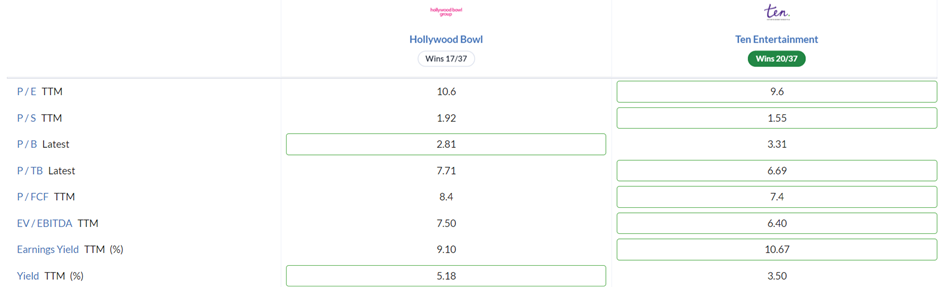
Although many investors prefer the largest player in a sector, when the size difference isn’t excessive, the smaller, nimbler company often has better growth prospects as well as a cheaper rating. This certainly seems to be the case here.
Ramsdens Holdings (LON:RFX)
Profile
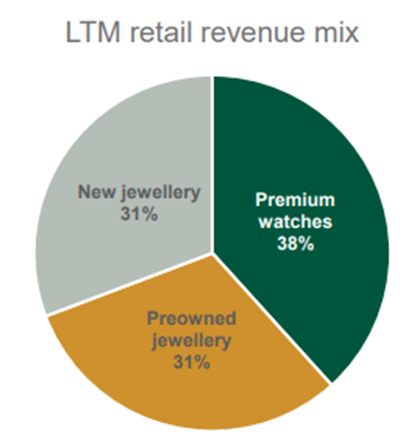
Many think of Ransdens as a pawnbroker, which it is. However, the company does much more than that. Pawnbroker is a pretty consistent business that consistently generates decent profits, but the big growth areas are from Foreign Currency and Jewellery Retail. The latter generated 31% of gross profit in the Half-Year results versus 24% for the more traditional pawnbroking. The purchase of precious metals makes up the final major part of the business.
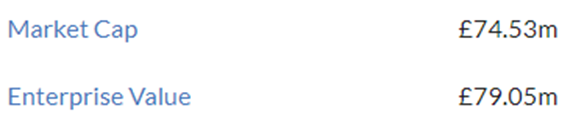
Net cash is around £5.5m, but lease liabilities of around £10m give an enterprise value of around £79m, including IFRS16. Again this is another where net lease liabilities are minimal at about £0.5m, meaning that I would use an EV of about £70m:
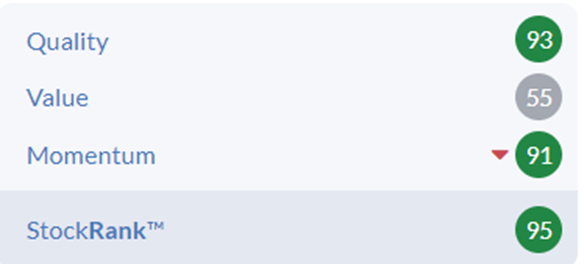
This is another company where the SuperStock rating is driven by the QM Rank:
Quality
Apart from the COVID-impacted period, the company has generated decent ROCE and ROE figures. Indeed these have been improving recently, and the business looks in better shape after COVID than before it:

This, plus a decent F-Score, means that the company scores highly on the Quality Rank:
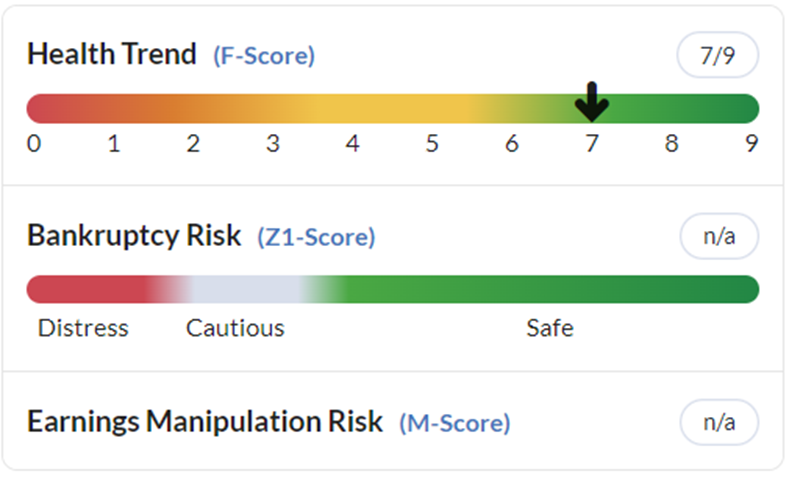
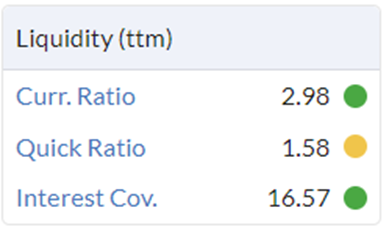
However, the algorithms are not able to provide an opinion on the bankruptcy risk or earnings manipulation risk. Personally, I don’t see any significant risk here. Particularly since the current ratio and interest cover are excellent:
Value
The value Rank is the weakest of the Ranks, with the value metrics somewhat mixed:
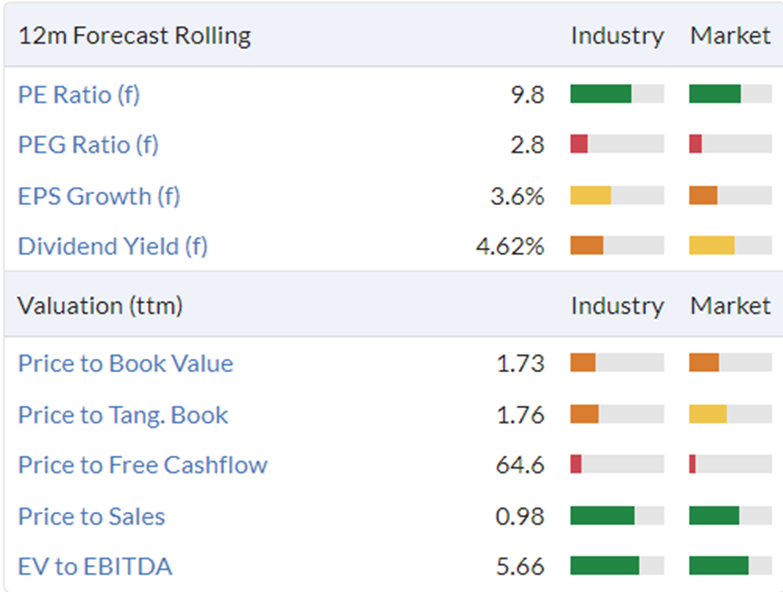
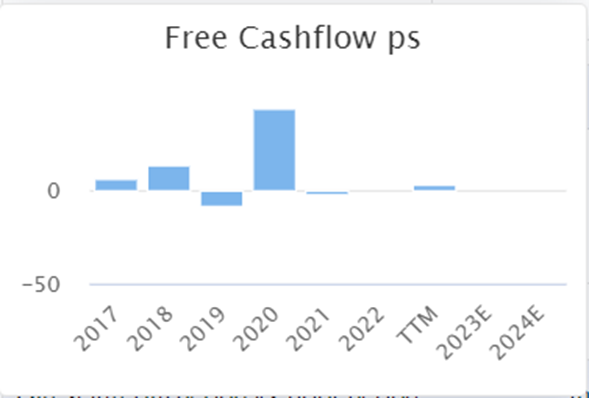
A P/E of under 10 is good compared to the market. But then the forecasts are for EPS to remain largely static over the next few years. So this is fairly priced unless there is a hidden long-term growth engine. Again, given the high Return on Capital, I am not concerned with the unflattering P/TBV. However, the P/FCF isn’t great and has been quite patchy over the years:
Momentum
This is another strong broker consensus chart with both future forecast years rising consistently over time:
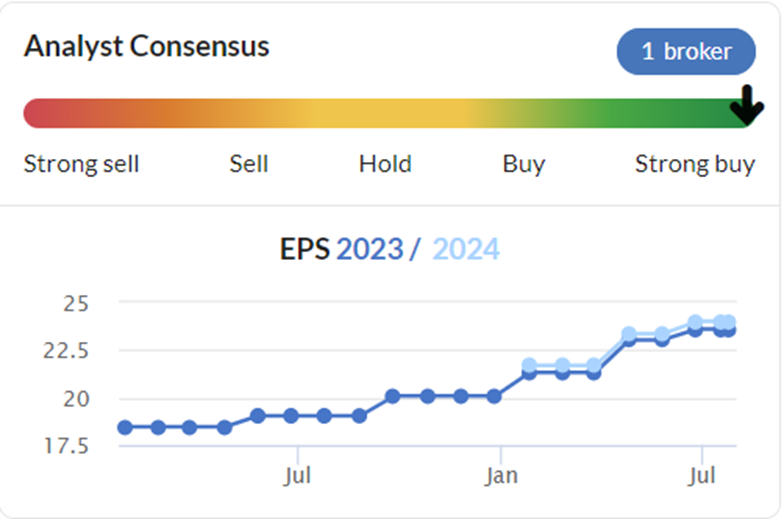
If this pattern continues, the current broker forecast for little to no growth into FY24 may be too pessimistic.
This strength is reflected in the share price too, with the 1-year relative strength of 27%:
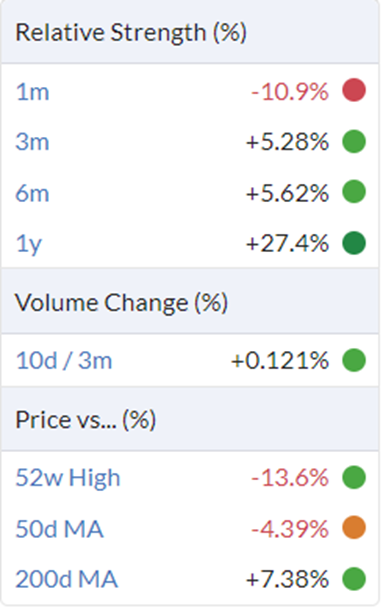
Although the 1-month share price action is negative, it may actually be a positive signal for investors. Academic evidence suggests that 1-month prices are more likely to mean-revert than trend going forward.
Concerns
Jewellery retail is the largest source of gross profit for the company, and the most significant part of that is the sales of premium watches:
However, as the broker consensus for Watches of Switzerland (LON:WOSG) shows, this is an area that is facing significant headwinds at the moment:
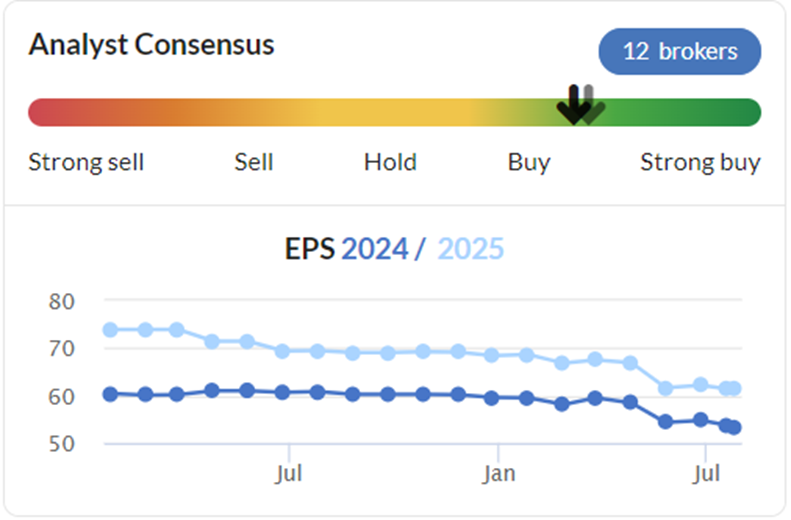
In a consumer downturn, this weakness may well be offset by strength nte the more traditional pawnbroking business, making the overall business quite resilient.
Despite some desirable qualities, these sorts of businesses rarely receive a high rating. Indeed the current P/E of 10 appears to be typical for the company in the past. Although investors can’t rely on a multiple re-rating to drive returns, the company has a good track record for growth, which may drag the share price upwards with it.
Finally, any analysis wouldn’t be complete without comparing the company to its larger competitor, H & T (LON:HAT) . This looks quite a bit cheaper, at least on a P/E basis:
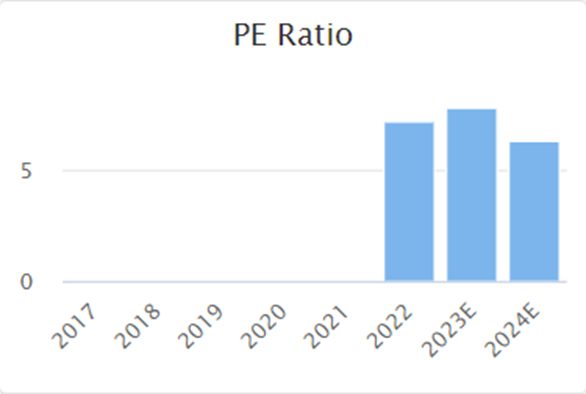
Although Ramsdens Holdings (LON:RFX) appears to be a better-run business with higher quality metrics, the valuation difference may be too much to ignore.
These are indeed three Superstocks that are worth researching further. Although I would personally be more comfortable with slightly higher Value Ranks, the Quality and Momentum Ranks, driven by strong recent and forecast trading, more than make up for this. I am also slightly cautious about owning anything with significant exposure to new-build housing. The industry predictions of -19% for the RMI market are a big headwind for any company to overcome. However, the beauty of a watchlist is that one doesn't have to invest immediately. As Warren Buffett says:
The stock market is a no-called-strike game. You don't have to swing at everything – you can wait for your pitch.
Having done the initial work, investors can wait for the fat pitch (or perhaps the full toss, for the UK investor). So all three of these companies make it onto my watchlist for further research.
Disclaimer
This is not financial advice. Our content is intended to be used and must be used for information and education purposes only. Please read our disclaimer and terms and conditions to understand our obligations.

8 comments
£TEN
Ref bowling - is there anything to suggest bowling has ben a fad? not that i have heard. Bowling aint exactly new.
All i could perhaps guess is that for price sensitive consumers its possibly decent value for money which i suspect is why they have done well - plus havcing decent lively offering - back in the day when i used to go most sites were poorly maintained so that customerer experience was worse than it should have been.
I have been expecting some dropoff of sales post covid as one would expect everyone went out doing stuff like this more post covid then would return to normal habbits by now - as a holder i am pleasantly syurprised there has ben no signs of dropoff yet. I would add caution though the the lfl's have ben so iompressive the last couple of years at soem stage they must run into headwins at some stage. From my point of view the market doesnt really rate this as highly as franchise rollouts can be rated anyway so the market seems to be taking the viewpoint that there may some dropoff or slowing of growth - the good thing here is that they are adding new outlets anyway which to a certain degree can cover up for poorer lfl figures when they do show up.
ref James Montier’s Trinity of Risk - short sell screen - interesting that company would get penalised for outperformance - guess there is a place for everything. Note this screen also fails the company on altman score - without being certain if i were a betting man i would guess this company only fails the altman test due to the ridiculous lease liabilities accounting treatment - so in suspect if one removes the lease liabilities excess (over asset) and recalcs then it probably wouldnt fail then altman test and therefore that screen wouldnt be activated ? - its only a very minor fail based on calcs done.
Note if one does old skool look at the balance ignoring lease liabilities - there is £14 mill of payables £1.3 other liabilities and cash and trade receivables £14.5 mill. So ignoring 57 mill of plant and ignoring inventories of £1.5 mill. This looks very simple not stressed soudn balance sheet factoring in current level of profits and then great cashflow benefit of getting paid pronto for all sales you book. I suspect if you asked great Ed altman whether his score is fit for purpose when lareg lease liabiloities are included he would say - no take em out - hmmmm i think he is still alive can we ask him ?
Negative Working Capital is a a risk factor for a lot of businesses, since it may mean a company is struggling to pay its bills or if sales fall then cash goes out the door quickly.
Same with rapid growth, it is well known as a risk factor, either for fraud, or simply as an indicator that a company has faced an unsustainable boom (combined with the fact that investors bid up high-growth companies to high multiples).
I don’t think either is the case for Ten Entertainment (LON:TEG) but I can see why the formulae tend to flag these sort of things as risk factors. It is why there is no substitute for looking into the details and considering the type of business being analysed.
. However, the deficit has increased recently as the company hasn’t received the full benefit of rate rises due to being hedged with LDIs
i thought LDI's were the golden ticket to stop defecits increasing when rates changed- for them to be the case of increaisjng deficts .........
No they were designed to protect the liabilities from rates falling further by hedging, but also removed the upside from rates rising. The problem is that funds took the hedged position as an excuse to hold a much bigger proportion equities and eliminate the deficit by assuming higher expected returns. Those returns have been no where near those expectations in the short term. This has left the likes of Alumasc (LON:ALU) with no drop in liabilities from rate rises and big drops in assets due to equities falling = a big deficit and possibly the need to make higher recovery payments. Not a great place to be.
PJY5 Mark means the lowest of the 3 Ranks relating to Alumasc as the other 2 Ranks are in excess of 90.
Thanks portugull.. I realised my mistake soon after I posted it. At least it shows I´m paying attention.. or trying to at least :-)
Ten Entertainment (LON:TEG) if bowling declines then that will affect food and drink sales also. I would never eat there anyway, even if I was playing bowls.
Interesting articles.. thanks.
Just want to question this statement from the Alumasc section...
"The Value rank is the lowest of the three here, with the Value metrics somewhat mixed:"
ALU value rank is 83, TEG 62, RFX 55. How does that make ALU the lowest?