Trading and Investing - Animated videos (Financial Wisdom)


Hi all,
I started a new thread so that all new animation videos can be placed here.
Any likes/comments/subscriptions would be greatly appreciated.
Mark Minervini - Trade like a stock market wizard

Trading for a Living - Dr Alexander Elder


Money Master The Game by Tony Robbins

Peter Brandt - Diaries of a Professional Trader

Joel Greenblatt - The Little Book That Beats The Market

The Naked Trader - Robbie Burns

Jesse Stine - Insider Buy Super Stocks

Stan Weinstein's secrets for profiting in bull and bear markets

Lone Stock Trader - Fred Saffore

William O'Neil - Shorting stocks


Candlestick Patterns - Thomas Bulkowski

How To Make Money In Stocks by William O'Neil


Van Tharp - Trade Your Way To Financial Freedom

The Complete Turtle Trader Strategy


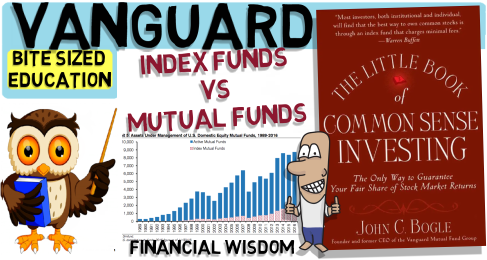
John Bogle's - Common Sense Investing
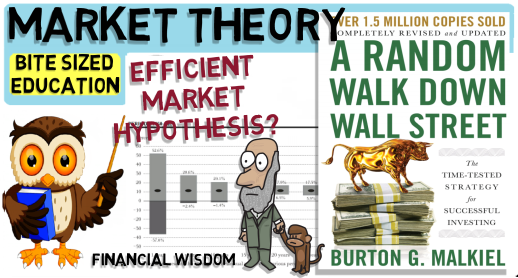
A Random Walk Down Wall Street
Timothy Sykes - Penny Trader

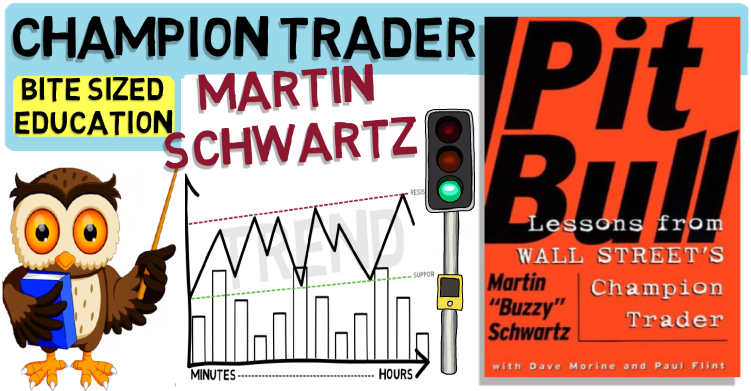
Pit Bull - Martin Schwartz
Naked Trader - Spread Betting

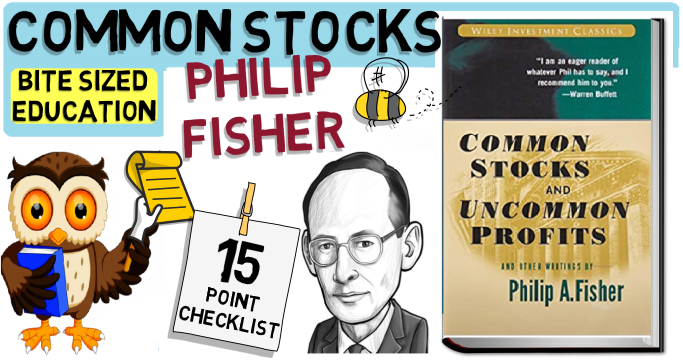
Common Stocks and Uncommon Profits
Paul Tudor Jones

Dan Zanger
Marcus De Maria

Dual Momentum Investing
Factor Investing
William O'Neil Method
Stan Weinstein
Steve Burns
Bitcoin Trading

The Trend Following Bible

Technical Stock Screener

Gold Investing

Millionaire Traders

My Trading Strategy

Alexander Elder New
Trading Fang Stocks
Trading Expectations

Oliver Kell - US Investing Champion

The Disciplined Trader - Mark Douglas
Disclaimer
This is not financial advice. Our content is intended to be used and must be used for information and education purposes only. Please read our disclaimer and terms and conditions to understand our obligations.
287 comments
Hi - See Oliver Kell - Crowned 2020 US Investing Champion
Again thanks Gareth. One of the key learning points for me is that this guy is prepared to allocate 35% of his portfolio to his high confidence trades - admittedly this is only 18% in reality as he's leveraged at 1.9%. Even so, it looks a bit risky for the average punter. But clearly it works for him. I'd guess he's using stop losses of 5-6%.
I've been told that Oliver Kell's stop losses are set at 1-3% and often just under the 10 day EMA.
Thanks Gareth, another great summary.
Any ideas yet as to what's up next?
Van Tharp - Super Trader
Next up will be the 2020 investing champion Oliver Kell....
Thanks Gareth. As always the message is about good risk management and tailoring our personal strategies to our own areas of skill and risk tolerance.
Completely agree gents - When I get more time I'll delve a bit deeper.... Thanks again.
Thanks Gareth. I've posted a response on your Financial Wisdom channel. An idea for a future presentation might be one on how to spot a fake trading guru on Youtube. There's a worrying number selling spurious trading courses for £2,500 whilst presenting no independently audited evidence of their own trading prowess. One well known guru has sold 100,000 courses at this sort of price - this works out at £250 million. Which might explain why he can present himself outside his country mansion with an expensive sports car
I did see, thanks as always William.
100,000 courses wow! Yes it could be an interesting study/presentation.
Who is the traders name....
Greg Secker. See article in the Guardian. There is also plenty of other material on YouTube and other sources about fake trading gurus. Raging Bull is another colourful guru, accused of $137 million fraud.
Early on in my trading journey, I signed up for "Falcon FX", run by a guy called Mark Hutchinson.
The membership cost £97 per month and seemed to have a fairly constant base of around 800-1000 members - but I think the turnover was very high.
The emphasis was on using no indicators at all, just relying purely on trendlines, and lots of motivation / psychology. The production quality of the course is very high, perhaps part of the illusion. Suffice to say, I wasn't profitable, and left after a few months.
If I remember correctly, none of Mark's trades were verified, he would just describe them in regular webinars in which he came across as highly competent trader.
Some of the content was valuable, and I did learn a few bits which I still make use of today - risk management, scaleability, how certain patterns play out - but I'm fairly sure most of his income is coming from the membership rather than his trading.
Thanks for sharing Breakout Trader. I suspect many of us on this website could come across as plausible trading gurus as we're a knowledgeable crowd and know the jargon. But our innate decency prevents our exploitation of ignorant millennial wannabes. The great irony is that the best internet trading content is absolutely free (e.g. Gareth's Financial Wisdom on Youtube). If I wanted to spend a lot of money on a course I'd go for Mark Minervini whose performance is independently audited, or Dr Alexander Elder. But I've learnt a lot just by following Minervini on Twitter - again absolutely free.
HI everyone - See below my recent video...
Trading Expectations
I must say, these videos are excellent - very well put together and a valuable resource for anybody navigating the markets - compliments!
Thanks BT much appreciated...
For those interested I have added an ebook of my strategy to my website
www.financialwisdomtv.com
*I do however only offer it to the paying subscribers of the site due to the effort I have put into it*
Thanks for the continued support.
Hi all, The most recent video - Trading Faang Stocks-
Thanks gpacker - fascinating. I take it this approach would work with any stock, not just faangs? Do you review all your stocks weekly using their weekly MACD charts?
Hi Indie.
Yes I use MACD for all my positions.
In principle the MACD should keep you in and out of your desired direction, although some stocks behave differently, trending stocks are more suited to the indicator, range bound would see more false signals.
Hi Gareth great video as always out of interest is there a force index or equivalent you can factor into charts on Stockopedia ?
Thanks Andy
Thanks Gareth. I like the concept of a value 'buying zone' between the 13 period EMA and the 26 period EMA, and selling when the price stutters above the 13 period EMA in 'overbought' territory. Very clear and simple. It is not so clear whether Dr Elder favours the daily or weekly EMA - I guess this depends on the anticipated duration of the trade. My guess is that the weekly EMA gives better profits in the long term.
Hi William,
He quotes daily and weekly throughout so it is difficult to determine, my feeling is he has a bias to shorter term trading on the daily chart.
I think we are both aligned in that the weekly chart is better suited to our fundamental/technical approach.
HI Everyone,
Another release:-
Very useful. Thank you. Just the right amount of explanation for a near-beginner to understand the message.
Good to hear thanks.
Recent video
Thanks Gareth. Another useful offering. Great encouragement for ordinary retail equity investors. We don't have to be Minervini to make a living.
Thanks Gareth, another great animation.
When deciding on which time frames to use for a particular market, do you use a formal volatility measure to decide which is more suited or is it based on prior price movements?
Hi dmjram,
Thanks.
For Gold and Bitcoin i do not use a formal volatility metric, as you suggest I look at prior price movements and backtesting to determine.
For all my stock selections which make up the bulk of my holdings at any one point, I predominatly use the weekly chart for entry/exit and the monthly for the longer term horizon. I find anything less than the weekly and It loses alignment to the fundamentals.
Thanks
Gareth
Gareth. As a sweeping generalisation, would you say you buy on the weekly MACD crossover and sell on the daily MACD crossover, on the grounds the shares fall much faster than they rise?
Hi William,
For stocks only; I use the weekly MACD as part of the decision process to buy and sell. I use fundamentals in combination, therefore I believe there is a degree of alignment with the weekly charts and fundamentals and less so with a daily chart IMHO.
I do however use weekly and daily for Crypto currency for the reason you suggest.
Cheers
Gareth
Thanks Gareth. That's very helpful. Since you started Financial Wisdom, I've been paying much more attention to the weekly MACD and, as I think you may have mentioned, it also reflects the fundamentals better than the daily MACD.
Hi William,
Yes the alignment to fundamentals is far better on the weekly chart in my opinion...
I really like the MACD for many reasons, it aids in keeping the process of exiting more mechanical too.
Hello,
A very interesting set of videos. I teach accounting, would you be interested in doing the animation for some videos on this?
Regards, Graham
Hi Epitychia, i'm open to suggestion...
Perhaps you can email me. Then i can send some information.
graham1987@btinternet.com
Many thanks, Graham
Hi Graham, i'll ping something across shortly
Thanks both - Your feedback is always appreciated...
I'll see If I can find some decent material on leverage, perhaps next.
Regards
Gareth
Evening all. My latest video:-
Thanks Gareth. Another masterpiece of simplicity. Perhaps one day a video that compares the main TA indicators? And possibly one on the use of leverage - or leveraged ETFs.
Hi Gareth
Again I enjoyed your Gold Strategy vid. I really appreciate the way you explain the 'smart' way you utilise the MACD, RSI, share price and the interpretations within the different temporal charts. I've really begun to benefit from practicing with the insights you have offered.
Many thanks, as always I look forward to the next offering.
Regards
Howard
Thanks Gareth. A useful reminder about the value of self-discipline and staying rational. Back testing is important. I shall spend the weekend working out a consistent strategy. As always, the challenge is knowing when to sell a winner, and when to buy back a loser.
Thank you Howard.
If only to stimulate the thought process, I'm happy...
Unfortunately there is no silver bullet to optimize our results... Not forgetting that luck plays a factor too.
Keep focused on the risk and the luckier we will get. Good luck.
The Trend Following Bible
Hi Gareth
Trend following vid, very good (as usual).
Your vids are always so stimulating and so often arrive at a point whereby I am pondering how to improve some aspect of my investing practices.
For example, over past months I seem to have got better in my risk controls (long term average hovers below -7%, used to fluctuate -10 to -15%). But I am still weak on the reward side (failing to get a sustained +12%, let alone +20%), and my win/loss ratio is not yet being sustained at greater than 50%, thus I am impairing compounding.
More to learn obviously, but you vids really do help. Thank you.
Regards
Howard
Thanks all,
I'm certainly happy with the percentage returns, unfortunately the monetary gains were not quite as impressive due to me rebalancing the portfolio at regular intervals, hindsight.....
Just waiting for the daily MACD to close above and I will take a new long position.
Great vids ! So good to access the headline content in such a user friendly way !
Many thanks for sharing
Best
Spl183
Thank you Gareth.
Interesting take on lining up the shorter/longer term trends when trading.
Hi, see a video on my Bitcoin strategy using MACD
Thanks Gareth. Fascinating. Dual MACD is a pretty logical approach if one's using TA. I sometimes look at the monthly MACD as well, but I don't think that adds anything you can't see on the 200 DMA.
Hi Graham
Very interesting video and rule-based application of MACD, I like it.
Oh, and congratulations on your excellent results.
Regards
Howard
Thanks Iron.
I'll check them out...
Hi gpacker
Two books I have read recently are:
The Art of Execution by Lee Freeman-Shor
This addresses the issue of 'when should I sell'. A much bigger problem in my view than buying. He describes different approaches and their relative success rates as strategies. A fairly basic division but useful all the same.
The Deficit Myth by Stephanie Kelton
Not an investment book but an excellent and very readable introduction to Modern Monetary Theory.
I highlight them as interesting and useful reads.
Regards
Iron
Hi Gareth maybe the Robbie Burns trade like a shark book at some point to cover the mental side of the markets great work as always by the way.
Hi William,
Thanks for the feedback, really helps the motivation...
Thats a great suggestion, i'll explore the use of leverage at some point. Thanks
Hi all - Happy new year!
A moving average book review:-
This backtesting was really useful. Thanks Gareth. It give us some objective data on which to choose our strategies. Simpler is usually better.
Thanks also for 37 high quality presentations over the last 12 months. Collectively they've totally transformed my trading strategy from pretty random to disciplined and methodical. One thing I'm currently exploring is the use of leverage (you mentioned that a lot of Dan Zanger's success was down to leverage). Are there any good books on the subject? Perhaps it's something you could explore in one of your future presentations?
Another great video Gareth re Stan's system and the moving average I think with Stocks you can only use daily moving average so two questions with the weekly moving average Stan quotes is a week classed as the five working days or the full seven day week and did Stan work on simple moving average or EMA ?
Thanks Andy
Hi Clarea,
If you change the settings of your chart to show a weekly time frame you can use the moving averages the same way you would as normal.
Thanks
Gareth
Thanks Gareth
In the book on which the above viseo is based, Stan Weinstein uses a weighted 30Wk MA based on the Mansfield calculation which weights the more recent weeks similar to a EMA although the formula is different. In the 2009 book 'The Heretics Of Finance', in which Stan Weinstein contributes, he refers to 50 and 150 day MA as near enough to 10 & 30 wk MA when using day charts. He also mentions that the 150 day MA is preferable to the more ubiquitous 200 Day MA as it gives an earlier signal but without a significant incidence of breakout failure.
Thanks XTR
Just seen the latest one on Stan Weinstein's selling rules. He gives a structured approach to relatively poorly understood topic. Many thanks, Gareth.
Thanks William - I forgot to upload here, i'll do it now....
brilliantly simple -keep it up
Another great summary, thanks Gareth.
From memory Morales got into some trouble with one of his funds but can't find anything online about it.
Many thanks Gareth. A useful revision course. I like William O'Neil's approach.
Thanks all... Here is another trading style review:-
William O'Neil
Thanks Gareth. Another useful summary. I tend to be guided by the Stockopedia rankings although I've found the paradox that high value scores can be a red flag whilst low value scores aren't always bad. But one can't go far wrong by sticking to Stock Ranks over 90.
Another great video, thanks
Another great video Gareth concept I hadn't come across before three questions if ok with you.
1) Re bonds what type of bond is equity markets being compared to short, medium , long and are the bonds US only or world bond index ?
2) Re moving average what figure do you favour ? and do you use simple moving average or end moving average.
3) You mentioned you use the method did it react fast enough to get you out before the big March drop ?
Thanks Andy keep us the awesome work. maybe Robbie Burns "Trade like a shark" at some point :)
Hi Clarea,
Treasury bonds from the US
I use weekly charts and look at a 20 week Moving Average, although the weekly MACD is my preferred inicator.
No the theory did not escape the drop in March it captured all the drop. But as I alluded to, my preference is not to use the concept in Isolation but as a foundation, as such, using the MACD cross down I was in cash position at the early stage of the plummet. Of course the flip side is you miss a portion of the recovery, but I prefer a safety first approach.
Thanks
Gareth
Evening all,
See below Dual Momentum Investing by Gary Antonacci.
Thanks Gareth. The presentation was of high quality, as expected, but I'm less convinced by the book. Whilst I can see the benefit of a system that switches readily from under performing assets to better performing assets, I don't see the attraction of bonds at the low current yields. I suspect many of us will just go to cash when equities go bearish rather than bother with bonds.
Thanks William, Likewise, I prefer a cash postion in those periods.
Hi Gareth
Another very good vid (Timing the market).
Many thanks.
Howard
Thanks Howard.
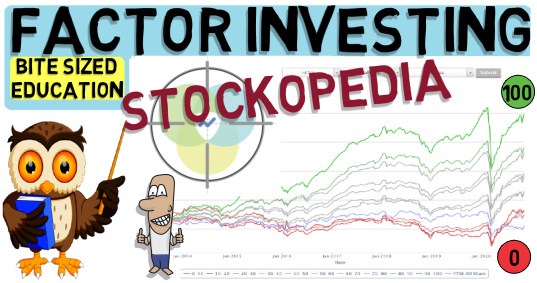
Should have a review of Factor Investing out mid week..
Gareth
Thanks William, I agree, and thanks for your contributions on the channel, it really does help..
Evening all.
See below The Lunchtime Trader by Marcus De Maria
Some useful tips in this one Gareth. Thanks. I like the idea of dollar averaging during the swing lows. It takes patience and discipline but it's doable. And it's good to be reminded of the PEG which I'd forgotten about for a while. I think it was Peter Lynch's favourite metric.
Watched the video on Stan Weinstein, it was well put together and explained the fundamental principles beautifully. I was looking for a strategy to trade with the trend and this video was just what I was looking for. Many thanks.
Thanks LaughingBuddha,
Glad you enjoyed it!
Hi, Latest addition...
Dan Zanger
Thanks Gareth. Fascinating study. Dan Zanger is probably not someone I'd try to imitate. Far too stressful. He must have been using crazy amounts of leverage to get those results. Perhaps the key takeaway for the ordinary retail investor is the study of technical indicators. Zanger spent thousands of hours learning about them. Perhaps you could do a presentation on a book that covers technical indicators (something like Bulkowski's book on Candlesticks that you covered earlier in the series)?
Incidentally, you must have gathered enough material, by now, to write your own book on the traders you've covered. Glen Arnold wrote a superb book on the subject, Great Investors, but it's far from comprehensive and I think the publishing world could be ready for an update that focuses on trading rather than investing, something succinct and accessible like your Youtube presentations.
Thanks William.
I'll look into the Glen Arnold book too..
Thanks
Gareth
Hi William
Agree, too many over complicate what really can be a rather simple approach..
Speak soon
Hi all,
See below Paul Tudor Jones review;-
Many thanks Gareth. High quality presentation as one has come to expect. This one demonstrates the 'keep it simple' method. Buy when it rises above the 200 day MA and sell when it dips below. I think this applies particularly well to indices and large caps. His philosophy reminds me of Warren Buffett's: Rule one - don't lose money. Rule two - see rule one.'
Thanks William, I agree, far more easier ways in this era!
Many thanks Gareth. Enjoyable as always. For those of us who don't have the time to do proper Scuttlebutt, I think it's possible to do a simplified, shortened checklist based on Fisher's principles. For example, one might look for companies that have doubled their revenue over the last five years without sacrificing their profit margins. (Very easy to do on Stockopedia.) I suspect quite a few of these companies will meet most of Fisher's guidelines.
Hi. See Common Stocks and Uncommon Profits:-
Another great video summary Gareth thank you.
What are planning next?
Thanks Dmjram,
In the process of Common Stocks and Uncommon Profits.
Should be live by Thursday.
Thanks Gareth i'm huge fan of Robbie's superb at money management and can dumb it down for the layman. Maybe the trade like a shark book at some point for the mental angle and a hat trick of books by the momentum master.
Keep up the great work hopefully you will reach the wider audience you deserve as these videos are pitched just right 12-20 minutes.
Regards Andy
Thanks for your feedback Andy.
Agree, its the layman perspective he's good at. I'll add the other to my list. Thanks
Yes please. Trade Like a Shark would be an excellent choice.
I'll take a look, I'm sure I have it on my shelf...
Thanks for the review of Spread Betting by Robbie Burns. Another valuable contribution to the series. I've waited a long time for this review and the wait was worthwhile. This is a book I've read a few times and was keen to find out what you thought of it. I note that you didn't award any stars but I'm guessing you'd give it five. My main criticism of the book (not your review) is that it doesn't give much practical guidance for novices. For example, all Robbie's bets seem to be either £10 or £20 whereas beginners might want to use £1 bets until they gain more experience. Looking forward to your next review.
Hi William... Forgot the stars!!! yes 5 for the UK audience.
Thanks for your feedback as always..
Hi - As promised Robbie Guide to Spread Betting.
Thank William.
Robbie Burns spread betting next...
Thanks Gareth. This was succinct and with at least 4 useful key learning points. Schwartz is clearly a day trader in disguise and so needs to be regarded with some caution (at least by beginners like me). But his observations on the use of the 10 day EMA have broad applications, as does his advice on how to trade gap-ups. I note that, according to his almanac, this month (September) is traditionally a weak time for the markets and last week's sell-off endorses that. (But it could also make September a good buying time for buy-and-hold investors, or medium term traders.) Many thanks again and I look forward to your next presentation.
Hi all, see below the Pit Bull review by Martin Schwartz.
Hi Gareth just wondered if any chance of the Robbie Burns Spread Betting book on the horizon have a good bank holiday weekend.
Regards Andy
Hi Andy, yes, I have been away for a week but likely to complete the Pitbull book this week followed by spread betting thereafter. Thanks.
Great thread, 1st time I've seen it! Plan to watch all the videos as some homework, thanks for posting.
Thanks Iron & William, Much appreciated...
Just watched the Kelly Criterion and much enjoyed it. Many thanks Gareth. Position size is a vital part of risk management in investing. The Kelly method is probably more useful to experienced and successful traders/investors as they can make more realistic assessments of the risk on each trade than a beginner. The Kelly Criterion can only work if you know with some precision what are your chances of winning. Otherwise you're probably better off with something simple like risking 1% of your portfolio on each trade, and adding to the position if it does well.
Hi wilkonz
Which animated book covers the Kelly criteron?
I have just read 'Excellent Investing' by Mark Simpson and he suggests a grid - high, medium and low risk (downside) on one access against high, medium and low return (upside) on the other and then fills the grid with starting % size of investment (10%,5%,2%).
I have been playing with this idea and also scoring my picks out of 10 on each of 8 risk areas
financial, management, commodity, product, regulatory, country, liquidity, correlation within portfolio
this gives a range of totals for risk which can be split into low, medium and high.
I'm finding it a useful exercise in making me think about the risks and avoid being over confident or too optimistic when assessing buys (behavioural biases I think many of us suffer from).
Its still work in progress and only time will tell if this improves my investing returns.
gpacker - fantastic work, much appreciated. I am working my way through your back catalogue. Many thanks :-)
Regards
Iron
Hi Iron. The Kelly Criterion is the latest review on Financial Wisdom on Youtube so easily found. I subscribe to the channel so I get early notice of all the reviews. Yes, there are many ways of sizing positions. On the whole I put a lot more money into big 'safe' companies like Apple and Microsoft than I put into risky small caps. It also depends on whether I'm investing or trading. But I can't claim any statistical expertise like Kelly.
@gpacker - I think these videos are absolutely brilliant. Just so good. I own a lot of these books and to have a refresher in 15 minutes in such an animated fashion is priceless. I'm going to play the Stan Weinstein video in our staff investment club meeting this afternoon.
Hi Ed
Thanks so much for your feedback, your professional opinion really means a lot.... I'm flattered that you would consider showing one of the videos to your audience too !!
Regards
Gareth
Hi Wilkonz, thanks again, sorry I know you have asked for this previously, i will complete it very soon.. The plan is for a review of the Kelly Criterion strategy (which I use), followed by Pitbull, then i will get to the spreadbetting ;-)
That's great Gareth. Thanks. Looking forward to Kelly & Pitbull. I agree with Ed Croft - these reviews are great refreshers and I often revisit them. (And I've bought some of the books that I didn't already have so the authors (the living ones!) and publishers are also benefiting from your series.
Great :-)
Hi all, another video below, it was a risky review of a penny speculator but due to his online popularity i'm hoping it will help with the youtube algorithm...
Thanks
Thanks Gareth. An interesting and highly professional review of a fairly ordinary book. I think we learned more about Sykes than about Penny Stocks - which are, for the most part, unrewarding investments but can on occasion produce spectacular profits. At some stage it would be good to see a review of a book on Spread Betting if you have time. Perhaps the one by Robbie Burns?
Thanks again Howard, always appreciated...
Thanks William - Much appreciated.
Yes a very long/complex book, trying to keep it at around the 10 minute mark was tough!
Great book though.
Hi all,
See below a summary of A Random Walk Down Wall Street
Very much appreciated Gareth. A succinct summary of a long and complex book, but you've captured the key points nicely. This is the book I recommend to all first time investors. Like you, I'd describe myself a hybrid investor but most of my 'serious' money is in tracker funds and large shares I plan to hold long term. I do a little trading and have learnt a lot from your reviews of Livermore, Minervini et al, but currently my tracker funds are outperforming may trades although I expect that to change over the next couple of years. Many thanks for yet another excellent review.
Hi Gareth. Another excellent summary and video. This was one of the first books about investing I ever read. I picked it out at random as I had no idea what investing really was. Many years later I still have so many of Malkiel's messages ringing in my head and recall with clarity how reading it all those years ago sent so many light bulbs off that I begun, slowly, to learn to invest. Some things in life are bifurcation points, switching your path onto another. Reading A random walk down wall street was one such for me. Thanks again for your vids, they are excellent. Regards Howard
Hi howard, thanks for your feedback and continued support.
Completely agree, if i'm honest it was only until i did this review that i realised the impact of such costs.
Cheers
Gareth
Hi Gareth
Ref John Bogle vid. A useful reminder of the longer-term powers of Index Funds and the negative effects of active funds over time. I was pulled up sharp a while ago when I noted the annual costs of some of my active fund holdings via Hargreaves. It is so tempting to look at annual growth rates but forget that as your holdings build up the annual management charges really do begin to chew away at your money. I think if more people looked at these numbers quite a few of them would not be amused.
A contact of mine sniffs at the time I spend investing lauding his annualised returns made by his IFA. He is happy with their 2 to 3% charges. I then ask him about the costs of his holdings which are all active funds. He has no idea. Knowing roughly the size of his pot and most of his funds I did not dear to illustrate to him how much he was paying for these funds per year (let alone how much he has paid out over the years).
Thanks for the vid, another great addition to your library, which I view repeatedly to keep myself on the straight and narrow.
Regards
Howard
Hi William,
You are one of a handful that have supported me consistently since the beginning, thank you, it is much appreciated.
I will make my very next review on A Random Walk Down Wall st for you.
Thanks
Gareth
Thanks Gareth. I wish I'd seen this before I started investing. The Vanguard Tracker funds are excellent. I don't think many people understand the compounding expense of seemingly trivial management charges (I didn't until very recently). There are a couple of good active mutual funds out there such as Baillie Gifford American (I hold) but one only has to think of Neil Woodford to be wary of these investments. Whilst on this subject I'd be interested in your views on Burton Malkiel's Random Walk on Wall Street, which pursues the theme of passive vs. active funds.
Hi All, see attached John Bogle's Common Sense Investing.
Evening all, See below my Ed Seykota animation.
Thanks Gareth. Another enjoyable presentation.
Thanks William
Hi AFlash, thanks for your detailed feedback and recommendations, i'll certainly look at the books you mention, much appreciated.
Gareth
two others:
Brett N. Steenbarger writes extremely well.
His 'Psychology of Trading' will only make you improve if you accept your psycho/social limitations.
'Elliot Wave Principle' Frost & Prechter is the standard primer on the method. Interesting but difficult. Deals with Golden Section & Fibonacci plus Ralph Nelson Elliott.
Thanks Aflash, i'll add to the list...
Rather than just write an appreciation, which is a bit annoying when one is looking for information, I am going to make a contribution & add a couple of suggestions.
It is a long, which is also annoying in a comments section but one seems unable to attach file so it has to be copied.
First, however, critical acclaim. One of the best features is your speaking voice. Many commentators on financial sites have regional accents that are a struggle to follow. Your delivery is measured and a mid-Atlantic tone closer to Britain and Canada than anywhere else.
Then you sometimes dissect what the author is saying in a way that improves my understanding. This is particularly true with William O’Neil. You added your own trading example of CCL in one video which fitted well.
Mark Douglas getting 5 stars made me look further with an important addition to my psychology of trading.
Why not take it a step further with James Montier the ‘Little Book of Behavioural Investing’?
Not sure I agree with Jessie Livermore following Partridge but I have to go back to the text. I use his own ‘How to trade in Stocks’, of which I could quote if there is interest.
Before that the other suggestions I wanted to make were:
Bernard Baruch: My own story
Gerald M. Loeb: The Battle for Investment Survival
Loeb survived the 1929 crash and went on to lead brokerage E.F. Hutton.
The battle for investment survival influenced me a lot.
I summarize it thus:
Cut your losses promptly. Never buy for income. Cash is an asset. The quick turn is much safer than the long haul. Put your eggs in one basket and watch the basket.
I have made extensive notes reproduced below.
Battle investment survival
(Chapter 6)
The individual who does his own thinking must learn to question most mass movements of majority point of view, for they are usually wrong.
I am so convinced of the inevitability of loss when attempting to secure a safe income of small return, that I constantly suggest speculation rather than investment as the policy less apt to show a loss and more apt to show a profit.
An intelligent program aimed at doubling one’s money might at least succeed in retaining one’s capital.
(Chapter 12).What to buy – and when
...t popular sentiment should be bearish and the securities market well liquidated. Business conditions should be poor, or the general expectation should be that they will become poor.
The company selected should be thought by the investing public at large to be so weak that it sells at low prices and is given low ratings. It should be operating at a deficit, its earnings should be abnormally low, or if earnings are currently satisfactory, the popular expectation must be that they are headed downwards. The stock should be paying no dividends, or the dividend should be lower than normal, or the general opinion must lack faith in the continuance of a reasonable dividend. The price of the stock must reflect a majority view that conditions affecting the company are bad, or soon will be bad, or will continue bad. At the same time the buyer must hold an opinion contrary to these surface indications and his opinion must be back by sound judgement and access to reliable sources of information.
The importance of full consideration of popular sentiment, expectations and opinion – and their effect on the price of the security – cannot be overstressed. Major buying points often occur without a full scale actual business depression. At such times the fear of a depression exists.
It is important to stick to issues which in past times of bullish enthusiasm have had active markets and which can be expected to have active markets again. However at the time of purchase they must be low-rated and unpopular, with their prices down and discouragement about their prospects in general.
At long intervals even the highest grade shares become depressed, and then the opportunities are especially great. That happens only one or twice in a business lifetime. The objective is always to buy that which the majority thinks is speculative and sell it when the majority thinks the quality has reached investment grade. It is in this policy that both safety and profits exist. As price is the all important consideration, the type of corporation and its characteristics are of relatively minor consequence.
Except in cases of panic or near panic prices, the fact that a stock is widely held by investment trusts is not a good reason for buying, as such stocks are generally of the high-grade kind, difficult to buy cheap. Since the aim is rather to buy an issue which is unpopular, the hope is, on the contrary, that investment companies do not hold any and will buy it later at a higher price. The distinction of being a stock listed frequently in published institutional holdings simply means not only that the price is high rather than low, but also that there are a large number of sellers should the situation take a turn for the worse.
Willingness and ability to hold funds uninvested while awaiting real opportunities is a key to success in the battle for investment survival. Market values change in a few months by amounts equivalent to many years of dividends or interest coupons. Therefore such changes in value are much more worthwhile seeking than is straight investment return.
The simple equation of weighting what you think are the possibilities for profit versus the risks for loss is really the soundest way to go about it.
(Chapter 13).Importance of correct timing
As soon as a security is purchased, the buyer loses the power to avoid a decision. It becomes necessary for him to decide whether to hold or to sell. As an inexorable consequence, the percentage of correct conclusions must be lowered. Therefore, intelligent investors expect to make a great many more errors in closing transactions than in opening them. When nothing but cash is held, no decision need be made at all unless conditions are completely satisfactory. Either a suitable opportunity may be present, so that a purchase can be sensibly made, or the pros and cons may be so balanced that nothing is done.
The worst that can happen if the latter decision is reached is that an opportunity will be missed through caution, which is an inconsequential misadventure. Other opportunities always come in due time, and nothing will be lost in final profits or peace of mind.
Another reason why selling at the right time is more difficult than buying is that the development of a frame of mind in which only real bargains are sought carries with it a tendency to lose confidence too early.(see chapter for further development).
(Chapter 13).When to sell
Perhaps the best way to describe when to sell is to review handling of a commitment from its beginning. Belief that a stock is in a buying range justifies a small initial purchase. If the stock declines, it should be sold at a small and quick loss. If it advances and the indications which supported the original purchase continue favorable, additional purchases can be made at prices which the buyer still considers abnormally low. Once the price has risen into estimated normal or overvaluation area, the amount held should be reduced steadily as quotations advance.
The best reason for selling a stock is because it stops going up, or worse, starts going down. Of course it is vastly more complicated than that. (p.81)
(Chapter 14)
The primary factor in securing market profits lies in sensing the general trend. Are we in a deflation or inflation period? If the former, I would hardly bother to analyze most equities.
It is more feasible to try to follow profitably a trend upwards or downwards than to attempt to determine the price level. No one knows when a share is « cheap » or « dear » in the sense of market bottoms and tops. Shares have a habit of sometimes seeming dear in the early stages of an advance, and later at far higher levels, new and unexpected developments often make them seem cheap again. There is no rule about it.
The most important single factor in shaping security markets is public psychology. (p.60)
Personal knowledge of what is ahead in the way of developments in the next six months to a year and due regard to market factors always count a great deal more than complicated analyses. The psychology which leads people to pay 40 times earnings under one set of circumstances and refuse to pay 10 times under another is such a powerful and vital price changing factor that it can overshadow actual earnings trends as an influence on stock prices.
The same considerations rule as between different stocks at the same time. Thus we may have a fashion in vending machines of photographic shares which will carry them much higher at a given time in relation to assets, earnings, dividends and future prospects than other groups. Later, when they are out of fashion, these yardsticks may actually figure out to greater advantage, but the public mind is on something else. Sometimes for years certain popular shares will be persistently overvalued by the public, which continues to pay an unreasonable sum in proportion to the theoretical valuation. Likewise, frequently, theoretic undervaluation will persist for years. It does not help one’s account to feel sure one is short theoretically overvalued stocks that are currently rising or long those theoretically undervalued but actually sinking in price.
One should bend every effort to determine what the tendencies of the public are, right or wrong, and profit from them.
99.99% of those who try to trade think they are right and the stock price is wrong.
Always write it down
Write down your reasons for making an investment-what you expect to make, what you expect to risk.
Writing things down before you do them can keep you out of trouble. It can bring you peace of mind after you have made your decision. It also gives you tangible material to evaluate your profits and losses.
Quantity does not make quality. There is invariably one reason why a particular transaction can be expected to show a profit.
Writing it down will help you find it. It will help you judge whether it is really as important as your first inclination suggests.
Of course, you will want to decide how much you can afford to lose. It ought to be substantially less than your hopes for profit.
All this will help you in the much more difficult decision: when to sell.
One of the greatest causes of loss is to open a commitment for a reason and then fail to close it when the reason proves invalid.
Capital is like a rabbit, it darts away at the first sign of danger.
It always will be the power to understand and the ability to act that turns information into profits. (p.49)
Cutting losses is the one rule that can be taught with the assurance that it is always the correct thing to do. As a matter of arithmetic it is a formula but as a matter of application it requires detachment from human frailties. People like to take profits and do not like to take losses. (p.57)
Buy Low, Sell High is wonderful idea for but can be expensive if applies as a generalization.
.
At some point stocks are genuinely ‘low’ or ‘high’. Remember they over-shoot their logical goals or levels and invariably become ‘undervalued’ or ‘overvalued’. (p.204)
There is no rule against buying stock back after selling it. It is much safer to buy and sell a stock a dozen times starting at 40 and ending at a 100 than just to buy and pay 40. If the stock starts to go down, you will not worry if you paid 40, but if you bought your last lot at 100, you will jump pretty quick. If you pyramid instead of averaging, you won’t get back in, or you won’t stay in for long if it happens to go into a real decline. The owner at 40 might very well average at 60 after seeing the stock at 100. (p.82)
In the consideration of market indications, the most important point is the time element. Outstanding strength or weakness can have precisely opposite meanings at different times in the market cycle. For example, consistent strength and volume in a particular issue, occuring after a long general decline, will usually turn out to be an extremely bullish indication on the individual stock in question. In addition, if later its leadership is gradually followed by other important shares, the signal for a turn in the whole market probably has been given.
On the other hand, after an extensive advance which finally spreads to issues neglected all through the bull market, belated individual strength and activity not only are likely to be short-lived but may actually suggest the end of the general recovery, especially if the early leaders begin to show no further response.
(Chapter 15)
If the market is getting stronger when the general expectation suggests it will get weaker gives an A1 buying suggestion to those not afraid to follow it.
(Chapter 16)
One is endeavoring to buy stocks that are hard to buy and easy to sell. (p.69)
Think more of the time something occurs rather than just of the occurrence itself; of comparing the action of one issue with others rather than just following an isolated move; of watching the effect of news on prices rather than the news; of looking into both supply and demand as against the usual practice of thinking about only one side of the market at a time. (p.70)
The most consistently reliable danger signal in a stock is a sharp advance and a complete retracement of the gain on great activity after a long series of advances in a market which one would ordinarily regard with suspicion anyhow.
If a stock goes back and forth in a trading range that is normal.
If it gets away for a straight gain, it should hold 50% to 99% of it.
There is rarely a second chance to get aboard once a stock is started and if it comes back and gives one a second chance, it is usually better to pass it up. That stock is no longer hard to buy. It might be easy to sell, as in early stages of breakouts a lot of public buying is done on the dips. A smart trader pyramids on new highs, the uninformed averages. There is something about new highs that makes them look unfamiliar and dangerous, but after it drops 20% looks safer. Most distribution is done on the way down. (p.73)
(Chapter 19)
Safety comes not from the selection of a slow mover or cheap issue, or worse, a group of such shares, but by concentration in the one outstanding, fast-trading leader that is jumping in the right direction. There is more safety and more profit in so timing one’s buying in the latter, that when one gets purchase advice the price is already higher than one paid.
One cannot afford to be wrong in such a fast-moving issue and much more watchful to get out quickly if the stock does not act as anticipated. Here is real safety and a chance to build a backlog of profit against future errors.
I generally favor issues selling at high prices per share. Frequently the highest per-share prices represent the lowest total valuation for a company when price is multiplied by shares outstanding and compared with total earning power and other figures. They are also more apt to be in the rapid-mover stage.
(Chapter 11) On Advisers
We get out of things what we put into them, and no more. There is a difference between the « free rider » and the sincere seeker of help who shows his desire to pay for help by faith in his adviser’s integrity, his courage to follow his judgement, and his loyalty when the inevitable mistakes occur.
It is in my opinion impossible to secure equally worthwhile opinions on pre-determined lists of individual securities. It is vital to know the superiority of volunteered opinions as compared to answers to queries. If one stops to think, it is one thing to guide someone to profit on one’s own ground. It is entirely another to have at hand worthwhile information or opinion on any and every security requested at any and every time.
IMPORTANT CHAPTERS:
6, 11, 12, 13, 16, 22, 53
"Not sure I agree with Jessie Livermore following Partridge but I have to go back to the text"
This is part of the relevant text I think:
"I think it was a long step forward in my trading education when I realized at last that when old Mr. Partridge kept on telling the other customers, "Well, you know this is a bull market!" he really meant to tell them that the big money was not in the individual fluctuations but in the main movements—that is, not in reading the tape but insizing up the entire market and its trend. And right here let me say one thing: After spending many years in Wall Street and after making and losing millions of dollars I want to tell you this: It never was my thinking that made the big money for me. It always was my sitting. Got that? My sitting tight!"
Livermore following Partridge was part of his transition from a shorter term bucket shop scalper to large scale operator I think.
The size of his account no doubt played a part in this, he had to scale into positions over time to avoid moving the market and used probe trades to see how the stock/commodity responded to his buying/selling.
Great, thanks Wilkonz.
Hi Howard / Wilkonz, I replied on youtube, thanks...
Here is the link to the other document I dug up from a Turtle Curtis Faith
https://bigpicture.typepad.com/comments/files/turtlerules.pdf
Many thanks Gareth. The link was very useful, and although the Turtles traded commodities, the principles can be made to work with equities - albeit with some tweaking and simplification. I liked the 4 stage entry into each winning trade. That made a lot of sense to me. Also I identified with the trap of selling too early to lock in a profit (I guess we've all been there - there's nothing worse than watching a large profit shrink into a small loss so one feels compelled to act preemptively). All the same, I shall continue to protect my 'zero position' when I'm 10% up on a trade.
The article is worth a reread and I shall adjust my current rules accordingly.
With regard to my question about why some Turtles did better than others, the answer is here:
The Turtles with the best trading records consistently applied the entry rules. The Turtles with the worst records, and all those who were dropped from the program, failed to consistently enter positions when the rules indicated.
Many thanks again for all your hard work in producing this excellent series of book reviews.
Hi Gareth
Many thanks for the link and the PDF. I will digest.
Regards
Howard
Just found this thread today, very useful
Hi Gareth
Another great vid. I asked on the YouTube wether the book publishes the details of the rules or wether you used another source? The video suggested they were propriety up to a certain date, so are they public domain now?
Regards
Howard
As usual, many thanks for a highly professional presentation. It would be interesting to know why some turtles did better than others. Was it luck? Or were some bending the rules? (I've asked this question on Youtube so apologies if you've already answered it.)
Thanks HumourMe,
I think in most markets the same principles apply (for trend following), The commodities the Turtles used were generally very liquid which is key with large amounts being traded, obviously low cap stocks would not have worked for them.
In essence they were looking for good risk/reward, i.e keeping check of risk and allowing for the trend to grow the reward as much as possible, in my opinion, this principle, in general will work in most markets, BUT when in the right environment. Hope that helps....
Thanks
Thanks for the feedback all, see below my recent Turtle trader review.
Excellent as usual. Do you have any thoughts about how a commodity based system might have to be adapted, if at all, for shares?
Hi Gareth
The Van Tharp video is a very good companion to your previous Minervini vid. The Van Tharp emphasising how important it is to get inside the processes and mindset of a particular style.
Very useful, thanks.
Howard
Hi All. Next video -
Van Tharp - Trade Your Way To Financial Freedom
Another great video Gareth you sure have a talent for this. Robbie Burns spread betting next would be awesome keep up the good work.
Andy
Thanks Gareth. A useful consolidation exercise. And something on spread betting soon please.
Hi again Gareth
With ref to the new second Minervini vid. I really like the trading statistics table Mark uses which you present.
I have put it into practice for some recent (historic) trades and find it very enlightening. I find that it has provided clear guidance as to where to focus my attentions on in order to adjust my trading behaviours and my data capture, analysis and subsequent trading improvements.
I am however, confused as to what the two columns 'LG Gain' and 'LG Loss' are presenting.?
I have his first book and have tried to determine their meaning from it, but could not. He does not present that particular table as a figure.
Could I be a little cheeky and ask you to offer your views please?
I will obtain his second book in the near future and read it up for myself, but would welcome a suggestion/answer in the meantime.
Regards
Howard
LG = Largest
Hi HumourMe
Many thanks.
Regards
Howard
Hi Howard, thanks for your feedback, sorry just seen your message but I see Humour has responded..
Thanks for taking the time again.
Van Tharp of Trade your way to financial freedom should be uploaded wed/thu this week.
HI Gareth
A truly excellent second Minervini video. Many thanks.
Regards
Howard
Thanks Howard, much appreciated
Hi Gareth. Are there any books on index trading? Probably not a large enough subject to merit a book, but sometimes it's tempting to go short on an index as a means of hedging. (I guess one can use Minervini's principles and treat the index like a share but I'm sure there must be some subtle differences.)
sure its something i can look into, Thanks William.
Stan Weinstein's book Secrets of Profiting in Bull and Bear Markets has a chapter on shorting and applying his techniques to funds as well as stocks.
Thanks dmjram - I'll take a look at that at some point, thanks
Thanks dmjram.
Hi all - See the latest video animation of Trade & Think Like a Champion.
Thanks Gareth. Another useful addition to the library. The VCP concept is new to me so I will study further. Best wishes, William
Afternoon all,
See Benjamin Graham's - The Intelligent Investor below. Thanks
The Intelligent Investor
Another useful tutorial Gareth. I've watched it a couple of times already and will revisit. Much of the territory is familiar. Although I'm wary of stocks with a low PE ratio (usually it's low for a very good reason that has little to do with value) Graham's principles are timeless. These days, I guess one would buy tracker funds rather than bonds for the 'safe' half of one's portfolio as interest rates/bond yields are so low. Your additional input from Tal Davidson regarding low beta over 3 years was particularly helpful.
Many thanks. William
PS If there are any books that deal specifically with trading in the few months after a market crash it would be highly relevant to the current scenario. V shaped recoveries must present some great opportunities.
Hi William - I i agree with you regarding the PE ratio, I Myself am a breakout momentum trader with momentum/quality metrics so it is a little against my 'theory', nonetheless obviously holds considerable meaning to value investors.
Great idea regarding V shape trading in the current climate.. I'll be finishing Mark Minervini's Think & Trade Like a Champion this weekend, i'll see what i can find thereafter.
Cheers
Gareth
Hi Gareth any chance of Naked Trader Spread Betting book being added to the list for future viewing ?
Great videos you clearly have a talent for this kind of teaching.
Regards
Andy
I second that! I thought Naked Trader Spread Betting was a bit light on detail in places, but I'd be keen to see what Gareth makes of it.
Thank you! - Yes I have it on my list, Minervini will be released tomorrow then I will take stock and work out whats next .. thanks
Minervini's books are certainly information dense. I look forward to your review.
Thanks Gareth. I've been looking forward to your review of Livermore's reminiscences - one of my favourite books - and was not disappointed. One of his great strengths was identifying 'pivot' points earlier than everyone else. It's well worth keeping a list of his aphorisms handy and checking them out from time to time.
Thanks William. Glad you liked it.
Thanks Gareth, another excellent summary.
Can you say where the charts/notes from the old looking book pages shown are from please? Not seen them before in books on Livermore. Thanks.
Thanks Dmjram.
Just resources found from the internet.
Evening all - Please see Jesse Livermore's - Reminiscences Of A Stock Operator
Jesse Livermore
https://youtu.be/uWBL6Zgfhg4
Thanks William - I agree..
Thanks Gareth. I struggled with William O'Neil's book when I first read it a couple of years ago, but your presentation made it much clearer. I think one problem now arising is going to be distinguishing between a true cup and handle and a V shaped recovery. Looking forward to part 2 on the CANSLIM method.
Hi all - Next video:-
How To Make Money In Stocks by William O'Neil
Thanks
Gareth
Thanks Jaime - Yes the interaction and help from the community here is excellent.
I’ve watched some of these on YouTube and think they’re great. I’m fairly new to the investing game (and a subscriber to Stockopedia) I love how people seem so willing to help when a question is asked. I’m still undecided on investing Vs trading although I’m probably leaning slightly towards the long game simply because it looks like it carries less risk.
Hi all,
See link here for the top 5 candlestick patterns from Thomas Bulkowski's book:-
Bulkowski book - https://youtu.be/4Lx-NnMOpWs
Thanks Gareth. I've always been wary of reading too much into candlestick patterns but I'll pay more attention now. It seems sensible to focus on five easily memorised signs and add them to the list of entry point criteria and maybe squeeze an extra 1 or 2% out of each trade.
Thanks Gareth, another good review this time on gap trading.
Took a while to track down as the stockopedia link redirects to the rich dad poor dad at the moment, not sure if that's a stockopedia site issue or a simple link fix for you.
Thanks for letting me know dmjram - the link is here - https://youtu.be/Jh40P4t_-HU
A quick summary of Continuation Gap trading:-
Gap Trading - https://www.youtube.com/watch?v=rY3koC-n8CQ
Thanks Gareth. Nice and succinct. And relevant. Yesterday International Personal Finance (LON:IPF) gapped up >30% so I'll be following its price and volumes closely for the next few days.
Nice, the stop would be placed at approx. 49 it seems, the 20DMA could even act as support prior that too..
Thanks Wilkonz - Yes i'm sure most of us have this ongoing battle...
Many thanks for another helpful review, Gareth. Great presentation. Emotions are almost impossible to control in my experience, even after one has identified one's areas of psychological weakness. I'm still working on it...
Hi - See below the most recent video from Mark Douglas - Trading in the zone. Thanks...
Trading in the zone - https://amzn.to/358VuGw
Sorry wrong link - https://www.youtube.com/watch?v=m1djMTkGE3Q