TruFin, Frontier Developments and the case for video game stocks

Summer may seem a strange time to get into video game stocks.
The release schedule is stacked towards the edges of the year, and the warmer weather means people spend more time outdoors (and less time smashing pixelated zombies in their attics).
That’s the theory anyway. But perhaps it’s worth reevaluating, given the performance of two UK-listed gaming stocks.
- Frontier Developments (LON:FDEV) posted a major ‘ahead of expectations’ update for FY26 on May 12, taking its 12-month gain to 96%.
- Just last week, TruFin (LON:TRU) posted a 20% increase in 2025 gross revenue, pushing its one-year return to 85% .
Both companies are running at P/E well under 15. Both are spitting off cashflow. And both have launched sweeping share buyback schemes, great for holders.

This piece isn’t here to analyse these companies. That’s what my colleagues’ stock pitches and Daily Stock Market Report features for (click to read their latest takes on Frontier and Trufin).
Instead we’re going to make the wider case for video game stocks, exploring 1) the adoption of more headwind-resilient business models and 2) the wider market sentiment.
Part 1: The business model
The gaming industry is huge. We all know that. In 2024 alone, it made $195 billion in content sales.
However the industry has faced significant challenges in recent years.
- The boom of the pandemic led to a profound slump as social restrictions were lifted.
- The democratisation of game development and the rise of indie studios has led to chronic over-supply.
- Rising consumer expectations and so-called ‘gamer fatigue’ has forced developers to spend ever more money to keep their audience interested.
- Demand for ‘ultra-realism,’ visuals and mechanics that are practically indistinguishable from reality, has squeezed budgets still further.
And conventional wisdom would have it that industry revenue is something of a bell-curve. A big push of lower-value games at the start of the year, before a sun-drenched summer valley and finally a barrage of blockbusters in the Black Friday-to-Christmas surge.
This remains true, if you look purely at game releases: GameSpot data from May shows that only 20 major games are slated for release in Q3 2026, compared to over 130 in Q2.
But this is a last-century way to view the video game business.
The inexorable rise of digital distribution (which accounts for more than 90% of standard software sales across modern platforms) provides a number of additional advantages:
- Constant, year-round income driven by in-game purchases of virtual accessories and bolt-ons (currently, nearly 50% of PC and console revenue in the U.S. comes directly from in-game spending rather than base game sales).
- Higher Profit Margins through the elimination of logistical costs associated with manufacturing, warehousing, and shipping physical game copies.
- Boosted Player engagement that allow developers to release constant updates that continually revitalise the player base.
The advantages of this new, digital-first model are accentuated by the growing predominance of simulation games, which enable players to design their own mini-realms within the wider game-scape.
Simulation and sandbox games, spearheaded by the virally popular Minecraft, create living ecosystems, provide evergreen inventory profiles and facilitate ´game as a service’ business models, where revenues shift from one-off sales to recurring revenue streams.
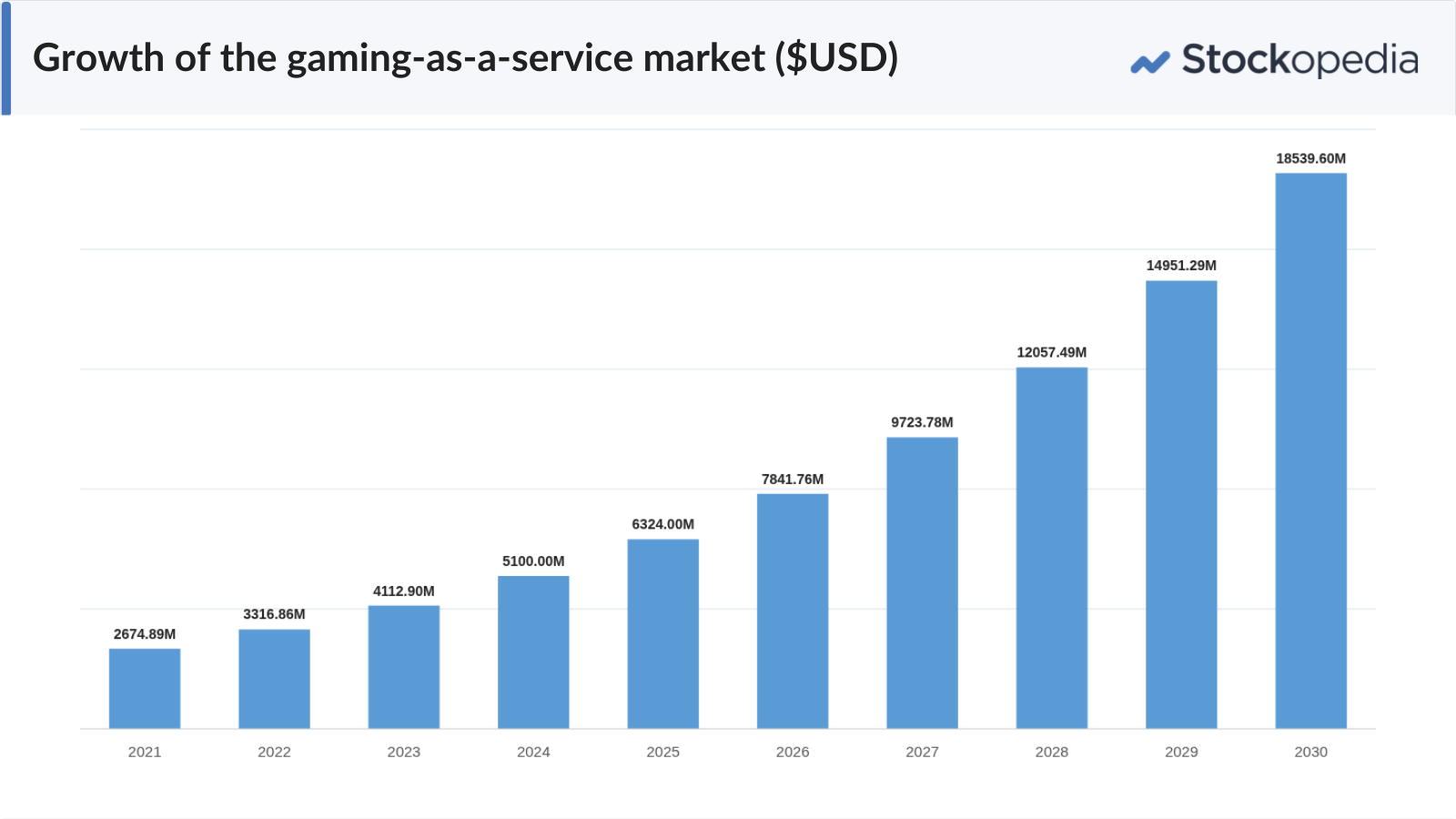
Source: Deep Market Insights
UK-listed companies are at the bleeding edge of this zeitgeist.
Frontier (through Planet Zoo and Planet Coaster), Trufin (through Cityscapes: Sim Builder) and Everplay (through Construction Simulator) have all rolled out lucrative simulation games.
Cynics will say that these new models are exacerbating, rather than curing the perennial problems. They will cite the 30% cut taken by digital distributor Steam, and say that the ‘always on’ nature of digital games will only enhance user fatigue.
But look at the facts.
- Although the high-profile Jurassic World Evolution 3 hogged the headlines in its latest results, Frontier’s H1 2026 update (released in January) flagged Planet Zoo as the company’s highest-grossing individual game by revenue.
- TruFin subsidiary Playstack achieved over 20 million downloads on Steam in 2025. In fact, the company’s portfolio has achieved over $100 million in lifetime revenue on the platform to date.
This digital-first, simulation-led model reduces fixed costs and creates long-tail momentum beyond a game’s initial launch. As Frontier flagged this week’s update, the “back catalogue” can now keep delivering for years, not weeks.
Part 2: The wider market context
Sometimes, a macroeconomic trend can have precisely the opposite effect that you’d think. The chaos in Iran may be just one of these examples.
The soaring price of oil is creating a global cost of living crisis, and the effect on consumer spend is evident already.
Eurozone retailers have reported sluggish figures, while in Britain the CBI's monthly retail sales volume measure fell to –68 in April 2026, its lowest point since inception in 1983 (a figure above 0 equals positive growth).
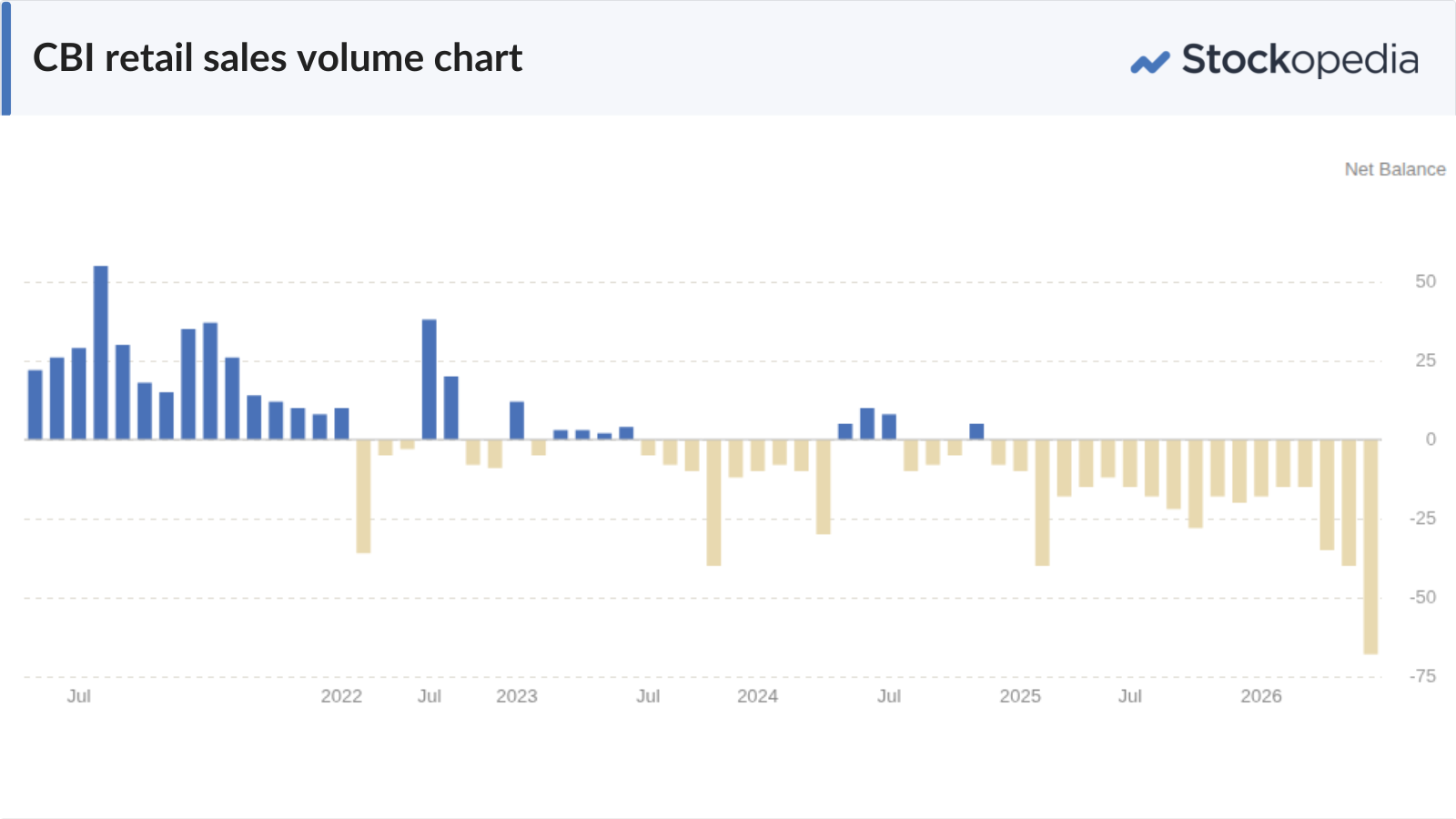
Source: Trading Economics
But not every corner of consumer spending is going to feel this crunch.
Entertainment has continued to flourish despite the headwinds from the Middle East. In the UK for example, research from Barclays shows that entertainment spend increased by 3.5% in March, despite an overall slowdown in non-essentials.
Why? Because as KPMG put it in a research note, people want experiences. And money channelled into home entertainment is a far more cost-effective experience than cash splashed on expensive clothes or fancy meals out.
This is particularly true of video games.
Even AAA-rated blockbuster video games typically cost less than $100 (or £100, depending on where you buy it). And the average gamer plays around eight hours a week. So the value case is pretty clear.
And this summer, the trend towards video games as substitutes for out-in-the-world extravagances may continue, as the world prepares for what some are calling ‘the great staycation.’
You probably know where I’m going here, but here’s a quick bit of context anyway:
- Middle Eastern carriers (which serve popular markets like Turkey and Dubai) have seen a 60% drop in global demand.
- Airports like Heathrow, Paris and New York are facing unprecedented passenger declines.
- In the UK, a nation of globe-trotters, travel spending declined in March after five years of growth.
This trend is sure to continue into the vacation season. Which means consumers who would otherwise be ploughing fortunes into foreign holidays will suddenly have some disposable cash.
Video games provide an inexpensive way to dispose of it.
So, is the case unequivocally bullish?
Not quite.
While TruFin has shone consistently and Frontier has recently posted excellent figures, other listed game-makers have delivered mixed results.
Devolver Digital (LON:DEVO) expects to reveal a 10% jump in gross profit after non-cash impairments in its FY2025 results. However, the company has also revealed a $16m statutory loss on the back of weaker-than-expected sales.
Similarly, Everplay’s (LON:EVPL) unaudited results for FY25 show “double-digit profit growth and strong margin expansion.” But below this glossy headline, revenue is slightly down on the year, from £166.6 to £166.0m.
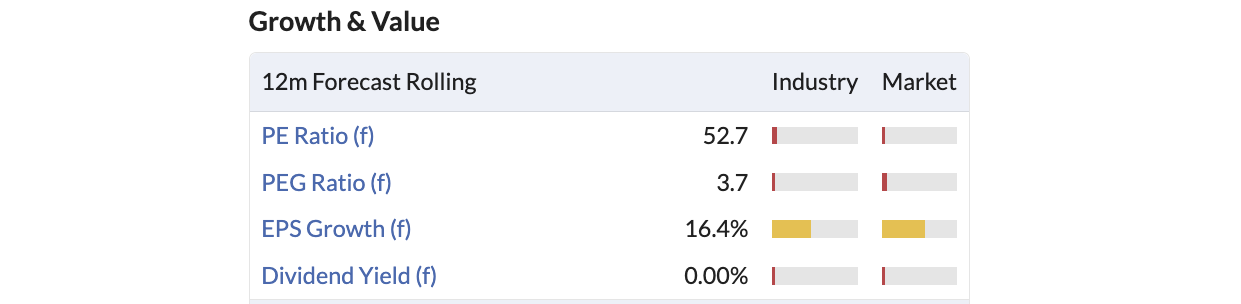
And while neither of these companies is particularly expensive right now, indie developer TinyBuild (LON:TBLD) is sitting on a P/E above 50. In their most recent write-up, our analysts said that TinyBuild has been “something of a financial car-crash in recent years,” highlighting the impairment losses of $3.93m in 2025 (and year-end cash of only $4.6m). The picture doesn't get any prettier when you read these figures.
So video games may feel a little too contrarian for some, given the industry’s previous headwinds and the role of AI, whose impact is still to play out. On one hand the use of AI may erode consumer trust (something Frontier has already experienced, with an outcry at the AI-generated scientists in Jurassic World Evolution 3). On the other, used widely, it may unlock new revenue streams and efficiencies while sating the demand for hyper-realism.
But as the number of gamers around the world continues to grow, the industry appears ideally placed to thrive from the geopolitical turmoil. Digital in its focus, recurring in its revenues - and inexpensive at a time when households are sweating every penny.
Just to recap - the stocks mentioned in this article are TruFin, Frontier Developments, TinyBuild, Devolver Digital and Everplay. If you’re excited about this article, click those links and take a closer look. The thoughts are in this piece are meant to provide a starting-point for your own research, not a final answer.
And if you want to contribute to the conversation? Leave your comment below. Whatever your take, it's valuable to the community.
Disclaimer
This is not financial advice. Our content is intended to be used and must be used for information and education purposes only. Please read our disclaimer and terms and conditions to understand our obligations.

9 comments
Frontier Developments (LON:FDEV)
8% holding in our Deep Dives portfolio.
15% 2028 forward FCF yield.
2.1x 2028 forward EV/EBITDA.
Cash balance increasing to over £57M by 2028.
Imminent buyback announcement enhancing further EPS.
Why is it still listed on one of the worst shrinking low liquidity markets on earth?
All the best
I guess my problem with video game companies is that you're only as good as your last game.
Thanks for the input Mark, definitely a fair point - although the shift towards long-tail releases should reduce this reputational risk.
I do still think you have to research deeper into the games their are developing and the likeliness of them succeeding in the market. A game that flops after launch can massively impact one of these companies. I owned Frontier on the run up to the release of the latest Elite franchise game and until I thought that game had run through the launch hype, then I was out. I would need a good feeling about the potential of future releases to buy in again….. or buy an esports and gaming etf, there is a VanEck one I have investments in.
I think that's made easier by using Steam data - you can get a sense of how something might do from wishlist adds. I think that's why tinyBuild (LON:TBLD) is more highly rated as it has a number of games very high up wishlist data. But different companies will take different approaches to pre-launch marketing which also affects wishlist placing versus eventual performance.
I think that's made easier by using Steam data - you can get a sense of how something might do from wishlist adds. I think that's why tinyBuild (LON:TBLD) is more highly rated as it has a number of games very high up wishlist data. But different companies will take different approaches to pre-launch marketing which also affects wishlist placing versus eventual performance.
There seems to be no liquidity in Trufin (LON:TRU) though
Hi Gareth. I think one additional challenge that should have been included in your list is AI. Personally I believe it's going to have a positive impact for quality gaming companies as they can utilise it as a tool and reduce their costs but the market has downgraded many software companies as if they're all now going to be commoditised.
For example take Everplay (LON:EVPL) it's on a forward PE of <10 and priced at 1.35 to book value.
Yes, great observation Andy! I feel like AI could be both an opportunity and a threat - the full impact hasn't played out yet.