Want High Yield and Momentum? Go for Insurance!

TIme to Love Non-Life Insurance
One of the key investment themes that I continue to champion is that of the "Hunt for Yield". Here we are, in a period where global central banks are conspiring to keep short- and long-term interest rates as low as possible in order to shore up what is fragile economic growth in the "New Normal" of a post-crisis Developed World.
At a time when government bonds, and even investment-grade corporate bonds, are no longer offering anything like attractive yields to maturity, where can income investors turn? One solution is to subscribe to Neil Woodford's new fund, which unsurprisingly is stuffed yet again with AstraZeneca (LON:AZN), GlaxoSmithKline (LON:GSK) and tobacco companies like Reynolds American, as it was back in his old funds at his former employer Invesco Perpetual.
I prefer a stock-picking approach, focusing on sustainable value and momentum. Within the UK stock market, the sector that looks best placed on these metrics is the UK non-life insurance sector, containing such high yield gems as Brit (LON:BRIT), Amlin (LON:AML) and $CGL within the Lloyds of London reinsurance segment, and the RBS spin-off Direct Line Insurance (LON:DLG) in more classic Property & Casualty insurance.
High and Sustainable/Growing Yields
Each of these four insurers offer prospective dividend yields in excess of 5%, up to 10% in the case of recently refloated Brit (LON:BRIT).
Dividend payout ratios are of the order of 60% except in the case of Brit (LON:BRIT), and Returns on Equity are typically between 10% and 13% this year and next. All of which suggests that not only are these high dividend yields sustainable (except in the case of a sharp unexpected drop in earnings), but that long-term dividend growth should be in the region of 4-6% going forwards. Perhaps not exceptional, but certainly more than enough to compensate for inflation.
Value aplenty too
On a basic metric like trailing price/book, you are paying somewhere between 1.1x (Catlin (LON:CGL), £BRIT) to 1.5x (£DLG), so hardly extortionate for solid double-digit ROEs. Forward price/earnings ratios range from 10-12x, so also well below the UK stock market average.
Stockopedia value rankings overall are:
| Company | Stockopedia Value Rank |
| Amlin | 94 |
| Catlin | 98 |
| DirectLine | 94 |
Source: Stockopedia.com
Note: BRIT Insurance has been refloated too recently to have Rankings due to insufficient data.
Momentum is Very Strong too
The FTSE non-life insurance sector has clearly broken out of any horizontal resistance levels in its recent bull trend (Figure 1):
1. UK Non-Life Insurance Sector Hits New Highs
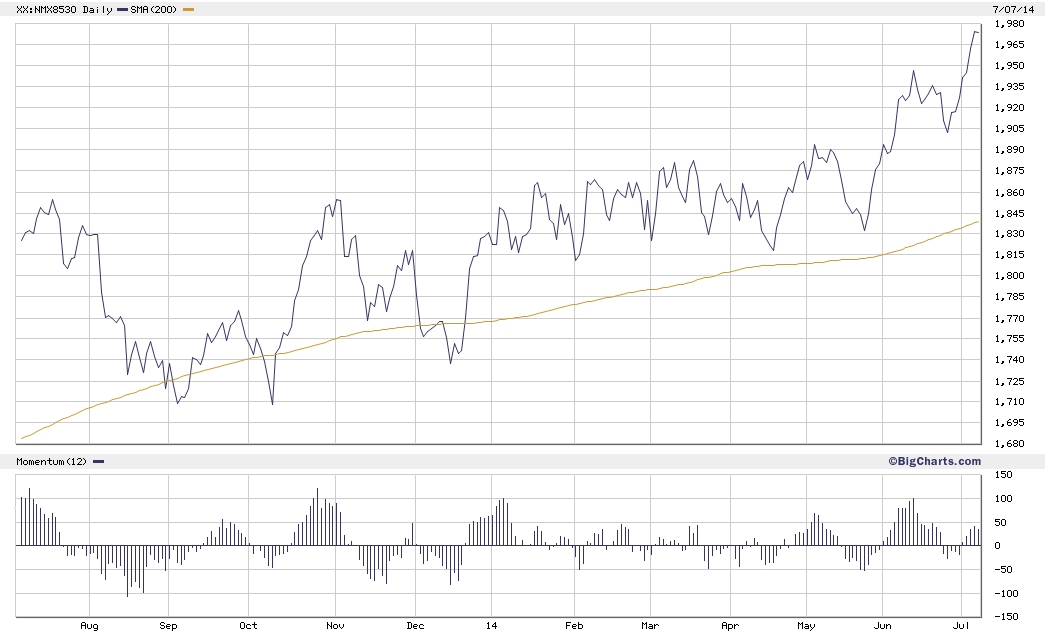
Source: bigcharts.com
Stockopedia momentum rankings overall are:
| Company | Stockopedia Momentum Rank |
| Amlin | 80 |
| Catlin | 86 |
| DirectLine | 68 |
Source: Stockopedia.com
Summing Up
With investors desperate for income yields that exceed the paltry 2.5-3.0% available from UK gilts and sterling corporate bonds, and other income alternatives like Property Funds receiving massive inflows driving down yields there, the Non-Life Insurance sector in the form of Amlin (LON:AML), Brit (LON:BRIT), Catlin (LON:CGL) and Direct Line Insurance (LON:DLG) all look good long-term buys here.
Stockopedia combined StockRanks are:
| Company | Combined StockRank |
| Amlin | 93 |
| Catlin | 97 |
| DirectLine | 75 |
Source: Stockopedia.com
But of course, as ever DYOR, as you should never just take anyone's word for it! After all, with insurance companies, there are always risks, notably from the weather and El Nino!
Edmund
The Idle Investor
Disclaimer
This is not financial advice. Our content is intended to be used and must be used for information and education purposes only. Please read our disclaimer and terms and conditions to understand our obligations.
12 comments
I think Insurance offers some fantastic valuations at the moment and I especially like names that are operating on modest growth because modest growth will result in increasing dividends in the absence of opportunities to generate growth through using cash to increase sales. Insurance is historically a difficult business to generate high growth rates - you need to find a fine line between being competitively priced to attract customers yet still have the margin of safety to actually underwrite/offset the risk. I avoid names that are aggresively growing revenues as they make me nervous. I very much like BRIT & Lancashire Holdings as I think we will see ever increasing dividends from both - both could hit 6-7 % yields fairly easily over the next 18-24 months. I also like Phoenix and Amlin on valuations - both are incredibly cheap!
I just bought Catlin shares after thorough analysis. The main reasons were;
1) Good stock ranks
2) Yield 6.5%
3) Outstanding 2014H1 results
4) 2014 ESTIMATES FOR FULL YEAR NET PROFIT OF $373m SEEM WELL SHORT OF THE MARK WHEN COMPARED TO THE FOLLOWING ACTUAL NET PROFIT FIGURES (all in $m)
2013H1=140
2013H2=296
2014H1=295
Paul.
I agree that insurers are slightly terrifying.
I have been looking at Catlin group, which looks very attractive to me based on yield, P/E and stockranks. However, the effect Fukashima had on Catlins 2011 profit is scary. Additionally, I believe extreme weather (yes, Fukashima was an earthquake, not extreme weather) will be become more common due to climate change. These considerations have prevented me from buying into Catlin.
It's worth considering comparison of Combined Ratio when evaluating insurers performance.
http://www.investopedia.com/terms/c/combinedratio.asp
I'd be surprised if it's not tabled out somewhere on the web.
Hi fuiseog,
Combined ratios for 2014e (consensus):
Amlin (LON:AML) Amlin 90.5%
Catlin (LON:CGL) Catlin 91.6%
Direct Line Insurance (LON:DLG) DirectLine 97.6%
Beazley (LON:BEZ) Beazley 89.8%
Lancashire Holdings (LON:LRE) Lancashire 73.1%
Aviva (LON:AV.) Aviva 96.2%
RSA Insurance (LON:RSA) RSA Ins. 96.3%
So all well below 100%, with Lloyds insurers 73 - 92%, and P&C insurers 96 - 98%
Edmund
Another factor worth considering is rising interest rates which will have a beneficial effect on Insurers' investment income.
May I proffer another name to consider in the insurance sector?
Beazley - a specialist insurer whose CEO is impressively smart and disarmingly honest. (Some years ago he took the trouble to phone analysts 1 to 1, in order to advise them that the recently released results had been flattered by exchange rates and one off adjustments and were not actually as good as they looked at first glance. The following year he explained that the results were better than they appeared for much the same reasons - he was believed instantly). The company is making inexorable progress in its very specialised niche markets. I particularly like the fact that it makes provisions for late claims by retaining profits accrued in previous years until sufficient time has passed to be confident that retrospective claims will not emerge. That means that it has a snowballing amount of historic unreleased profits from which emerges a steadily growing stream of late released profits from prior years. I expect that the time will eventually arrive when that stream of late released profits overtakes the flow of profits from the current year. Until that happy day, the historic profit provides a boost and a safety cushion of profit year-on-year-on-year.
And they have a retail bond in issue which pays out about 5% which is decent.
I would fully agree with tournesol's assessment of the Beazley CEO whom I met not long ago, good progress on a fundamental basis, just not the same yield level as the others...
Edmund
Ed,
If it makes you feel better, Amlin (LON:AML) Amlin has a very steady record of consistent dividend growth since 2004 (i.e. 10 years unbroken), which actually makes it a lower risk, lower-volatility proposition than most other insurers despite being a Lloyds of London insurer. Even during the 2008 FInancial Crisis, it did not cut the dividend, unlike many other financial stocks...
Be brave, believe your own StockRanks!!
Edmund
I think the 2 areas of the market that have always most terrified me are Financials and Insurers - I've never invested in either. Am I alone in this, or do investors generally find them terrifying due to their capacity to dump enormous losses on random occasions ?
I'm sure I'm suffering from recency bias post 2008 about this. If I'm not alone in this irrational fear then presumably insurers and financials have rather depressed share prices. Maybe I should take a contrarian position against myself ?
Ask yourself this question: "what do believe is priced in?".
"If it ain't broke, don't buy it" -- Bruce Greenwald.
I've been tempted by insurers, but it's hard to break the "don't invest in things you don't understand" rule. It's one of those sectors where you may want to shadow sector experts but I don't know any for UK insurance.
Banks I've still got a small exposure to for diversification purposes, but always pondering if I should exit totally. I'm pretty bearish for the sector: I think investors have not discounted properly the aftermath of the crisis, which means that lots of what banks did in the past will move out of legacy banking, because the regulatory burden will make them uncompetitive with others which do the same things outside of banking structures. Virtually all integrated banks do can be done, often better, by specialised non-banks -- which incidentally I think is good for the economy and society as a whole, as it spreads risk in a more robust way.