A Primer on Covid-19 testing in the UK (Part 1)

As Covid-19 cases continue to climb around the world, testing stocks have once again risen in popularity. With an effective vaccine still a few months away at best, testing is currently the best solution for governments to try and keep the pandemic under control.
In the UK, the government has made it clear that Covid testing will be ramped up significantly in the coming months. Prime Minister Boris Johnson recently announced plans to test up to 10% of the UK’s population each week, a rise from the current 300,000 weekly tests to over 5 million, as part of ‘Operation Moonshot’. Even after the development of a successful vaccine, Covid testing will likely be around for a while.
With the sudden strong change in fundamentals, investors have once again set their sights on Covid stocks, driving many to new heights. So below, we attempt to demystify this part of the diagnostics market.
Some of the best performers on the UK market this year have been Covid-19 focused testing stocks and there have been more than a few multi-baggers. Below is a screenshot of the best performers on the UK market over the last year. As you can see below, 6 of the top 21 performing companies have been involved in Covid-19 diagnostics, therapeutics or equipment provision in some way.

In this article, we will explain some of the different testing solutions on the market, evaluating the different advantages & drawbacks of these solutions and where they are at in the development process.
In the follow-up article, we will briefly assess some of the UK listed companies in this space, to give investors a more comprehensive idea of the opportunities in this potentially highly lucrative but highly speculative segment of the market. We will be covering the following: Novacyt, Avacta, Omega Diagnostics, Genedrive, Braveheart Investment Group and Yourgene Health.
Types of Covid-19 Testing
It is important to remember that diagnostics testing focuses upon two key elements: sensitivity and specificity.
- Sensitivity refers to the ability of a test to accurately detect those who have the disease that is being tested for (known as the ‘true positive’ rate). A test which is highly sensitive will be able to detect most cases of infection, thereby generating few false negative results. For example, if 100 people were known to have the disease that is being tested for and the test detected 98 of these, the sensitivity rate would be 98%.
- Specificity is slightly different, it highlights how accurate a test is in generating a negative result for people who don’t have the disease that is being tested for (known as the ‘true negative’ rate). A test which is highly specific will be able to accurately rule out most people who don’t have the disease, thereby generating few false positive results. For example, if 100 people were known not to have the disease that is being tested for and the test returned 98 negative cases, the specificity rate would be 98%.
The higher the sensitivity and specificity of a test, the better the test!
PCR Tests
The vast majority of Covid-19 tests carried out worldwide are currently Polymerase Chain Reaction (PCR) tests. These PCR tests work by copying small segments of DNA and dramatically amplifying these (making millions/billions of copies) so that they can be used for molecular and genetic analysis.
Having been invented in 1984 by Kary B. Mullis (for which he eventually won a Nobel Prize in 1993), PCR has been one of the most significant scientific advances in molecular biology in recent decades, enabling the effective identification of infectious diseases amongst a wide range of other applications.
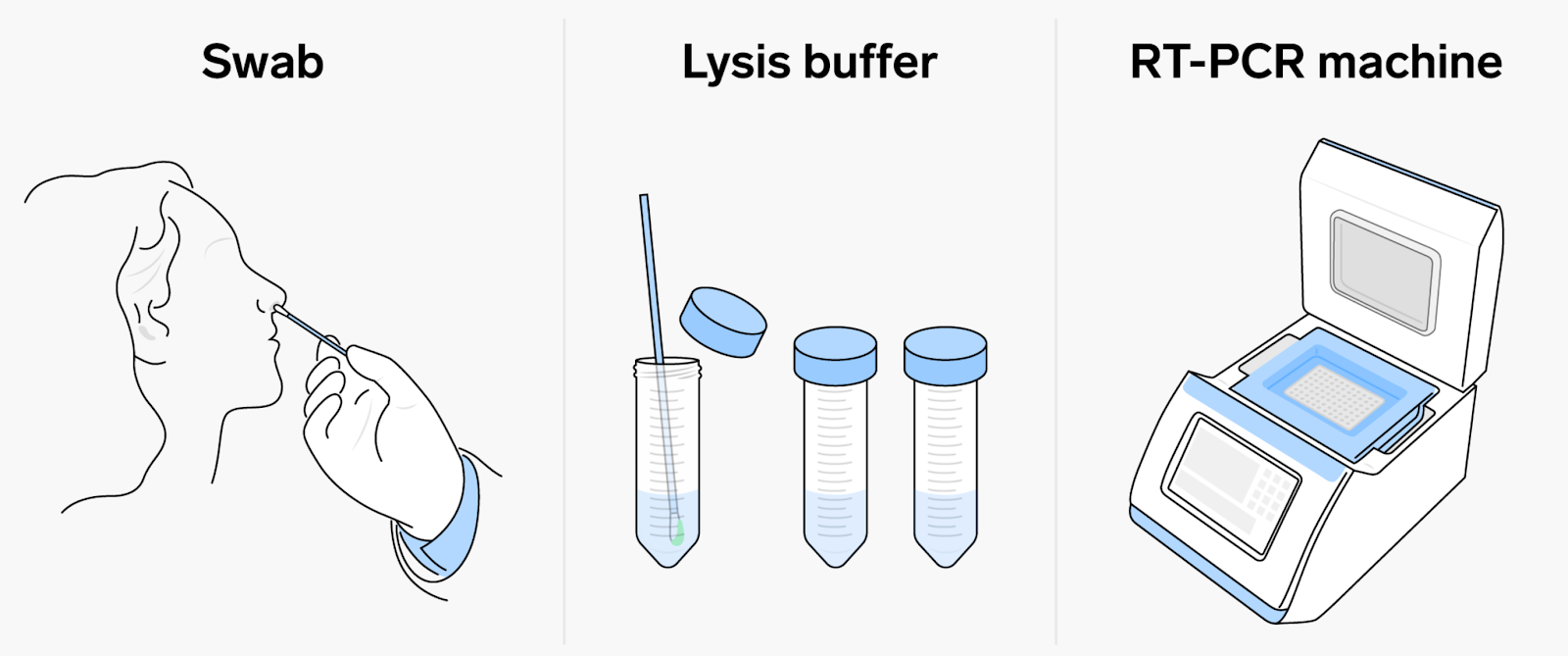
Source: Business Insider
PCR tests are typically highly sensitive, being able to detect the most minute quantities of DNA to identify positive cases. A nasal or throat swab is usually used to collect the samples and it usually takes several hours to generate the results, although this timeframe is extended if the samples must be sent to an external laboratory.
RT-PCR
Whereas standard PCR testing focuses on making copies of DNA samples, Reverse Transcription Polymerase Chain Reaction (RT-PCR) is used to convert the RNA into DNA for replication and analysis. Certain viruses, including SARS-CoV-2 (the virus that causes Covid-19) use RNA as opposed to DNA to store their genetic code. Therefore, for effective SARS-CoV-2 analysis, RT-PCR must be used.
Through RNA extraction, the enzymes in the test kits are able to make copies, which can then be amplified by the thermal cycling process of RT-PCR machines. A positive or negative test result can then be generated.
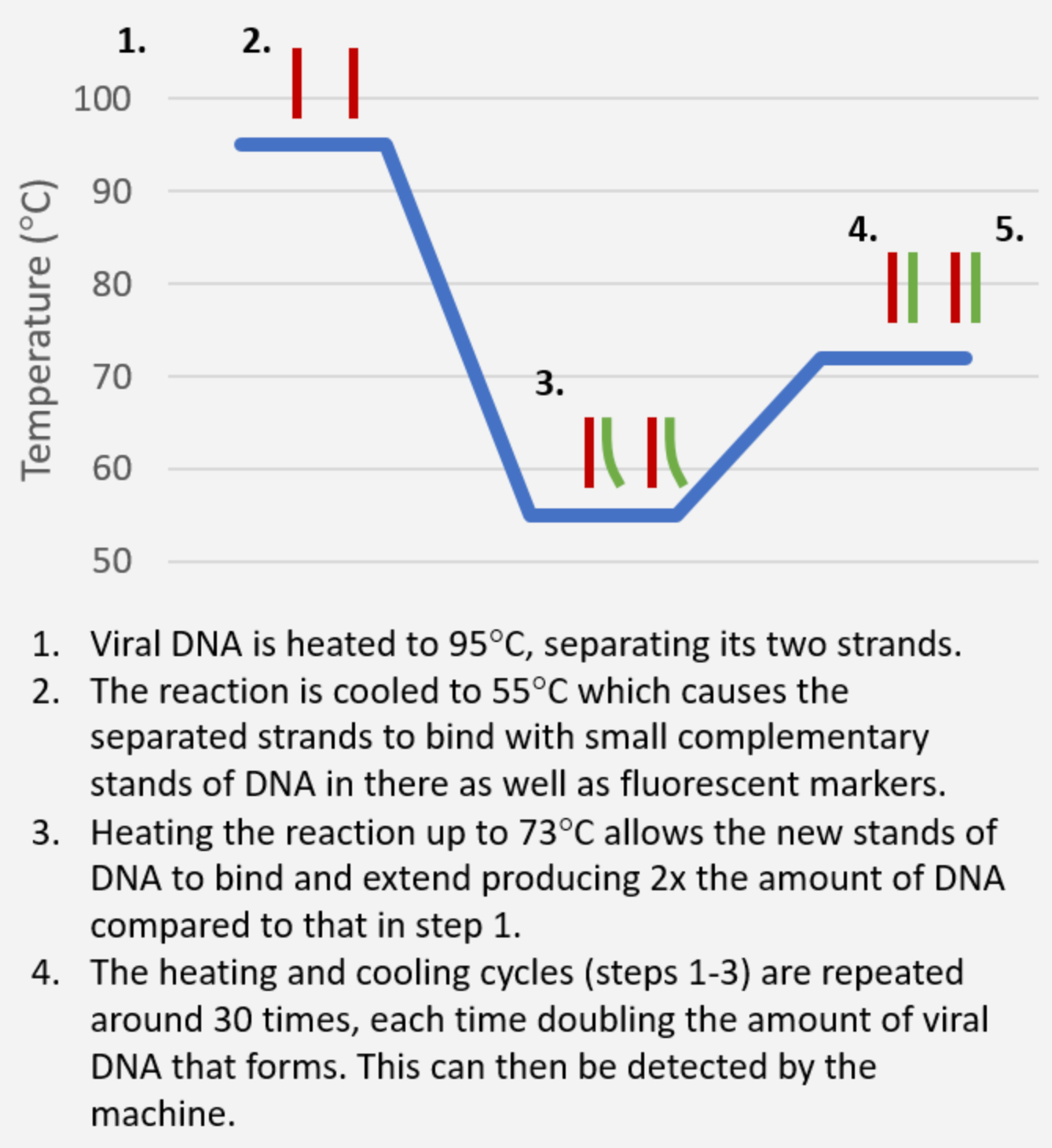
Source: CEBM
RT-PCR tests and machines are readily available globally and the latest developments will allow more decentralised testing to take place moving forward, thereby reducing testing turnaround times. It is important to remember that RT-PCR tests only detect if an individual is currently infected, not if they have previously been infected.
Advantages of PCR testing:
- Highly sensitive and specific tests.
- PCR infrastructure is already well established and it is a readily available solution for testing for most nations around the world.
- Potential for higher output through automated testing on new PCR platforms.
- Provides a good consensus of the current infection rates of a population.
Disadvantages of PCR testing:
- PCR tests are more expensive to carry out than some other testing devices.
- Due to the numerous steps involved in the PCR process, there is a higher risk of contamination or sample loss.
- Results may take several days to process if they must be sent to labs.
- Experienced professionals are required to analyse the tests.
- Only able to determine whether a person is currently infected and could therefore miss people who have previously been infected.
LAMP
Loop-mediated Isothermal Amplification (LAMP) testing uses a single test tube to amplify DNA samples. The premade reaction mix in the test tube usually contains several primers, which are then used to target the bacterial/viral genome. LAMP testing is very similar to RT-PCR testing, however, the key advantage is that no thermal cycler is needed. In LAMP testing, the amplification can take place at a constant temperature, which speeds up testing times.
Nasal and throat swabs are commonly used with LAMP tests, although mucus samples can also be used. Once the viral DNA is amplified and the reagents mix with the sample in the testing tube, the reaction that takes place can cause the solution to become cloudy, or in some cases change colour. This allows the results to be quite easily seen without the need for further machinery for analysis.
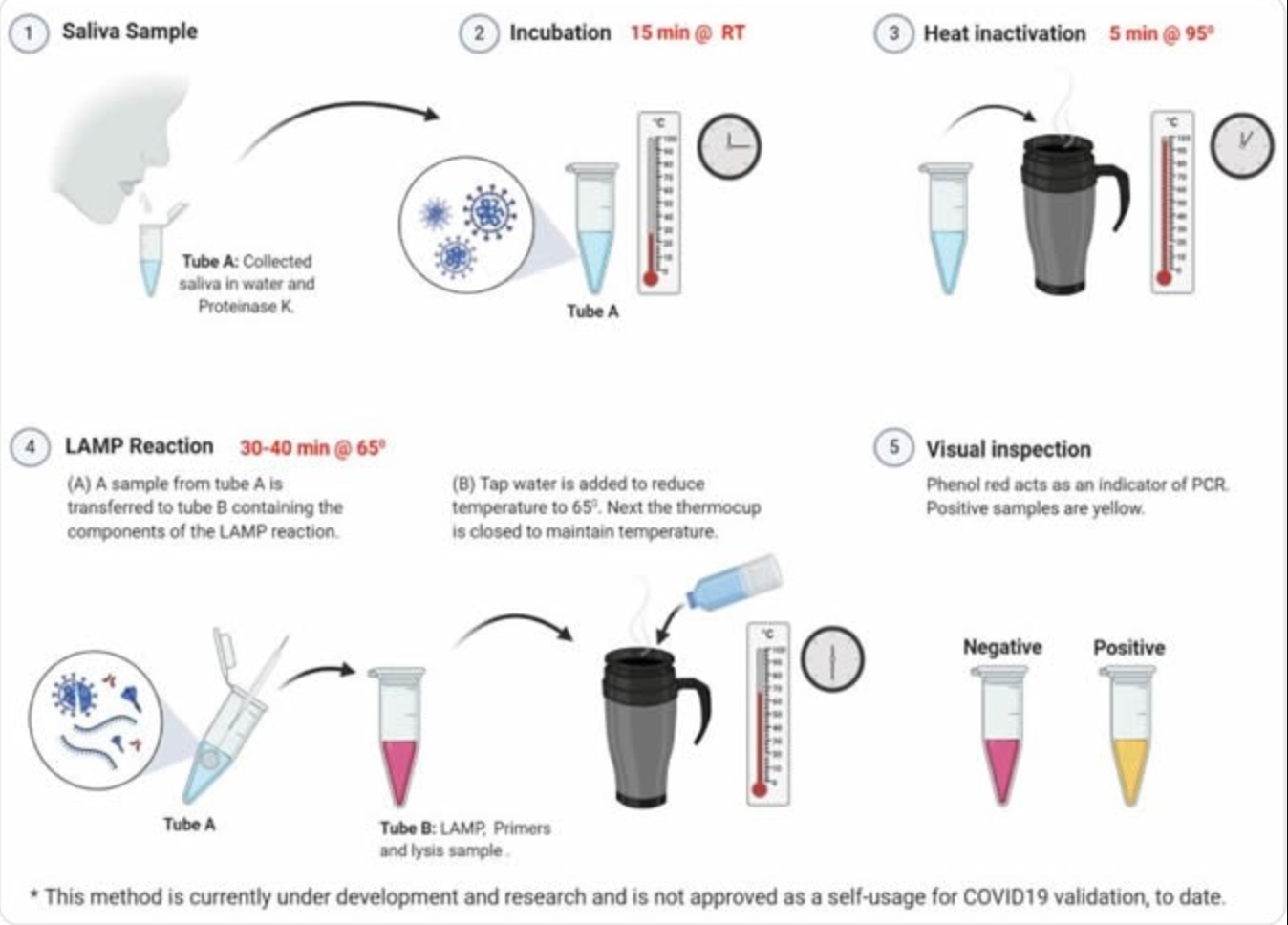
Source: News Medical Life Sciences
Advantages of LAMP testing:
- LAMP tests, much like PCR tests, have high levels of sensitivity and specificity.
- Results can be available in under an hour in some cases.
- As results can be seen by the naked eye, there is no need to send the tests to other labs for further analysis. This reduces the risk of contamination and sample loss.
- Provides a good consensus of the current infection rates of a population.
Disadvantages of LAMP testing:
- LAMP testing is a fairly recent development and more rigorous clinical evaluation may be needed if this is to become a mainstream form of testing.
- Although achieving high levels of sensitivity and specificity, the tests are still not as accurate as PCR tests.
- Complicated test design due to the requirement of 6 primers.
- Only able to determine whether a person is currently infected and could therefore miss people who have previously been infected.
LFT/LFD
Lateral Flow Immunoassays, which are more commonly referred to as Lateral Flow Tests or Lateral Flow Devices, are rapid tests that usually generate results in 15-20 minutes. Lateral Flow Immunoassays utilise liquid samples (such as saliva, blood, or urine) to determine the existence of a particular substance.
These pregnancy style tests consist of a sample pad where the patient sample liquid is placed and as it travels through the test strip it then binds to test and control lines. The colour changes on the lines can then be used to determine a positive/negative result.
Although Lateral Flow Immunoassays are usually used to detect antibodies, recent efforts are being focused on creating this style of test to detect active infection from a virus.
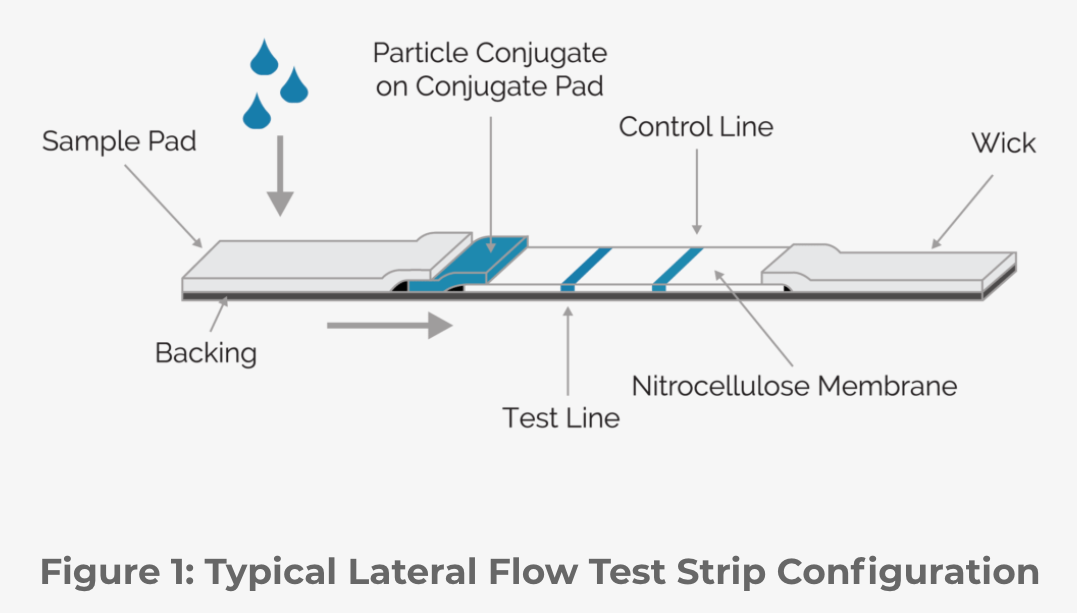
Source: DCNDX
Advantages of LFT/LFD testing:
- LFT/LFD tests are much faster than PCR and LAMP tests and can produce results in under 15 minutes in some cases.
- Tests can be administered by individuals and do not require professional assistance or laboratory settings to be carried out.
- The tests are also cheaper to carry out due to the need for fewer chemical reagents, machinery and personnel.
- The test is less invasive than certain nasal/throat swabs.
- Provides a good consensus of the level of herd immunity amongst the population.
Disadvantages of LFT/LFD testing:
- The levels of sensitivity and specificity of most LFT/LFD tests are not as accurate as other forms of testing.
- The test is self-administered so there is a higher risk of error and false results.
- Current LFT/LFD tests can only detect past infection in individuals. There is a lack of evidence on how effective these devices are in detecting active infections.
- Some antibodies (including those generated by the immune response to SARS-CoV-2) drop off after several weeks/months of infection. This can make gathering general levels of herd immunity amongst the population quite difficult.
ELISA
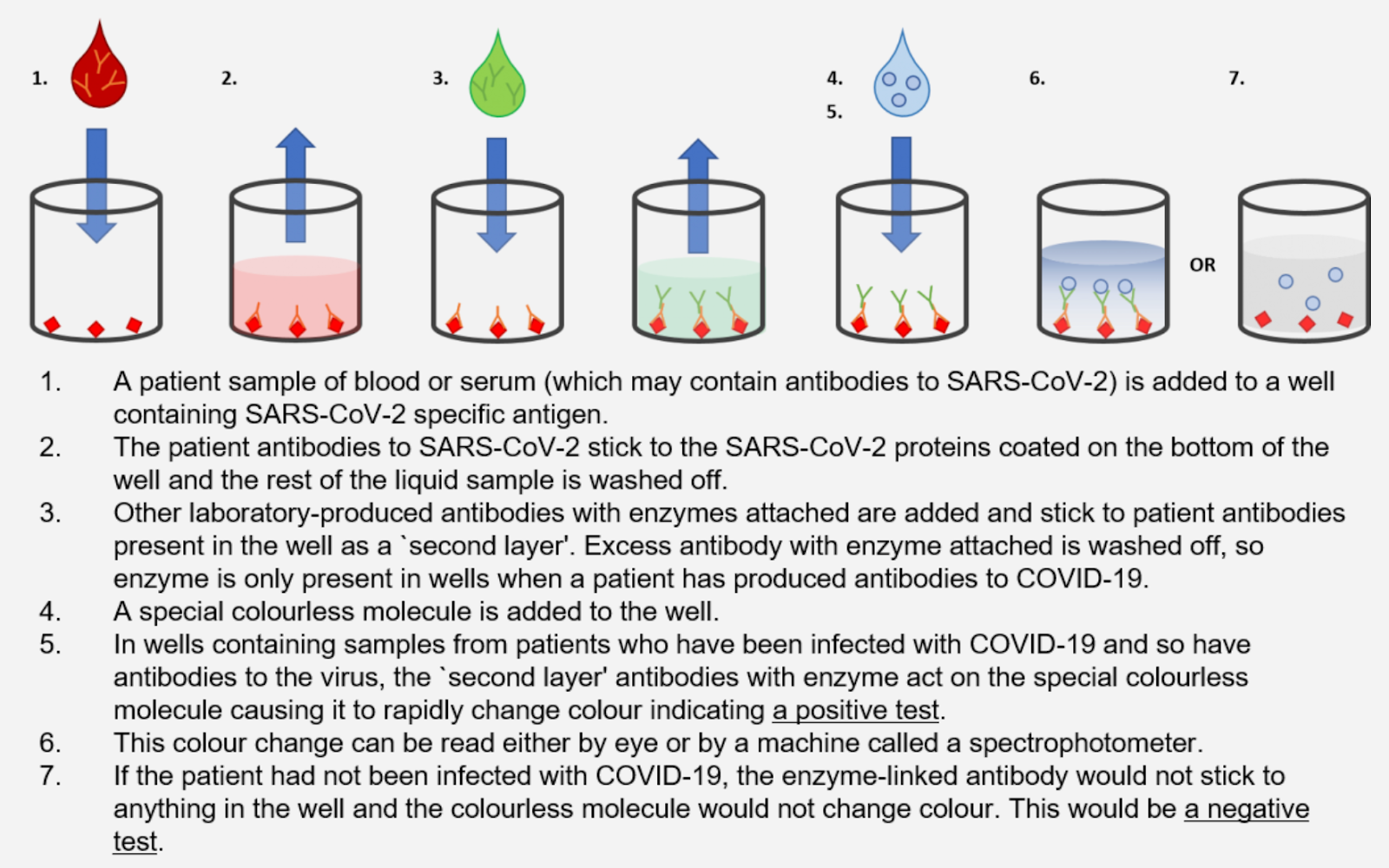
Enzyme-Linked Immunosorbent Assay (ELISA) uses biochemical substances to detect whether antibodies or antigens are present in an individual. The tests are most commonly used for antibody identification.
The way in which the ELISA tests work is that specific enzymes will bind to the molecules being tested for, which will in turn cause the biochemical substance to change colour. This change of colour can then be interpreted by a machine, to identify a positive or negative result.
Source: CEBM
Advantages of ELISA testing:
- ELISA produces high levels of accuracy around antibody testing and is a well established form of biochemical analysis.
- ELISAs can carry out batches of 96 assays at a time, allowing for high throughput and faster turnaround times.
- The process and chemical costs are relatively inexpensive compared to other forms of testing.
- Provides a good consensus of the level of herd immunity amongst the population.
Disadvantages of ELISA testing:
- ELISA tests must still be sent to labs for analysis, which delays turnaround times and increases the risk of contamination and sample loss.
- The current ELISA tests do not really cater for detecting active infections. This is currently in clinical evaluation and remains to be seen how reliable it might be.
- Some antibodies (including those generated by the immune response to SARS-CoV-2) drop off after several weeks/months of infection. This can make gathering general levels of herd immunity amongst the population quite difficult.
Outlook for Covid-19 Testing Stocks
Bull Cases:
National & international testing programmes - The UK government has its ambitious ‘Operation Moonshot’ project - but it is not alone in adopting such testing strategies. France will be launching a new testing strategy with rapid tests, India has plans to double its current testing capacity in the coming months and the Slovak government has just announced that it will test its entire population within 2 weeks.
Flu season - As the flu season approaches in the Northern Hemisphere, concerns are growing. Whilst Covid-19 is believed to be more infectious, with each person on average infecting 2.5 others (according to the WHO), the flu can still spread at similar rates. Hospitals in most areas of the world simply do not have the capacity to deal with both Covid-19 and flu cases. Wide spread testing and lockdowns may be the only current means to avoid a worst case scenario.
Endemic - The UK’s chief scientific advisor, Patrick Vallance, is reporting that Covid-19 is likely to become endemic, much like the annual flu. As it looks set to stay as one of the many infectious diseases to affect humanity, testing may be required on a permanent basis moving forward.
Economic recovery - The tourism, travel and hospitality sectors have been affected more than most by the pandemic. Large scale rapid testing could open up this part of the economy once more, which might be crucial as the furlough scheme comes to an end.
Long-term diagnostics focus - The global In-vitro Diagnostics Market is expected to be worth a staggering $133.34 billion by 2027, growing at a CAGR of 5.1% from 2020 to 2027, according to PR Newswire.
Bear Cases:
Vaccine development - If an effective vaccine, that prevents infection and provides immunity is developed in the coming months, then the demand for testing will inevitably drop off.
Lack of personnel for testing - National test & trace strategies are hugely reliant on available personnel. The UK & Germany are currently struggling with ramping up testing due to a lack of clinical professionals to carry out and analyse the tests.
Competition - The competition is fierce. International giants such as Abbott, Qiagen, Roche and Thermo Fisher Scientific are able to invest vast sums into R&D to develop market-leading testing technologies. Furthermore, as new entrants enter the market to get their share of profits, margins may eventually erode over time.
Economic collapse - One could argue that the full effects of the pandemic are yet to be felt. If a more serious downturn does occur then there is the potential risk that governments, businesses and individuals alike will run out of money. In this event, testing will likely be greatly reduced due to the costs involved.
Herd immunity approach - This is more theoretical and unlikely given the current rhetoric, but governments may at some point adopt a herd immunity approach if a vaccine is not developed in time and Covid-19 most likely becomes endemic. This could then lead to drop off or abrupt halt of testing.
Conclusion
Volatility has increased over the past few weeks as Covid-19 cases grow. The UK government has announced a 1-month national lockdown as it continues to record over 20,000 cases a day. Most countries in mainland Europe are seeing rates of infection well above this level.
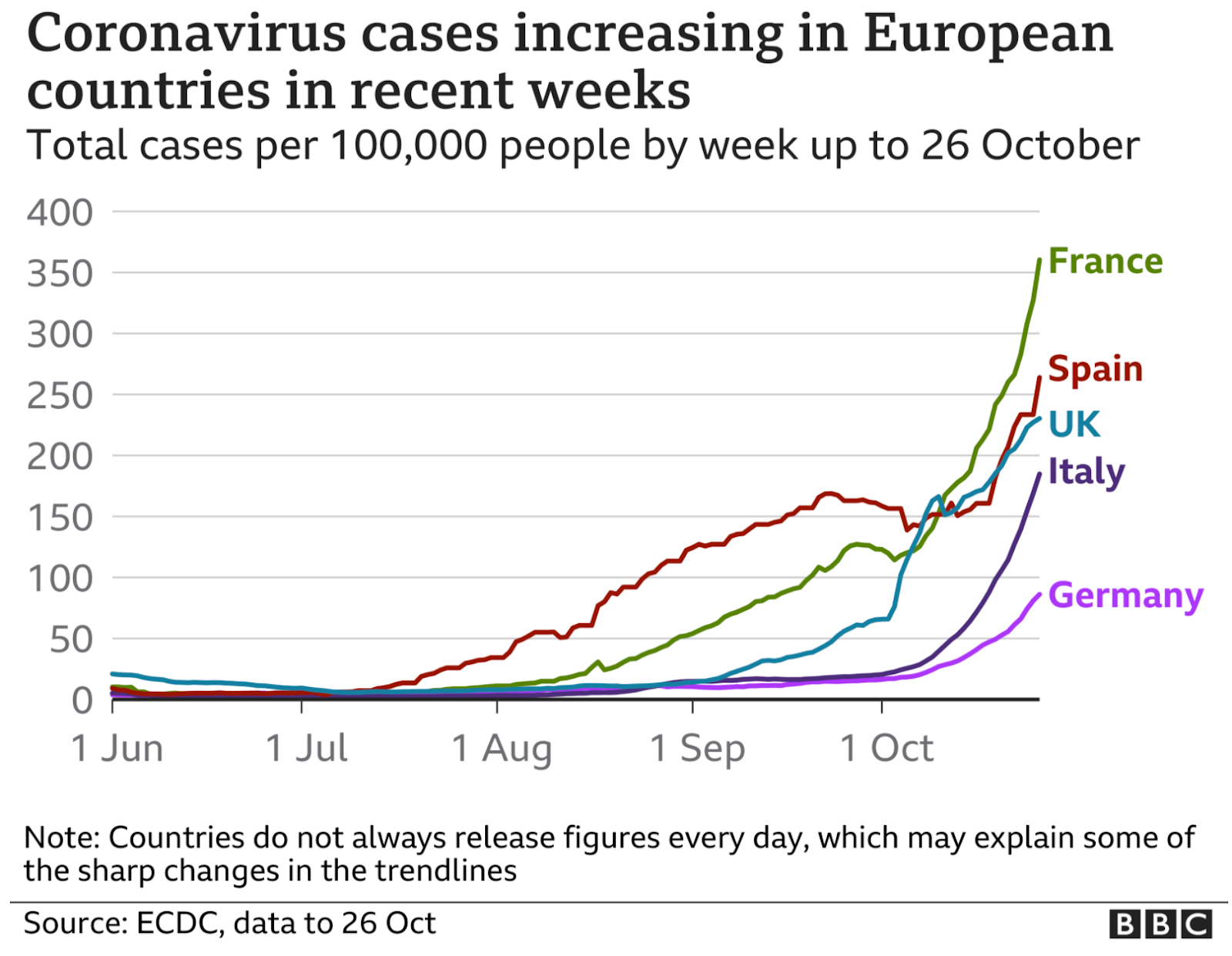
Testing is likely to remain key to keeping the pandemic under control as best as we can. A full scale worldwide vaccine roll-out is still some time away and long-term full scale lockdowns may prove too costly to economies.
Whilst Covid-19 focused stocks remain highly volatile, with careful due diligence, the rewards can outweigh the risks. As the Chinese philosopher Sun-Tzu once said, “In the midst of chaos, there is also opportunity.” In the next article, we will take a closer look at a few of the UK listed companies in this space.
Disclaimer
This is not financial advice. Our content is intended to be used and must be used for information and education purposes only. Please read our disclaimer and terms and conditions to understand our obligations.
46 comments
I wish the government pronouncements were as clear as this.
The lateral flow test in development from Avacta (LON:AVCT) is quite unique in that:
It’s a “have you got COVID now or not” , it’s based on proprietary technology, it uses patient saliva so no swabbing or processing, it’s very specific and very sensitive too. Results are produced in minutes. This was the company that developed and had ready a test for Zika virus. But, I bought Avacta (LON:AVCT) for the new “chemotherapy without side effects” drug which is close to being released. Eventually they will be acquired by a GSK or other big pharma company I think.
NCYT fell £6 on Monday to a low of £5.50. This fall demolished a lot of spread betting accounts (who are 88 per cent long) and must have triggered every stop loss. The price has recovered a bit today to back over £8. GDR and ODX also fell like a stone and have not recovered. These stocks are now very risky in my opinion as and when the next vaccine is announced. There are over 40 in test out of over 200 being developed. The shorts and market makers saw how vulnerable the prices were on Monday and I suspect we may see more sudden and heavy falls.
I own NCYT as a "freeroll" and bought some more at 590p on Monday. It felt almost invincible up to last week but no longer. Confidence has been hit for the moment and I wonder what next. NCYT has been a fantastic stock for me all the way up from 73p....but for those who bought over £10 to £12? Meanwhile GDR has been a disaster. Chased up to 300p, placing at 80p, about 120p on Friday and touched just over 50p on Monday. Just about every current holder must be sitting on a significant loss. In lockdown. Ouch.
As always, the really smart money got in early, cashed out at the highs and ran away without looking back.
This healthcare analyst is not keen on any Covid testing stock other than Novacyt after the Pfizer vaccine announcement:
https://novacytinsider.com/vox-vaccine/
One should bear in mind, though, that he works for Novacyt's house broker, so there's the possibility of bias.
I hold Novacyt.
Keelan. Well done on an outstanding piece of work..Excellent.Tony
The Pfizer/BioNTec vaccine is great news for all of us. I wonder what that means for the share prices of those companies producing the antigen tests (many of whom tanked yesterday)?
My view is that mass testing is not going to ramp-down anytime soon. I think demand will remain for the LFT rapid tests and these will continue to be rolled out aggressively for some time yet.
Does anyone know if the new Pfizer/BioNTec vaccine is meant to give permanent immunity to Covid-19? And does it have to be dispensed regularly (eg annually) to provide ongoing immunity?
Brilliant article btw Keelan - eagerly awaiting Part 2 (which I guess you may be re-drafting a little, given yesterdays events)
"Does anyone know if the new Pfizer/BioNTec vaccine is meant to give permanent immunity to Covid-19? And does it have to be dispensed regularly (eg annually) to provide ongoing immunity?"
My understanding is that the answers to both questions are not known at present.
Here is a useful summary of the reaction of medical experts to Pfizer's announcement:
https://www.sciencemediacentre.org/expert-reaction-to-pfizer-and-biontech-reporting-interim-results-from-phase-3-covid-19-vaccine-trial/
thank you very much
Oh my god. I just bought Novacyt Sa (LON:NCYT) this morning after watching for some time. What terrible timing! Surely the announcement of a vaccine is not the end of testing?
Hi Retireyoung,
With regards to the Novacyt shares you bought this morning before the Pfizer vaccine announcement, this article suggests the 40% fall may be overdone:
https://www.thearmchairtrader.com/novacyt-shares-plunge-over-40-on-pfizer-news-but-is-this-the-end/
Not read your link but I think it could be overdone, the Govt are talking about rolling out mass testing today.
Ouch
Staying on the Covid 19 theme, TERN is about to go global with a Carehome solution that will allow people to visit their elderly relatives in Carehomes, and that's just the start.
Further to Nicksan, 6 Nov, I am also invested in Avacta, and would like to add another very important advantage as I understand it of antigen testing.
The PCR tests only pick up the presence of virus after 3 to 5 days from initial infection yet people may already be highly infectious from day one, hence for instance, the need for those returning from high risk areas to quarantine for 5 days or so before being tested.
Antigen tests on the other hand can pick up the virus from day one, and together with their advantages of low cost, immediacy and ease of use, can be applied at points of access to airports, stations, schools, theaters, cinemas etc to filter out potentially infectious people. This also eliminates the ned for quarantining.
Antigen tests on the other hand can pick up the virus from day one
This sounds highly unlikely. Do you have a reference to a reputable source for this statement?
Keelan, thanks for your feedback on my GDR post. With so many reads showing on the article now, a few more thumbs ups from the community might have been nice. Hey ho :)
Could you please consider adding Deepverge (LON:DVRG) to the list of review companies; breath test based on aptamer technology which is in development.
I held previously but sold into the rise prior to the reverse takeover but currently considering a re-entry.
Cheers, Forbsy.
Great article, think it’s worth adding CTEA to the list though as they have testing and robust software that is the next stage in getting people travelling and back to work. Still only mkt Cap of £8m.
Really interesting and well written primer.
Well done Nicksan. Keelan Cooper’s very detailed and interesting article completely missed the most important FACT that you have, quite rightly, pointed out. Perhaps, Keelan should rewrite the article. Probably, it should then give the real story behind what he wrote!
One for the speculators amongst us?
Great, thanks Keenan for such an informative article!
Please may I add for interest.... that the upcoming Avacta (Lon:AVCT) LFT launch will be UNIQUE in that it’s based, not on antibodies, but on highly sensitive and specific Affimer’s which are quick and cheap to produce compared to antibodies. These simple saliva LFT’s are destined for both professional, and unsupervised home use.
Investors believe that Avacta’s Affimer based home use ‘pregnancy style’ antigen saliva test is central to the imminent U.K. Gov moonshot testing program. And if successfully launched, there is expected to be very high demand for Avacta’s LFT world wide.
The reason for the length of time taken to launch is said to be the need for error free Technical Transfer for BBI and Abingdon to manufacture, and the MASSIVE upscaling of production that is required to meet the anticipated 100m per month demand for tests. Avacta is also licensing their Affirmer technology for other global players to manufacture and sell their own Affimer based LFT’s.
Avacta (Lon:AVCT) are also nearing clinical trials for their game changing AVA6000 cancer therapy which is activated only by entering a specific cancer tumour micro environment, whilst remaining completely inert in the rest of the human body. The success of these trials will disrupt the business of providing cancer therapies currently available.
I'd be interested if anyone could explain the differences between Affimers and Optimers with respect to Sars-Cov-2 testing protocols?
https://www.aptamergroup.co.uk...
excellent
Public Health England has just published a tender notice for a National Microbiology Framework which will be worth about 22 billion pounds over the next two years:
https://bidstats.uk/tenders/2020/W45/738328646
It would seem reasonable to suppose that a significant part of that huge amount of money will go on Covid testing.
Newspaper unimpressed with OptiGene LAMP test in Moonshot trials.......
https://www.theguardian.com/wo...
Thanks for your excellent article, Keenan, although I will have to read it several times again to fully understand it!
Great article. The paragraphs headed economic collapse and herd immunity approach are terrifying...
A really clear & comprehensive article; as a hospital consultant physician (now thankfully retired) I would have been equally impressed if one of the specialist doctors in training managed to produce such a fantastic understandable report. I really enjoyed reading it.
Hi jsaunders,
Thank you for your kind words, it's great to hear such positive feedback! I've now worked out an alternative career path! :-)
Kind regards,
Keelan
Great article Keenan. Thank you.
Do you have a date for part 2?
I hold Avacta (LON:AVCT) Novacyt Sa (LON:NCYT) Open Orphan (LON:ORPH) Synairgen (LON:SNG)
Regards
Michael
Hi MichaelFBS,
Thank you for your comment. Part 2 will be out sometime next week!
Kind regards,
Keelan
I do feel that what is needed is a quick. simple to operate, test with a very high sensitivity and ok specificity backed up by an accurate specificity test because then you can identify a bunch of possibles with the quick test and retest the possibles with the second test. Unfortunately the quick tests don't seem to have the high sensitivities. I don't see this coming - would be delighted to be proved wrong.
Slovakia is reported to have tested virtually the entire population using a lateral flow antigen test, apparently the SD Biosensor kit. The outcome of the first and subsequent round of testing there will be interesting as will the results of the Liverpool experiment.
Hi Keelan, thank you very much for this. I noticed an IPO last week SourceBio that is also in the testing space. Not sure how it stacks up!
The aptamer approach taken by Paraytec ( owned by Braveheart #BRH) and Sheffield University looks interesting. It is fast, sensitive and avoids false positives so looks to be the holy grail if they make it to commercial trials
see https://tinyurl.com/y2scbs2l
Very good article. I think the 'drop off' for testing after vaccine availability is a way off yet. Firstly vaccines are going to be prioritised for 85 year olds and the front line. Secondly the development of these tests in some cases is not just for the detection of Covid 19. The current new innovations are throwing up testing for air particles as well as humans for a range of different pathogens. I reckon testing for work, travel, sports and entertainment events is likely to become mandatory for some time after the control of Covid.
A very thorough and interesting article
I look forward to part 2
Many thanks
It seems the sniffer dogs being trialled at Helsinki airport can do a better job. Apparently (well it is a Daily Mail report) the dogs were able to sniff out the disease in people who tested negative but then fell ill a few days later.
Would appreciate you outlining how Ekf Diagnostics Holdings (LON:EKF) (with their Longhorn tie-up) fits into this matrix.
Is "primer" a deliberate play on words given the role of PCR...? ;-)
Primer Design are a subsidiary owned by Novacyt that produce the PCR tests. I think thats the "primer".
I think the biggest potential growth area is in lateral flow tests for antigen. These will provide a 15 min test for infection. Sensitivity and specificity are likely to be poor compared to pcr but may be good enough for the intended purpose. The tests may still require a swab but this is likely to move to saliva based testing fairly quickly.
PHE Porton Down has a three phase assessment programme for these tests. According to gov.uk there are currently three tests that have passed phase three: SD Biosensor Lateral Flow Test, Innova SARS-Cov-2 Antigen test and Healgen Coronavirus Antigen Rapid Test. According to The Guardian, the Innova test has been purchased for the Liverpool mass testing trial.
Excellent summary of the various testing protocols Keelan, many thanks. It was somewhat comforting to read sections that I recalled when researching Genedrive (LON:GDR) .
For those who are interested, I have previously completed some analysis on Genedrive (LON:GDR) in a separate thread. I'll be interested to read Keelan's take on this company in the forthcoming articles to see if my own effort is aligned with Keelan's excellent work to date.
https://www.stockopedia.com/co...
Hi Forbsy,
Thank you for your feedback, I've had a read through your analysis on Genedrive (LON:GDR) and there are some really interesting points that you make. Great read!
Kind regards,
Keelan
Another brilliant effort from Keelan. Sign him up permanently Ed and sponsor him through university.
@David - actually we've twisted his arm and he's working here full time till next Summer. He's on a sabbatical from University for a year... what's the point of going to physical University if you can't actually see friends and enjoy yourself?!