Covid-19 Sector Reviews: Basic Materials

My previous article took a look at the performances of the 10 main economic sectors prior to and since the Covid-19 pandemic began. It also assessed some of the economic data that has been released, detailing the sectoral impacts that have been documented so far and the path that lies ahead for UK industry.
This article will examine the Basic Materials sector and its industry groups in some more detail, assessing how the industries have performed so far. It will also investigate current valuations of the industry groups and focus on how some of the top-ranking stocks in the sector are preparing for the future.

The Basic Materials sector, which consists of the Chemicals, Forestry & Paper, Industrial Metals and Mining industries slightly underperformed the market in 2019 and has continued this trend since the pandemic erupted.Nevertheless, resurgent commodity prices and burgeoning demand for specialist chemical products and sophisticated packaging solutions point to a brighter future for the industries within the Basic Materials sector.
Performance of the Industry Groups

The Chemicals industry has withstood the impact of the pandemic better than any of the other industries in the Basic Materials sector, falling by -21.5%. A large part of this has been due to the uptake in the demand for chemical products in the healthcare industry, for medical equipment, sanitation products and personal protective equipment.
Despite this, chemical manufacturers face an uncertain road ahead, particularly with potentially reduced demand from the automotive, transportation and consumer products markets. For example, the chemicals required for tyre manufacturing such as sulphur, silica, polybutadiene and various antioxidants, are no longer needed in the same quantities. With automotive industry production coming to a halt and consumers more reluctant to make big purchases on items such as automobiles, demand is not expected to return to previous levels of production for quite some time.
Within the Chemicals industry benchmark, there was one standout performer, which defied the trend and saw its share price appreciate by 9.7% since the start of this year. The company in question was Treatt, an ingredients manufacturer for the beverage, flavour, fragrance and consumer products industries. In its most recent interim statement, the company confirmed that “COVID-19 has had no adverse impact on trading performance”.
This is in contrast to a different kind of chemical producer, Elementis, which has seen its share price depreciate by -67.7% over the same period. The company provides functional additives to the coatings, personal care and energy markets, along with various chromium chemicals for aerospace alloys, timber treatment and leather production. In its most recent trading statement, the company said it has witnessed a “15% year on year decline in April revenue”.
It shows that one must pay particular attention to the end-user markets that industries serve in order to fully grasp what the outlook may look like for a particular company.
There are even greater disparities in the performance of the Mining industry. Although the industry saw a -21.7% fall overall, its constituents have seen performances range from +114.2% (Petropavlosk) to -44.1% (Gem Diamonds) since the start of the year. Indeed, miners with exposure to precious metals, such as gold, have fared particularly well, due to the safe haven status attached with the metal. Gold has risen in value in each of the last 6 quarters and appreciated by 6.9% in the first quarter of this year alone.
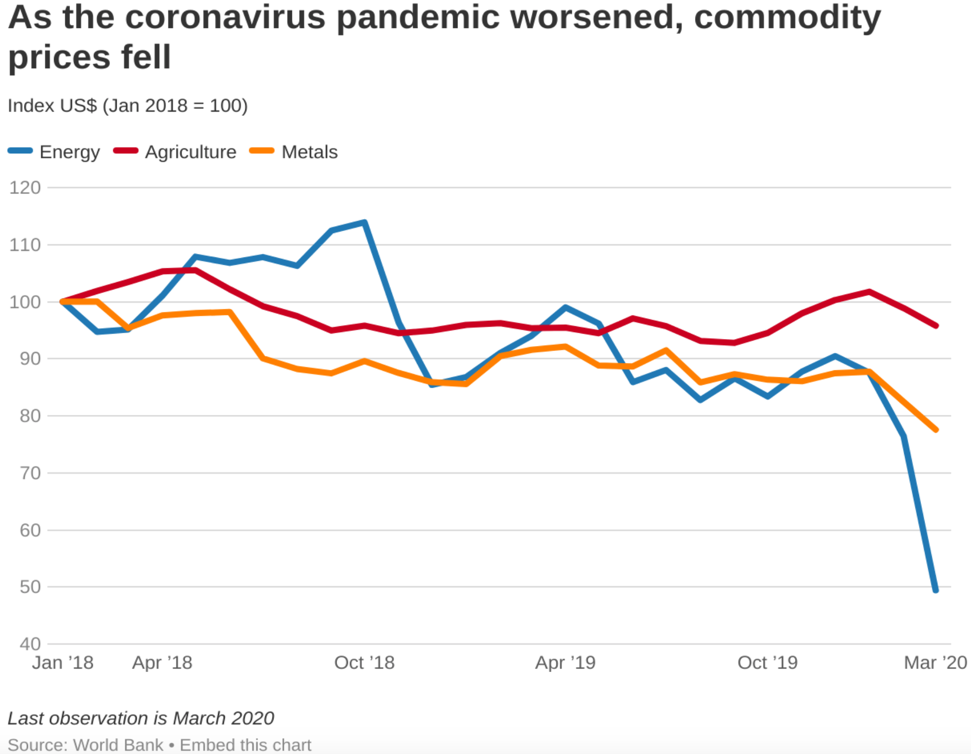
The 3 best performers, Petropavlosk (114.2%), Polymetal International (41.4%) and Centamin (39.3%) all take part in gold mining operations. Whereas, most of the worst performers, Gem Diamonds (-44.1%), Glencore (-41.4%), Anglo American (-34.9%) have greater exposure to industrial metal mining operations, such as copper, iron ore, nickel, zinc and lead production.
The performance of these miners reflects the lower demand for industrial metals in end-user markets. Manufacturing plants have shut down, the demand for transportation has plummeted, and construction/infrastructure projects have been put on hold. These make up the majority of demand for industrial metals, the side effects of this resulting in lower metal prices, and reduced profitability for miners.
The Forestry & Paper industry FTSE All Share benchmark mirrors the performance of packaging and paper company Mondi, due to the lack of other companies working in this industry. Since January, the benchmark (Mondi) has dropped -26.8%, which is more than the Basic Material sector average fall of -22.1%.
Mondi, like many of its international peers, has had to shut a number of operations to cope with weaker demand. In April, the company shut its mills in South Africa and Austria, which focus on container boards, pulp and corrugated boxes production. In addition to this, the flexible packaging division, which produces goods such as paper bags for industrial packaging has also received sluggish demand from the construction industry. This has failed to make up for improvements in the flexible packaging division, catering for the food, beverage and personal care sectors.
The worst performing industry, by some margin, was the Industrial metals industry, which plunged by -33.3% since the start of the year. The benchmark tracks the performance of iron ore, coal and vanadium steel manufacturer Evraz and iron ore pellet producer Ferrexpo, which fell by -38.5% and -7% respectively. The prices for iron are expected to be, on average, 9.4% lower for the duration of the year, according to the World Bank.
The Industrial metals industry seems to have been harder hit than the mining industry as a result of the greater exposure to industrial metal prices, which have fallen considerably. Evraz has already announced that capital expenditures for the year will be cut by at least 20%.
Valuation of the Industry groups
Industry Group | ||||
Median Ratio (Forecast) | Chemicals | Forestry & Paper | Industrial Metals | Mining |
P/E Ratio | 16.1 | 10.28 | 5.06 | 10.35 |
EPS Growth | 2.55 | -10.79 | -2.53 | 10.7 |
Dividend Yield | 3.6 | 5.14 | 10.91 | 4.69 |
The Chemicals industry may appear to be the most expensive industry through valuation analysis, with a 12m rolling forecast P/E ratio of 16.1 and a forward dividend yield of 3.6% but the industry is still expected to see growth of the coming year. EPS Growth of 2.55 may not seem all that special, but in times where growth will be near impossible to achieve in most industries, this should not be overlooked.
The Forestry & Paper industry is expected to see earnings fall by the most significant amount of any industry. An earnings per share contraction of -10.79 is over 4 times worse than the next worst affected industry. However, this fall may already be factored into the price, in which case a forward P/E of 10.28 makes the industry look quite attractive.
Median earnings per share growth of 10.7 possibly makes the Mining industry the most alluring for investors tempted by growth prospects. With a median forward P/E of 10.35, it does not seem as if investors would be paying too much for these growth prospects either. However, as noted in the previous section, the variation in performance across the industry is substantial, as are the valuations.
From a valuation perspective, the Industrial metals industry group currently looks the most appealing, with a current 12m forecast rolling P/E ratio of just 5.06. A forward dividend yield of 10.91% is also far superior to another other industry in the Basic Materials sector.
Though this might be enough to entice investors at first glance, there are several red flags that investors should look out for. In the case of the Industrial metals industry, the poor performance, as discussed in the previous section, has made the industry look attractive through valuation metrics.
However, when share prices fall and guidance isn’t updated to reflect the effects of the pandemic (due to the uncertainty), it can make companies look deceptively cheap. Dividends are also being cut and suspended across all sectors of the economy and one must factor this risk into account as well.
Basic Materials: The Top-Ranking Stocks
In this next section I will take a look at the top 3 ranking stocks from the Basic Materials FTSE All Share sector benchmark.
Ferrexpo (LON:FXPO) – Industrial Metals
Share Price: 149.20p
Market cap: £831.73m
StockRank: 99
Ferrexpo specialises in the production of iron ore pellets, which are used in the steel manufacturing industry. Based in Ukraine, the company sits on the largest iron ore deposits in Europe, with an estimated 20 billion tonnes of resources.
The company reported impressive results in its latest annual report, for the year ending 31st December 2019. Revenue increased 18% to $1.5 billion, EBITDA rose 17% to $586 million and cash flow generation soared 62%, enabling the company to reduce net debt to 0.48 times EBITDA.
Though 50% smaller than the final dividend paid out for the year 2018, the company recently confirmed it would still make a final special dividend payment to shareholders.
Ferrexpo also provided an update on current operations, stating that sales have been successfully re-allocated to markets less affected by Covid-19. Furthermore, the company has also seen a reduction in operating costs due to lower oil prices. This has allowed the group to continue to “maintain a strong balance sheet and low debt levels with net debt further reducing since 31 December 2019.”
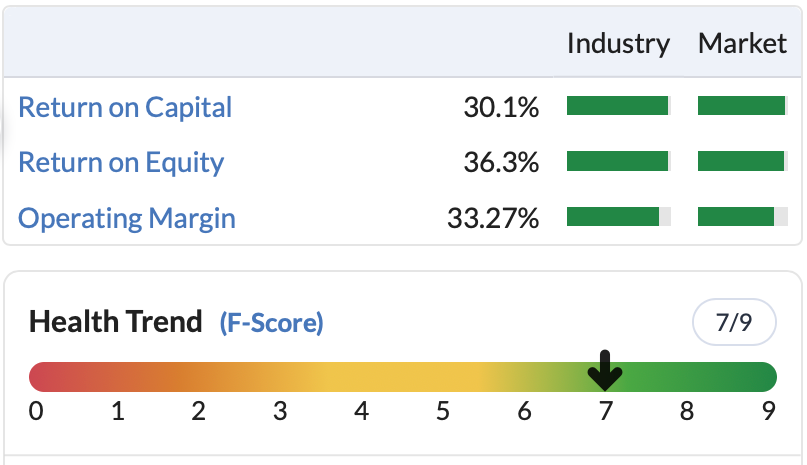
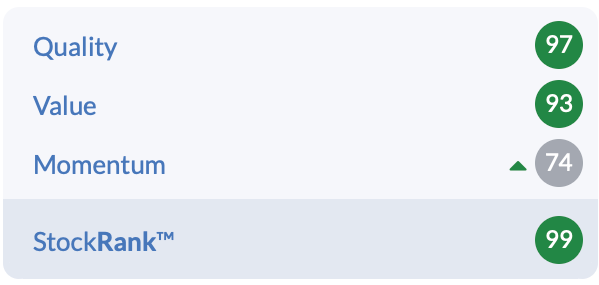
Further analysis of the company’s fundamentals also points to a positive outlook. The company boasts remarkable quality characteristics, with operating margins, return on capital and return on equity all over 30%. A Piotroski F-score of 7 out of 9 is also a testament to the improving fundamentals of the company, with profitability, liquidity and operating efficiency all increasing. Indeed, the Quality Rank stands at 97.
With China’s economy reopening, which is the largest iron ore consumer in the world by quite some distance and iron ore prices remaining resilient, the outlook for Ferrexpo may be promising.
BHP Group (LON:BHP) – Mining
Share Price: 1,535.60p
Market cap: £71.45b
StockRank: 97
Formally known as BHP Billiton, BHP Group is the world’s largest listed miner and second largest mining company in the world by revenues. Its mining operations include copper, iron ore, nickel, metallurgical coal, potash and petroleum.
BHP was one of the worst affected companies in the mining industry, seeing its share price drop -47.5% from January to its March lows. However, the shares have recovered well, with the shares now down -14.2%. A large part of this has been down to the recovery in metal and petroleum prices combined with the fact that the pandemic has had little impact on BHP’s mining operations. The company reaffirmed its annual production forecasts for iron ore and petroleum in its latest quarterly report.
The company has now confirmed that spending will be lower than the original guidance of $8 billion for the 2021 financial year and it will continue with the capital allocation framework that it introduced in 2016. Spending on overheads is on track to be slashed by over $500 million by 2021. These measures will allow the company to further strengthen its balance sheet.
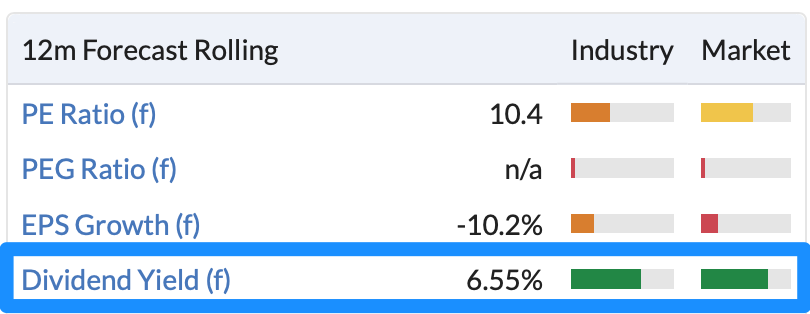
The balance sheet strength, with low gearing and its low-cost asset base lays the foundations for the company to continue its generous dividend payments. On a 12m forecast rolling dividend yield of 6.55% and forward dividend cover of 1.49, BHP could be a great income stock for investors in these uncertain times.
Rio Tinto (LON:RIO) – Mining
Share Price: 4,226.00p
Market cap: £63.45b
StockRank: 97
Another mining giant features as one of the Basic Materials sector top ranked shares. Rio Tinto, whose mining operations stretch across 36 countries, produces aluminium, copper, diamonds, gold, industrial minerals, iron ore and uranium.
In the company’s most recent annual report, it reported growing revenues, profits and cash flows. In 2019, it generated a whopping $9.2 billion in free cash flow, enabling it to return $7.2 billion worth of cash to shareholders over the year.
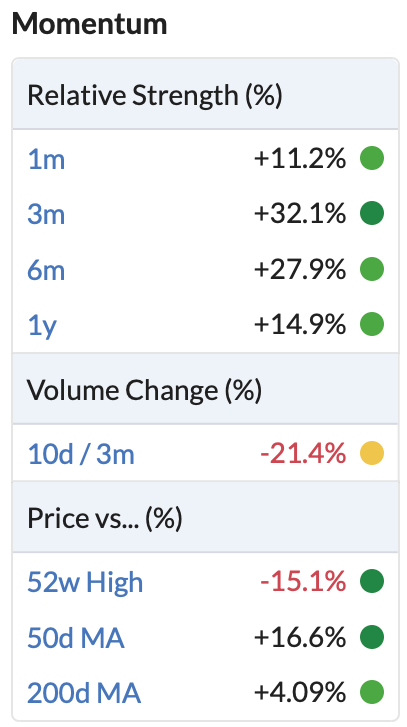
The stellar performance of 2019, in addition to confirmation that the company is “prepared for some short-term impacts, such as supply-chain issues” and that “our products are currently reaching our customers” has helped to reassure investors. This has led to a resurgence in the company’s share price. The strong price momentum has seen Rio Tinto’s Momentum Rank reach 92.
The company’s ability to generate substantial levels of cash, combined with its access to financing has also put the company in a position where it will be able to take advantage of opportunities in the market, should they arise. The CEO recently stated that “We do also see the potential for new opportunities to emerge.”
In an environment, which is very much a survival of the fittest, it may be the heavyweights of each industry that emerge in the strongest position. A post-pandemic world could see these heavyweights reinforce their existing positions through mergers & acquisitions.
Conclusion
Industries are swiftly adapting the way in which they carry out their business activities to effectively cope with the challenges of Covid-19. Whether it is the transformation of supply chains, tailoring production facilities to meet current requirements, or adjusting the company’s entire business model, a renaissance is taking place in the Basic Materials sector.
We have seen the Chemicals industry shifting production to cater for global medical needs. Companies such as Croda International are now regarded as critical suppliers for the end-user health care, crop care, cleaning and sanitisers markets. In the Forestry & Paper industry, Mondi is now using its expertise to manufacture plastic protective medical gowns.
Companies operating in the Industrial metals and Mining industries have been more fortunate. A report by the World Bank has shown that the simultaneous drop in demand and supply has limited the impact of commodity price falls.
With supply disruptions expected to persist and a sustained reduction in capital expenditure for mining projects forecasted for the foreseeable future, this should act as a price floor for most metal-based commodities. The prudent capital spending in recent years, combined with a drive to automate production processes, should equip companies operating within these industries with the capacity to weather the effects of the pandemic.
Stay safe and safe investing!
Disclaimer
This is not financial advice. Our content is intended to be used and must be used for information and education purposes only. Please read our disclaimer and terms and conditions to understand our obligations.
14 comments
Ferrexpo (LON:FXPO)
For those who's interest was piqued, they issued a AGM statement this afternoon:-
"Below is a trading update which would usually be made at the AGM:
· Year to date 2020 pellet production from own ore up 8.8% to 3.8 million tonnes compared to 3.5 million tonnes for the same period of 2019
· Record pellet production from own ore in April 2020 of 1.06 million tonnes
· Year to date 2020 sales increased by 28% to 4.1 million tonnes compared to 3.2 million tonnes for the same period of 2019
· The Group expects a further reduction in pellet stocks in the remainder of 2Q 2020
· Ferrexpo continues to benefit from lower energy prices which have reduced production and logistics costs
· We continue to take active measures to protect our workforce and local communities against the impact of the COVID-19 virus"
Iron ore demand:supply appears to continue to be favourable.
Thank-you Keelan for the series you are doing on Covid-19 sector reviews. Really interesting seeing your analysis. Looking at Paul's intro today and the lack of thumbs ups for 6 hours work, I thought I would give you a big thumbs up and thank-you.
An interesting interview on the BBC Today programme this morning with a Prof from Southampton who has been studying microbial transmission for 20 years. He points out that while there may be a problem restoring shoe and clothing sales, given that it seems likely that Covid can survive for hours and sometimes days on cardboard, for example, it dies within minutes on copper. Could this have significance for Central Asia Metals (LON:CAML)? I hold.
Hi TangoDoc,
Thank you for these insights. I’ve done a bit of research on this and copper does seem to hold exceptional antimicrobial properties, which include the ability to kill the Covid-19 virus within four hours when exposed. The way in which this work is that positively charged copper ions act to attract and trap bacteria/viruses, which are negatively charged. The copper ions are then able to penetrate the bacteria/virus particles, thereby removing the capacity for them to replicate.
An Australian company, Spee3D, has managed to develop technology that will spray-print a layer of copper onto objects to give them better antiviral properties. Research carried out in association with Melbourne laboratory 360biolabs showed the extent to which copper coatings are effective in combating Covid-19. An astonishing 96% of the virus was killed off within 2 hours and 99.2% in 5 hours.
https://uk.reuters.com/article/uk-health-coronavirus-copper-antimicrobi/copper-takes-aim-at-covid-19-with-virus-killer-coatings-idUKKBN22K0S4
The use of copper in medical and industrial applications moving forward may prove to be a further catalyst for an increase in copper prices.
Thanks, useful. One area that is missed when reviewing at this level is the potential for Copper to surprise. We live in a world where we are moving to distributed renewable energy, and EVs. These take a lot of interconnection, and buildings, infrastructure will need more copper. Supply looks tight once some global economic momentum is underway. Antofagasta (LON:ANTO) and Kaz Minerals (LON:KAZ) are worth considering.
Very informative - good read
Great to see a Resource article in Stocko - thanks for that Keelan.
Within this area I've been concentrating on iron ore and gold producers but your analysis has raised some other possibilities I plan to investigate.
It's noticeable that the top three are connected by iron ore - 2 of the three biggest producers and a pure play in Ferrexpo (LON:FXPO) .
Whilst the World Bank says:-
"In contrast to metals, iron ore prices gained 2.4
percent in the first quarter, after a decline in 2019Q4. The price increase largely reflects
weather-related supply disruptions, including
cyclones in Australia and heavy rainfall in Brazil.
Prices were also supported by robust steel
production in China—which accounts for twothirds of seaborne iron ore trade. Steel mills have
not cut production in response to the pandemic
due to the high costs of restarting idled plants.
Iron ore prices are anticipated to average 9.4
percent lower in 2020 due to weakening global
steel demand and a recovery of supply from
Australia and Brazil."
Currently the iron ore price is far stronger than this anticipated:-
https://in.reuters.com/article/asia-ironore/update-1-china-iron-ore-marks-best-week-in-over-8-months-on-supply-concerns-idINL4N2D4266?rpc=401&
Brazil's poor handling of CV19 is moving the market at the moment - concerns on the impact on Vale's operations (the other constituent of the largest three). Don't know about the impact of the cyclone that's about to hit Western Australia.
I do hold Ferrexpo (LON:FXPO) (as well as Rio Tinto (LON:RIO) ) but anyone considering investing in Ferrexpo (LON:FXPO) should read up on the governance issues surrounding the 53% shareholder and previous CEO . Personally I think the concerns are overdone but that is my personal opinion and everyone has to make their own decision.
Longer term my iron ore theme assumes phase 2 infrastructure stimulus post lock-down boosting steel demand.
Time, as ever, will tell.
Phil
Hi Phil,
Thank you for your response. I previously held Ferrexpo (LON:FXPO) but sold out at the start of the pandemic when I anticipated that global steel production and iron ore demand would collapse. In hindsight that looks to have been a mistake now, with iron ore prices surpassing the $100 per tonne mark for the first time since August last year and Ferrexpo releasing strong results in its latest trading update. Furthermore, James North being elected as acting CEO has also appeared to qualm investor nerves.
The long-term iron ore outlook seems to be positive. Iron ore stockpiles have fallen in China to their lowest level since November 2016, according to data published by SteelHome consultancy. With steel manufacturing picking up at pace in China now, this should provide further support to iron ore prices. Though some of the supply issues for iron ore production are expected to subside in Q3, demand is also likely to pick up in Western economies by then.
Very interesting and useful in both return on capital and risk assessment.
A really superb article. I am a fan of the sector. I like UPM in the forestry sector as a long term investment & Holland colours (plastics)
Another great article Keelan, I brought into Ferrexpo (LON:FXPO) last week so it’s good to read the piece on them in your report.
Thanks. Good article and industry sectors to review.
Looking ahead, and with countries looking to repatriate or relocate manufacturing capacity away from China, whether by imposing import tariffs on Chinese made goods e.g. USA , or incentivising companies to move manufacturing back e.g. Japan then I see a good outlook for mining industries across the globe. I can see the repatriation/relocation angle approach accelerating quite quickly. Security of supply and so on is important.
There are several other things that have my mind doing some mental gymnastics at the moment e.g. Rare Earth Elements present an opportunity that is currently filled in large part by Chinese companies. Canada are already looking to REE to get them mined and processed in Canada. There is some potential supply there but there is also a potential REE supply in South Africa and surrounding nations. It requires specialist processing - but so what - the commodity prices will likely increase as the squeeze gets put on REE by China and the market has a way of finding a way!
In addition the manufacturing plant relocation repatriation angle will require re-building of those manufacturing plants and that means base metals will be in demand. It's not a simple lift and shift exercise.
Finally, do not rule out the Chinese kick starting their economies by also pushing on massive infrastructure projects. Again, base metals will be in demand.
Taking a contrarian view I think we are seeing improvements in commodity prices, and positions being taken in mining companies with potential to get up and running, and able to supply materials the world markets will require. The outlook is positive in my opinion.
Hi Under Siege,
Thank you for your comment. You’ve highlighted some interesting points here. The rhetoric coming from most nations completely agrees with what you’re saying. I also believe that a tough stance on China will form a key part of Trump’s election campaign come November. His policies are likely to focus on the repatriation of key industries and on job creation from newly revitalised manufacturing industries, and the basic materials sector is likely to benefit from this.
The most recent data coming out of China is also pointing to a V-shaped recovery for its economy. The manufacturing PMI came in at 50.7 for the month of May, highlighting an expansion in activity. With China accounting for over half of the world’s global metal demand for metals, this reinforces a more positive outlook for metal prices.
Providing further support to the long-term outlook for metals, the CEO of BHP, Mike Henry, recently made the following statement “We anticipate that global steel and primary energy demand will both grow slightly faster than population growth for decades to come, while copper, nickel and potash will do a little better than that.”
Thanks! Great article