Medica: a high quality Healthcare compounder?

Medica (LON:MGP) is a small cap Healthcare company that ticks a lot of boxes if you’re looking for your next high quality long term hold. Think repeat revenues, strong cash generation, a solid track record of profitable growth, and encouraging underlying market dynamics. There are some concerns, as well - as there are with any other stock - but overall the medium term prospects look good here.
Medica has clearly qualified for other peoples’ screens as well: it made the cut for the 2020 NAPS as a top QM candidate, and it was also in the top 20 picks in our 2020 Stock Picking competition (you can find a list of the top picks in this PDF).
It also qualifies for a screen I recently set up that aims to identify stocks with long term compounding potential. You can read more about the rationale for that screen here but to cut a long story short, it is looking for high margins and returns on capital over multiple years, with a QM Rank of 75 acting as a basic cut off.

Medica Group was established in January 2004. In 2007, Nuffield Health acquired half of the Group, then John Graham led a management buyout in May 2013. In March 2017, it listed on the London Stock Exchange, raising gross proceeds of £15m, which were used to pay down net debt to approximately £10m.
It has so far generated excellent operating margins and returns on capital. The big question is can it protect them?
What does Medica do?
Medica Group is the market leader by revenue in the provision of Teleradiology services to the NHS. It connects its network of off-site teleradiologists (who review and report on medical scans) to hospitals that then act on those findings. It does this via a bespoke IT platform.
The company currently offers three primary services to hospital radiology departments:
- NightHawk - an out of hours emergency reporting service,
- Routine cross-sectional (Routine CS) - covering a combination of routine CT and MRI scans (both forms of cross-sectional scan), and
- Routine plain film (Routine PF) - covering plain film images.
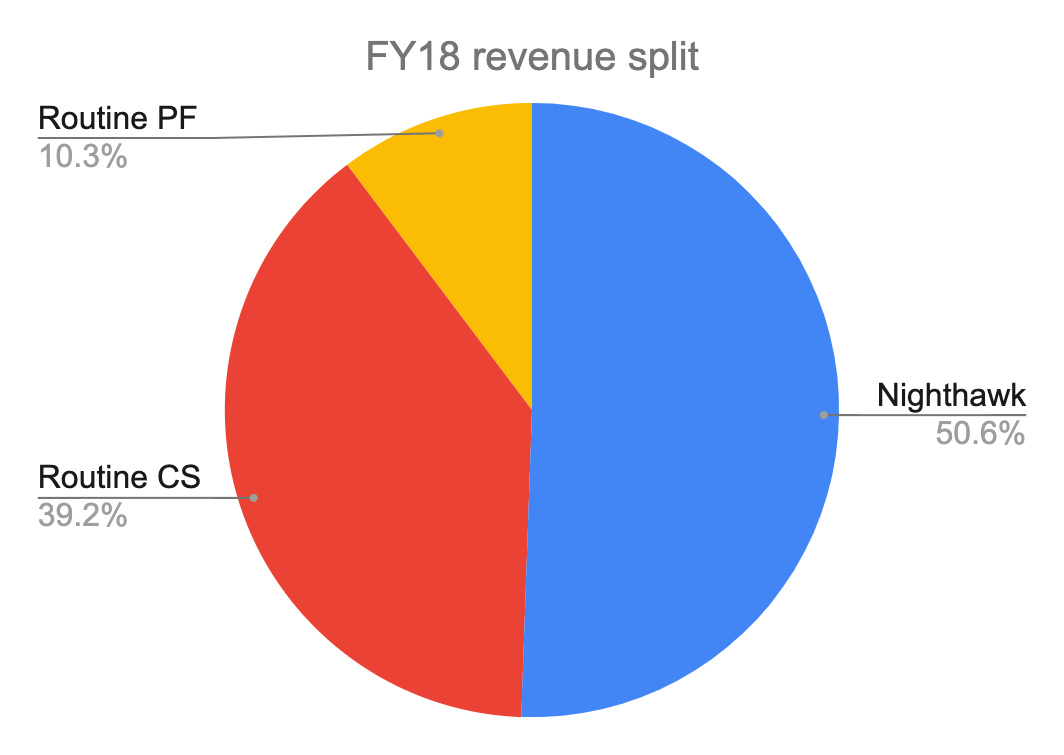
Of these departments, Nighthawk is the biggest and most profitable division because it provides higher value out of hours emergency scans in less than sixty minutes. The “Routine” divisions assist hospitals in managing their day-to-day operations.
Medica says the number of examinations in the UK is growing and this, alongside a general shortage of daytime reporting capacity within the NHS makes for a trend towards increasing demand for Medica’s services.
This certainly seems to be backed up by the group’s revenue and operating profit performance.
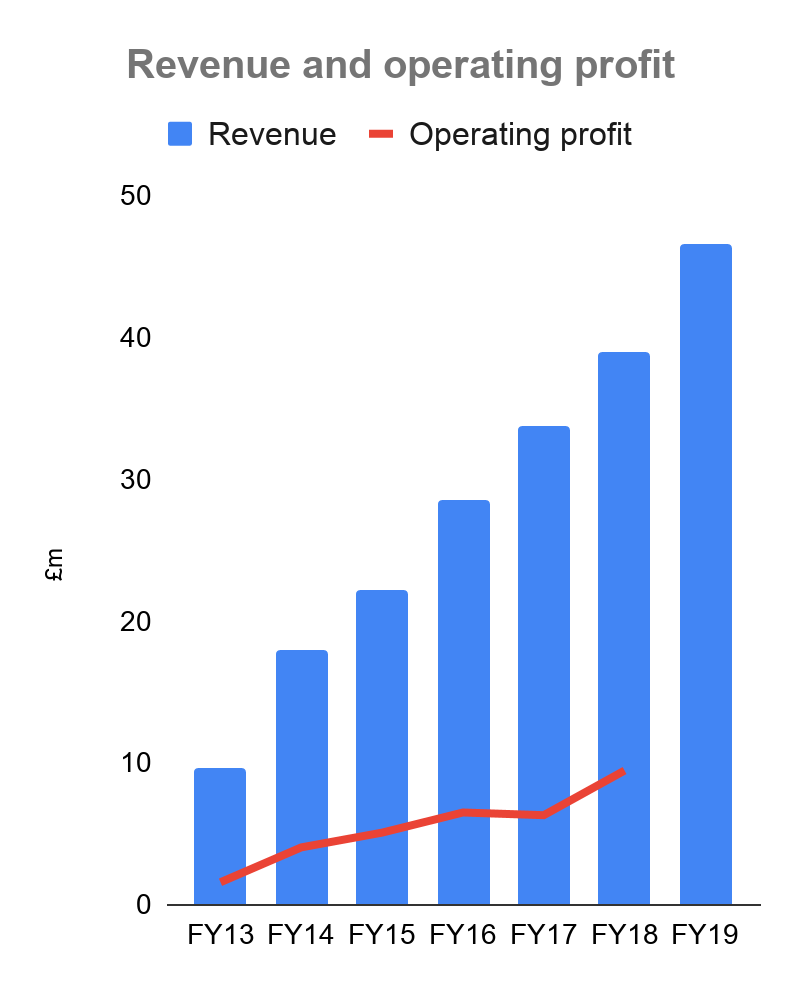
The group has only given revenue figures for FY19 so far, but it says that adjusted EBITDA margin has remained stable. In FY18, adjusted EBITDA was £11.9m, making for a margin of 30.6%. Applying that to FY19 revenue of £46.5m gives adjusted EBITDA of £14.2m. This figure is likely higher than the FY19 actual operating profit figure tracked in the chart.
Recent trading
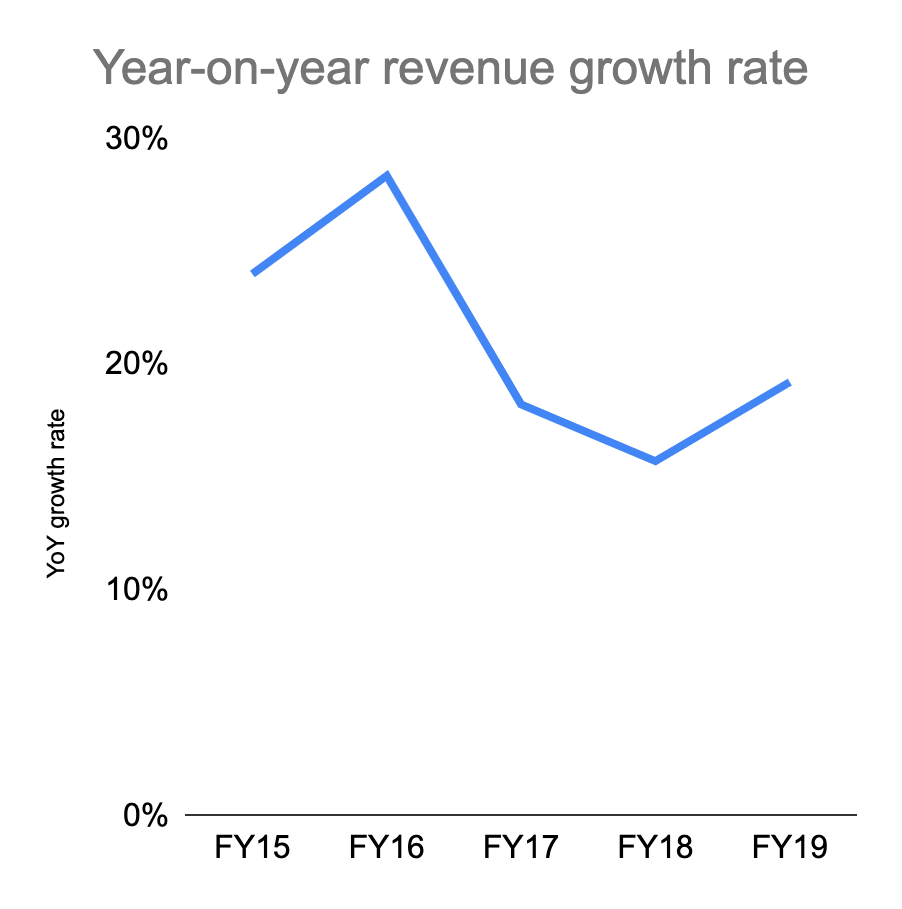
Since IPO, growth has been broad-based and encouraging. While top line growth has moderated somewhat over this period, it is still very healthy at around 20% year-on-year.
Running through the group’s updates since IPO provides a picture of reassuringly solid growth and high levels of profitability.
FY16:
- Revenue +28.3% to £28.5m
- Gross profit margin 49.8%
- Cash conversion 158.3%
- Profit margin 15%
FY17:
- Revenue +18.2% to £33.7m
- Gross profit margin 48.7%
- Cash conversion 97.4%
- Profit margin 16.8%
In 2017, Medica continued to grow strongly. It looks like the market was expecting more, however:
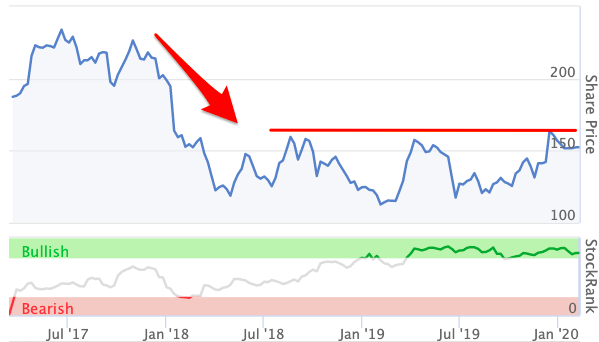
Perhaps the valuation just got ahead of itself. If anybody knows of additional reasons for this sudden drop I’d like to hear it.
Medica’s share price has struggled to break above 150p ever since. Operationally, the group does not appear to have done much wrong since IPO and revenues have grown by around 38% since FY17...
FY18:
- Revenue +15.6% to £38.9m
- Gross profit margin 48.9%
- Cash conversion 105.1%
- Profit margin 23.9%
- Revenue +19% to £46.5m
Medica’s most recent update declares FY19 to be in line with market expectations, with a pick up in the rate of revenue growth. It’s a brief update so we can’t read too much into it, but there are no obvious areas of concern.
Given the above, I feel the company’s current valuation at 16.8 times forecast earnings is not actually that expensive given the group’s track record of growth, its cash flow and profitability characteristics, and its strong long term returns on capital.
Increasing demand for consultants and imaging
I am also reasonably optimistic on Medica’s outlook given market conditions and believe it can maintain double digit rates of revenue growth over the next few years.
The best way to get a feel for prospects in the Clinical Radiology market is to flick through some of the Royal College of Radiologists (RCR) UK workforce census reports. Long story short, supply significantly lags demand and this trend is set to continue for the foreseeable future.
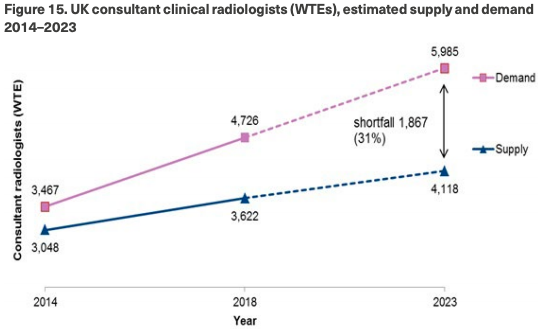
Source: Clinical radiology UK Workforce census 2018 report
While this may mean Medica’s consultant radiologists can bargain for higher pay, it also means the group’s services will continue to be in demand in the years ahead. It seems there is plenty of headroom for further growth in Medica’s core business of recruiting consultant radiologists and connecting them to hospitals.
Meanwhile, the size of the pool of consultant radiologists in the UK (according to RCR) shows there is plenty of headroom for Medica to expand its network.
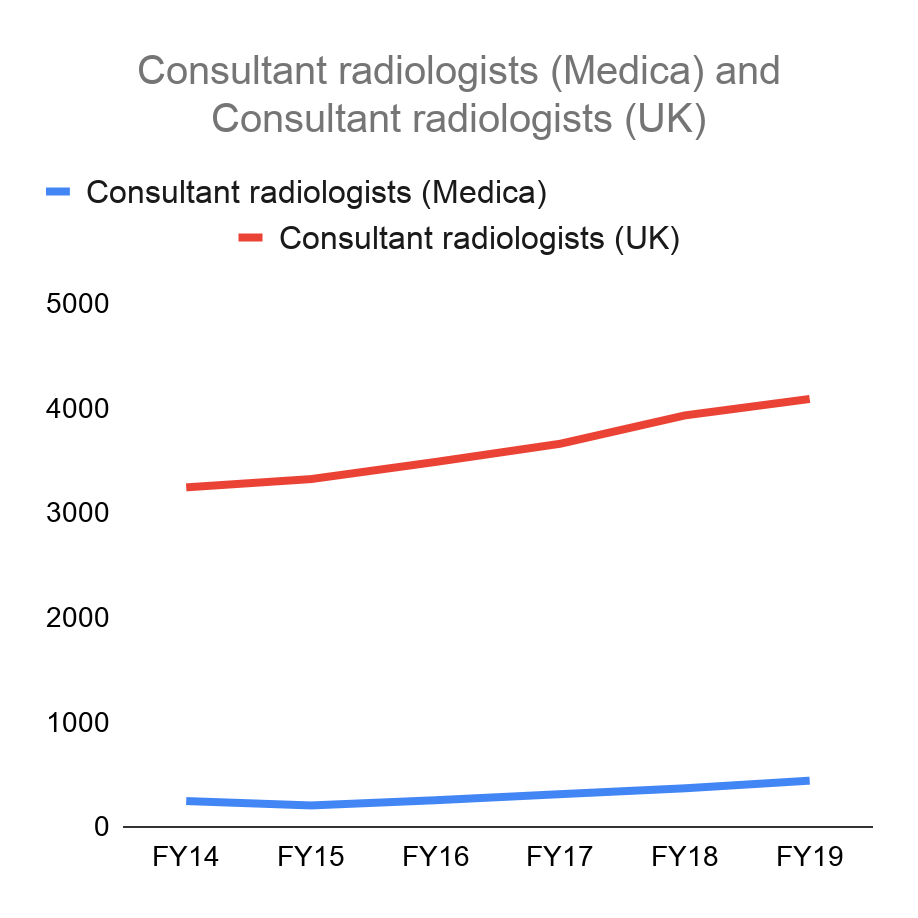
The Group has grown strongly for a number of years, driven by a combination of underlying growth in the number of examinations undertaken as well as an increasing level of outsourcing by its customers. Nothing in Medica’s statements or the RCR’s reports suggest these trends are about to change anytime soon.
Indeed, the RCR’s forecasts indicate a significant gap between demand and supply for the foreseeable future. Meanwhile, Medica notes that its “UK recruitment pipeline is strong and the ability to engage with overseas based radiologists offers additional opportunities.”
One of the concerns regarding Medica is the idea of AI eventually performing more work in this space and hitting pricing power. This is certainly worthy of further investigation, but technological progress is also helping Medica by helping to drive increasing demand for the kind of examinations that Medica provides.
Other factors driving hospitals’ increasing demand for examinations include:
- The UK’s ageing demographic,
- technical advances making more conditions suitable for diagnostic imaging;
- growth in the number of A&E admissions for which diagnostic imaging is appropriate; and
- greater patient awareness of the availability of diagnostic imaging.
Operating divisions
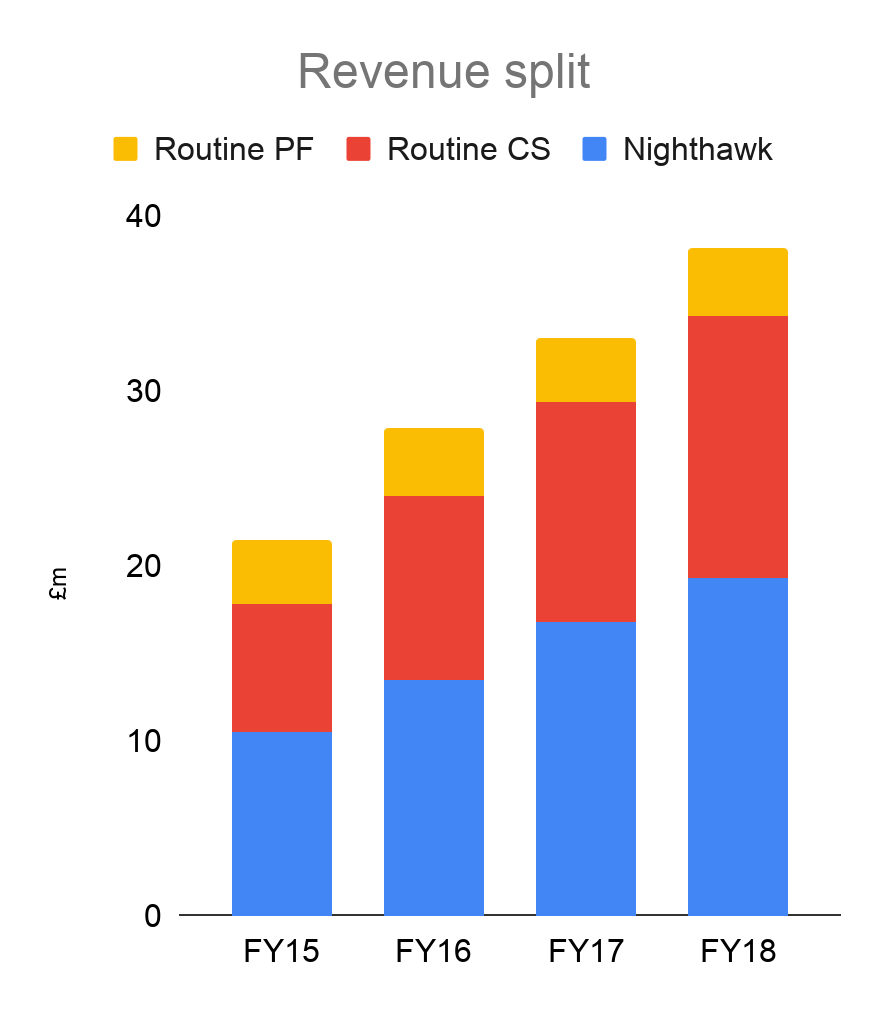
You can see below that Nighthawk and Routine CS have driven the majority Medica’s growth in recent years:
Nighthawk
Medica’s NightHawk division is an out of hours service to hospital emergency departments, offering ‘always on’ support 24 hours a day, 365 days a year. NightHawk represented approximately 50% of group revenue in FY18.
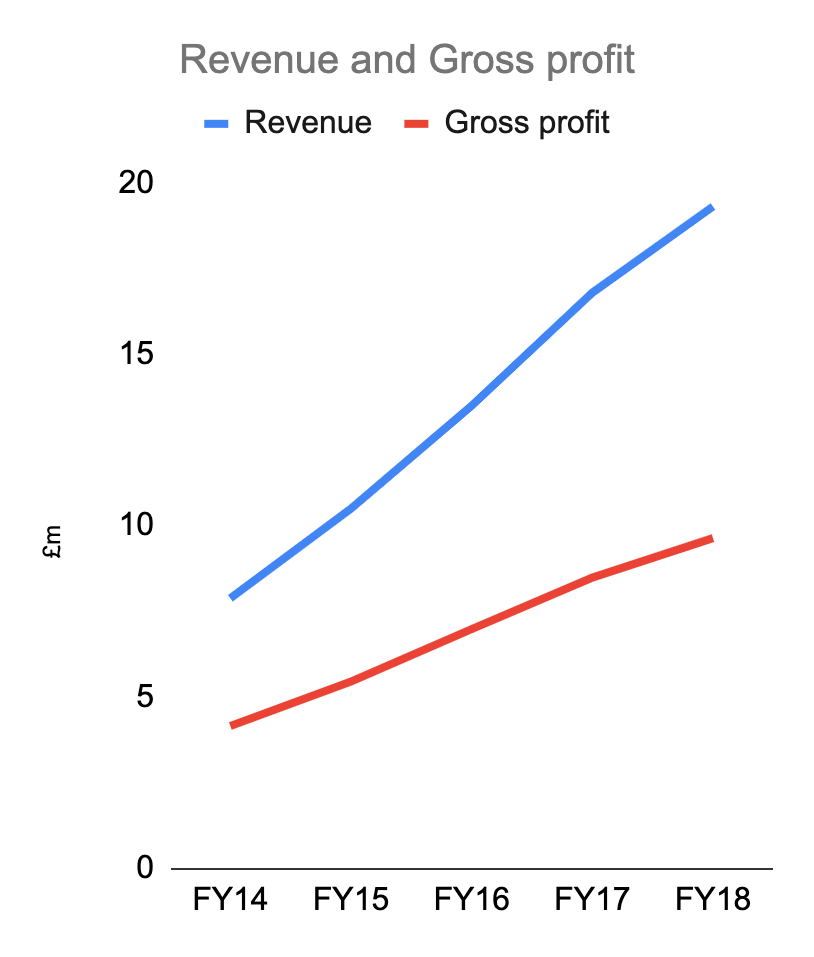
I’ve left this as a line chart so we can more clearly see a potentially important trend: gross margins appear to be falling - albeit gently - across divisions, suggesting Medica is struggling to hang onto its prices.
Routine CS
Cross-sectional imaging, which comprises CT and MRI scans, is growing much faster than Routine PF and is of higher value per unit.
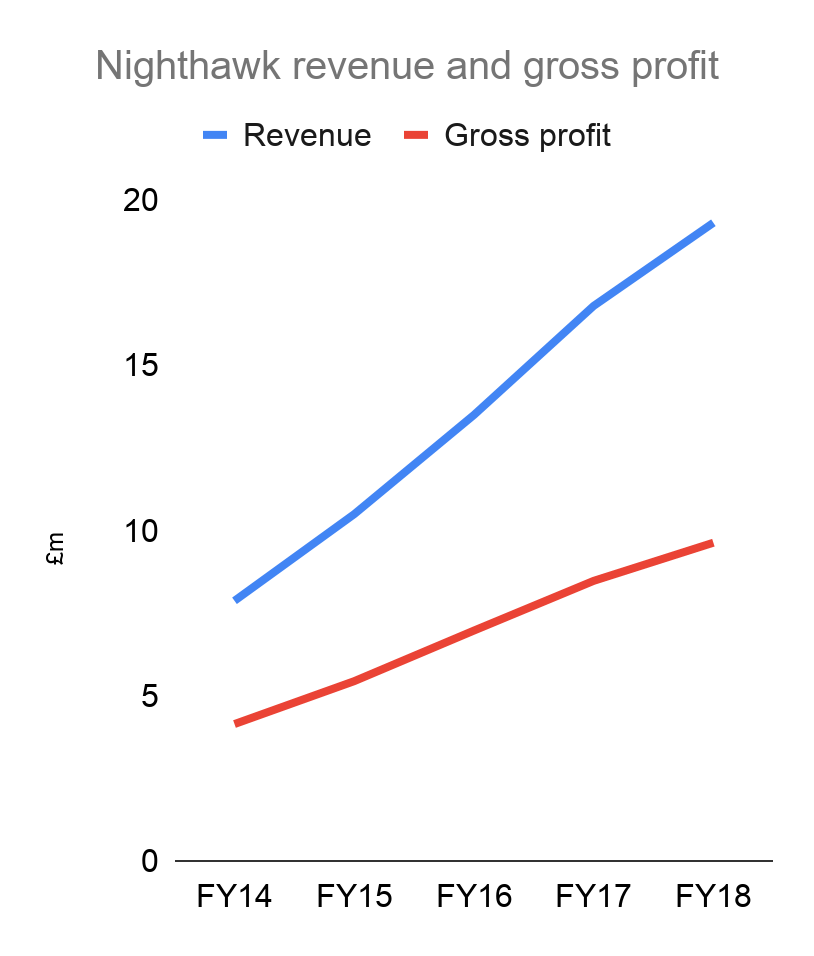
Again though, we see the revenue and gross profit lines diverging as margins gradually decline - and we see the same thing with Medica’s smallest division, Routine PF:
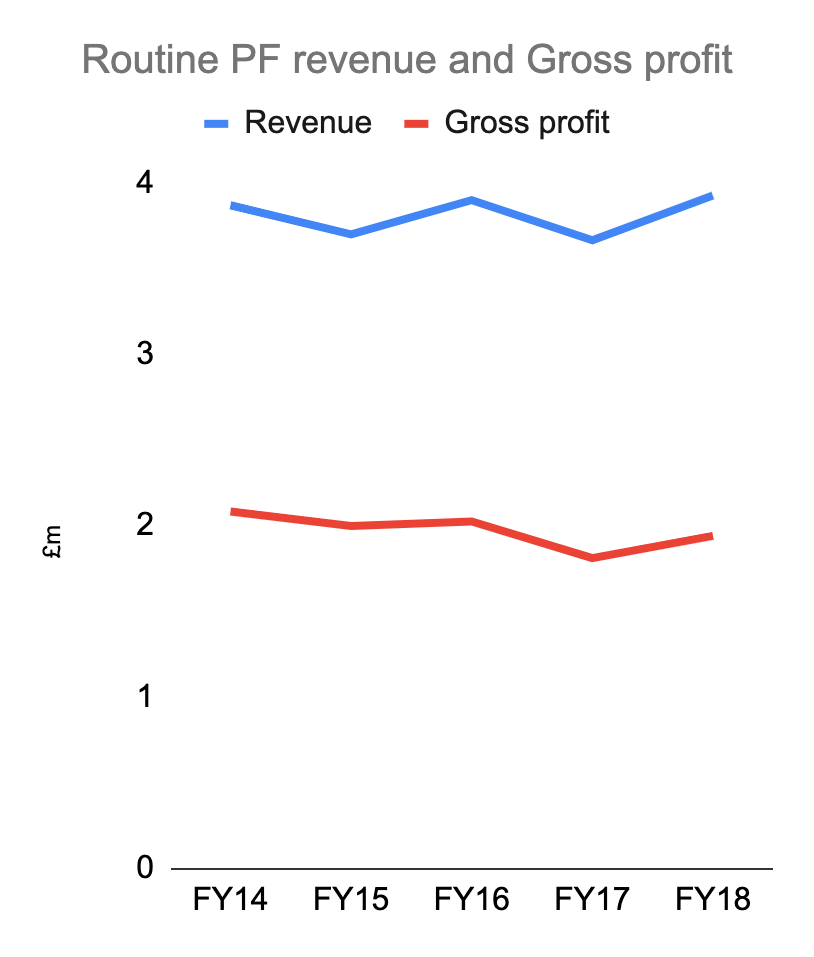
I think this gross margin pressure will continue in the next few years, although volume and revenue growth should more than compensate.
In the company’s own words: “gross profit margin is expected to edge down in the next few years. There are a number of contributing factors with the main reason being ongoing renewal of contracts often through migration to framework agreements which increasingly have costs attached to them. There has been downward pressure on prices for some time as volumes increase and this is expected to continue.”
Risks
Key customer risk. For a number of reasons, including the growth in the number of scans and the shortage of radiologists, the NHS will need to continue to outsource if it is to maintain a cost effective service and to deliver the requisite level of patient care. Nevertheless, Medica notes its dependence on the NHS is a key risk.
Gross margins are likely to come under further pressure, but this should be offset by volume growth.
I would not be surprised to see competition increase here over the years. At least for now, Medica is the clear market leader and there is plenty of scope for growth in its market. The admission documenta identifies three key UK competitors:
- 4 Ways - backed by private equity. Has been operating for a similar period of time and also has a UK-only business model
- Radiology Reporting Online - Joint venture between Everlight Radiology (an Australian Teleradiology business) and University College London Hospitals NHS Foundation Trust. Established in 2011.
- Telemedicine Clinic (TMC) - Europe-based Teleradiology provider, owned by private equity. Established in Europe 2003 and commenced operations in the UK in 2004.
In the long term, I do wonder how Medica will be able to keep its current level of profitability without an obvious moat. In the meantime, however, there should be plenty of scope for growth.
There are also concerns over the potential for artificial intelligence to disrupt Medica’s core business, with some big players investing heavily into this area in recent years. This may need further investigation.
The company itself says that “AI remains an opportunity as well as a risk and Medica continues to monitor closely.”
Conclusion
The above risks aside, there is a lot to like about Medica. It has a leading position in the UK market for provision of teleradiology services. It has various accreditations and it has invested millions into its scalable, bespoke IT systems and is a respected member of the UK health economy. Some customers even ask Medica to audit their own internal radiology departments.
Future growth is underpinned by favourable long term market dynamics. Gross margin pressure is a concern, but it should be able to offset this with volume and revenue growth. This is certainly something to monitor in future statements, as is any mention of increasing competition.
Meanwhile, the group has built up a strong operating track record of double digit sales and profit growth over multiple years. Its model is cash generative and it generates strong long term returns on capital. Given its quality characteristics and solid balance sheet, I think Medica can grow to become much bigger than its current market cap of c£170m. While a forecast PE of 16.8 times is not cheap, the group justifies this kind of rating based on its historic and forecast growth rates.
Disclaimer
This is not financial advice. Our content is intended to be used and must be used for information and education purposes only. Please read our disclaimer and terms and conditions to understand our obligations.

9 comments
Thanks for the article, Jack
My concerns for Medica (LON:MGP) would be around the competition that Medica (LON:MGP) will have from AI based analysis. Recent research has shown that AI based analysis of scans can give significantly better results than those provided by human beings. And once set up AI should also be price competitive.
I don't know whether AI will take off in this area or, if it does, how long it will take but there is at least a potentially very strong competitor here.
It is also interesting that the share price has not so far performed well despite the eps growth and the strong fundamentals you discussed above.
I looked at this a few months back but decided that the company seemed to not be looking to diversify. I felt too much dependence on Night Hawk and there did not seem barriers to entry which could easily mean a significant hit on income were rivals to become more significant I.e simply by paying skilled staff more. Had not really followed so note the new CEO and may look again if there is some wider ambition to improve the range of services. To me NH is a cash cow business so the company needs to use this to fund growth elsewhere...
Hi Jack thanks for the write up. You asked "If anybody knows of additional reasons for this sudden drop I’d like to hear it."
I think this related to it being a recently listed & at the time relatively highly rated stock which issued a mild profits warning with their trading update on 16/1/18. It got quite savagely treated and hasn't recovered that much since despite as you say delivering decent growth thereafter, albeit perhaps a little lower than people had been expecting.
On other posters concerns about lack of ambition in terms of broadening product offering and not operating internationally. I would just note the appointment of the CEO detailed in the announcement on 9/5/19. He seems to bring plenty of experience in these areas at a previous job he held:
"Stuart will join Medica from Synlab, the international laboratory diagnostic services provider, where he is currently Head of Central and Eastern Europe, Middle East and Africa. Previously he was Synlab's Group Chief Commercial Officer and Chief Executive of its UK operations. Stuart brings a track record of delivering significant growth both in the UK and internationally and has extensive experience of working in partnership with the NHS. During Stuart's tenure in the UK he expanded the business by winning new diagnostic service contracts and through the acquisition of four companies that significantly diversified Synlab's service offering for customers. Prior to joining Synlab, Stuart worked in private equity both as an Investment Director at August Equity and for seven years at 3i in the UK and Germany as an Associate Director focusing on investing in healthcare. Stuart also spent four years at Accenture in the US and UK as a Manager in the health and life sciences strategy consulting practice. Stuart holds a BSc (Hons) in immunology from the University of Edinburgh, a PhD in immunology from Imperial College London and an MBA from INSEAD."
Hope this helps add to the debate. I hold it too as it Scores well in my own screening process which looks for quality stocks / businesses with which to compound a growing income.
Regards
Jamie
Website: Compound Income
Twitter: https://twitter.com/CompoundIn...
Thanks for the insight CI,
Look forward to hearing more from the new CEO in the company results.
It's interesting on your site you look for income. I sometimes put a dividend check into my screens but generally leave it out to widen the pool of candidates. There are academic arguments in favour of reinvesting earnings or buying back shares as opposed to paying out divis but I feel that, in reality, a sustainable, growing dividend track record can be quite a powerful quality indicator.
Thank you Jack, great article. I am a holder in my SIPP as I like the ROCE and margins. I don't mind that there is not yet a huge growth story, as sensible incremental growth on high return business will build value. My position size is small as small cap liquidity makes holding a larger position too high risk, however, I like the business and can sleep at night holding it. You have identified the risks of AI and reliance on NHS, and these are real, but no business is without risk, competitors, substitutes etc and management seem sensible enough to take sensible decisions in meantime.
Greyster
Thanks for the good write upJack,
I'm a holder and you have highlighted the two biggest risks in my view.
The future of the NHS is a bit of a political football, so that key customer risk you have highlighted comes with a side of political risk in my view.
Automation is very hard to predict, and I can't see many industries that aren't at risk from disruption.
Medicine is expensive and extremely important to us all, so I can see more investment going into this industry to try to automate processes and make healthcare more affordable. That wouldn't be a bad thing at all, but I'm keeping my position here quite small
Hi Jack, excellent article as always. I hold and have for a number of years but i am reticent about this being a bigger position due to the lack of international ambition. I have asked the company about this and they remain focused on the UK. They recruit Australian consultants so surely that is a market to go after, but they have no plans, or at least didn't last year. They also said no plans to use the platform/tech for other services in the nhs. So for me it all seems a bit pedestrian. Im sure if they keep growing there will be a rerating soon but i see no sign of a catalyst to really move the shares.
Hi John,
I agree that there appears to be opportunities elsewhere. With a 24/365 service, with modern communications there is an argument that they could at least explore other English speaking territories. If successful it would also reduce the key customer risk that Jack highlighted in the article.
However, perhaps it is a case of walking before you can walk. As long as the returns on investing in the UK business can continue, that might be a sensible strategy. Like you, though, I'd like to see an attempt at international expansion at some point
Thanks John,
Interesting - I got the international info from page 21 of the 2018 Annual Report... It's still early days, clearly, with no definite commitment in terms of operational goals. Medica (LON:MGP) will update on strategic priorities and FY results on 23 March so we should get more information to gauge how genuine the prospect of international expansion is over the next couple of years.