NEWBIE to stockopedia, would appreciate any advice.

Hi there,
My names Alex, I'm new to Stockopedia and relatively new to investing. I think Stockopedia is an amazing website, just what im looking for. I've never posted on the internet before so i apologise if I'm breaking any etiquette's or anything.
I'm trying to start a portfolio of about 8 shares, trying to emulate the NAPS style. High Stockranks, different industry sectors and equal weighting. High Stockranks, different industry sectors, various market caps and equal weighting. The reason I'm only going for 8 to begin with is because I think with the amounts I'm investing the fees become too much if I go for more than 8 right now. But I'd like to get it up to 20 within a year.
I've also tried to incorporate a growth element as well as QVM and the portfolio I've got so far(only 7) is.
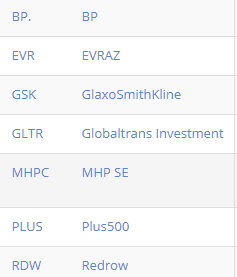
and 3 of these are ones that I already owned and still meet my new criteria as well.
I feel it leans a bit towards the adventurous side which is what I want. I already have a long term strategy in the form of dollar cost averaging into some index tracker funds which I feel is far from adventurous. So this portfolio is aiming to be something a bit riskier.
Setting my stop loss has been a bit of a tricky one for me to decide. Initially I was leaning towards 7% but now I'm thinking that with the growth element of the portfolio I'd be better of giving stocks more of a chance, so I'm thinking 10-15%. The reason for this is Morgan Sindall which looks like a good stock to me so I bought with a stop loss of 7% and it was gone in less than 4 days....WTF!
I'd appreciate any opinions including criticisms.
Regards
Alex
p.s. opinions on my bubble chart would also be appreciated.

Disclaimer
This is not financial advice. Our content is intended to be used and must be used for information and education purposes only. Please read our disclaimer and terms and conditions to understand our obligations.
54 comments
I used to use XIRR and as you've highlighted it can get difficult accounting for cashflows and comparisons with a benchmark. In fact I still use it a bit as it I think it's not a bad figure to have in isolation. I never knew quite how to deal with money movement and so always found comparisons to be flawed. I can see where you're coming from replicating all cashflows as if you'd bought a tracker, but then if you're going that far it really wouldn't be more effort to unitise and have a perfectly comparable figure.
I have found unitisation to be far better for comparing with other investments, and negating the influence of cash movements into and out of the portfolio.
Thinking about this some more, you don't need to know the flows of money into and out of the market to make this calculation ... you just need to calculate what your return would have been if you had put/withdrawn the same cashflow into, say, the FTSE 100 or whatever you want to make your preferred comparator. Dividends would be an issue, though, I guess.
Can anyone more expert than me say if there is a standrad way of going about this calculation?
Using function (XIRR) in excel you only need two figures, the date spread and your preferred comparator (total return to include dividends) avaialable here: FTSE INDICES
Hope this helps.
Bonitabeach
Thank you ... that should do it. Perhaps, when I have a quiet day, I'll put together a little model to compare my performance in managing my own portfolio against how things would have turned out if I had just put the same funds into tracking the FTSE 100.
It would not be especially difficult (albeit a little fiddly) to work out and track the IRR (internal rate of return) for your own portfolio (based on the assumption that you could always cash in your holding at quoted market prices). And you could fairly simply make that calculation over a spread of time (lets say for every month end).
But making the same calculation for the market so that you can perform the comparison ... that would seem to me to be very hard! How do you know how much money entered or exited the market and when?
Perhaps I am missing your point but Stockopedia gives FTSE 100, 250, All Share, and AIM 100 data every day. You could measure your performance against this on, say, a weekly basis.
The point is that it's actually quite tricky to measure actual portfolio performance, especially if it's split across accounts and involves investing new cash. I've known people claim to be beating the market when they're actually pouring tons of cash into their accounts - we hate admitting we're terrible investors, even to ourselves.
As doug2500 suggests the simplest way is to unitise. Even that's quite tricky, because you need to account for new funds and dividends in order to be comparing like-for-like. Broadly speaking, don't do it very often (I do it twice a year) and don't worry about calculating it to serious levels of accuracy (if it's even close you'd be better off investing in an index tracker and doing something less pointless).
timarr
Does anyone have a good way to track performance against the market? My broker shows me only ave weighted return. So I just have to export all transactions onto a spreadsheet and try to work it out my performance within a time period, on an ongoing basis. However I don't yet have a good way to track this against the market performance.
Some brokers may give you all this so isn't an issue for others. Or does anyone have a good excel template?
Maybe there are other threads on this subject?
Last year I unitised my portfolio. I actually made it into 3, trading accounts, ISA's and funds.
As I understand it this is exactly how a fund would do it, so this means you can compare directly to any fund, or as I've done assign the same starting unit value to my portfolio and my chosen benchmark. I think trackers are also commonly used benchmarks and are easy to get prices for.
I wish I'd started when I started investing as it's the best approach I've found, but hard to do retrospectively.
These might help:
http://monevator.com/how-to-unitize-your-portfolio/
And a thread on the lemon fool where I review my portfolio and unitisation is discussed:
https://www.lemonfool.co.uk/viewtopic.php?f=56&t=4511&sid=cd9a2f1527c83f6332d9b8a9ce56062b
And a screenshot of my excel spreadsheet:
https://i.imgur.com/6O5802y.png
There's more on lemon fool if you do a search.
Hope that helps.
Again, thank you all for the very helpful comments and the time you have taken to write them, Key takeaways so far.
Get reading! I've got hold off and working my way through the Naked Trader (just realised how that sounds), seems like a good read well suited for me. I've also read Peter Lynch's one up on Wall Street, which I'm sure most of you will probably already have read, I enjoyed it and would recommend it. I will be expanding my library more than my portfolio for the time being.
The general consensus seems to be that the Russian stocks are not recommended so with that in mind I've decided to focus on UK based companies only. My portfolio will no longer be a NAPSICHOK strategy.
For now, I will be changing my strategy on stop losses as well, I agree with the comments that with a NAPS style strategy a 7% stop loss is too tight and I will aim to hold the stocks for longer and re-balance if I feel it is necessary after 6 months.
I'm quite lucky in that I have some experience in analysing companies after doing a stint as a credit analyst a few years back and having studied accounting and finance at university so it's time to put this knowledge to good use and hopefully have some fun and make plenty of money to boot.
Thanks all
Alex
Alex,
I am a retired investment professional who manages his own pension fund (almost 20 years now) . Essentially I am a "long term buy hold" investor.
My 8 largest holdings in descending order are Daigeo, Apple, Unilever, GSK, Rio Tinto, United Utilities, Royal Dutch Shell and Rolls-Royce.
1) Note that these are all in different sectors.
2) All my stocks and funds (except Apple) are UK listed. Easier to follow and better corporate governance.
3) I have around 25% in small companies (mainly AIM)
4) I don't invest in financial stocks, retail stocks, property stocks and housing construction stocks.
Looking at your list of 7 stocks, I would only consider 2 myself. I hold GSK and would regard BP as OK but I prefer Shell.
Evraz, GLTR, MHPC I would not touch with a bargepole. All three have Russia or East Europe business.
Redrow I would not buy as I don't invest in construction or housing. Too cyclical and you have to get the cycle right. Better to invest in steady businesses (mainly manufacturing) with are easier to understand. Also commodities (oil and mining) and utilities.
But investing is essentially personal. Have a plan and stick to it.
Kuronagi
Hi, some good advice above that is a struggle to beat. You may want to consider browsing the Screen of Screens for a bit and track some stocks before you buy . I like to diversify in sector, currency & continet and I must admit I throw in a few brands that I like & use (not very scientific but it can work well).
Also follow the small cap report & the SIF portfolio ( Roland Head covers Redrow for example) - over time you can pick up a good idea how companies are doing by the analysis here
Wise words Timarr.........
A few random things ...
Firstly throwing darts at a dartboard comprised only of high Stockrank shares is a decent approach. However, holding three Russian companies is taking on geo-political risk and isn't wise. My own preference would be to hold none. And also GlaxoSmithKline (LON:GSK) is probably mis-ranked - as Terry Smith has pointed out big pharma companies have switched to an illusory core earnings measure which overstates real earnings by ignoring restructuring, legal costs and asset impairment - none of which tend to be exceptional with drug companies.
Secondly, assuming relatively small lot sizes - the usual situation for a new investor - then stop losses are simply a way of adding extra costs to your portfolio. But if you're going to set them, set them reasonably wide - 7% is too small. But better still don't set stop losses at all and use the Stockopedia triggers to identify when a price has fallen significantly - you can then manually sell if you so want.
Thirdly, you won't learn anything by not investing, so you need to be in the market if only for the experience. Learning how to deal with losses is part of the game. There are very few people who can time the market to any great degree and with all due respect to other posters, it's unlikely many of them will be posting here. When we had a minor market wobble earlier in the year the boards here were full of doom laden prophesies from people who have gone silent since. No one really knows, markets are a class of system known as non-linear, which means they're impossible to predict, other than in the very short term if you happen to have a stray super-computer lying about.
Fourthly, beware of any system that claims to beat the market - even where these systems work it's likely that the people marketing them have better access to data and analysis tools than we will ever have. And they make money whether we do or not.
Fifthly, as other posters have mentioned, you need some form of strategy. But at this stage buying high Stockrank companies, making sure they're UK domiciled and making sure they span a variety of sectors isn't a bad starting point. Diversification is important, at least until you have a clearer idea on what you want to do.
Finally, make sure you track your returns and costs. A surprisingly large number of investors don't and really have no idea whether they're successful or not. Spending hours a week on your portfolio is pointless if you can't consistently beat a vanilla index tracker.
And of course, good luck!
timarr
great response thanks for posting.
Alex
Read two books prior to investing any money and remember the main criteria for trading is the condition of the underlying market --you can make money by saving losses and if the general market trend is weak why bother with the risk. I have been in cash for almost a year now. on the other hand if you are an investor for the long term buy quality shares as if you were going to own the company in total, do a lot of research and sit back and enjoy the roller coaster. The Two books-- The Naked Trader by Robbie Burns and Trade Like a Stock Market Wizard by Mark Minervini and if you do read them don't be selective in how you apply what you read-- create your own rules and stick with them but amend them with experience. Good luck the journey isn't easy if it was everyone would be multi millionaires. Regards Ken
"I have been in cash for almost a year now". Ken, I think you're far too pessimistic! I'd feel a big opportunity cost if I'd be sitting out for nearly a year. You mention Minervini's book. Interesting to note that he hasn't been sitting out!
As a Minervini influenced trader, I'm only in the market if stocks meet my Minervini criteria. If not, them I'm sitting out. Lots of stocks have met my criteria over the last year, and at the moment. In fact I've seen more setups in the last few weeks so I'm cautiously optimistic.
Thanks Ricky-- It depends upon the tolerance to risk, I keep a record of the portfolio and I would have been up a further 5% had I not sold. Over the period there have been some steep drops and buttock clenching moments, this is now a fully fledged bear market as far as I am concerned but of course we will only know in time. I also understood that Minervini was out of the market!! It was his criteria that I had in mind when I referred to the condition of the market.
Hi Ricky
Just wondered if you were still going to pen s bit on your trading story no probs if its delayed due to the nice weather.
Cheers Andy
Hi Andy,
Yeah, I hope you've been enjoying the nice weather as I have, BBQ today!
It's been a tough write (over 4000 words atm). I aim to get it done by no later than 14th May, next Monday.
I hope it will be worth the wait!
Regards,
Ricky
Hi Ricky
BBQ this end also, you can't beat England when the sun is out, looking forward to the ramble got a feeling you have an interesting story to tell and you seem to have the whats my plan before i get into a trade mind set sorted also.
Enjoy the burger and sausages your end.
Regards Andy
Hi Andy,
I don't think my post is in good enough shape to put on here yet. Going to be a bit longer. Apologies.
Regards
Rick
No sweat Ricky looking forward to your trading story when it's ready to go.
Regards
Andy
Stop losses! I used to set stop losses but like you got sick of being stopped out only for the share to bounce back the same day. My solution - on Stockopedia you can set a stop alert. I set them at about -8% you will then get an e Mail from Stockopedia when the alert is hit. This gives you the opportunity to revisit the share and asses if it is really going down or if it is just the market makers shaking the tree. Good luck with your investing and you are amongst friends on Stockopedia. I agree with reading Naked Trader also read William O'Neil How to make money in stocks.Charles
I set stop losses on most of my holdings, enforced by automatic trading. I use a simple spreadsheet to work out where to set the stops depending on the underlying volatility of the share and whether I see it as a long-term hold or something I'm hoping to make a profit on while the sun is shining and don't have any expectation of holding long-term. Most of my stops are in the 12.5-17.5% range ... reflecting the fact that most of my holdings are individually quite volatile and most I aim to hold long-term.
Ocado (LON:OCDO) is an example of a share where I was just riding the wave while things were looking good but had no expectation of holding in the long run. So I set a fairly tight stop and duly found out one morning that I was no longer a holder ... but I'd crystallised a decent profit. Last time I bothered to look Ocado shares were still priced below my stop-price.
Globaltrans Investment (LON:GLTR) dropped like a stone two or three weeks ago when the POTUS started throwing his weight around over Russian oligarchs. My holding got chewed up and spat out the back by my stop setting before I'd even read the news. Then it drifted back up a bit. Still ... it might have kept on falling and I'm saved the worry of what could happen next. Globaltrans Investment was meant to be a long-term hold. I've learned a useful lesson about the riskiness of those Russian stocks, for sure, although an expensive one. Although I might well buy Globaltrans again when the dust is fully settled (it seems a good business), I will be very careful about it.
Thank you everyone for the comments, i really appreciate it. Its been a much better response than I was expecting, there seems to be a great community here on Stockopedia. Plenty more to think on, I will be re-reading all the comments and doing plenty more research. I take the point that I may be rushing into things, however the money I've have allocated for this i'm fully prepared to lose (assuming i gain some valuable lessons that will help me with investing in the future). After all you need to start somewhere and I find that getting stuck in and using real money helps to focus my mind and forces me to pay far more attention. Whatever strategy i do finally settle on I know that I will be sticking to the fundamentals and keeping a diversified portfolio, and therefore (i may be being naive here) I feel i'd be pretty unlucky for it all to be completely shipwrecked, although i'am expecting plenty of storms.
Regards
Alex
If you are using stop losses, be wary about about using automatic trading to enforce it, there is often a lot of volatility in the morning, which can catch you out. good luck
Alex,
Stop and think!
What am I trying to do?
You've said you want to emulate a NAPS style.
NAPS buys once a year and rebalances a year later.
No selling in the meantime.
It's a low maintenance strategy.
If that's not what you want to do, then you need to do even more thinking around timing your buys and your sells.
For example, if you're interested in harnessing and surfing momentum, then you might want to buy on break outs and the use of some form of stop loss might make sense. I use a momentum focused approach and use 'notional' stop losses based on Ichimoku charts.
If you're a value focused investor, then you might not be bothered by a short term reduction in price as it might offer an opportunity to buy more stock at a cheaper price.
You might also want to consider what else might make me sell, for example bad news, reduction in stock rank, etc.
There is no one correct answer and only you can decide which approach is best suited to your temperament and the amount of time you have available.
It is easy to get confused with all the advice from others that follow different strategies. Find and learn to know your own strategy and integrate useful advice that complements your strategy.
Best of luck
Phil
I very much second Phil's advice.
I think it's best to first decide on a strategy, making sure you have a complete understanding on why it should outperform the market over time. A strategy has a few elements - it should tell you what to buy, when to buy it and when to sell. This is not straightforward and you should probably be spending quite a bit of time considering options, thinking them through and working out what works best for you, before getting too sucked in to looking at individual shares. What the right strategy is does depend partly on you i.e. your temperament, interest and how much time you are prepared to put in...
On Stockopedia, the Stockranks and Guru screens are good places to start looking for inspiration. I'd also recommend reading investing books.
thats a great comment Phil I'm finding its like drinking from the fire hose there is loads of information out there and deciding the best route for you is tricky, however once you have done that then stick to your rules
Alex, I see you've been given different advice from every person! That's because there's more than one way to skin a cat when it comes to investing/trading.
Mark Minervini & David Ryan (imo two of the best stock traders) are doing a free webinar on Wednesday 2nd May. I've attended two of their previous webinars and learnt new things. Highly recommend.
Here's the link to register: https://t.co/whqeQG6WdL
I have both of Minervini's books and adopting his strategy transformed my trading. My results went from mediocre to consistently beating the market. I have tried other approaches, but I haven’t found one yet that does as well as a growth stock approach, not just in percentage returns but also in minimising drawdowns.
Ricky
Hi Alex,
Lots of good advice above for you and me to as a newbie myself. Never till this year been in a position to have the cash and the time to invest and watch what I have invested!
You will always "regret" - I picked Fevertree Drinks (LON:FEVR) in Jan 2015 just as I was about to be made redundant. Liked what I saw and read about the founders and the business. Loved the bold advertising push to gain brand awareness - Something like 3/4 of your G&T is tonic so use the best - price then 215p
Didn't commit
Started my watch list Jan 2017 - Fevertree then at 1970p Far too expensive to invest
Price today 2779p (28% since Jan) !@!:@@
Hi Alex,
As you have found out, a stop loss of 7% is too small, and is especially the case if your holdings are not large as the stop loss price should include fees already and to-be incurred in trading. A stop loss of 12-15% I feel is more appropriate, however the stop loss to me really depends on the size of a company, it's price volatility, risk, etc. So, for a FTSE-100 company even a stop loss of 10% might do, but for anything smaller it should be at least 15%, and for any small caps you might eventually invest in then 20% is more suitable.
I don't have much of an opinion on the stocks you mention, though I would caution against investing in Russian stocks as I would challenge whether they are regulated to the extent of those on the LSE, or even AIM. I looked at the last trading statement from EVRAZ (LON:EVR) and it doesn't look great to me, with most volumes down compared to Q1/2017. If you insist on an investment in Russia, I would suggest considering a unit or investment trust instead to reduce risk; I have some units in the Neptune Russia trust, and consider the performance mediocre.
Redrow (LON:RDW) seem to do be doing well, I'm watching them at the mo; the only question mark has been director sales in the last few months, I feel.
If you haven't already done so, I would look at recent trading updates and results on RNS of any companies you are considering. Also look at share price charts with MVAs (moving averages) of 50 and 200 to see if the overall trend is up or down - if a price is below both the 50 and 200 MVA then this isn't good.
I have a small holding in Morgan Sindall (LON:MGNS) and feel the volatility is largely due to the Carillion debacle. Morgan Sindall (LON:MGNS) have stated that this has had minimal impact on their trading, though they will continue on these contracts to completion. They recently announced a £2b joint venture which seems positive.
I think the overall view on GlaxoSmithKline (LON:GSK) is negative as I think there are worries over the future pipeline of drugs, patents expiring, and strategy, however the price has recently broken above the 200 MVA so perhaps the downtrend of the past 9ish months is over.
You don't have to buy all the stocks at the same time, you could watch the price over a few days and try and figure what it's doing. However, you will never get the timing exactly right... people rarely do.
Good luck!
Andrea
I would also look at diversification, I think you have far too much exposure to Russia, I would not buy any. Also quite a bit of exposure to commodities. I would not buy Morgan Sindall (LON:MGNS) the operating margin is too low. I don't use stop losses anymore, it's more about the fundamentals, NAPS did not use stop losses, if I did use them it would be around 20%, if you study some of the old NAPs portfolios, that would cut out the big lossers but not stop you out of most of the big winners. A 7% stop loss could stop you out of many of your shares and then what do you buy then?
Perhaps consider that the Stockranks system gives you a statistical probability of doing better from a reasonably well diversified group of stocks. That diversification is essential.
If a reasonably well diversified set of stocks is not possible just yet because it is not possible to have enough stocks in the portfolio then I think it perhaps may be better to think of the Stockranks as just a tool rather than a rule. It is going to be necessary to put in additional research over and above the Stockranks to try and increase the probability of success from such a concentrated portfolio. Paying additional attention to the risk ratings (balanced, conservative, adventurous etc) may help avoid ending up with a concentrated portfolio that is high Stockrank but taking rather too much risk for a concentrated portfolio.
Just my view and I don’t pretend to have any special insight. Different people find different approaches that work. There was someone on here sometime ago who said something like a dart in a stock listing in a newspaper was the best selection tool he had found!
Hi Alex,
".... The reason I'm only going for 8 to begin with is because I think with the amounts I'm investing the fees become too much if I go for more than 8 right now. But I'd like to get it up to 20 within a year. "
I have similar sort of challenge on a couple of JISA's I'm looking after, although I expect the sum that I'm playing with in each of the JISA's is a lot smaller pot. As such each JISA pot only has a couple of positions, so very little diversification. An alternative would have been just put the small pot into an ETF for greater diversification. But I'd rather just slowly build up the JISA pots into a low maintenance NAPS style portfolio.
The great thing about just the NAPS approach (once you have sufficient diversification of shares within it), is that statistically it does look to outperform more often than not (at least so far), and is very low maintenance approach if you don't have much time to devote to investing.
Are there 3 Russian firms in your shortlist?? Maybe you might shave a few points off the stockrank for such firms - if you think it's an issue.
My guess: you have drawn a low quality man, evidenced by his stooped physique and his spivvy moustache; and then the black cloud representing opaque accounting practices, issuing forth the lightening of profit warnings. The cactus is boring and slow-growing but can be tapped to yield a steady flow of water, so it should have been placed at the top left.
Hi Alex,
It is not really that surprising that you got stopped out of Morgan Sindall with a 7% stop. It has been quite volatile with two 15% plus high-low falls in the past three months alone. One thing you could have considered is trying timing your entry close to the six month low where there is likely to be buying support. You could still get stopped out but your odds of staying in the trade would be better. Alternatively (and probably better) would be to wait to see if breaks above the 12 month high and then set a stop just below that.
The key thing is that your use of stops needs to make sense in the context of your overall strategy, most importantly in terms of your sell rules. Do you have a price target in mind for each stock? Would you sell if the StockRank fell below a certain level? Do you simpy intend to hold your portfolio for a certain period of time (e,g, 12 months) and the rebalance? There also many technical indicators that can indicate when to sell, but you need knowledge to use them properly.
If you are buying something because it has good fundamentals then there is an argument that short-term price movements are irrelevant and you shouldn't bother with stops at all. In this case, you would only consider selling at a loss if something happened with the fundamentals to change that view.
I should point out that if you have some concerns around trading costs, then you probably don't want to adopt a tight stop strategy as this will increase your trading costs. Certainly with 7% stops you are going to get stopped out a lot.
Cheers
MB
Interesting stuff mechanical all makes sense would there be any chance of you deconstucting one of your recent trades at some point with why you went for the entry point, where the stop would be would you cut the entire position in one go, or maybe in two lots with the second stop further back and what your target price was and reasoning,
I;m more interested in the logic behind the plan before getting into the stock rather than the fundamental reasons you invested in xyz as I think money management and strategy are more important than the actual stock picks.
No issues if you prefer not to share if its a bit of a ball ache.
Regards
Andy
Hi Andy,
I am afraid I can't really help as I don't actually put any effort to timing my trades. In fact my philosophy is to trade on only one day of the month, unless there is a profit warning or some other negative news that demands immediate action. This approach works for me because I can apply my system in a completely detached way without having to be constantly monitoring my positions,
My point is that there is not a specific correct level at which to set stop losses, or whether to use them at all. It all depends on your overall strategy. For example, a NAPS type strategy doesn't really need to use stops because risk is managed through diversification rather than than through risk management of individual positions.However, if you do want to use tight stop losses, then you really have to try and time your entry point or else your trades will be at constant risk of being choked.
Cheers
MB
Thanks Mechanical interesting you use the low maintenance approach unless the fire is at the door do you mind me asking what your average returns have been for last five years appreciate its been a good period of time got a feeling you will have achieved good returns.
Regards Andy
Andy
These are my annual and average returns for the past four years.
2014 20.6%
2015 38.3%
2016 15.0%
2017 21.5%
Average 23.8%
This includes dividends and all costs. However, it also includes the cash holdings in my trading account which can often be quite large and obviously return nothing. I estimate I am about 70% invested on average. If one was happy being 100% invested then even better results could be expected.
MB
Hi Mechanical,
Impressive average return for sure, may i ask how many stocks do you normally hold and do you hold single stocks or investment trusts or even both.
Kind Regards
Andy
Just in case you don’t know already, Paul Scott’s and/or Graham Neary’s daily Small Cap Value reports, along with reader comments are a must read.
A key point to remember is that every share price goes up and down, and buying after latest dip instead of right at top of current peak reduces the chance of share going down soon after you bought. So check the one year and shorter term charts before buying. That will reduce the chance of your stop loss being hit soon after buying.
Also markets have had a great run. The ideal time to buy in general is after big market or sector falls. And a good time to buy an individual share can be when bad news looks priced in after big share price fall and with clear signs of the worst being over. A good example of this was BOO HOO. Paul Scott highlighted the great buying opportunity after a profits warning around 30p and the share nearly 10 bagged. Hence the advice to read Small Cap Value Reports!
If you haven't already done so I suggest heading to investegate.co.uk and setting up your portfolio there to receive e-mails for RNS announcements for your shares. It's free to use.
I think BP are reporting this week and the market is expecting good things based on the increasing oil price.
Hi Alex,
Welcome to Stockopedia, I'm fairly new here myself and the minds here a very open and helpful, I've asked questions and always received a great response.
After 4 months my advice may not be the best but here it goes:
1: Don't buy for the sake of buying, if you've not found something you're happy with don't buy it just because you want around 8 shares. I set myself up to buy a different share every month, I've been busy, haven't had a chance to research, April has come and gone and i didn't buy this month.
2: Start at 10% stop loss. I've given a lot of thought to this topic and the general rule I've found is 10%. You can change this as you go along but less than that and you face being sold out early. I've had some of my shares drop down 8-9% in a day and then back up again.
3: Having a stop loss and getting sold out early is better than no stop loss, for your own piece of mind. I work full time and can't manage a portfolio during the day. Having stop losses lets me not think about it.
4: Don't be reliant on your shares increasing, yes you want them to succeed but you'll be a lot calmer if it's not your only source of income and you can afford to loose it all.
Also, what's your plan? How much are you spending? Can you afford to loose it? How much do you want to earn? Are you being realistic with your goals?
Manage your expectations and don't expecting a lot very soon. I remember getting frustrated when i first started because i didn't see much gain. I increased the amount i bought and expected less. It's been a few months now and I've just started to see a gain which i'm happy with.
And have fun, it's been enjoyable watching my investments rise and fall (Although i'd rather they rose and stayed there)
Welcome Alex- I've been using Stockopedia for almost 2 years now and it was drastically improved my performance.
Remember that your not investing in a stock-ticker, but an actual company. Read through annual reports and get to know businesses, not just their share price & stockopedia ratings. I use ratings to channel my time in reading through good business and get to learn more about them.
There is plenty of debate on stop-losses on here so find what works for you. I personally think 6/7/10% is just too low. I set mine at 20% but will sell out sooner than that if I thought the story had changed.
The important thing is to keep to your rules as best as you can, and allow sufficient time to see how statistically by keeping to those rules how your overall portfolio performance is doing (rather than get too focused on an individual stock).
Yes a stop will get hit, and your be out of that stock, and subsequently that stock might immediately rebound and go on to do great things. But there will also be many occasion, when that stock will continue to dive, and thus your stop saved you from a bigger percentage loss. Don't get attached to shares, all stocks go through cycles.
There are lots of excellent books on investing, my personal favourite is "Stan Weinstein's Secrets for Profit in Bull and Bear Markets". Nice and simple book, but with some fantastic lessons. Stan was far more of technical trader (didn't seem to look at the fundamentals at all). But I think its greats read for just learning about identifying the long term stock price trend for a specific company, and adding some real basic technical analysis to your strategy (i.e. you can always fine tune a NAPS type selection with some basic technical analysis to further fine tune which share to buy, when to buy, and also when to exit). The charts in Stan's book aren't the clearest I've seen, but its still my favourite investment book by a long shot.
As a new investor I would support the recommendation for Stan Weinstein's book. Much of it is based on the 80s but the lessons are still relevant today and you would have the advantage of having access to all the chart information on Stockopedia to help you with your stock selections. There are lots of book reviews on here, and for balance The Naked Trader's book is worth a read.
Hi Alex,
I use a maximum stop loss of 10% for FTSE 250 stocks. My average stop loss for FTSE 250 stocks is 6%. Don't be disheartened that your stop was hit - small losses are part of trading.
Rick
Thanks Rick that's encouraging to know, appreciate it.
Hi Ricky,
Was just wondering if you are still intending to post on your trading rules/journey (or you might already have done so and I missed it).
Regards
Andy
Hi Andy,
Funny that you mentioned it as I was spending time yesterday writing it. The title is "Musings of a Minervini Influenced Trader". It's quite an extensive write up of my trading approach, from risk management, buying, selling etc. I'm at 8 pages of A4 at the moment so it's going to need some editing. I think it's going to ruffle a few feathers as my approach flies in the face of conventional wisdom.
Regards
Ricky
Hi Ricky, I look forward to reading that too (as I'm sure a whole host of others will as well).