SIF Portfolio: Plus500 is riding high on cryptocurrency profits - what’s next?

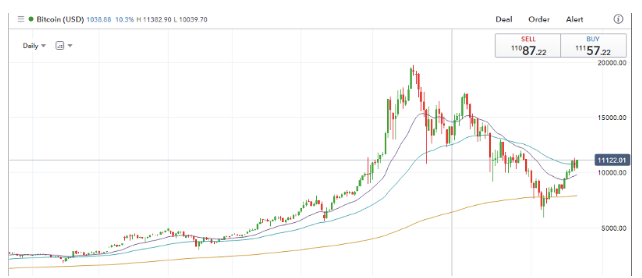
Is the cryptocurrency boom turning to bust? The chart below showing the value of Bitcoin since June last year suggests that it might be.
On the other hand, investors who have HODLed have seen the value of their coins rise by more than 85% since 5 February. Rivals Litecoin and Ether have also staged strong comebacks.
This rapid rebound means that anyone who bought Bitcoin as recently as October has already doubled their money. So the boom could still have further to go before it peters out, as I believe it will.
Source: IG.com
Stock market crypto-winners
Which stocks have profited from the cryptocurrency boom? Leaving aside the rash of dubious AIM firms that have climbed on the blockchain bandwagon to boost their share prices, CFD firms have been among the big winners.
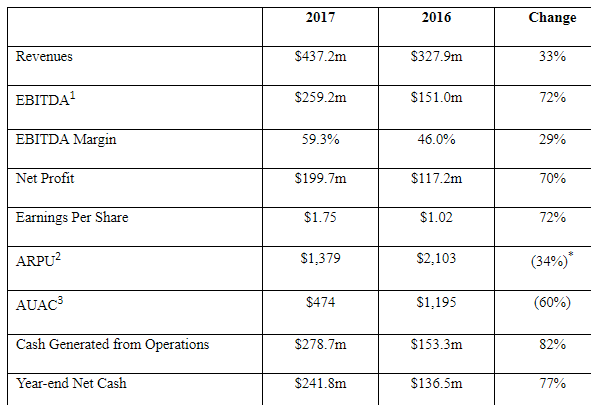
One of the most notable of these is Israel-based Plus500. New customer numbers rose by 136% in 2017, helping to lift revenue by 33% and earnings per share by 72%:
Source: Plus500 Ltd 2017 preliminary results
It’s worth noting how profits rose twice as quickly as revenue. Much of the improvement in profit margins appears to have been driven by the fall in average user acquisition cost (AUAC), which dropped by 60% from $1,195 to $474.
I’d hazard a guess that much of this reduction was due retail customers seeking out the firm in order to start trading bitcoin and other cryptocurrencies. Although Plus500 says that “less than 15%” of revenue came from cryptocurrency trading last year, I suspect the resulting contribution to profit was much greater than this.
Should I buy this stock?
Plus500 was one of Ed Croft’s NAPS choices for 2018. For similar reasons, this marmite stock has now qualified for my Stock in Focus screen.
I have to admit that the thought of buying this stock makes me uncomfortable. Personally, I can’t see how a company which grows so quickly and generates so much surplus cash can be a good quality, sustainable business.
I remember when the firm’s founders were happy to sell at £4 per share. Today the price is £12, despite the threat of regulatory restrictions on leverage.
Plus500’s performance has so far defied expectations, perhaps in part due to a good run of luck. Whatever the case, no-one can argue with the returns enjoyed by shareholders. During the last two years alone, this stock has risen by 137%, while paying out a further 20% or so in dividends.
The group’s latest results have now been fully digested by Stockopedia’s algorithms. They’ve left it with a StockRank of 99 and Super Stock status.
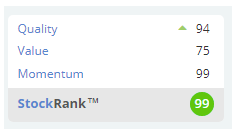
As the top-ranked eligible stock in my screen results, I have no choice but to consider whether to add these shares to the SIF portfolio.
Good value, but...
Plus500’s ValueRank of 75 is fairly ordinary compared to its 90+ quality and momentum scores. Why is this? The shares trade on a trailing P/E of 9.7 with a dividend yield of 6.2%, which seems cheap enough.
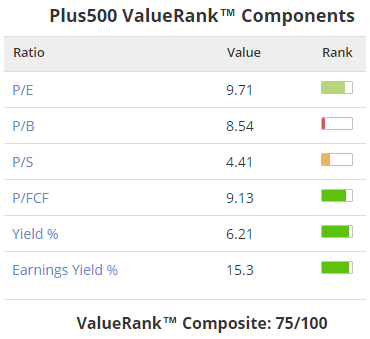
A price/free cash flow ratio of 9.1 indicates that earnings are fully backed by surplus cash. And the group’s earnings yield (EBIT/EV) of 15% is nearly double my screen’s 8% minimum.
The only weaknesses in terms of valuation is the price/book ratio of 8.5.
2 things concern me
Plus500’s balance sheet always seems odd to me. It has very little on it, aside from $241m of cash. Although you’d expect receivables to be low, given that customers fund any losses upfront, I’ve always been a bit surprised at the lack of long-term assets.
This is why the P/B ratio is so high:
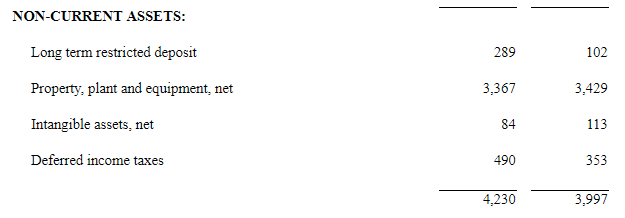
The firm’s website says that its“self-developed, proprietary technology” is the key to its success. But with non-current assets of just $4.2m and intangibles of only $84k, hardly any of this value seems to be reflected on the balance sheet.
Staff costs appear to be passed through the income statement as expenses. Perhaps its data centres are outsourced. But I’m surprised that the group hasn’t capitalised more assets to reflect the value of its trading platform.
In fact, the only sizeable liability on the balance sheet is a current obligation of $22.6m for “service supplies”. According to the 2016 annual report, this relates “mainly” to advertising service suppliers. I believe this will mostly be lead generation.
(If you’re interested in the detail of how the crypto-boom has affected Plus500’s lead generation costs, this article might be worth reading.)
My other concern is that customer turnover appears to be very high. Here’s a snapshot from last year’s results:

It seems fair to assume that the vast majority of new customers traded within the same period and became active customers. If that’s correct, then 78% of last year’s active customers were also new customers. In 2016, the equivalent figure was 67%.
While the cryptocurrency boom has increased the skew to new customers, Plus500’s business model does seem to be dependent on a constant supply of new customers each year. Presumably this is because many customers lose money and stop trading after an initial period of enthusiasm.
Plus500’s ValueRank reinforces my view of the stock - it will be great while it lasts, but it could come tumbling down. Will the planned regulatory limits on leverage be the final straw?
Super quality
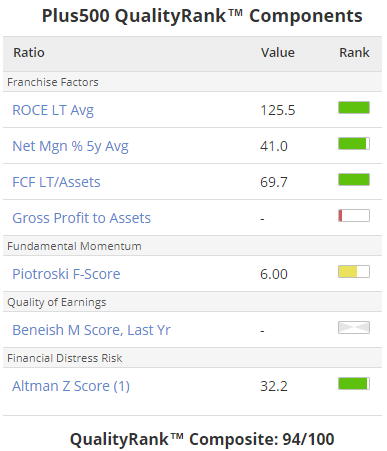
Plus500’s quality score is everything you’d expect. Very high returns on capital and profit margins are backed by strong cash generation. The results is a sea of green and a near-perfect score of 94:
Even the Piotroski F-Score of 6/9 is probably better than it looks. The three ‘fails’ are as follows:
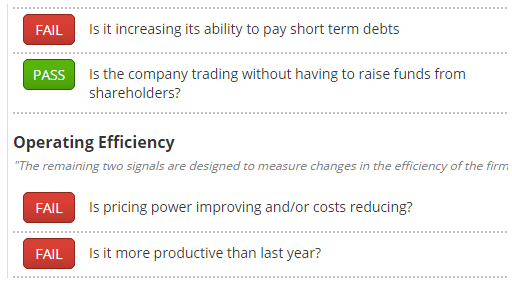
Short-term debts: In my view, this is largely irrelevant because although the group’s current ratio fell from 8.1 to 5.9 last year, this hardly represents a material concern in a company with ample net cash.
Pricing power: This is irrelevant because Plus500 doesn’t report gross profit.
Productivity: A reduction in asset turnover that reduced productivity -- might be worth considering. But a score of 8/9 isn’t bad.
Can we trust the momentum?
Plus500’s MomentumRank of 99 is all that you’d expect for a company whose earnings rose by 72% last year, and whose share price did even better.
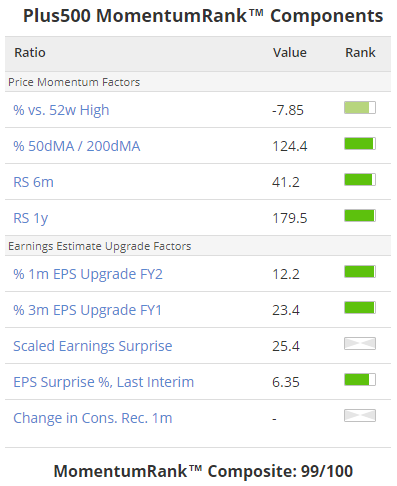
There really is nothing to fault here. Broker forecasts are also rising:
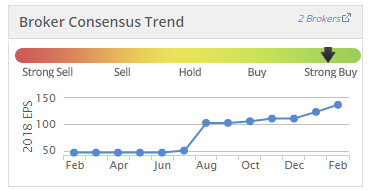
The question is whether it can continue. Personally I doubt it.
But for better or worse, I can find no good reason to reject Plus500 based on what I know today. As a result, I will be adding the stock to the SIF portfolio and to my personal holdings this week. Gulp.
Disclaimer
This is not financial advice. Our content is intended to be used and must be used for information and education purposes only. Please read our disclaimer and terms and conditions to understand our obligations.

21 comments
About 6 months have passed since this evaluation, and everything appears to have continued well, except perhaps the share price if the last few weeks are anything to go by. A high of £20.10 per share, then interims knocked this back to around £15 - fears of regulations hitting revneues, which I think have been overdone in the SP given the slides the company put out recently. I'm increasing my holding at these levels. It now passes 9 Guru screens btw.
Not sure why lack of non current assets is a concern. At worst this is a conservative accounting approach by management.
Roland,
I think your comment ‘Plus500 (LON:PLUS) business model does seem to be dependent on a constant supply of new customers each year. Presumably this is because many customers lose money and stop trading after an initial period of enthusiasm’ hits the nail on the head!
From my personal experience Plus500 (LON:PLUS) is basically a CFD gambling site and I was caught out trying to hedge a 'smallish' long position in a metals ETF (clearly outside my area of expertise!) when the price spiked hugely and they halted trading in the instrument. When they restarted trading a few days later the price opened way above my stop-loss, the position closed and I lost considerably more than my stop-loss. 'Caveat Emptor' on my part but I suspect that Plus500 (LON:PLUS) are doing so well because c. 80% of customers lose money on their transactions. As a past holder of the stock making a decent profit with various sales in 2014/15, before selling the final tranche when the share bombed in 2Q 2015 (c. 50% fall - regulatory issues) I should have kept the shares and steered well clear of the product!
I think you are right to view this with trepidation - the financials look too good to be true, regulatory risk is high, the business HQ is in Israel and the Crypto bubble must surely burst. Good luck with this one in the SIF portfolio.
Ignore me - ex div
8% down this morning.
Cant see any news.
Phil
I think its more accurate to say Odey has been rebalancing as his flagship fund was down 49% at one point recently over the last 2 years. Outflows & need to rebalance. Forced seller.
A bit like Neil Woodford could well be soon if his run of dismal performance doesnt improve. He holds some highly illiquid positions. Now that could be an interesting case study of illiquidity meeting forced seller...
You can see what Odey's fund says here: https://www.odey.com/media/251921/odey-arff-gbp-a-dec-17.pdf
Very bullish on the future of Plus.
They have been selling throughout the past few months. Probably mostly due to the need to rebalance as Plus has gone up so swiftly for them.
Interesting report but I think they've been selling since £4.
'Odey is a major bull on Plus500 (LON:PLUS), with a 20%+ holding if memory serves me correctly. He's been proved right so far, too.'
ODEY ASSET MANAGEMENT - 12.75% (Previous position: 13.98%), from RNS a couple of days ago. He's been selling for a long time, actually
shine66,
Thanks for pointing this out. I should have checked!
Having taken a look, he dropped below 20% in August.
Roland
I used to be a Plus500 (LON:PLUS) holder, but have been put off by quite a few factors, and NOT by legislation/regulation fears.
I made a few comments in another Discussion (starting from this post) that may be of interest to readers here.
In short:
A
Massive profits YE 2017, 100 per cent returned to shareholders.
Hi Roland,
I see you are buying in, but somewhat reluctantly! A few points:
- It looks like your dividend yield stat is based on the interim & final dividends, and excludes the special dividend. If you include this the dividend yield is more like 10%. They often pay a special dividend, the size can vary significantly, but that can be the case for the normal final dividend as well. They have also done a small amount of share buybacks in 2017.
- Developments of their systems are expensed as incurred (I believe), which can lead to a low book value. Personally I would probably prefer this, as it means profits match closer to cashflow. If they capitalise a large amount of development costs, this would inflate profits, so I would suggest this treatment is conservative accounting (assuming they could capitalise some if they wished).
- I suppose some of the positive points are captured in the stock ranks, but you don't seem to dwell too much on the positives. They have generated very strong cashflow, shown strong growth (revenue & customers), very high returns on capital, strong balance sheet.
- There is uncertainty regarding new regulations, and what will happen with the crypto side (either due to regulation or interest passing). In terms of regulations it is worth looking at what happened in Japan when they clamped down on leverage some time ago. It's also worth thinking about the offsetting uncertain positives, which are perhaps harder to envisage but could lead to a very good outcome e.g. new licences / expansion in to other countries could lead to the business being much larger and with lower proportional exposure to individual regulatory environments.
I am long (as you may have guessed). Appreciate people are wary of the company, and it's had an interesting ride so far, but I do wonder if it's sometimes judged harsher than some other company's.
Hi clouds,
Thanks for your comment. I think I did miss the special dividends and buybacks, so thanks for pointing these out.
I don't always like to include special dividends in my calculations of yield, as they can set expectations for the future at unreasonable levels. But I certainly agree that Plus500 (LON:PLUS) has been an outstanding generator of cash and has been disciplined at returning this to shareholders.
Regarding assets -- I agree that it's prudent to expense software development costs through the income statement, but I'm slightly surprised that the company doesn't seem to attribute any balance sheet value to its brand, platform and IP.
On the other hand, I suppose that these intangibles would be pretty worthless if the group fell out of favour with customers (or regulators). So perhaps an expense-only approach is the most transparent and appropriate way to value the business.
I think I mentioned some of the positives, but I suppose my stance is affected by my view that the firm's earnings may lack the quality and durability of rivals such as IG Group (LON:IGG) and CMC Markets (LON:CMCX).
Note in the table at the top of this article that average revenue per user at PLUS fell by around 34% last year, while the proportion of new customers rose.
I can't escape the feeling that this company makes most of its money from inexperienced and (often) loss-making traders, many of whom throw in the towel after a short while. This makes me a bit nervous.
Regards,
Roland
Thanks for the response Roland.
I think ARPU & AUAC have been skewed by a couple of factors:
- Large number of new customers in Q4, who wouldn't have had much time to contribute revenue when looking at the year.
- Cost of acquisition falling due to new users seeking out a way to trade cryptocurrency's.
They do gain a large number of customers, and many of those don't stay with them. I've heard this described as a process whereby the underlying growth (that remain with them) is still substantial, even after such a large number stop trading with them. I think this is probably supported by the active customer numbers vs new customers reported over time.
I'm not always convinced IG Group (LON:IGG) are as different as people think, for example on the regulatory side they used to offer binary bets (which are / or are being banned by ESMA, and personally strike me as a fairly ludicrous offering), and allowed accounts to go into a negative position (I think also being banned by ESMA). Appreciate they are perhaps generally more aimed to serious investors / traders. Interestingly IG have often seemed more concerned about the ESMA regulatory changes when compared to Plus500 (LON:PLUS). I do wonder if PLUS have substantially lower operating costs, and may be better able to cope with more adverse conditions. PLUS also are less UK focused I think.
It's worth seeking out the Odey Asset Management commentary on PLUS, I found it helpful.
Hi clouds,
Odey is a major bull on Plus500 (LON:PLUS), with a 20%+ holding if memory serves me correctly. He's been proved right so far, too.
I take your point about gradually accumulating sticky customers. I agree that's probably a realistic view of how this sector works. As with any specialist activity that's in fashion, many people dip their toes in the water but only a few stick around.
My concern is that the attrition rate at PLUS is higher than at some rivals. However, this may simply be because of the firm's target user base (retail traders). In contrast, my understanding is that it's now quite hard to open a CFD/SB account at IG.
I think this whole sector carries some risk, but my feeling is that CFDs and spread betting are a natural fit in today's electronic trading world and will persist. What could change is the shape (and profitability) of these services. Remember how profitable stock broking used to be...
Cheers!
Roland
I commend your objectivity,Roland.I've been advised both to buy and to short it. I'll continue to steer well clear..
thanks Roland.
Hi Roland,
It's a good article, thanks, and on a share I'm interested in as it's a current holding. The essential message I got from your article is what I have been thinking for 6 months or so: the fundamentals can't be faulted, but there are other less tangible issues that cause it to be a share that twangs the nerves on a regular basis.
The recent full year results were impressive. As has by now become usual, they were better than expected for the full year, and revenue expectations for y/e 31 Dec 2018 were increased already, which seems odd/impressive.
As you said, year end net cash was $241.8m (£174m) which I understand does not include any client monies. They talked about a consolidated industry in the short to medium term, but don't say whether or not they will make any acquisitions. They certainly have the capability.
They are very generous with shareholder returns, either with dividends (or buybacks last year).
They seem to think the regulatory threat wouldn't affect them much, although I suppose it's in their interest to say that, and they state they would adapt anyway: "the Board believes the proposals are unlikely to have a material adverse effect on the Group's business". We'll see. Once ESMA announces its proposals, I expect the shares will take another hit, but the market is aware of the worst outcome in terms of the reduction in leverage. There is a question mark over the CFDs on cryptocurrency, as ESMA tacked this on as an after thought to its consultation. I expect ESMA already knows what it wants to do on all scores, but had to go through this process to look like it cared.
On the customer churn, which Graham Neary has highlighted previously, they state that this has been reduced again in H2, apparently due to improved customer service. However it does not give any figures on this so I'm taking this with a pinch of salt.
I'm holding for the being, and will monitor this very closely, as they seem to find a way through the mire each time. Whilst the ESMA proposals will certainly affect PLUS, and competitors, it is not these companies that they are trying to stop. It's the much much smaller end of the market, like the old boiler rooms.
If there is a general market slowdown, or worse, this will be hit sharply, as it's only really everyone's general appetite for generally risk-on assets which is providing these bumper profits. I reserve the right to dump my holding at any time if it starts to freak me out.
Thanks
Chris
Roland,
PLUS has taken two hits by regulators and come out of both smiling. I think the regulators have moved on to more pressing matters than trying to stop idiots from losing money. As part of a diverse portfolio, as in the case of my wife, PLUS is not only a star growth stock, but more importantly, a star income stock (We are both retired). I made a great deal of money from PLUS in the early days, and invested for my wife after the second swipe by the regulators, on the basis that lightening will not strike three times in the same place. PLUS is widening its international offerings, and more and more environments accept the model as reasonable.
I am no fan of cryptocurrencies, but I have no objection to making money from those who are.
As a company, PLUS has always either met or exceeded its forecasts, been open about its engagement with the powers that be and provided us with excellent returns.
Hi Jasper,
Thanks for your comment. I certainly agree that Plus500 (LON:PLUS) management certainly seem very able and have made a lot of money for investors (including themselves) so far.
Regards,
Roland