Sucker Stocks - why do we love to own the worst prospects in the market?

In the aftermath of England’s early exit from this year’s Rugby World Cup came an intriguing but sadly familiar tale of misadventure in the stock market. During the tournament preparations it’s alleged that the team’s kit manager shared a tip about the ‘exciting prospects’ of a micro-cap oil exploration company. This apparently lulled some players into parting with tens of thousands of pounds for the stock. Like the team’s on-field performance, there were high hopes for shares in LGO Energy, but the hype failed to live up to expectations - as the price chart shows...
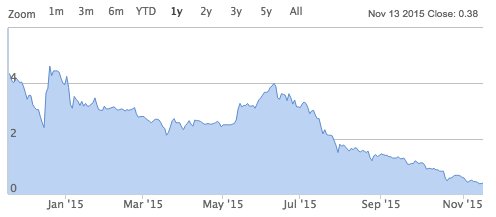
This was a classic case of story over substance tempting investors into a stock where the statistical likelihood of a good result was low. The share wasn’t obviously cheap, it had low quality characteristics and its momentum was declining. But it did have vocal supporters who were prepared to talk-up its prospects to anyone that would listen. In the Stockopedia taxonomy of stock market winners, we classify these shares as Sucker Stocks.
The traits of a Sucker Stock
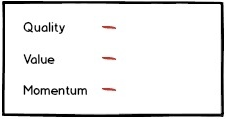
Sucker Stocks have very little exposure to the Quality, Value and Momentum factors that have historically generated the strongest returns in the stock market. Typically they have blue sky business models or operate in highly speculative sectors that may be experiencing cyclical downturns.
Occasionally, they will be broken firms that have lost the confidence of most of the market. But unlike Value Traps, the appeal of their story to some investors often means that these low quality, low momentum shares remain over-priced.
Moreover, these stocks are often small and attract scant coverage from analysts. That means their poor quality and stretched valuations may not be obvious to gullible investors. It makes them particularly vulnerable to the kind of rumour and conjecture that is rife on internet bulletin boards. All these factors can easily suck in the unwary.
Robert Haugen’s “stupid stocks”
The profile of these shares is well known in academic finance. Some of the best analysis was done by Robert Haugen, the groundbreaking financial academic who sadly passed away recently. In his wonderful book, The Inefficient Stock Market, he referred to them as Stupid Stocks.
Haugen’s research into long term expected returns found that the best performing shares had the characteristics of what many would recognise as GARP stocks - or Growth at a Reasonable Price. These were low priced, low volatility shares with a strong growth profile.
By contrast, the shares that delivered the lowest returns were generally exposed to a heap of negative factors (although not all at the same time). Haugen defined the ultimate Stupid Stock as “relatively small, and illiquid, risky, financially shaky, negative momentum, unprofitable now and getting worse, yet selling at high prices relative to current sales, cash flow, and earnings”.
The strong link between poor returns and the sorts of negative factors Haugen highlighted has led some to use them for short selling strategies. James Montier, during his stint as Global Strategist at Societe Generale, wrote extensively about the tendency for expensive, deteriorating, poor quality stocks to systematically underperform.
To prove the point, he created an ‘Unholy Trinity’ strategy. It deliberately looks for stocks with a high price-to-sales ratio (ie. expensive), a low Piotroski F-Score to isolate deteriorating fundamental health, and high total asset growth as a signal of poor capital discipline. Between 1985 and 2007 a portfolio of such European shares rebalanced annually would have declined over 6% per year against a market that was rising 13% per year over the same period. Stockopedia’s tracking of the Unholy Trinity strategy has also seen very poor performance (as it should). You can see the performance here.
Red flags - expensive, poor and deteriorating
These negative characteristics echo the profile of stocks that score badly against Stockopedia’s ranking of Quality, Value and Momentum (QVM). Specifically, shares with low StockRanks will be afflicted by a combination of:
- Expensive valuation - In the absence of earnings, valuations may have to rely on ratios like Price to Sales and Price to Book, which can quickly highlight shares on overstretched ratings.
- Financial weakness & low earnings quality - As these shares tend to be blue-sky, or pre-revenue ventures they will likely have negative profitability (e.g. a negative Return on Capital Employed), poor or non-existent free cashflow and have a history of diluting shareholders through consistent secondary share issues. They may also flag for potential earnings or bankruptcy risk, as measured by the Beneish M-Score or Altman Z-Score.
- Poor price momentum and broker downgrades - Share prices of Sucker Stocks will likely have been weak against the market. Brokers may have revised down their forecasts, or the firm may have missed earnings expectations.
How Sucker Stocks have performed
Over the past two and a half years, a portfolio of shares with a minimum market cap of £50 million and StockRanks in the bottom 10% of the market has limped to a 50% loss. Portfolios with StockRanks in the bottom 20% and 30% of the market lost around 29% each. By comparison, a portfolio holding shares with the highest blend of Quality, Value and Momentum produced a 63% return.

We have previously looked at the relatively poor performance of Momentum Traps, Value Traps and Falling Stars. Each of these categories relies on just one of either Momentum, Value or Quality to drive a return. What we found in each case was that there were periods in recent years when they did well. But over time they all underperformed.
In contrast, with Sucker Stocks, periods of ascendancy have been virtually non-existent. With the exception of a brief spell in the summer of 2013, the low ranking portfolios have endured a steady decline. This dire performance strongly suggests that this is an area of the market that, if not avoided entirely, needs extremely careful handling.
Some sucker stocks today?
Using the Stockopedia Screener we scanned the market for companies with some of the lowest Quality Value and Momentum rankings using the following rules:
- Quality Rank < 40 (below average operational quality)
- Momentum Rank < 40 (a deteriorating trend)
- Value Rank < 40 (more expensive shares)
- Market Cap > 50 (removing the smallest companies)
As expected, the results are weighted towards small-cap companies in commodity sectors like oil & gas and mining, and speculative areas like biotech/ healthcare and technology.
While the evidence suggests that investing here has a statistically low success rate, roaring individual successes obviously do happen. This may be the reason why investors are so attracted to investing in these shares. The allure of Lottery Ticket type payoffs can be immensely attractive.
Here are some of the notable names on our current Sucker Stock list.
| Name | Mkt Cap £m | Stock Rank™ | Quality Rank | Value Rank | Momentum Rank | Sector |
| Ophir Energy | 629.8 | 17 | 26 | 28 | 33 | Energy |
| Gulf Keystone Petroleum | 251.9 | 4 | 2 | 19 | 26 | Energy |
| RM2 International SA | 182.9 | 5 | 12 | 6 | 33 | Basic Materials |
| Horizon Discovery | 140.2 | 13 | 21 | 18 | 39 | Healthcare |
| Quantum Pharma | 133.1 | 17 | 28 | 24 | 34 | Healthcare |
| Gama Aviation | 121 | 12 | 8 | 31 | 35 | Industrials |
| Nanoco | 114.4 | 4 | 39 | 5 | 3 | Technology |
| Rare Earth Minerals | 51.8 | 10 | 21 | 20 | 27 | Basic Materials |
| Flowgroup | 50.4 | 4 | 1 | 37 | 8 | Industrials |
| Bango | 50.4 | 8 | 35 | 4 | 21 | Technology |
Perhaps the words used by executives to name some of these companies should instantly ring alarm bells? Horizon, quantum, rare, nano, gama, discovery, bang…. these all sound other-worldly to us.
Why people love sucker stocks
What normally happens when we publish lists of ‘sucker stocks’ is that defensive shareholders come out in waves to unleash a torrent of reasons why their favoured stock shouldn’t be in the list. Some of the usual suspect reasons are:
- Valuing the company on historic measures is not relevant as the reality is all about the future.
- The technology once fully commercialised will ‘revolutionise’ an industry or the world.
- There is some upcoming ‘transformative’ event that must be taken into account (like a drilling result or an FDA report).
- Our numbers are just plain wrong.
Nearly every sucker stock always has a strong story behind it that will (apparently) lead it to redemption. But we humans are blinded by the allure of a good story. The facts are plain. Just as with lottery tickets, some sucker stocks may do well but, if past trends persist, the majority are likely to underperform. We can almost guarantee that every investor holding one of the above stocks will believe that their stock is ‘the one’ which will outperform. But everyone can’t be right.
The really sad truth is that individual investors just love loading up on these losing plays. If we look at the most discussed shares on UK bulletin boards and put them into the Stockopedia Bubble Charts it’s obvious that there are far more sucker stocks (bottom left) heavily discussed than super stocks (upper right). Perhaps we should learn from Odysseus and block our ears with wax so we don’t succumb to the siren song of story stocks.

Lessons from Sucker Stocks
The major lesson here is that shares which rank badly for their Quality, Value and Momentum should immediately raise red flags in the minds of investors and require very detailed research.
Warren Buffett once remarked in a letter to shareholders of Berkshire Hathaway:
“...if you aren't certain that you understand and can value your business far better than Mr. Market, you don't belong in the game. As they say in poker, ‘If you've been in the game 30 minutes and you don't know who the patsy is, you're the patsy’.”
To varying degrees, portfolios are dragged down by exposure to shares that are overvalued, poor quality and on a deteriorating trend. Yet, for various psychological reasons, this class of share still holds great appeal. And while there may be individual cases of remarkable recovery, evidence suggests that the odds are stacked against it. So when constructing a portfolio it’s best to keep to an absolute minimum the number of sucker stocks held.
For investors and rugby players alike… it’s worth treating tips and bulletin board hype with great caution. The prospect of quick riches from speculative story stocks is likely to end in tears… or at least an early bath.
To find out more about the taxonomy of stock market winners, you can browse through the entire series:
- Towards a taxonomy of stock market winners
- Contrarian stocks - how going against the crowd can put you ahead
- High Flyers - how to beat the market in expensive and highly priced shares
- Turnarounds - how to find value shares that are bouncing back
- Falling Stars - how to handle glamour shares that fall from grace
- Value Traps - how to avoid bargain stocks that might never recover
- Momentum Traps - how to avoid the siren song of overhyped stocks
- Sucker Stocks - why do we love to own the worst prospects in the market?
Disclaimer
This is not financial advice. Our content is intended to be used and must be used for information and education purposes only. Please read our disclaimer and terms and conditions to understand our obligations.
104 comments
Great road map!
In the last few days, International Consolidated Airlines Sa (LON:IAG) has now become a sucker stock, but £RYA is no longer one.
Given that UK covid figures are accelerating rapidly day by day, has the time has come for all airlines to be considered sucker stocks?
What is happening with Ryanair Holdings (LON:RYA), no rankings and no share price chart since last year.
It delisted from LSE. It's only trading in Ireland now.
Thanks Ed, would it not be a good idea to put that information on the Stockreport, similar the Bid situation notice and also zero the share price movements.
I see that Wizz Air recently went from sucker stock to neutral. Why?
https://simpleflying.com/wizz-...
Expanding while there is a pandemic in full swing looks reckless to me. Latest net debt has gone from 388 to 1690 million euros.
The revenue prediction for 2023 looks daft: a 365% increase on the 2021 figure.
I reckon there is more of a case for Wizz Air being a sucker stock than Ryanair.
If only subscribers could plot the results of their screeners too!
Sirius Minerals springs to mind. I was a brave gallant and fool hardy novice invester and also a new user of Stockopedia. I checked SXX on Stockopedia and it came back described as a "Sucker Stock" Did I believe Stockopedia? Of course I didn't and invested in Sirius!
Luckily managed to get out by the skin of my teeth and only lose a small amount of money. The whole situation was rather embarrassing and I was simply sold a story to good to be true.
I have a more cautious approach to investing now after that hard learnt lesson.
I do feel "Sucker Stock" is a poor, unpleasant and rather brutal name. It carries the implication that anyone who buys such a stock must themselves be a 'sucker'. Sometimes we know that isn't going to be case. Instead, they are simply going to be someone that has spotted something about a stock that the rest of us haven't.
I far prefer the term "Siren Stock". It's more accurately descriptive, it doesn't imply any judgement about the person who chooses to buy them ... and it's simply a far more cultivated use of language.
I've been at Mello Derby for 2 days (where 700 private investors have gathered) and talked to many about this terminology. There's something of a buzz about the term 'sucker stock' here - partly due to controversy, but also about the 'nudge' that it provides to help make you think twice about investing in low odds stocks. I was speaking to Gervais Williams who agreed that these 'nudges' are a good idea, and nobody here has complained that the term is a negative.
Someone was talking to me about the fact that G4Music has turned from a High Flyer in October, to a Momentum Trap to a Sucker Stock in short order. Of course many still own £G4M after a great run for the stock last year... but those who discussed it with me saw the classification change and the terminology as humorous and thought-provoking rather than offensive.
It is a bit of a provocative title. Not sure it is 100% accurate as lots of sucker stocks will change into other categories and do well. As discussed before I wonder how a portfolio of sucker stocks does without category changes? So starting year X with a fixed portfolio of sucker stocks then seeing how they perform over 10 years. I think the system of changing the categories to evaluate the performance may be flawed. People buy sucker stocks in the hope that their category will change. So if they buy them they will hold over the long-term.
A performance evaluation system that kicks out sucker stocks that have changed category doesn't make any sense to me. That is not how people invest. It also means that the performance of sucker stocks will look much worse than it would otherwise be. Who would buy a portfolio of sucker stocks and sell out of the ones that are no longer sucker stocks and keep the ones that are?
I am surprised that Gear4Music could be a sucker stock. I personally don't have a huge issue with the sucker stock label. It is a bit tongue in cheek and provocative. I am not really sure how accurate it is though. Some sucker stocks are just early stage companies that will look poor until they reach profitability. Personally I don't take the labels too seriously but for people who do maybe the term sucker stock doesn't work.
It is good, probably, to have a wake up call when looking at companies that appear to be very weak. However, taking EU Supply (LON:EUSP) it is pretty clear that in two year's time it won't be labelled a sucker stock. Is it appropriate to dismiss it now just because it is labelled a sucker stock. That makes no sense to me.
So my issue with the sucker stock label is that it is only fair if it takes the sucker stocks at a point in time and then assesses their long-term performance excluding category changes. I.e. it doesn't throw out a sucker stock if it changes category. On that basis it would be interesting to see how many sucker stocks do well.
A few are likely to be recovery/early stage growth stories and do spectacularly well. Probably sucker stocks contain some of the companies that have gone onto be the biggest winners out there. Maybe Boohoo.Com (LON:BOO) was a sucker stock after its post-IPO profit warning. If it is the case that some sucker stocks do spectacularly well if held as their labels changed then maybe the sucker stock label is somewhat misleading. Sucker stocks could be the place to look to find the biggest winners which seems counter-intuitive!
People are getting hung on the application of the term (whether it be SuperStock or SuckerStock) to one stock or another. That is not what the StockRanks and classifications are about.
Rather it is if you hold a portfolio of 'Sucker Stocks' you are likely to lose on ~60% of the trades and if you hold a portfolio of 'Super Stocks' you are likely to win on ~60% of trades.
Given those figures what would you call someone who had a portfolio of 'Sucker Stocks'?
Talk about trying to push an elephant uphill!
Best of luck
Phil
Phil, I understand your point. But investment is about the future. I can certainly accept that sucker stocks will generally do badly. However, if you see a stock and you are 90% sure it won't be rated as a sucker stock in a year or two year's time does that mean you are buying a sucker stock? For me it doesn't really mean that. In reality you are buying a stock that will have a different label down the road. I agree that buying a stock that will always have the sucker stock characteristics is not good. But if you can predict a rating change then are you really buying a sucker stock?
EU Supply (LON:EUSP) - I think it will be almost impossible for this to be rated as a sucker stock in a year's time. They will be profitable this year and the valuation is very modest. So in reality I am buying a stock that will not remain a sucker's stock. But lets come back in a year and see if EU Supply (LON:EUSP) is still rated a sucker stock.
My issue is that if the classifications change a lot, as they do, it is hard to be a long-term investor on that basis. For example, apparently £G4M became a sucker stock recently. But I am more of a fundamentals and business person. Stockopedia's algorithms while no doubt very good are always using past data. For investors we are concerned with the future. Yes the past can be a guide to the future but it does not determine the future. It is useful to use our heads to see what the future may bring IMO.
When I think of EU Supply (LON:EUSP) I don't think of it as a sucker stock. I think of it as a highly rated stock in a year or two's time. If I was buying the past it would be a sucker stock but I am buying the future.
EU Supply isn't currently rated a Sucker stock - it' Style Neutral. But won't Brexit make it a sucker stock in a year's time?
shipoffrogs - in my Stockopedia it is still rated as a sucker stock. Maybe it has changed I don't know. But my one still says sucker stock. It was definitely rated as a sucker stock before. Brexit and EU Supply - no I don't think so.
Well I agree that investing is about the future. But the question ... are you Mystic Meg or Septic Peg?
I don't buy stocks with certainty in the companies, I buy a basket of stocks knowing some of them will fail and others will do well. And perhaps that whole strategy will fall apart if conditions change.
With respect to EU Supply (LON:EUSP) ... that's the point ... I'm not interested. I have a system based around probability based upon academic research and that system says £EUSP won't at this point match my criteria ... if it does I'll consider buying it. In the meantime it might well do well and there will be loads of stocks I don't buy that will do well, including Sucker Stocks. *shrug*
I am full of admiration of the ability of Paul & Graham to deconstruct companies, sectors, markets, sentiments, management teams, etc. ... but really ... come on ...
Every reader has to answer the question ... Can I do what they do for myself? or Do I even need to do that?
Every morning up reading RNS's, sifting through thousands of spun missives from CEO, CFO's and PR departments?
Maybe it might help one's ego to think that one can do it?
Or perhaps what I suspect is going on, many people follow the views of influential posters and buy what others like. They kid themselves they are doing well but really if the source of the influential posting is removed they are rudderless.
If I can generate 25% annualised over 5 years (that's not hypothetical btw) without seeking guidance from an external locus and not having to do all of that work digging through the context of a business or even knowing really what a company does beyond the Stockopedia headline of the company's activities then why should I waste so much time digging through tons of fools gold hoping to find a nugget?
I'd imagine most people here are not full time investors, they are doing some sort of full time job, maybe managing a family too. For me it's about efficient use of my time and maximising returns whilst limiting downside.
I think some people strongly identify their ego with their ability to 'know' businesses and the idea of letting go of that is challenging to them.
Phil - Not mystic Meg unfortunately. I don't disagree that buying stocks that are rated highly in the Stockopedia system will do well. Your returns are very impressive and Stockopedia is a very easy to use system. I am only saying that personally I wouldn't rule out a company if it was rated as a sucker stock. I just met EU Supply (LON:EUSP) at a show (Cenkos/shares magazine) earlier this year and they seemed ok. I could well be wrong though. I was just using it as an example.
I agree that most sucker stocks will not do well. In reality for all shares, over the long-term, the performance is driven by business fundamentals. I think we can assess the fundamentals for early-stage shares as well as more mature companies. But maybe I am wrong and the opportunity cost is that I am spending time on weaker companies rather than fishing in the more attractive pool of stocks. Personally I like to get my head around the fundamentals of a company. I think you and Ed would do more of a portfolio/statistical approach. Hopefully there are many ways to skin a cat that can work!
I admire your rationality Phil and think myself mad for being less rational but is a constant battle with myself! As a part time investor it is a hobby and I'm interested in companies and therefore stockpicking. But that's mad. I could do better with less hassle by following the odds. Oh no. There I go again. It's hard to be ruthless.
Hi Richard,
it's weird isn't it.
I encounter it in my work sometimes too, e.g. with addiction issues and the intervention goes like this ...
"I walk up to you in a pub and offer you some new amazing substance.
I tell you that the initial hit will be the MOST amazing feeling of contentment that you've ever experienced EVER!
but ... it'll be short lived and you'll forever be chasing that first seductive embrace.
It'll be your primary focus, the first thing you think about when you wake up until you score and the last thing you think about before you sleep.
Over time IT will come to control you, whispering it's sweet seduction but it will destroy you and those you care about as you prioritise IT over everything else."
I ask them what they would say to my offer and the client usually tells me that they would tell me where to go ...
Only when a client really faces up to the stark reality of their relationship to IT, whatever IT is, can they begin to take a more rational perspective; consider what they actually want and consider change to achieve it effectively.
If I sidled up to you in a pub and said I'm offering two investment opportunities; one which generally has a hit rate of 30% and the other has a hit rate of 60%, but I pay a lot closer attention to the first option what would you say to me?
I know what I'd ask ... "what is the risk adjusted return of each strategy?"
My suggestion would be if you love picking stocks based on analysis, stick em in fantasy fund and pat yourself on the back (either when you pick a winner or when one goes badly wrong and you have the satisfaction of knowing it's just a fantasy fund). In the meantime, invest your hard earned lukka and your families future in a less risky and more lucrative alternative.
Well this is all a good natured debate I hope. I don't personally try to find sucker stocks. My point is that we are buying the future. I try to see how a stock will be rated in a year or two's time rather than now.
I am happy to bet 2 to 1 that EU Supply (LON:EUSP) will generate a positive return over 2 years and will not be rated as a sucker stock in 2 year's time (say May 2020 after full year results for 2019 have been reported). It is almost impossible that the quality rank for EU Supply (LON:EUSP) will be two in 2 year's time. So I don't perceive it as buying a sucker stock in the sense of one that will always remain in this category. I do accept that most sucker stocks are fairly dire i.e. companies like Torotrak etc. They never make any money and just continue to bleed cash.
I think the difference between me and you guys (Ed/PhilH) is that I am willing to get into the fundamentals of a business to see how it will look going forward. I understand that other people prefer a statistical approach. Fair enough. But some of the highest ranked stocks on screens actually look fairly poor to me. They are cheap for a reason i.e. cyclical sectors or own wasting assets (mines).
All my posts have been thumbed down here ;( I don't disagree with the statistical approach I just think understanding the existing business is very powerful. This is what Buffett and Terry Smith does. Are we saying that those guys are idiots and should just be doing things off the back of statistical screens? Buffett has bought some stocks at the bottom that would no doubt be rated at sucker stocks at the time of purchase.
Hi ratioinvestor.
Not quite sure why your comments are getting the “thumbs down”. Seems a bit puerile when all you’re doing is challenging the latent group think that factor investing is the only way to go.
Ultimately we all run our portfolios to suit our own ends and means and it’s up to each individual to work out what gives them the best financial return together with a number of other “soft” benefits such as peace of mind that they’re not taking undue risk and the satisfaction from picking a winner against the form book. To my mind, part of the attraction of a sucker stock is the chance to beat the system. Would you prefer to make a £1 gain from a purely mechanistic factor approach or 90p from a carefully researched sucker stock that everyone else is calling a dog? Rationally, you take the £1 every time .... unless you maybe have enough £1’s already and enjoy the challenge of playing a different game strategy and derive an added satisfaction from that (and just maybe the possibility that the 90p becomes £5).
I’ve been investing in shares for about 30 years and have tried various methods from fundamental research through a chart/technical based approach. It’s quite common, I find, for advocates of each method to become quite evangelical that they’ve chosen the “one true path”. I’ve been a Stocko subscriber for about three years and have used the tools it provides to accumulate quite a diversified portfolio with a fairly large portion of the total now based on factor based principles. I am, however, very much still learning the game and am happy to experiment with alternative strategies. Likewise, I wouldn’t suggest anyone try and copy my approach.
Looking through my portfolio, of my 150 or so holdings, of the top 10 total returns none are Super Stocks. Of the top 3, (all of which have made over 300% returns) IQE (LON:IQE) , Boohoo.Com (LON:BOO) and Falcon Oil & Gas (LON:FOG) , we have one Neutral, one Momentum Trap and one Falling Star. At the other end of the spectrum, of the bottom 10 performers 4 are (now) Sucker Stocks, although 4 are Contrarian and one, Spaceandpeople (LON:SAL) is now classified as a Super Stock (even though I’m down 40% since acquiring it). Does this prove anything? Probably not, or if it does, I’ve not figured it out yet.
Am I 100% happy with the stocks I own? Not really - it’s a constant exercise weeding out the failures and deciding where best to reallocate the capital. Could I have made a better return from doing something different? Almost certainly, and I freely admit I’m still regularly making mistakes. Am I getting better at it? I like to think so, but it’s a complex game with many variables and you only really find out when (if ever) you reach the end. All said and done, however, I enjoy the challenge of trying to get better and would encourage everyone else to do the same and find their own path.
Gus.
Gus, 150 holdings?! I'd have a nervous breakdown trying to keep up with all those!
Hi ricky65.
Oddly enough, I used to run a concentrated portfolio of about 20 stocks and found it way more stressful. One bad RNS and a meaningful chunk of the portfolio disappears. Although 150 holdings sounds excessive, this gives me the protection of diversification while also allowing me the freedom to dabble in the occasional long shot. So far, I seem to have avoided falling in to the trap of ending up with a passive tracker although that is clearly a risk with so many positions. It’s much easier to monitor positions nowadays with a real-time facility like Stocko than it used to be so the day to day admin is pretty straightforward (the tax return can be a bit of a ‘mare though!) and most of the time is spent dealing with a relatively small number of “awkward” stocks.
Gus.
I have analysed Terry Smith's portfolio before and I'll do it here again. These are his top 10 holdings.
As you can see - it's a portfolio full of low risk (conservative/balanced), large caps - all but one a 'winning style' in our classification system. His style is very aligned with the "High Flyer" archetype. i.e. rather expensive, high quality and good momentum businesses. There's not a sucker stock in sight !
Stocks with strong fundamentals tend to have a higher quality rank. Terry Smith buys high quality businesses - but that quality (profitability/cashflow/margins etc) is present now.... not in an imagined future. The problem with forecasting future quality is that humans are terrible at forecasting! I recommend reading the "Folly of Forecasting" in this paper - The Seven Sins of Fund Management'.
Something like 80% of people think they are a better than average driver. It's no different in investing. We just aren't as good at predicting the future as we think we are. It's called 'illusory superiority' and is one of the more expensive of the common biases!
I just prefer to avoid low probability bets, and I think it's wise, when constructing a portfolio, to minimise the number of them across one's portfolio. It doesn't matter if you are a systematic or a discretionary investor - the stats will win out - that's why even Terry Smith & Warren Buffett put the stats in their favour !!!
Ed, thanks for the reply. Yes Terry only buys high quality stocks. He did by Novo Nordisk when it was experiencing a weak patch and also Domino's Pizza (US) when customers weren't fond of it.
I think this debate is largely driven about whether we can forecast the future. I think for high quality stocks we can but I understand that some people think we can't. Most human beings forecast things that are not predictable and don't impact returns anyway. If you try to forecast things that are predictable and impact on returns then it can make sense. Forecasting is discredited in the sense that people predict unpredictable things like election results or macroeconomic trends. But I can predict that we will all use shower gel tomorrow and brush our teeth.
I don't think the statistical approach is awful it just has limitations and implies a fair bit of trading. I do think qualitative analysis is very important for things like moats, customer franchise etc. At the end of the day you are forced to do qualitative analysis for IPOs for example.
I understand the view that taking "low probability bets" is irrational. But I think that if you have the ability to see which ones will be winners it can make sense. I don't mean to mention this company so much but the only reason I looked at EU Supply (LON:EUSP) is because I met them at an investment fair. The have recurring income and switching costs for customers. I wouldn't recommend anyone buys them as they are too small. But they illustrate to me that qualitative judgements can work.
I do absolutely agree that you shouldn't have too many sucker stocks in your portfolio as on average they are awful. I just think it is worth doing the homework on some of them. I don't disagree that the "stats will win out" I am saying that sometimes we can identify sucker stocks that will move into other categories and subsequently perform well. That is a different question really. Can we identify sucker stocks that will eventually change category and deliver good results.
I do agree in principal that starting with sucker stocks to look for ideas probably isn't great. I only have one sucker stock and it is a small part of my portfolio.
When it comes to Terry Smith you are almost actually illustrating my point. His last position was Facebook which he added recently. My argument would be that he should of added it at say $30 when it was unloved. Instead he added it at the recent price of $155. I think Facebook was reasonably predictable: network effects, a loyal customer base and growing online advertising. Terry Smith also added MercadoLibre late into his FEET fund. If he had added it when the fund had started he would of done much better. Both stocks were high quality and appeared to be predictable.
The response may be that no one could have forecast Facebook's success when it was US$30? But Google had tried to compete and failed, network effects are the most powerful moat and they also drive growth by attracting more users.
But we can all agree that you should only look at sucker stocks at your peril. I know some people trust statistics but for me I have to look at the business to see what it is all about.
I also think it is easy to misconstrue Terry Smith's approach. He doesn't buy of statistical stock styles he tries to understand the business. That is largely the key to his success. Many stocks here have had high ratings and subsequently had issues. Terry Smith has avoided this largely by seeking to understand the business. I agree he doesn't tend to buy sucker stocks but he has done well by trying to understand whether a business will do well long-term. Smith also attributes part of his success to low turnover. That isn't really possible with a statistical approach and you need to focus on the business. I.e. £G4M recently rated a sucker stock.
Probably best we pause this debate as it could go on forever! I guess we will have to agree to disagree on some points and agree to agree on others.
You misunderstand though ratioinvestor ... the screens I use are driven by fundamental data so I too invest based on fundies except I don't dig into the detail.
I buy high quality stocks, that are winning, exhibiting cheap growth and appear to be in favour through price momentum. They are usually either HighFlyers or SuperStocks.
btw I don't ever recall thumbs downing a post and I think it's out of order personally.
I like the debate as it can draw out details of your own approach.
I'm not saying Buffet, Smith, Paul, Graham are idiots ... but each person has to be honest with themselves ... Am I as talented as Warren Buffet?
PhilH - good point there. If you don't have the time to look into the business a statistical kind of approach probably works best. I hope to own businesses for ages and so don't view looking into them as a waste of time. Also interesting that Buffett lost everything on Dexter Shoes. So if he can lose the lot we all can.
I think your results certainly show that your approach of focusing on HighFlyers and SuperStocks works. I should maybe have a go at trying it myself. I find it hard instinctively, though, not to try to get underneath a business to see what it is all about. I don't really trust the statistics or want to turnover my holdings too much. I think as small investors we can follow the statistical approach as we can exit and enter positions easily. Larger investors are forced to take a fundamental approach as they can't enter and exit so easily.
Thumbs down - not a huge fan of that myself. An alternative might just be to have a "report this post." People should be able to have an alternative view.
Great points and will probably leave this debate now as otherwise we will be here forever! Good luck on your run.
@ratioinvestor - I think you've got the wrong mental model of how the performance studies work. Do let me explain it more clearly.
We've just completed a 5 year test of their performance from the launch of the StockRanks back in April 2013. At the start of each annual period, all stocks are classified into one of 9 buckets (4 "winning" styles, 4 "losing" styles and 1 style neutral). Each bucket is turned into an equal weighted portfolio. The 9 portfolios are then 'held' for 1 year for performance tracking purposes. After each year is complete, the process is repeated - a new portfolio is created for each classification and then it's tracked again. i.e. these are annually rebalanced, equally weighted portfolios.
During any year, each stock's classification will change - possibly multiple times. So something classified 'sucker stock' at the beginning of the period - may well shift within days or weeks to a different category - possibly even to a winning style classification over the course of the year. In spite of this, it remains in the original 'sucker stock' portfolio for performance tracking purposes until the next rebalancing date.
I believe emulating a 1 year holding period is appropriate as it reflects the typical private investor holding period for a stock. In fact the data suggests that the average holding period is a lot shorter - more like 8 months. So 1 year holding periods is actually conservative.
Here's the output:
I've excluded the 'style neutral' chart for clarity from the above graphic... but it sits in the middle.
The point I'm making is that the average return of sucker stocks over 1 year holding periods has been extremely negative - however you look at it. I presume if we extended the holding period to 2 years, or shortened it to 6 months we'd see a similar result.
These findings are completely in line with all the academic research on the subject. It's just that we're making the findings a bit more accessible through some colourful language.
I can't comment on individual companies - but I'll explain my own perspective on this point - and it comes down to opportunity cost. Yes there may be many early stage companies that are labelled sucker stocks - and many may have promising long term business plans. But the average return has been -11.2% annually over the last 5 years for these shares.
Given the average returns across 'winning' styles has been approximately +10% annually in the last 5 years... the real opportunity cost of owning sucker stocks has been greater than 20% per year!
Ed - thanks for the detailed reply. I personally don't believe a one-year holding period is appropriate. I agree that sucker stocks will trend lower in aggregate over a year. That makes sense. However, contrarian investors buy a sucker stock with the intent of holding for a long-time. That is the point of them. My main point is that the sucker stock performance analysis will always look bad if you kick out stocks that are no longer sucker stocks at the end of the year. You are forcing yourself to divest of sucker stock winners. Who would do that?
A one year holding period doesn't really answer the question in my view. I.e. what percentage of sucker stocks will eventually do well over the long-term? I understand that the average private investor may hold for one year. But I don't think we can extend that to a test type scenario. The average private investor doesn't do very well. I personally wouldn't do a test based on the behaviour of an average private investor. Or start with an assumption that we will hold for one year.
A test without any assumptions, in my view, would give more powerful results. I.e. buy a basket of sucker stocks and hold for say 10 years. What percentage eventually do well? Your general finding is still likely to hold. However, we may also find that there are spectacular sucker stock winners. The proportion that are winners would be interesting.
I agree it isn't good to focus on individual stocks and nothing here is a tip. However, EU Supply (LON:EUSP) is expected to be in profit this year and has a good track record of revenue growth. I am just using it as an example.
Opportunity cost - I understand the argument but am not sure I agree. I could buy €EUSP for example (not a tip) when it goes to say 20p (hopefully) and everyone likes it. Or I could buy it now when it is rated as a sucker stock for say 11.75p (my entry price). So I think if you can pick the sucker stocks that will change rating, and will eventually be winners, there is an opportunity cost to not buying them early on.
It is of course a different question as to whether we think we can identify the sucker stocks that will eventually be winners. I personally don't think it is rocket science to do so. I agree there is an opportunity cost if the sucker stock does nothing. However, part of the rating category momentum it is likely that a sucker stock will go up in price before it changes category. I agree largely with the Stockopedia system and would generally not look at sucker stocks. However, I personally don't think we can rule them out. But this is based on a qualitative assessment and I guess Stockopedia doesn't really focus on that. I wouldn't specifically try to find opportunities amongst sucker stocks but if I found something I liked and it was a sucker stock it wouldn't put me off.
With regard to EU Supply (LON:EUSP) (again just as an example not a tip) in 2020 it is forecast to be on a P/E of 10X and have £1.1m net cash. The current market value is about £9.5m. So it is pretty obvious that it won't be a sucker stock if the forecasts are met. I agree, though, that the sucker stock label is not discriminatory and the reason EU Supply (LON:EUSP) is very cheap (on face value) is that it appears to have missed forecasts before. So how much weight can we put on forecasts this time? Not least with one broker.
My overall point is that if you have sufficient confidence in a company you shouldn't ignore it just because it is labelled a sucker stock. You should just be more careful (EU Supply (LON:EUSP) is a small position for me). There are many who would say it is best to wait for the rating to improve. But I personally wouldn't want to give up the early gain as the rating moves from sucker stock into other categories.
For private investors, though, I think the sucker stock rating is very useful as it stops them buying into story stocks. We have to note that the sucker stock rating is effectively saying the past of this company is not great. Statistically the past is in aggregate a reasonable guide to the future but it isn't for every individual company.
If Facebook or Google had been listed when they were loss making and a financial crisis had come along they would could have been rated as sucker stocks. Past losses are not necessarily bad if a company is building a platform i.e. Amazon. So I prefer to make a case by case assessment.
The overall point that most companies at the UK Investor Show were awful still holds. However, there were some early stage companies that were building a platform that might do well. These included Sosandar (LON:SOS) and Franchise Brands (LON:FRAN). I guess those who go for sucker stocks and do well are looking at early stage stories. This takes considerable skill to get right with UK VCTs generally performing poorly. However, I think it is potentially possible to pick early-stage winners although many other people would disagree.
I also personally think we have to use our heads. EU Supply (LON:EUSP) is rated by Stockopedia as 2 on the quality front. That seems crazy to me and makes no sense. They have seen good revenue growth and have just become profitable. It is obvious that in a year's time the quality rating from Stockopedia on EU Supply (LON:EUSP) will be higher than 2. We can also reflect that the quality rating on Conviviality was over 90 a few months before it went bankrupt (someone posted that a while back). So while I look at these metrics I prefer to think for myself.
So while I look at the Stockopedia ranks I don't necessarily agree with them. In my view, we shouldn't invest in individual stocks unless we can think for ourselves. But I have a relatively concentrated portfolio and this is therefore a necessity.
Hi Ed
That's rather spooky I was just posting this across on the Stockopedia at Mello thread and have just now seen your post. I think this posting (apologies for repeating it again here), adds to the points you are articulating.
Not sure this is the most suitable thread for this snippet (my apologies if it is inappropriate).
On this Saturday morning reflecting on the recent market and catching up on some Tweets. I thought the following from the very knowledgeable Mr Tim Bennett, to be a useful reminder of what our minimum investing goals ought to be. But also, a reminder that maybe we ought not expect the performances I know many of us experienced last year.
He wrote ........
A Look at the Historical Record Over the Last 120 Years
Equities have delivered the following annualized returns since 1900:
• 6.12% nominal, price only.
• 9.48% nominal, including dividends.
• 3.06% real, price only.
• 5.67% real, including dividends.
[Nominal is before taking inflation into consideration; Real is after adjusting for inflation.]
Before we go any further, let’s all try to agree on one thing. The only returns that matter are real total returns. Why? Because the whole point of investing (putting your life savings at risk) is to accumulate real wealth, net of inflation. Real wealth is defined in terms of purchasing power, not as net worth.
From this article https://www.zeninvestor.org/ex...
Building on this theme. Another statistic I value is from the 'Intelligent Investor' By Benjamin Graham whereby he explains that if you can make 7.1% annualised, you will double your money in ten years.
To me Stockopedia has definitely placed me on track to match both these challenges, and I suspect but cannot of course be certain, beat them over a ten year period.
Regards
Howard
EDIT: I made a mistake. The research is not by Tim Bennett, he tweeted the research which is by an Erik Conley. Sorry for the mistake
Surely the answer is right there in the original article, with the reference to Odysseus and sirens: 'Siren stock', in the Greek mythology sense rather than the warning alarm sense, although it works that way too. Wikipedia defines sirens as "dangerous creatures who lured nearby sailors with their enchanting music and singing voices to shipwreck on the rocky coast of their island" which somehow seems appropriate given they are often stocks which sell themselves based on an alluring narrative over any substance and can lead the unwary investor to lose money unless they can resist the allure. And it retains the alliteration.
Ed suggests changing the name would be tantamount to dumbing down, but in my view if you're going to pigeon hole all stocks in the investable universe into just a handful of categories, you're already dumbing down to an extent.
I think there is also dumbing down going on when you consider that the labels attached to the category extremes ('sucker stock' vs 'super stock') imply a much wider dispersion of outcomes than the actual odds (33% chance of a gain for a sucker stock vs 67% for a super stock).
Deleted!
Bestace wrote: "I think there is also dumbing down going on when you consider that the labels attached to the category extremes ('sucker stock' vs 'super stock') imply a much wider dispersion of outcomes than the actual odds (33% chance of a gain for a sucker stock vs 67% for a super stock)."
I agree - the term 'sucker stock' implies to me an almost certain probability of a loss. So I think Bestace's suggestion of 'siren stock' is much better than than 'sucker stock'.
I prefer to consider it as ...
SuperStock ... 67% chance of a win
SuckerStock ... 67% chance of a loss
General Melchard might refer to such a stock as a "ginger headed step-son"
Ed I've just noticed your post with your 3 driving criteria for the site and I cannot emphasise how strongly I agree with your points.
Please don't surrender to the sophisticated investor or company CEO's, drive forward with trying to educate and inspire Jo Public to take control of their own investments. There is a huge market out there for you to tap into. I know from personal experience how life transforming taking control of one's investing and embracing naivety can bring. The strategy has demonstrated how successful this approach can be, even if it is just a reasonably short time window.
The longest journey starts with the smallest step.
“Siren Stock” does it for me. Less pejorative than the term “sucker” but just as deadly. Nice bit of Circe from Odyssey Book XII to start the weekend .....
“First you will come to the Sirens who enchant all who come near them. If any one unwarily draws in too close and hears the singing of the Sirens, his wife and children will never welcome him home again, for they sit in a green field and warble him to death with the sweetness of their song. There is a great heap of dead men's bones lying all around, with the flesh still rotting off them. Therefore pass these Sirens by, and stop your men's ears with wax that none of them may hear; but if you like you can listen yourself, for you may get the men to bind you as you stand upright on a cross-piece half way up the mast, and they must lash the rope's ends to the mast itself, that you may have the pleasure of listening. If you beg and pray the men to unloose you, then they must bind you faster.”
You’ll just have to rely on Stocko to keep you from straying if you must listen to their call.
Gus.
How about "Low Stock" instead of "Sucker Stock"?
"Gambler's Stock" is best I can come up with.
Wish I'd thought of Banzii as my posting name.
Phil
it would be wonderful if we could chart stock rank against share price - maybe also indicate the style/rank changes dates as well.
Thanks Gromley. It's a start.
The term sucker stocks doesn't bother me but I would be interested in a historical view of categorization, QVM and stock rank. Doesn't need to be on a day by day basis but perhaps monthly historical snapshots of values. That may allow identification of stocks that are improving and moving upwards in the ranks.
From Ed's win rate data (reply No 33) I see that Super Stocks (High QVM) have a 66.7% 1 year chance of winning and that the High Flyers (High QM) category is very close behind. Rather than debate the lowest segment win rate (Sucker Stocks) I prefer to focus on the highest win rate segments. Perhaps this is my confirmation bias, because Super Stocks and High Flyers make up some 90+% of my (stock picked) share portfolio.
These two market beating Stocko classifications are not surprising given that they are largely calculated from metrics using decades of +ve market anomaly data. Thus whilst selecting Super Stocks and High Flyers are no guarantee to beat the market, selecting from these categories are one way to push the odds in our favour.
Off to Mello Derby shortly, hopefully in time for Paul and Graham's 9am live Small Cap Report. Hope to meet some of you there in what promises to be an interesting couple of days. Ian
I don't have a problem with the styles apart from Style Neutral, some of those I feel should be in a winning style or losing, some have high QR and MR but the VR is in the high 40s, if the VR went up a bit it would be a Super Stock, if it fell slightly it would be a High Flyers. There are currently 8 shares that have a Sr of 90 or over in Style Neutral. But then you have shares such as Stanley Gibbons (LON:SGI) with SR14 which I think should be a Sucker Stock.
Do you have any stats for this style. Be interesting to see how Style Neutral SR of 80+ performs.
Tom Winnfirth, hmmm, I believe he got a lot of his information on Globo from Paul Scott who is part of the Stockopedia team, no mention of of that, also Paul was exposing Quindell as well I believe. Yes stats based results can be throw by fraudulent or false figures of course. That's why I like to read reports about a company.
Tom Winnifrith totally 'went off on one'. There's just no point in trying to reason with him when he does that.
I’m perfectly happy with Sucker Stock as a term myself but I can see that it is rather sneering.
Perhaps something a bit less provocative might be Problem Child. Many people will be familiar with this term in the context of a company referring to a business unit that is underperforming in some way. So the person that buys this stock is not a Sucker as such but just someone that believes the Problem Child can be reformed in some way to become a success.
I think changing the names of the classifications would dumb down the service, disappoint subscribers and quite possibly lead to poorer investor outcomes. We are paid by our subscribers, not the companies they invest in.
Ultimately there are 3 key ideas that drive the development of Stockopedia under my guidance:
I've seen good products not dissimilar get sold to big brokerages, and end up getting dumbed down by committee. I'm quite determined not to let that happen here.
Ed
I truly wish I had the quality of words to articulate how much I agree with your words.
But, sadly I do not.
All I can write it is HEAR, HEAR
...... completely inadequate to express the importance I believe you and the Stockopedia team are adding to us Private Investors, I know, but the best I can do.
Regards
Howard
I'm so glad to read this. Please keep the name. It is a simple nudge. Your list of key ideas are perfect. How many other financial institutions are set up with such excellent goals. Keep up the great work.
Is there a flag you can get to show when the taxonomy of a stock changes? I think GKP is a good example of a company that has gone from basket case to apparently sensible. I don't have a position in it, but moving away from being a sucker stock to neutral seems to me a bullish thing, as it is likely still tainted by its past reputation and thus may be undervalued by the wider investing community, who may still be thinking of the company as it was rather than as it now it.
P.S. I don't think we should change the term "Sucker Stock" to sooth the feelings of Sucker Stock companies, or the people that invest in them. If a Sucker Stock company starts to perform, then it will get labelled something else and the share price will most likely go up so why should anyone complain? In any case, if I happened to think that a "Sucker Stock" was actually a great investment, I would be quite happy for it to be labelled as such as this might help me buy the stock at a lower price.
I agree MB. I see 'sucker stock' and ask why? Sometimes the classification has not caught up with new management, new findings on an asset, new shareholders hitting the TR1 limits etc. The narrative for a company can change significantly on AIM for example. I see it as an opportunity to build a picture of what else is going on within the company, the wider economic cycle, and to accumulate a large position when I decide it's worthwhile before the herd arrives late to the party. Each to his own. If it's not on the wider market radar at the moment then I usually like it better!
The name Sucker Stock is fine with me, because their own metrics are predicting that they will most likely have a loser outcome. At the other end of the scale Super Stocks and High Flyers have a high mathematical probability of doing well. Surely we all want to select a portfolio of companies that will beat the market and any terminology that assists us with this should be applauded. Ian
I see that Tom Winnfirth is slagging off StockRanks, pointing out that they rated Qunidell and Globo highly, which were later exposed as frauds and then tanked.
https://www.shareprophets.com/views/35602/tom-winnifrith-bearcast-guess-which-stockmarket-system-flagged-quindell-as-one-of-the-11-cheapest-value-plays-on-aim
But this is to misunderstand what the StockRanks are. They are a probabilistic, not a deterministic, metric. A high StockRank will no more guarantee success than giving up smoking will guarantee you a longer life. In the same way, a low StockRank no more guarantees failure than keeping on smoking will guarantee you don't live to hundred. But these possible outcomes do not disprove either a link between StockRanks and stockmarket performance or a link between smoking and life expectancy.
Winnifirth is simply pointing out some exceptions to the rule and says that this is proof that StockRanks are rubbish. This is a completely invalid and unscientific and is in stark contrast to the extensive scientific evidence that underpins the StockRanks.
But then Winnifirth also rubbishes evidence of anthropomorphic climate change so I guess science is not his strong suit.
@Mechanical Bull - interestingly that list of 11 value shares in the Telegraph is up 43% since publication vs 11% for the FTSE. :-)
Nice one!
So even the worst performing factor over the past four years has trounced the FTSE. Meanwhile, a random sample of QVM stocks rebalanced quaterly could expect 100% growth over the same period.
Basically,stocks overall are over-valued right now.
Compared to what?
Good question.Compared to historical norms [No,I can't be bothered to check].
Sorry - attempted better reply-: Sustainable yields are down to around 3 %.By sustainable here I mean indefinitely sustainable,as opposed to paid out of a falling net cash balance.
Really but the FT100 is only up about 20% in the last 20 years, that does not look overvalued to me. Some markets maybe over-valued I agree.
FWIW Ed, I would concur with pka that a small change in the wording would materially reduce the aggravation associated with labelling people (and indirectly the companies) as "suckers" whilst still retaining the impression that a company has the lowest probability of being a good investment.
"Stupid Stock" wouldn't do that as it simply replaces one pejorative with another but "long shots" would, I think, be a good compromise. You could spin the change as "having listened" and offering an olive branch to the companies labelled as "sucker stocks".
Ed's use of the term "sucker stocks" to describe many of the companies exhibiting at last Saturday's UK Investor Show has greatly upset Tom Winnifrith (to put it mildly) and I assume also those companies. Perhaps it would be tactful to use a less prejorative term in future.
@pka - well of course this classification system is baked into the Stockopedia service and they are indeed deliberately phrased in a way to align with the interests of investors (rather than the interests of corporate IR departments). We could call them "Long Shots" or as Professor Robert Haugen called them "Stupid Stocks" but I don't think companies would like those terms either.
It's very important to make the distinction between the financial asset of the stock, and the underlying company. A great company, run by great people, making great products, with great investors on the register can still be classified as a sucker stock. I think Tesla cars are fantastic, Elon Musk is a genius and wish the company every future success. But it's still rated a "sucker stock" as it's a low probability bet (right now) according to the three QVM factors.
I think when people get upset, they are failing to make this clear distinction. The algorithm makes absolutely no judgement on the underlying company.
Hopefully Tesla can turn things around and become a High Flyer - I'll be a buyer then.
pka,
If Tom Winnifrith doesn't like the term "sucker stocks", I would like to put forward "Wankifroth stocks" as an alternative.
Great idea!
I bought sucker stock Sosandar (LON:SOS) - it's lost me 1/3rd so far.
I believe in the story and can see the relative success on social media, so, so far so good on the reasons and justifications for holding it. For me it's a long term hold but...
I feel the sucker stock style is appropriate, it might not make it as a company even though the style is probably a hangover from when it was a crappy gold miner without a gold mine.
I made a mental note when I bought the stock to assume it's already a 100% wipe out, treating it as a bet rather than an investment. As with all bets; bet what you're prepared, and can afford, to lose.
I allow myself one sucker stock at a time, I sold my other sucker stock Futura Medical (LON:FUM) and used the preserved capital (not too bad considering I was prepared for 100% loss, around 85% preserved) and a relatively small top up of the pot to get Sosandar. Now that it's generating sales and growth it hopefully won't stay a sucker for long.
I think Terry Pratchett had the right idea (as he often did) with this general idea (can't remember the exact quote or which Discworld novel its from, but this has stuck with me since I read it) "rules are there so you think very carefully before breaking them".
I absolutely agree with this.
Stocks in this classification have had only a 1 in 3 chance of making a gain for investors over the last 5 years (on any individual year basis). The classifications are just there as a statistical guide to probabilistic outcomes. Individually we can use them as a guide to know when we are taking a long odds bet. You can see the 'win rates' below:
Ed, you know Tom, can you ask him to pipe down on his stocko / personal attacks. I'm relatively new to this site and I find it useful, data and the community! He is getting irritating. I'm expecting a tirade of abuse on Twitter, since I just asked him to pipe down
Would never follow someone as rude as that nor subscribe to anything of his
@sharmvr - they say "don't feed the trolls" so I'm ignoring him. I suggest you do the same.
The funny thing is he was wonderfully courteous to me in person after the show... introduced me to his kids, said he'd invite me back to speak next year, that he believed in free speech and that he was only trying to cut me short because the show was running behind schedule. :-D
Winnifrith is certainly a strange character!
I agree that generally sucker stocks won't do well. However, I don't know how these statistical tests work but I presume they are no longer counted when they are no longer sucker stocks? Even if this isn't the case I totally understand that sucker stocks would do badly. I think it isn't a bad way to have a note of caution.
I will still buy a sucker stock if I think it looks good. I have bought EU Supply (LON:EUSP) because I think the fundamentals will look ok in a year or two. It is rated as a sucker stock at the moment but in two years I don't think it will be.
Stocks move through the style classifications depending on their Quality, Value and Momentum factor ratings.
"Sucker stocks" have very poor "factor" ratings in all three dimensions and of course those ratings can improve.... there are three things that can happen:
If the stock improves 2 or more of these 3 dimensions at the same time it shifts into a "Winning style" classification.... either Turnaround, Contrarian, High Flyer or Super Stock.
Classifications are temporal... they are within the control of the market (value/momentum) and/or the company itself (quality).
Thanks. I guess I meant without the potential benefit of changing the ratings how do sucker stocks perform? This is because changing the ratings will dump the ones that develop into another category and might do well but will keep the ones that remain poor. So a portfolio of say all the sucker stocks at the start of a year how does it perform over say 4 years. This might be a better test for those of us willing to buy sucker stocks. I buy sucker stocks that I think won't be rated as such in say 2 years time. I think #EUSP fits this criteria. Probably the sucker stock label still has poor returns but it would be interesting to see what the are without any category changes.
I'm not keen on the name "sucker stock", sounds too american. I don't hold any at the moment but I see £G4M is now one.
Just been having a look at styles. Which would you say is the best share a "High Flyer" with a SR of 46 or a "Style Neutral" with a SR of 90?
I have held several Momentum Traps which did very well for me, some became High Flyers.
Some tagged as 'sucker stocks' are IMO recovery plays which is very different. I have bought several over the years after a lot of DD and been very happy with the outcome. I look at them as junior listed 'start up's. Only a few make it, but when they do it more than covers for the others - in my experience. I don't particularly care what they are called.
Its a warning !
Doesn't mean we don't go there - we all have a few guilty picks, surely !
Phil
I think Sucker Stock is quite a good name. The only alternative I can think of is PieceOfShit stock, or POSS.
Great comments everyone - keep them coming !
Interesting - at the start of the year i started a portfolio of the lowest ranked stocks for each sector - most of these had a stock rank of less than 10 - almost all are sucker stocks.
This portfolio is up 12% YTD, to factor in the spreads and cost-to-borrow it would need to trade +15-20% to break even. Affectionately this is my S***NAPS portfolio.
Genedrive (LON:GDR) Genedrive
Speculative Momentum Trap -
Nostra Terra Oil and Gas (LON:NTOG) Nostra Terra Oil and Gas
Highly Speculative Momentum Trap -
ValiRx (LON:VAL) ValiRx
Highly Speculative Momentum Trap -
Big Sofa Technologies (LON:BST)
Big Sofa Technologies
Speculative Sucker Stock -
Jersey Oil and Gas (LON:JOG)
Jersey Oil and Gas
Highly Speculative Sucker Stock -
Koovs (LON:KOOV)
Koovs
Highly Speculative Sucker Stock -
Landore Resources (LON:LND)
Landore Resources
Highly Speculative Sucker Stock -
Maistro (LON:MAIS)
Maistro
Highly Speculative Sucker Stock -
Motif Bio (LON:MTFB)
Motif Bio
Speculative Sucker Stock -
Netscientific (LON:NSCI)
Netscientific
Speculative Sucker Stock -
Norman Broadbent (LON:NBB)
Norman Broadbent
Highly Speculative Sucker Stock -
Premaitha Health (LON:NIPT)
Premaitha Health
Speculative Sucker Stock -
Thruvision (LON:THRU)
Thruvision
Highly Speculative Sucker Stock -
Given all the furore over the use of the term "Sucker Stock" after this year's investor show - I thought I'd give this old article a nudge to the top of the discussion stream. This brilliant article by Ben Hobson was published in 2015 and shows the academic origin from Professor Robert Haugen as well as a list of shares that (at the time) were classified in this way.
It's interesting that only 1 of the 10 stocks listed in the article has actually made a gain since for shareholders. Several have delisted, lots have fallen by more than half. That's a 1 in 10 win rate - which is pretty poor. On average, we've found that over the last 5 years on average annually there is only a 1 in 3 hit rate for stocks that we label 'sucker stock' to actually generate a gain - so this set did worse than average.
The use of the term "sucker" seems to be quite emotive... but it's defined in the English Dictionary as a 'gullible person'. By categorising the 10% of the market that rate as having the worst quality, most expensive valuations and weakest momentum combined as 'sucker stocks' - we're hopefully just helping subscribers think twice before investing in what are empirically very low expected return stocks.
Hi Ed
'Sucker Stocks' gets a big thumbs up from me. I always have an exclude Sucker Stocks in my screens.
But most of all I recall the first time I encountered your Stock rank descriptors, back in 2015 when I first subscribed.
I have no hesitation in saying they helped me from the outset and have continued to serve me well ever since.
In particular the term Sucker Stock just stuck in my head the moment I read it and I acted on it immediately, scanning my holdings for them. None have entered my portfolios since and I am better for that lesson and the memorable descriptor.
Regards
Howard
Howard - thanks for the big thumbs up!!!
Hello .
Please allow me to be somewhat facetious here .
Why not just rename the dreaded word to " nag " , since such reminds me of my early days as a racetracker .
But beware ; l once saw a really really ultimate nag streak home by eight lengths , and , yes . it was well swabbed by the stewards and declared the winner !
Take care .
Hi Ben - thanks for the interesting article. I have been using Stockopedia for a while and find it useful. However, this list highlights to me a rather strange anomaly - take two off the list Ophir v QP. Both have similar ratings - however, QP does actually make a profit, has a low PE and PEG and pays a divi. Meanwhile Ophir!!! Yes, I see that momentum for QP is not good and that there is a fair amount of debt in the business but the recent results show a growing business in an expanding market. Also, the eps figures in the Stock Screen TTM do not appear to be in line with the company's recent trading statement?
Regards,
David
Ben
As always a useful article and as usual it has prompted many insightful comments from others which has extended my investing education further (so thanks also to the other contributors).
I find your explanations about how to use Stockopedia to identify stocks to avoid immensely educational and useful. Please do continue to show us how to use stockopedia as a tool to not only screen for stocks to buy, but also screen for stocks to avoid, or at least look more deeply into.
My thanks for your great work.
Regards
Howard
Here here !
Ed there does appear to be difference between the eps TTM figures on the Stock Screen for QP and those reported in the company's recent statement. Can you please clarify how the Stockopedia figure is derived?
Thanks
Sorry to take this thread off on another direction, but I don't see why Gama Aviation (LON:GMAA) is such a sucker stock. If anyone can offer some ideas I would appreciate. I would say I am new and learning and I thought I could look at the Fundamentals and spot a good stock, so when I looked at Gama Aviation (LON:GMAA) the only warning sign I really saw was the Current Ratio.
Appreciate any views, privately or openly
Thanks ... Andy
Thanks David,
Any idea on what spreadex's policy is on companies in admin? Even in cases when the administrators have said no return to shareholders IG have been going to 100% margin for shorts and moving the whole amount including profits up to delisting into a sperate account you can't access until the shares are cancelled in CREST. I can't find an easy way of checking CREST status so essentially they are just keeping your money for an indeterminate period of time without any idea of when it may be released. It would ceryainly be worth considering speadex if they had a more sensible payout policy on admins.
Hello Dangersimpson and Tom (posts 8 and 9)
Firstly, my overall experience of Spreadex is positive: I have no complaints.
My single experience of settlement on a stock which went into administration / delisted was Gowin New Energy, in which I had a short on Spreadex. When Gowin delisted, it started trading on ISDX and Spreadex then speedily offered me a settlement, which I recall I was more than happy to accept, since it was considerably below the then current share price on ISDX.
As I understand from Spreadex, for shares that go into administration, they will settle once their brokers confirm there will be no return to shareholders. As I understand from IG Index, they will settle once the administration process is complete.
I have no experience of Spreadex changing to a 100% margin ,in the way IG Index does. Also, personally I do not like the fact that you cannot view on-line the separate account to which IG Index move your funds, on delisting.
Hope this helps,
David Talbot
Thank you very much for taking the time to go through all of that David. It's been very helpful and I will look a little further into opening an account at Spreadex I think. Seems to be a useful service.
Excellent returns you've acheived on there as well by the way - very impressive! Statisticians may well be boring (to some...) but those results sure aren't.
Tom
Great article - one could go along way by simply excluding sucker stocks from ones list to research/buy.
Just a word of caution for those who are looking to profit from sucker stocks by shorting though - the StockRanks are not equally as applicable to all industries since the valuation metrics used are not equally applicable. e.g. an oil explorer may have a valuable asset that is not reflected in the accounts. The risk is that you may end up with an exposure that you hadn't intended. This shouldn't be much of a problem if you have wide diversification across stocks and industries but this leads to the second problem which is getting the borrow to go short. If a stock is small or recognised as a sucker stock by many people already the borrow will be expensive or not available.
For example of the list above you can only short Ophir Energy (LON:OPHR) & Nanoco (LON:NANO) on market leader spreadbetting firm IG Index's platform. All others are unborrowable. So trying to profit from the tendency for sucker stocks to underperform via a pure quant strategy is probably too hard & risky to implement.
You shouldn't assume that because IG index say a stock is "unborrowable" this is, in fact, correct. Not always, but certainly more often that not, Spreadex will accept a short position on stocks that IG Index say is "unborrowable".
My short positions with Spreadex (often using Stockopedia statistics as a part basis of the shorts) is showing a return of just under 70% per annum, and the shorted stocks involved over time have invariably been stocks that IG Index has said were "unborrowable"!
David - that's fascinating. Can you give any more detail on some names ? I use IG to short, but find it very hard to short anything below a 30 StockRank. My shorts have done very well this year and have seriously reduced my downside, but there are many that are impossible to short. I've been thinking of using CFDs at Interactive Brokers instead.
Hello Ed
I am happy to supply more details.
My shorting is always through spread betting and my first call is usually IG Index, since I find shorting through IG is marginally cheaper than Spreadex. However, when IG Index is unable to help, I then try to short through Spreadex and am often successful. (When you are not able to short online through Spreadex, you are referred to its dealers and I always find them very helpful). Obviously, there are times when Spreadex cannot help - I tried to increase my Concha short earlier this week, and was unsuccessful.
My current shorts with Spreadex (including stocks which are in administration or delisted and for which I am awaiting payout) are: Afren, African Potash, Arian Silver, China Chaintek, Concha, Flowgroup, Gaming Realms, Gulf Keystone Petroleum, Gulfsands Petroleum, Horizon Discovery, Inspirit Energy, Mar City, Phorm and Victoria.
For all the above shorts I firstly tried to use IG Index but, after being refused, I then went to Spreadex. In the cases of Afren and Gulf Keystone Petroleum, I also hold shorts with IG Index but increased them with Spreadex, after IG Index were no longer allowing shorts.
With regard to my methodology I, like you, am of a statistical bent and have developed my own mathematical model. For shorts, the main inputs are the Stockranks, the short guru screens (to a much lesser extent than Stockranks and weighted by past performance) and scores given to people whose opinions I trust. Notable amongst these people are Paul Scott, Lucian Miers, Tom Winnifrith and Waseem Shakoor. I do add my own opinion into my model, but with a much lesser weighting than the people whom I have just mentioned, since I am happy to admit they are much more able and know much more than me.
Since I am a boring statistician, I know exactly the return on my Spreadex account since inception and, as as at 18/11/2015, it was 67.8% per annum.
I hope this further information is useful (and congratulations again on Stockopedia which I find an outstanding resource which I cannot imagine doing without).
Best wishes
David Talbot
If you phone up, you can often get IG to open a short on an "unborrowable" stock.
Twice I managed to increase my short on Afren when IG had it listed as unborrowable. Concha was another I managed to open a short on despite being unborrowable.
Wow, what are you experiences like with Spreadex overall? Customer service and so on?
As an example I looked up Flowgroup on their site as the joint smallest share in the article....daily spread of 0.8%, near future spread of 0.6%, 0.7% spread for far future and 0.8% for very far future. Minimum stake £10. Not sure exactly what time frames those various spreads refer to but they seem quite appealing to me! Especially for such a small company.
http://www.spreadex.com/financials/range-of-markets/Shares/marketdetail/?n=Flowgroup&mId=NLIT=4TIUa
Unborrowable means there is no loan stock for the SB co to hedge its short. It can choose to hedge against its own longs.
Spreadex ramped up the borrow charge to up to 10% PA on small caps even when they hedge against their own book ie they are actually saving money! I hardly use them now because of this.
You can't even find the borrow cost online before you trade (applies to IG as well) so they are hoping information asymmetry will benefit them.
Article would be much improved if Chipspa's suggestion were implemented.
Great article Ben, thanks. Is there anyway we can hover over your bubble chart to see the names of the companies? It might just make people (myself included) pause and think before pressing the buy button
Thanks for the article. I do hold one of those being Gama Aviation (LON:GMAA) and yes I did think the figures were wrong as seem to be based on the pre reverse takeover figures. Figures are hard to come by, I'm holding until the full results are out next year. The interims last Sept. did not look bad. Also the EPS forecasts look promising, so I'm not so sure it is a sucker stock. Compared to Air Partner (LON:AIR) it has not done so well this year but over last 2 years it has out performed it.
I was expecting to see more companies like GBO, Fitbug and QPP on your list.