Final Results for the year ended 31 March 2026
Embargoed until 07.00
23 June 2026
Telecom Plus PLC
Final Results for the year ended 31 March 2026
Telecom Plus PLC (trading as Utility Warehouse), an integrated and unique platform for subscription-style essential household services in the UK, today announces its final results for the year ended 31 March 2026.
Financial Highlights
FY26
FY25
Movement
%
Revenues (£m)
1,941.1
1,838.2
5.6
Gross profit (£m)
389.2
358.1
8.7
Adjusted pre-tax profit (£m)
132.2
126.3
4.7
Statutory pre-tax profit (£m)
113.0
105.9
6.7
Adjusted EPS (p)
122.8p
119.2p
3.0
Statutory EPS (p)
101.2p
96.3p
5.1
Total distribution to shareholders (p)
100p
94p
6.4
of which:
Interim dividend per share (p)
38p
37p
Final dividend per share (p)
12p
57p
Share buyback (£ total and equivalent p per share)
£40m
(50p)
-
-
Net debt to EBITDA
0.9x
0.8x
Operational Highlights
FY26
FY25
Movement
%
Total customers (m)
1.43
1.16
23.3
Organic customers[1] (m)
1.26
1.14
10.3
Total services (m)
3.80
3.39
12.1
Organic services[2] (m)
3.62
3.37
7.6
Partners ('000)
77.2
71.7
7.7
● Adjusted profit before tax of £132.2m, within guided range
● Organic net customer growth of 10.3%, with total net customer growth of 23.3% (including broadband customers acquired from TalkTalk)
● Organic net service growth of 7.6%, with total net services growth of 12.1% (including broadband customers acquired from TalkTalk)
● Cross-sell trial into the acquired TalkTalk customers continuing to perform strongly with 14.5k customers upgraded and cross-sold as at 31 March
● Continued strong interest in our unique Partner income opportunity, with Partner numbers increasing to 77,200 (FY25: 71,700) at year end
● Winner of Best Value for Money at the uSwitch 2025 Energy awards together with Which? Recommended Provider 2025 awards for Energy and Broadband
Shareholder distribution policy
● As set out in our April trading update, we intend to maintain a total payout ratio of at least 80% of adjusted profit after tax, split between both dividends and share buybacks
● At least 50% of the total payout each year will be allocated to ordinary dividends with the remainder being allocated to either share buybacks or special dividends, in accordance with the following formula: the Company will undertake a share buyback as part of its shareholder distribution policy if the Company's shares are trading below 20 times implied post-tax earnings, based on the midpoint of the Company's guidance for adjusted pre-tax profit for the current financial year and assuming an effective tax rate of 25%
● As the Company's shares are currently trading below this multiple, we have allocated £40m (equivalent to 50p per share), representing 50% of the total distribution for FY26, to a share buyback. Accordingly, the Company will today commence a share buyback programme to purchase ordinary shares with an aggregate value of up to £40m. Shares purchased will be cancelled or held in treasury.
Outlook
● As set out in a separate announcement today, we have announced a new five year plan to double our number of high-quality, multiservice customers from c.500,000 to more than 1 million by FY31
● The plan builds on our differentiated business model and will require c.£55m per annum of P&L investment across the following four pillars:
○ Optimising our multiservice proposition
○ Scaling our Partner sales channel
○ Building a nationally recognised and trusted brand
○ Developing a best-in-class digital experience with market-leading cost to serve.
● Increasing both the number and proportion of multiservice customers - who have market-leading lifetimes and generate higher annual contributions - will result in higher quality, compounding earnings.
● In FY31, the plan is expected to deliver:
○ adjusted profit before tax of c.£175m, with earnings per share growing faster than total customer growth and return on capital employed above 30%
○ shareholder distributions of c.£100m, representing around 80% of adjusted profit after tax, with at least 50% of the distribution by way of dividends
○ net debt / adjusted EBITDA of around 1.0x.
● Adjusted FY27 profit before tax is expected to be in the range of £80m to £90m, reflecting the plan's first year of investment.
Stuart Burnett, CEO, said:
"Today, as well as announcing our full year results for FY26, we are launching our new five year plan.
"Telecom Plus has built a unique business, helping households by putting all their household bills - energy, mobile, broadband, insurance, on one platform in a multiservice package, saving them time and money. Over the last 30 years we have built a network of 80,000 Partners who introduce this multiservice offering to new customers, typically their friends, family and members of their local community. These multiservice customers are the strongest driver of long-term value, staying with us for longer and generating higher returns and this model has now delivered five consecutive years of record results and more than 1.4 million customers.
"Today we are detailing how we will be building on our leading position in multiservice customers by investing behind the proven strengths of our model as well as outlining some of the encouraging results from our trial initiatives already underway.
"Successful delivery of the plan will more than double our multiservice customer base to over 1 million customers by FY31, enhance the quality and resilience of our earnings and result in attractive long-term returns for shareholders."
There will be a presentation for analysts and investors today to discuss the strategy update at 9.00am, accessible via https://brrmedia.news/TEP_FY_2026
The presentation of our FY26 results has been recorded and will be available online shortly at https://www.telecomplus.co.uk/investor-information/results-reports-presentations.
For more information please contact:
Telecom Plus PLC
Stuart Burnett, CEO 020 8955 5000
Nick Schoenfeld, CFO
Louise Rich, Head of Investor Relations louise.rich@uw.co.uk
07486 895017
Peel Hunt
Dan Webster / Andrew Clark 020 7418 8900
Investec
Carlton Nelson / Henry Reast 020 7597 5970
For media enquiries:
FGS
Gordon Simpson / Emma Spencer 020 7251 3801
This announcement includes inside information as defined in Article 7 of the Market Abuse Regulation No. 596/2014 (as it forms part of domestic law by virtue of the European Union (Withdrawal) Act 2018) and is being released on behalf of Telecom Plus PLC by David Baxter, Company Secretary.
About Telecom Plus PLC ("Telecom Plus" or "the Company"):
Telecom Plus, which owns and operates Utility Warehouse (UW), is the UK's only integrated provider of subscription-style essential household services - energy, broadband, mobile and insurance; all these services share similar characteristics where the revenues and profitability are highly predictable, and where customers can be expected to remain with us for an extended period once all their chosen services have been successfully migrated.
Customers benefit from the convenience of a single monthly bill, consistently good value across all their utilities and exceptional service levels.
Customers sign up through a national network of local Utility Warehouse Partners, who recommend Utility Warehouse's services to friends, family and people they know.
Telecom Plus is listed on the London Stock Exchange (Ticker: TEP LN). For further information please visit telecomplus.co.uk
LEI code: 549300QGHDX5UKE58G86
Cautionary statement regarding forward-looking statements
This Announcement may contain "forward-looking statements" with respect to certain of the Company's plans and its current goals and expectations relating to its future financial condition, performance, strategic initiatives, objectives and results. Forward-looking statements sometimes use words such as "aim", "anticipate", "target", "expect", "estimate", "intend", "plan", "goal", "believe", "seek", "may", "could", "outlook" or other words of similar meaning. By their nature, all forward-looking statements involve risk and uncertainty because they are based on numerous assumptions regarding the Company's present and future business strategies, relate to future events and depend on circumstances which are or may be beyond the control of the Company which could cause actual results or trends to differ materially from those made in or suggested by the forward-looking statements in this Announcement, including, but not limited to, domestic and global economic business conditions; market-related risks such as fluctuations in interest rates; the policies and actions of governmental and regulatory authorities; the effect of competition, inflation and deflation; the effect of legislative, fiscal, tax and regulatory developments in the jurisdictions in which the Company and its respective affiliates operate; the effect of volatility in the equity, capital and credit markets on profitability and ability to access capital and credit; a decline in credit ratings of the Company; the effect of operational risks; an unexpected decline in sales for the Company; any limitations of internal financial reporting controls; and the loss of key personnel. Any forward-looking statements made in this Announcement by or on behalf of the Company speak only as of the date they are made. Save as required by the Market Abuse Regulation, the Disclosure Guidance and Transparency Rules, the Listing Rules or by law, the Company undertakes no obligation to update these forward-looking statements and will not publicly release any revisions it may make to these forward-looking statements that may occur due to any change in its expectations or to reflect events or circumstances after the date of this Announcement.
Chairman's Statement
I am pleased to report another strong performance in FY26, with double-digit percentage organic customer growth resulting in record profits and an increase in total cash returned to shareholders.
Adjusted pre-tax profits increased by 4.7% to £132.2m (2025: £126.3m), which was at the bottom end of our previously guided range of £132m-£138m following reduced energy consumption during an unseasonably warm winter.
Our revenues increased by 5.6% to £1,941.1m (2025: £1,838.2m) driven by higher customer numbers, partly offset by lower average energy consumption over an unseasonably warm winter period.
These factors are reflected in our gross profit margin of 20.0% (2025: 19.5%) and the 8.7% increase in our gross profit to £389.2m (2025: £358.1m). Adjusted earnings per share for the year rose by 3.0% to 122.8p (2025: 119.2p). Statutory pre-tax profits rose by 6.7% to £113.0m (2025: £105.9m), and statutory EPS rose by 5.1% to 101.2p (2025: 96.3p).
Total customer numbers increased by 23.3% to 1.43m (FY25: 1.16m), including 193k fixed-line/broadband customers acquired from TalkTalk in order to improve our scale within this product vertical and enable us to trial a range of cross-selling initiatives. Whilst organic customer numbers continued their double-digit growth trajectory, increasing by 10.3% to 1.26m (FY25: 1.14m), overall service growth continued to lag behind customer growth with single service customers growing at a faster rate than those applying for multiple services. This primarily reflects continued strong competitive activity in the Energy and Broadband markets, whilst Insurance services (-8.3% in FY26) have been slower than expected to recover from the temporary pause in new Insurance sales during FY25.
Our churn rate increased slightly to 14.2% (FY25: 13.7%), reflecting the competitive dynamics mentioned above, with the shape of the energy wholesale forward curve enabling competitors to offer fixed price energy tariffs meaningfully below the Ofgem price cap for much of the year.
The customers we acquired from TalkTalk increased our broadband services by 193k. These customers are expected to generate a return above post-tax WACC, even without cross selling any other services to them. Of these customers, 160k had been migrated onto our systems by year end, with the remainder expected to migrate by the end of the first quarter of FY27. Initial cross-sell results remain encouraging, with 14.5k customers upgraded and cross-sold during the year.
Across the UK, families continue to face cost-of-living pressures, and we are proud of the role we are playing to help both customers and Partners address these challenges. Our unique business model shares the benefits we derive from our integrated platform with our customers (by giving them sustainable long-term savings on their essential household subscription-style services). Meanwhile our Partner opportunity offers hard-working people, from all walks of life, the ability to earn an additional secure long-term income. With a pension crisis looming over the medium term, the need for this income is becoming ever more urgent, resulting in strong ongoing interest in our Partner opportunity, and total Partner numbers increasing to 77,200 (2025: 71,710).
Recently, we took the decision to strengthen and modernise our brand, emphasising our belief in the power of 'people helping people'. We soft-launched this new brand identity at our 'Power Up' Partner event in April 2026 which was welcomed enthusiastically by our staff and Partners, and look forward to rolling this out to raise our profile with both our existing customers and amongst the general public.
I would like once again to thank our employees for their hard work and commitment in helping to achieve another record company performance and a host of accolades. These included being awarded "Best Value for Money" by Uswitch in their 2025 Energy Awards; becoming the Which? Recommended Provider for both Energy and Broadband in 2025, the first company to hold both awards simultaneously; being named Best Value Energy Supplier by Expert Reviews, and maintaining an "Excellent" rating on Trustpilot. These reflect the outstanding customer service delivered by our colleagues and the dedication of our Partners, as well as the consistently strong value for money of our customer offering.
When I started Utility Warehouse almost 30 years ago, my goal was to build a business supplying an integrated range of essential household services, delivering savings, simplicity and best-in-class customer service. I am hugely proud of the journey we have travelled, and the strength of our current position with over 1.4 million customers, 77,000 Partners, revenues approaching £2bn, a strong balance sheet, record recent profitability, and widespread independent recognition for everything we have achieved.
Recent competitive dynamics in some of our core market verticals mean that we now need to make a conscious choice to invest more heavily than we had previously anticipated, in order to provide the right framework for growing the business profitably and sustainably over the next phase of our journey - and it is that adjustment that we are sharing with our shareholders today following our recent review. I remain more confident now than I have ever been that the best days for Utility Warehouse lie ahead.
Sustainability
Our people and communities are central to our strategy. We focus on sustainability through building long-term relationships with customers and Partners, supporting our employees, and conducting business responsibly. This includes considering our wider impact on society and the environment around us, and supporting the UK's transition to net zero.
This year we launched our Diversity, Inclusion and Belonging vision to create an inclusive workplace where people from all walks of life can achieve their full potential. Our seven Belonging Groups, ranging from Women in Leadership to African-Caribbean to Neurodiversity, continue to thrive, holding regular events across the year. We are also pleased to have again been recognised in the FTSE Women Leaders Review and to have exceeded our targets for management roles held by women.
As UK families face ongoing cost-of-living challenges, we are proud to help customers save on household services while offering Partners an opportunity to earn additional income. Our research to assess the socio-economic impact of our Partner opportunity showed that 86% of the Partners who participated felt that being able to earn flexibly through Utility Warehouse had improved their quality of life. Additionally, 79% said that this income had provided them with a greater sense of financial empowerment and 53% stated the boost in skills and confidence enabled them to increase their income outside Utility Warehouse, change jobs, progress their career or start their own business. Building on this, we launched our Utility Warehouse Community Champion awards to recognise Partners who go above and beyond in their communities.
We continue supporting vulnerable customers nationwide through our partnership with Citizens Advice Plymouth, while our Electric Vehicle (EV) tariff and enhanced Smart Export Guarantee (SEG) tariff continue to help us better serve our customers as the energy retail market evolves alongside the UK's transition toward net zero. Our FY27 ESG objectives demonstrate our ongoing commitment to sustainability, with further details available in our ESG and Sustainability Reports.
Corporate governance
The UK Corporate Governance Code (the "Code") encourages the Chairman to report personally on how the principles in the Code relating to the role and effectiveness of the Board have been applied.
As a Board we are responsible to the Company's shareholders for delivering sustainable shareholder value over the long term through effective management and good governance. A key role of mine, as Non-Executive Chairman, is to provide strong leadership to enable the Board to operate effectively.
We believe that open and rigorous debate around the key strategic issues, risks and opportunities faced by the Company is important to achieving our objectives. The Company is fortunate to have non-executive directors with diverse and extensive business experience who actively contribute to these discussions.
Further detail on the Company's governance processes and compliance with the Code is set out in the Corporate Governance Statement in our Annual Report.
Dividend and capital allocation
The Company continues to deliver strong underlying cash generation alongside consistent double-digit organic customer growth.
As announced in our year end trading update on 28 April 2026, and in response to shareholder feedback, the Board has now concluded its review of the Group's shareholder distribution policy.
We confirm our intention to continue distributing at least 80% of adjusted profit after tax to shareholders. Of that, at least 50% will be by way of ordinary dividend; the balance will be allocated to share buybacks if our forward looking adjusted PER is below 20x in the run up to results, and if not it will be returned by way of a special dividend.
The share price used for these purposes will be calculated using the average of the closing price for the 20 business days prior to each results announcement. The earnings used here will be the midpoint of the range for adjusted profit before tax provided by the Company in that announcement for the current financial year, applying the standard rate of corporation tax (currently 25%). If no guidance is provided by the Company, the average of the forecasts of the Company's broker(s) will be used instead.
Based on the methodology described above, the Company's shares are currently trading significantly below a forward adjusted PER of 20x (equivalent to c.£16 per share on the basis of £85m of adjusted PBT, which is the mid-point of the range we have guided towards). We are accordingly proposing a final dividend of 12p (2025: 57p), bringing the total for the year to 50p (2025: 94p) and a further £40m will be allocated to share buybacks, taking the total return to shareholders for FY26 to 100p per share or c.80% of adjusted post-tax profit.
If during the course of carrying out any buyback, the price of the company's shares exceeds the level derived using this methodology, then the share buyback will be paused for so long as that level is exceeded; any unused funds at the end of any financial year will then be distributed as a special dividend in addition to any earnings which may subsequently be allocated to a special dividend in respect of that financial year just ended.
The proposed final dividend is subject to approval by shareholders at the Company's AGM which will be held on 17 August 2026, this will be paid on 28 August 2026 to shareholders on the register at the close of business on 7 August 2026.
The Board adopts a disciplined approach to the allocation of capital, with the overriding objective being to enhance long-term shareholder value, whilst maintaining an appropriate level of gearing; this means retaining sufficient resources within the business to ensure that our organic growth is not constrained by lack of capital.
Board changes
We welcomed Gemma Godfrey and Phil Bunker to our Board following the AGM in August 2025. Both have strong entrepreneurial track records, and we expect Gemma and Phil to make a valuable contribution to the Board over the coming years. I would like to extend my thanks to Bea Hollond and Andrew Blowers, who stepped down from the Board at the AGM in August and in December 2025 respectively, for their insights and hard work over the last nine years as non-executive directors. Suzi Williams assumed the role of Senior Non-executive Director following Bea Hollond's departure.
Outlook
We have now delivered compound double-digit percentage organic customer growth across a range of market conditions for close to five consecutive years. While recent competitive dynamics have led to a reduction in average services per customer and a modestly higher churn rate, our unique platform and word-of-mouth route to market remain a proven model for delivering high quality, multiservice customers at scale, generating a long-term source of growing, recurring, subscription-style revenues. In addition, our wholesale energy supply arrangements provide valuable insulation against energy market volatility caused by events in the Middle East.
As we set out in our trading update issued in April 2026, we have recently undertaken a review of potential initiatives to increase services per customer, reduce churn, grow contribution per customer and enhance customer lifetime values. We are announcing the outcome of this review, together with our new five year strategy, separately this morning.
This five year strategy sets out a new trajectory which aims to maximise long-term shareholder value through increasing the attractiveness of our unique multiservice customer proposition, scaling our Partner sales channel, building a clear, strong, and nationally recognised brand, and improving customer service (whilst enhancing productivity) through delivering a bespoke digital experience and rapid AI adoption throughout the business.
By the end of FY31, successful implementation of this strategy is expected to deliver:
● compound annual growth in the number of high-value multiservice customers of over 10%, such that multiservice customers increase from around 500,000 today to around 1m by the end of FY31
● adjusted profit before tax for FY31 of c.£175m with EPS increasing at a faster rate than the growth in overall customers
● net debt to adjusted EBITDA of around 1.0x
● ROCE in excess of 30%
● a total distribution to shareholders for FY31 of c.£100m in aggregate, of which at least 50% will be paid by way of ordinary dividend and the balance returned by either share buybacks or special dividends.
We have seen very positive results from various early stage trials over recent months, including stronger multiservice growth and increased Partner activity, giving us high levels of confidence in delivery of the strategy. We will report progress against the key operating and financial metrics underpinning the strategy at each half-year and full-year results announcement.
Given the level of P&L investment required to deliver on our plan, we expect adjusted profit before tax for FY27 will be meaningfully lower than we achieved for FY26, and in a range of £80m to £90m, with net debt/adjusted EBITDA at a temporarily higher level of c.1.5x by the year end.
During the five years to FY31, and in the absence of unforeseen circumstances, we will continue to return at least 80% of adjusted profit after tax to shareholders each year, with at least 50% of this being by way of ordinary dividends and the balance via share buybacks and/or special dividends.
I would like to thank my boardroom colleagues for their support and all our staff and Partners for their energy, determination and commitment through another excellent year of growth, and for the significant contribution they are making to the ongoing strong performance of the business.
Charles Wigoder
Non-Executive Chairman
22 June 2026
Chief Executive's Review
Over our near 30 year history, we have consistently helped households save time and money on their essential services, which include energy, broadband, mobile and insurance. Our unique multiservice proposition continues to deliver exactly what financially-stretched and time-poor households are looking for; namely savings, simplicity and service. At the same time, our word-of-mouth Partner model is inherently suited to the needs of modern society, enabling people from all walks of life and all parts of the UK to generate an additional income in their spare time. This fulfils their immediate cash flow needs, as well as contributing to longer-term financial security by building up passive income.
The company has continued to perform strongly in terms of customer growth, despite increasing competition in the energy and broadband markets, demonstrating the ability of our subscription-style business model to deliver double-digit organic customer growth under every wholesale energy price environment.
We grew our total customer base by 0.27m, representing a growth rate of 23.3%, whilst our organic growth rate (excluding those customers who were acquired from TalkTalk but have not yet been upgraded or cross-sold additional services) was 10.3%. This takes the total number of customers we supply to a record high of 1.43m (2025: 1.16m) and our organic customer numbers to 1.26m (FY25: 1.14m). The number of services we supplied increased by 0.41m, to a total of 3.80m (2025: 3.39m), representing growth of 12.1%. Organic growth in services, excluding the customers added from TalkTalk, was 7.6%. Despite a 29% increase in Mobile services, our overall organic services growth rate during FY26 was behind our customer growth rate, primarily reflecting continued strong competitive activity in the energy and broadband markets, resulting in lower than expected growth in energy and organic broadband services (1.8% and 3.8% in FY26 respectively), whilst insurance services (-8.3% in FY26) have been slower than expected to recover from the temporary pause in new Insurance sales during FY25.
For almost 30 years we have built up a large UK-wide community of Partners; people from all walks of life who are genuine advocates for our unique proposition. They overcome the natural inertia that exists to simultaneously switching multiple essential household services by personally explaining to family, friends, work colleagues and acquaintances the convenience of a single Utility Warehouse account for all their household services, the long-term value we offer, and the award-winning service we provide. This unique approach enables us to successfully grow our multiservice customer base in a way that other customer acquisition strategies cannot replicate.
Whilst the dynamics in each of our markets constantly vary, we continue to focus our efforts on strengthening our core multiservice proposition and supporting our Partner community.
During the year, we continued to innovate and evolve our multiservice customer offering, launching a market leading entry-level mobile tariff alongside a new multi-SIM deal on our unlimited mobile tariff. We also introduced a 'welcome bonus' on the Cashback Card for new multiservice homeowner customers, extended our 6 months free City Fibre trial and introduced a broader range of fixed energy tariffs.
Recently, we took the decision to strengthen and modernise our brand and we launched our new brand identity at our annual 'Power Up' Partner event in April 2026. Our new brand identity emphasises our belief in the power of 'people helping people' and that is why we are 'in your corner and around the corner' - local, human and personal. The brand focuses on simplicity and our identity as the UK's only multiservice provider, with a stronger and more personal visual identity. At the same time we also introduced Cat Deeley as a new brand ambassador with wide public appeal.
We continue to see strong interest in our Partner opportunity, as confidence in the strength of our customer proposition continues to build, enhanced by new initiatives and the ongoing cost of living crisis. The total number of Utility Warehouse Partners increased during the year to 77,200 (2025: 71,710). Partners underpin our long-term growth, being a unique route to market for referring high-quality customers in significant volumes. There are over 20 million people in the UK with a second or third part-time income - a trend which is driven by changing societal attitudes towards work, as well as the ongoing pensions crisis which emphasises the need to build a sustainable retirement income, for which our Partner opportunity is a compelling solution.
We have adopted a consistent and disciplined approach to building a long-term, sustainable and consistently profitable business. In a year which saw an increased intensity in marketing and customer acquisition activity across both the energy and broadband industries, we focused our efforts on delivering on the three key business priorities for FY26 that I set out at the start of the year:
● Making our customer proposition epic
● Transforming and digitising the customer service experience
● Scaling the UK's leading additional income opportunity
We are pleased to have made significant progress against these priorities, laying the foundations for further progress in the years ahead.
Making our customer proposition epic
● Our customer proposition is one of our key competitive advantages. In mobile this included a market leading Essential Max tariff at just £5 per month and a competitive multi-SIM Unlimited Max tariff offering at £23 per month, with up to three additional SIMs free for six months and £10 per month thereafter. We introduced a 'welcome bonus' of up to £150 on the Cashback Card for homeowner customers signing up to multiservices, extended our 6 months free City Fibre trial and introduced a broader range of fixed energy tariffs.
Transforming and digitising the customer service experience
● We provide award-winning customer service, which is fundamental to giving our Partners the confidence to refer us to their friends and family and to extending our customer lifetimes. During the year we enhanced our WhatsApp channel for customers to enable them to get answers quickly and conveniently. We enhanced the effectiveness of our customer service agents through the development of "agent assist" which places accurate and concise knowledge in front of our teams when they are talking to our customers. As a result, we are resolving our customers' queries more rapidly than previously whilst improving our operational efficiency. Through the use of AI tools and offshoring we are able to limit hiring for new customer service roles, thereby improving efficiency. The strength of our customer service was recognised by becoming a Which? Recommended Provider for both Energy and Broadband in 2025 and we were awarded "Best Value for Money" by Uswitch in their 2025 Energy Awards.
Scaling the UK's leading additional income opportunity
● We continued to see strong interest in our Partner opportunity, as the continuing cost of living crisis combined with the ability to earn a unique passive income stream continue to attract new recruits to the UK's leading part-time income opportunity. During the year we supported our Partners in building their businesses with new initiatives, such as the launch of "Connectors" as a way to help them generate referrals from local community organisations, and through the introduction of a more flexible commission structure, giving Partners greater choice in their role. We invested in modern digital tools and training such as our AI-enabled Partner coach and our 24/7 Partner app. Alongside this, streak-building initiatives, such as the "Free Energy Club" and "Achievers retreats", provide Partners with more benefits and opportunities than ever before.
Our business model
We have a unique, self-reinforcing and long-term business model - we are the UK's only integrated platform for subscription-style essential household services, spanning energy, broadband, mobile and insurance, as well as a Cashback Card which provides extra savings at a wide range of retailers. The discounts available to our customers increase with each service taken and our subscription-style model leads to recurring and predictable profits and cashflow.
We bundle essential home services together to give Utility Warehouse customers peace of mind, sustainable long-term savings, a simple single monthly bill and award-winning customer service; these elements combine to ensure our multiservice customers stay with Utility Warehouse for longer than our competitors. The combination of higher revenues per customer (from taking multiple services) and lower churn generates a significantly higher average customer lifetime value.
By having a single set of central overheads for our multiple revenue streams, we are able to make cost savings due to operating efficiencies. This gives us a sustainable, structural cost advantage which enables us to offer both the best value across our range of services, and significant savings to our customers year after year.
Our Partner network gives us a unique and efficient way of acquiring hard-to-reach multiservice homeowner customers. The perceived effort of switching multiple services can be high amongst consumers, resulting in more conventional advertising and marketing approaches typically failing to successfully convert customers to a relatively complex multiservice proposition. In contrast, a conversation with a trusted Partner can provide first-hand reassurance and explanation of the switching process, often based on the Partner's personal experience. This helps to overcome the natural inertia associated with switching multiple essential household services simultaneously.
By further strengthening our market-leading proposition through continued investment, and keeping Partners incentivised to sign up new customers in increasing volumes and with greater consistency, we are confident we can continue successfully growing our multiservice customer base in a way that other customer acquisition strategies cannot replicate.
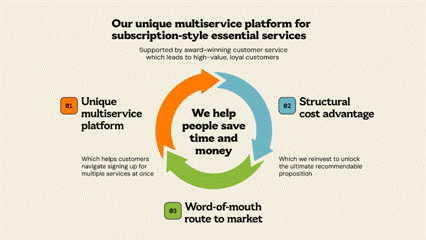
Unique platform for subscription-style essential household services
We enable customers to choose the essential services they want and combine them together to create a unique multiservice proposition, all within one integrated platform. These services include energy, broadband, mobile and insurance as well as a pre-paid Cashback Card.
This approach provides:
- Simplicity: a single simple bill for all their home services.
- Savings: compared with the prices they were previously paying.
- Service: an easy-to-use customer app backed up by award-winning customer support.
By offering customers the ability to receive all their essential home services on a single monthly bill, and manage them on a single app, we deliver a straightforward and cost-effective experience. The more services a customer takes from us, the more they save.
A key component of our business model is the long-term relationships we have built to secure high-quality and reliable wholesale services from market-leading established industry providers, which we then bundle together for our customers' benefit. We source our energy from E.ON, use Openreach and CityFibre via PXC for Broadband, and utilise the EE network (which has the widest national coverage) for our mobile services. We have also established insurance relationships with a number of major insurers, alongside our own insurance company, UWI.
Unique structural cost advantage
Our unique multiservice customer proposition allows customers to bundle many of their essential household services together with us. As a result, we receive up to four revenue streams from each of our customers but have just one back office supporting all the services we provide to them. This gives us an inbuilt and enduring cost advantage that our competitors have been unable to replicate and which we share with our customers year-on-year through competitive prices.
This long-term, fair pricing approach, enhanced by award-winning customer service and the convenience of having one bill, one account and one app to manage all their household services, builds loyalty towards our brand; as a result, our typical homeowning customers display below-market rates of churn and lower bad debt, compounding our cost advantage.
Unique word-of-mouth model that creates earning opportunities and drives multiservice customer growth
The key to acquiring new multiservice customers is our unique and hard-to-replicate word-of-mouth acquisition model. Our network of 77,200 Partners are members of their local community: "people helping people". This helps to build trust with potential customers when Partners explain our multiservice proposition to them. Our Partners are motivated by the opportunity to earn an additional income in the context of continuing cost of living pressures; the satisfaction of helping people to save money on their essential household services; the need to save for retirement; and a long-term structural trend towards multiple incomes which now comprises over 20 million individuals in the UK.
They receive a monthly commission based on the services being used by the customers they have referred, with the opportunity in some cases to receive a prepayment of some of this future commission as a lump sum. As Partners refer more people to Utility Warehouse and grow their Partner teams, their income stream can continue to grow, creating a truly life-changing potential earning opportunity.
Our proposition provides genuine alignment of interests between our customers, our Partners and Utility Warehouse. Our customers benefit from cheaper bills, great service and a more convenient way of buying their essential household services, while our Partners can build a valuable passive income stream.
Energy
Energy service numbers increased by 1.8% to 1.77m. We have seen increased price competition in the market over the last twelve months, with a range of discounted fixed tariffs on offer from most suppliers. Some competitors also spent heavily on marketing and brand building campaigns. Despite this, we have continued to grow our customer base, in an environment where only one of the 'Big 6' energy suppliers increased their market share organically.
The energy price cap was £1,849 at the start of the year, before falling to between £1,720 and £1,758 from July to March. Wholesale energy prices rose at the end of March as the impact of the Iran War and closure of the Strait of Hormuz was felt in oil and gas prices, with the energy price cap due to increase in July as a result. Our wholesale energy supply contract means we are insulated from the effects of this market volatility. The government has already taken action to try to reduce household energy bills due to ongoing cost of living pressures, announcing the closure of the Energy Company Obligation scheme and the temporary transfer of 75% of Renewables Obligation costs into general taxation from 1 April 2026. The Warm Home Discount scheme has also been extended to support customers in fuel poverty.
Ofgem is continuing to consult on various aspects of the price cap, driven in part by the new Market-Wide Half-Hourly settlement regime, which is a key milestone in opening up 'time of use' tariffs to help customers reduce their energy costs by using energy at cheaper 'off-peak' times of day.
Alongside our Which? Recommended Energy Provider status, in June, we were named "Best Value for Money" at the Uswitch energy awards, demonstrating our commitment to offering high quality and reliable services at consistently competitive prices. We were also awarded runner up in the customer service and customer satisfaction categories, confirming our commitment to taking great care of our customers.
We continue to maintain our position at the forefront of the smart meter rollout programme. We met our Ofgem targets calendar 2025, with more than 77% of our customers now benefiting from smart meters, and we remain fully committed to delivering further progress on this vital element of the UK's transition to net zero.
Broadband
Broadband service numbers increased by 38.9% to 0.56m (including the 193k customers acquired from TalkTalk). Excluding the impact of the customers acquired from TalkTalk, broadband service numbers increased 3.8%.
We successfully migrated 160k TalkTalk customers onto our systems by year end, with the remainder expected to migrate by the end of the first quarter of FY27. Initial cross-sell results are continuing to perform strongly, with 14.5k customers upgraded and cross-sold during the year.
Our partnership with CityFibre remains strong and we continue to benefit from the expansion of their network footprint, as well as continuing to offer customers of the CityFibre network 6 months free.
74% of new customers are now choosing Full Fibre broadband, reflecting continued demand for higher-speed and more reliable connectivity; with our VoIP (Voice over Internet Protocol) product due to launch early in FY27, we expect to see a further increase in the proportion of customers taking Full Fibre broadband.
Mobile
Our mobile service numbers increased 28.9% to 0.78m. This strong performance reflects continued demand for our mobile offering and our growing competitiveness in the market.
Over the course of the year, we enhanced both of our core tariffs to deliver even greater value to customers. Our 'Essential Max' plan now offers one of the most competitive entry-level propositions in the market at £5 for 10GB of data. In addition, customers benefit from additional SIMs on our Unlimited Max tariff at no extra cost for the first six months.
During the year, we also launched eSIM capability, expanding customer choice and enabling a more seamless and flexible onboarding experience. These improvements, combined with the strength and reliability of EE's network, have driven sustained momentum in mobile service growth throughout the year.
Insurance
Following positive engagement with the FCA, we resumed insurance sales at the end of April 2025. Despite this, insurance service numbers decreased by 8.3%, largely driven by a decline in Boiler & Home Cover services, albeit with Home Insurance services returning to growth in December.
Work is underway to re-platform our broker system which will enable more competitive pricing and a wider underwriting footprint once launched. Combined with the launch of new products, such as motor, travel and pet, this will enable us to reinvigorate the insurance business and build on the exciting opportunities in this large and diverse sector.
Cashback Card
Our unique Cashback card has continued its growth, driving the outcomes that differentiate our model, including: reduced churn, stronger brand affinity and higher customer lifetime values. Over the past year, the cashback card program saw £10.9m returned to customers as discounts on their bill, with our most active cardholders now saving over £460 per year.
To accelerate card take-up, we launched a new 'three months free' promotion whereby the monthly fee was waived for three months, with the cashback card attachment rate subsequently increasing from 62% to 70%. We also launched a 'welcome bonus' for new multiservice customers which is loaded onto customers' cards, which saw the attachment rate further increase to 85%. Our rollout of open banking as a method for topping up cashback card balances has been very successful, with over 75% of top-ups now being completed via this route. To improve the customer experience further, we have implemented Mastercard's Click2Pay functionality.
Supporting our customers
We gain our customers' trust by giving them an excellent standard of service, fair treatment, and swiftly resolving any issues they might have. One of the key objectives for our operations and customer service teams is to deliver a proposition which our Partners can confidently refer to their friends and family.
We continue to gain external recognition for our investment in high-quality customer service across all sectors with Which? Recommended Provider status for both Energy and Broadband in 2025; the first company to hold both awards simultaneously. We were also awarded Best Value for Money at the Uswitch 2025 Energy awards. To ensure that customers joining Utility Warehouse have a great experience, we have a dedicated welcome team who can assist customers in their first few weeks as they get our energy, mobile, broadband and insurance services up and running, while our advanced routing technology allows us to route new customer calls automatically to our specialist welcome advisors. Our customer agents also focused on enhancing the level of service by updating customer details when receiving inbound calls, in addition to resolving queries.
We continue to invest in our customer experience across all our contact points. In particular, we are focused on enhancing our WhatsApp channel, which receives excellent feedback from our customers. Customers can submit questions 24/7 and the channel is able to auto-resolve queries, rather than solely routing the question to a customer services representative. It is currently resolving nearly one in five of customer queries, generating scalable operating efficiencies.
We have been active in welcoming and onboarding the new customers we acquired from TalkTalk, seeking to ensure they are happy with the service levels we are providing. We have answered queries about initial billing, supported those who received new routers and helped them understand the new services such as energy, insurance and mobile that Utility Warehouse can provide. We also collected renewal dates for home insurance and energy contracts to assist in our cross-selling campaigns.
We are increasing the efficiency of our operations by offshoring some of our less complex customer contact functions and by year end this reached c.30% of our customer facing teams, up from under 10% at the end of FY25 and in line with our plans.
Our use of AI tools has expanded to assist our advisers in providing the very best levels of service through the development of "agent assist" which places accurate and concise knowledge in front of our teams when they are talking to our customers. As a result, we are resolving our customers' queries quicker than previously, while simultaneously improving our operational efficiency. Further innovations during the year included the ability for customers to submit meter readings using an AI bot and run automatic broadband line tests. We are also using AI to identify cross-sell opportunities with increased accuracy, including capturing customer renewal dates for various services, enabling us to subsequently recontact the customer at the right time.
Supporting vulnerable customers continues to be a focus across Utility Warehouse and we continue to invest in the partnership between the Utility Warehouse and Citizens Advice.
Operational performance and non-financial KPIs
We had another record year with customer numbers rising by 23.3% (2025: 15.0%) to 1,434,403. Excluding the 193,000 broadband customers acquired from TalkTalk, organic growth was 10.3%.
As in FY25, our customer acquisition efforts were focused on residential customers, with our business offering remaining closed to new customers.
Customers
2026
2025
Residential
1,424,079
1,151,071
Business
10,324
12,537
Total
1,434,403
1,163,608
The total number of services we supply to our customers grew by 12.1% (2025: 8.5%) to 3,803,823. Organic service growth was 7.6%.
Services
2026
2025
Core services
Energy
1,775,730
1,745,004
Broadband
568,647
409,358
Mobile
787,426
610,689
Insurance
112,715
122,856
Other services
Cashback Card
526,234
484,196
Legacy telephony
33,071
20,490
Total
3,803,823
3,392,593
Note: the table above sets out the individual services supplied to customers. Legacy telephony comprises non-geographic numbers (08xx) and landline only (no broadband) services provided.
Following changes to our customer proposition in September 2025, organic service growth improved in the second half of the year with energy services increasing over the course of the year as a whole by 1.8% and broadband services by 3.8%. Mobile services increased by 28.9% in FY26, while insurance services decreased by 8.3%.
Customers can take any combination of services they want from us - energy, broadband, mobile or insurance; the more services a customer takes, the greater the savings they make. There is also a clear correlation between the number of services taken and the length of time a customer can be expected to remain with us, the total amount they will spend over that period, and hence their lifetime value to the business.
Average number of Core services per organic customer
Q1 FY25
2.61
Q2 FY25
2.57
Q3 FY25
2.56
Q4 FY25
2.52
Q1 FY26
2.50
Q2 FY26
2.46
Q3 FY26
2.46
Q4 FY26
2.45
The average number of Core services taken by customers is an important metric that underpins long-term business sustainability: customers taking two or more Core services from us are benefitting from a genuinely differentiated proposition, as well as greater ongoing savings, meaning that they are less likely to leave us.
However, our annualised energy churn increased to 14.2% (2025: 13.7%), due to continued strong competitive activity, especially in the energy and broadband markets, with the energy wholesale forward curve enabling competitors to offer fixed price energy tariffs meaningfully below the Ofgem price cap for much of the year.
The year ahead: our business priorities for FY27
While recent competitive dynamics have impacted our churn rate, our unique platform and word-of-mouth route to market remain a proven model for delivering high quality, multiservice customers at scale, generating a long-term source of growing, recurring, subscription-style revenues. In addition, our wholesale energy supply arrangements continue to insulate us from the current energy market volatility caused by events in the Middle East.
Our focus is on progressively increasing services per customer, reducing churn, growing contribution per customer, and enhancing customer lifetime values, in order to maximise long-term shareholder value. As a result, we have undertaken a review of potential initiatives to achieve these goals, and we announced the outcome of this review, together with our new five year strategy, separately this morning.
Our five year strategy sets out a trajectory to maximise long-term shareholder value through:
1. optimising our unique multiservice customer proposition (including price investment, cross-selling, insurance, and small business customers initiatives)
2. scaling our Partner sales channel
3. building a nationally recognised and trusted brand
4. delivering a best-in-class digital experience coupled with a market leading cost to serve.
By the end of FY27, we expect to see the first indications that our updated strategy is beginning to build traction, with multiservice customer numbers increasing by at least 10%, a 10% uplift in monthly active Partners, and the launch of our first motor insurance product.
Stuart Burnett
Chief Executive Officer
22 June 2026
Financial Review
Overview of results
Adjusted
Statutory
2026
2025
Change
2026
2025
Change
Revenue
£1,941.1m
£1,838.2m
5.6%
£1,941.1m
£1,838.2m
5.6%
Gross profit
£389.2m
£358.1m
8.7%
£389.2m
£358.1m
8.7%
Profit before tax
£132.2m
£126.3m
4.7%
£113.0m
£105.9m
6.7%
Basic EPS
122.8p
119.2p
3.0%
101.2p
96.3p
5.1%
Dividend per share
50p
94.0p
(46.8)%
50p
94.0p
(46.8)%
Share buyback
£40m
-
-
£40m
-
-
Total distribution
100.0p
94.0p
6.4%
100.0p
94.0p
6.4%
Throughout this report the Group presents various alternative performance measures ('APMs') in addition to those reported under IFRS. The measures presented are those adopted by the Chief Operating Decision Maker ('CODM', deemed to be the Chief Executive Officer), together with the main Board, and analysts who follow us in assessing the performance of the business. In order to provide a presentation of the underlying performance of the group, adjusted pre-tax profit and adjusted basic EPS exclude share incentive scheme charges of £4.8m (2025: £3.4m), the amortisation of the intangible asset of £11.2m (2025: £11.2m) arising from entering into the energy supply arrangements with E.ON (formerly npower) in December 2013; this decision reflects both the relative size and non-cash nature of these charges. Adjusted pre-tax profit and adjusted EPS also exclude one-off restructuring costs of £0.7m (2025: £5.7m), and in FY26 £2.4m (2025: £Nil) of energy platform upgrade set up costs ahead of Market Wide Half Hourly Settlement ("MHHS"); this decision reflects the one-off non-recurring nature of the charges. The reconciliations for adjusted pre-tax profit and adjusted EPS are set out in notes 2 and 3 respectively of the financial statements.
Summary
FY26 represented another strong financial performance by the Group with double-digit percentage customer growth and increased profits. The Group finished the year in a strong financial position with gearing at 0.9x adjusted EBITDA.
Adjusted pre-tax profit increased by 4.7% to £132.2m (2025: £126.3m) on revenues of £1,941.1m (2025: £1,838.2m). Statutory profit before tax increased by 6.7% to £113.0m (2025: £105.9m). The increase in revenues primarily reflects higher telephony revenues during the year, including the impact from the acquisition of customers from TalkTalk. The increase in adjusted pre-tax profit reflects the impact of higher customer and service numbers, and a reduction in energy usage during an unseasonably warm winter.
Distribution expenses remained broadly stable as a percentage of revenues, increasing to £48.0m (2025: £45.7m).
Administrative expenses (excluding share incentive scheme charges, amortisation of the energy supply agreement intangible, energy platform upgrade set up costs, and restructuring costs) increased during the year to £156.7m (2025: £144.4m), largely due to a higher depreciation charge (including the amortisation of customer contracts intangible assets), and higher software costs.
The bad debt charge for the year (which is separately identified on the income statement as impairment loss on trade receivables) increased to £41.2m (2025: £33.4m), representing 2.1% of revenues for the year (2025: 1.8%), largely due to continued cost of living pressures and the slow evolution of involuntary prepayment meter installation processes following the temporary hiatus imposed by Ofgem.
Adjusted earnings per share increased by 3.0% to 122.8p (2025: 119.2p), with statutory EPS increasing by 5.1% to 101.2p (2025: 96.3p). The Board is proposing to pay a final dividend of 12p per share (2025: 57p), making a total dividend of 50p per share (2025: 94p) for the year, whilst also commencing a share buyback programme with up to £40m allocated.
Revenues
The growth in the number of services we are supplying increased by 411,230 over the course of the year (2025: 265,496), taking the total number of services provided to our customers to 3,803,823 (2025: 3,392,593).
The overall increase in revenues mainly reflects higher telephony and electricity revenues:
Revenues £m
2026
2025
Change
Electricity
954.0
903.1
5.6%
Gas
609.9
629.3
(3.1)%
Broadband
203.8
153.2
33.0%
Mobile
98.3
84.2
16.7%
Other
75.1
68.4
9.8%
Total Revenue
1,941.1
1,838.2
5.6%
Gross profit
Gross profit for the year increased to £389.2m (2025: £358.1m), following the growth in the number of services we supply, partly offset by the impact from warmer weather. Our overall gross margin for the year increased to 20.0% (2025: 19.5%), mainly reflecting a higher proportion of telephony sales.
Distribution and administrative expenses
Distribution expenses include the costs of commission and incentives paid to Partners, together with other direct costs associated with gathering new customers. These expenses remained broadly stable as a percentage of revenues, increasing to £48.0m (2025: £45.7m).
Administrative expenses (excluding share incentive scheme charges, the amortisation of the energy supply agreement intangible, energy platform upgrade set up costs, and restructuring costs) increased during the year to £156.7m (2025: £144.4m), mainly due to a higher depreciation charge (including the amortisation of customer contracts intangible assets), and higher software costs.
In order to calculate adjusted profit before tax an adjustment has been made during the period for restructuring costs of £0.7m, and exceptional IT platform costs of £2.4m associated with the upgrade of the Company's energy platform ahead of the implementation of Market Wide Half Hourly Settlement, a one-off industry-wide programme.
The bad debt charge for the year increased to £41.2m or 2.1% of sales (2025: £33.4m; 1.8%), mainly due to a continuing elevated number of customers having difficulty paying their bills. The proportion of customers with at least two energy bills outstanding increased to 3.6% (2025: 3.4%) across the year. This reflected continued elevated levels of customer non-payment arising from previously high energy prices and the slow evolution of the involuntary prepayment meter installation process. Typically, any movements in bad debt levels across the industry are recovered through increases in the relevant Ofgem price cap allowance, all of which accrue to the Group.
Cash, capital expenditure, working capital and borrowings
2026
2025
2024
2023
2022
Adjusted EBITDA (£'000)
161,840
148,095
133,251
110,118
73,760
Net debt (£'000)
(143,072)
(115,865)
(122,501)
103,424
(70,334)
Net debt/adjusted EBITDA ratio
0.9x
0.8x
0.9x
-0.9x
1.0x
The Group ended the period with a reported net debt position including lease liabilities of £143.1m (2025: £115.9m), comprising cash of £91.5m (2025: £79.0m) less bank loans of £232.3m (2025: £191.7m) and lease liabilities of £2.3m (2025: £3.2m). The Group's net debt/adjusted EBITDA ratio of 0.9x is calculated using adjusted EBITDA of £161.8m (representing operating profit of £125.4m, plus depreciation and amortisation of £28.5m, share incentive scheme charges of £4.8m and exceptional IT platform upgrade and restructuring costs of £3.1m, see note 2).
The Group's net working capital position showed a year-on-year cash outflow of £9.6m (2025: cash outflow of £3.2m (excluding the prepayment of the purchase of customer contracts).
Capital expenditure of £63.6m (2025: £17.2m) related primarily to the acquisition of customer contracts from TalkTalk and our ongoing technology investment programme.
Dividend
Following the revised shareholder distribution policy announced on 28 April 2026, a final dividend of 12p per share (2025: 57p) will be paid on 28 August 2026 to shareholders on the register at the close of business on 7 August 2026 and is subject to approval by shareholders at the Company's Annual General Meeting which will be held on 17 August 2026. This makes a total dividend payable for the year of 50p (2025: 94p). The equivalent of a further 50p per share, representing £40m in total, will be available for share buy-backs as per the revised policy.
Share incentive scheme charges
Operating profit is stated after share incentive scheme charges of £4.8m (2025: £3.4m). These relate to an accounting charge under IFRS 2 Share Based Payments ('IFRS 2'). As a result of the relative size of share incentive scheme charges as a proportion of our pre-tax profits historically, and the fluctuations in the amount of this charge from one year to another, we are continuing to separately disclose this amount within the Consolidated Statement of Comprehensive Income for the period (and excluding these charges from our calculation of adjusted profits and earnings) so that the underlying performance of the business can be clearly identified in a consistent manner to that adopted during previous periods. Our current adjusted earnings per share have also therefore been adjusted to eliminate these share incentive scheme charges.
Taxation
A full analysis of the taxation charge for the year is set out in note 5 to the financial statements in the Annual Report. The tax charge for the year is £32.3m (2025: £29.9m). The effective tax rate for the year was 28.6% (2025: 28.2%), primarily reflecting the ongoing amortisation charge on our energy supply contract intangible asset (which is not an allowable deduction for tax purposes).
Nick Schoenfeld
Chief Financial Officer
22 June 2026
Principal Risks and Uncertainties
Background
The Group faces various risk factors, both internal and external, which could have a material impact on long-term performance. However, the Group's underlying business model is considered relatively low risk, with no need for management to take any disproportionate risks in order to preserve or generate shareholder value.
The Group continues to enhance a consistent and systematic risk identification and management process, which involves horizon scanning for emerging risks (e.g. maintaining good relationships with industry bodies, consultants and regulators to monitor key developments which might impact the Group, monitoring relevant press commentary, and keeping abreast of the latest threats in relation to cyber security through industry experts and publications), risk ranking, prioritisation and subsequent evaluation, all with a view to ensuring significant risks have been identified, prioritised and (where possible) eliminated, and that systems of control are in place to manage any remaining risks.
The directors have carried out a robust assessment of the Company's emerging and principal risks. A formal document is prepared by the executive directors and senior management team on a regular basis detailing the key risks faced by the Group and the operational controls in place to mitigate those risks; this document is then reviewed by the Audit and Risk Committee. Save as set out below, the magnitude of any risks previously identified has not significantly changed during the period.
Business model
The principal risks outlined below should be viewed in the context of the Group's business model as a reseller of utility services (gas, electricity, fixed line telephony, mobile telephony, broadband and insurance services) under the Utility Warehouse and TML brands. As a reseller, the Group does not own any of the network infrastructure required to deliver these services to its customer base. This means that while the Group is heavily reliant on third party providers, it is insulated from all the direct risks associated with owning and/or operating such capital-intensive infrastructure itself.
The Group is able to secure the wholesale supply of all the services it offers at competitive rates, enabling it to generate a consistently fair level of profitability from delivering a great value bundled proposition to its customers. There is an alignment of interests between the Group and its wholesale suppliers which means that it is in the interests of the suppliers to ensure that the Group remains competitive, driving growth and maximising their benefit from our complementary route to market. Furthermore, the Group benefits from a structural cost advantage, due to the multiple revenue streams it receives from customers who take more than one service type, and only having one set of overheads. The Group has alternative sources of wholesale supply should an existing supplier become uncompetitive or no longer available.
In relation to energy specifically (representing over 80% of revenues), the Group's wholesale costs are calculated by reference to the Ofgem price cap, which gives the Group considerable visibility over profit margins.
The Group mainly acquires new customers via word-of-mouth referrals from a large network of independent Partners, who are paid predominantly on a commission basis. This means that the Group has limited fixed costs associated with acquiring new customers.
The principal specific risks arising from the Group's business model, and the measures taken to mitigate those risks, are set out below.
Reputational risk
The Group's reputation amongst its customers, suppliers and Partners is believed to be fundamental to the future success of the Group. Failure to meet expectations in terms of the services provided by the Group, the way the Group does business or in the Group's financial performance could have a material negative impact on the Group's performance.
In developing new services, and in enhancing current ones, careful consideration is given to the likely impact of such changes on existing customers.
In relation to the service provided to its customer base, reputational risk is principally mitigated through the Group's recruitment processes, a focus on closely monitoring staff performance, including the use of direct feedback surveys from customers (Net Promoter Score), and through the provision of rigorous staff training.
Responsibility for maintaining effective relationships with suppliers and Partners rests primarily with the appropriate member of the Group's senior management team with responsibility for the relevant area. Any material changes to supplier agreements and Partner commission arrangements which could impact the Group's relationships are generally negotiated by the executive directors and ultimately approved by the full Board.
Information and cyber security risk
The Group's ability to deliver seamless multi-utility services is fundamentally dependent on the integrity of our digital infrastructure and the rigorous stewardship of the data entrusted to us. As cyber threats become increasingly automated through AI, we continue to evolve our defences to stay ahead of more sophisticated exploitation methods. Failure to do so could result in material loss of business, substantial legal liability, regulatory enforcement actions and significant harm to the Group's reputation. Consequently, continuous investment in system resilience is critical to protecting our customers and partner data and maintaining our operational viability.
Information security and cyber-related risks are governed by an executive-led internal committee, ensuring strategic alignment across the business. Day-to-day risk management is spearheaded by a dedicated security function, underpinned by our ISO 27001 accredited Information Security Management System ("ISMS").
Recognising the rapid emergence of generative technologies, we have established a formal AI Governance Committee. This body is responsible for the legal and ethical oversight and risk assessment of AI integration across the Group, ensuring that all initiatives are directly aligned with our long-term AI Strategy. By balancing innovation with responsibility, the Committee ensures that our use of AI adheres to strict 'Human-in-the-Loop' principles and data privacy standards. This alignment ensures that our pursuit of operational efficiency and enhanced customer experiences remains consistent with our risk appetite and commitment to ethical data usage.
External oversight of the entire digital risk landscape is provided by the Audit and Risk Committee, which reviews the effectiveness of our risk appetite and control framework.
The Security Operations Centre ("SOC") is responsible for the real-time monitoring, detection, and response to security events. A core priority of the SOC is ensuring that our Business Continuity Plans ("BCPs") and disaster recovery protocols are effective and regularly tested. This ensures the Group remains resilient and ready to maintain essential services in the event of a major cyber incident. Furthermore, the SOC is tasked with the ongoing maintenance and validation of security controls across our systems, networks, and data estates.
Our Secure Engineering and Development ("DevSecOps") team ensures that security is an intrinsic part of our growth, rather than an afterthought. By integrating automated security controls and principles into every stage of the Software Development Lifecycle ("SDLC"), we scale our defences alongside our software. This approach ensures that the proprietary technology we build is rigorously tested and secure by design before reaching a production environment.
The Governance Risk & Compliance ("GRC") team manages the Group's daily adherence to cyber security governance and regulatory standards. This function maintains a comprehensive policy framework applicable to all employees, contractors, and suppliers, subject to periodic review to reflect the shifting threat landscape. To validate our posture, risk-based assessments are conducted regularly on critical processes and assets by both internal experts and qualified external professionals. Additionally, the GRC team manages the full lifecycle of third-party supplier risk, ensuring that our vendors meet the same high standards of data protection and security that we demand of ourselves.
Data privacy and protection
The Group recognises that the trust of our customers and partners is built upon the rigorous protection of their personal and commercial data. As a multi-utility provider, we handle a diverse range of sensitive information. We are committed to a "Privacy by Design" philosophy, ensuring that data protection is embedded into the development of every new product, service, and internal process from the outset.
Our privacy framework is overseen by a dedicated Data Protection Officer ("DPO") and supported by the Legal and Compliance teams. We maintain full alignment with the UK General Data Protection Regulation (UK GDPR) and the Data Protection Act. To ensure accountability:
(i) ICO Engagement: We maintain our registrations as Data Controllers with the Information Commissioner's Office (ICO) and proactively monitor the regulatory landscape to ensure ongoing compliance with evolving privacy standards.
(ii) Data Protection Impact Assessments (DPIAs): We conduct mandatory DPIAs for all high-risk processing activities, particularly those involving new technologies or the large-scale processing of customer data.
To address the risk of unauthorised access or data loss, we implement a multi-layered defence strategy:
(i) Data Minimisation: We only gather the minimum amount of personal data required for its intended purpose/s.
(ii) Access Governance: We enforce "Least Privilege" access controls, ensuring that personal data is only accessible to employees whose specific roles require it, backed by mandatory Multi-Factor Authentication (MFA).
(iii) Employee Awareness: Data privacy is a shared responsibility. All employees and contractors undergo mandatory privacy training to ensure they remain vigilant against data-handling risks and phishing attempts.
(iv) Continuous Testing: In addition to our internal audits, we engage independent external consultants to perform regular penetration testing and vulnerability assessments on our core infrastructure, ensuring our "layered" defence remains effective against current and emerging threats.
Fraud risk
Fraud has the potential to impact the Group from a financial, regulatory and reputational perspective, with potential exposure across the Group's operations. There are several key fraud typologies the Group faces including application fraud, account takeover, first party fraud and compromised card details. Through the use of synthetic identities and AI, the fraud landscape is evolving.
The fraud risk the group faces is driven by the breadth of services offered across multiple industries as well as overall increase in fraud within the UK. The group faces the same risks as financial institutions, telecommunication and energy providers, and consumer businesses and requires managing across this broad spectrum.
Fraud risks are overseen by the Group's Fraud Team, which sits within Legal & Compliance. Periodic updates are provided to the Executive Leadership team and escalated to the Board as appropriate. Updates are also provided to the Audit and Risk Committee twice yearly.
Effective controls are in place to identify and reduce incidents of fraud, actively investigate potential fraud, and report on fraud activity and trends both internally and to the Group's industry partners. Fraud incidents are reported to law enforcement and regulatory bodies in line with industry expectations. The Group employs real time transaction monitoring, customer onboarding checks as well as bespoke risk modelling. Quarterly external transaction monitoring auditing is performed to ensure the quality of the fraud control framework.
Legislative and regulatory risk
The Group is subject to various laws and regulations across the energy, telecommunications and financial services markets in the UK, each subject to comprehensive operating requirements as defined by the relevant sector regulators and government departments. Amendments to the regulatory regime in any of these sectors could have an impact on the Group's ability to achieve its strategic goals, and any material failure to comply may result in the Group being fined, loss of ability to operate in this area and lead to reputational damage which could impact the Group's brand and ability to attract and retain customers.
In energy, the Group is a licensed gas and electricity supplier with a direct regulatory relationship with Ofgem. The regulatory framework for the UK's energy retail market is subject to continuous development, with Ofgem leading the industry through a range of consumer, market and policy objectives. The Group is obliged to comply with retail supply procedures, amendments to which could have an impact on operating costs. Substantial industry-wide change programmes continue, including the rollout of smart meters and the transition to routine half-hourly electricity metering. Ofgem's Financial Resilience reforms include a Capital Adequacy regime requiring a minimum level of net assets per dual-fuel customer.
In telecommunications, the Group provides services under Ofcom's general authorisation regime and has a direct regulatory relationship with Ofcom.
In financial services, Utility Warehouse Limited is authorised and regulated by the FCA as an insurance broker and offers a Cashback Card prepaid product; Utilities Plus Limited holds consumer credit lending permissions; and UWI is authorised by the Gibraltar Financial Services Commission (GFSC) for insurance underwriting. Regulatory changes relating to insurance pricing practices and the FCA's Consumer Duty have had a significant impact on the financial services sector, and the Group continues to be informed by any clarifications and additional guidance issued.
Across all industries political and consumer concern over costs, vulnerable customers and fuel poverty may lead to further reviews and additional consumer protection legislation.
The Group seeks to maintain appropriate relations with Ofgem, the Department for Energy Security and Net Zero, Ofcom, the FCA and the GFSC, engaging with officials from these organisations on a periodic basis to ensure they are aware of the Group's views when consulting on proposed regulatory changes. The Group is closely involved in relevant industry forums to engage in and prepare for regulatory change.
The Group's Legal & Compliance team provides periodic updates to the Audit and Risk Committee and completes horizon scanning. The team has developed and rolled out policies and procedures across all regulated areas of the business, undertakes training across the business, and continually monitors legal and regulatory developments. The team also conducts compliance and assurance tests on policies and procedures.
Financing risk
The Group has debt service obligations which may place operating and financial restrictions on the Group. This debt could have adverse consequences insofar as it: (a) requires the Group to dedicate a proportion of its cash flows from operations to fund payments in respect of the debt, thereby reducing the flexibility of the Group to utilise its cash to invest in and/or grow the business; (b) increases the Group's vulnerability to adverse general economic and/or industry conditions; (c) may limit the Group's flexibility in planning for, or reacting to, changes in its business or the industry in which it operates; (d) may limit the Group's ability to raise additional debt in the long-term; and (e) could restrict the Group from making larger strategic acquisitions or exploiting business opportunities.
Each of these prospective adverse consequences (or a combination of some or all of them) could result in the potential growth of the Group being at a slower rate than may otherwise be achieved.
Bad debt risk
Whilst the Group's focus on multiservice homeowners acts as a mitigating factor against bad debt, the Group has a universal supply obligation in relation to the provision of energy to domestic customers. This means that although the Group is entitled to request a reasonable deposit from potential new customers who are not considered creditworthy, the Group is obliged to supply domestic energy to everyone who submits a properly completed application form. Where customers subsequently fail to pay for the energy they have used, there is likely to be a considerable delay before the Group is able to control its exposure to future bad debt from them by either switching their smart meters to pre-payment mode, installing a pre-payment meter or disconnecting their supply, and the costs associated with preventing such customers from increasing their indebtedness are not always fully recovered.
Bad debt within the telephony industry may arise from customers using the services, or being provided with a mobile handset, without intending to pay their supplier. The amounts involved are generally relatively small as the Group has sophisticated call traffic monitoring systems to identify material occurrences of usage fraud. The Group is able to immediately eliminate any further usage bad debt exposure by disconnecting any telephony service that demonstrates a suspicious usage profile or falls into arrears on payments.
Wholesale price risk
Whilst the Group acts as principal in most of the services it supplies to customers, the Group does not own or operate any utility network infrastructure itself, choosing instead to purchase the capacity needed from third parties. The advantage of this approach is that the Group is largely protected from technological risk, capacity risk or the risk of obsolescence, as it can purchase the precise amount of each service required to meet its customers' needs.
Whilst there is a theoretical risk that in some of the areas in which the Group operates it may be unable to secure access to the necessary infrastructure on commercially attractive terms, in practice the pricing of access to such infrastructure is typically either regulated (as in the energy market) or subject to significant competitive pressures (as in the telephony and broadband markets). The profile of the Group's customers, the significant quantities of each service they consume in aggregate, and the Group's clearly differentiated route to market has historically proven attractive to infrastructure owners, who compete aggressively to secure a share of the Group's growing business.
The supply of energy has different risks associated with it. The wholesale price can be extremely volatile, and customer demand can be subject to considerable short-term fluctuations depending on the weather. The Group has a long-standing supply relationship with E.ON (formerly npower) under which the latter is responsible for undertaking the buying and hedging of the energy supplied to the Group, and where the price paid by the Group to cover commodity, balancing and certain other associated supply costs is set by reference to the Ofgem published energy price cap, which is set at the start of each quarter; this may not be competitive against the equivalent supply costs incurred by new and/or other independent suppliers. However, if the Group did not have the benefit of this long-term supply agreement it would need to find alternative means of protecting itself from the pricing risk of securing access to the necessary energy on the open market and the costs of balancing.
Commercial risk
The Company uses different distribution channels to drive customer and service growth and is also required to effectively manage customer churn given the recurring nature of the Company's services.
The Company must therefore remain attractive and relevant to the various distribution channels in the face of alternative sources of income/commission arising from the growing 'gig' economy. Any failure to properly manage these channels could make it more difficult for the Company to meet its growth targets and consequently fail to meet market expectations. The identification of alternative distribution channels and innovative commission structures/incentives is required to mitigate the risk of obsolescence.
Competitive risk
The Group operates in highly competitive markets and significant service innovations by others or increased price competition could impact future profit margins, growth rates and Partner productivity. In order to maintain its competitive position, there is a consistent focus on improving operational efficiency. New service innovations are monitored closely by senior management, and the Group is generally able to respond within an acceptable timeframe where it is considered desirable to do so, by sourcing comparable features and benefits using the infrastructure of its existing suppliers. The increasing proportion of customers who are benefiting from the genuinely unique multi-utility solution that is offered by the Group, and which is unavailable from any other known supplier, further reduces any competitive threat.
The Directors anticipate that the Group will face continued competition in the future as new companies enter the market and alternative technologies and services become available. The Group's services and expertise may be rendered obsolete or uneconomic by technological advances or novel approaches developed by one or more of the Group's competitors. The existing approaches of the Group's competitors or new approaches or technologies developed by such competitors may be more effective or affordable than those available to the Group. There can be no assurance that the Group will be able to compete successfully with existing or potential competitors or that competitive factors will not have a material adverse effect on the Group's business, financial condition or results of operations. However, as the Group's customer base continues to rise, competition amongst suppliers of services to the Group is expected to increase. This has already been evidenced by various volume-related growth incentives which have been agreed with some of the Group's largest wholesale suppliers. This should also ensure that the Group has direct access to new technologies and services available to the market.
Infrastructure risk
The provision of services to the Group's customers is reliant on the efficient operation of third-party physical infrastructure. There is a risk of disruption to the supply of services to customers through any failure in the infrastructure, e.g. gas shortages, power cuts or damage to communications networks. However, as the infrastructure is generally shared with other suppliers, any material disruption to the supply of services is likely to impact a large part of the market as a whole and it is unlikely that the Group would be disproportionately affected. In the event of any prolonged disruption isolated to the Group's principal supplier within a particular market, services required by customers could in due course be sourced from another provider.
The development of localised energy generation and distribution technology may lead to increased peer-to-peer energy trading, thereby reducing the volume of energy provided by nationwide suppliers. As a nationwide retail supplier, the Group's results from the sale of energy could therefore be adversely affected.
Similarly, the construction of 'local monopoly' fibre telephony networks to which the Group's access may be limited as a reseller could restrict the Group's ability to compete effectively for customers in certain areas.
Smart meter rollout risk
The Group is reliant on third party suppliers to fully deliver its smart meter rollout programme effectively. In the event that the Group suffers delays to its smart meter rollout programme, the Group may be in breach of its regulatory obligations and therefore become subject to fines from Ofgem. In order to mitigate this risk, the Group dual-sources (where practicable) the third-party metering and related equipment they use.
The Group may also be indirectly exposed to reputational damage and litigation from the risk of technical complications arising from the installation of smart meters or other acts or omissions of meter operators, e.g. the escape of gas in a customer's property causing injury or death. The Group mitigates this risk through using established, reputable third-party suppliers.
Energy industry estimation risk
A significant degree of estimation is required in order to determine the actual level of energy used by customers and hence what should be recognised by the Group as sales. There is an inherent risk that the estimation routines used by the Group to recognise sales do not in all instances fully reflect the actual usage of customers. However, this risk is mitigated by the relatively high proportion of customers who provide meter readings on a periodic basis, and the high level of penetration the Group has achieved in its installed base of smart meters.
Gas leakage within the national gas distribution network
The operational management of the national gas distribution network is outside the control of the Group, including the management of gas leakage from the network, however in common with all other licensed domestic gas suppliers the Group is responsible for meeting its pro-rata share of the total leakage cost. There is a risk that the level of leakage in future could be higher than historically experienced, and above the level currently expected.
Underwriting risk
Operating the Group's in-house insurer gives rise to some underwriting risk - principally the risk that claims costs or frequency exceed expectations, that risks are mispriced, or that catastrophe events generate losses beyond anticipated levels. The principal drivers of underwriting risk include the Group's exposure to catastrophic risks - such as storm, flood and freeze events
The Group mitigates underwriting risk through a number of controls. Existing lines of business are migrated to the in-house insurer (UWI Limited) only where the Group has several years of trading history and sufficient scale to maintain low volatility and predictable returns. The Group uses conservative levels of reinsurance - including protection for catastrophe risks such as storm, flood and freeze. Real-time and proprietary data enable accurate risk pricing and active management of overall portfolio exposure. The Group also maintains and grows its existing home insurance panel so that the in-house insurer can selectively target risk profiles suitable for its balance sheet, such as properties with lower rebuild costs and limited CAT peril exposure.
Underwriting performance is reviewed by the business on a weekly basis with matters escalated to the UWI Claims and Underwriting Committee on a monthly basis and the UWI Board on a quarterly basis, as appropriate, in accordance with its corporate governance framework. UWI's CEO submits a quarterly report to the Group Board which includes underwriting performance and capital position.
Acquisition risk
The Group may invest in other businesses, taking a minority, majority or 100% equity shareholding, or through a joint venture partnership. The Group may also acquire batches of customer contracts from other suppliers. Such acquisitions may not deliver the anticipated returns (e.g. through the increased cross-selling of services), and may require additional funding in future. This risk is mitigated through conducting appropriate pre-acquisition due diligence where relevant.
Climate change risk
Climate change has the potential to significantly impact the future of our planet and the Group's operations, financial performance and reputation. No business is immune from the risks associated with climate change as it acts as a driver of other risks and impacts government decision-making, consumer demand and supply chains. Development of climate-related policy, regulatory changes and shifts in consumer sentiment could impact the Group's ability to achieve its financial goals and result in increased compliance costs or reputational damage.
The key drivers of climate change risk include transition risks - arising from evolving climate policy, regulatory change and shifts in consumer sentiment away from carbon-intensive products and services - and physical risks from extreme weather events that could affect the Group's operations and supply chain. The Group's decarbonisation trajectory is also influenced by the pace of decarbonisation of the UK energy grid and by key suppliers' decarbonisation plans, as modelled using the UK government's published projections. As an agile reseller without its own generation or network infrastructure, the Group is strategically resilient and insulated from more severe direct physical risks.
Climate change is designated as a standalone principal risk for the business, and the General Counsel is assigned as owner for managing this risk. The Environmental Social and Governance (ESG) Strategy Committee - consisting of the ESG Board Champion, CEO, CFO, Company Secretary, Executive Leadership Team and senior management - is updated by the ESG Working Group on climate issues, which are then assessed and used to inform the Group's strategy as needed. The Group has a dedicated Head of Sustainability and continues to use external specialists as needed. The Group continues to implement the recommendations of the Task Force on Climate-related Financial Disclosures (TCFD) and the requirements of the Companies Act 2006 as amended by the Companies (Strategic Report) (Climate-related Financial Disclosure) Regulations 2022.
The Group is committed to achieving net zero greenhouse gas emissions on or before 2050, across Scopes 1, 2 and 3. Following evaluation of its emissions and trajectory in FY23, the Group committed to an interim target of reducing emissions by 63% across Scopes 1, 2 and 3 by 2035 from an FY22 baseline, in line with a 1.5°C trajectory. The Group's targets are to be validated by the Science-Based Targets Initiative (SBTi) following finalisation of its revised corporate reporting standard, and the Group will track and disclose progress against them. The Group also continues to monitor the development of new climate reporting regulations.
Consolidated Statement of Comprehensive Income
For the year ended 31 March 2026
Note
2026
£'000
2025
£'000
Revenue
1
1,941,057
1,838,156
Cost of sales
(1,551,893)
(1,480,088)
Gross profit
389,164
358,068
Distribution expenses
(48,008)
(45,657)
Administrative expenses - other
(159,131)
(144,356)
Restructuring costs
(691)
(5,717)
Share incentive scheme charges
(4,847)
(3,409)
Amortisation of energy supply contract intangible
(11,228)
(11,228)
Total administrative expenses
(175,897)
(164,710)
Impairment loss on trade receivables
(41,207)
(33,389)
Other income
1,360
1,579
Operating profit
125,412
115,891
Financial income
2,871
3,161
Financial expenses
(15,299)
(13,103)
Net financial expense
(12,428)
(9,942)
Profit before taxation
112,984
105,949
Taxation
(32,314)
(29,852)
Profit and total comprehensive income for the period
80,670
76,097
Basic earnings per share
3
101.2p
96.3p
Diluted earnings per share
3
99.9p
95.1p
Consolidated Balance Sheet
As at 31 March 2026
Assets
Non-current assets
2026
£'000
2025
£'000
Property, plant and equipment
20,871
23,523
Investment property
7,861
7,895
Intangible assets
171,178
133,415
Goodwill
3,742
3,742
Other non-current assets
90,543
68,335
Total non-current assets
294,195
236,910
Current assets
Inventories
2,350
3,200
Trade and other receivables
130,227
118,377
Current tax receivable
2,207
3,049
Accrued income
233,335
236,798
Prepayments
9,900
32,466
Costs to obtain contracts
35,537
26,574
Cash and cash equivalents
91,452
79,020
Total current assets
505,008
499,484
Total assets
799,203
736,394
Current liabilities
Trade and other payables
(63,256)
(48,731)
Accrued expenses and deferred income
(233,379)
(239,803)
Total current liabilities
(296,635)
(288,534)
Non-current liabilities
Long term borrowings
(232,261)
(191,717)
Lease liabilities
(2,263)
(3,168)
Deferred tax
(1,273)
(1,465)
Total non-current liabilities
(235,797)
(196,350)
Total assets less total liabilities
266,771
251,510
Equity attributable to equity holders of the parent
Share capital
4,066
4,042
Share premium
167,174
161,491
Capital redemption reserve
107
107
Treasury shares
(15,688)
(15,688)
JSOP reserve
(1,150)
(1,150)
Retained earnings
112,262
102,708
Total equity
266,771
251,510
Consolidated Cash Flow Statement
For the year ended 31 March 2026
2026
2025
Operating activities
£'000
£'000
Profit before taxation
112,984
105,949
Adjustments for:
Net financial expense
12,428
9,942
Depreciation of property, plant and equipment
3,038
3,938
Profit on disposal of fixed assets
(12)
-
Amortisation of intangible assets and impairment
25,423
19,140
Amortisation of debt arrangement fees
574
792
Decrease in inventories
850
549
Increase in trade and other receivables (including Costs to obtain contracts)
(17,071)
(55,111)
Increase in trade and other payables
6,596
51,390
Share incentive scheme charges
4,847
3,409
Corporation tax paid
(31,809)
(31,250)
Net cash flow from operating activities
117,848
108,748
Investing activities
Purchase of property, plant and equipment
(448)
(393)
Purchase of intangible assets
(63,188)
(16,770)
Purchase of customer contracts
-
(11,971)
Disposal of property, plant and equipment
147
-
Interest received
2,954
3,056
Cash flow from investing activities
(60,535)
(26,078)
Financing activities
Dividends paid
(75,794)
(66,437)
Interest paid
(13,733)
(14,400)
Interest paid on lease liabilities
(62)
(85)
Drawdown of long term borrowing facilities
120,000
55,000
Repayment of long term borrowing facilities
(80,000)
(40,000)
Fees associated with borrowing facilities
(30)
(584)
Repayment of lease liabilities
(811)
(794)
Cancellation of 'B' shares
(1)
-
Issue of new ordinary shares
5,550
5,821
Cash flow from financing activities
(44,881)
(61,479)
Increase in cash and cash equivalents
12,432
21,191
Net cash and cash equivalents at the beginning of the year
79,020
57,829
Net cash and cash equivalents at the year end
91,452
79,020
Consolidated Statement of Changes in Equity
For the year ended 31 March 2026
Share
capitalShare premium
Capital redemption reserve
Treasury shares
JSOP
reserve
Retained earnings
Non-controlling interest
Total
£'000
£'000
£'000
£'000
£'000
£'000
£'000
£'000
Balance at 1 April 2024
4,007
151,553
107
(15,688)
(1,150)
93,802
-
232,631
Profit and total comprehensive income
-
-
-
-
-
76,097
-
76,097
Dividends
-
-
-
-
-
(66,437)
-
(66,437)
Credit arising on share options
-
-
-
-
-
3,409
-
3,409
Deferred tax on share options
-
-
-
-
-
(11)
-
(11)
Issue of new ordinary shares
35
9,938
-
-
-
(4,152)
-
5,821
Balance at 31 March 2025
4,042
161,491
107
(15,688)
(1,150)
102,708
-
251,510
Balance at 1 April 2025
4,042
161,491
107
(15,688)
(1,150)
102,708
-
251,510
Profit and total comprehensive income
-
-
-
-
-
80,670
-
80,670
Dividends
-
-
-
-
-
(75,794)
-
(75,794)
Credit arising on share options
-
-
-
-
-
4,847
-
4,847
Deferred tax on share options
-
-
-
-
-
(11)
-
(11)
Issue of new ordinary shares
25
5,683
-
-
-
(158)
-
5,550
Cancellation of 'B' shares
(1)
-
-
-
-
-
-
(1)
Balance at 31 March 2026
4,066
167,174
107
(15,688)
(1,150)
112,262
-
266,771
Notes
1. Revenue
Revenue by service
2026
2025
£'000
£'000
Electricity
953,975
903,069
Gas
609,884
629,301
Landline and broadband
203,746
153,244
Mobile
98,324
84,230
Other
75,128
68,312
1,941,057
1,838,156
The Group operates solely in the United Kingdom, other than through UWI Limited, a subsidiary set up to write insurance business with passporting rights into the UK.
2. Alternative performance measures
Throughout this document the Group presents various alternative performance measures ('APMs') in addition to those reported under IFRS. The measures presented are those adopted by the Chief Operating Decision Maker ('CODM'), deemed to be the Chief Executive Officer, together with the main Board, and analysts who follow the Group in assessing the performance of the business.
Adjusted pre-tax profit
Adjusted pre-tax profit and adjusted basic EPS exclude share incentive scheme charges, the amortisation of the intangible asset arising from entering into the energy supply arrangements with npower in December 2013 and restructuring costs; this decision reflects the relative size, non-recurring, and non-cash nature of these charges as appropriate. In the current year adjusted pre-tax profit and adjusted basic EPS also exclude energy platform set up costs ahead of Market Wide Half Hourly Settlement ("MHHS") due to the one-off non-recurring nature of these charges.
Group
2026
2025
£'000
£'000
Statutory profit before tax
112,984
105,949
Adjusted for:
Amortisation of energy supply contract intangible assets
11,228
11,228
Share incentive scheme charges
4,847
3,409
Restructuring costs
691
5,717
Energy platform set up costs
2,429
-
Adjusted pre-tax profit
132,179
126,303
Adjusted EBITDA
Adjusted EBITDA excludes share incentive scheme charges. This decision reflects the non-cash nature of these charges. In the current year adjusted EBITDA also excludes energy platform set up costs ahead of Market Wide Half Hourly Settlement ("MHHS") due to the one-off non-recurring nature of these charges.
Group
2026
2025
£'000
£'000
Operating profit
125,412
115,891
Adjusted for:
Depreciation, amortisation and impairment
28,461
23,078
EBITDA
153,873
138,969
Energy platform set up costs
2,429
-
Restructuring costs
691
5,717
Share incentive scheme charges
4,847
3,409
Adjusted EBITDA
161,840
148,095
Net debt/Adjusted EBITDA ratio
Group
2026
2025
£'000
£'000
Long-term borrowings
(232,261)
(191,717)
Lease liabilities
(2,263)
(3,168)
Less
Cash on balance sheet
91,452
79,020
Net debt
(143,072)
(115,865)
Adjusted EBITDA
161,840
148,095
Net debt/adjusted EBITDA
0.9x
0.8x
3. Earnings per share
The calculation of basic and diluted earnings per share ("EPS") is based on the following data:
2026
£'000
2025
£'000
Earnings for the purpose of basic and diluted EPS
80,670
76,097
Share incentive scheme charges (net of tax)
3,655
2,566
Restructuring costs (net of tax)
518
4,288
Energy platform set up costs (net of tax)
1,821
-
Amortisation of energy supply contract intangible assets
11,228
11,228
Earnings excluding share incentive scheme charges and amortisation of intangibles for the purpose of adjusted basic and diluted EPS
97,892
94,179
Number
Number
('000s)
('000s)
Weighted average number of ordinary shares for the purpose of basic EPS
79,728
79,002
Effect of dilutive potential ordinary shares (share incentive awards)
1,012
1,042
Weighted average number of ordinary shares for the purpose of diluted EPS
80,740
80,044
Adjusted basic EPS[3]
122.8p
119.2p
Basic EPS
101.2p
96.3p
Adjusted diluted EPS3
121.2p
117.7p
Diluted EPS
99.9p
95.1p
It has been deemed appropriate to present the analysis of adjusted EPS excluding share incentive scheme charges due to the relative size and historical volatility of the charges. In view of the size and nature of the charge as a non-cash item the amortisation of intangible assets arising from the energy supply agreement with E.ON has also been adjusted. In 2026 it has also been deemed appropriate to exclude energy platform set up costs due to MHHS given the one-off non-recurring nature of these charges. The amortisation of the energy supply contract intangible asset has not been adjusted for taxation as this item does not impact the amount of corporation tax paid by the Group.
4. Dividends
2026
2025
£'000
£'000
Prior year final paid 57p (2025: 47p) per share
45,459
37,145
Interim paid 38p (2025: 37p) per share
30,335
29,292
The Directors have proposed a final dividend of 12p per ordinary share totalling approximately £9.6m, payable on 28 August 2026, to shareholders on the register at the close of business on 7 August 2026. In accordance with the Group's accounting policies the dividend has not been included as a liability as at 31 March 2026. This dividend will be subject to income tax at each recipient's individual marginal income tax rate. The Group has also allocated a further £40m to share buybacks.
5. Related parties
Identity of related parties
The Company has related party relationships with its subsidiaries and with its directors and executive officers.
Transactions with key management personnel
Directors of the Company and their immediate relatives control approximately 10.8% of the voting shares of the Company. No other employees are considered to meet the definition of key management personnel other than those disclosed in the Directors' Remuneration Report in the Annual Report.
Details of the total remuneration paid to the directors of the Company as key management personnel for qualifying services are set out below:
2026
2025
£'000
£'000
Short-term employee benefits
2,780
2,715
Social security costs
426
361
Post-employment benefits
56
118
3,262
3,194
Share incentive scheme charges
996
797
4,258
3,991
During the year directors purchased goods and services on behalf of the Group worth £30,000 (2025: £16,000). The directors were fully reimbursed for the purchases and no amounts were owing to the directors by the Group as at 31 March 2026. During the year the directors purchased goods and services from the Group worth approximately £17,000 (2025: £83,000) and persons closely connected with the directors earned commissions as Partners for the Group of approximately £4,000 (2025: £11,000).
During the year ended 31 March 2026, the Group made sales to Glow Green worth £578,000 (2025: £809,000). Glow Green is a former subsidiary and now owned by Charles Wigoder, the Non-Executive Chairman of the Group. There is an outstanding loan receivable owed by Glow Green to the Group of £6,450,000 (2025: £6,450,000).
The loan receivable is repayable in full on 1 April 2027 and attracts interest at SONIA +2.5%. This loan receivable has been personally guaranteed by Charles Wigoder.
Subsidiary companies
During the year ended 31 March 2026, the subsidiaries purchased goods and services from the Company in the amount of £58,000 (2025: £51,000 purchased by the subsidiaries from the Company).
During the year ended 31 March 2026 the Company also received distributions from subsidiaries of £90,000,000 (2025: £70,000,000). At 31 March 2026 the Company owed the subsidiaries £87,000 which is recognised within trade payables (2025: £16,836,000 owed by the Company to the subsidiaries).
6. Basis of preparation
The financial information set out above does not constitute the Group's statutory information for the years ended 31 March 2026 or 2025, but is derived from those accounts. The Group's consolidated financial information has been prepared in accordance with accounting policies consistent with those adopted for the year ended 31 March 2025. Statutory accounts for 2025 have been delivered to the Registrar of Companies and those for 2026 will be delivered following the Company's annual general meeting. The auditor has reported on these accounts, their reports were unqualified and did not contain statements under the Companies Act 2006, s498(2) or (3).
7. Directors' responsibility statement
The directors confirm, to the best of their knowledge:
(a) the financial statements, prepared in accordance with UK-adopted international accounting standards in conformity with the requirements of the Companies Act 2006, give a true and fair view of the assets, liabilities, financial position and profit or loss of the Group and the undertakings included in the consolidation taken as a whole; and
(b) the Chairman's Statement, Chief Executive's Review, Financial Review and Principal Risks and Uncertainties include a fair review of the development and performance of the business and the position of the Group and the undertakings included in the consolidation taken as a whole, together with a description of the principal risks and uncertainties that they face.
The directors of Telecom Plus PLC and their functions are listed below:
Charles Wigoder - Non-Executive Chairman
Stuart Burnett - Chief Executive Officer
Nick Schoenfeld - Chief Financial Officer
Suzi Williams - Senior Non-Executive Director
Phil Bunker - Non-Executive Director
Gemma Godfrey - Non-Executive Director
Bindi Karia - Non-Executive Director
Carla Stent - Non-Executive Director
By order of the Board
---ENDS---
[1] Organic customer numbers exclude customers acquired from TalkTalk which have not been upgraded or cross-sold
[2] Organic service numbers exclude the services from those customers acquired from TalkTalk who have not been upgraded or cross-sold
[3] Adjusted basic and diluted EPS exclude share incentive scheme charges, the amortisation of the intangible asset recognised as a result of the new energy supply arrangements entered into with npower in December 2013, energy platform set up costs and restructuring costs.
This information is provided by RNS, the news service of the London Stock Exchange. RNS is approved by the Financial Conduct Authority to act as a Primary Information Provider in the United Kingdom. Terms and conditions relating to the use and distribution of this information may apply. For further information, please contact rns@lseg.com or visit www.rns.com.
RNS may use your IP address to confirm compliance with the terms and conditions, to analyse how you engage with the information contained in this communication, and to share such analysis on an anonymised basis with others as part of our commercial services. For further information about how RNS and the London Stock Exchange use the personal data you provide us, please see our Privacy Policy.ENDFR AKBBBFBKDCAB