10 Stocks for Enterprising Investors

One of the challenges when screening for Value stocks is that many screens can generate very few results most of the time. For example, the current highest-performing Value-based Guru Screen in Stockopedia is the Bill Miller Contrarian Value. This screen has just two hits in the UK. Sadly, this makes the performance of this screen more dependent on chance than anything else.
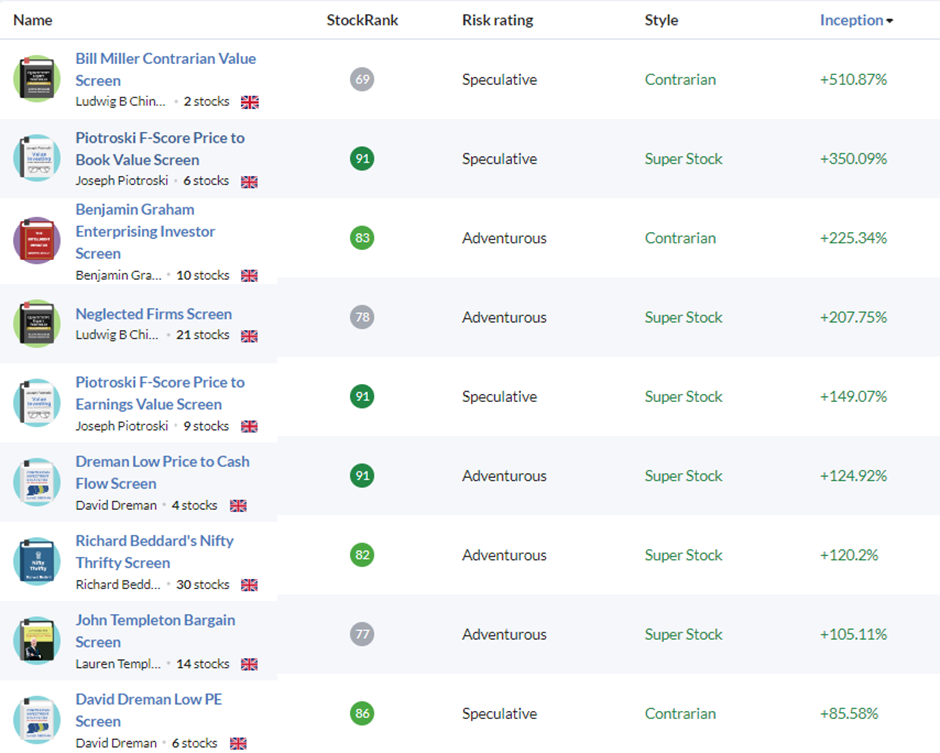
Going down the list, the third best-performing Value Guru Screen is the Benjamin Graham Enterprising Investor screen based on the writings. This currently has ten results, making its 22% performance since inception more reliable. Graham said:
The determining trait of the enterprising investor is his willingness to devote time and care to the selection of securities that are both sound and more attractive than the average.
Much of Graham's investing focused on defensive strategies, using significant discounts to tangible assets, or even discounts to working capital to provide a margin of safety. However, this Enterprising Investor screen is less strict on valuation but adds requirements intended to generate higher returns over the long term. The screen results so far suggest it achieves this.

The Screen
Let's go through the criteria:
Cheap on both earnings and assets

Neither of these criteria is focused on finding companies that are the absolute cheapest on either earnings or assets, but together, they find companies that are fairly cheap on both metrics. This avoids companies that are highly profitable but lack tangible asset protection. This would include people businesses, such as recruiters or brokers, where the employees tend to end up generating the bulk of the returns to the business over the long term. Similarly, these criteria avoid businesses where there are a lot of tangible assets, but they are currently very unprofessional.
Conservatively financed

Value investing requires buying cheap stocks and waiting for them to become stock market darlings. For example, investors who recognised the potential of £ W7L's strategy in cosmetics at IPO in late 2016 had to wait six years before that strategy generated significant revenue growth and was reflected in the share price:
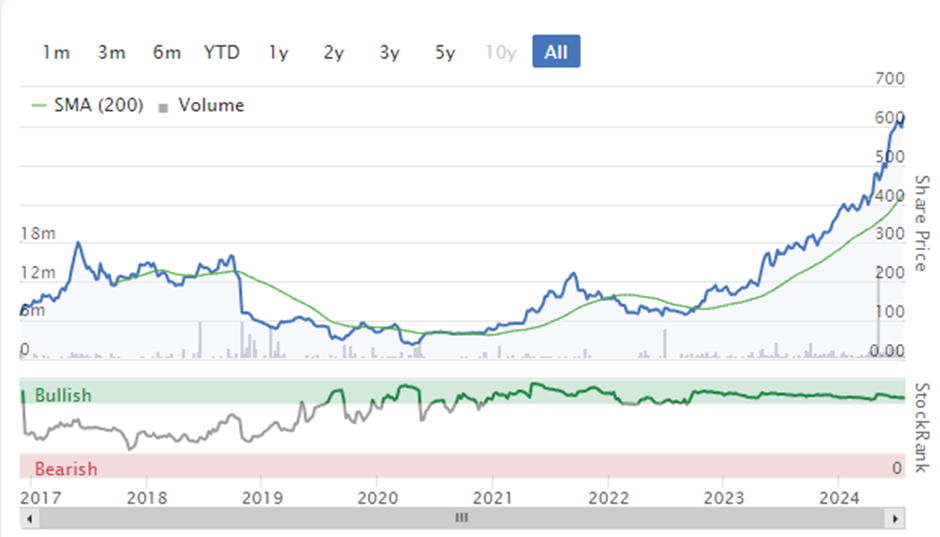
Companies that run out of money during the waiting period and dilute shareholders, or worse, go bust, never generate the returns that shareholders require. These criteria ensure that a company is sufficiently well capitalised to survive until a change of fortunes and/or sentiment occurs.
Positive long-term earnings momentum

The criteria here are not looking for the fastest growing stocks as these are unlikely to be found in a bargain screen. However, by requiring that a company has consistently positive earnings at a higher level than five years ago, this screen avoids companies that are in permanent decline or inconsistently profitable.
Paying a dividend

Finally, Graham demanded that such companies pay a dividend. It doesn't seem that the amount paid matters, so this is more about the intent to ensure shareholders benefit from the profitable trading of an enterprise.
The Results
Here is the list of companies that this screen currently generates:
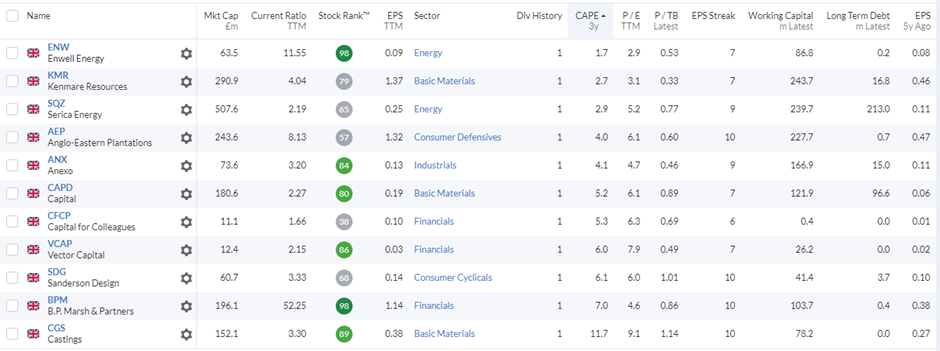
Let's go through these results to see if they are worth considering further:
Enwell Energy (LON:ENW)
Enwell Energy is an oil & gas producer in Ukraine. During the recent period of high prices, this has been very profitable:
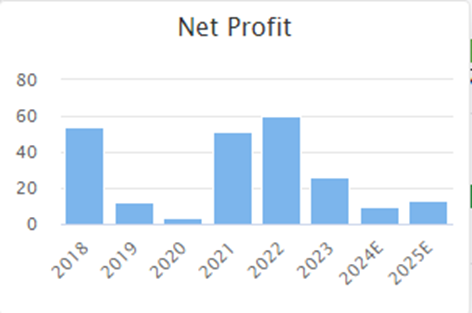
However, forecasts are that it will be less so in the future. The forecast P/E is now 7.4, which is good compared to the general market but not necessarily for the oil & gas sector:

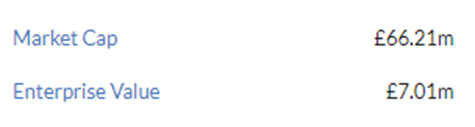
The company has a very low Enterprise Value:
With the cash generated sitting on the balance sheet:
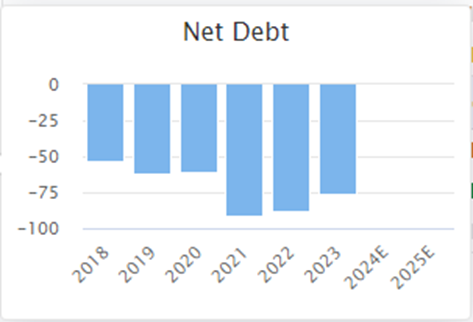
Some of that cash was paid out in 2023:
On 15 June 2023, the Company paid an interim dividend of 15 pence per ordinary share, aggregating to approximately £48.1 million, which was the Company's maiden dividend payment to its shareholders. The Company has not declared any further dividends since then.
However, it doesn't seem like they intend to pay a dividend again soon. Which makes one wonder how much of the cash is distributable. In the recent results, they say:
The Group's cash and cash equivalents balance as at 27 May 2024 was $91.0 million, held as to $72.5 million equivalent in Ukrainian Hryvnia and the balance of $18.5 million equivalent predominantly in US Dollars, Euros and Pounds Sterling.
This makes the EV even lower. However, it may be worth only counting cash held outside of Ukraine. This one is only for the very brave, given the location of their operations.
Kenmare Resources (LON:KMR)
Kenmare mines Heavy Mineral Sands in Mozambique. These provide essential feedstock for many industrial or commercial products. For example, one of the products, Ilmenite, is used in most paints to add opacity. Demand for these products generally matches global GDP. However, supply has been constrained recently by a lack of investment in new production, meaning that the pricing environment has been positive lately:
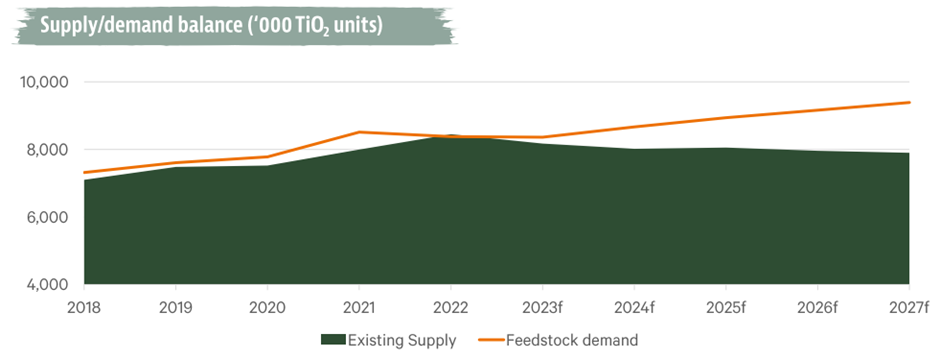
Things will get worse for supply in the short term as Base Resources (LON:BSE) ceases mining in Kenya at the end of the year. Base Resources also has a development project that looks like it may finally get the go-ahead. It has planned a merger with a US company in order to fund the development. This may tip the balance again in 2028, but Kenmare should generate some great profits in the meantime. With a P/E of 5, it doesn't take many years of supranormal profits for this to look very cheap.
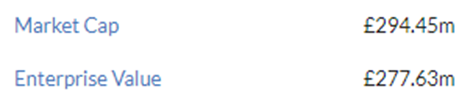
One of the challenges is that Kenmare needs to move one of its Wet Concentrator Plants. They are taking the opportunity to upgrade this simultaneously, but the capital cost is a rather eye-watering $341m. The market cap here isn't that far off this level:
This move is both expensive and risky and is the reason that management thinks that they haven't received an offer for the company despite trading at just a third of tangible book value:

This does mean that new mines are unlikely to be easily funded when producers such as Kenmare are trading at such a discount to assets. Ultimately, this company is likely to be highly cash-generative. However, weaker production and increasing costs mean that the broker consensus was cut significantly earlier in the year:
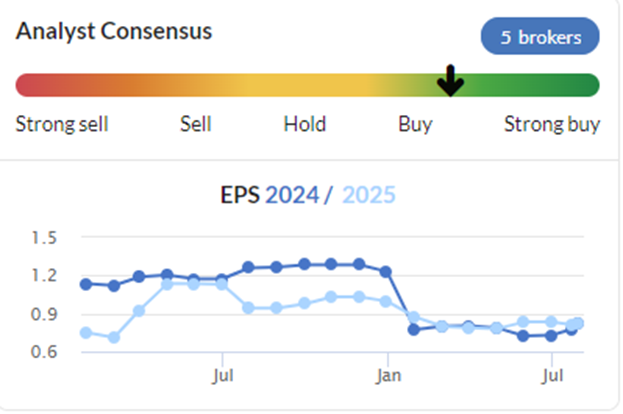
With a high dividend yield, shareholders are paid to wait these issues out:
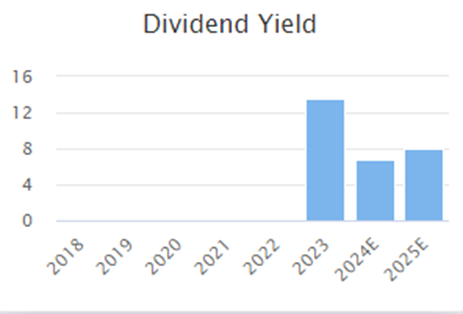
However, the capital cost of the concentrator and lower profitability means that brokers are forecasting this to be much lower than in the recent past. Irish withholding tax also takes the shine off this payout. The cautious investor may want to wait to see positive progress on the concentrator move and the supply dynamics to be visible in the pricing trend before investing here.
Serica Energy (LON:SQZ)
Serica is an oil and gas producer in the UK. This has been a terrible place to be an oil producer as successive governments have sought to burden the industry with increased taxation. On top of this, the incoming government have pledged to ban new North Sea Developments. Of course, oil and gas are global commodities, and reducing production in the UK will not necessarily reduce the UK's carbon emissions; it will just reduce UK tax revenue. As non-sensical as this appears, investors have to play the hand they are dealt, not the hand they would prefer.
Despite this poor outlook for the industry, the metrics here are compelling:
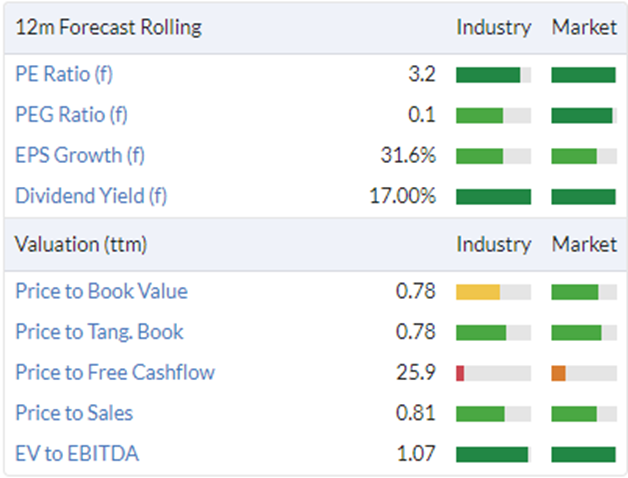
The only weak metric is free cash flow. Here, the company have been ramping up capex:
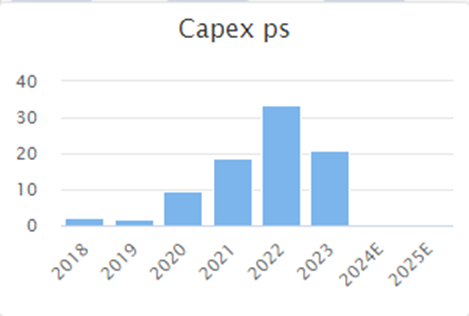
This is partly due to the ability to offset this investment against very high tax rates. One risk is that the current government don't allow this to be offset in the future. Barring this rather extreme scenario, it seems hard to imagine a scenario where Serica doesn't generate significant cashflows in the future and return these to shareholders in the form of dividends.
Anglo-Eastern Plantations (LON:AEP)
Angle Eastern Plantations is a producer of palm oil. Cash makes up around half the market cap:
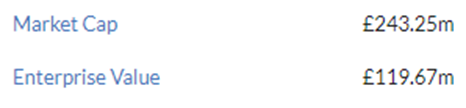
This means that the EV/EBITDA figure is particularly compelling:
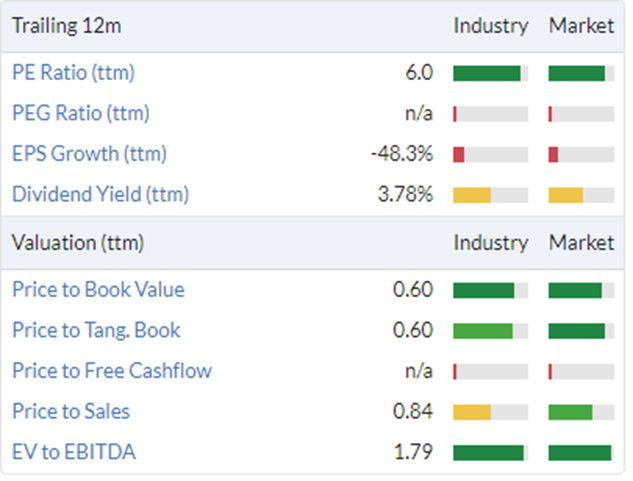
However, the company has historically been reluctant to distribute this cash, so some investors are sceptical about the company. They have recently upped their dividend payout, which has helped assuage some of these concerns:
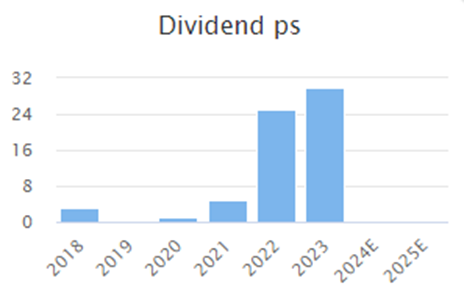
However, the cash balance has also been reduced because they spent $86.6m buying out minority interests last year, something that is hard for independent investors to judge that they have paid a fair price. Complicating matters, there are no forecasts in the market. Their AGM statement showed slight declines in production, mainly due to weather-related issues. They said:
For the first five months ended 31 May 2024, our own production of fresh fruit bunches ("FFB") was 403,200mt, a decrease of 4% compared to the same period in 2023 (five months to May 2023: 420,300mt)…
FFB bought-in was 367,700mt, a decrease of 9% in comparison with the same period last year (five months to May 2023: 404,000mt).
Prices have held up well:
The CPO ex-Rotterdam price averaged $1,014/mt for the first five months to 31 May 2024, 1% higher than the average price for the corresponding period in 2023 (first five months to May 2023: $1,006/mt). The average ex-mill price for the same period however was lower at $750/mt, a 2% decline compared to the corresponding period in 2023 (first five months to May 2023: $768/mt).
However, they expect this to be weaker going forward:
The CPO price ex-Rotterdam closed at $1,018/mt on 5 June 2024, representing an increase of 9% from the start of the year at $935/mt. The demand for CPO is expected to remain weak and may decline in the near term, especially against the backdrop of a seasonal increase in soybean production in South America. We further expect weaker CPO prices going forward as harvest generally peak in the second half of the year barring a drastic change in weather forecast.
Although there is no sign of significant weakness yet:
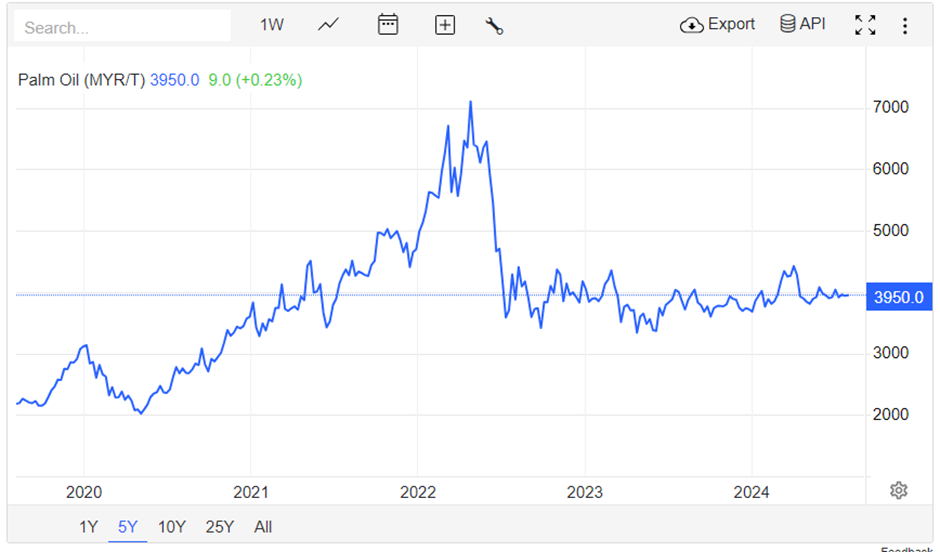
In June, fellow UK-listed palm oil producer M P Evans (LON:MPE) were more positive, saying:
The average price of CPO (cif Rotterdam) for the first five months of the year was US$997 per tonne, very similar to the US$1,001 per tonne during the equivalent period in 2023. During this period, the Group realised an average price at mill gate of US$770 per tonne compared with US$779 per tonne in 2023, a 1% difference. Prices for palm kernels have been improving from a low level at the start of the year and, by the end of May, year-to-date pricing had exceeded the previous year's average at US$425 per tonne (2023 US$415 per tonne).
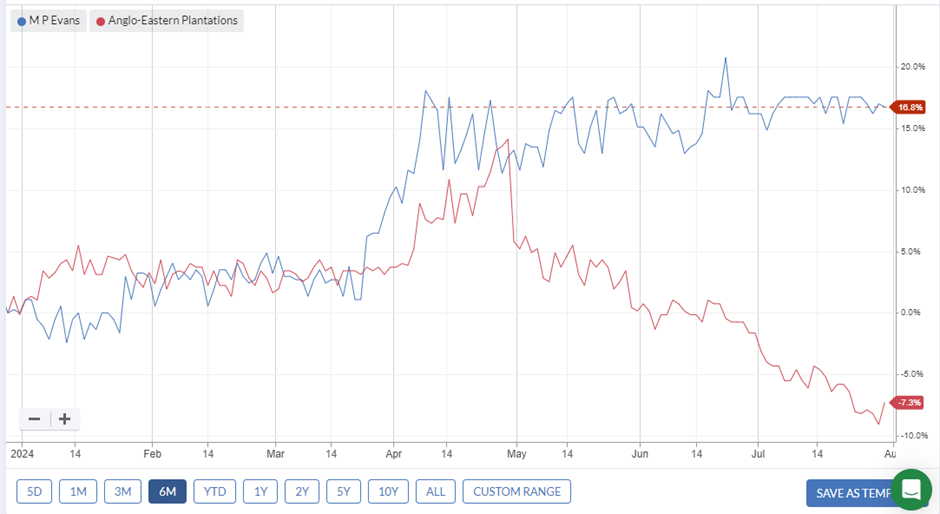
The divergence in price here over the last six months may give an opportunity:
Anexo (LON:ANX)
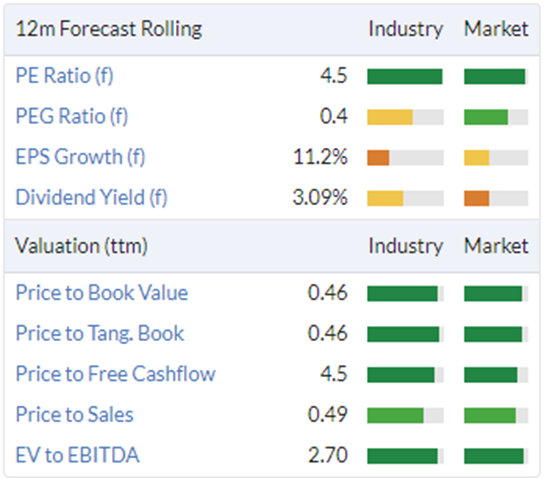
On the surface, this seems to be an incredibly cheap business for one that has grown revenue at 21% CAGR over the last five years:
The problem is that although they are booking revenue, they are struggling to get the cash in, which shows up in large trade receivables:
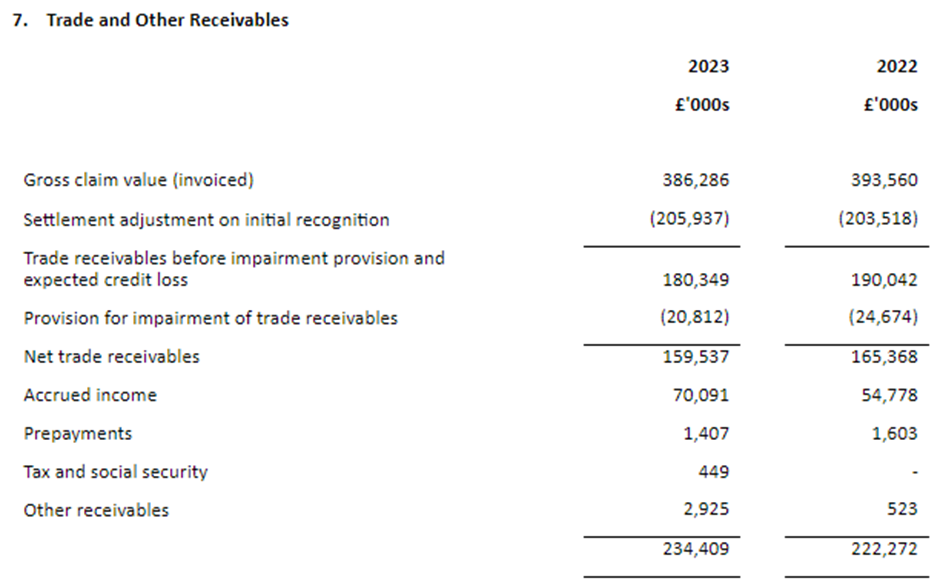
This arises from the nature of the business, where they are always fighting for payment from those who don't want to pay. As such, it seems almost impossible to judge the likely outcomes for shareholders. Given similar businesses have failed in the past, it would be a brave move to bet that things will be different here.
Capital (LON:CAPD)
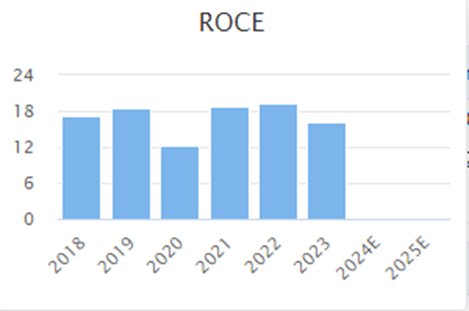
Capital provide drilling and mining services, mainly in Africa. In addition, they own a fast-growing labs business. This is a capital-intensive business, but a management focused on long-term contracts with major miners and high-quality delivery means that they manage to have a very respectable ROCE:
One of the concerns here has been their exposure to gold and the risk of a cyclical downturn. However, there has been no sign of this in the gold price over the last few years:
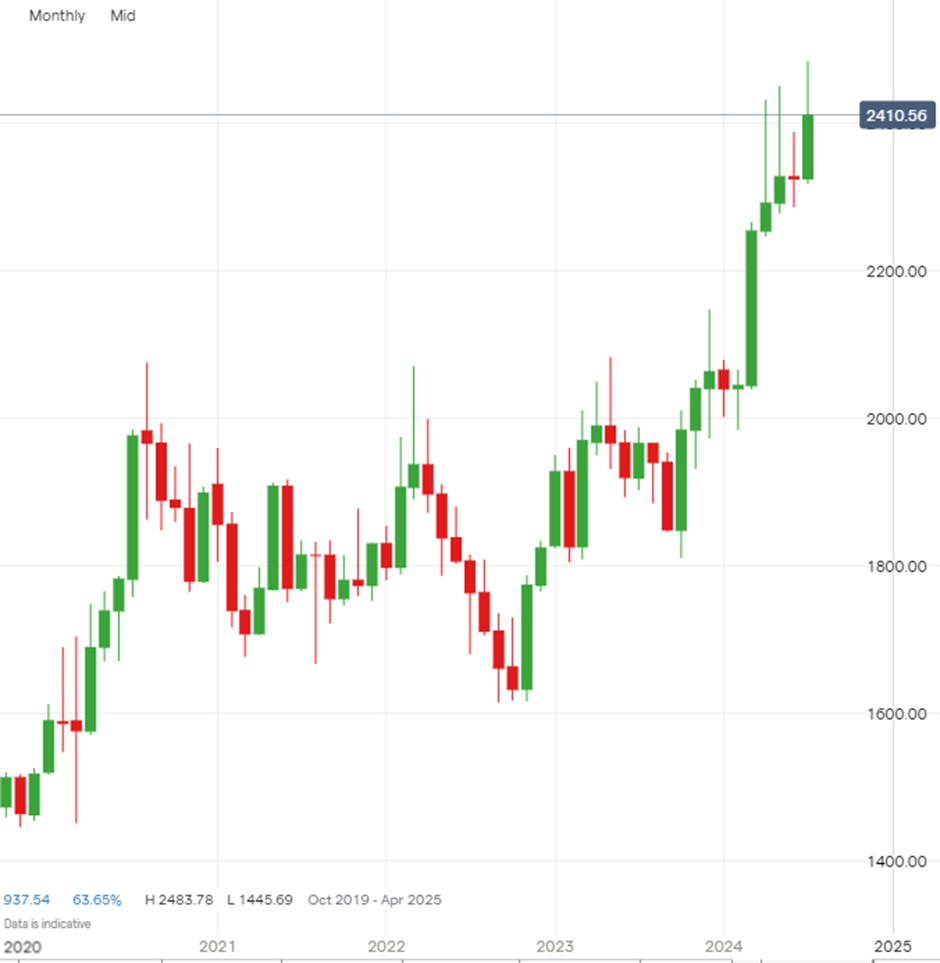
The company mitigates this risk by signing long-term contracts. The downside is that they don't benefit from high spot rates in a tight market for rigs and equipment. Still, they are on a very modest rating, including a discount to TBV, which is rare for a company with such productive assets:
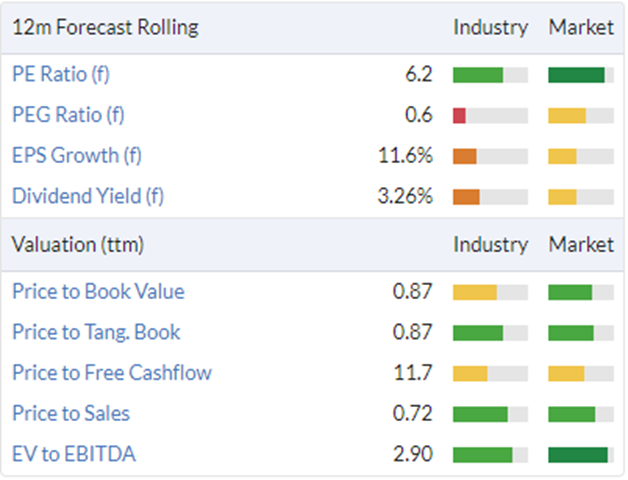
One of the concerns is that investment ahead of new contracts, plus increased debt interest, mean that earnings are expected to decline in 2024, even though revenue continues its impressive growth rate:
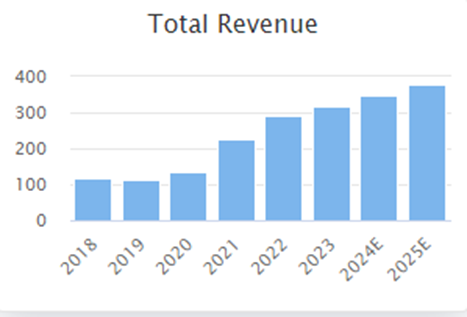
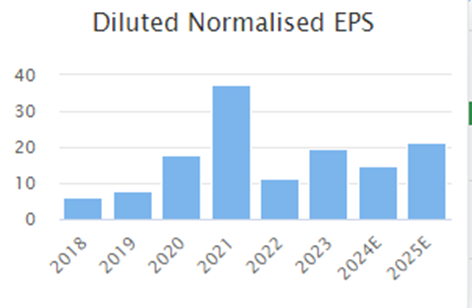
(note that 2021 figures are mixed with gains on equity positions held by the company, so they don't reflect the underlying business.)
Broker trends are also not particularly encouraging in the short term:
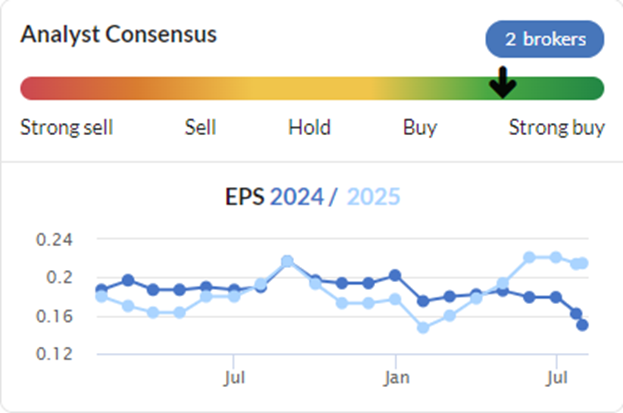
Still, it is hard to argue that this isn't already in the price, and then some. So it seems too cheap for such a high-quality operator. Something well-respected fund Rockwood Strategic (LON:RKW) have recently cottoned on to.
Capital for Colleagues (OFEX:CFCP)
Capital for Colleagues is an investment fund focused on employee-owned businesses. As such, earnings here are not a useful metric. Instead, the focus should be on the price to tangible book:

This may well indicate good value and book value has risen over time. However, this is reliant on their valuation of private companies being accurate. Something I am not able to judge in this microcap space. Hence, this goes into the too-hard pile for me.
Vector Capital (LON:VCAP)
Vector Capital offers bridging loans and secured business finance to SMEs, usually for property development or buy-to-let. This is a company with very cheap valuation metrics, but it must be noted that it doesn't stand out in its industry:
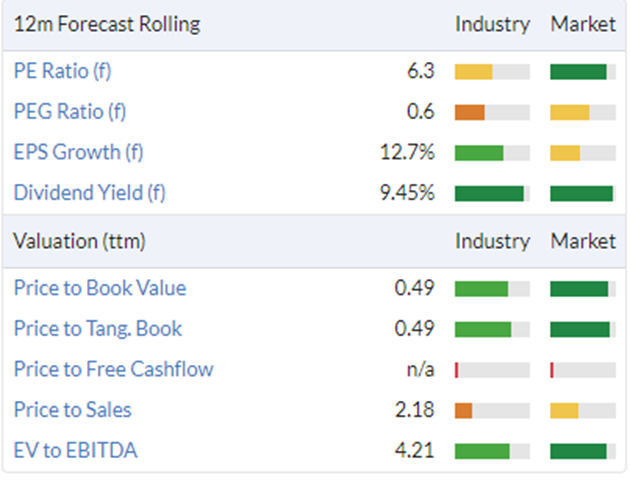
The dividend yield is very high and is forecast to increase slightly, so this will certainly appeal to income investors:
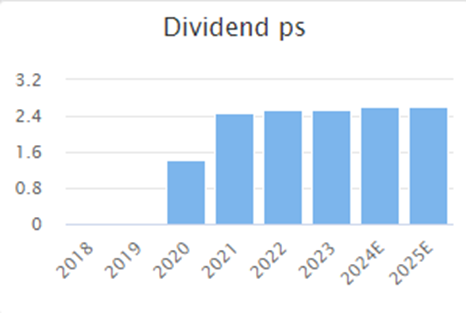
The market is clearly sceptical about this business's ability to maintain these earnings or dividends. However, the company itself claim that their bad debt provisions are prudent and that:
We expect base rates to start the move downwards during mid-2024. At that point we will review the scenario to get back to loan book growth. We have a strong capital base and a talented team to perform well in our market and we look forward to the rest of 2024 with more confidence.
Some related party loans perhaps need further investigation. Particularly when the CEO and family own well over 50% of the equity:
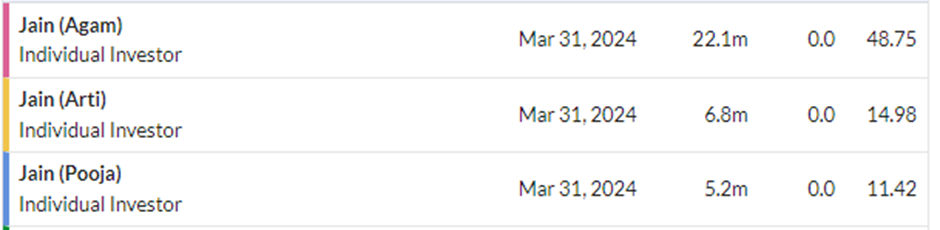
However, in general, this looks great value for those who can bear the controlling shareholder risk.
Sanderson Design (LON:SDG)
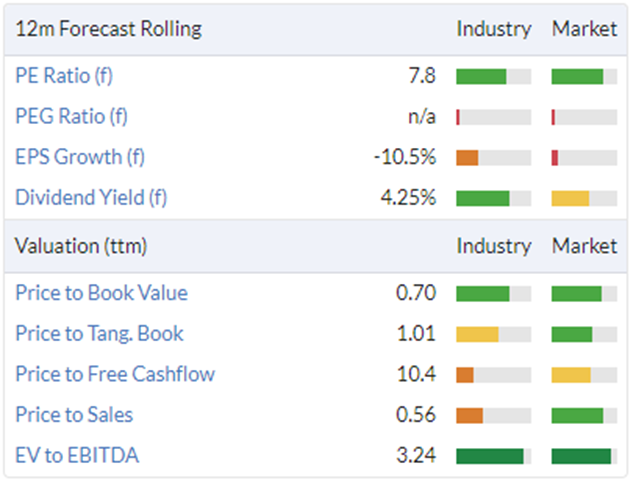
Sanderson Design is a manufacturer of wallpapers and coverings, as well as the owner of a range of designs that it licenses to others for use in non-competing products. The valuation metrics here are pretty good:
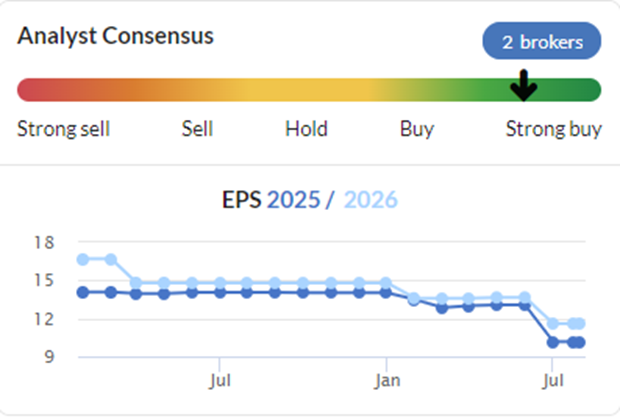
However, this company has recently suffered from a multiyear downgrade in prospects:
Complicating matters further, all of last year's profit was covered by licensing revenue:
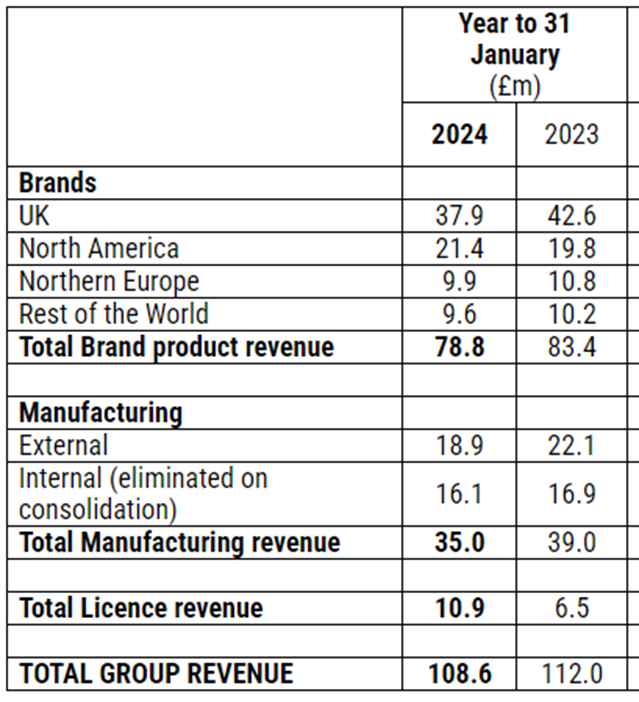
This suggests that excluding this very high-margin part of the business, all the rest was break-even, at best. As required by accounting regulations, this licensing revenue recognises the minimum agreed revenue immediately rather than when it is received. The cash will be received over several years. So, this is a blessing and a curse.
The licensing side is undoubtedly a great part of this business and one the current management have focused on growing. However, the core product sales look to be a pretty mediocre business, but one that can't be separated out, given the nature of the business. Hence, this will only appeal to those who believe the licensing business has much more to run.
B.P. Marsh & Partners (LON:BPM)
B.P. Marsh is a specialist private equity investor in early-stage financial services businesses. Again, this is a business that is best judged against tangible book value:

While the discount here is not compelling, B.P. Marsh & Partners (LON:BPM) have a history of profitable exits that perhaps marks them out against similar plays. For example, from last year's results:
· Disposal of Kentro Capital Limited and receipt of £51.5m in proceeds
· Disposal of Paladin Holdings Limited / CBC UK Limited agreed for £42.1m upfront consideration, with post-year end completion
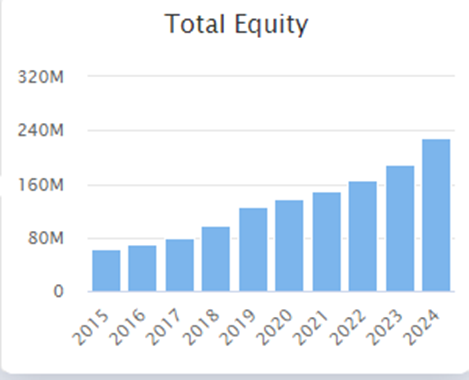
The long-term history of increasing book value makes this an interesting prospect:
Castings (LON:CGS)
While the historical P/E is less than 10, the forward earnings are forecast to be much lower:
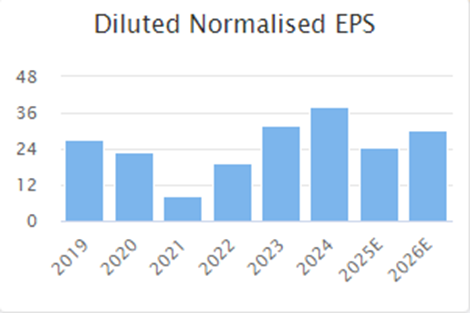
This is partly the result of a recent profits warning:
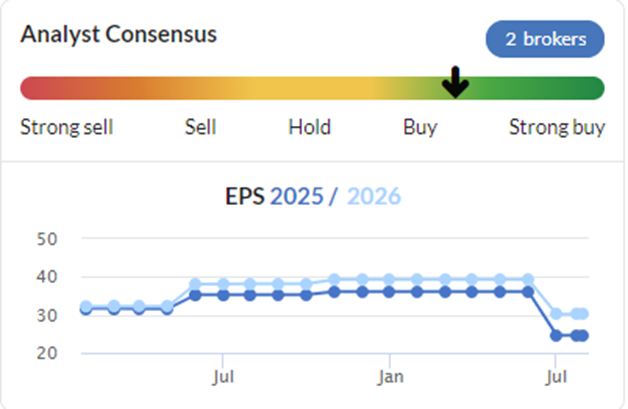
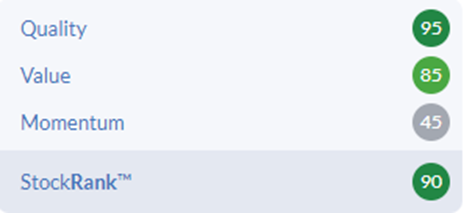
Again, this is likely to hit both the Quality Rank and Value Rank, making the current StockRank due for a fall:
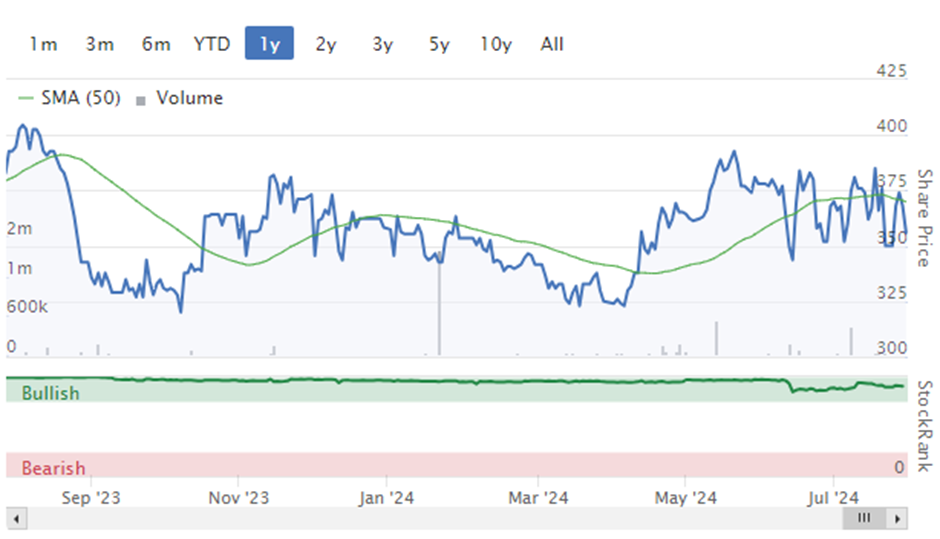
For some reason, investors don't seem to have taken fright at the recent downgrade:
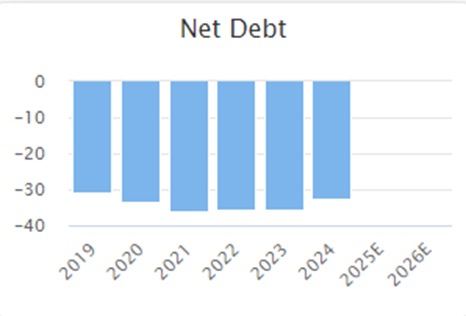
The price is perhaps supported by the decent cash balance:
And the willingness to return this to shareholders as dividends, including special dividends:
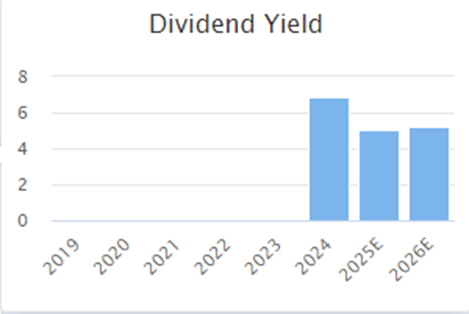
However, this can only continue for so long without higher earnings. So, despite the chance of a recovery at some point in the future, the metrics here don't look particularly compelling.
There are a couple of things that stand out about these screen results. The first is that many are in extractive industries. This reflects the difference between many commodity prices that have performed strongly and equities in the sector that have not. This may be because the equity markets are taking a longer-term view of the price direction than the spot markets for commodities. Or it may be that resource stocks have limited lifespans for their assets, making simple shortcuts to valuation, such as P/E, less relevant. However, I don't think these factors can fully explain this disparity. Instead, a lack of capital flows to the UK market, particularly this sector, may give some great opportunities.
Secondly, almost all of these stocks have some hair on them. When looking at cheaply priced stocks, few have no reason to be sold off. Personally, some of the reasons are not strong enough to stop me from investing (or the price is so cheap that I think it is worth bearing that risk), while others are showstoppers. Every investor needs to make their own mind up on these.
[Disclosure: Mark owns shares in Capital (LON:CAPD) Sanderson Design (LON:SDG) Serica Energy (LON:SQZ) ]
Disclaimer
This is not financial advice. Our content is intended to be used and must be used for information and education purposes only. Please read our disclaimer and terms and conditions to understand our obligations.

5 comments
Great article Mark. I've looked at nearly all of these at some stage. Many of them are at attractive valuations for a good reason unfortunately. Some scary stocks in there. (I hold Serica Energy)(LON:SQZ)
Sadly I understand that our government has not only increased ‘windfall’ taxes on North Sea oil and gas, and for more years, so in fact functionally it would seem permanently, but it has also decided to not allow capital investment to be offset against tax.
Not such great news for Serica Energy (LON:SQZ), but great news for Gulf and US oil and gas importers.
So much for Labour’s economic growth focused policy.
Unbelievable, where doctrine beats common sense economics lets import instead of produce from own resources. Stupidity on steroids!
Totally agree that’s the trouble when you base your policy on what’s trendy or political ideology rather than logic
Thanks for displaying your political views on this investing website. Nevertheless, you are wrong anyway as the vast majority of oil produced in the North Sea is sold into world markets and has no effect on price or the supply to the UK.