52-week lows due a bounce – sorting the wheat from the chaff

Last week, I wrote about using the 52-week low screen to find stocks that might be due for a bounce. While many UK small-cap shares have been strong performers over the past three months, the recovery has not been universal. Sometimes this is because the company has released bad news, such as a profits warning. However, in many cases, it is simply because the stock has been overlooked by investors, resulting in a low valuation compared to its peers. This may provide an opportunity if such stocks eventually get their day in the sun. The screen I created had few hits, so I relaxed the criteria a little and ended up with 25 companies that look superficially interesting and hence go into the top of my funnel:

A screen update
Running the screen this week only gives 21 results. What has happened is that a few, mainly commodity stocks, have bounced and are no longer within 20% of their 52-week lows (ARC Minerals (LON:ARCM) FIH (LON:FIH) Kodal Minerals (LON:KOD) Pharos Energy (LON:PHAR) Central Asia Metals (LON:CAML) Henry Boot (LON:BOOT) Syncona (LON:SYNC) ). However, these have been joined by two stocks, (BILN and Somero Enterprises (LON:SOM)) . While the 20% I chose is largely arbitrary, it goes to show that often all this is needed for cheap stocks like these to bounce is a change in sentiment rather than any groundbreaking deal or positive trading statement. Here is the updated list of 21 in order of their proximity to their 52-week lows:


Over the next two weeks, I'll go through the list in an attempt to narrow the field down to the stocks that will make it onto my watchlist. This week, I'll take a look at Recruiters, Household Goods and Property companies. Next week, I'll look at Industrials, Extractive Industries, and anything else.
Recruiters
It may not be surprising that four companies on this list are in the recruiting sector. Here is the summary of the head-to-head for these:

Robert Walters (LON:RWA)
This has been considered one of the highest-quality recruiters in the past. Yet that hasn't stopped the share price from trading almost monotonically down over the last year:
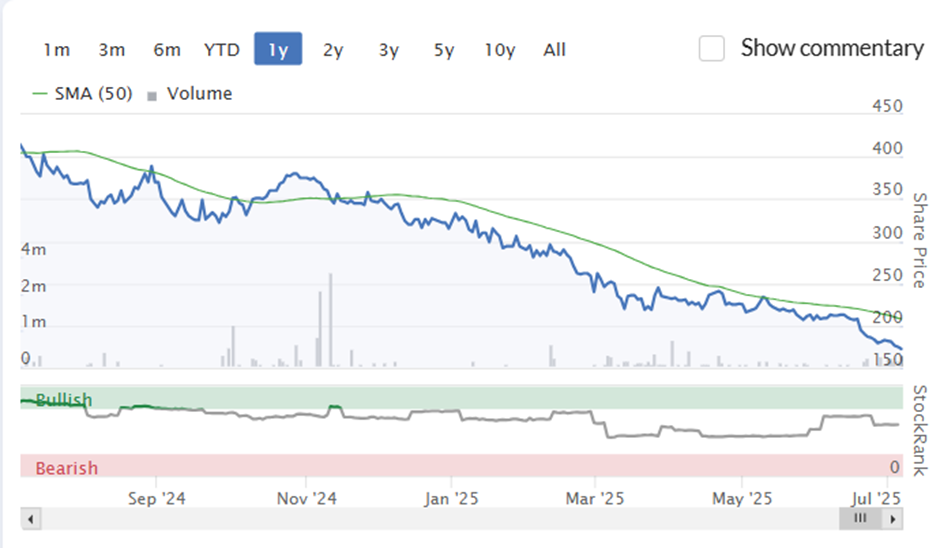
This has largely tracked the downward trend in brokers' forecasts, which, following a further warning in April, are now for FY2025 to be loss-making:
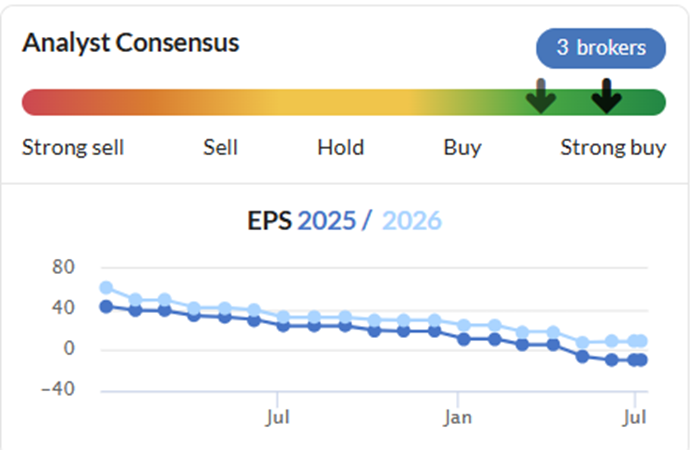
The forecasts are for a modest recovery in 2026, but I'm not sure we should place much weight on that given what's happened to FY25 forecasts this year. The company is certainly cheap on assets, but even here it doesn't stand out in the sector:
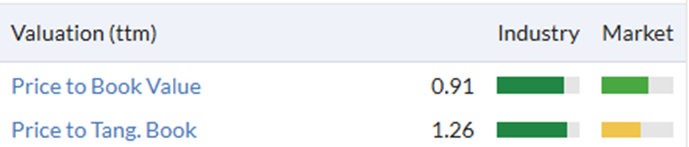
With a 13% yield, this stock may appeal to income investors. Although this is uncovered, and while the company may be able to pay this out of their generous cash balance, they will likely need to see a strong recovery in FY27 to be able to maintain this. The idea of this screen is to find stocks that are unduly beaten up, whereas this seems to deserve its recent sell-off, at least in the short term.
SThree (LON:STEM)
The drop here over the past year is mainly due to a big profits warning at the end of last year. Since then, it has primarily been bumping along the bottom:
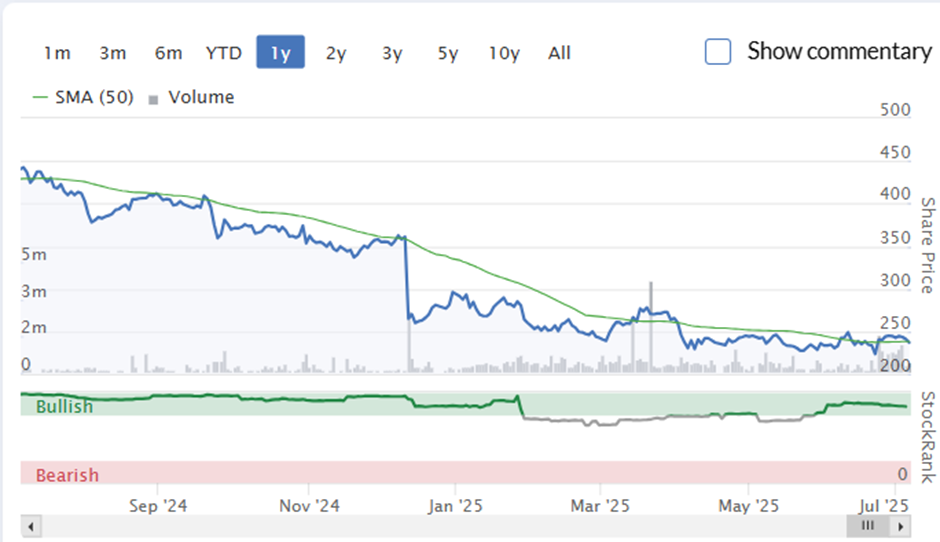
Unlike Robert Walters, SThree manages to maintain profitability. However, on 17x forward earnings, investors are still putting a lot of faith in an eventual recovery back to previous earnings levels:
Gattaca (LON:GATC)
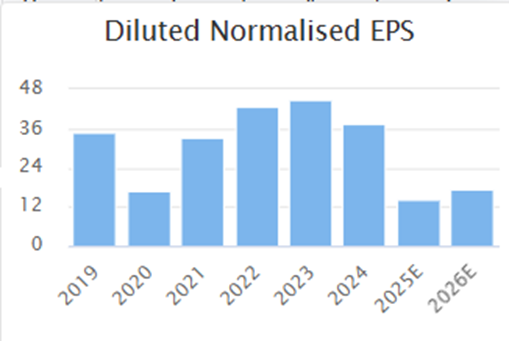
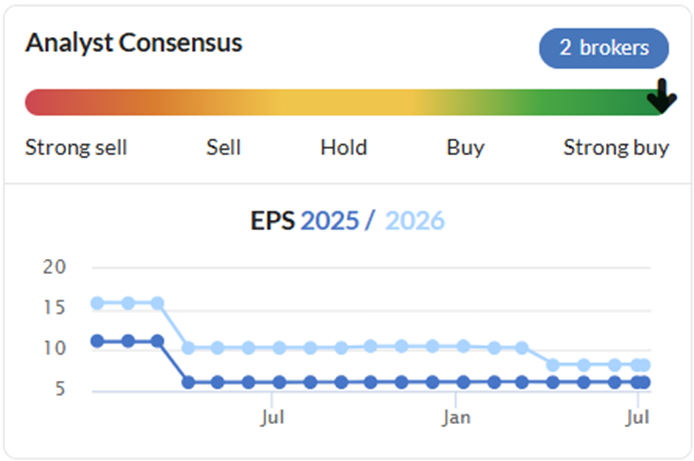
Gattaca is outperforming the wider recruitment market. While most of the sector is reporting mid-teens drops in Net Fee Income, including Robert Walters and SThree, Gattaca only saw NFI drop by low single-digits. The latest trading statement was in line. However, the broker consensus fell on the news. It seems one of the brokers was wildly optimistic and took the opportunity to realign forecasts to more sensible figures:
The standout valuation metric here is the Price to Tangible Book Value:
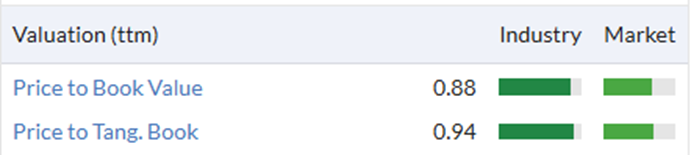
With £18.5m in cash and £8m of net working capital, this company is trading at a discount to very liquid assets. While the P/E is low compared to the market, it is exceptionally low if cash-adjusted.
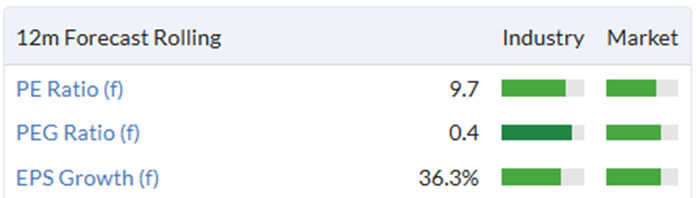
Perhaps equally importantly, brokers are already forecasting a recovery underway. While this still has to be delivered by management, I see no reason why a company outperforming its sector should trade at a material discount.
RTC (LON:RTC)
RTC is a very specialised recruiter, serving the rail and defence sector. They also run the Derby Conference Centre, where last year's Mello investing conference was held. Whether investors consider this an asset or a liability probably depends on whether they were in a presentation room that started leaking during heavy rain at Mello!
This is another stock that has already seen a significant recovery in its profitability:
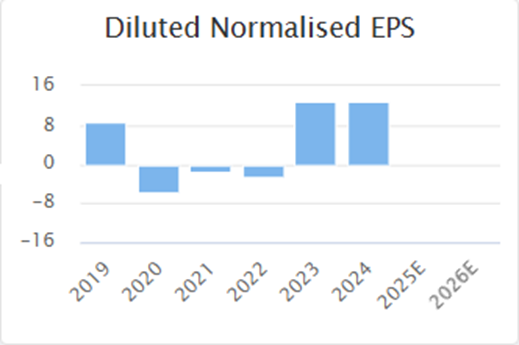
And the medium-term chart shows the impact of that on investor sentiment:
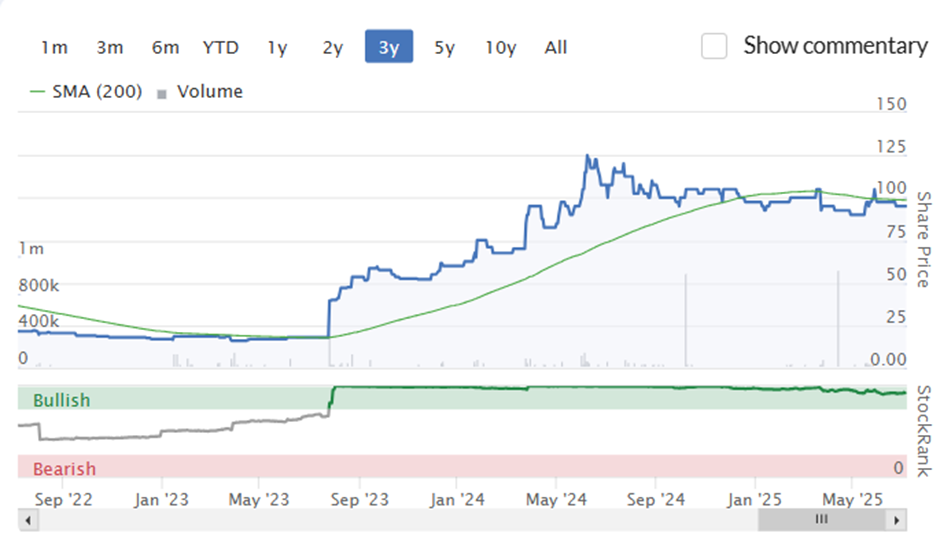
However, this highly illiquid stock has no forecasts in the market, so we are reliant on their latest outlook statement:
In the first quarter of 2025 the Company continued its trajectory of positive trading and cash generation.
As we enter quarter two of 2025, we are beginning to witness the impact that the government's increases to employer's NI contributions and minimum wage are having on companies' appetite to recruit workers. Whilst this is clearly concerning, we believe our strategy of positioning the Group across targeted sectors sees it well placed to capitalise on new and emerging growth opportunities as they arise.
It appears that there is a risk of a short-term decline in profitability. If they successfully mitigate this, then a P/E of around 7 looks too cheap. However, perhaps too much uncertainty remains.
Summary
The entire sector has the potential for a strong bounce back in better market conditions. I can see the value in making it a sector recovery play and buying a small amount of all the financially robust recruiters. However, I agree with the algorithms on this one, it is Gattaca that is outperforming its peers, yet it trades at a material discount to them on several metrics, making it the pick of the sector for me, and I've put my money where my mouth is on this one.
Household goods
Headlam (LON:HEAD)
Investors in this once very well-regarded carpet distributor have had a torrid time over the last few years:
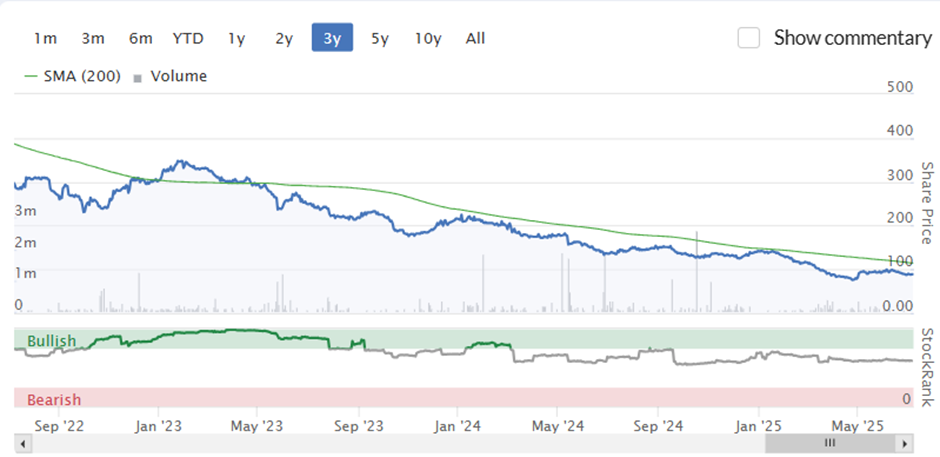
This is hardly surprising given the scale of the recent (and forecast) losses here:
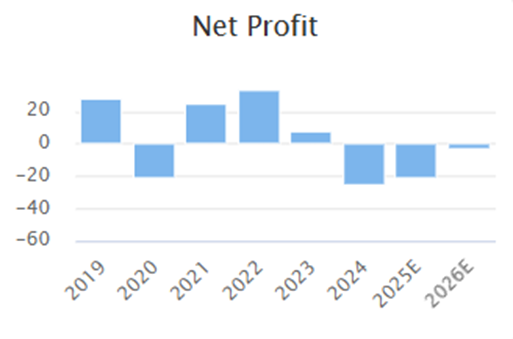
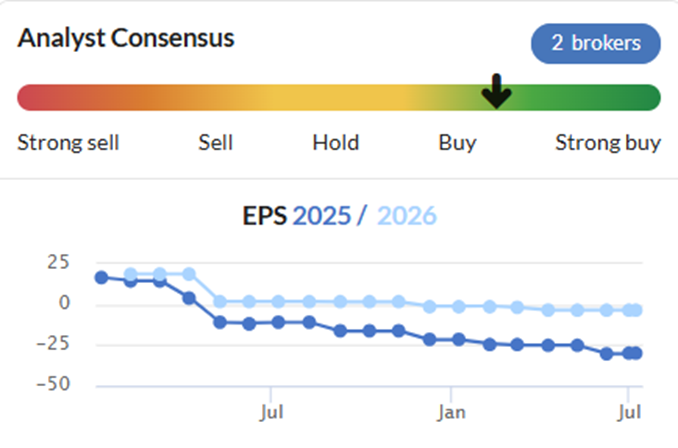
A recovery doesn't seem to be in sight as further downgrades were made recently:
The company blames market conditions for the weakness in trading. In their FY Results, they said:
Flooring is a discretionary 'big ticket' purchase and has been one of the weakest performing categories for consumer spending and the impact of the challenging trading conditions is evident in the Group's performance for 2024.
While this is no doubt true, I don't think this is the whole story. Competitor Likewise (LON:LIKE) , which was set up by former Headlam management to do likewise, said in their AGM statement that they were:
…pleased to announce a continuation of the very positive sales trajectory reported earlier in the year as they approach the end of H1 25.
It seems the weakness at Headlam is at least in part due to increased competition.
The main attraction is a big discount to Book Value:
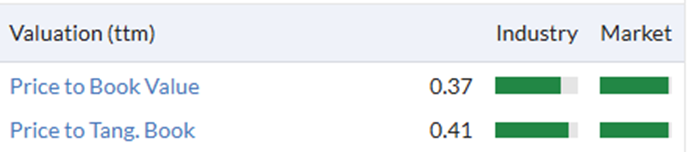
And the company is quick to point out that this consists largely of cash and freehold property:
The Group ended the year with net cash of £11 million and a property portfolio valued at £95 million.
That £95m portfolio is potentially undervalued on the books given recent transactions. However, the net cash comes from selling properties, and two out of four of these were leased back, with the third replaced by a new distribution centre:
The sale of the Ipswich, Gildersome and Leeds properties for £50.9 million. Following operational improvements, the Ipswich property has become surplus to requirements and will be fully vacated by the Group after completing the relocation to the new distribution centre in Rayleigh in Q1 2025. The Group has agreed a leaseback arrangement in relation to the Gildersome and Leeds properties...The sale of the Uddingston property, which had also become surplus to requirements, for £3.1 million on 11th December 2024. The property was last valued by the Group at £2.3 million.
This transaction appears to be driven by liquidity requirements rather than a sale of surplus property and has merely converted the bulk of debt to a covenant-free form (lease liabilities). That they only have £11m of net cash highlights the scale of the losses here, which will erode all of the asset value if they don't manage to stem these soon. If they can do this quickly, there may be value here, but with little sign of it, and likewise appearing to be eating their lunch, I'm not sure it can be said that these are due a bounce.
Colefax (LON:CFX)
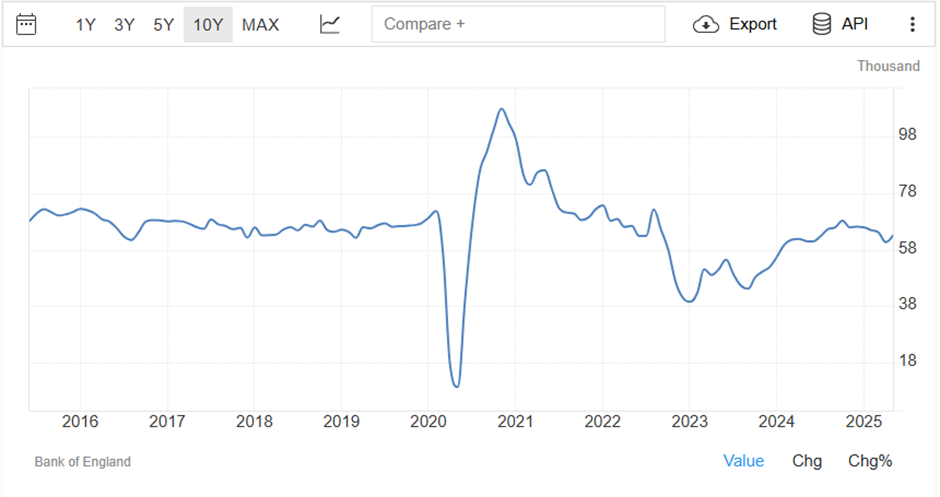
Colefax is a designer and distributor of furnishing fabrics and wallpapers. This has undoubtedly been a tough market for a homewares company. Remodelling of properties tends to be driven by people moving house, and the Bank of England reports that mortgage approvals in the UK took a big dip at the end of 2022 and have yet to recover fully:
[Graph: Trading Economics]
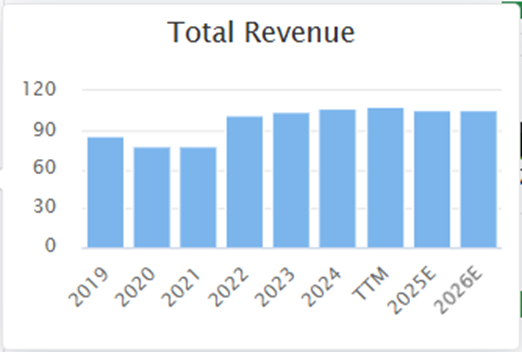
This weakness isn't really reflected in the Colefax revenue (at least in nominal terms), which is remarkably flat:
EPS has been more variable, and is forecast to decline slightly going forward, due to increased costs, where they said the following in their HY results released in January:
The Group has delivered a good performance in the first six months due to a strong Fabric Division performance in the US. Market conditions in the UK and Europe are currently challenging and we expect these conditions to continue through the second half of the year. Following the US election in November the US Dollar exchange rate has strengthened significantly and if sustained this will be beneficial for Fabric Division profits going forward. Although trading prospects in the US look favourable there is currently significant uncertainty around the possibility of higher US import tariffs and how they might impact our US business
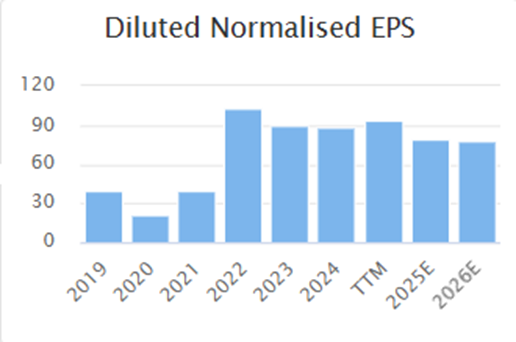
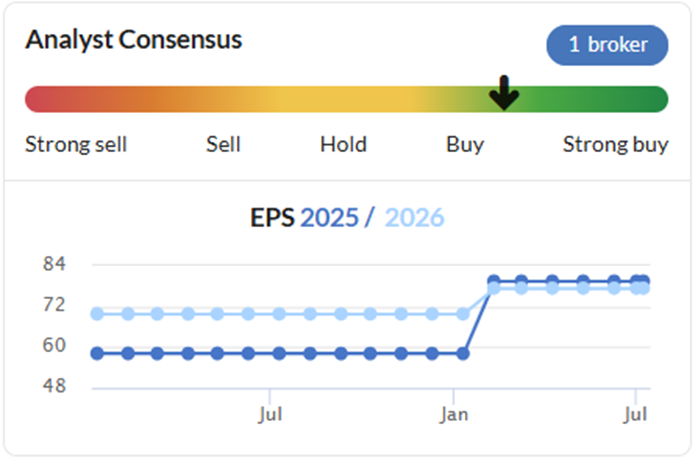
However, brokers actually upgraded forecasts at the time:
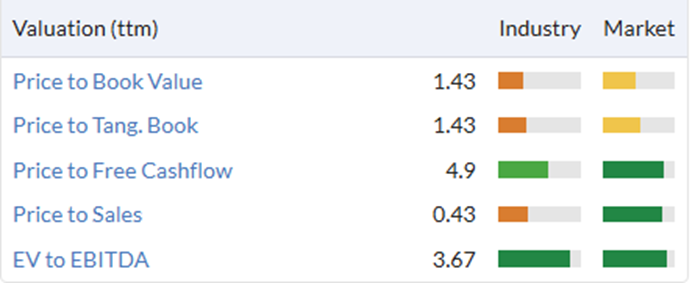
When you include the net cash in the business, this trades on a low EV/EBITDA multiple:
Six months without news is a long time. However, what makes me think that the share price may react positively to news when we get it is that Sanderson Design recently jumped on a more positive-sounding trading statement. Sanderson has not managed the weak market conditions anywhere near as well as Colefax, with brokers' forecasts having declined significantly over the same period:
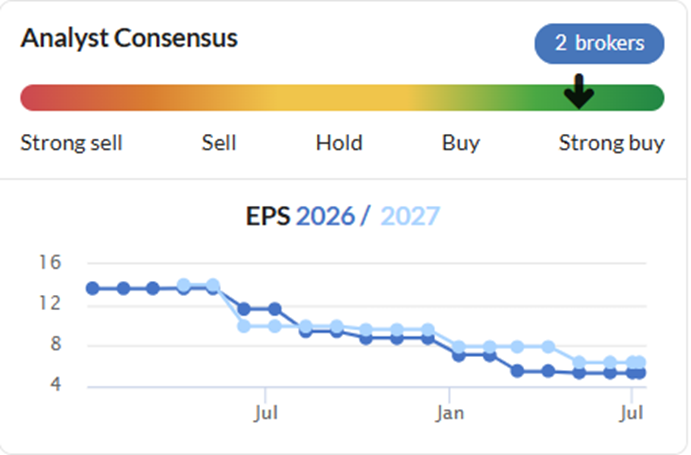
If Sanderson are benefiting from a modest recovery, it is likely that Colefax are too.
Portmeirion (LON:PMP)
One of the things that makes me think Portmeirion (LON:PMP) may be due for a bounce is that it has already done so:
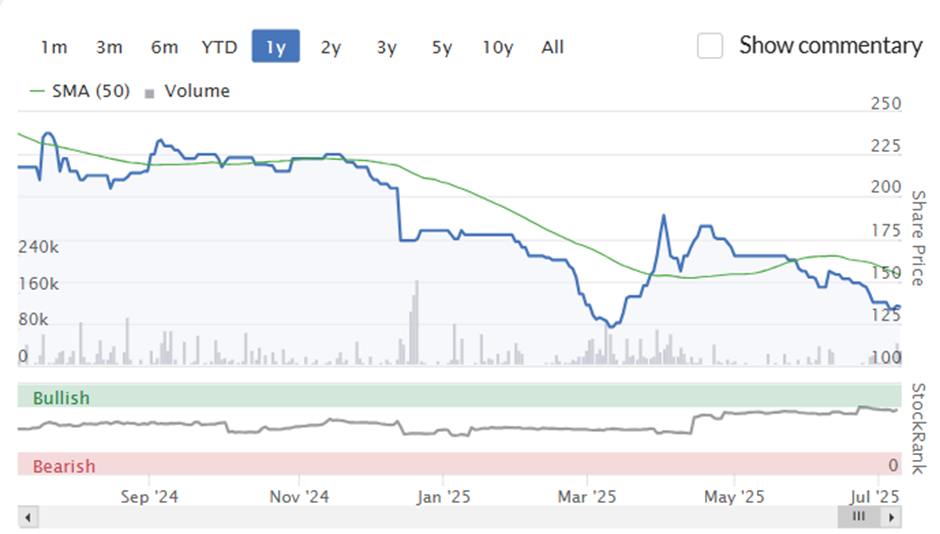
And it did so in response to very weak annual results at the end of March. When companies see their share price rise on bad news, this is often a sign that the market was actually expecting much worse! Yet that initial optimism has given way, and the shares are back trading close to their 52-week lows. This leaves them on a huge discount to tangible book value, which is mostly comprised of liquid assets such as inventories and receivables:
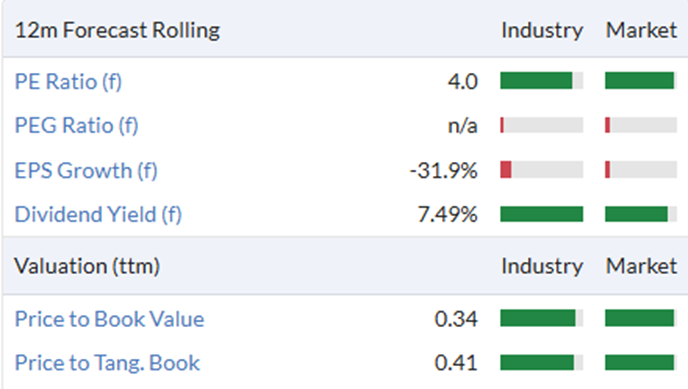
Forecast numbers here should probably be ignored as there are no forecasts from their broker Shore, and the dividend has been cut. However, Shore say:
Although we are not reinstating forecasts for FY25F or FY26F at this stage, we are encouraged that the c.£4.6m adj. EBIT for H2 FY24A equating to an 8.3% EBIT margin, implies PMP can return to a double-digit EBIT margin as and when it gains sales traction
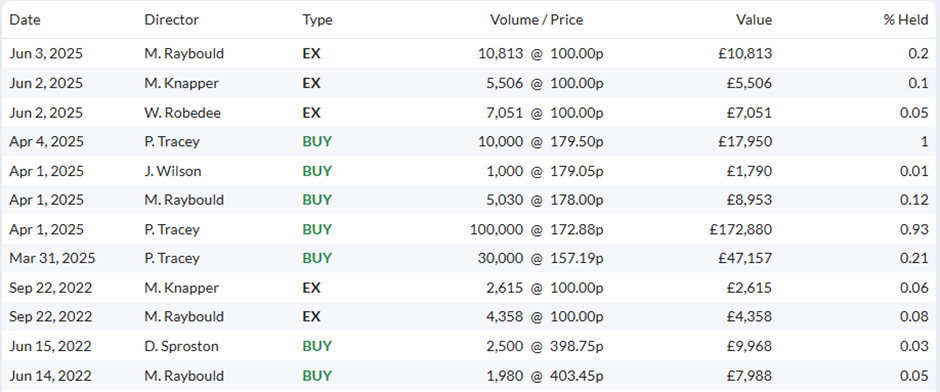
Directors also see value here and were willing to buy shares after the initial rise in response to the recent results:
However, there are a few reasons to be cautious. The first is that there is a huge gap between adjusted and statutory earnings:
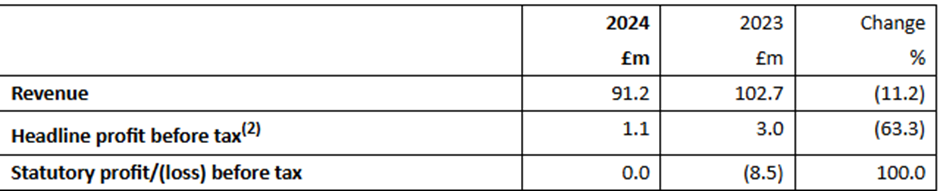
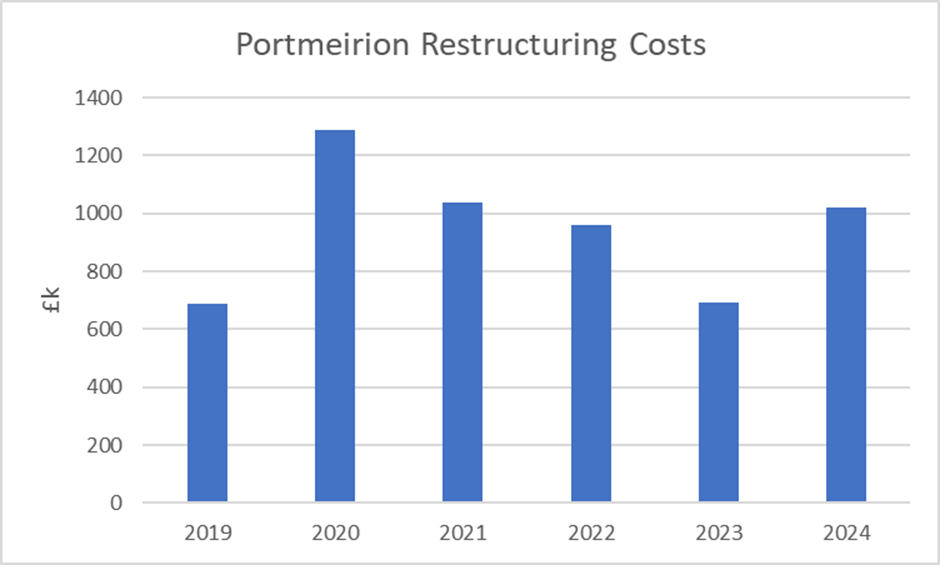
For example, there appears to be little exceptional about the restructuring costs Portmeirion would like investors to ignore:
The second is that there is now significant net debt, particularly at times of seasonal peak working capital. In the recent results, they said:
In August 2024, the Group signed a new 4+1 year term £30m revolving credit facility with Barclays, which replaced the existing facilities with Lloyds. This new facility allowed the Group to consolidate and simplify our borrowing structure, whilst providing a secure structure and sufficient working capital headroom for the future and an 80bps improvement in the interest rate charged...Our business is seasonal due to the second half weighting of our sales. Consistent with previous years, we experienced a working capital swing of around £10.0m during the year as we built inventory to match our sales demand. At the year-end we had available cash and borrowing headroom of £9.8m.
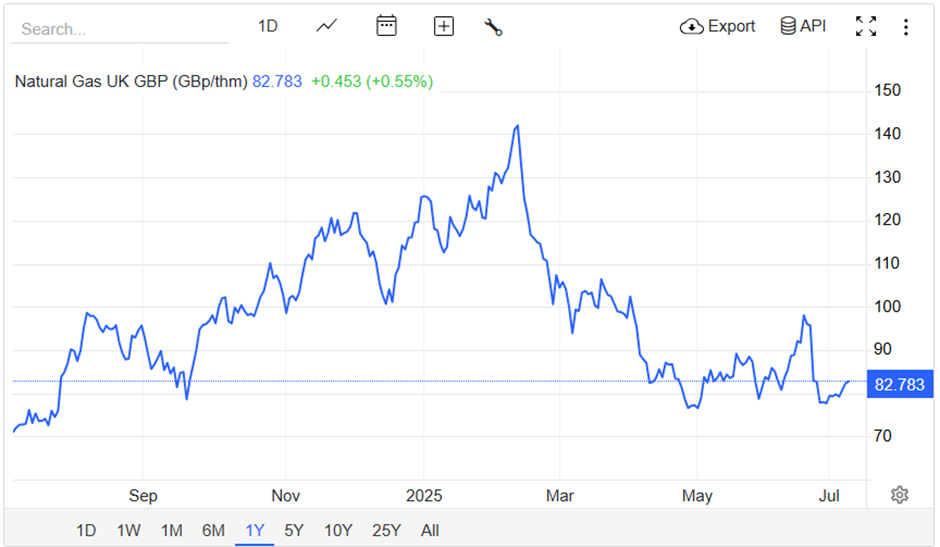
This is why the dividend has been cancelled. This information was already known at the point of the last rise, and since then, the UK gas prices have weakened, giving them a cost tailwind:
Property
Panther Securities (LON:PNS)
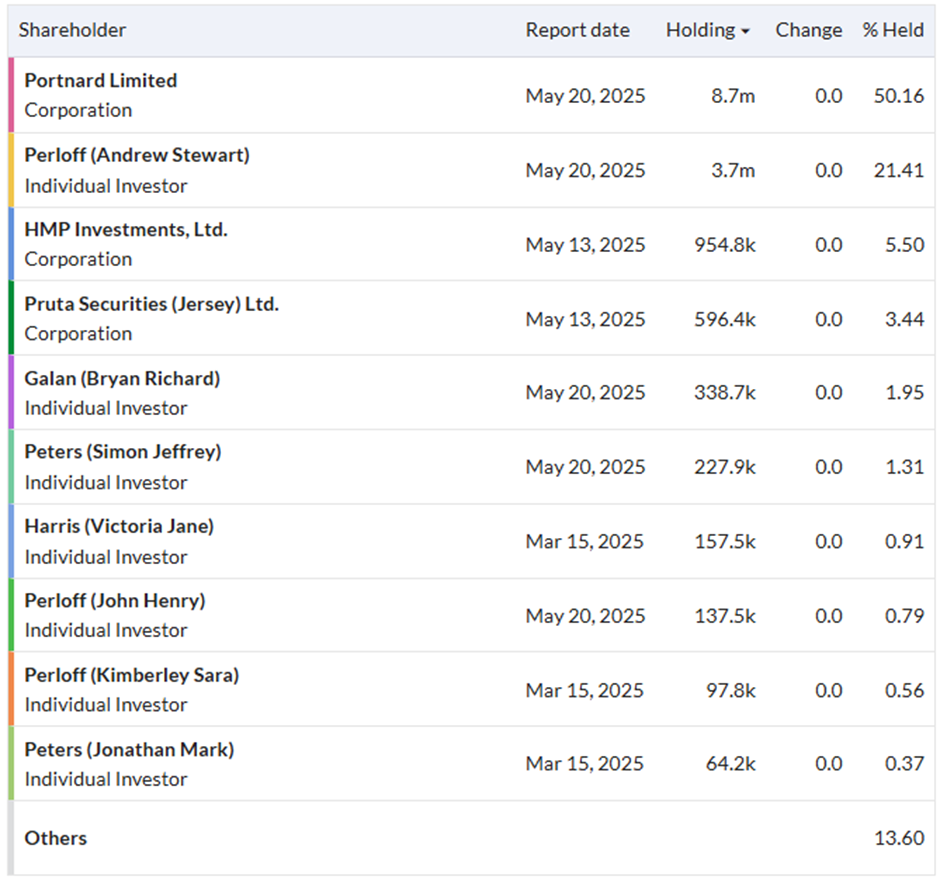
Panther Securities is a microcap property company with the always entertaining Andrew Perloff as Chairman. Perloff owns around 70% of the shares directly and via a company, plus other Perloffs are on the register. This makes the free float tiny and will put off many investors.
As will some of Perloff's uses of cash within the company:
At last year's AGM I proposed a resolution to donate £25,000 to the Reform UK political party and this was successfully passed. Once again, I propose a donation of £25,000. As previously, I will abstain voting my personal holding.
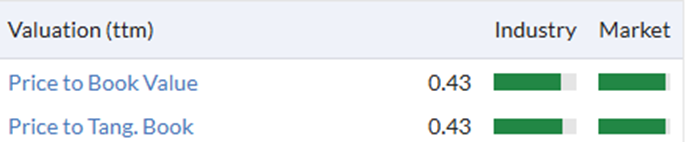
Quite how this benefits shareholders of the company, I've no idea. However, it is likely immaterial in the grand scheme of things. Property companies should almost always be valued on Tangible Book Value, and here the company compared favourably to peers:
The Stockopedia description of the company reveals that these probably aren't the highest quality of assets:
The Company specialises in property investing and managing secondary retail, industrial units and offices, and also owns and manages many residential flats in several town centre locations.
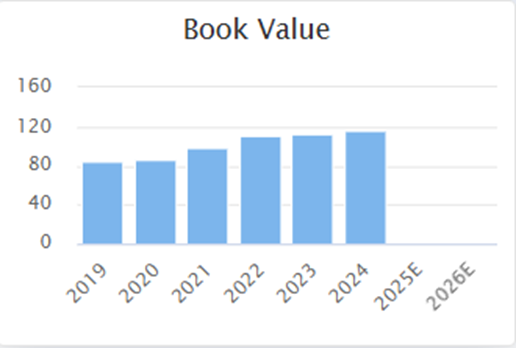
However, book value has been gently rising, and there are enough external transactions to give an indication that the book values are not that far off reality:
Looking at the 10-year chart reveals the problem. Apart from modest volatility around COVID, the chart is almost completely flat. The company trades at around 52-week lows because it has gone nowhere significant, up or down, in the last year:
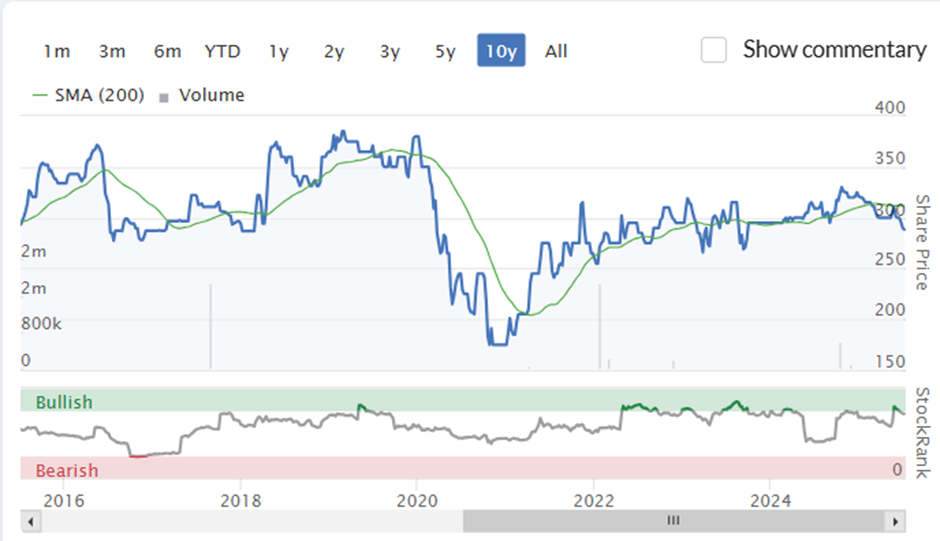
This makes it unlikely a candidate for a short-term bounce.
Globalworth Real Estate Investments (LON:GWI)
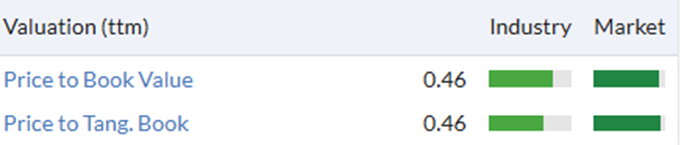
This is a much bigger property company, with a similar discount to TBV:
While the type of assets here is likely to be of higher quality, the geographic location adds to the risk:
The Company is engaged mainly in the real estate business, comprising offices, mixed-use, industrial, and residential investment properties segments and property management services, in two geographical areas, such as Romania and Poland. It acquires, develops, and manages commercial real estate assets, primarily in the office sector. Its segments include Office, Residential, Mixed-use, and Other.
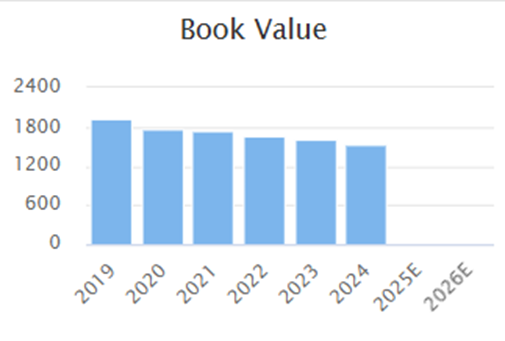
This adds currency risk, as well. The long-term performance looks weak, with Book Value declining:
And share count rising:
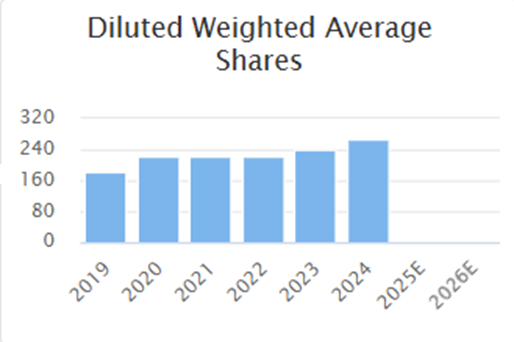
Meaning that Book Value per share is dropping quickly:
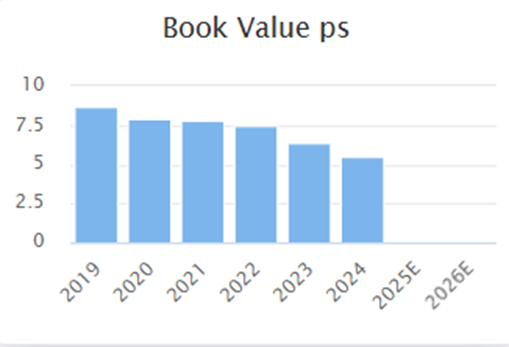
Some of this may be due to the history of paying out large dividends. However, even here, these have declined over time:
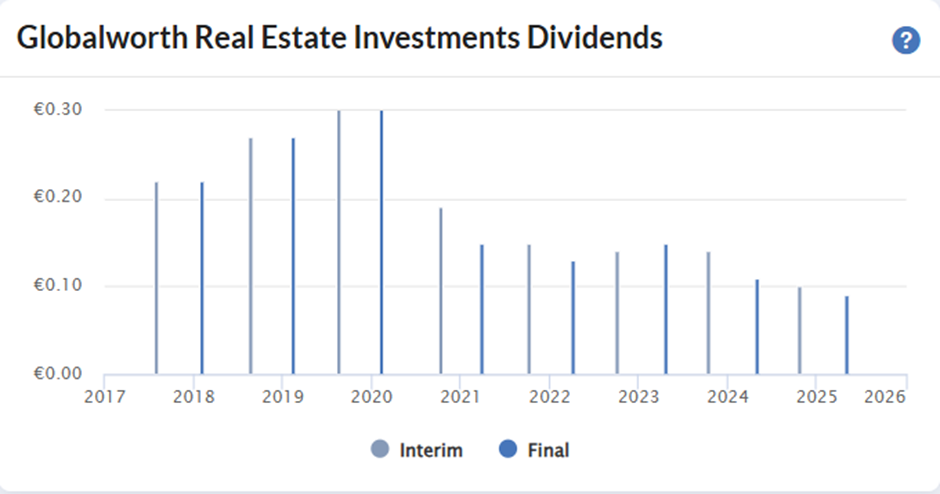
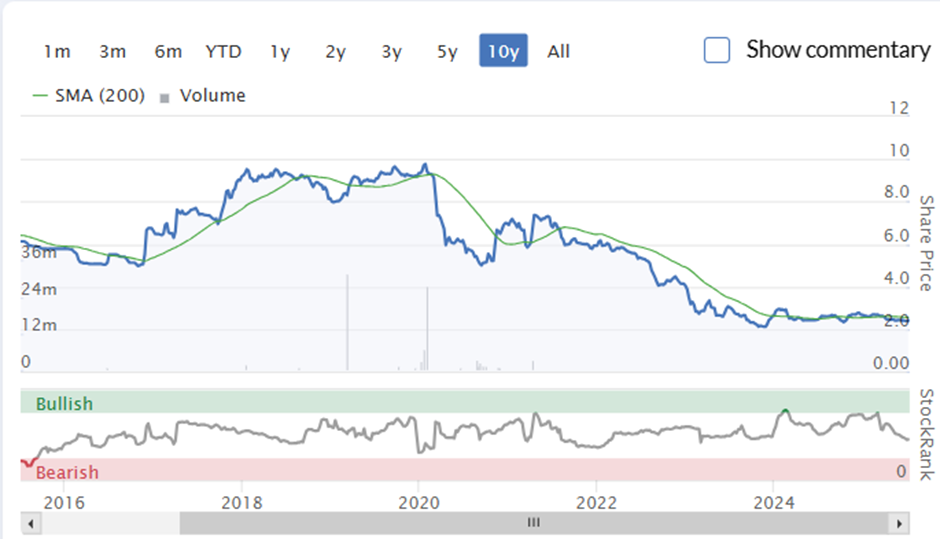
Unless there is a significant change in company fortunes, or corporate action, the long-term chart suggests that this will continue to languish rather than bounce:
Summary
Almost all of these stocks appear to be undervalued, especially if investors assume that a cyclical recovery in trading will occur at some point, or that property assets are correctly valued on the books. Investors with a very long-term horizon will probably do well from holding all of these. However, for many of the companies, the recent share price weakness looks warranted. If the aim of this screen is to look for stocks that may be due for a short-term bounce, only Gattaca (LON:GATC) , Colefax (LON:CFX) and Portmeirion (LON:PMP) seem in the right place for this to be a possibility, in my opinion. The disappointing part is that I already hold two of these, so as an idea generation exercise, this hasn’t added much value…yet.
[Disclosure: Mark holds Billington Holdings (LON:BILN) Gattaca (LON:GATC) Goldplat (LON:GDP) Colefax (LON:CFX) £SDG ]
Disclaimer
This is not financial advice. Our content is intended to be used and must be used for information and education purposes only. Please read our disclaimer and terms and conditions to understand our obligations.

2 comments
Panther Securities (LON:PNS)
Quite how this benefits shareholders of the company, I've no idea. However, it is likely immaterial in the grand scheme of things. Property companies should almost always be valued on Tangible Book Value, and here the company compared favourably to peers:
Is that not like saying it doesnt make a difference if you leave an underperforming ceo in their job.
the payment is to support change to remove the current powers that be and replace with party more competent who will improve the economy and the company will benefit.
to be fair to the main man hes left it up to others to approve or not.
one can agree or disagree with such tactics - its fairly easy option to sell up and move on (not at 52w low perhaps) if one doesnt agree. anyone who has bought shares here at anytime in the last 15 years or so should very much be expecting stuff like this.
This makes it unlikely a candidate for a short-term bounce.
hmmm perhaps there is room for some hope here
between 2019 and now book value per share has gone from 480p to 669p
net debt has only risen slightly in that same period.
so to me where a company is increasing the value of its assets regularly and isnt getting into more debt and shareprice has been trending down or nowhere - that trend of going nowhere is going against the grain that the trend should be upwards to reflect heard earned profits. The discounts to tnav is presumably getting tastier by the year with assets increasing and shareprice going - to me this is appealing rather than being not appealing.
Ok debt is chunky and perhaps not coming down fast enough to help give confidence finance costs might not jump in tehn future. Presumably no one rates the assets here - but the company has delivered in the past.
Perhaps a lower risk contrarian play on the basis it will continue to uplift value - and there could be some action that outs the discount to real value perhaps? not sure waht would happen if Andrew P ever wasnt in charge ? would others say - lets sell up and hand back an easy 400p to shareholders ?
Interesting article - thank you. Given the direction of travel in the UK economy it is hard to be positive on recruiters where I feel there is more pain to come.
As for the Derby Conference Centre - it is a dire and depressing venue. I am a long term Mello fan, both as an exhibitor and humble attendee. Derby was on both counts a once only experience.