A checklist to spot potential takeover targets

Investing is about managing uncertainty. Share prices move in ways we can’t predict, and that’s especially true when it comes to takeovers. The key question for investors is this: are takeovers completely random, or do they leave detectable fingerprints?
If someone tells you this or that company will go up, you may be speaking to a crook, perhaps someone like Gordon Gekko, the villain in Wall Street who boasts: ‘I only bet sure things.’ Gekko was loosely based on Ivan Boesky, who in the 1980s made a fortune trading on confidential takeover information. Boesky would source insider secrets, buy up shares in takeover targets and sell after the price pop. It was a foolproof strategy, precisely because it was illegal.
In the movie, Gordon Gekko tracks the private jets of corporate executives, as if air traffic can be used to predict takeover bids. The irony is that investors don’t need inside information to improve their odds. There is no magic formula to predict takeovers, but investors can tilt the probabilities in their favour by using publicly available data.
That is what we have done, as part of a deep dive series into takeovers. I’ve worked with Mark and our intern, Joe Hodges, to analyse 116 UK takeovers between 2022 and 2025. Last week, Mark gave an overview of UK takeover activity, outlining recent trends, deal structures, and premiums. This week, we go over the leading traits of takeover targets - i.e. the common characteristics that were apparent before the bid was announced. The results don’t offer certainty, but they do reveal a surprisingly consistent pattern. This can help us build a checklist for spotting potential takeover targets.
Never swim against the tide
To find potential takeover targets, it may be worth accepting the wisdom of crowds theory — i.e. the idea that the market’s collective judgment can be more accurate than that of an individual investor. Takeover targets tend to show modest share price strength before a bid is announced. They generally had a pre-bid MomentumRank of 54, with stronger 3 month momentum than the control group. In this sense, takeovers are perhaps poorly held secrets, given that the takeover process involves multiple groups who sometimes leak material, price-sensitive information.
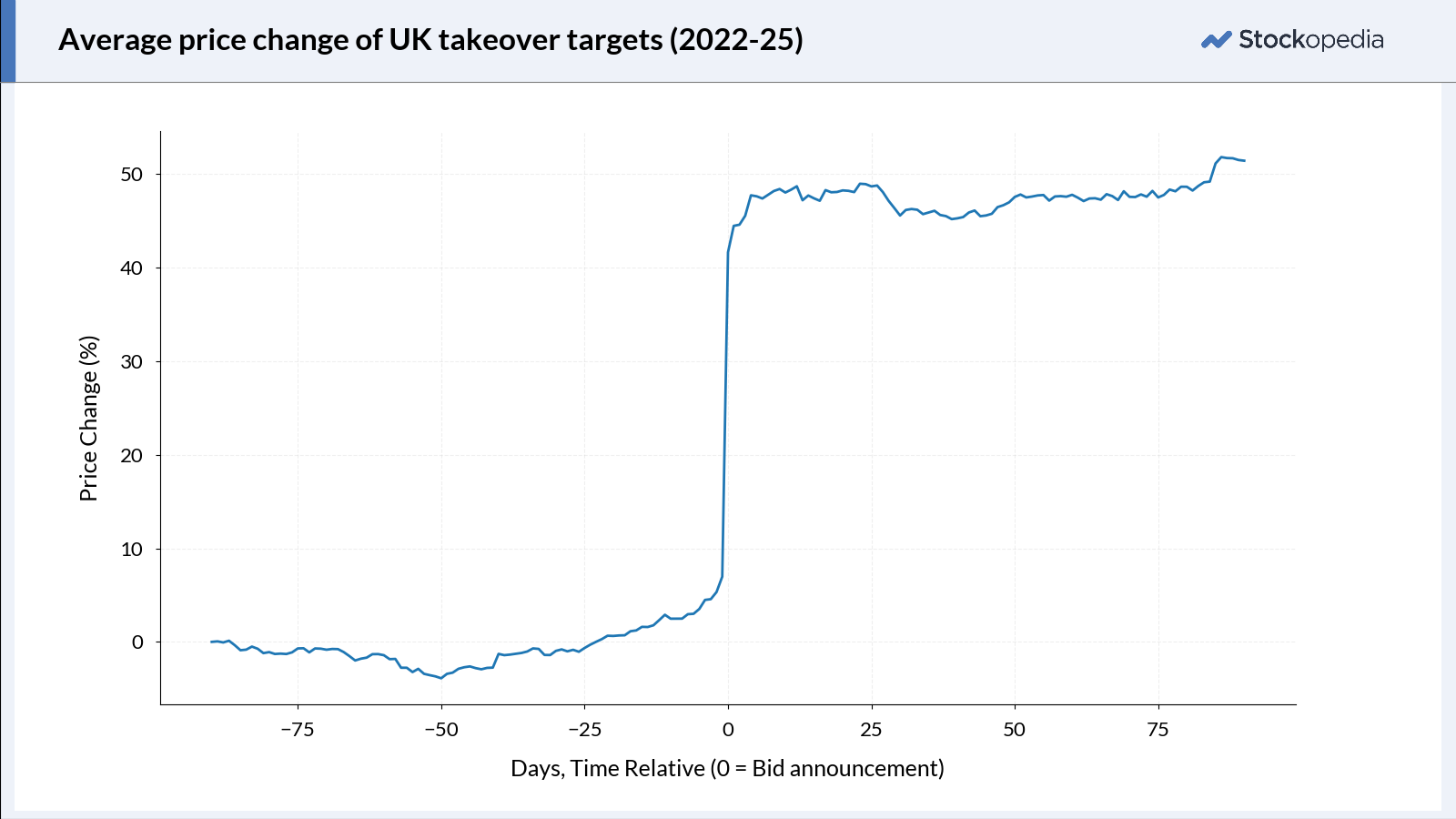
The early price weakness possibly reflected adverse market conditions in 2022-25 and may have been a short-term factor encouraging the takeover bid, before information leakage drove the price upwards.
Are takeover targets badly managed?
Strong asset bases make attractive takeover targets, although our findings show that takeover targets are not the poorly managed, deeply discounted firms we typically imagine. Before the takeover bid, takeover targets were generally good at using assets to generate cash and profits. This implies that they were well-managed companies. It contradicts the idea put forward by gurus like Jim Slater and Benjamin Graham, who argued that poor management causes asset-rich companies to have low valuations, and that these low valuations made the companies attractive takeover targets.
It’s worth quoting Slater and Graham at length, to refamiliarise ourselves with their argument.
- Slater argued: ‘If a company holds the right kind of assets, earnings will flow from them eventually. If the existing management fails to deliver, new management or a predator will arrive on the scene to put the assets to work.’
- In a similar vein, Graham argued: ‘Poor managements produce poor market prices. The low market prices, in turn, attract the attention of companies interested in diversifying their operations.’
This line of thinking was arguably a product of its time. Slater wrote The Zulu Principle in 1992, at the tail end of the 1980s takeover wave, when it was fashionable for corporate raiders to swoop down on undervalued, asset-rich companies, sell off their assets and turn a profit.
Takeovers have followed a different pattern in recent years. If takeovers were indeed triggered by bad management, then we would expect to see low valuations and possibly poor performance in terms of profitability and cash generation. We actually found the opposite…
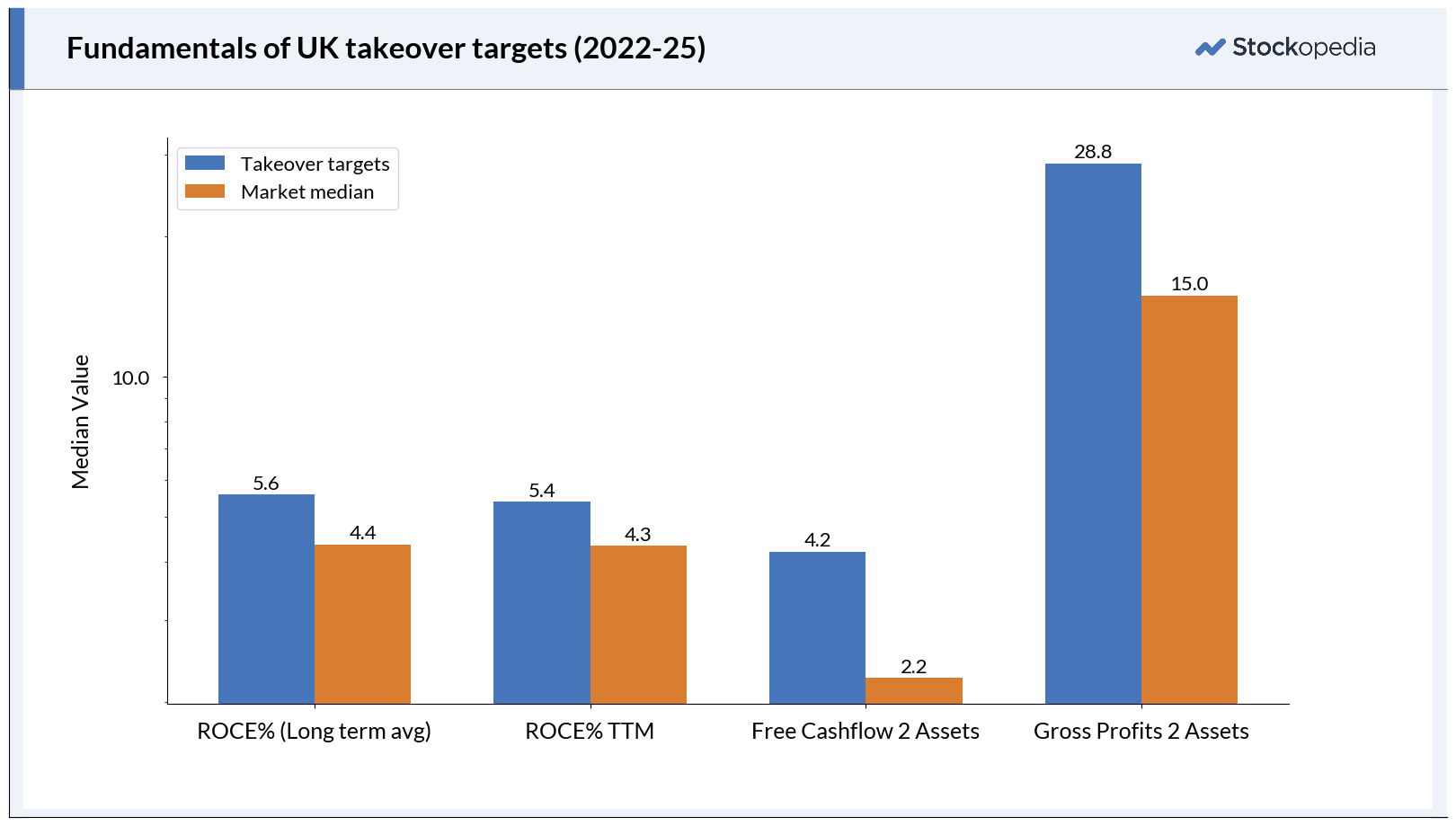
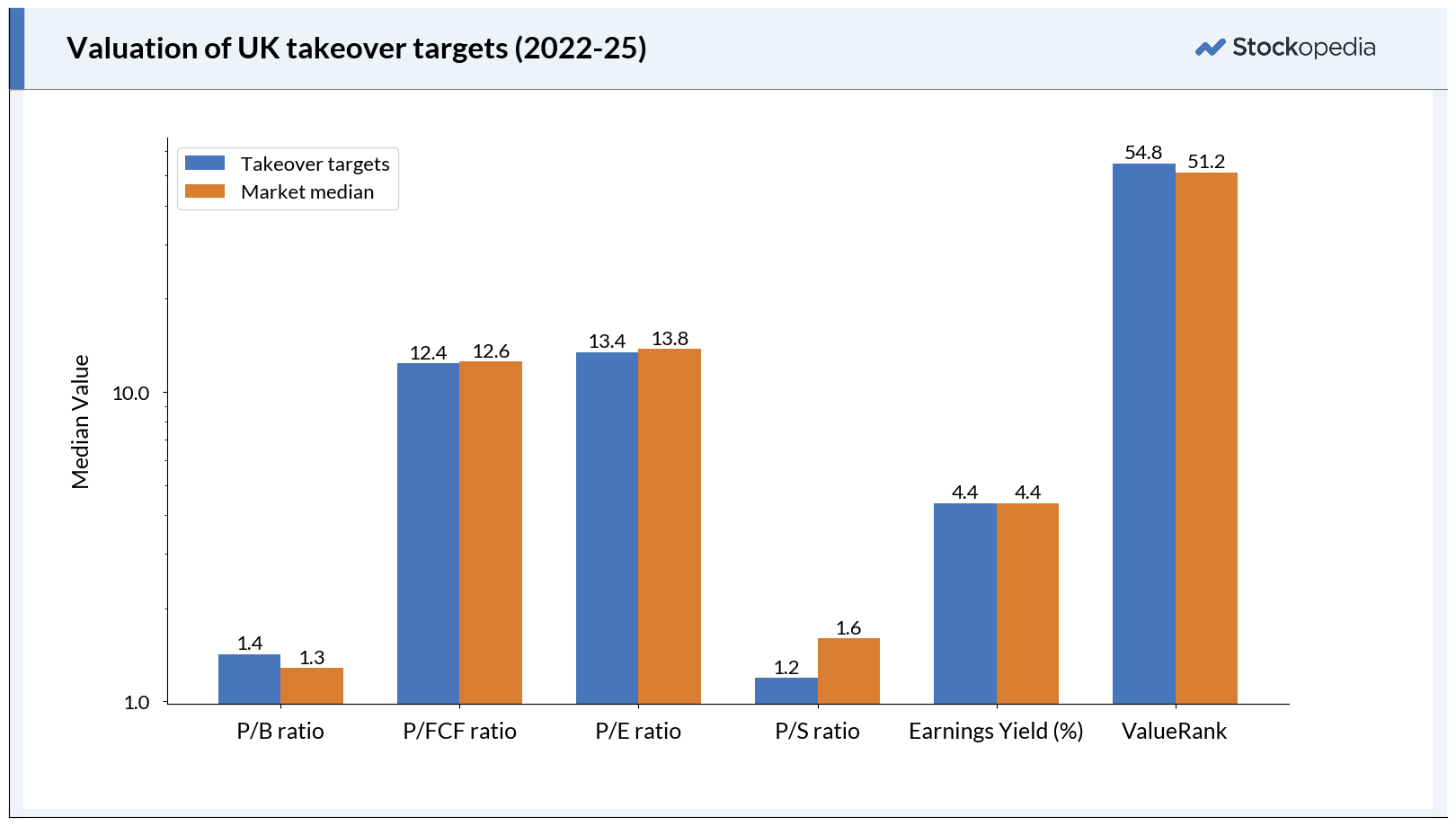
So what was the takeover catalyst? Takeover targets must have something special that makes them attractive. To explore this further, we can take a closer look at company fundamentals, paying particularly close attention to the quality metrics of takeover targets.
Are takeover targets ‘bombed out’ junk stocks?
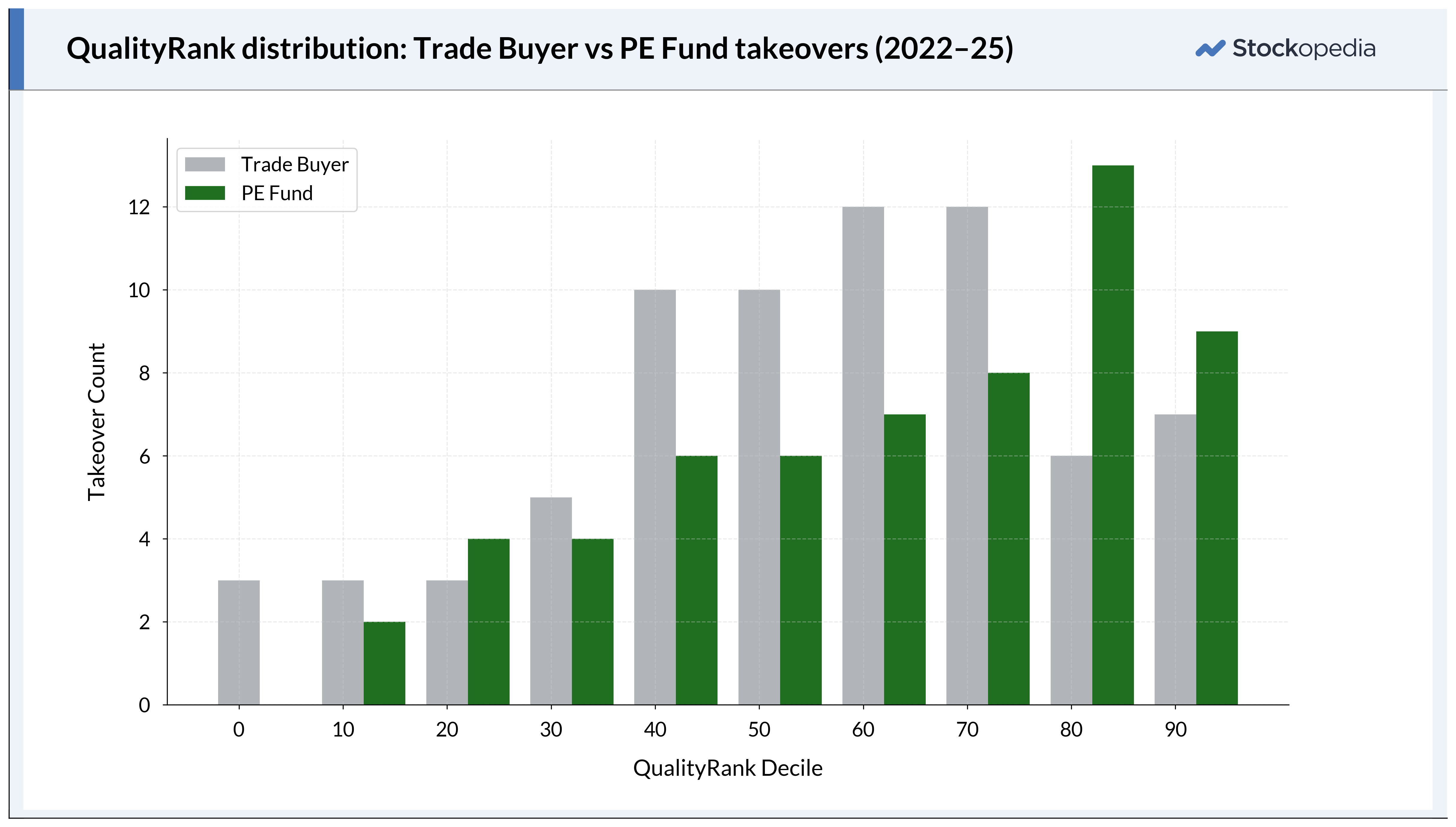
One of the most striking findings is that takeover targets generally had a higher than average QualityRank. These were not junk stocks in need of a turnaround. Takeover targets were better stocks, rather than cheaper stocks; that was the attraction. Bidders possibly identified ‘decent’ quality companies with the potential to become ‘great’, through restructuring and operational synergies.
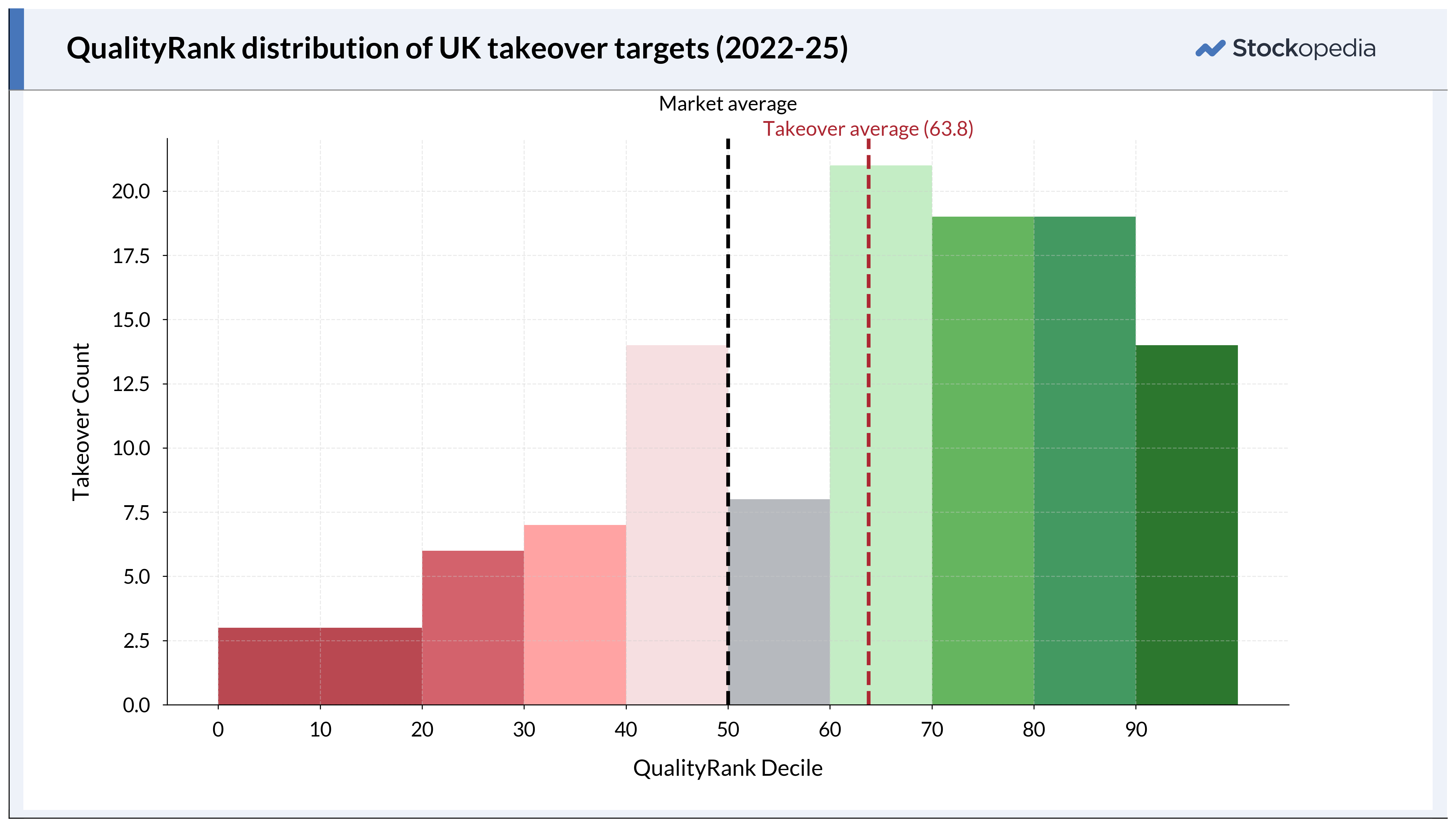
This pattern becomes more evident when we separate private equity (PE) bids from trade buyer bids. Both groups showed a preference for quality, although PE firms demanded a higher standard.
The resource-returns imbalance
Takeover targets were higher quality companies, but that quality was unbalanced. Bidders targeted two types of imbalance. The first was the imbalance between low resources and high returns. On the one hand, takeover targets were good at using assets to generate cash and profits (see above). On the other hand, they had limited resources in the sense that they were highly levered. A takeover could alleviate leverage problems through debt refinancing and/or operational improvements.
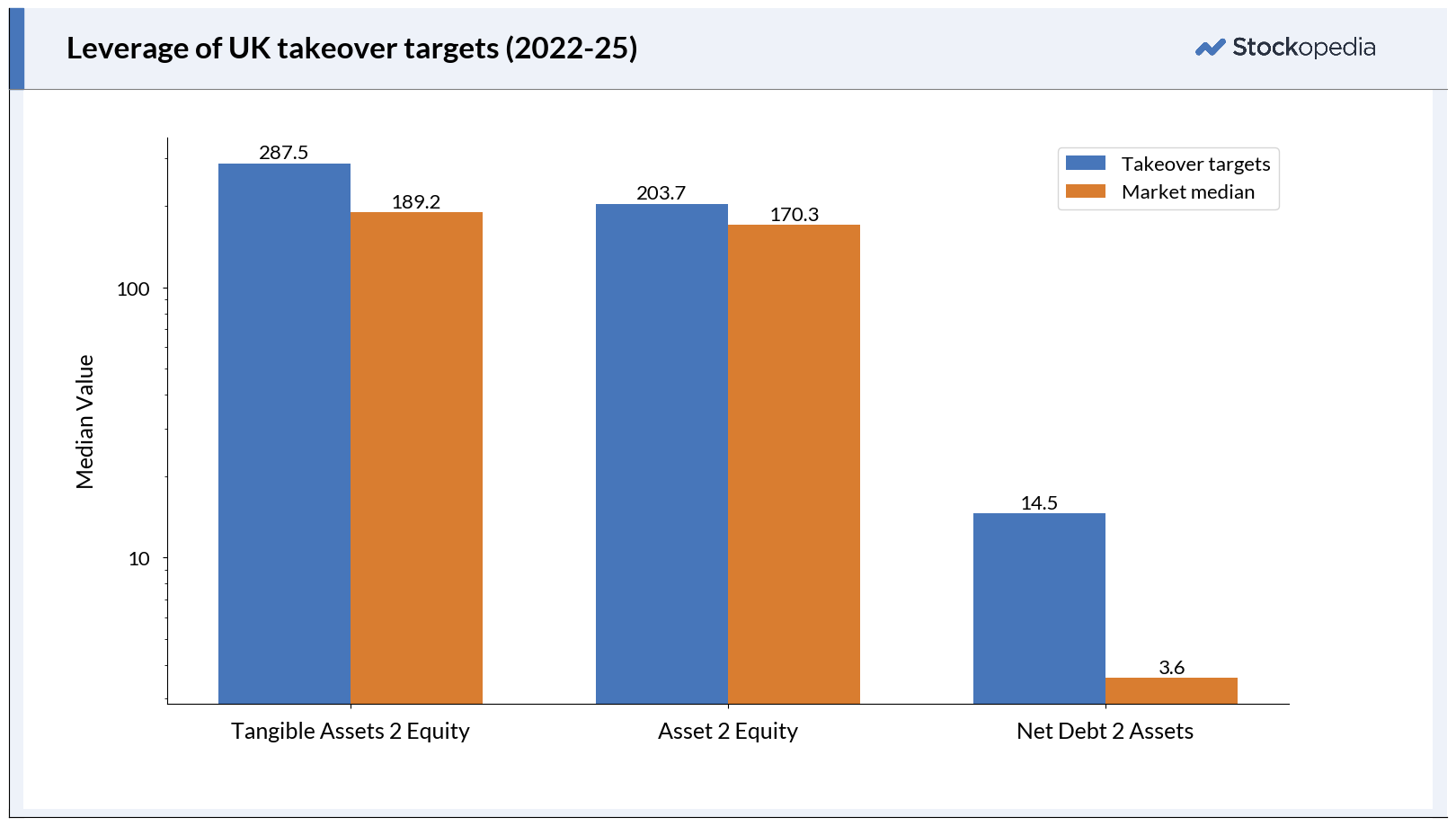
To measure leverage, we use debt to assets, assets to equity and also tangible assets to equity. Tangible assets are important in the context of takeovers. Academics like Ambrose and Megginson argue that tangible assets can serve as proxies for operational synergies between targets and bidders.
The resource-growth imbalance
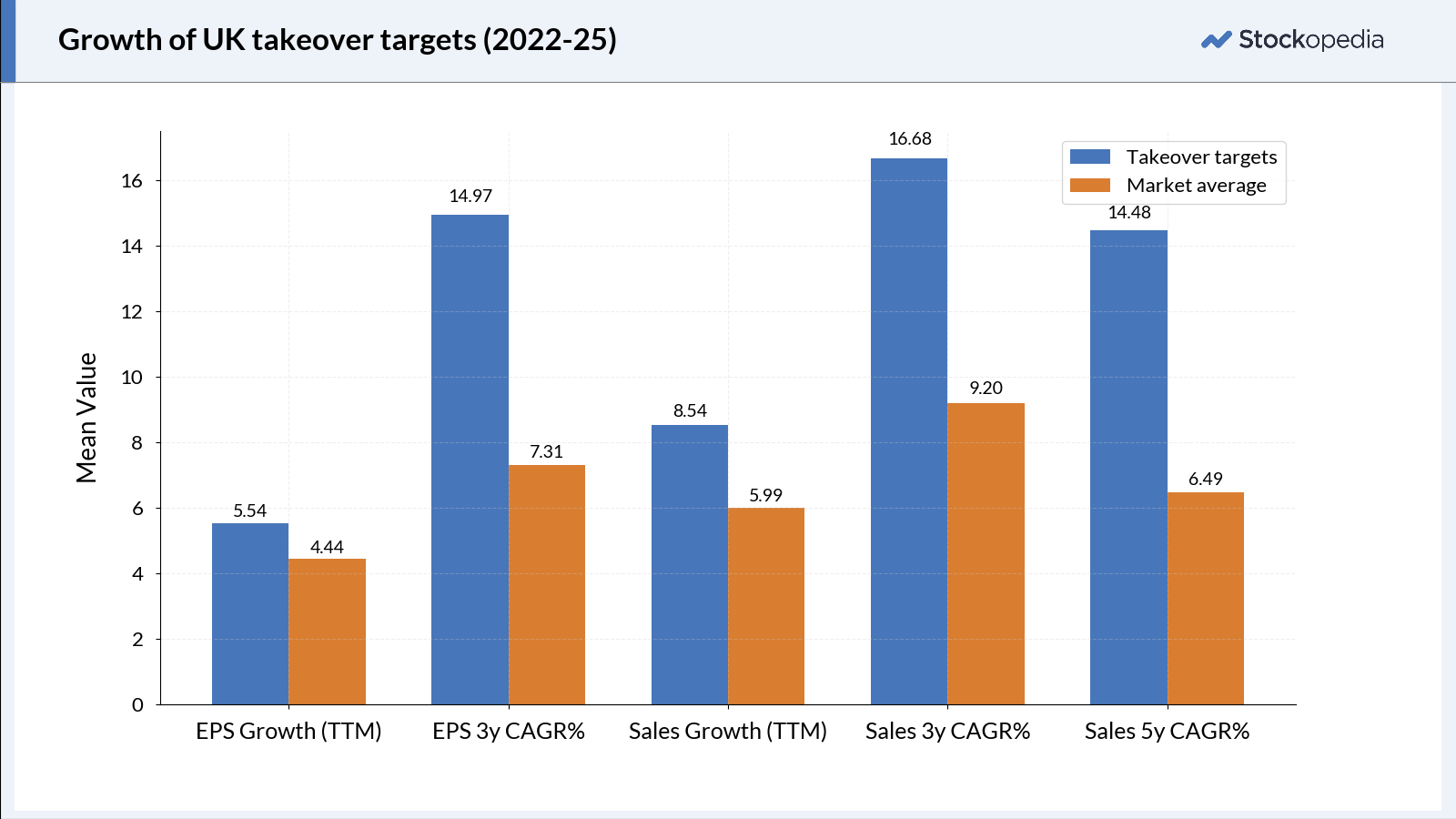
The second imbalance was one between low resources and high growth. Takeover targets were often levered and enjoyed higher than average growth, particularly when we look at the long-term growth rate (see 3y and 5y CAGR). This imbalance is indeed well documented by academics like Palepu.
Why target leveraged companies?
The point is not that bidding firms deliberately target leveraged companies. Rather, the finance literature argues that takeovers often involve two types of firms: targets, with high growth but high leverage, and bidders, with lower growth but stronger balance sheets (or vice versa). The idea is that M&A activity between these types of firms can ‘cancel out’ the problems associated with low growth and high leverage, resulting in stronger combined companies. Unfortunately, in our study, the bidding firms were often private, making it impossible to directly examine their financial fundamentals.
The takeover checklist
Our research should be accompanied by an important caveat. Takeovers are difficult to predict. The academic literature is full of models which identify the factors that explain takeover activity. However, these models often perform poorly as predictive tools. In practice, there is a one-sided relationship, where it is easy to identify the common characteristics of takeover targets, but not all companies with those exact same characteristics will themselves become takeover targets.
Even if takeovers are hard to predict, we can still think like an acquiring company seeking attractive investment opportunities. It may be more appropriate to use takeover checklists not as prediction tools, but as a tool for identifying ‘decent’ quality companies that have scope to improve. Investors with this mindset may find the following checklist useful. I have used some ‘rules of thumb’, based on the above charts.
| Rule | Rationale | Rule of thumb |
|---|---|---|
| Is the QualityRank above average? | Takeover targets were generally good quality companies, with room to improve. | QualityRank > 50 |
| Is the company profitable and cash generative? | Takeover targets tended to be good at using assets to generate returns and cash. | Gross profits 2 assets > 15 Long-term FCF 2 assets > 2 |
| Is the company levered? | Target companies may be ‘high quality’, but they should have some issues which a takeover can solve (e.g. leverage issues). | Tan Assets to equity > 170 Net Debt 2 assets > 7 |
| Is the company growing? | Pay attention to long-term growth. We noticed an imbalance between high growth and low resources (i.e. high leverage). | 3-5y CAGR > 10% |
The checklist does not simply target quality stocks; it targets a particular subset of quality stocks - i.e. growing, cash generative, profitable companies that are also levered. As such, it targets ‘unbalanced’ quality stocks. These factors are quantitative, but we can also ask a qualitative question: Is there a plan to pay down debt and/or restructure more generally? Takeovers can potentially resolve ‘low quality’ issues if the acquirer (or new management) implements a restructuring plan. This change does not need to be imposed by ‘outsiders’. It can and often does come from within.
Next week Mark will put together his own screener that applies these criteria and identifies companies with the characteristics typical of takeover targets…
Disclaimer
This is not financial advice. Our content is intended to be used and must be used for information and education purposes only. Please read our disclaimer and terms and conditions to understand our obligations.
4 comments
Apologies in advance, no insight.
I hold Glencore (LON:GLEN) who are a serious commodity entity beaten down due to coal and iron ore being out of fashion (yesterday) and therefore attracts predators.
So just floating it out there as perhaps one to study the hypothesis.
Hey,
Interesting.
I built a checklist using the rules in the article. We can see that LON:GLEN is leveraged, but not necessarily a high quality and/or growth stock (although the cashflow is there).
Hi Ed, just wondering...if the filter is for companies with above average Quality, why set the filter at >50% and not, say, >80%?
Boesky was also encouraged to buy stakes in companies being bid for- hence Distillers/Guinness scandal- by Guinness. UK merchant banks were in touch as well through 3rd parties ( and maybe direct)with this and other bids but they escaped censure.