Angling Direct: Fishing for Value

This week I am continuing my search for value amongst low Price-to-Sales stocks with a look at an interesting small cap stock: Angling Direct (LON:ANG)
Summary
- Angling Direct is a cheaply-rated company trading at a considerable discount to Tangible Book Value, largely made up of cash and working capital.
- Despite the large cash balance, there are no plans to return that capital, and the company doesn’t even pay a dividend. Instead, the company is going for growth by investing in new stores and expanding its European online business. Shareholders will need to believe that this strategy is the right one to invest in the company.
- The company appears to be well-regarded amongst its customer base and has a reputation for offering high-quality products at usually the lowest price. The high growth rates in new stores may be hiding a better quality business than the Return on Capital figures suggest.
- The shares are illiquid with a large spread and will only appeal to those investors who believe in the management’s growth strategy and are willing to hold for the long term.
- If the company can profitably grow and is given a growth stock rating again, the returns could be significant, while the cash balance protects the downside. Hence the risk-reward may currently be favourable for the patient value investor.
Profile
Angling Direct is an AIM-listed specialist retailer with an approximately £22m market cap. It first started in 1986 when the founders acquired interests in a number of small fishing tackle shops in Norfolk. They began to trade online in 2000 using the Angling Direct brand name. In 2002 the company opened its first “superstore’’ in Norfolk as the first retail unit to be branded as Angling Direct. The company continued to expand via acquisition and organic store openings, as well as launching its own fishing tackle brand, Advanta, in 2016. Advanta now represents about 7% of sales and generates higher margins than other products.
The company floated in July 2017 at 64p per share with 15 retail superstores in addition to their UK online retail business. The company raised £6.1m net of fees to accelerate the opening of new Angling Direct stores within the UK and invest in their online offering. The company opened eight stores in their first year as a listed company, and the initial excitement about the company’s growth prospects led the shares to trade over 100p in 2018. In November of that year, the company raised a further £20m at 92.5p to further accelerate growth. They planned to open 20 additional stores between 2019 and 2020, as well as expand online into Europe. However, like many AIM IPOs, there has been a difficult period of re-adjustment:
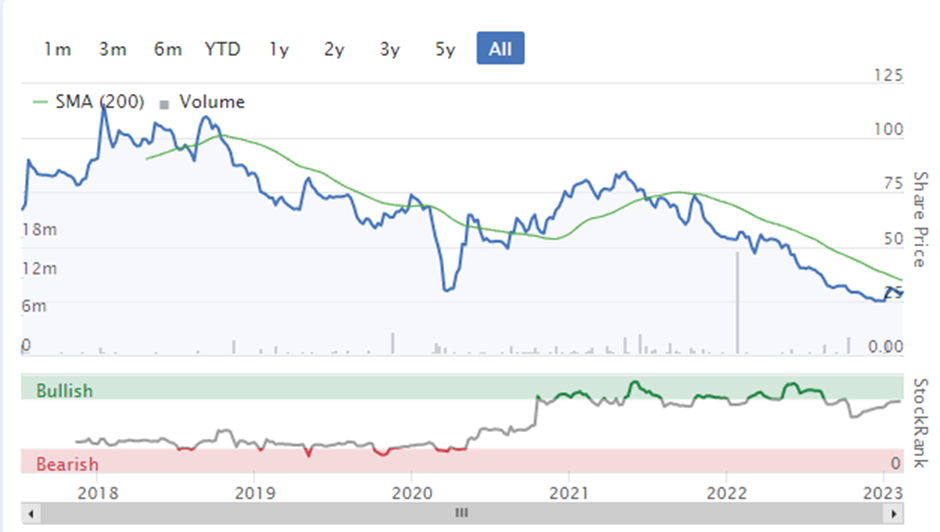
COVID saw the company’s shares sell off precipitously before recovering quickly. A further placing ensued at 50p, raising £5.15m after costs. With hindsight, this appears to have been partly precautionary. However, it did allow them to add inventory to profit from the post-COVID recovery. As a result, they generated £2.4m profit in the year ending 31 July 2021 and £3.1m in the year ending 31 July 2022.
However, more recently, the company has struggled with a period of scorching Summer weather and a weakening consumer outlook, meaning that H2 is forecast to generate only a small amount of EBITDA. This has led to the share price dropping below 30p.
Significant operating cash flow combined with good working capital discipline means the company had £17.1m of net cash on 31 July 2022. This makes the EV, with a share price of around 28p at the time of writing, just £4.5m. Although this is another retailer with IFRS16 lease liabilities that the Stockopedia algorithms include in their EV:
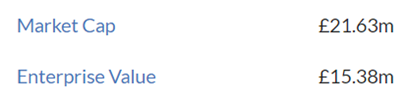
At the last balance sheet date, net lease liabilities stand at only £54k, and while there are several assumptions in these figures, it is this value I’d add to the EV, personally.
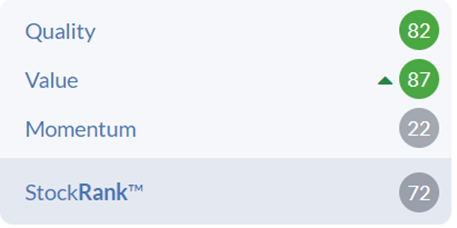
The company has a StockRank of 72. Good Quality and Value Ranks are let down by a weak Momentum Rank:
Business Model
Investors who don’t see the attraction of fishing as a sport (like me) may dismiss Angling Direct’s omnichannel retail strategy as unnecessary. After all, there is a long history of tackle shops providing rods and bait for anglers. The sales of fishing licenses boomed during COVID lockdowns as people sought new outdoor activities to engage in. While these have returned to more historical levels post-COVID, the introduction of free fishing licenses to children in 2017 and the increasing popularity of carp fishing means that the participation by young people has been increasing. A more tech-savvy generation wants to be able to research their purchases online and purchase online or in-store. I don’t think it is a coincidence that the keenest anglers I know are the teenage children of friends.
Competitive Landscape
Independent angling stores are probably still the company’s biggest competitors by number. However, the closest in style is Fishing Republic, which is owned by JD Sports Fashion (LON:JD.) JD Sports don’t break out their fishing revenues separately. Fishing Republic has 66 retail outlets. However, if google maps is to be believed, only 16 of these are independent shops, and the rest will be in Go Outdoors, which JD Sports also own. So while it may be challenging to go up against the retail buying power of JD Sports, it is not clear that they are necessarily a more significant competitor in terms of sales or economies of scale.
Strategy
The company’s strategy is still one of growth. They say:
…we have a long-term strategy to become the leading fishing tackle retailer in Europe by inspiring and delighting increasing numbers of customers, focusing on sustainable profitable growth and enhancing local fishing communities. We will grow revenue, increase market share and generate sustainable healthy profits.
This can be seen in the growth in store estate, which started at 15 stores at IPO and now stands at over 40. The company has also expanded their online retailing to Europe. Since March 2022, all EU online sales now go through their European subsidiary and are fulfilled by a new Dutch distribution centre, mitigating the issues that Brexit causes to cross-border trade. Start-up costs mean that their European online operation is currently loss-making. However, this part of the business grew revenue by an impressive 55% in 23H1, demonstrating the potential that this expansion holds.
Competitive Advantage
The company has a reasonable Quality Rank because it is a relatively safe company that is highly unlikely to manipulate its earnings.

However, when it comes to margins, the numbers are distinctively unimpressive:
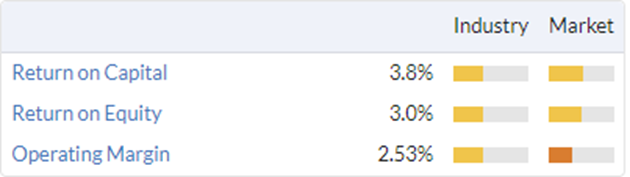
As the “traffic lights” show, these don’t necessarily compare that badly with other retailers. However, the return on capital is undoubtedly below their cost of capital, so investors need to question whether their growth strategy really does add shareholder value. However, the low return on capital is partly a function of the company’s rapid growth in stores and online operations. Each new store takes some time until it delivers an acceptable return on the capital invested in it. Hence, rapid growth in store numbers obscures the underlying performance of mature stores.
Contacts who are keen anglers rate Angling Direct much more highly than Fishing Republic/Go Outdoors. Here are a few comments I received when I asked them for feedback comparing Angling Direct to competitors:
Angling Direct are cheapest almost all the time. You can return to ANY store as well.
Angling Direct has a wider variety of better quality brands, plus more product reviews than other fishing stores.
The only potential negative feedback that I received was that the quality of advice can depend on the staff at work in the store at the time of a visit. However, all Angling Direct staff fish themselves, which cannot be said about Go Outdoors, where staff are more likely to rotate between all departments. Overall, the company appears to have a moat due to its brand reputation amongst customers and economies of scale. However, this isn’t particularly strong since the company still needs to compete on price to retain customers.
Financials
Growth and Profitability
Revenue growth has been impressive here, with a 28% CAGR:
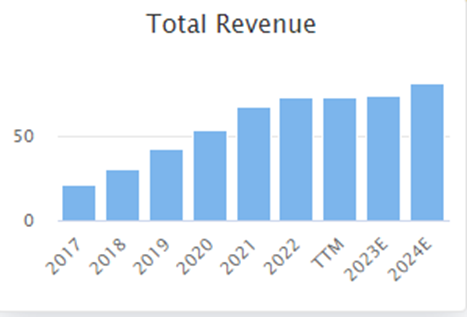
The current year is likely to be one of consolidation before 2024 is forecast to see a more modest 9% revenue growth. Unfortunately, profitability has been much more hit or miss:
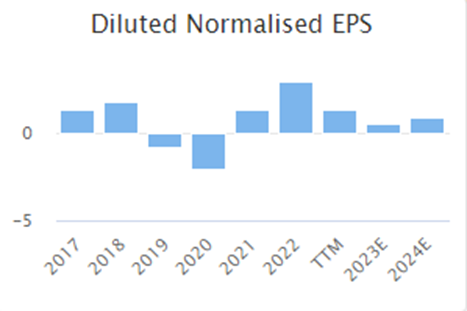
As well as downgrading 2023 estimates, their Broker, Singer, also downgraded 2024, citing market uncertainty. However, if the negative weather patterns experienced in FY23 don’t repeat in FY24, and consumer sentiment doesn’t drop further, this may prove overly cautious, leading to these estimates being walked back up.
Balance Sheet
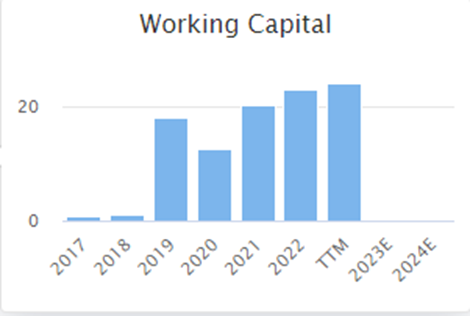
As you would expect for a company holding so much cash, the balance sheet is very strong, with a current ratio of almost three:
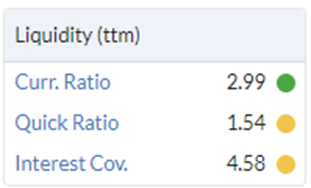
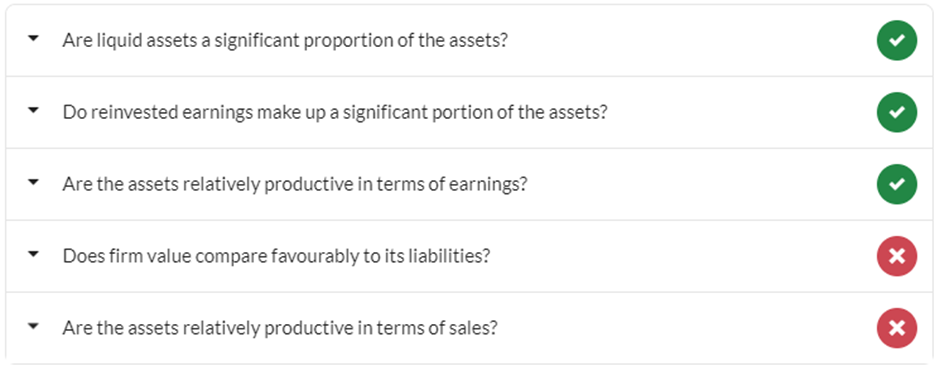
The company also has positive working capital, which isn’t always the case for a consumer-facing retailer and adds to the balance sheet strength. The Altman z-score suggests that we should be cautious about the Bankruptcy risk:
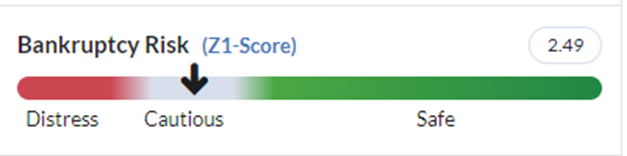
But when I drill down into the details, paradoxically, the substantial cash balance makes the assets appear unproductive, hence flagging a concern:
Overall, I see no reason why this company doesn’t have the financial resources to weather the current weak trading period and invest in future growth.
Cashflow
Cash flow is one area that appears weak:


Apart from the bumper years of 2021 and 2022, the operating cash flow has been negative. On top of this, significant Capex directed towards news stores means that free cash flow has been feeble. This is why the company needed to raise equity from the market twice after the IPO. The negative operating cash flow for 2018-2020 is due to trading losses and the working capital required to support rapid growth in sales;
While this is perfectly normal for a growing company, shareholders must be wary of these characteristics as the company pursues further growth.
Dividends/Buybacks
The company’s policy is not to pay a dividend while there are still opportunities to expand their store estate and European online business. However, as the business matures and the scope for further store expansion reduces, I would like to see them commit to shareholder returns.
Ownership Structure
Several well-regarded funds have significant stakes in the company, with Gresham House as the largest shareholder:
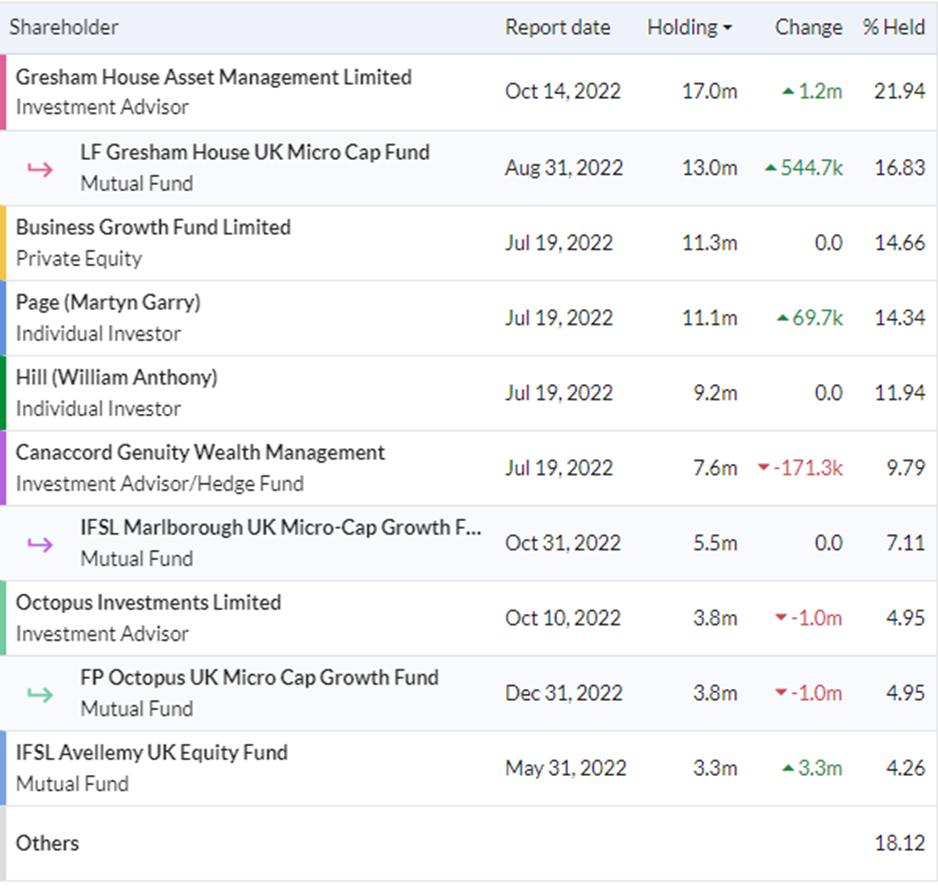
Despite selling some of their shares at IPO, founders Martyn Page and William Hill remain large shareholders, and Mr Page is the Non-Executive Chairman, having stepped down from an executive role in 2021. The size of these holdings makes the stock relatively illiquid, with only 18% free float. Executive management holds very few shares, and although the CEO has been buying, these are small amounts:

Former CEO Darren Bailey, who is no longer on the board, likely still owns just less than 4% of the equity. Current CEO Andy Torrance has had a very successful career in retail, having previously been COO of Dunelm. Given the collapse in share price, I’d like to see executive directors put their hands in their pockets far more readily than they have been.
Valuation
The company is very cheaply rated on a number of metrics:
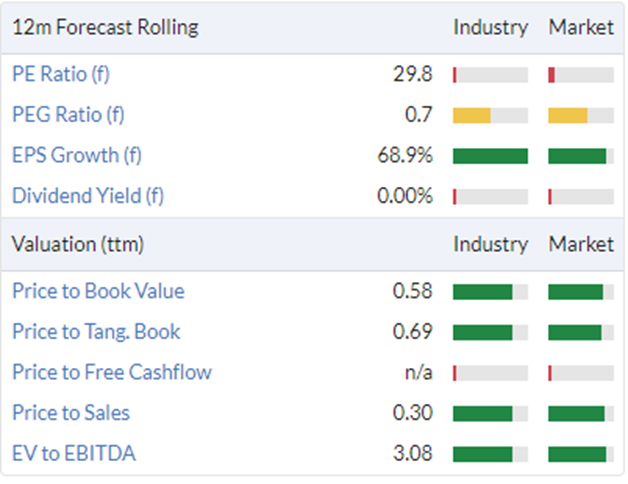
However, the forecast weakness in trading, plus a large amount of cash on the balance sheet, means that the Price-Earninsg ratio is relatively high. Shareholders will be betting that the company can return to profitability and that the cash pile can be successfully deployed to generate much higher earnings in the future. Given the recent issues with weak online trading and hot weather, it is unsurprising that the broker consensus has been going the wrong way:
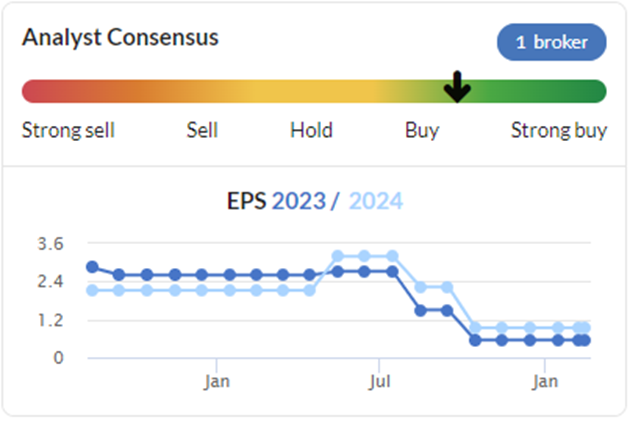
Cautious investors may wish to wait until the consensus trend improves before considering a position.
Risks
The most significant risk is that trading never recovers and that the company wastes their cash resource engaging in expansionary activities that never generate a return above its cost of capital. While the company appears to have the upper hand in terms of customer satisfaction and economies of scale, its primary competitor is owned by JD Sports. Hence, if competitors started a price war to win market share, this would harm the company’s prospects. Given the small free float, the company is illiquid, and shareholders are unlikely to be able to exit in size if trading prospects decline further. Perhaps a final risk would be the founders becoming fed up with the market valuation ascribed to the company and taking them private again at a price that doesn’t reflect the future growth potential of the business.
Recent Trading
The company reported H1 results to 31st July 2022 in October:
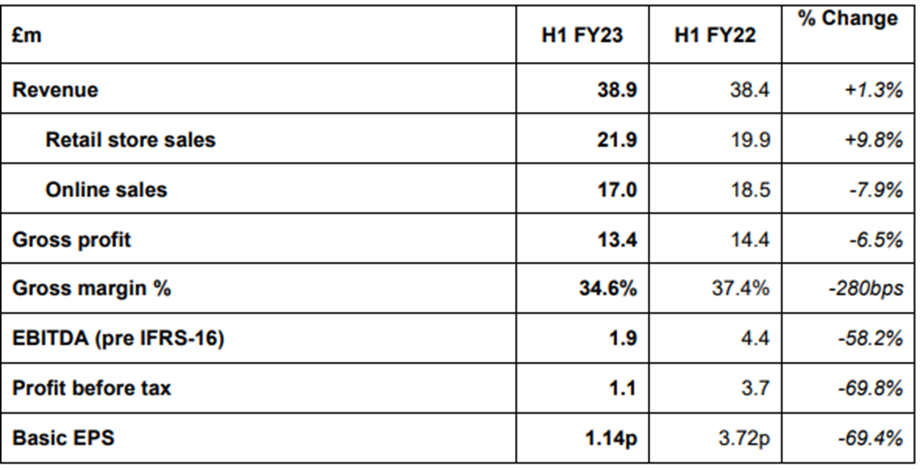
Although revenue held up reasonably well, due to additional stores opened in the period plus like-for-like store sales increasing by 4.6%, the drop in online sales and reduction in gross margin hurt profits. Given the cash balance represents around 22p per share, a 1.1p EPS for six months doesn’t seem too bad. However, there was also a sting in the tail:
As flagged in our recent trading update, post-period end sales have been impacted by unusually hot temperatures which caused some fishery closures and led to sales in the peak trading month of August being 7.0% down against the corresponding month in H2 FY22…
The board is confident that revenue and pre-IFRS 16 EBITDA for the year ending 31 January 2023 will be not less than £73.8m and £2.2m respectively.
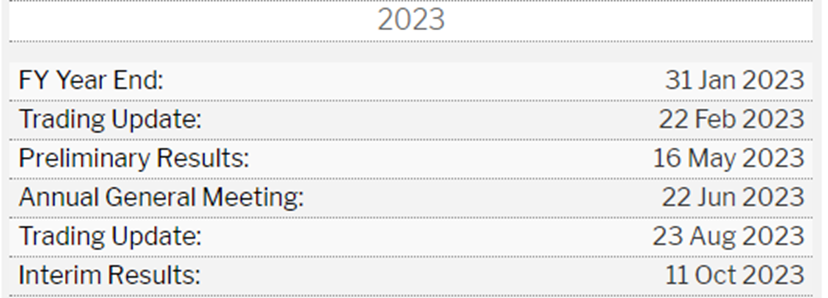
This means that H2 is forecast only to generate around £0.3m EBITDA and therefore be loss-making before tax. A trading update next week will give more details (it is nice to see a small cap company provide a full financial calendar rather than leave shareholders guessing):
Despite these challenges, the board believes that they have gained market share and are well placed for future growth, saying:
The board remains optimistic about the long-term growth prospects of the Group and believes that continued strategic investment now will leave the Group best placed competitively when consumer confidence returns. The Group will only continue to strategically invest in a controlled manner and only to the extent that it retains both strong liquidity and its robust balance sheet.
The last part implies that they will not go for growth at any cost. For the value investor, this gives some reassurance that capital allocation will be carefully considered going forward.
Sentiment
The Momentum Rank is poor here:

This reflects that the price has declined based on the weaker H2 trading outlook.
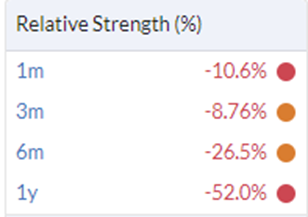
A very weak 1-year relative strength means that it is not a share that will appeal to momentum investors.
Conclusion
The company is undoubtedly cheap. It trades at a significant discount to tangible book value, which is mainly cash and working capital. The EV is less than £5m. The company is facing short-term headwinds and has guided that H2 will be loss-making. However, this weak performance has at least partially due to weather conditions, which are outside the management’s control. If the company can return to FY22 performance, the shares would be trading at an EV/EBITDA of less than one.
However, there is no dividend and no intention to return any capital. Instead, that cash will be used to grow the store estate and expand their online retail offering further into Europe. Investors need to trust that this is a reasonable strategy and can be achieved. In light of this, the management seems cautious about delivering sales growth at any cost, which is good. The company was previously considered a growth stock, and if the company is awarded a growth stock rating again, the returns to shareholders will be outstanding. In the short term, the large cash balance protects the downside. Hence the risk-reward looks favourable for value investors willing to look through poor near-term trading.
[Disclosure: Mark owns shares in Angling Direct (LON:ANG) ]
Disclaimer
This is not financial advice. Our content is intended to be used and must be used for information and education purposes only. Please read our disclaimer and terms and conditions to understand our obligations.

15 comments
Mark, great report, this is a longer-term hold, my first purchase was after the hack due to the way they handled it, intention is to hold more shortly, reasons, fishing in certain EU can be lucrative income for the leisure industry supported by customers with reasonable disposable incomes. The distribution scenario appears sensible for EU and UK plus the new entrant from Dunelm background gives comfort. I hold Angling Direct (LON:ANG)
Mark,
For someone who admits not to know much about fishing this is a first class summary of Angling Direct (LON:ANG) .
The fishing tackle trade was a huge beneficiary of Covid and has retained some of the new customers but probably not enough to replace the natural wastage, the pastime had a huge influx of newcomers around the 80s thru a series of programmes on Channel 4 starring the late John Wilson, a lot of these are falling out of the numbers now.
One danger of comparing historic rod license sales is that the new fad for carp angling usually requires the angler to purchase 2 licenses as each one only covers 2 rods and most anglers will use 3. Whilst go back a few ( 5 plus) years and that didnt happen.
The fishing tackle trade has never found a way to advertise the 'sport' as a fantastic way to spend some leisure time and unfortunately seems it never will. It seems to be facing too many social issues, stock predation, water abstraction, parking issues and parental worry of leaving a child alone all day.
AD have already bought out a number of the better independent retailers and a lot more are in their 60s-70s and wont be in business for ever so AD will continue to mop up an increasing share of a shrinking market IMHO.
This company was heavily tipped some while ago. I got out quickly at breakeven when they reported a data breach, since when the share price has gradually weakened. I share your concern at the JD Sports situation but they might be tempted to take AD over. I will put it back on my watch list. Thank you for a very comprehensive report
Thanks Berlin50. I was aware of the cyber attack but didn't want to make the article too long. IIRC the main issue was that the hacker redirected their website, and visitors were shown a different type of tackle than the one they were expecting!!
Thanks for doing this Mark, bit too tiny for me, but just had a quick look at the balance sheet, I'd question why they are carrying so much inventory and why this figure is climbing so rapidly, bit of a red flag, why can't they shift it and why are they allowing it to accumulate
Inventories as a proportion of COGS is fairly static:
130 days isn't the fastest turnover, however. But I think this just reflects specialist shops that need to stock a full range of equipment, rather than a food retailer with large shops that turnover standardised goods. I'd only consider this a red flag if the proportion of inventory held went up significantly. That said, it shows that store growth will require capital since each store probably has around £2-300k of stock as well as fit-out costs for the store itself.
Thanks Mark, fair enough I guess
I own some £ANG and think the article slightly mis-represents and under-sells its position in the market, as confirmed in a Q&A on investorMeets Company. The biggest mkt share is from the general online retailers (Amazon, EBay etc) and omni-channel chains stores (Decathlon as well as JD Sports Fishing Republic - especially of the stuff only loosely related to fishing like jackets. These will not be beaten on price but can be on service (the strategy of anglers as instore experts), community (newsletters, sponsorship etc) and crucially services like live bait.
The other group are single store lifestyle businesses. These can definitely be squeezed but can fight back in the same way as Angling Direct (LON:ANG) to with Amazon. The net position is the Angling Direct (LON:ANG) is already much the largest dedicated retailer and has the space and cash to grow both in the UK and Europe and this will feed the Own Label strategy and which is the key to better margins. These products/brand names take time to grow - just as it did at G4M (I also hold).
The situation is the same in Europe but (i tend to agree with the company) online is less well developed there and there is no niche leader. Pre-Brexit signs were encouraging for Euro -sales and being forced into a omni-channel/warehouse in Europe strategy will be a good thing long term but this takes a lot of time, money and management attention to set up. The initial set up is now done and even 5-6 stores will be enough to put most of NL,B and a part of Germany within reach of stores and justify a virtuous circle of online advertising for both online and physical store sales.
The biggest risk is cultural on market size - will the next generation of Europeans take up fishing? It's a fairly cruel and bloody sport and often cold and lonely. Personally, although I don't fish, I think it will endure as a countervailing trend for some is a desire to get outdoors and engage with nature and all the attention on sewage in rivers now will likely lead to healthier fish population notwithstanding climate change ie species may change but more fish in the water. It is also a good 'sport' for the elderly.
NB the company rely on very old market research and this I think would be worth them spending some serious cash on updating this.
Net, with a such a low EV, I am happy to patiently wait for growth to work through and a re-rating. It wont be huge due to ongoing margin pressure but it will in time become a very steady income share and I think I am in at the ground floor.
Hi Zipmanpeter,
Good thoughts. My contacts said they did believe Angling Direct (LON:ANG) was often cheaper for good quality brands. And I think that the days of Amazon competing on specialist kit are numbered. The selling fees are too high, and there are too many fake products and reviews. So I think we largely agree, but with slightly different perspectives.
On the age issue. The keenest Anglers I know are teenagers. This may be the free fishing license. But they seem to enjoy the independence and adventure, and even go night fishing, so the weather doesn't appear to be a major impediment. Whether they remain interested into their 20's is another matter, though.
In terms of research coverage. Their broker is Singers, so at least that is available for those who pay for research tree. I think there will be a point when it is worth paying for additional research. However, probably not today. The issue is that the uncertainty over short-term trading is too high. So the research recommendation will most likely be an Under Review one, which helps no one.
Like you, I don't mind the uncertainty. since the company is more than backed by cash and inventories. However, this is definitely one for the patient.
This article is about Angling Direct (LON:ANG) but the stock shown on the right of the screen is for JD Sports Fashion (LON:JD.). I do find this annoying, it happens on other posts as well. Is it possible to change the order or even delete JD Sports Fashion (LON:JD.)?. At first I thought te chart and information was for Angling Direct (LON:ANG).
I see Angling Direct (LON:ANG) on mine, so hopefully, this was just a short-term bug, or someone from the tech team has fixed it!
Good article thanks. Totally unscientific but I'm an angler and buy stuff online. I buy from other online angling retailers because stock availability and choice from Angling Direct hasn't been great in the past. Doesn't mean it might not be a good investment though, everything has its price.
Hi Joe,
Like you, my poll of anglers is only a few friends and contacts so equally unscientific. However, I was surprised by how positive they were about the company overall. However, they appear to be disappointed that I was not asking for real purchasing advice but just writing an investment article!
Hi Mark , thanks for the article. For the record the average age of a UK angler is 50 something . In the Uk a fishing licence is required by law from the age of 13.
According to the gov.uk, the licenses are free to under 16s: https://www.gov.uk/fishing-lic...
I think the challenge is how many children will then buy a license when they reach 16 rather than give up the sport.