Daily Stock Market Report (Thur 18th June 2026) - TGP, DUKE, WATR, TBLD, XPS, WTB, SNX, TMO

Bank of England: no change is expected to UK rates today, with the decision due at midday. Rates are expected to stay at 3.75% but it would be really surprising if everyone on the MPC agreed with this decision. Watch out for dissent on the 9-member committee.
For context, UK inflation numbers published yesterday gave an annual inflation rate at 2.8%, matching the prior month’s reading. While this is still higher than the 2% target, the figure was below market expectations (3%) and is the lowest level for over a year.
Federal Reserve: the US central bank published a decision yesterday, keeping rates unchanged as expected.
Economic activity is expanding at a solid pace despite elevated uncertainty that owes, in part, to the conflict in the Middle East. Productivity growth and capital investment are strong. Job gains have kept pace with the workforce, and the unemployment rate has changed little.
Inflation remains elevated relative to the Committee's 2 percent goal, in part reflecting supply shocks that have driven price increases in certain sectors, including energy. The Committee will deliver price stability.
It’s a similar story to the UK: inflation is too high, but there isn’t much appetite for rate hikes to address this. Indeed, US inflation is currently running at 4.2%, double their price target. But if temporary supply shocks are to blame, then the Fed can argue that rate hikes wouldn’t fix that underlying issue.
Overnight market movements:
The FTSE is set to open down 0.3% at 10,465
S&P 500 is up 0.8% at 7,475
Brent crude is down 2.2% at $77.50/bbl
Gold is up 1.2% at $4,305/oz
Bitcoin is down 0.8% at $63,950
Mark Simpson joins me today.
Calling it a day there, cheers! Spreadsheet accompanying this report: link.
Companies Reporting
| Name (Mkt Cap) | RNS | Summary | Our view (Author) |
|---|---|---|---|
Tesco (LON:TSCO) (£28.8bn | SR76) | LfL sales +1% (UK+1.8%). Outlook: Having made a good start to the year, we continue to expect Group adjusted operating profit of between £3.0bn and £3.3bn for FY 26/27 and free cash flow within our medium-term guidance range of £1.5bn to £2.0bn. | ||
Informa (LON:INF) (£10.6bn | SR60) | Underlying revenue growth of 6.4% in the five months to 31 May. Earnings guidance reaffirmed. “We remain committed to full year Group earnings guidance (double-digit underlying growth in adjusted EPS).” | ||
Whitbread (LON:WTB) (£4.02bn | SR29) | Total sales +2%. LfL accommodation +2%, LfL Food & Beverage down 1%. “In the UK, our forward booked position remains ahead of last year, supported by peak leisure bookings. Whilst visibility remains limited… we are confident that we can continue to outperform the wider M&E [midscale and economy] market.” | AMBER/GREEN = (Graham) | |
Drax (LON:DRX) (£2.53bn | SR83) | The FCA has closed its investigation into the Company, which was announced on 28 August 2025, and no action will be taken. The FCA has confirmed that it has no concerns warranting further investigation. | ||
Firstgroup (LON:FGP) (£982m | SR71) | Adjusted revenue +25%. Adjusted operating profit £219.4m, marginally lower. Outlook: the Group expects to maintain Adjusted EPS in FY 2027, from a higher quality earnings base. | ||
Workspace (LON:WKP) (£670m | SR38) | Acknowledges the letter and presentation to shareholders issued by Saba. “The Board firmly believes in the strength of the Company's strategy… is carefully reviewing the Letter and Presentation.” | ||
XPS Pensions (LON:XPS) (£661m | SR43) | Revenue +13%. Revenue excluding McCloud +185. Adjusted EPS +7% (23.5p), Statutory EPS 13p. Outlook: “...confident of further growth in FY 2027 and beyond in line with the Board's expectations.” | AMBER/GREEN = (Mark) I struggle to get particularly excited by the current forecast 7% EPS growth rate versus the P/E multiple of around 14. However, this has a history of consistent delivery, modest upgrades and has managed to keep growing, despite a year where one-off project revenues rolled off. A 7% FCF yield and 4.3% forward dividend yield are not expensive for a business that has the ability to keep growing organically, and the cash flow to grasp acquisition opportunities when they arise. I think these results justify keeping our broadly positive stance. | |
Costain (LON:COST) (£560m | SR94) | Costain selected by Norfolk County Council to design and build the new road infrastructure for the West Winch Housing scheme. | ||
Seeing Machines (LON:SEE) (£209m | SR23) | Significant expansion to an existing Automotive production program with a major European OEM. Estimated value of US$31m. | ||
Kistos Holdings (LON:KIST) (£195m | SR44) | Vår, in partnership with Kistos, has taken a final investment decision (FID) on the Balder Next project, which will deliver seven new production wells from the Jotun FPSO. 7 additional wells will deliver significant additional volumes at a b/e cost of approximately $30/boe. Will have increased gross production by an additional 11 mmboe to 86 mmboe. | ||
Eco (Atlantic) Oil & Gas (LON:ECO) (£164m | SR30) | “…multiple further value accretive workstreams remain underway across our portfolio of four diversified Atlantic Margin basins” | ||
Duke Capital (LON:DUKE) (£136m | SR72) | FY Cash revenue +7% to £28.6m. FCF +13% to £14.2m, Adj earnings -10% to £13.9m. Dividend held at 2.8p. £7.0m recurring cash revenue expected in Q1 FY27. “Looking ahead, the macroeconomic environment is likely to remain uncertain…The team's focus is on maintaining and creating value in our portfolio companies while navigating the macro headwinds.” | AMBER = (Graham) | |
Anpario (LON:ANP) (£104m | SR82) | “…has made a good start to the year with revenue and profit performance ahead of prior year and in line with full year analyst consensus expectations, despite well-reported geopolitical and related economic conditions.” Cash £10.9m (31 Dec: £12.4m) after £1.1m buyback. | ||
Ondine Biomedical (LON:OBI) (£81.4m | SR17) | Nasal Photodisinfection Reduces Surgical Infections in Complex Brain Surgery by 78.5% Compared to Nasal Antibiotics at Leeds Teaching Hospitals | ||
Water Intelligence (LON:WATR) (£41.6m | SR76) | Revenue +9% to $90.4m, Adj. EBITDA +15% to $16.5m, Adj. PBT +9% to $9.2m, Net Debt $19.3m (FY24:$15.7m). Q1 Revenue +9% to $23.2m. | AMBER/GREEN = (Mark) There is so much going on here that I struggle to come up with a cohesive view. These results look slightly ahead of brokers’ forecasts, but they don’t put to bed any of the concerns with the company; namely, a lack of operational gearing and the tendency for all the cash flow to go back out in re-acquiring their own franchises. If some commentators are right about the industry being fundamentally overtaken by technology, then this growth strategy will ultimately destroy shareholder value. However, big changes in industries tend to take much longer than we expect, and the valuation multiples are getting to the stage where the upside may well exceed the downside. As such, I keep our broadly positive view, at least until things come to a head, one way or another. | |
Time Out (LON:TMO) (£37.9m | SR17) | Signs franchise agreement to bring Time Out Market to South America. Will generate revenue through contractual franchise fees and ongoing payments, while not contributing capital towards the development of the Market. No figures given. | RED = (Graham) [no section below] The good news is that Time Out will not be contributing capital to this venture, and will instead benefit from "contractual franchise fees and ongoing payments". If the entire group was run on this basis, maybe it would be sustainable? The track record suggests that they are not able to profitable operate these international food markets. But if they fully outsourced operational management, while retaining the brand, maybe it could work some day? | |
tinyBuild (LON:TBLD) (£36.7m | SR41) | Sales are ahead of expectations for the first five months of the year. Strong pipeline, based on Steam wishlists. Net cash mid-single digit millions, reaching trough in summer 2026. “…remains on track to deliver results for 2026 at least in line with expectations.“ | AMBER/RED = (Mark) I can see why investors, including the CEO, may see momentum behind the prospects and be willing to hang on (or buy in) for the ride. However, with this being an inherently unpredictable industry, I don’t think that this is automatically good value at a significantly higher share price than earlier in the year, on the same forecasts, just because he says so in a tweet. Multiples are tricky to apply in this industry and even if we were to accept this valuation methodology, we have to be making assumptions outside of the forecast window and into FY28 to make this look cheap. As such, I’m not sure I can argue that we should change our view today. | |
Synectics (LON:SNX) (£35.6m | SR90) | New orders from Stagecoach with an aggregate value of £1.5m, including £1.1m call-offs under Ocular's recently extended five-year framework agreement., for the supply and installation of Ocular's CCTV systems on 190 new electric buses. Majority of work expected to be completed between Q4 2026 and Q1 2027. | AMBER/RED = (Mark) | |
Tekmar (LON:TGP) (£23.5m | SR69) | H1 Revenue +31% to £16.2m, Adj. EBITDA £0.1m (25H1: LBITDA £0.7m). LBT £1.1m (25H1: £2.7m LBT). Order intake £29.5m (25H1: £10m). Net Debt £2.7m (25H1: £1.8m). | AMBER/RED ↓ (Mark) | |
Genedrive (LON:GDR) (£19.7m | SR15) | Genedrive MT-RNR1 ID kit for the prevention of Antibiotic Induced Hearing Loss in neonates is now a usual routine clinical service at Manchester University NHS Foundation Trust hospitals. | ||
Medpal AI (LON:MPAL) (£17.5m | SR0) | Launch of "Juno", its next-generation agentic AI health companion, alongside a full upgrade of the technology that powers it. | ||
Panther Metals (LON:PALM) (£12.3m | SR21) | £2.5m raised at 135p at a 3.5% discount, 21% dilution. |
Graham's Section
Duke Capital (LON:DUKE)
Up 2% at 27.2p (£139m) - Annual Financial Report - Graham - AMBER =
“Duke Capital Limited (AIM: DUKE), a leading provider of hybrid capital solutions for SME business owners in Europe and North America, is pleased to announce its audited results for the 12 months ended 31 March 2026…”
Duke provides a revenue-based “royalty” product for businesses. Investees make regular payments back to Duke - and these payments adjust higher or lower depending on revenue growth at the investee.
And although some of Duke’s investments can look risky at times, they haven’t yet suffered a major default.
These full-year results are solid:
Revenue +7% (£28.6m)
Recurring revenue +5% (£27.1m)
Profit after tax £11m (2025: £2m), “reflecting the reduction of non-cash fair value decreases across the investment portfolio”.
Q1 recurring revenue is expected at £7m, so the annualised figure continues to grow.
Chairman’s comments
These results demonstrate the income certainty and resilience created by Duke's disciplined approach to deploying capital into well-established, cash-generative businesses. Our focus over the period has been on backing existing investments, where we have strong relationships with the management teams, and we were pleased to make £21 million of follow-on investments into our portfolio of capital partners.
As Mark pointed out last year, there was a follow-on investment which seemed to be necessitated by the investee’s financial obligations - in other words, it was a bailout of a company that Duke had previously invested in. So we should treat follow-on investments carefully - and check in each case whether they are assisting real business growth, or merely papering over financial issues that the investee might be experiencing.
The Chairman also says that “access to flexible, long-term capital for SMEs has remained constrained as traditional lenders have maintained cautious credit appetites in the lower mid-market… businesses are actively seeking patient capital solutions that align with their long-term growth plans rather than traditional leverage-driven structures.”
I would also treat this statement carefully. Duke’s main product is a corporate mortgage in all but name. And it’s a mortgage that comes at a high cost with large, contractually-defined cash payments. I’m not sure that I would call it “patient capital” (compared to a straight-up equity investment) or inherently more attractive for a business than “traditional leverage-driven structures”.
For owners who want growth capital, who can’t access cheaper credit, and who also don’t want to give up too much equity, I can see the attraction.
Indeed, the fact that Duke is so happy to pick up equity stakes in its investees is ssomething that I still find surprising. A bank wouldn’t do that. This was one of the reasons I ended up selling my DUKE shares several years ago: they seemed to be moving further up the risk spectrum than I had anticipated, and further than I was comfortable with.
That said, the bulk of the portfolio is still in royalties. The investment portfolio today is described as containing £249m of “hybrid credit investments” (i.e. royalty investments) and only £14m of equity investments. Their borrowings to fund all of this are close to £100m. Net assets are officially £175m.
Outlook by the CEO: some important paragraphs here.
…we are pragmatic about the year ahead. Although we saw three rate cuts during FY26, the outlook no longer favours further easing, and persistent inflation and geopolitical headwinds are likely to keep rates higher for longer. These same pressures make growth in the portfolio a lower-probability outcome in the near term, and we are planning accordingly rather than assuming a more favourable environment.
The outlook for the portfolio in the coming financial year has both encouraging and challenging aspects. On the one hand, we have current visibility over two capital partners who are currently going through a formal M&A process with Tier 1 investment banks to sell their business and thereby exit Duke, both of which could occur in the current financial year.
On the other hand, two partner companies most affected by the economic challenges are going through restructuring in parts of their group, which tests the strength of our portfolio and its ability to weather adversity. We will of course keep shareholders informed on a real time basis on all these processes, as they develop.
Graham’s view
Although Duke is trading at a 20% discount to its official balance sheet value, there are a few good reasons for this.
Duke itself is leveraged up, increasing the risk profile for a portfolio of high-yield investments.
Interest rates staying higher for longer keeps a lid on the value of the portfolio.
The specific news that two of the 14 partners are going through restructuring is a warning - could losses from that part of the portfolio exceed profits from the disposals being worked on in other parts of the portfolio? It remains to be seen.
Long-term, I believe that Duke itself would like to raise more equity capital, which is something to consider if the Duke share price recovers to NAV or higher.
For these reasons, I think an AMBER stance from us remains reasonable. For investors who only want yield and who don’t care about capital appreciation, it could be worth looking into. The yield now is c. 10%.
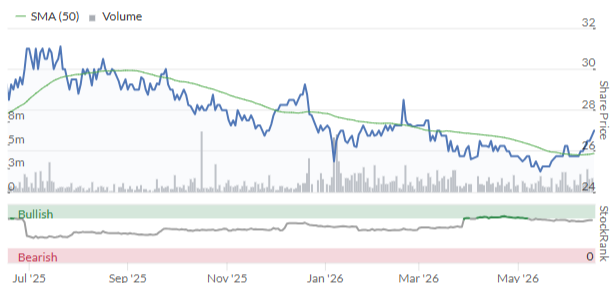
Whitbread (LON:WTB)
Down 1% at £23.80 (£3.99bn) - 1st Quarter Results - Graham - AMBER/GREEN =
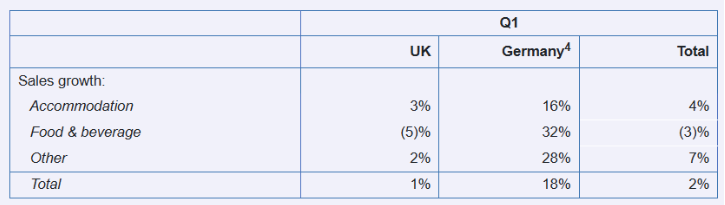
This is the owner of Premier Inn and various food and beverage brands. Key points from Q1:
Total sales growth +2%
Accommodation like-for-like sales growth 2%
Food & Beverage like-for-like sales down 1%, and total sales down 3%
We previously mentioned Whitbread’s “Accelerated Growth Plan”, designed to help increase the group’s overall returns.
As a reminder: Whitbread announced that it was selling 100 restaurants and converting the rest into “a more efficient integrated restaurant offering”, as they become a “pure-play hotel business”.
I interpret the changes to their remaining restaurants to mean that they are moving towards a Travelodge-style restaurant offering.
The “AGP” is an important part of the overall plan to improve their economic returns.
This is the context in which total Food & Beverage sales have fallen 3%.
CEO comment:
"We delivered a strong and improved performance in the first quarter. In the UK, driven by the strength of our brand and commercial programme, total accommodation sales and RevPAR continued to grow ahead of the wider market. In Germany, demand strengthened through the quarter and with the opening of six new leasehold hotels, we drove double-digit accommodation sales growth and continued to outperform the wider market.
They are “confident in the full year outlook”:
Whilst we expect the impact of business rates to remain in line with our previous FY27 guidance, we are continuing to press the UK Government for changes to FY28 and FY29.
In April, they cited increases in business rates and National Insurance increases as reasons for the decisions they made.
In the UK, our forward booked position remains ahead of last year, supported by peak leisure bookings. Whilst visibility remains limited, the strength of our brand and national coverage, together with our best-in-class commercial programme, means we are confident that we can continue to outperform the wider M&E market.
Graham’s view
I upgraded our stance on this to AMBER/GREEN last time, at a share price of 2280p.
The share price is up a little since then, and I remain happy with that call.
If they hit their target ROCE of 15%+, then investors should do well - and they should do fine even if the gains are more modest than that.
So I like the investment case here. I’m not fully GREEN because the ROCE provided by the company is adjusted, and real unadjusted ROCE may remain fairly modest. This is obviously a capital-intensive type of business, even with their new low-capex plans:
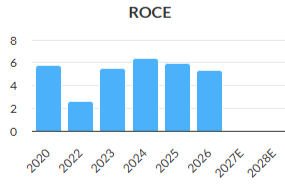
It’s a mature business, with limited top-line growth, but I do like what they are doing to boost returns.
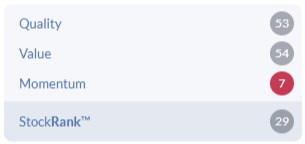
It might be worth noting that my moderately positive stance is in conflict with the StockRank, mostly because of the poor MomentumRank:
Mark's Section
Tekmar (LON:TGP)
Down 10% at 15.2p (£23.5m) - Unaudited Interim Results - Mark - AMBER/RED ↓
Tekmar has had a rather chequered past:
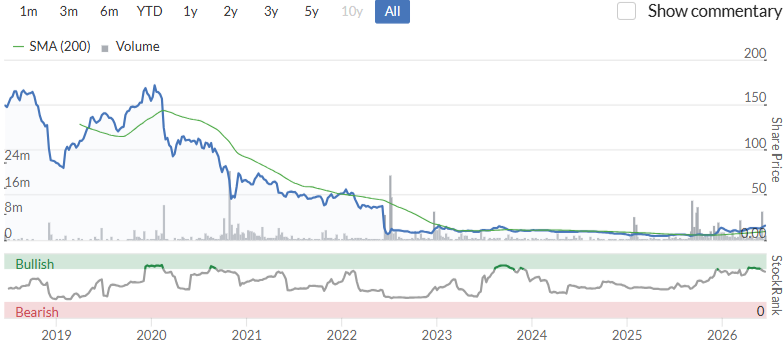
I’ve followed this company for a long time as the story appeared compelling. Amongst other things, they provided cable protection systems for offshore wind farms. This was a business where Tekmar had considerable market share and was forecast to grow 15% CAGR for a decade from 2019. It would seem in such a scenario it would be hard for Tekmar not to be a success. Yet they managed it.
The downfall:
Project delays in 2020 began impacting margins which led to the founder-CEO stepping down. One of the signs that there may be deeper problems was a huge jump in receivables, mainly contract assets:
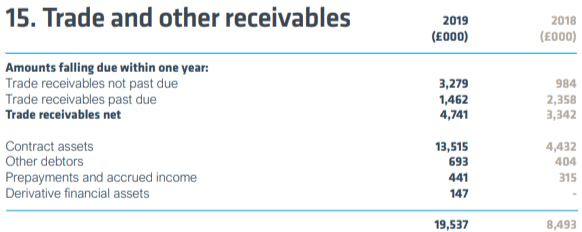
These are usually unbilled revenue, showing that the company was booking revenue that had not yet been invoiced. There is nothing wrong with this practice per se, but these are inherently lower quality and it was one of the warning signs that meant I steered clear of the company.
Receivables continued to rise even as revenue declined, and eventually the company had to take write-downs within their Chinese subsidiary. They also had a warranty issue with a major customer, and while Tekmar denied that their product was to blame, the risk weighed heavily on sentiment.
The rescue:
By mid-2022, compounding losses forced the board to launch a Formal Sale Process to find an external strategic partner to rescue the balance sheet, admitting that the company required emergency capital to support growth.
A £7.3m subscription by SCF Partners plus up to £18m of Convertible Loan Notes, a £2m placing and £1m retail offer rebuilt the balance sheet, but at the cost of significant dilution. The company now has roughly 140m shares in issue up from around 50m.
Today’s results confirm that the loan note was never drawn and has expired since they managed to secure a £4 million UK Export Finance-backed Barclays facility, a £2 million British Business Bank Growth Guarantee Scheme loan, and raising cash through the £2.84 million disposal of its Innovation House premises.
The present:
Tekmar’s survival is good news as it seems the UK taxpayer would have been on the hook for some of the losses. The company finally managed to access sufficient other facilities to repay its CBILS loan in October 2025, more than 5 years after it took this out as a short term loan to get it through the COVID period. However, today’s results show that they are not completely out of the woods:
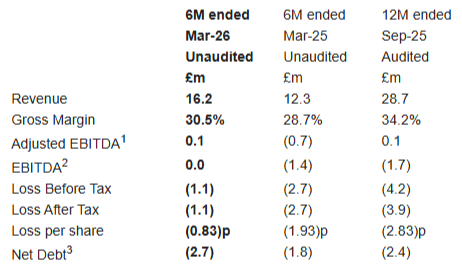
Net debt is rising, and the company continues to be loss-making. Given that SCF Partners still own 31%, I would expect them to still be supportive if further equity capital was required. After all, they were happy to offer loan notes.
The concern:
Given the background above, I hope readers will forgive me, that the next place I naturally turn to in these results is the note to the accounts that details the receivables:
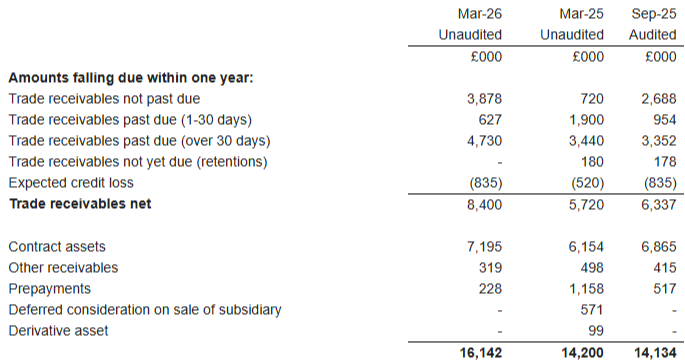
So again we have a not insignificant amount of contract assets, and trade receivables more than 30-days past due are both significant and rising. It is hard not to get the feeling of deja vu.
The future:
The good news, and the reason that the share price has almost trebled since December last year, is a series of contract wins that have been announced since then and have led to a jump in order book:
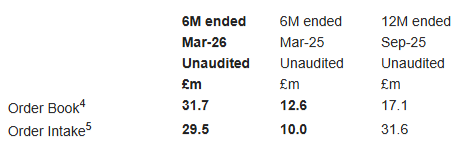
Revenue for these will be recognised across FY26 and FY27. However, with their broker Cavendish forecasting £22.4m of revenue for 26H2 and a big jump to £52.6m of revenue for FY27, the much-improved order book only just covers H2 and the first two months of FY27.
Cavendish suggests they will deliver 1.5p of Adj. EPS in FY27 and 2.7p in FY28, which would make them look pretty cheap. However, with a gross margin that remains around 30% (and therefore suggests that they are delivering mostly a commodity product) they absolutely have to deliver the big jump in revenue figures to be able to hit those forecasts.
Mark’s view
Perhaps I am jaded by the company’s long-term history, and this really is turning a corner under a new management. Recent contract wins and the jump in order book means that the future looks better than the recent past. However, there is still a huge amount of work left to do to meet broker forecasts for FY26 let alone FY27 and beyond. The low gross margin suggests that their product does not have a huge technical advantage over competitors and issues such as pricing and availability may have a bigger impact on sales than technical prowess.
I still have doubts that they will meet these challenging revenue forecasts, and even if they do, questions remain as to whether they will be paid on time, or at all, for the revenue they book.
I expect their major backer to be supportive if further equity is required, and the banks will be sanguine as the debt appears to be largely underwritten by the UK taxpayer. However, there is no escaping that this was a loss-making half where net debt rose.
In December, following the second contract win I maintained our neutral view. However, with the share price now materially higher, the Stock Ranks starting to decline, and the benefit of seeing these half-year results I think we should take a slightly more negative stance. AMBER/RED
Water Intelligence (LON:WATR)
Up 2% at 252p (£41.6m) - Audited Results for Year - Mark - AMBER/GREEN =
I continue to be fascinated by Water Intelligence. On the surface, this is one of the cheapest growth companies on the market, with revenue having growth 20% CAGR for the last five years:
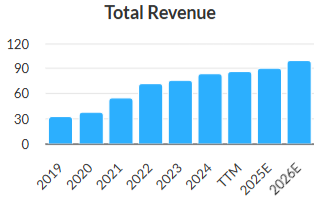
There is a lack of operational gearing, but still, if 2026 forecasts are to be believed, EPS will have almost grown 4x since 2019. Few companies can boast this sort of performance.
Cash flow:
However, I remain sceptical. Despite strongly growing Free Cash Flow,
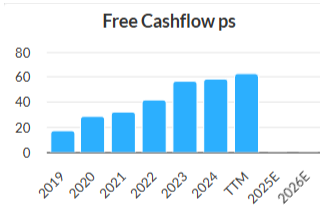
Net debt is rising:
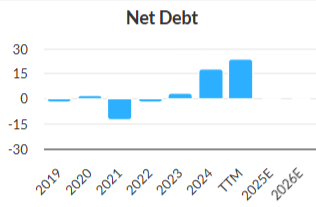
Today’s 2025 FY results show a similar pattern:
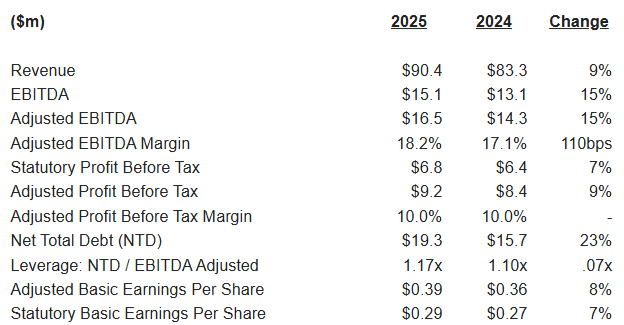
Revenue grows, statutory and adjusted profitability measures are up, but without any operational gearing. Adj. EPS at 39c looks like a small beat on the 36c in the StockReport, and Canaccord Genuity calculate this as 38c on a diluted basis confirming this was slightly ahead of forecast. However, net debt is also up.
It is also worth noting that it is getting quite late to be reporting results for the year to 31st December, and we are approaching the 6 months cut-off at which point AIM companies would be suspended. They clearly got them over the line in time, but the time taken shows the complexity of the business.
This is no doubt not helped because the company has a habit of both selling and buying back franchises:
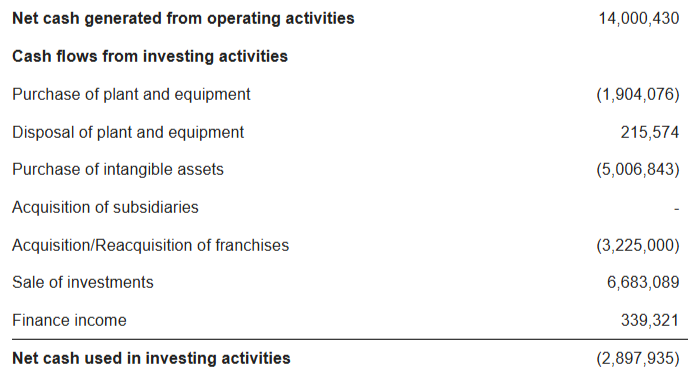
Forecasts:
Canaccord don’t upgrade future forecasts, but they do introduce a FY27 number showing further progression, saying:
We make no changes to FY26 estimates and introduce FY27. These assume doubledigit adj. PBT/EPS growth in both years, supported by commercial progress, modest margin expansion and no further M&A. This suggests potential upside if the preventative maintenance model can quickly scale and/or ALD franchises are reacquired. Leverage falls to 0.7x by year-end FY27E, providing headroom to capitalise on growth opportunities.
However, that growth opportunity appears to largely be the acquisition of more of their own franchises, with CG saying:
M&A optionality: Three acquisitions in FY25 for $4.6m added $3m revenue and $0.9m profit in-year. The franchise reacquisition pipeline remains deep with $92m of gross sales still in third-party hands after a $0.2m deal was completed in March.
Strategy:
The company points out that this strategy gives them the best of both worlds. Getting start-up growth for little cost and then bringing the successful ones back under the fold. However, we only have the company’s word that these transactions make financial sense.
Given the time to report FY results they also mention Q1 trading. But the update here is less detailed than the actual Q1 trading update released last month. Although Q1 is ahead of the growth rate of the previous year, it is slightly behind the 10% full year growth in revenue forecast by their broker. Adjusted EBITDA was up by a similar amount to revenue, showing the same lack of operational gearing and net debt is up a bit more.
These trends are that far off trend that the FY results don’t look achievable, which would mean that company trades on a P/E of 7.8, falling to 7.0x for FY27. This would appear to be too cheap.
However, I can’t help feeling that shareholders would like a good chunk of that cash that ends up going to re-acquire franchises being returned as a dividend instead. The market is clearly sceptical about the strategy, and until it results in clear shareholder returns, I don’t see that changing.
Existential threat?
Overall, I’m not sure these results quell the debate that rages in my mind over whether Water Intelligence is a great opportunity, or a company pursuing growth at any cost to the detriment of overall shareholder value.
Adding to the confusion is a brilliant substack article written last year that argues that the company is at a fundamental crossroads. The article is well worth reading in full, but the final paragraphs say:
For investors, the question isn't whether they're right about water infrastructure needs (they are) or whether they execute well (they do). It's whether being right and executing well matters when the game itself is changing.
They've spent fifty years perfecting the science of detection. But no amount of acoustic equipment can hear the sound of your industry evaporating.
If the author is right about where the industry is going, repurchasing franchises, even if done selectively and at a good price, will destroy shareholder value.
Mark’s view
There is so much going on here, both within the company and industry, that I struggle to come up with a cohesive view that captures it all. The temptation is to cop out and go for a neutral view. However, the valuation appears to be getting to the level where the upside perhaps out-weighs the downside. With a StockRank of 76, I think it makes sense to be broadly positive, but I can see why many will simply avoid this kind of complex situation. AMBER/GREEN
tinyBuild (LON:TBLD)
Up 1% at 9.3p (£36.7m) - AGM Trading Update - Mark - AMBER/RED =
It is a positive update for the first 5 months of the year:
The industry backdrop remains difficult with few signs of modest improvement. Despite this challenging backdrop, tinyBuild is carefully managing its catalogue (e.g. announcement on Graveyard Keeper 2) while investing in high-potential new IP (e.g. Kingmakers, SAND, The Lift). tinyBuild's revenue is trading ahead of expectations for the first five months of the year.
Which combined with a strong pipeline, means that the company issue a positive update for the full year:
All things considered, the Board remains confident the Company is on track to deliver results for 2026 at least in line with expectations.
However, the share price reaction has been muted today. The chart suggests that this was expected:
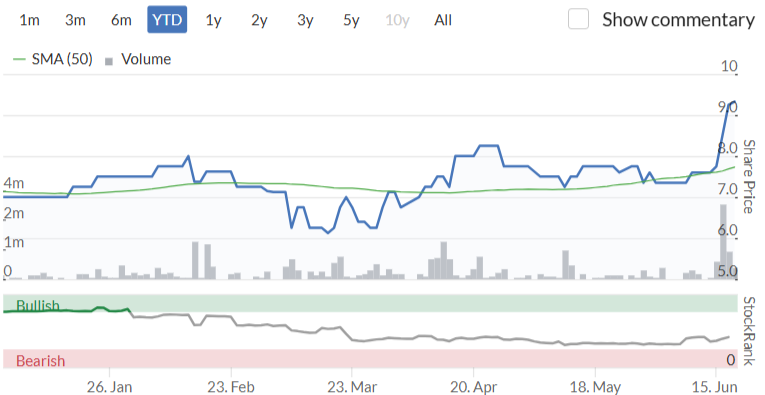
The reason is probably because, a few days ago, CEO Alex Nichiporchik tweeted that he last going to buy more shares on Monday after the launch of SAND on Steam, saying:
The amount is TBD. I believe the current price is severely undervalued
It is an interesting approach to shareholder communication and that may well have cost him money if he follows through and buys more shares on Monday. However, I feel he won’t be that disappointed, as he already owns 58% of the company having backstopped a $10m emergency fund raise a couple of years ago:

I always have a challenge valuing games companies. This is a highly cyclical industry and results tend to be determined by a relatively small number of blockbuster hits. These can rarely be predicted at the time the companies are investing significant sums into game development, making these factors often unknown to the companies themselves, let alone investors. However, I think that it is an area where industry knowledge may pay off in the short term, so we should take it seriously when the CEO and major holder here says the immediate future is bright.
Looking at the brokers forecasts, Zeus forecast the EV/Adj. EBIT for FY26 to be 11.2, reflected a reduction in profitability from FY25, but falling to 6.4x in FY27 as profitability recovers.
Valuation: Shares have risen 23% since the beginning of the year and now trade at a 2027 EV/ EBITDA multiple of 6.4x, broadly in line with 6.1x for the sector average. We believe this in line multiple undervalues the company’s step-change improvement in revenue quality and potential.
I am a little more sceptical myself as it seems that there is simply huge variability of profitability and it is largely unknown, which makes using multiples of a FY27 estimate to value such a business a tricky proposition.
Mark’s view
My instinct says that Graham may have been a little harsh on this company with a broadly negative view earlier this year. However, since then the share price has risen around 50%, on some positive statements from the company, but no change in forecasts.
I can see why investors, including the CEO, may see momentum behind the prospects and be willing to hang on (or buy in) for the ride. However, with this being an inherently unpredictable industry, I don’t think we can automatically conclude that this is good value at a significantly higher share price just because he says so. Multiples are tricky to apply in this industry and even if we were to accept this methodology, we have to be making assumptions outside of the forecast window and into FY28 to make this look cheap. As such, I’m not sure I can argue that we should change our view today. AMBER/RED
XPS Pensions (LON:XPS)
Down 3% at x306p (£660m) - Full year results - Mark - AMBER/GREEN
There is decent revenue growth here at 13%, even more so if one is willing to exclude a one-off project executed in the previous year.
Fully diluted adjusted EPS comes in at 22.3p which, on the surface, looks like a modest beat on the 21.0p Stockreport consensus. This had been flat recently, but has shown a modestly positive trend last year:
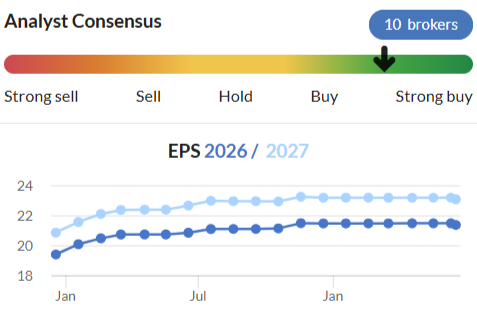
However, this is only 8% ahead of last year, showing an apparent lack of operational gearing. Although it seems cost rises had an impact, it was again the one-off project that means the growth rate was not higher:
Adjusted EBITDA grew 9% notwithstanding the impact of the higher employer National Insurance contributions; excluding McCloud adjusted EBITDA growth exceeded revenue growth reflecting further delivery of operational gearing as the business scales
However, there is a big gap between adjusted and statutory EPS. Here are the details of those costs:
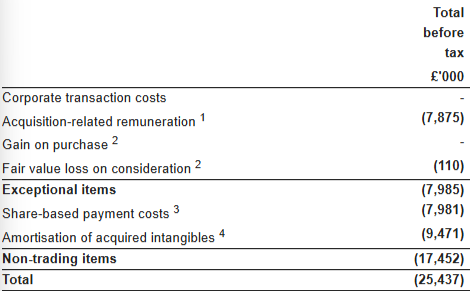
The explain that accounting regs require them to classify the acquisition of Polaris as a post-transaction employment cost accruing over the deferment period as continued employment is one condition of the share purchase agreement. However, if you are buying a business where the people are part of the key assets, I think excluding this may appear aggressive.
The same with the share-based payment charge. This is pretty sizable compared to overall profits, so simply excluding this as non cash seems quite a favourable treatment.
Their broker, Cavendish, appear to make their own adjustments to come up with a 21.1p figure for FY26 EPS, meaning they consider this in line. They say PBT was 4% ahead of target but due to a lower than expected D&A charge.
Cash flow:
Overall, the cash flow seems reasonable, with £55m of operating cashflow offset by £10m of capex, giving the ability to pay a £25m dividend for a roughly 4% yield and buyback around £21m of shares with net debt only increasing by £6m.
This isn’t a small cap, though., and with a £660m market cap this is trading around 15x FCF.
Stock Ranks:
Overall the algorithms are not a huge fan of this business:
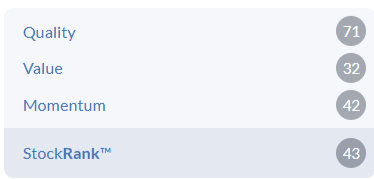
But I feel these results may help with the Value and Quality Ranks. A forward P/E of 14 is not outstanding, so much of the value is in them continuing this trend of consistent underlying growth.
Outlook
This is what they say about the future:
We have invested in our capabilities, our people and our technology. With this strong underpin, expansion of our addressable markets and continuous changes in the regulatory and market environment, we are confident of further growth in FY 2027 and beyond in line with the Board's expectations.
Cavendish have 22.6p pencilled in for FY27 and 24.3p for the following year, which is a pretty modest 7% or so growth each year. An estimated free cash flow yield 7% more than covers a 4.3% forward yield. So being in line with these figures doesn’t scream great value, especially when there are some heavy adjustments.
However, while the forecast growth may be quite pedestrian, this is a business that has pretty sticky revenue and a long runway ahead of it to grow for many years.
Mark’s view
I struggle to get particularly excited by the current forecast growth rate versus the multiple, and perhaps the market feels the same way, with the shares marked down slightly today.. However, this has a history of consistent delivery, modest upgrades and has managed to keep growing, despite a year where one-off project revenues rolled off. A 7% FCF yield and 4.3% forward dividend yield are not expensive for a business that has the ability to keep growing organically, and the cash flow to grasp acquisition opportunities when they arise. I think these results justify keeping our broadly positive stance. AMBER/GREEN
Synectics (LON:SNX)
Down 1% at 198p (£35.6m) - New Stagecoach Orders Totalling £1.5m - Mark - AMBER/RED =
£1.5m of orders is only 2.4% of forecast revenue, so I think we can understand the market not reacting to this announcement.Especially as only £0.4m was outside of a previously announced framework agreement:
In addition, Ocular has recently received further orders totalling approximately £0.4 million, outside the framework agreement, for the retrofit of its CCTV systems on 71 buses owned by another UK transport authority and operated by Stagecoach.
This also doesn’t appear to have triggered any updated notes from brokers, suggesting these were already in forecasts.
Te last update we had was following an AGM update, where they said that the first five monthsFY26 were “broadly in line with management expectations” I.e. slightly below expectations.
They said that they expected to recover this for the full year but also flagged a heavily caveated H2 weighting:
Subject to energy sector activity normalising through the second half, the Board currently expects trading for FY 2026 to be in line with market expectations.
They also didn’t give us a specific order book number, which given the only very short term visibility over revenue doesn’t give great confidence that they can hit numbers which were cut following the recent profits warning.
Mark’s view
Given recent newsflow, the bounce back in the share price following the profits warning looks premature, and today’s small orders don’t change that situation. Much of the investment case here rests on a rapid bounce back of trading in future forecasts, for which so far, there is little sign. I am in no rush to change our previously mostly negative view. AMBER/RED
Disclaimer
This is not financial advice. Our content is intended to be used and must be used for information and education purposes only. Please read our disclaimer and terms and conditions to understand our obligations.

28 comments
The South Korean benchmark index, the KOSPI, surged past the historic 9,000-point milestone for the first time.
Driven by an extended rally in chipmaker heavyweights—such as Samsung Electronics and SK Hynix—fuelled by artificial intelligence optimism, the index closed at a record peak of 9,063.84. During the trading session, it climbed as high as 9,106.07.
All the best
MHA (LON:MHA) daily drip lower on low volume, looking very good value now
Morning all!
Any time for a gander at Whitbread (LON:WTB) today? Looks interesting (to me!) at this price.
Also Water Intelligence (LON:WATR)?
The prices of premier inn hotels are extortionate - yet demand must be good enough otherwise they would drop the prices
Are they? I pay about £50, seems reasonable compared to other hotels, in the same area. Some are even cheaper than that. Some are far better quality than other budget choices also.
Paid £63 for a double room at Heathrow last week and they had a free breakfast deal on for the wife and I (normally £14 each). They've got a lot of meal deals advertised at the moment as well. Just opened a nice art deco style hotel in Bognor Regis but selling half developed site I saw in Ilfracombe as looks like a difficult/expensive site to develop. It definitely feels like they're actioning their plan to rationalise and increase/decrease bed spaces where appropriate. Looks like a good entry point for the patient investor although labour costs are definitely against them at the moment.
Prices have gone up recently, l used to pay £42 at Heathrow but a few months ago, it was £50. Free breakfast would have been no use, as l had to leave at 5.20am.
Liverpool last September was £43, l think but l stayed in an AirBnB instead, closer to where l needed to be and can cook cheap dinner.
Their costs have gone up, wages and business rates.
Whitbread (LON:WTB)
yet demand must be good enough otherwise they would drop the prices
their lfl sales growth of 2% in uk isnt great - facts are extortionate prices are needed to tread water - something i didnt appreciate when i bought in here. Their new cunning plan may work - but its a new cunning plan that wasnt part of their prior cunning plan - radical shifts ref cunning plans suggest its not doen from posistion of strength.
I just had to pay £38 to stay at Tirana airport and £4 taxi each way! Albania is no longer cheap, so P Inn are bargains.
I paid £165 for a very average (at best) hotel near Southamton docks last week, car parking extra and breakfast was also not included it seems the days of £60-£70 rooms for a night are over.
Still seeing plenty below £60.
Yes, I'd like to hear what the team think about Whitbread (LON:WTB) - to me it looks like a good entry point.
Whitbread (LON:WTB)
i hold whitbread i thought it was a reasonably low risk play - premier inns is a very decent brand imho - it shouldnt be a complicated buisness model - and they have high ownership of properties - and had next to no debt.
Its kinda been one disaster after another since i purchased - thats perhaps a slight exageration - but clearly they are being battered from old sides ref costs - so i underestimated how hard it is to make great profits in their sector. To be fair to managment - i think most of tyyhe issues and sector wide and the same as retail - more red tape - increased costs - insensitive budget changes - and targetting of companies like this to raise tax revenue. - they seem to be doing better in germany than here.
I dont think thye are over the worst of cost cutting - and it says it all that they had their 5 years plan - and then sudenly had to flip to making decision to exit food side of things - is that a snap decision at the hardest point in the cycle ? its hard to say - i do get the mkove away from food bit - i just think if you are gonna do that do it naturally over time - ratehr than end of closing what may be decent money making places.
i have to presume that the pivot away from food is gonna eat hugely into cashflow if done in dramatic fashion - the marekt does like a plan and simple though - so there is scope for the market to see the end goal that they arent wasting capital on stuff that doesnt return top dollar ? does their core buisness return top dollar - well looking at recent lfl updates its not trending great.
the reality is with them drip feeding bad news - there is the chance that the current rosy projections for 2028 -anre nonsense and that the reality may be that they cant up profits from where they are now. What head honcho in business like this is ever gonna say we will make les in 2 years time than now - none. so we are stuck with people who must promise glass rammed full of rosiness projections - rather than honest reality that profits wil perhaps go nowhere in real cash terms.
perhaps the sensible money is wating for real upward projections in forecasts rather than the opposite. At present too they will no doubt be stuffing the exceptional lines to make them look much better than they are.
I do still think they will come good - but i cant really recommend the business when they are saying "we are beating the market" but delivering lfl growth below inflation in their core market. Hey ho 2% lfl growth is better than nowt. i supect that might not even cover the rates wage increases unfortunately !
I spend plenty of time at various Premier Inns. To be honest, I wish there was more choice in the towns where I stay. Fair play to WTB for their stable of hotels as very often there is little alternative. What I witness more often than not is hotels that need serious money spent to bring these places up to date. Rooms are shabby, heating is complicated to operate and WiFi poor. Hallways are damp etc.
Some are in good positions and in good order. It’s plain to see that there is never enough staff in the bar/restaurant area to service the residents. Staff morale is generally low no doubt because they are often trying to cover the jobs of 2 or 3 people, and also on the verge of redundancy. I have been snapped at on occasions and it’s understandable why. WTB are trying to manage this, often by ringing a few days ahead and asking if I will be wanting dinner. Also pressurising on arrival to say exactly what time I want to have breakfast. It’s advisable to book if you intend to dine evenings as if you don’t book you may not get a table or be made to wait up to a couple of hours. All this even in a Beefeater restaurant which at the moment is also open to the public. Evening meals are not encouraged. One of their top hotels recently only served 4 people for dinner on a busy weekday. Residents were told that Wetherspoons is round the corner. This is all changing soon and evening meals will only be available for people staying on site. Unfortunately, this will make things worse IMO because the menu will be more restricted. I’ve already stayed in a Premier Inn where the main restaurant has closed and a couple of rooms converted to a so called breakfast area which also serves basic food evenings such as pizza, curry and burgers. All out of the freezer or from a bag. The burgers are disgusting and I am told they have taken out the fryers and the only choice of French fries are oven chips which are also disgusting. A pint of draught lager or Guinness etc no longer available. Bottles only!. I fully understand that this company must be at their wits end with this government but it’s no excuse to just throw in the towel like this. I believe this will backfire over the next few years and it will prove costly. Unless you stay on a Sunday evening (usually the cheapest night) sub standard rooms can easily cost between £125.00 & £175.00 per night (breakfast and ultimate WiFi extra). I would like to invest in this company due to their monopoly but will hang on for now and see what happens when they shut down the restaurants. It will be interesting to hear what other hotel guests have to say at breakfast time!!
Any time for a look at Duke Capital (LON:DUKE) ? I wonder what's going on under the bonnet.
XPS Pensions (LON:XPS) looked ok to me, will you cover please?
No position
Still looks weak, tempting here, what am i missing?
Daniel Thwaites (OFEX:THW) had figures yesterday at 12.05pm so missed yesterday's run through. They were very good, and report was unusually optimistic.
At huge discount to NAV £4.57 per share. P/e of just over 7 and yield only about 4%. Look cheap compared to peers ( and the overall market ).
Superficially attractive so I took a closer look. Operating profit in recent years has bobbed about between £11m and £13m despite rising turnover. The real issue is that most of the after tax earnings are reinvested in fixed assets, with capex exceeding depreciation by around £8m or £9m a year. From the investor's point of view, you'd have to question the wisdom of that investment when ROCE is between 4% and 5%. Since interest rates went up, ROE has been even lower than ROCE - so the rate of interest on their borrowing is higher than the rate of return on the assets it helps to finance. So I would say an EV (market cap plus net debt) of about £125m or 10 times EBIT sounds about right. The fact that the assets employed (shareholders funds plus net debt) are around 2 and a half times that does not improve the investment case IMHO, unless ROCE improves or substantial realisations near book value are in prospect. Happy to hear contrary views as I don't generally analyse pub and hotel companies.
A fair point, performance has been poor for many years. I suggest things are changing.
Interest costs will be coming down , they have a long term loan taken out in 1999 I think at about 7% of £45m which is being paid back, this should be replaced with cheaper debt.
They also have interest rate swaps giving some protection from rising rates.
Large investment in Langdale Chase in the Lake District has been completed and is apparently doing well (at £1500 a night ), but you can check yourself ....try booking.
They seem to have come to terms with all the government costs piled on them and have mitigated as best they can, judging by the chairman's comments.
Hope to do well over the football.
May benefit from Staycations over the Summer.
They have been buying back shares and I hope continue around these prices as highly accretive to NAV.
tinyBuild (LON:TBLD) AGM statement: Revenue ahead of five month expectations and ‘on track to deliver results for 2026 at least in line with expectations’ This bodes well given their major releases this year are all due to be released after this date with Sand being published over the next week. Cash and cash equivalents of mid-single digit millions at the end of May 2026 - but Zeus point out this will drop by year-end due to investment in major releases.
The company feels more conservatively run now than previous history.
I think this company has multi-bagging potential because some of its upcoming titles, including Sand, look like they should do very well - you can check out their high rankings on Steam (and in today's RNS) - and the valuation is modest.
Nanoco mission accomplished! Thanks for everyone who voted against. Together we are a force to be reckoned with. This company has 10 million in cash, it has no business going private when more than 90% of its investors are retail. If they want to save money they should downlist to AIM 'the Board continues to believe that a delisting would be in the best interests of all shareholders but recognises that the resolutions are unlikely to meet the required approval threshold of 75% of votes cast by shareholders at the General Meeting.' https://www.londonstockexchang...
Well done you for raising the issue here. All too often, the big institutions ride rough-shod over the small shareholders.
Potential trading opportunity here I think given the current valuation versus balance sheet and previous valuation.
well done ben - i get it that a few people might have got bored with the numerous messages - facts are one or two extra people finding out and taking action can be the difference - so those that were moaning perhaps shoudl have just srolled on down and taken it ion the chin. Yours is the noble cause here that proper consultation should be done - congratulations on getting to where we are now.
The situation which Ben is highlighting is a good reminder we are goldfish swimming in a sea of sharks.
I admire your drive and motivation regarding this company. I do not hold and have little knowledge of the situation however have read your posts. I am an east Londoner and not short on a few choice words which I can’t post. Let’s just say big institutions take the ….
I do admire Ben as well for insisting on what he believes and I did not like that others have complained about his posts. After all he pays for his subscription like everybody and he can post anything related to the stockmarket.
BUT the truth is that Nanoco (LON:NANO) is burning cash at a fast pace and in two years will be a zero.
EX management have destroyed Nanoco (LON:NANO).
Take your loss Ben and move on.
All the best