Finding certainty – a first look at the P/TBV screen results

In last week’s article, I explained how looking at the balance sheet of a business could provide certainty in the currently uncertain UK markets. The idea is that by buying shares in businesses that trade at a discount to book value, investors harness the power of capitalism to make currently unproductive assets productive again. Not every business will experience this mean reversion, but for those that do, the effect can drive strong investor returns. The maths is fairly simple. If I invest in a business that is trading on 0.5x Tangible Book Value, which currently generates a return on equity of 5%, then I will be paying a P/E of 10 for this enterprise (on a debt/cash-free basis). However, if that return on equity increases by 15%, then the net profit will triple. The market will likely view this as favourable and give the business a rating closer to market averages, if not beyond. If this traded on a P/E of 15, then this would be a 350% return on investment.
These returns typically take time, and a management team committed to getting the best out of the business’s assets. However, the scale of the returns that the winners generate will make up for the stocks where the mean reversion in corporate performance never arrives. I screened for potential investments that may benefit from a return to productivity for their assets last week and generated 42 ideas:


Based on the following criteria:

Given that the type of re-rating that generates high returns is hard to predict and often subject to a large degree of randomness, it is tempting to simply play the numbers game and invest in all these stocks. However, I believe a small amount of extra research can improve the risk-reward ratio. Here is my initial look at these stocks.
Extractive industries
One of the big themes amongst these screen results is the abundance of commodity stocks:

One of the downsides of these is that their assets often exist in faraway lands and are subject to very high political risk. For example, Enwell Energy (LON:ENW) and Ferrexpo (LON:FXPO) operate in Ukraine, with all that currently entails. The good news is that a discount to Tangible Book Value means that at some point in the past, investors thought that there was a sufficient business case to invest capital at attractive returns despite the high risks. In some cases, such as with Serica Energy (LON:SQZ) , the investment landscape has shifted significantly since then, but these may still be good investments overall.
For some companies, the commodity price has declined significantly, meaning their assets are no longer productive, or the market is worried about the scale of the investments they are making. Gem Diamonds (LON:GEMD) , Sylvania Platinum (LON:SLP) , and Tharisa (LON:THS) fall into this category. Commodity markets tend to be highly cyclical, which means that these are likely to bounce back at some point purely from these dynamics. However, commodity cycles tend to be very long, making it hard to pick an entry point. For example, PGM prices have been weak for several years and show little sign of recovery so far. There has been a bit of strength in the Rhodium price in the last month or so, but this would still need to rise significantly from this level to make Sylvania Platinum (LON:SLP) look cheap compared to historical multiples.
Trying to be too cute on timing can be costly, though. Kenmare Resources (LON:KMR) has traded at a large discount to Tangible Book Value for many years. With further large capex projects currently being undertaken, the market has been worried about the returns these will generate. However, private equity, supported by their former CEO, see the value here, having tabled an initial indicative offer at 530p. Despite being more than a 90% premium to the pre-disturbed price, the Board described the offer as undervaluing the company.
Overall, many of the investment cases here come down to investors’ views of the commodity and how much political risk they are willing to bear. A few of the companies are a bit different to the others and are worth considering as separate cases:
Yellow Cake (LON:YCA)
Yellow Cake describes itself as “A specialist company providing investors with direct exposure to the uranium market” and is closer to investing in the commodity directly rather than a miner. The P/TBV on Stockopedia isn’t especially useful as the value moves much more quickly than the published accounts due to changes in the spot uranium price. Helpfully, the company does the maths for us and provides an estimate of the commodity price implied by the current share price:
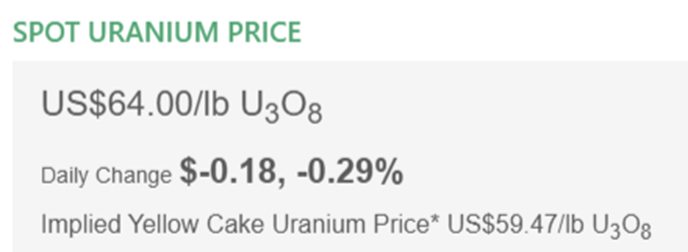
The current 7% discount isn’t enough for asset investors to consider this. Instead, the investment case is simple commodity play for those bullish on uranium.
Capital (LON:CAPD)
I’ve got to admit that this company has been a frustrating hold for me. For many years, it has had an excellent business operating mineral drilling rigs in Africa, mainly supporting the gold producers. Their efficient operations and best-in-class safety have enabled them to charge a premium and generate high returns on capital, despite being in a capital-intensive industry:
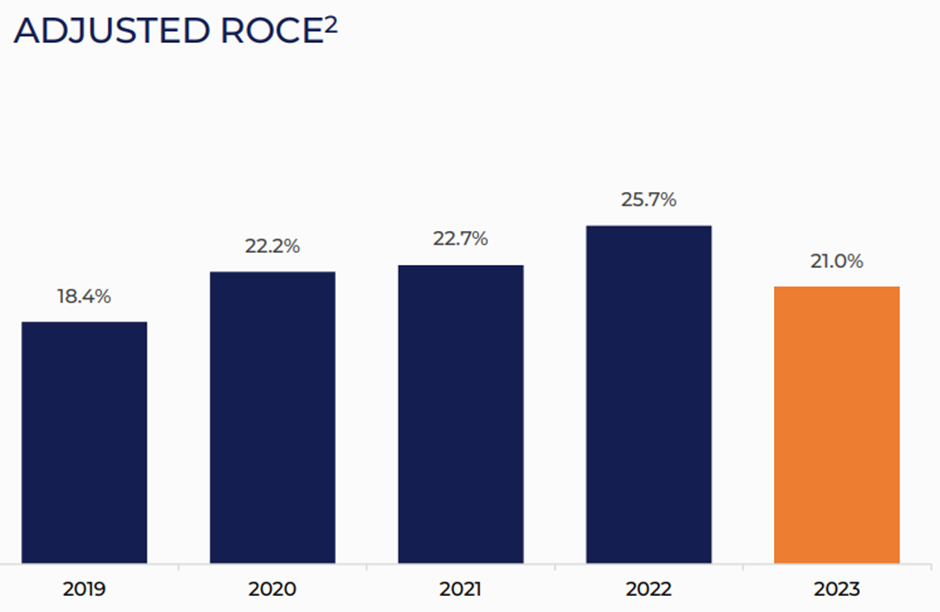
The company management recognised that they operate in a highly cyclical industry. Therefore, they have been moving away from shorter-term exploration contracts and instead pursuing long-term contracts with some of the largest gold miners in the world. This should partially insulate them from any downturn. This has been highly successful. Although, in the short-term, it means they foregone the boom of some peers in order to avoid the bust in the future. They have also been diversifying in commodity, operations and geography. However, it is these new areas that have caused all the problems:
- They have partnered with Australian technology provider Chrysos to quickly grow a lab business focused on an easier and more rapid way of measuring gold samples. Despite very rapid initial growth rates, the roll-out here has been slower than anticipated. The start-up costs of multiple labs mean that this part of the business has yet to contribute significantly to profits.
- They moved into providing mining services, initially for their major customer, Centamin, and then for an iron ore mine in Gabon. However, the Centamin project was not extended, and the other project ended early, leaving them with a haul of mining equipment that was not generating any earnings. Recently, it was announced that this equipment would be deployed to another long-term customer, but the ramp-up means it will be a couple of years before that equipment is fully deployed.
- Finally, they expanded into providing drilling services in North America. Again, this is an area that has been slower than anticipated, which means it is currently loss-making as contract revenues are not yet supporting the cost base put in place to deliver the project.
So far, these seem to be examples of diworsification. I can’t help feeling that if they had just stuck to drilling in Africa, the share price would be multiple of today’s price, even with the low rating that such businesses seem to attract. It is the issues with new areas of operations that have led to the continual downgrade of EPS expectations:
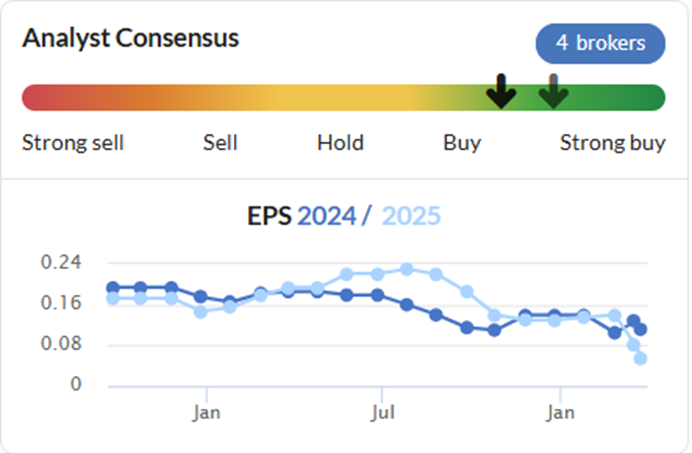
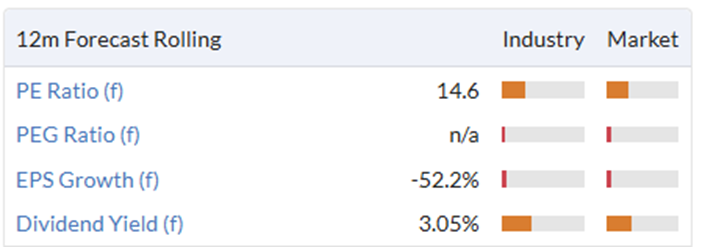
Meaning it no longer looks cheap on forward earnings:
And the share price has taken a tumble:
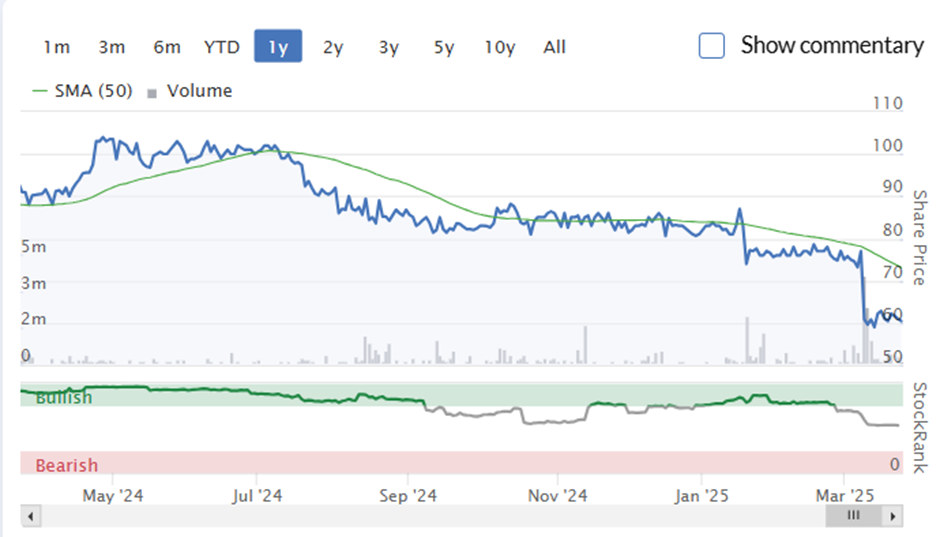
However, none of these issues are unfixable, which means that the current discount to TBV looks too large:
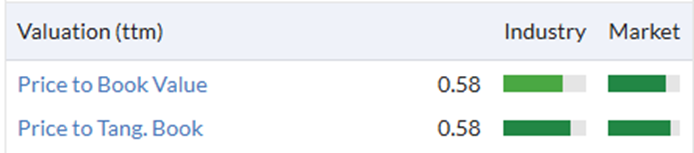
The big unknown is how long it will take to fix these and return to the previous strong ROCE.
Castings (LON:CGS)
Although it is classified as Metals and Mining, this is because it operates foundries that cast and machine metal components rather than engaging in mining. This means its commodity exposure is typically the reverse of mining companies. However, this doesn’t mean it has been performing well. Weakness in its end markets, particularly automotive, means that its forecast trajectory looks like this:
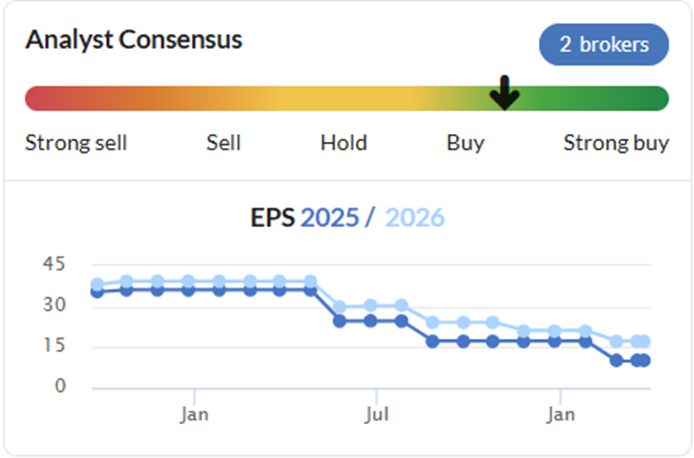
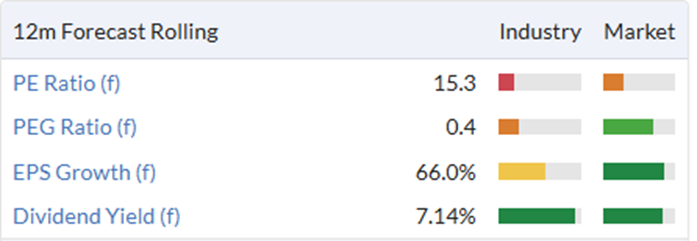
And it is another one that isn’t cheap on near-term earnings:
The company has a decent cash balance, which is why they are maintaining an uncovered dividend and are clearly expecting a cyclical recovery similar to the past:
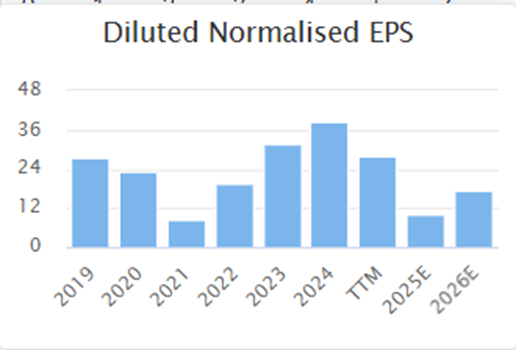
However, it is a company whose assets are never particularly productive, even in the boom times:
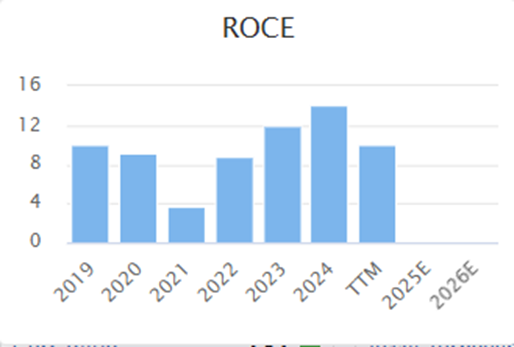
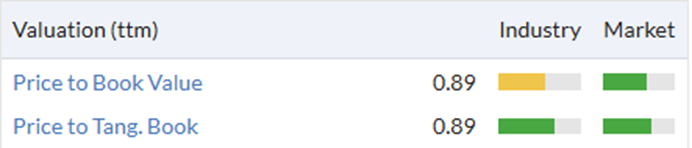
So, the fair value may only be 10 times the average full-cycle earnings. This is actually lower than the current share price, although not when cash is included in the calculation. Overall, there is probably a modest upside if investors get carried away in the next boom times. However, there is perhaps not enough obvious value at 0.89xTBV, given the persistently mediocre returns on capital:
Housebuilders & Real Estate
The second sector that features heavily amongst these low P/TBV stocks is house builders and other property stocks:

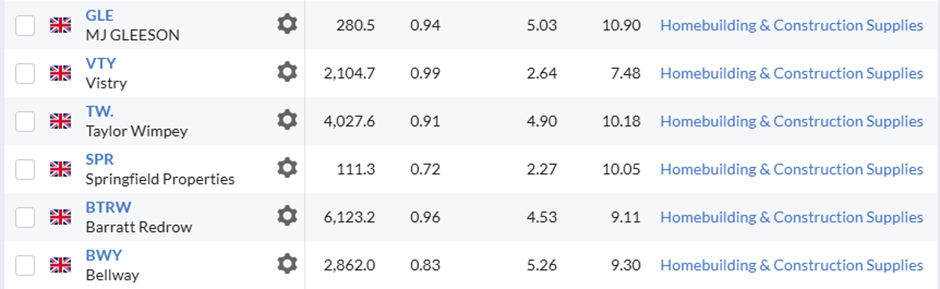
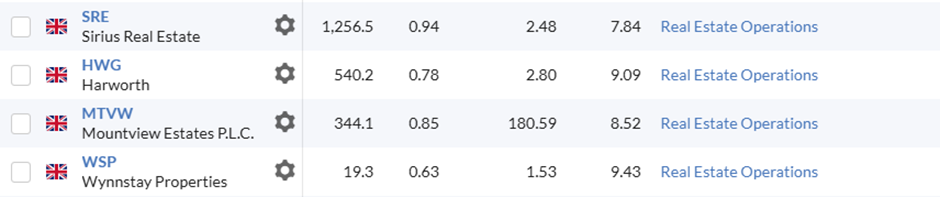
This is perhaps not surprising given the initial enthusiasm that the UK government would drive increased housebuilding has given way to weak consumer sentiment. Almost all of these meet the criteria of looking weak on near-term earnings but cheap compared to their assets. Personally, I think I’d avoid Vistry (LON:VTY) given the accounting issues it has faced recently and the fact that it is trading close to TBV. However, I think a basket of any of the others is likely to perform well for the patient investor who can wait for the cycle to turn.
Best of the rest
Of the remaining stocks, there are a few where I don’t think the discount to tangible book value is high enough to justify the risk of holding, or there are issues with the assets of the business. For example, see the recent DSMR for my views on £ANX.
These are the stocks that do pique my interest:
Anglo-Eastern Plantations (LON:AEP)
I looked at this company as part of my More Midcap Madness article in January and suggested that this may be a better way of gaining exposure to palm oil than MP Evans, which had already re-rated. Pleasingly, the share price has outperformed MP Evans since then:
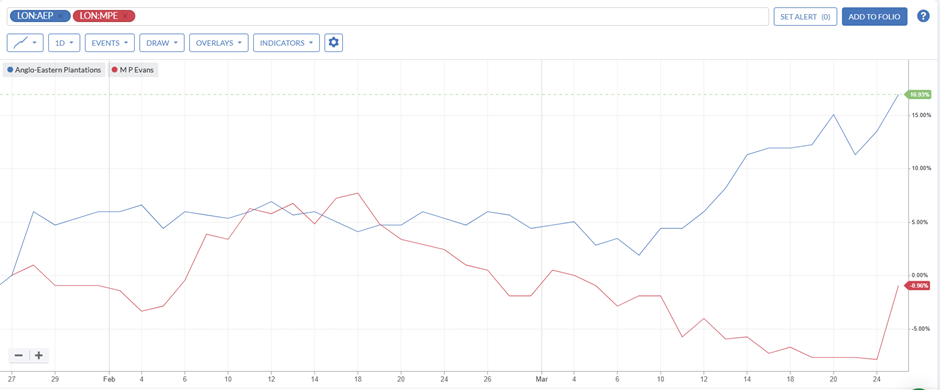
This strength is partly because the company announced a £5m share buyback program last week. This isn’t a significant part of the company’s capital, but given the illiquidity plus the message it delivers, it seems to have had a positive effect on the share price. Despite the rise, the company remains at a discount to TBV and a modest earnings multiple, suggesting that there could be more to come.
Airea (LON:AIEA)
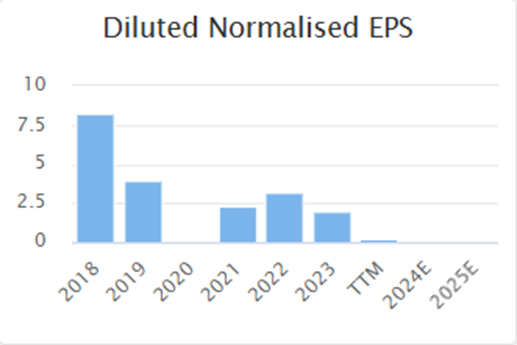
This carpet tile manufacturer only just scrapes past my £10m market cap limit, so it will not be for everyone. However, this could be an interesting opportunity for those willing to consider microcaps. This has never regained its pre-COVID performance. However, a return to 2022 EPS would see it very cheaply rated:
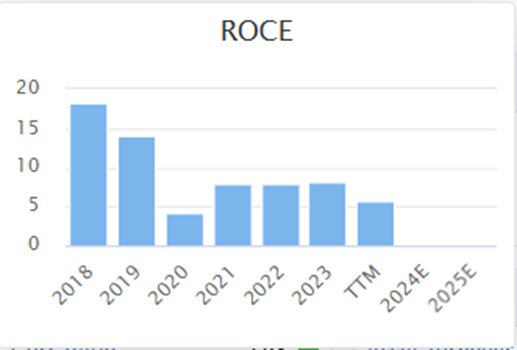
Even then, the return on capital has never really been at an acceptable level:
However, a new management team has been appointed, and they are making some major changes in how the business is being run. Firstly, they have targeted a reduction in working capital and stock in particular. Plus, they are marketing the company’s investment property, valued on the balance sheet at £4.1m. This cash is being invested in significantly increasing production capacity at their facilities. This sort of strategy is not without risks, but assuming they have got their market analysis right, this could see significant growth. At 0.65xTBV, the shift from relatively unproductive assets such as surplus property and inventory into productive capacity could transform the business.
Churchill China (LON:CHH)
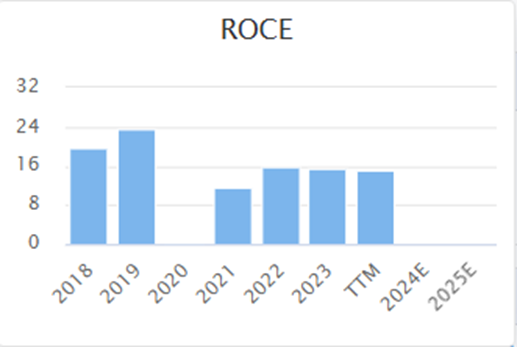
Many investors consider Churchill China to be an excellent business. It has had a reasonably consistent (ignoring COVID) mid-teens ROCE:
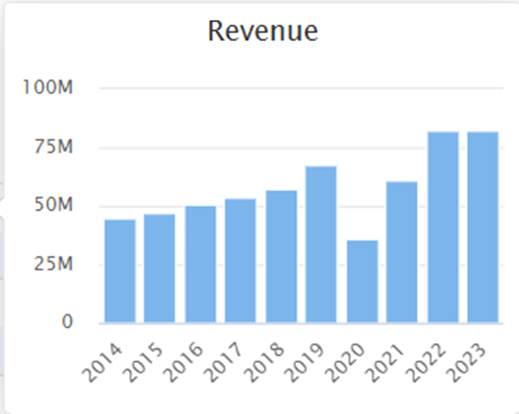
Plus, it has a history of long-term revenue growth:
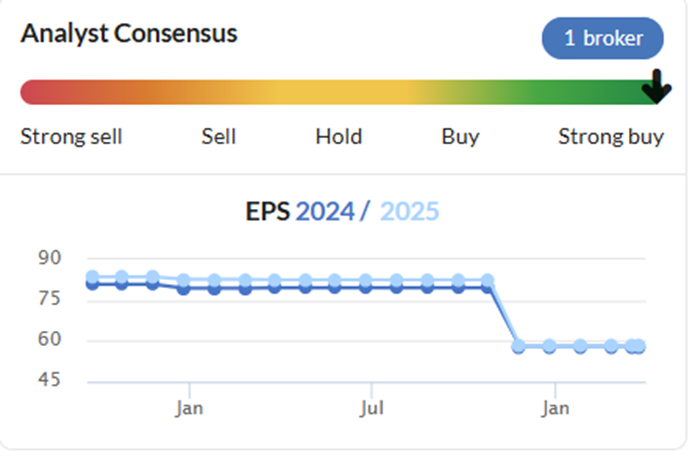
These mean that it would meet the criteria for many multi-bagger screens. However, being a crockery supplier to the hospitality industry means that it depends on that industry’s outlook. Weak consumer spending plus rising food, energy, and employment costs means that the sector is struggling and replacing crockery is the last thing on the minds of many restaurateurs. This is behind a pretty big multi-year profits warning at the end of last year:
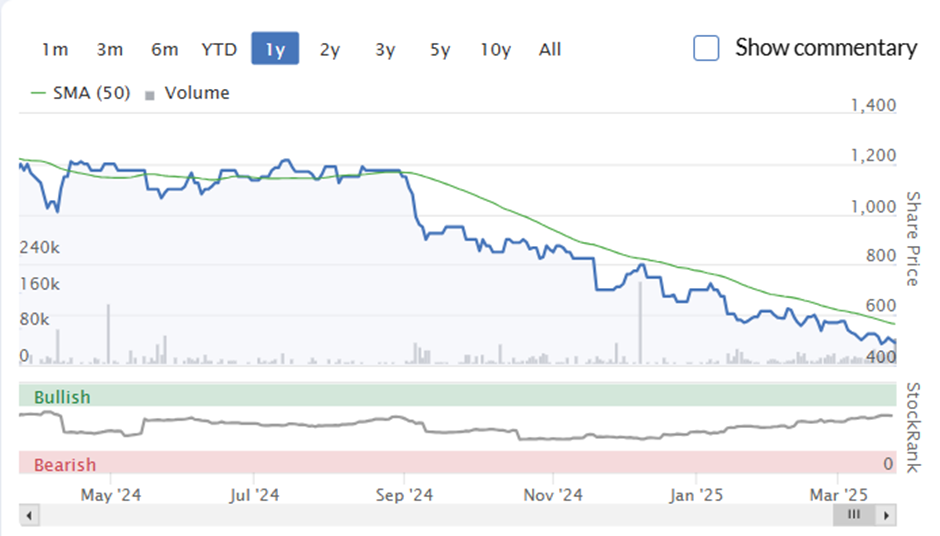
The share price has continued to fall in response, with the market fearing worse to come:
However, the 7% yield is forecast to be maintained and the shares now trade at a discount to book value. The good news is that their product is breakable. So, eventually, hospitality businesses will need to replace breakages. When they do, they will likely continue to buy from Churchill, and the market may well start to see the positive qualities of the business again.
ECO Animal Health (LON:EAH)
On any form of earnings analysis, this looks massively overvalued at a 30x P/E:
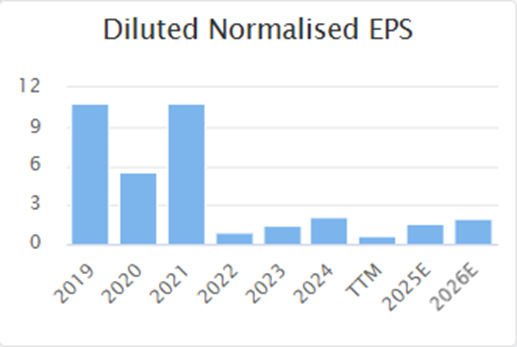
However, this has fallen to the level where it now trades at a discount to TBV:
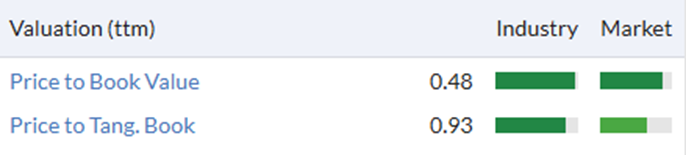
Some caution is warranted as a good chunk of the cash on the balance sheet is in their China subsidiaries and may not be easily repatriated. On the flip side, this is a company where the intangible IP is likely to have value even if it isn’t currently generating earnings.
The bull case is that the company is currently investing heavily in R&D for new products, which may drive the next wave of growth. However, if these fail, the company could cut this spending, significantly improving earnings to the point where it would look cheap. The discount to TBV suggests this may well be the case. However, what puts me off investing is that the decline in revenue suggests that this isn’t all about the cost of R&D but that the core business is struggling. Plus I can’t reliably estimate the chance of success of the new products. Investors with greater experience in this space may feel the bull argument is strong enough to consider.
Mincon (LON:MCON)
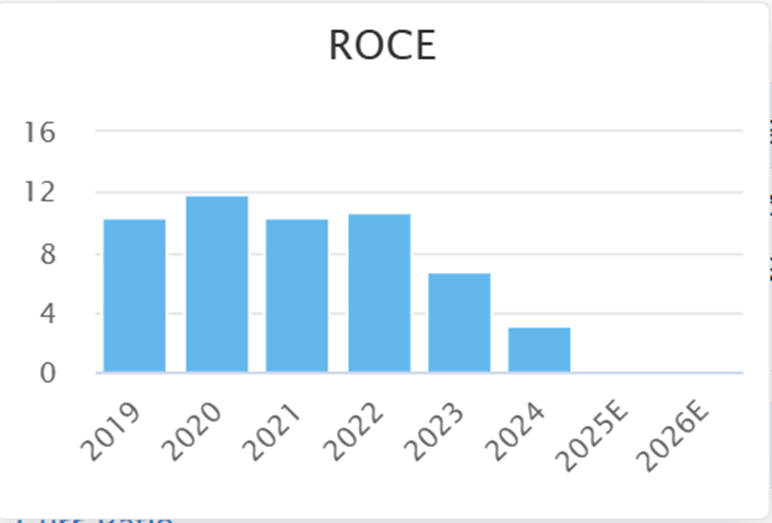
This drill tool manufacturer has never generated particularly strong returns on capital:
Although the current downturn does appear to be cyclical in nature:
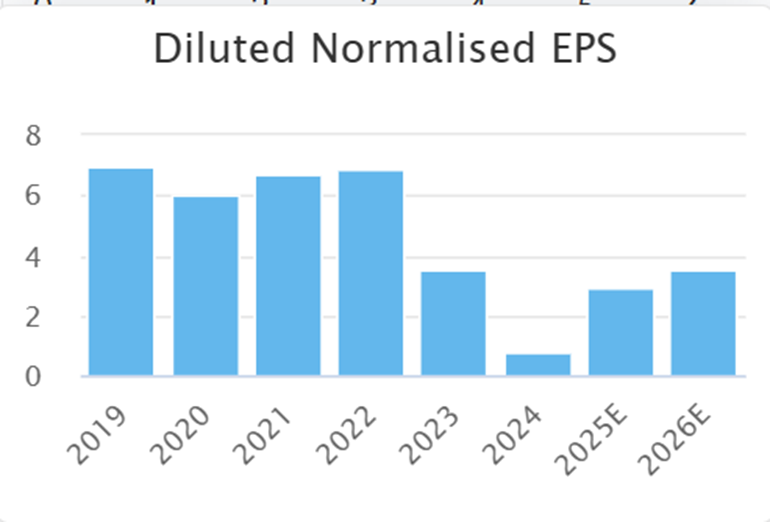
Up until last year, the forecasts were for similar EPS to 2019-2021:
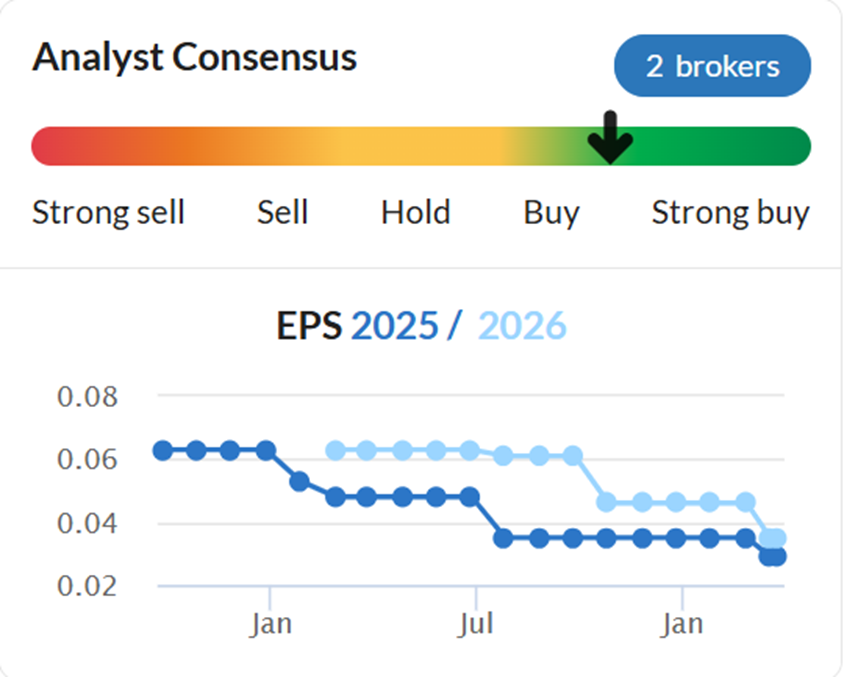
Management appears to be taking action to make their assets more productive again, closing a loss-making subsidiary and reducing inventory. Inventory, receivables and plant equipment make up the bulk of the assets and the shares trade at a reasonable discount to these values:
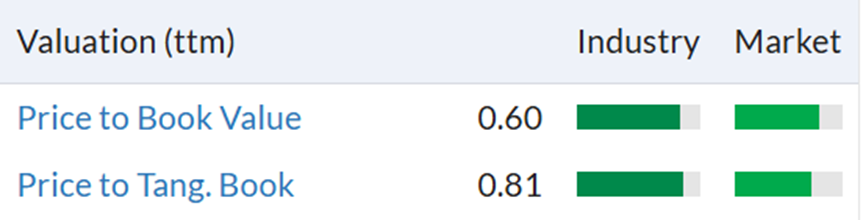
It would seem optimistic to hope this stock will reach previous highs, but I don’t see why it wouldn’t trade at a modest premium to book if trading conditions normalise.
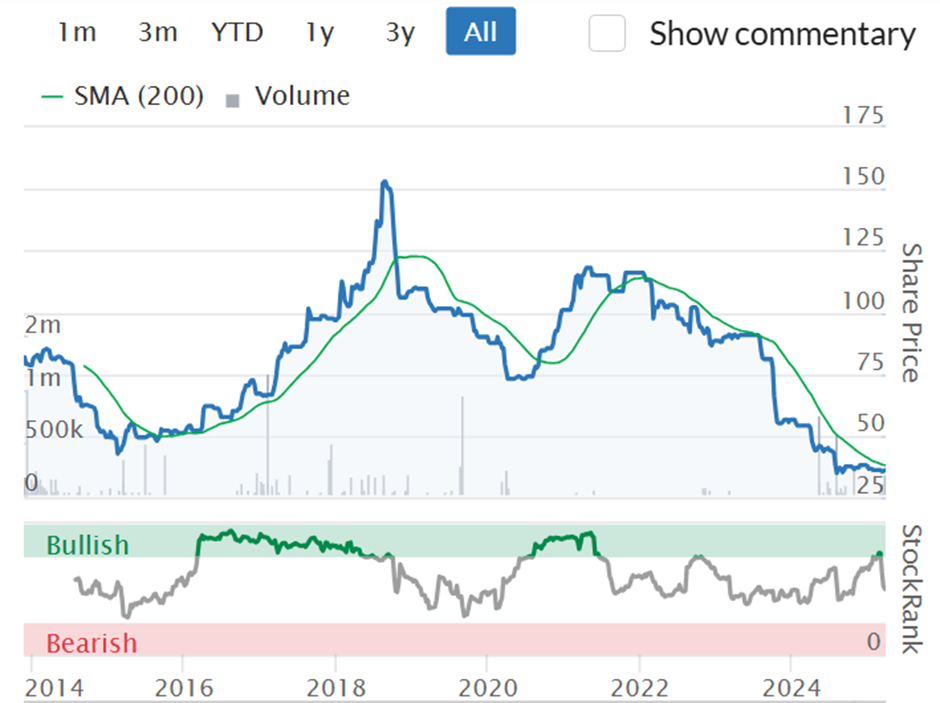
This would generate a reasonable return from the current share price of 36p.
Sanderson Design (LON:SDG)
Sanderson Design was an investor favourite a few years back. The post-COVID recovery, plus the strategy shift to drive increasing high-margin licensing revenue, drove the share price above £2/share:
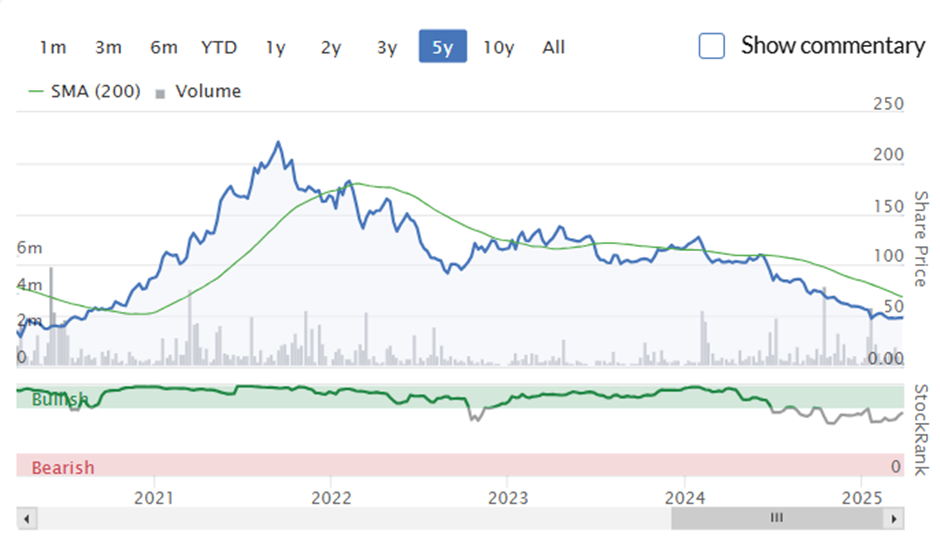
However, weak consumer markets, especially for high-end home renovation products, have seen the shares collapse to below 50p and significantly below tangible book value:
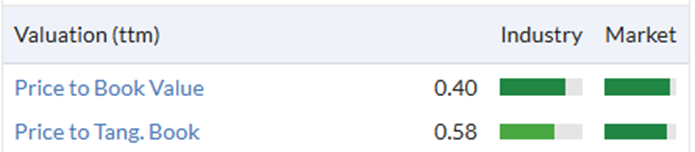
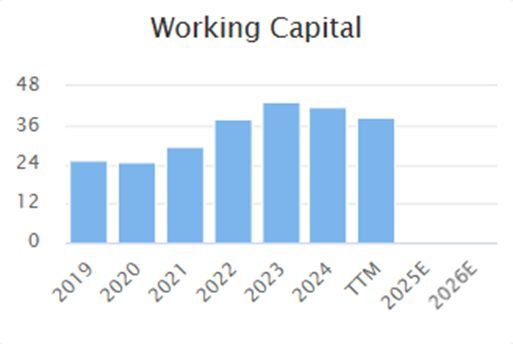
The current £35m market cap is below working capital:
A quick look at the recent trading statement reveals the problem:
Licensing has shown good momentum since the half year results and is expected to end the year delivering revenue in the region of £10.1 million to £10.9 million (FY24: £10.9m), with the final outturn dependent on the timing of signature of contracts in work.
…As a result of the factors outlined above the Board now expects underlying pre-tax profits for the year ending 31 January 2025 to be in the region of £4.0 million to £4.8 million.
The core business is now heavily loss-making, and the licensing side is bailing them out. I can’t help feeling that management has been a little complacent and that without that highly profitable part of the business, they would have cut costs sooner. They at least appear to have got the message now, as they also say:
The Group is continuing to accelerate strategic changes and focusing on efficiency and cost savings to better position the business for the current trading environment and for future growth.
I think the reality is that the shares have now fallen to the level where the current market cap could be justified by the licensing side alone. While not having a 100% gross margin, since it requires designers to support customers in implementation, it is still a very high-margin business. It seems likely that the rest of the business is cyclical and will recover in time, aided by cost-cutting. But even if it doesn’t recover, the assets mean it may be shut down without losing too much money. The transition to a licensing-only business would no doubt be greeted by a re-rating.
Wynnstay (LON:WYN)
This agricultural products supplier is a particularly cyclical business, as its long-term chart shows:
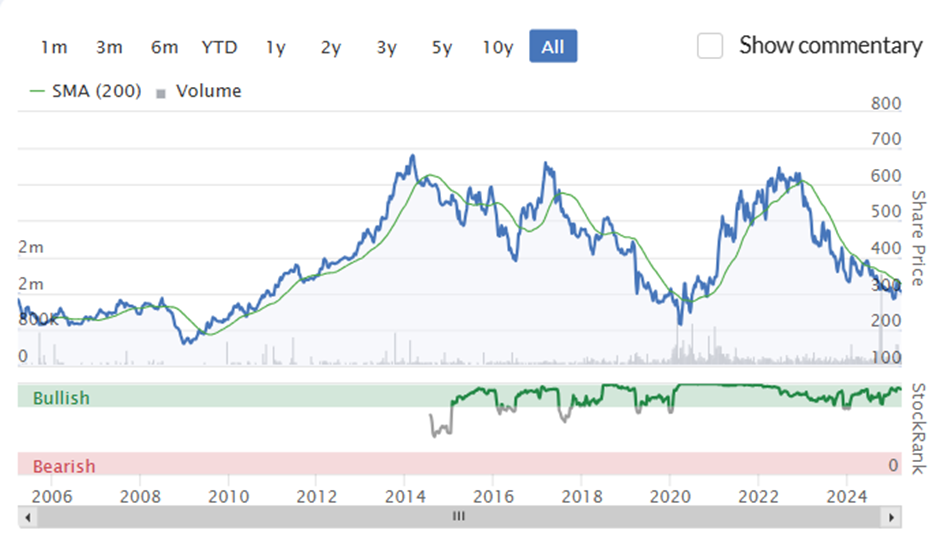
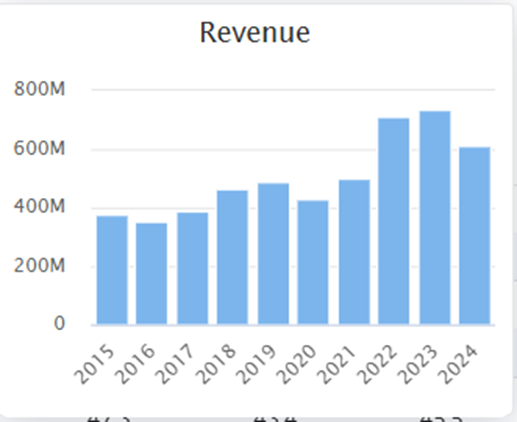
At just over £3, the shares are not quite at the bottom of their trading range. However, they may never get there as overlaid to the cyclical part of the earnings is a modest growth trend in revenue:
However, the return on capital has rarely been acceptable in recent times, only rising above 10% at cyclical peaks for trading:
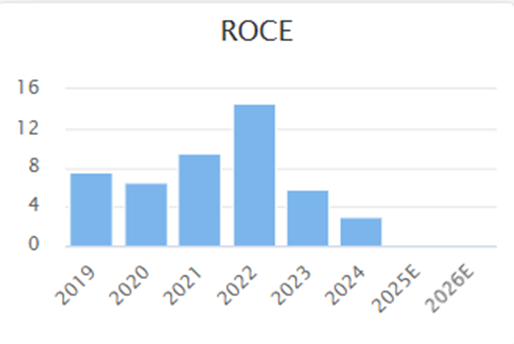
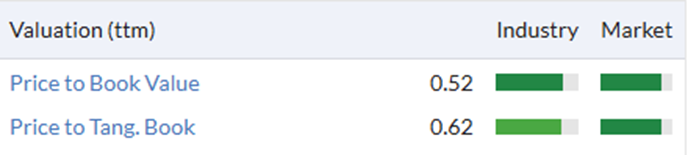
This makes it borderline whether this company really ever should trade at a premium to book value. Indeed, if the long-term fixed assets have consistently failed to generate a reasonable return on capital, that suggests that they are overvalued on the balance sheet. For example, they recently took a 40% write-down on the sale of their Calne feed mill, which doesn’t build confidence in the valuation of the rest of the assets. However, the size of the discount perhaps means that there is a margin of safety and that this has fallen too far:
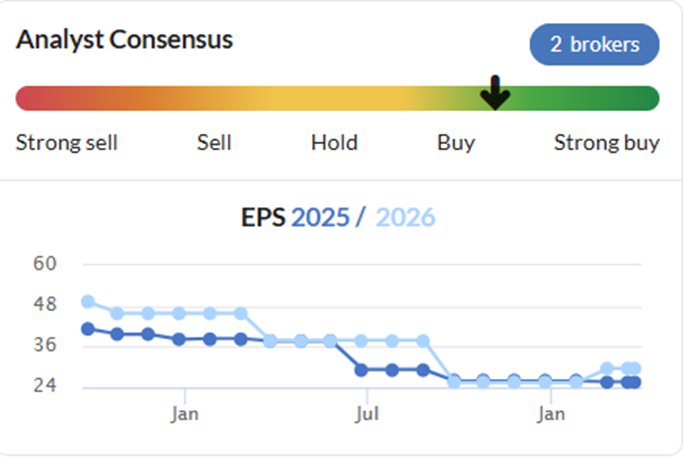
The overall broker trend isn’t particularly comforting, although a very minor recent upgrade for FY26 may mean that there isn’t much worse to come:
A new management team is in place, including new non-execs announced this week. Talk so far has been about cost-cutting and improving capital discipline, which makes sense but is still quite vague. They admit that this is never going to be a high-return business. Overall, I struggle to get excited by this company. I think there is some modest upside to come from improved returns on capital, and the downside is largely protected. This may appeal to some investors. However, I can’t help feeling that these statements could describe most UK small caps at the moment and that this doesn’t necessarily stand out compared to the potential upside of some of the other discounts to TBV bargains.
Barring takeover interest, none of these companies will likely see a significant change in fortunes in the near term. However, many have been sold off to the extent that some kind of recovery is the most likely outcome. Very few of these stocks look like they have a broken business model but instead suffer from temporarily weak trading conditions. In many cases, the management of these companies is already putting in place actions to make the assets of the business more productive again. If they succeed, investors will likely generate market-beating returns from these turnarounds.
[Disclosure: Mark owns shares in Capital (LON:CAPD) Sanderson Design (LON:SDG) Serica Energy (LON:SQZ) ]
Disclaimer
This is not financial advice. Our content is intended to be used and must be used for information and education purposes only. Please read our disclaimer and terms and conditions to understand our obligations.

7 comments
I think these companies are at different stages of the psychology of recognising, or wanting to do anything about relatively low ROCE. Capital (LON:CAPD) has sacked the CEO, recognised the problem and doing something about it. In fact I think that all of their initiatives have potential. It's mainly that when things are new they don't always go to plan immediately.
With the changing of the generations at top level Anglo-Eastern Plantations (LON:AEP) may also be beginning to grasp the nettle. In their case their problem is perhaps less the return on assets than communication with the market.
Others such as Castings (LON:CGS) feel like they accept they'll never get great returns so the big cash balances just mean that they'll stick out many years at low returns - this ain't necessarily so though, check out Goodwin (LON:GDWN) for a contrasting company with similar original assets.
Sanderson Design (LON:SDG) feel as though they haven't bitten the bullet, still focus on a creative, rather than hard nosed mindset and not wanting to accept that hard changes need to be made. I don't think that moving into a new head office really gets to the fundamental nub of their problems. Again, we know that this can be done, just contrast it the long term performance with Colefax (LON:CFX).
Prof. Aswath Damodran pondered the question of low PBV,
Suppose you had a company A that earns 20% ROCE and company B that earns 5% ROCE. Neither has borrowings. Suppose that neither has reinvestment opportunities either, so they generate constant cashflows in perpetuity.
Suppose you require a return on investment of 10%. How much would you be willing to invest in either company. The answer is that for company A you would be willing to pay 2X book value, whereas for B you would be willing to pay only 0.5X, if you do the maths.
This assumes that everything else is equal, of course, which it rarely is. But it illustrates the point that you would be willing to pay different multiple of book values depending on how goo the company's return on capital is.
So in a company like WYN, investors might be entirely rational in paying only a fraction of book value.
There's the question of "mean reversion". Banks are a really good example. When interest rates were low, they were earning meager returns on equity, so their PBV were low. As interest rose their profits increased. Consequently their ROEs increased. Investors got a double-dip. ROEs increased and the market increased their willingness to pay a higher multiple on PBV .
Everything depends on whether you think returns on capital will revert to former levels and the timeframe involved.Yes, wise words.
The good news is that ROCE is one of the most mean-reverting metrics in finance, at least in a capitalist economy. Basically, there are two ways of making money in stocks by doing securities analysis (there are other ways using momentum etc., that may be equally valid but don't rely on assessing the underlying business). The first is to find the few stocks that have high ROCE and resist that mean reversion, i.e. the moaty ones. The second is to invest in the ones that have a low ROCE and mean revert. The second way is far easier, in my opinion, not least because only a few per cent of stocks actually have an enduring moat, and the market usually knows about it and bids the stocks up far higher than 2xBook.
There are a few pitfalls with the second way, too: companies where management have no incentive to seek that mean reversion or are so bad that they have no hope of the assets becoming productive. This is what I am trying to filter out with this screen and initial look at these companies.
Just because it is easy doesn't make it simple, though. The psychology makes it difficult, as typically, investors have no idea when the mean reversion will occur and whether there will be further determination in trading first. The market screams that you are an idiot for even considering such a poor company.
The moaty way of investing may be much more difficult analytically, but is often much easier psychologically, as other investors (and professors) congratulate you for investing in such a wonderful business. So I see why others are willing to do the incredibly hard work to find companies with enduring moats. I'm just built differently!
Housebuilders do look cheap when looking at their book values, and the intention of the Government to build 1.5m homes over the current parliament suggests that this area could do well.
However it is up to the Government to create the conditions where this would happen. They certainly didn't help matters by increasing employers NI contributions as this is inflationary and only increases the build costs, also the forthcoming decrease of the stamp duty threshold for first time buyers will only decrease demand.
It would have been wiser in my view to have increased income tax; this would at least have been deflationary and perhaps lead to a quicker reduction in interest rates.
The UK Bank Rate is 4.75% which compares with the Eurozone rate of 2.5%. Conscious of the quicker reduction in rates I bought the Irish Housebuilder Cairn Homes (LON:CRN) which has done reasonably well.
Improved planning will be a helpful factor but the most effective approach would be to contain inflation, reduce interest rates and thereby increase mortgage demand.
Mark makes the point that investors will need to be patient and wait for the cycle to turn, however I think this has been the case for a long time now and I cannot see any pending actions that will make the business cycle turn more effectively, this suggests to me that the level of patience required could be considerable indeed.
Hopefully our government will hire you as a consultant.
My day rate is very reasonable...for a consultant ;-)
Useful piece, thank you. While TB is no panacea, it is useful when thinking about replacement cost, in a more inflationary environment, together with wider industrial value.