Finding tax-selling bargains

A couple of weeks ago, I wrote about how the risk of tax changes in the upcoming budget may be driving the selling of UK small caps. We are already seeing the effects of selling to avoid changes in capital gains tax or the tax-free lump sum from SIPPs (both rumoured but not confirmed). This may get worse as any change to Inheritance Tax Relief on holding AIM shares would likely see advisors reposition clients into alternative assets. On top of this, there will be secondary effects, with fund managers seeing outflows from UK equity funds and the risk of underperforming closed-end funds going into wind-down. In my last article, I looked at the stocks most at risk from a possible sell-off in a particular fund, Miton UK Microcap Trust (LON:MINI) , showing how investors can assess the risk to individual stocks for similar situations.
While my last couple of articles have shown which stocks may sell off in the future, we may also be seeing bargains now, particularly if some of the worst rumours of tax changes for investors prove to be overblown. More adventurous investors may want to deploy capital now and take the long-term view on any price action, knowing that buying cheap growing businesses will eventually be reflected in share prices. After all, none of these rumoured tax changes will affect the fundamental value of listed businesses. It may be worth taking advantage of any recent sell-off now, and the Stockopedia tools enable investors to find these types of stocks.
The Screen
The Stockopedia Screener enables investors to search for the worst-performing stocks which may have been impacted most by tax selling over the last few months:

Here, my choice of 15% is arbitrary, but one of the mistakes Value investors make is missing how far a share price can fall when sentiment is against a stock. Buying when something has fallen just a few per cent is unlikely to represent a bargain purchase.
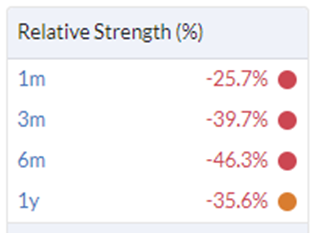
However, buying stocks that have suffered from a recent sell-off isn't necessarily a great strategy. Many of these will have sold off because something fundamentally has changed with the business. In a period of weak consumer and business sentiment, some companies will have fallen due to profit warnings rather than just tax-selling. For example, Oxford Metrics (LON:OMG) has fallen a whopping 40% over the last three months:
But a quick glance at the graph of brokers' consensus shows a massive multi-year profits warning:
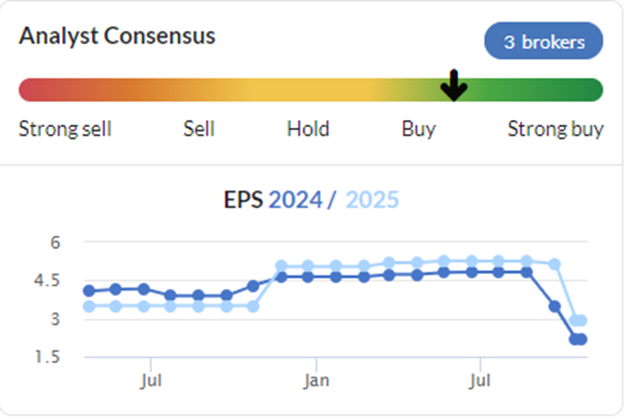
The company may be a good recovery play, especially given its large cash balance, but this is not the type of stock we are looking for here.
Thankfully, we can exclude this type of company by screening for companies where the broker's EPS consensus hasn't fallen:

Here, I have added a small margin that allows the EPS consensus to fall by a few percentage points. We don't want to exclude companies where a new broker forecast has been added or a small tweak has been made, but the company hasn't suffered from a profits warning.
Adding a lower market cap limit of £10m gives 55 stocks.

This shows how far-ranging the sell-off has been in certain stocks. However, I am going to apply another criterion to narrow the list. At the start of last year, I wrote an article about the idea of Surfing the StockRanks. The idea was that investors did their research and built up a position while quality companies were cheap and getting cheaper, then held as the value was outed and momentum took over, finally selling when the momentum started fading. Alex published an article on this topic yesterday. The key finding was that investors need to be quite quick to sell as the Momentum Rank drops. Just three months of a declining Momentum Rank and investors may be better off running for the exit. Plenty of investors may be holding on to these stocks due to the recent strong share price performance, and anything that reverses that momentum may lead to investors exiting and further weakness. Take, for example, High Flyer Oxford Instruments (LON:OXIG) . Recent selling here is causing the Momentum Rank to drop:
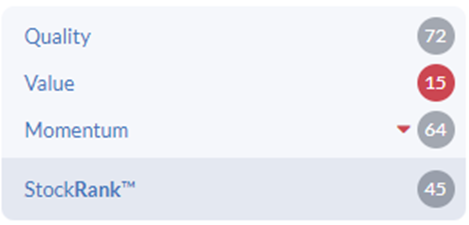
However, with a forward P/E of close to 20 and a 5-yr CAGR in EPS of just 10%, it will be quite some time before the Value Rank starts to provide some price support. In my screen, I exclude the losing StockRank styles together with the High Flyers who are most susceptible to momentum reversing:

This excludes some investor favourites, such as Warpaint London (LON:W7L) or Tristel (LON:TSTL) , which have fallen recently. However, these are rather unique times and avoiding stocks where an extended period of selling may attract more sellers seems wise. They are also stocks where many investors have made gains. If these are in taxable accounts, they are exactly the type of stocks anyone fearing a change to CGT rates will be taking profits before next week.
Finally, I am after bargains, and while this isn't a screen for the cheapest stocks, I do want to have a sense check that what I am researching may be undervalued. Hence, I look at stocks with a Value Rank above 60:

The Results
Here are the 26 results the screen currently generates, sorted by 3-month relative price fall:
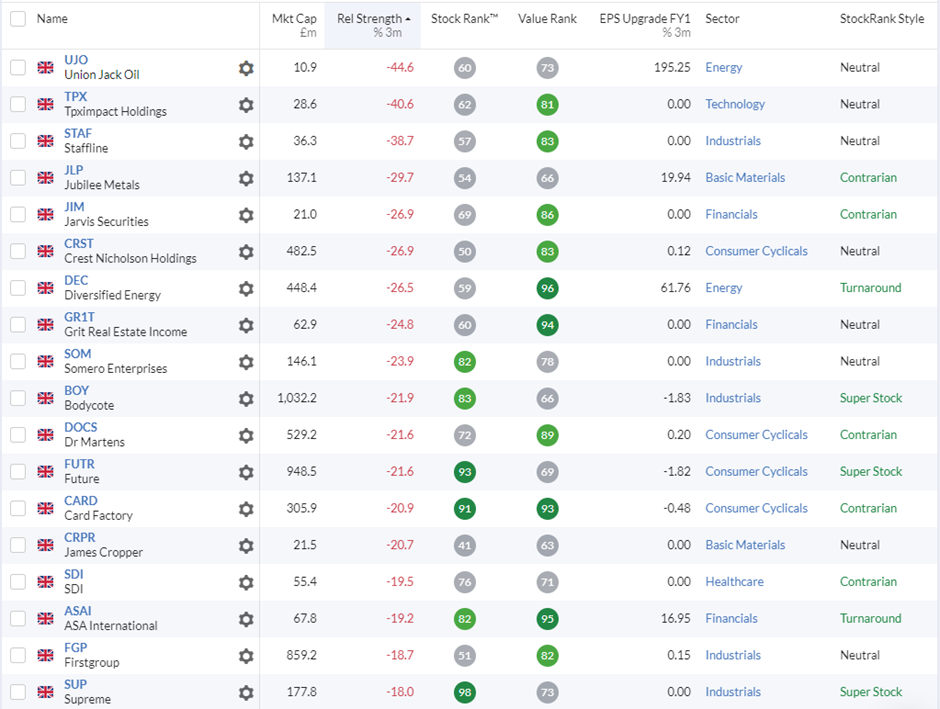
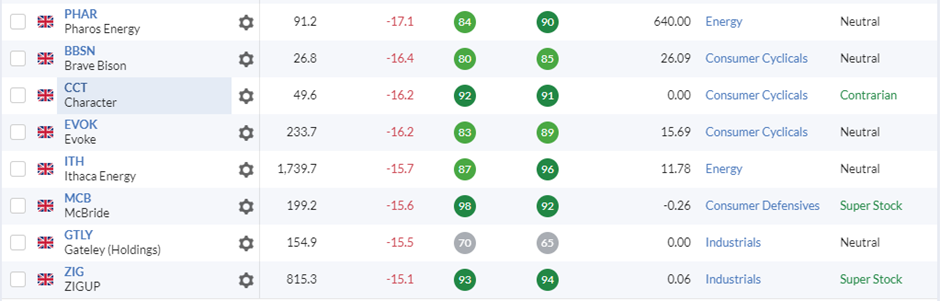
Investors may want to start researching some of these stocks to see if the recent sell-off has given a bargain. Here is a quick look at six of the most interesting situations to me:
Staffline (LON:STAF)
Blue-collar recruitment specialist Staffline has been one of the biggest fallers over the last few months:
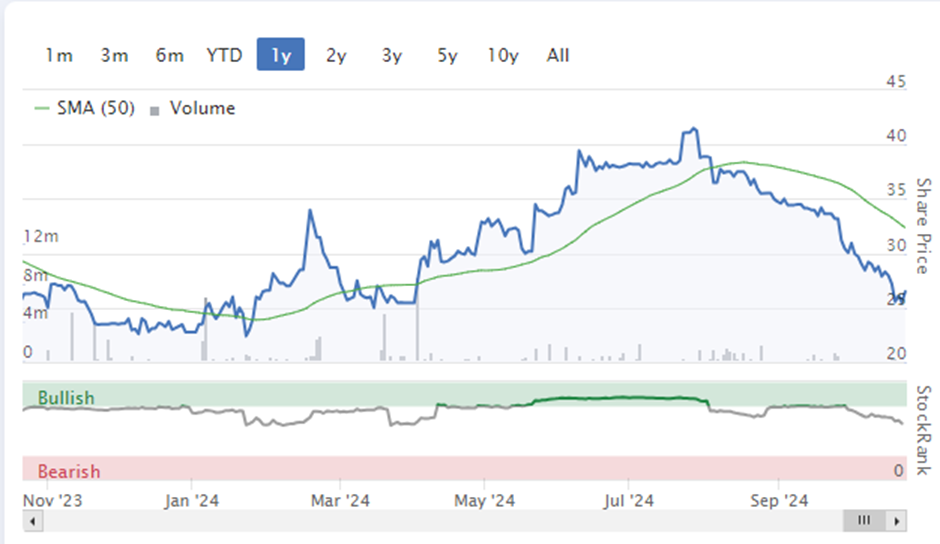
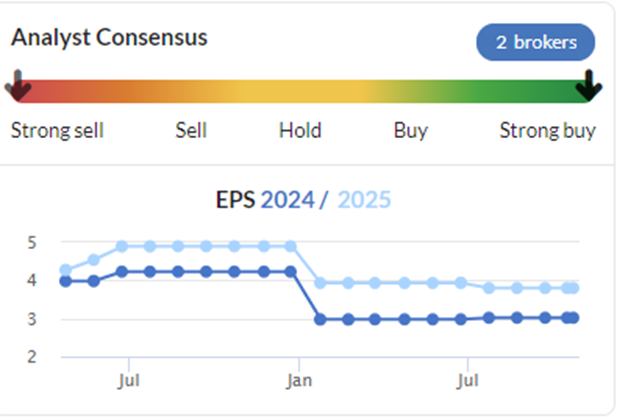
With an earnings downgrade in January, it could be argued that it was the bounce to the 40p level in July that was unwarranted rather than the recent sell-off:
Still, the P/E here is undemanding:
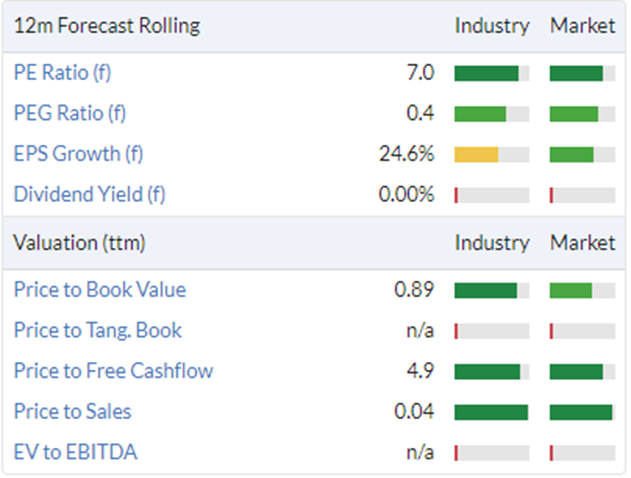
There is some debt, but the cash flow is also strong. Perhaps the most significant short-term risk is in the share register:
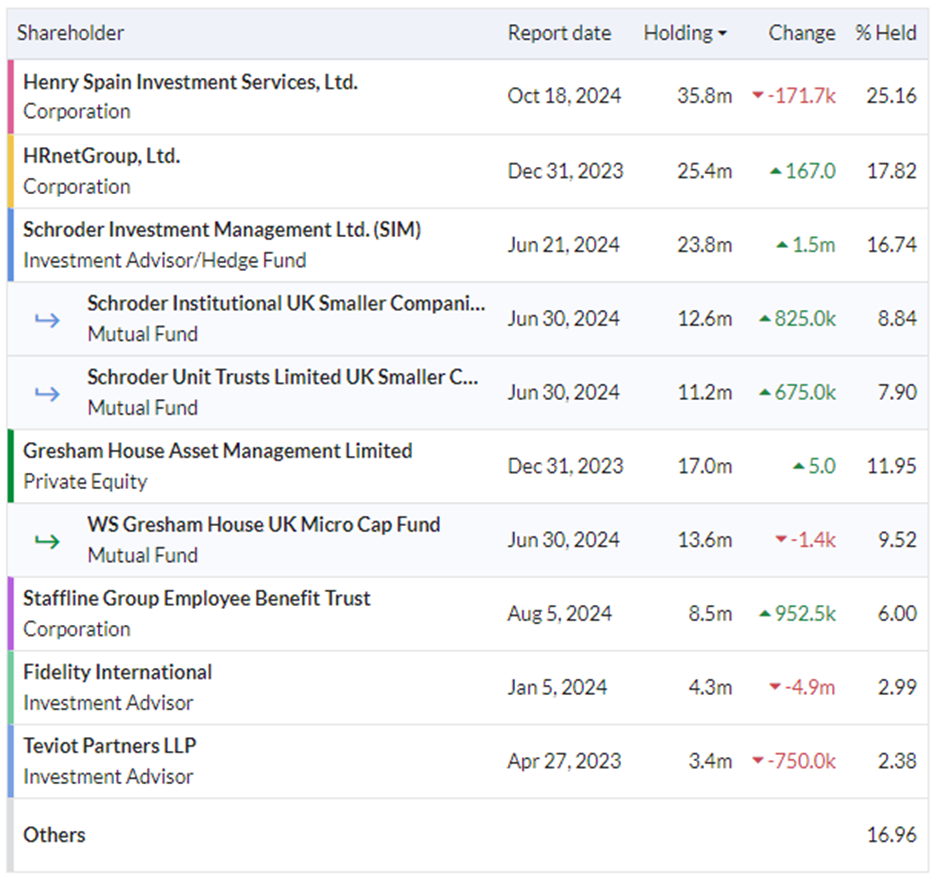
Henry Spain is a wealth manager whose products include IHT accounts. Hence, this could be a significant overhang if there are changes to Business Property Relief on AIM shares next week. Conversely, if rumoured changes here are not forthcoming, this could bounce in response.
Crest Nicholson Holdings (LON:CRST)
Crest Nicholson is a housebuilder, so it is unlikely to be held by AIM IHT funds due to uncertainty over whether property assets meet the regulations. Instead, the major fall is caused by the proposed takeover by Bellway falling through:
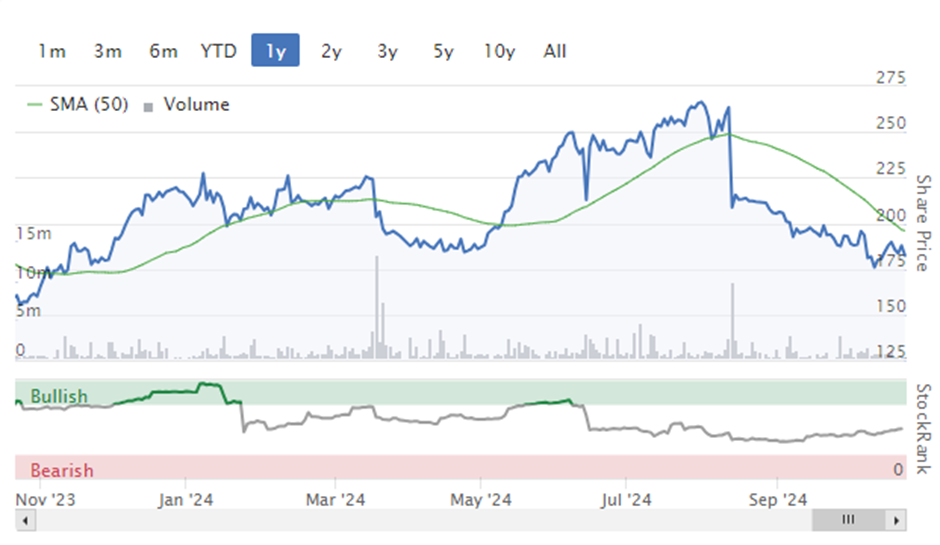
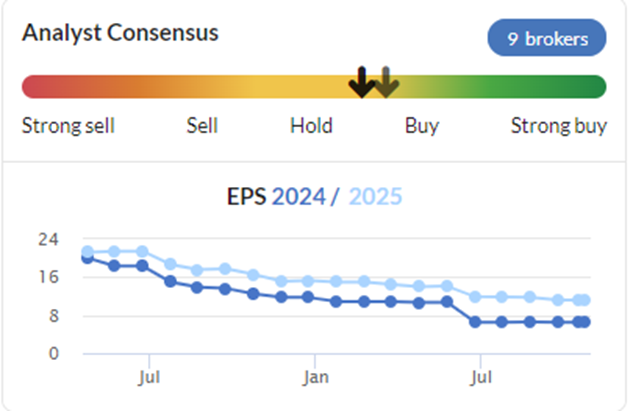
However, the shares have drifted since then and are not far off the November 2023 lows. This still doesn't make it cheap on earnings, with a forward P/E of around 20. However, the earnings trend appears to have bottomed:
Instead, the main attraction here is the discount to tangible book value:
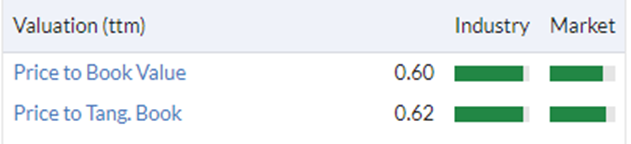
With most housebuilders now trading at a premium to TBV, this anomaly may attract further industry consolidation interest even if the Bellway approach did not lead to an offer.
Somero Enterprises (LON:SOM)
Somero is well known to Stockopedia subscribers. I wrote a StockPitch article back in 2022. It remains a cash-generative market leader with a high return on capital:
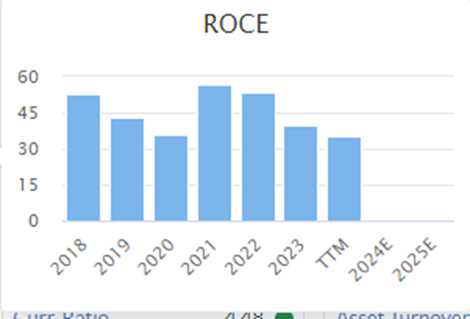
However, it hasn't been able to re-invest that capital at similar high rates, meaning that EPS is roughly the same as it was 5 years ago:
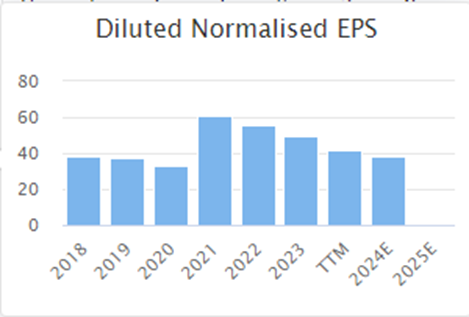
The flip side is that the company pays an excellent dividend, with a yield of around 7% at the moment. The company did warn on profits in July, but the share price didn't fall significantly then. This may be because many investors were already anticipating that trading may be a little weak. The company has always said it has a highly flexible cost base and their response in rapidly reducing costs has helped ameliorate the impact of this period of weaker sales. Somero is perhaps a victim of its popularity amongst individual investors, and the share price has actually been weaker in the last three months than it was after the profits warning. Many will also only hold in a SIPP where dividends are not subject to US withholding taxes, meaning that the risk of pension lump sum changes may weigh on the stock. That popularity can go both ways, and it is a company that may be high up investors' lists when capital flows back into the UK small cap market. In the long term, the risk remains that they are complacent concerning the positioning of their core products, and a competitor erodes their high market share. Their innovations outside their core market have also been slow to gain traction. This may be due to slow uptake in a conservative industry or a lack of demand for these innovations. However, it would only take one of these new products to become the industry standard for the company to return to growth and re-rate.
Future (LON:FUTR)
Looking at the share price graph of Future, investors would assume that the company had beaten expectations in May this year and warned this month:
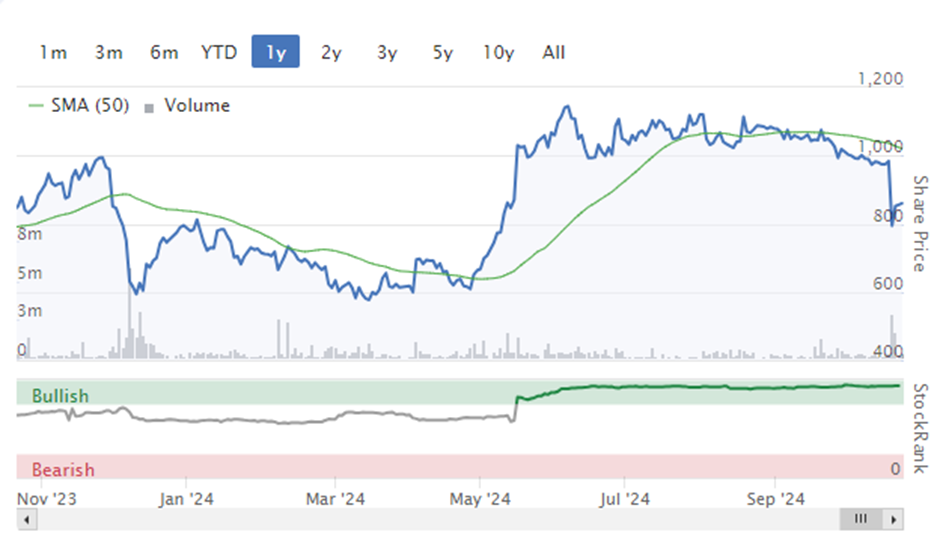
However, neither is the case:
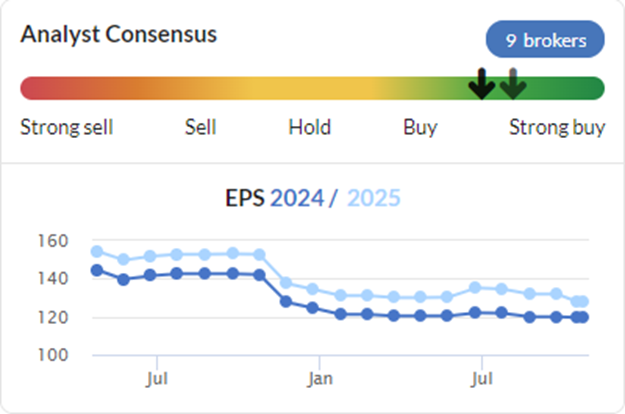
The rise in May was due to an upbeat H2 outlook. The shares were on a P/E of 6 at the time, and the market was pricing in a further warning that didn't come. Combined with the announcement of a share buyback, this led to a significant re-rating. The share price fall was caused by this announcement:
Jon Steinberg, Chief Executive Officer, has informed the Board of his decision to step down from the Board later next year to relocate back to the US with his family. Jon's notice period is twelve months and the Board will now launch a search for his successor.
The market often worries when senior board members resign, expecting that they are anticipating bad news. However, this relationship is far from absolute, and in this case, the usual warning signs aren't present. He is leaving for a good reason, he is working his long notice period, and he is thanked. As such, the 22% fall in the share price over the last 3 months looks like a significant over-reaction, particularly as the forward P/E is back down to around 7:

There are a couple of things that may worry investors - there is some debt, meaning that the buyback is funded out of debt not cash and the balance sheet isn't particularly strong:
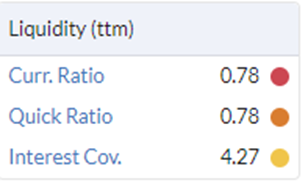
However, the share price will surely bounce if the next set of results due on 5 December don't show any nasties and confirm that the CEO is leaving for personal reasons only.
Card Factory (LON:CARD)
I looked at Card Factory when I wrote about Charles Kirkpatrick's methods. At the time, I was a little cautious; the shares looked cheap but had risen 40% on no news, suggesting that short-term momentum traders were buying it. Such money is often quick to enter and quick to leave, as the chart reveals:
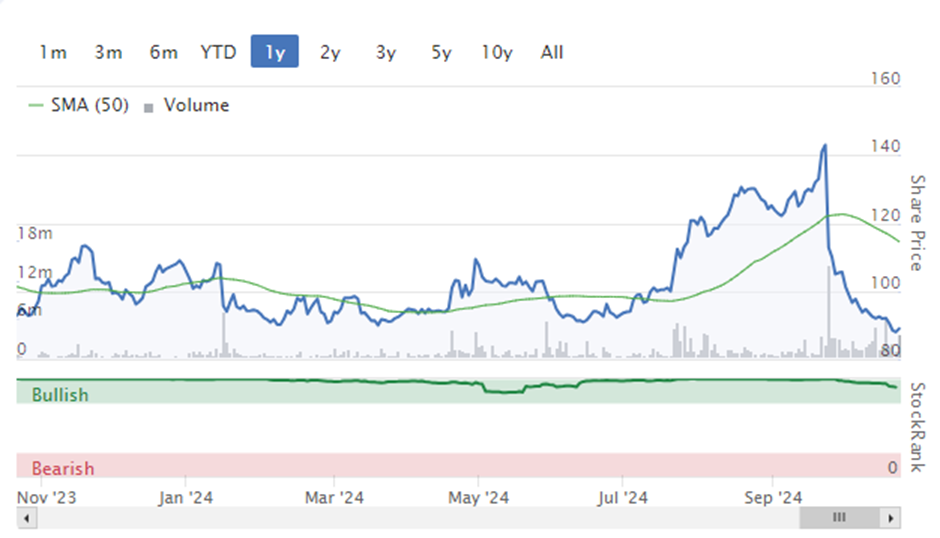
It was the Interim Results that precipitated the fall. Although the company said:
Albeit we are yet to trade through the key Christmas period, the strong topline performance in the first half, combined with our robust actions to mitigate inflationary pressures, means that our expectations for the full year are unchanged.
However, the H1 results were so poor, with adjusted EPS down 38%, that the market simply doesn't believe them. This leaves investors in a bit of a dilemma. If they hit those forecasts, then the shares look cheap on a P/E of 6 and a 6% yield. However, it would be naïve to think that the share price won't be hit further if a profits warning does arrive, and this looks like the most likely outcome. At some point, though, this may get so cheap that it is all in the price anyway.
Character (LON:CCT)
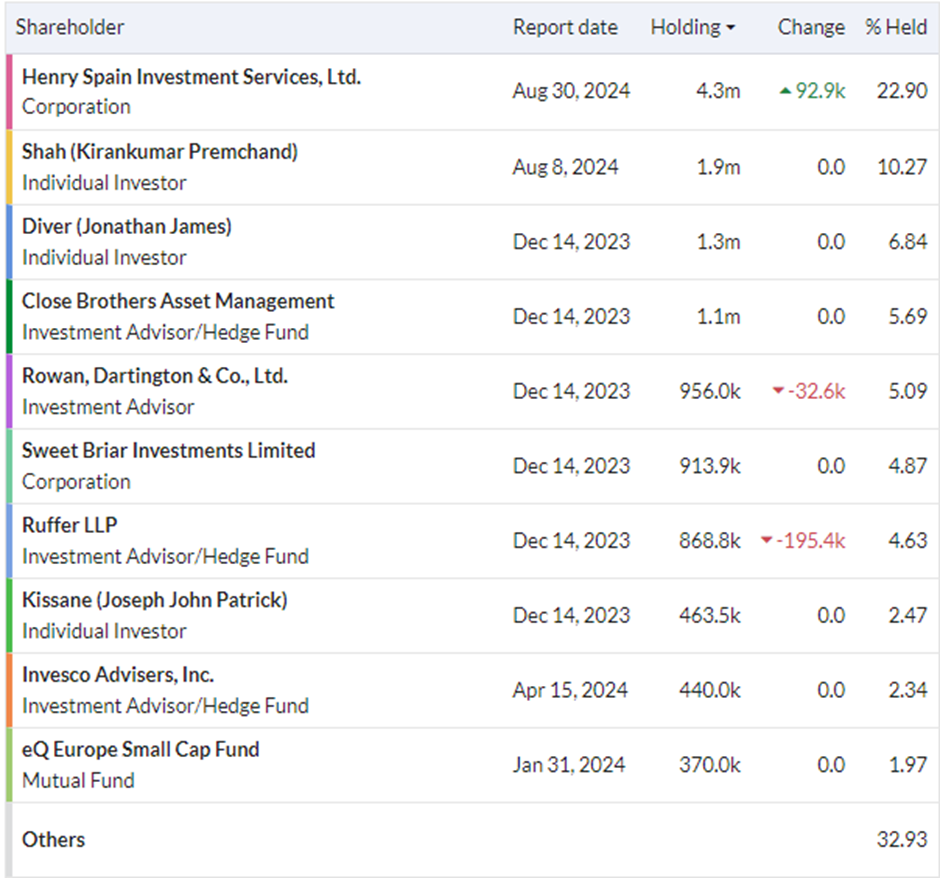
Toy maker Character suffers from the same risk as Staffline, namely that its largest holder is Henry Spain and, therefore, is likely held in IHT accounts at that wealth manager:
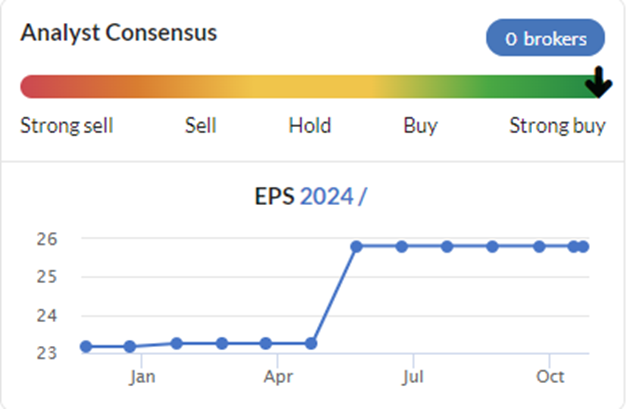
In other respects, the shares look like an interesting opportunity. Brokers upgraded expectations in May this year:
Which led to a jump in the share price:
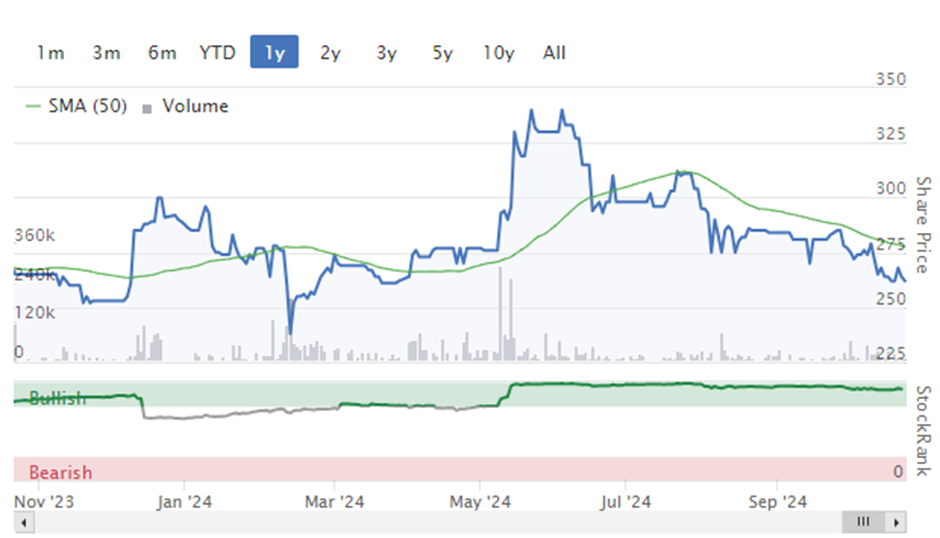
That trading for the year to 31 August is in line with these upgrades was confirmed at the start of this month:
Whilst the market has continued to experience external challenging conditions, such as the higher cost of living, the surge in freight costs and shipping delays due to reduced capacity, the Group has continued to perform well and expects its adjusted profit before tax for the financial year ended 31 August 2024 to be in line with current market expectations. Initial sales of products for the Christmas '24 season are showing encouraging signs, especially new introductions. Previews of our 2025 new ranges are also going well.
However, since then, all of those share price gains have been eroded, and the shares have fallen by 16% in the last three months. A forward P/E of 10 is perhaps not the cheapest stock, but earnings remain depressed versus historical norms. There was £12m of cash on 31 January, and although this is a seasonal peak and the company has since spent £2m on buybacks, there remains scope for the buyback to be extended after they announce results on 10 December.
Conclusion
None of the recent fallers is without risk, and the market may well be right to be cautious, given the impact of possible tax changes on smaller companies. However, many companies have fallen to a level where they look interesting and any further tax-related selling over the next week may make them great bargains. Long-term investors almost always do best by focusing on valuation, and this is unlikely to be changed by anything in the upcoming budget.
Disclosure: Mark owns shares in Future (LON:FUTR) Oxford Metrics (LON:OMG) ]
Disclaimer
This is not financial advice. Our content is intended to be used and must be used for information and education purposes only. Please read our disclaimer and terms and conditions to understand our obligations.

7 comments
Mark can I flag one that I think you might like which is bordering on the 20% drop at the moment - Frp Advisory (LON:FRP) . Right before the Election announcement it hit 144p, dropped to 120p, bounced to 154p and is currently at 124.5p.
AIM share so could go lower depending on Wednesday's budget but I love the high margins, increasing analyst estimates for EPS growth, reasonable fPE at 11.7 to March, 4%+ divi well covered, net cash and steady M&A programme. Recently announced their 4th acquisition this calendar year.
Or you could look at Paul’s and Graham’s green rated shares that have fallen by 10% or more over the past 3 months…..
Full spreadsheet is available here…
https://docs.google.com/spread...
Good to have some further ideas. Thanks for sharing. I think we have to consider this as an additional list though, because the colour rating has an element of personal judgement in it, and each investor may come to a slightly different conclusion to Paul/Graham.
The other thing is that the list you share is from when the company was reviewed by the SCVR, not the three-month return. In fact, if we use Google Sheets, we may as well go for the day before the election, which is called on 22nd May. Here is the list of companies falling more than 10% since then that were rated green by the SCVR:
I would note that several of these, e.g. Hunting (LON:HTG) or VP (LON:VP.) have had profits warnings during this time, so again, this is a good list to add to the mix but perhaps not a list to buy simply due to the price falls since the election was called.
If the idea holds that some of the selling has been selling down ahead of the budget is to lock in the current CGT rate. And if there are concerns of further selling of AIM shares because of BPR changes after the budget, would it be possibly be sensible, if acting on the thesis, to focus on small main listed shares which may have sold down for CGT purposes ahead of the budget? And then revisit AIM shares after the budget and the BPR position is clearer. Obvs you could miss out on a bigger bounce in the AIM shares if they are already pricing in BPR changes that do not materialise
On the value rank. Would it be an idea to screen for those that are currently at a lower value rank but with high Quality rank so that next week you have a shortlist of Quality that may fallen into a more valuable range if there is indeed a mass budget sell off?
Nice to see Ithaca Energy (LON:ITH) on the list I hold due to 400million$ dividend this year and next and cost savings to be found due to its merger with eni, tiny free float of 10%.
Crest Nicholson Holdings (LON:CRST) ( I hold)
I have recently started buying Crest again. I tend to be very active in the building sector and have been since 1989! Crest has been beset by a few problems, historic crap management, some poor projects which has led to current management putting provisions through three times, downturn in market, cladding provisions chatter. As a result its generally been a very poor relative performer but has provided some excellent trading opportunities.
At this price it is trading at a gigantic discount to NAV. Unless something is wrong with their NAV (NAVS aren't complex here)then this usually gets resolved through a takeout. Why did Bellway not proceed as I think this has freaked the market out. I was surprised Bellway even bid as they are historically an extremely good but extremely conservative housebuilder. Ultimately I suspect their inherent conservatism held sway.
Crest insist provisions are done but the market needs to see a set of results that confirms this. Persimmon were the frontrunner for Cala homes( Legals home building business), Ultimately private equity paid 1.2-1.3x NAV, Persimmon were interested at 1xNAV.
Housebuilders have been a tremendous trade from the depressed NAVS of recent history. Considering none have/had distressed balance sheets, there has been no weakening in land prices which has made this cycle somewhat strange. Crest is sticking out like a sore thumb. NAV is around 330p vs a current price of 185p. If I was offered a slightly pokey £1m house for £565K, I'd probably think I had a chance of making some decent money. It's a cheaply priced option imo, not without risk as ever,but risk reward heavily skewed in my favour relative to other names in the sector.