Finding bargains using Charles Kirkpatrick's methods

Continuing our summer theme of looking at some of the Guru Screens, I was intrigued by the Charles Kirkpatrick Bargain Shares screen. This is based on a rather interesting finding that Kirkpatrick wrote up in his book Beat the Market, which is something I'd not come across before. He found that when combined with a measure of price strength, stocks tended to outperform if their relative price-to-sales ratio fell between the 17th and 42nd percentiles in terms of cheapness.
This is how this would be implemented in the Stockopedia Screening Tool:

Kirkpatrick doesn't explain why but simply says it was the best-performing range in his backtests. This is an unusual result because a lot of the academic studies on Price-to-Sales show data similar to this, taken from James O'Shaughnessy's What Works on Wall Street, which Kirkpatrick references:
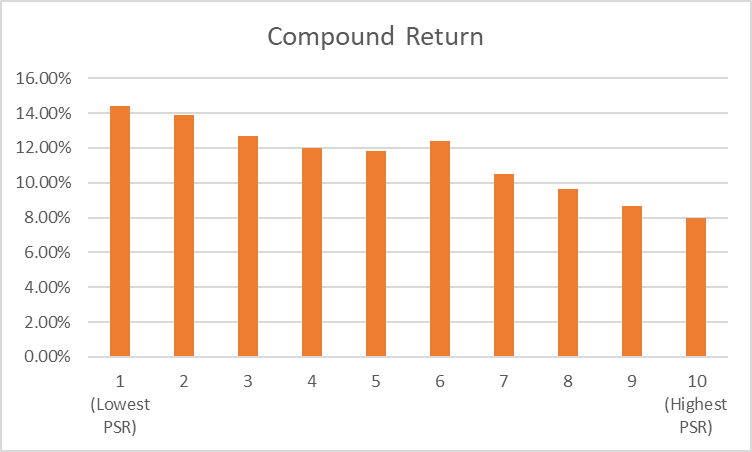
However, if I estimate the Sharpe Ratio for the same data using a 5% risk-free rate, I get a slightly different picture. (The Sharpe Ratio is a measure of the excess return per unit of volatility and recognises that investors typically prefer a less volatile path of returns.)
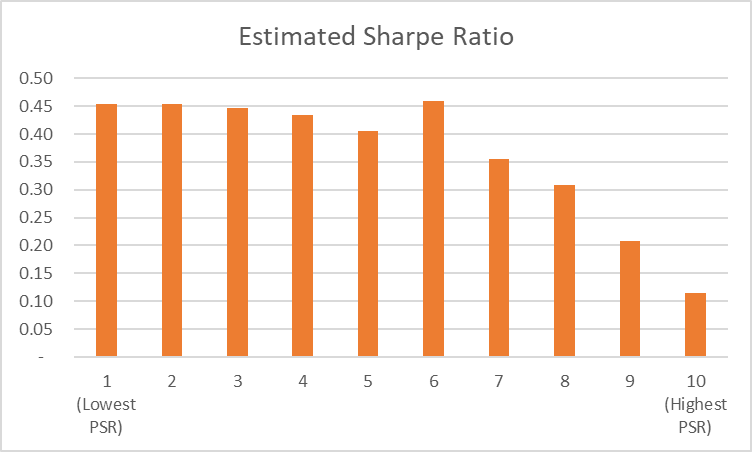
The highest 40% of stocks, as measured by price-to-sales, seem to perform poorly, but the outperformance of the lowest decile comes at the cost of higher volatility. While Kirkpatrick's precision in recommending the 17-42nd percentile is probably due to data mining, it is easy to see why the middle price-to-sales deciles could be a fertile hunting ground when combined with other factors. For this, Kirkpatrick used a simple moving average test to find the bargain stocks that were moving in the right direction:

The original screen looks at companies with a market cap greater than £200m. The long-term performance of this screen is a little mixed. It seems to go through stages of being a very strong performer but gives back those gains during periods of market turmoil.
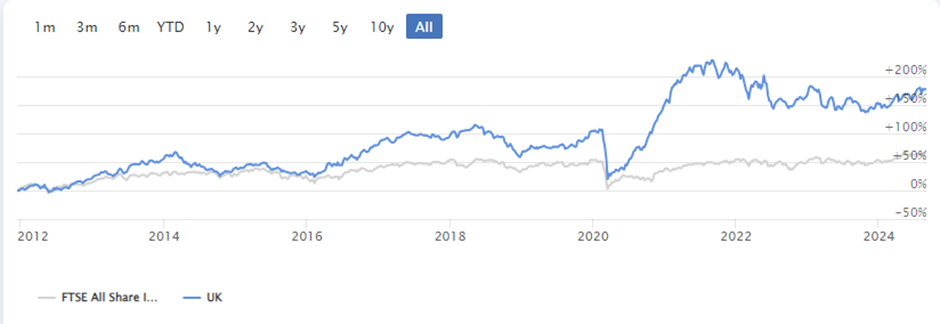
The interesting thing is that it has been one of the better-performing bargain Guru Screens in 2024, so we may well be entering one of the periods where this type of stock significantly outperforms the market.
As is my way, I like to create a copy of a Guru screen and make my own modifications.

Firstly, I am happy to reduce the lower market cap limit down to the £100m level, and I add in an upper market cap limit as I find larger companies difficult to analyse:

Secondly, I include a few more criteria that I think add value here. For example, I want to look at shares with a primary listing in the UK.

Finally, I include a couple of "Value" sense checks, such as a reasonable Value Rank and a sensible gearing level:

The Results
My modified screen currently generates 12 hits:
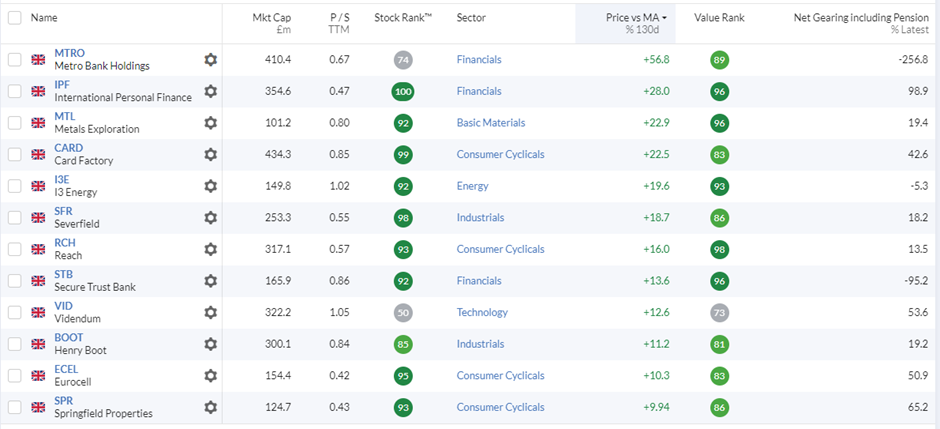
Metals Exploration (LON:MTL) I looked at as part of the Neglected Bargains Screen. I covered Reach (LON:RCH) briefly when competitor National World (LON:NWOR) came up on the same screen. It is hard to argue that Reach (LON:RCH) is good value while National World (LON:NWOR) remains at a significant discount. I3 Energy (LON:I3E) has received a recommended takeover offer, so it is unlikely to provide an opportunity for anyone apart from arbitrageurs. Let's go through the rest to see if they are worthy of further research:
The Shares
Metro Bank Holdings (LON:MTRO)
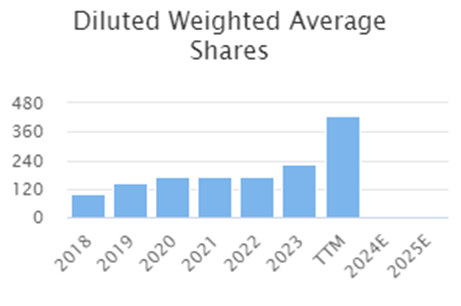
Metro Bank got itself in trouble last year by being undercapitalised. Leading to a capital raising, as can be seen by the share count:
Plus, they have been selling off parts of their retail mortgage book in order to reduce capital requirements.
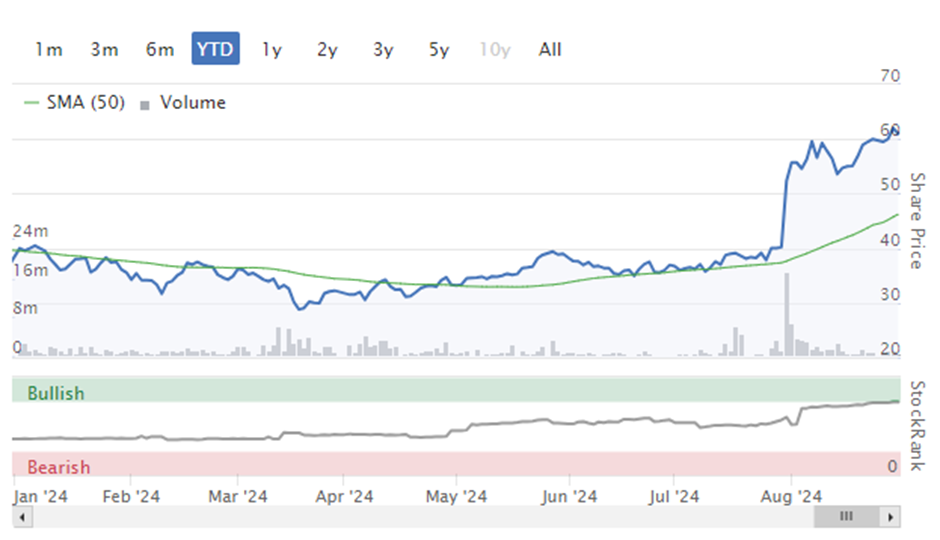
The company said that they had managed to become profitable again in Q4, which has led to a partial recovery in the share price:
And they trade at a big discount to TBV:

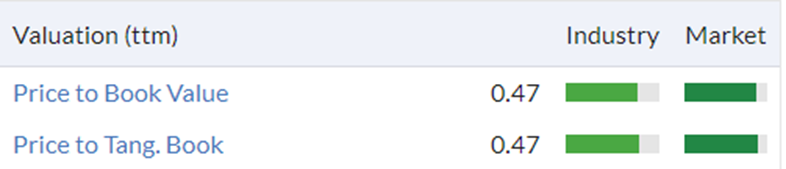
Although I am not a banking sector expert, I can't help thinking that Barclays (LON:BARC) or Secure Trust Bank (LON:STB), both on a P/B of 0.47, have a much better record of managing risk, better profitability and a similar upside if things go well.
International Personal Finance (LON:IPF)
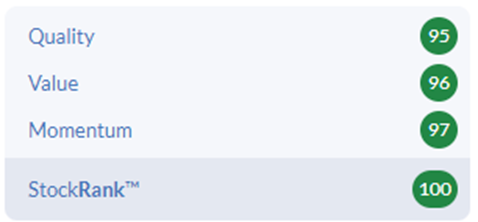
International Personal Finance has the honour of being the highest-ranked superstock at the moment, with great scores in each of the QVM factors:
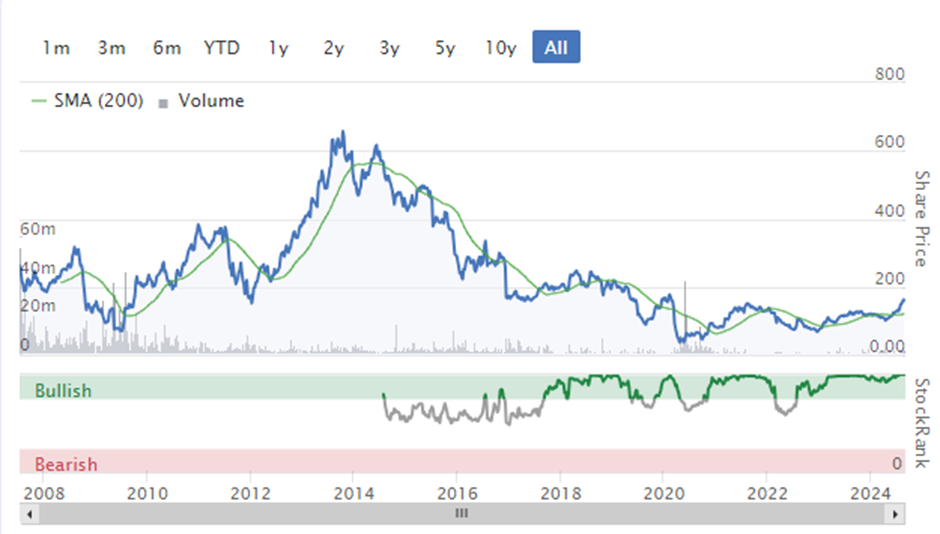
While I am a big believer that no company is always great or terrible, it is worth the reminder that this company is the international arm of Provident Financial, which was demerged in 2007. While IPF hasn't suffered from the same regulatory issues as Provident, its long-term performance has been rather mediocre:
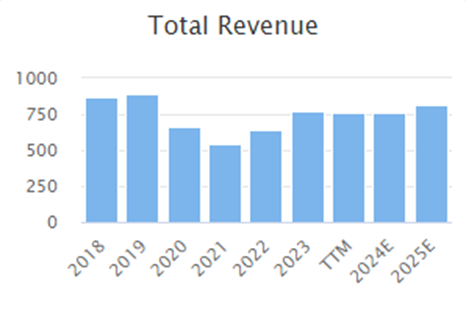
As a non-sector expert, I find it hard to see what has driven the strong performance this year. Revenue is largely flat over the long term:
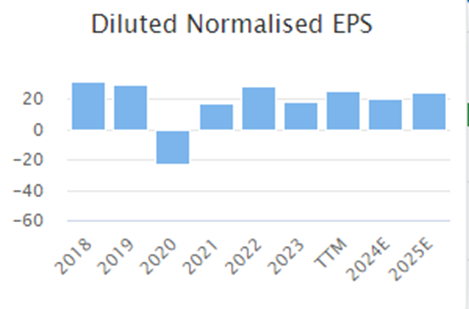
As is EPS:
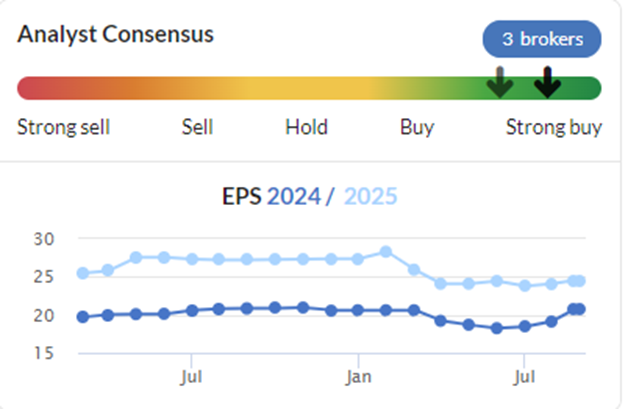
The broker forecasts show some recovery but still stand at a similar level or below where they started the year:
The high Quality Rank is driven primarily by the Piotroski score:
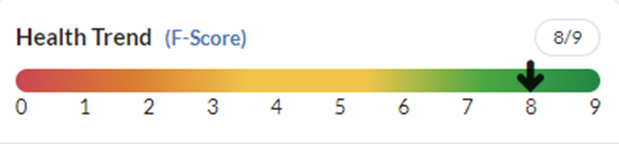
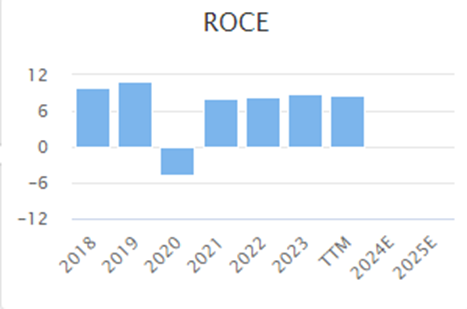
While this means that the company has improving trends, the size of the improvements is quite small. Other measures of quality, such as ROCE, are consistently pedestrian:
There is a decent dividend which may attract income investors:

And a discount to TBV:
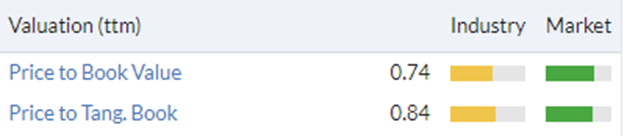
But nothing that stands out compared to other financial stocks. I am afraid I am going to disagree with the algorithms on this one!
Card Factory (LON:CARD)
I wrote a StockPitch article on Card Factory about a year ago. I concluded that the stock would appeal to Trending Value investors but to be wary of any deterioration in trading as the company was less robust than it may first appear. Since then, the stock has performed well, gaining around 25%. However, all of that gain appears to have come in the last month or so:
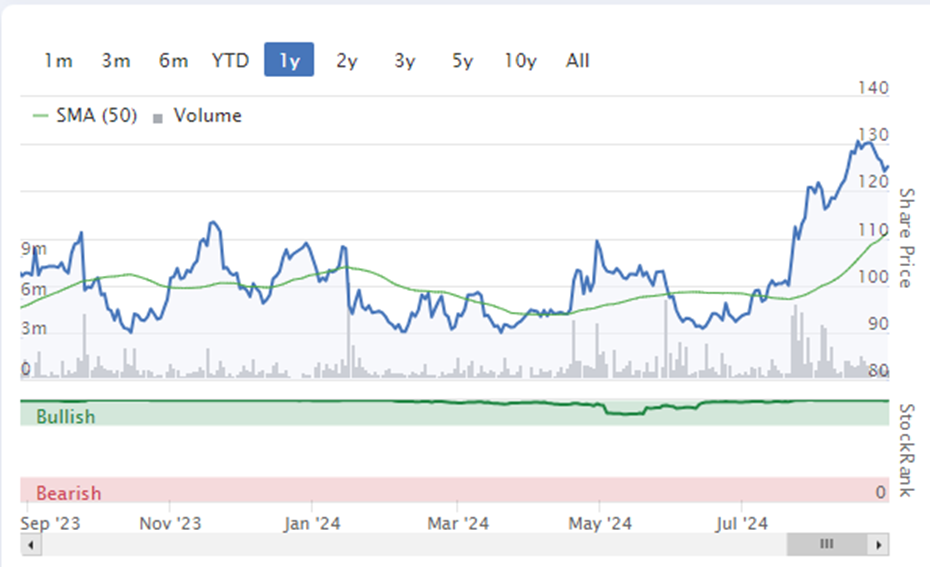
This appears to be a bit of a mystery as no material news has appeared in this time. This makes me a little wary – such short-term price rises tend to mean a revert. This may be to do with the previous large holder, Teleios, selling out and an overhang clearing. However, such hedge funds tend to be smart money, and buying what they sell can be risky.
Still, the medium-term trends seem positive, with small upgrades to forecasts:
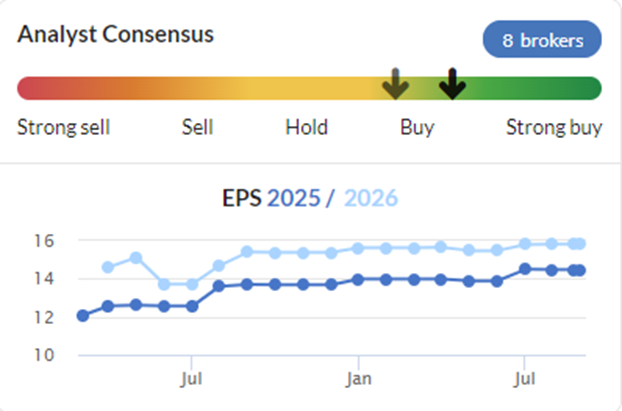
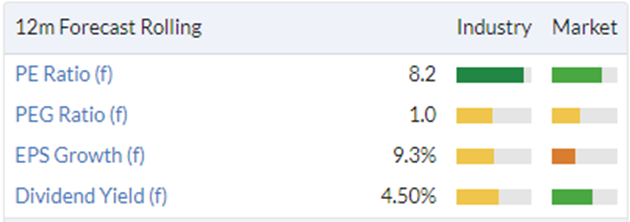
And it is not expensive:
Some of the concerns I had when writing up last year's StockPitch have also proven unfounded. Their leases are no longer proving onerous (according to their accounting model), and their negative working capital position is moderating. So this could be a good opportunity, especially if the recent froth in the share price subsides.
Severfield (LON:SFR)
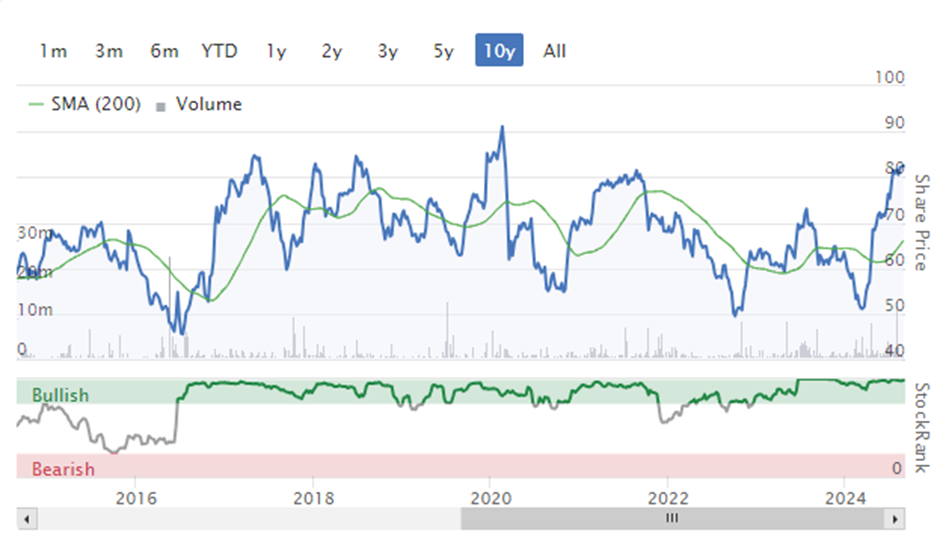
Structural Steel manufacturing tends to be a boring and cyclical business, as the Severfield long-term chart attests:
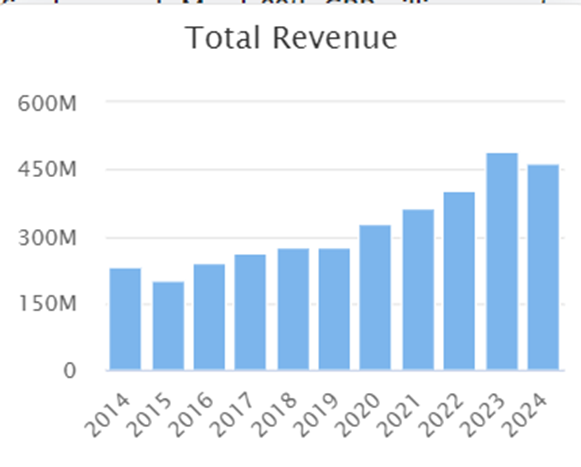
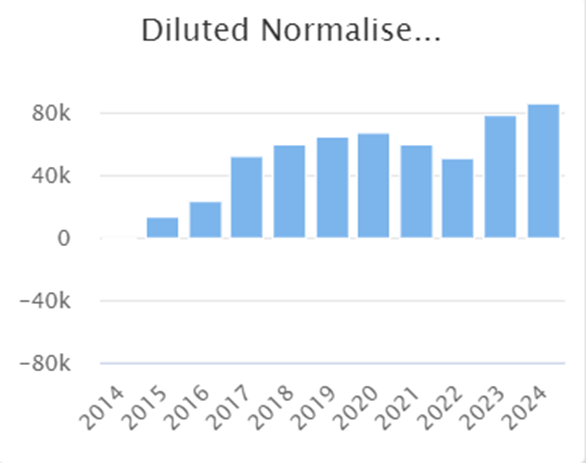
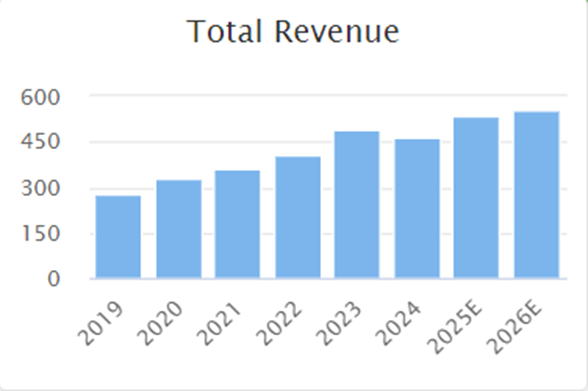
But despite the range-bound chart, the company has doubled sales and transformed profitability over the last decade:
EPS is forecast to grow further:
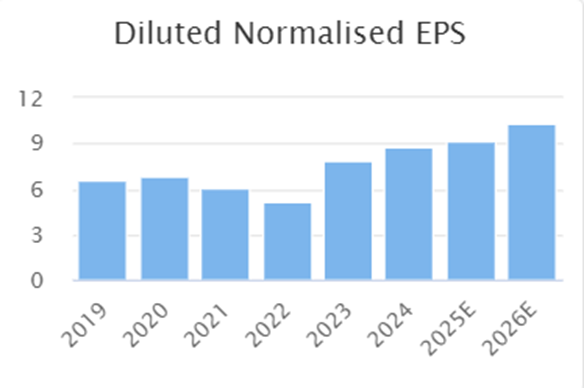
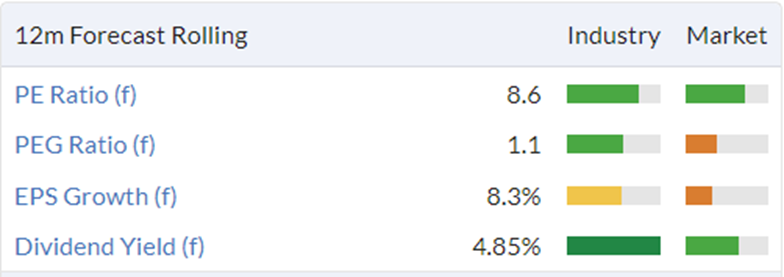
Which leaves the company on a very modest rating:
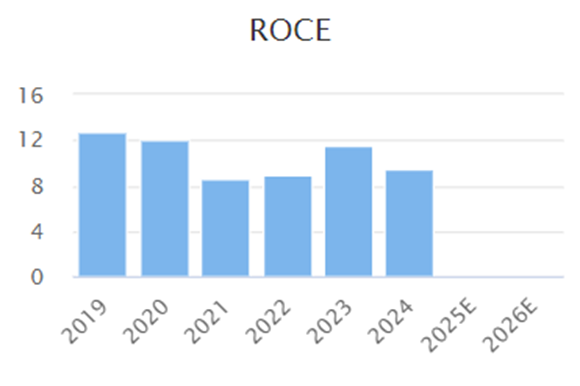
The return on capital isn't particularly impressive, especially compared to Billington Holdings (LON:BILN) that I reviewed as part of the Neglected Bargains screen, and must be close to their cost of capital:
However, there are signs that this reflects past capital expenditure and that the return on incremental capital is much higher at the moment. For example, the company has grown without issuing shares, pays a decent growing dividend, and sales have increased 68% between FY19-FY24:
This is despite capex being modest over this period:
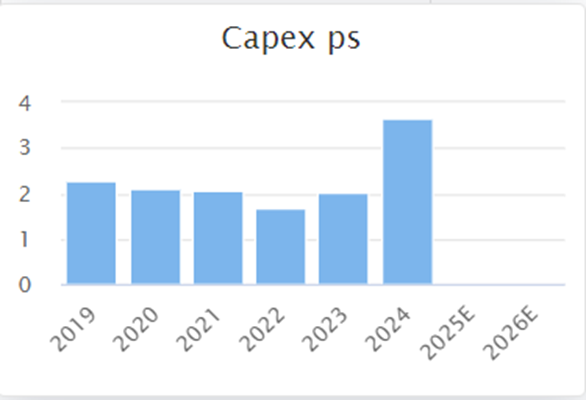
Which means that the company has generated free cash flow in most years despite funding this growth:
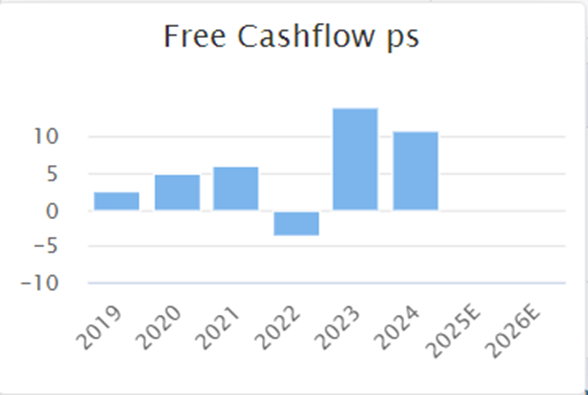
This is another company that won't shoot the lights out, but it is surely too cheap given its long-term history and current positive trading momentum.
Secure Trust Bank (LON:STB)
Secure Trust is a Bank specialising in lending against commercial property, trade receivables and vehicles. The company has done well, consistently increasing revenue and Book Value over the last few years:
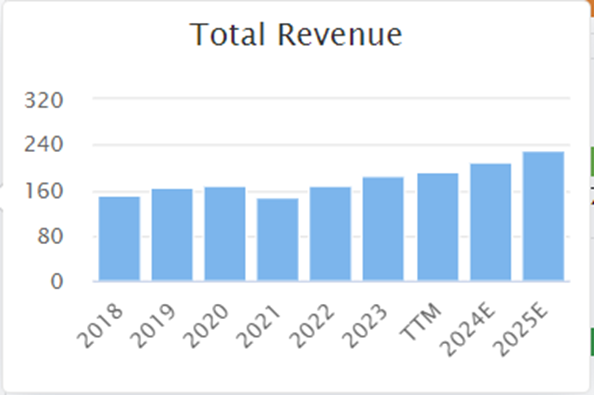
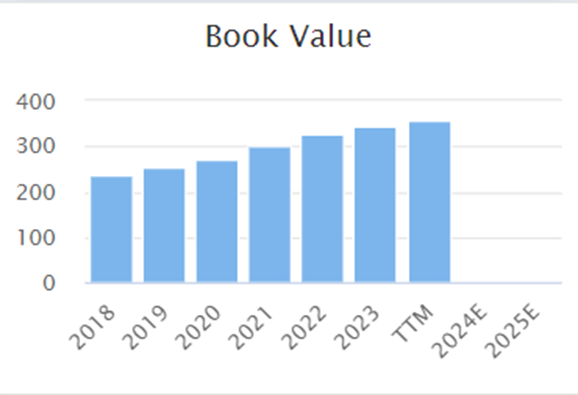
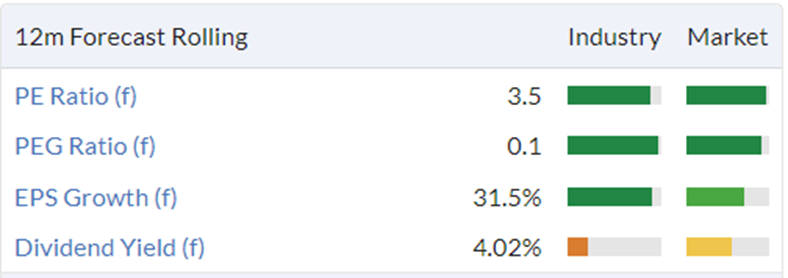
As many of us learnt to our cost in the Great Financial Crisis, strong earnings alone are not a good reason to invest in banks. However, the numbers here, apart from the dividend yield, are great:
More importantly for owning a bank, a big discount to Book Value:
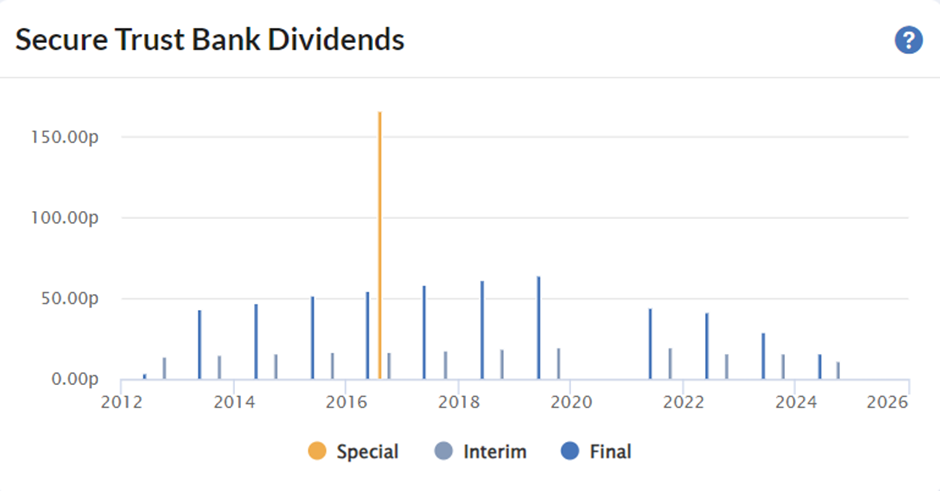
The dividend history isn't perhaps what investors would like to see, as it has been declining since 2020:
This appears to be the company's policy:
This is in line with the Group policy to return 25% of earnings to shareholders. The Board has decided to move to a progressive dividend policy for the 2024 financial year, reflecting feedback from shareholders.
Presumably, the strategy that larger shareholders prefer is strong growth, which requires them to retain capital. The forecast earnings growth for the next two years is certainly impressive:

With the caveat that I am not a banking analyst, the capital ratios look reasonable, but not with a huge amount of leeway that they could grow and pay a market-leading dividend:

For example, Osb (LON:OSB) has a CET 1 ratio of 16.2% and pays a 9% dividend. There are some regulatory headwinds for Secure Trust that may require them to retain capital:
As highlighted in our pre-close trading update, during H2 2023 we engaged in formal discussions with the FCA about our collections processes, procedures and policies following its Borrowers in Financial Difficulty review across the industry. This activity has resulted in the recognition of a provision for costs including any redress required of £4.7 million. This has been treated as an exceptional item along with corporate activity costs of £1.8 million.
However, in general Secure Trust looks good value for those who want a bank that is focused on growth rather than simply paying out profits as dividends.
Videndum (LON:VID)
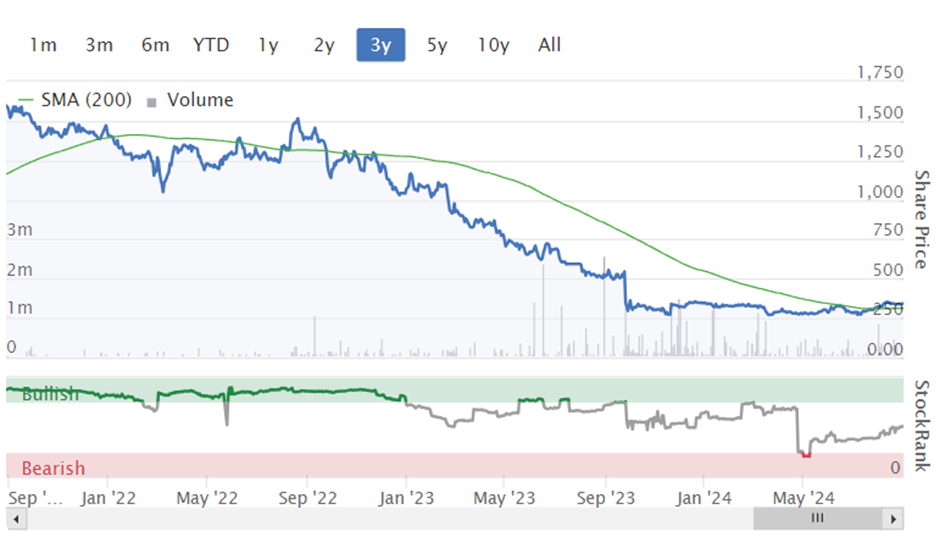
As the logo on the StockReport handily reminds us, Videndum is the new name for Vitec, the provider of hardware and software solutions for the content creation market. The three-year chart shows a tale of woe:
Caused by an even more precipitous fall in EPS forecasts:
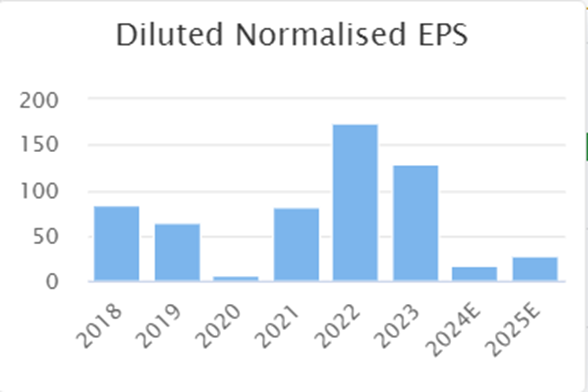
Although 2024 EPS was always forecast to fall, the real damage was done at the end of last year:
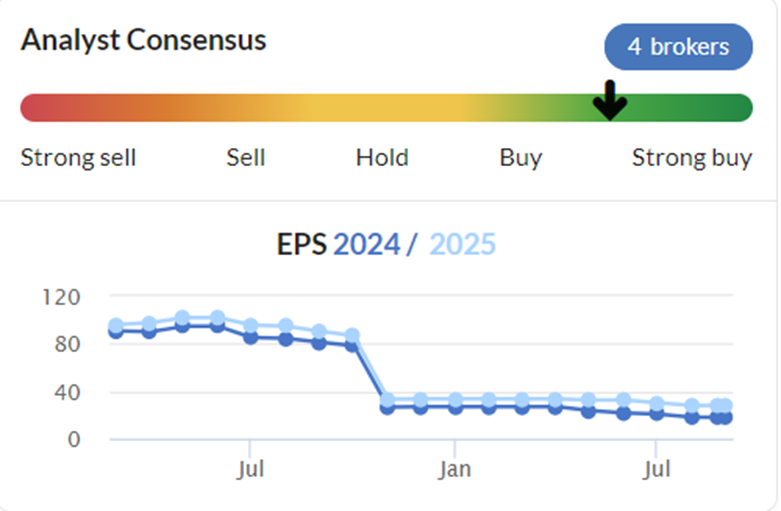
In their 23H1 results, they said:
The Group is also experiencing significantly more impact from the strikes in H2 2023 than anticipated at the time of our May Update. This is due to the prolonged writers' strike, the additional impact of the actors' strike, and the fact that there is less time for a recovery in the current year. Additionally, the macroeconomic environment remains challenging. We are not yet seeing recovery in the consumer or ICC segments, and retailers are increasingly concerned about interest rates and working capital, and we are therefore still seeing some destocking. This is resulting in worse-than-expected trading conditions.
They also flagged that they were under-capitalised and likely to raise money from the market, which they did at 267p in November 2023. The effect of this was to almost double the share count, which now stands at 94.2m shares.
When faced with this level of variability in earnings, the near-term forecasts are perhaps not the best way to value such a business, which doesn't look particularly cheap:
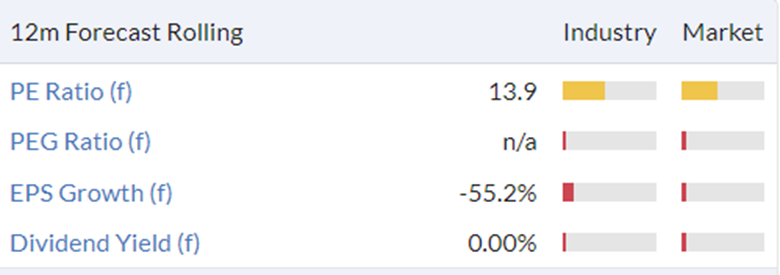
It is tempting to think that a return to c.80p EPS is inevitable, and that makes the current share price cheap. However, that misses that there has been significant dilution. Using operating figures, the highest profit was generated in 2022 at £48.2m:
The market cap is around £325m, and the latest trading statement puts net debt at £118m, giving an Enterprise Value of £443m. So, this is 9.2x EV/EBIT on the all-time high EBIT. This is not particularly cheap, and even if it was, it would take several years for the company to recover and reach previous peak trading. It seems that the market has already priced in a very significant recovery in trading in the future years, which may or may not happen.
Henry Boot (LON:BOOT)
Although Henry Boot is a construction company and a housebuilder, the main attraction for investors is its land development arm. It is a specialist in purchasing land for housebuilding and getting planning permission to develop that land. As such, the most interesting metric here is P/TBV:

This discount isn't out of the ordinary for property companies at the moment. However, there is one interesting feature here: the land is held on the balance sheet at purchase cost. Even when planning permission has been secured, as they currently have for around 8,500 plots, the book value isn't written up until the plot is sold. Quite reasonably, this has meant that the company has often traded at a premium to TBV to reflect that hidden value.
The new government housing targets have the potential to disrupt this market, particularly if planning regulations are changed so that it is easier to get planning permission. This may mean that plots that have already secured planning permission are not worth as much. This would impact Henry Boot's 8.5k of plots that are secured but not sold. However, such relaxation would also positively impact at least the pace of conversion of the roughly 90k of plots where the company don't currently have planning permission. Even if the uplift on receiving permission is lower than in the past, with plots in the book at cost value, it is hard to lose buying below TBV.
This means that in any reasonably consistent housebuilding boom, the Henry Boot share price should trade 50% or so higher to reflect the deserved premium in those conditions. The biggest question seems to be over the timing of any such re-rating.
Eurocell (LON:ECEL)
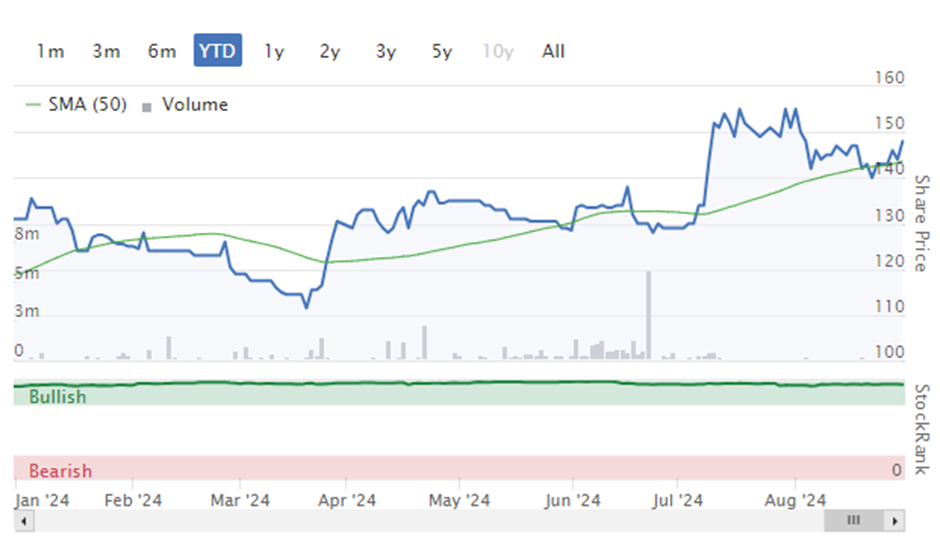
While many housebuilders have significantly re-rated in 2024 on the expectation that the new government will drive growth in the sector, housebuilding products suppliers, such as Eurocell have seen a far more modest response:
Meaning this is also much more cheaply rated than many housebuilders:
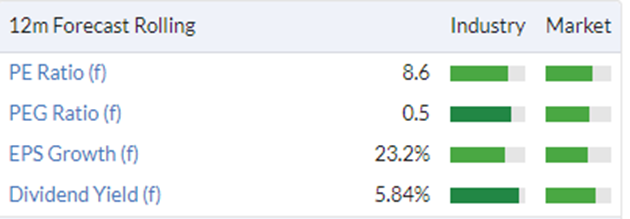
The share price largely tracks the earnings forecasts, which were estimated to return to previous highs in 2025 before being cut. The trend appears to be reversing, but EPS is still some way off that level:
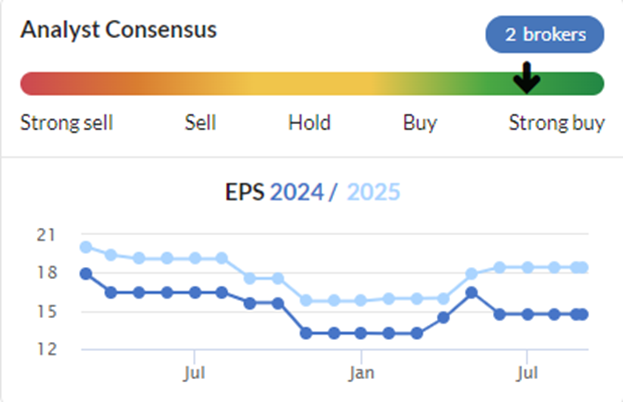
This is a cyclical stock and is unlikely to suddenly become a high-growth company. However, there is scope for further recovery in earnings:
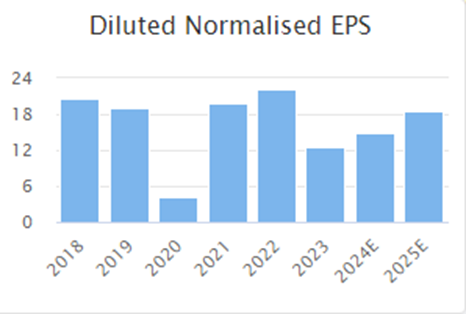
This morning's results show a decline in sales but a decent increase in profits as they have focussed on rebuilding margins. If the government manages to generate a step change in the number of houses being built, then it is possible that EPS will reach all-time highs. This would make the stock look very good value and almost certainly lead to further share price gains. However, concerns over the cyclicality of this industry mean that this is unlikely to be a multi-bagger.
Springfield Properties (LON:SPR)
Springfield is described as a housebuilder in Scotland focused on delivering private and affordable housing. There is undoubtedly some momentum behind the share price:
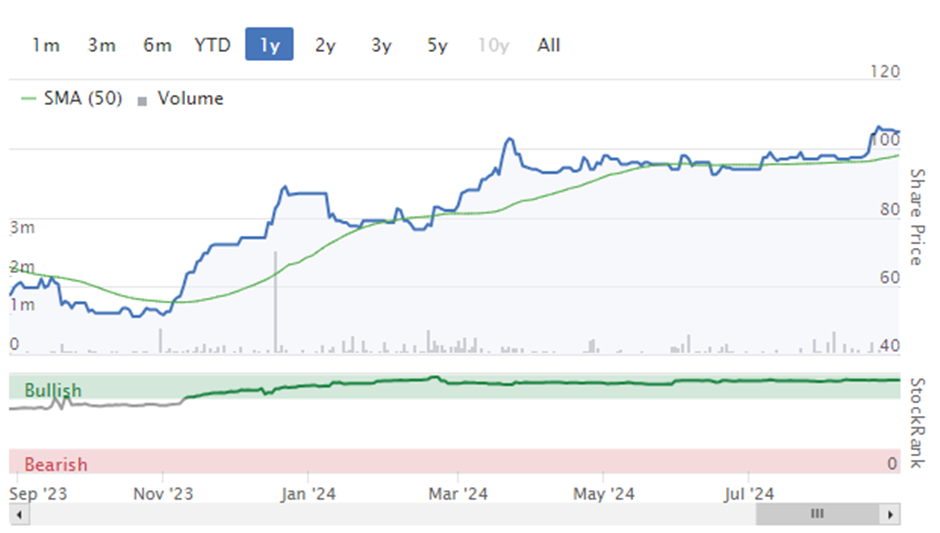
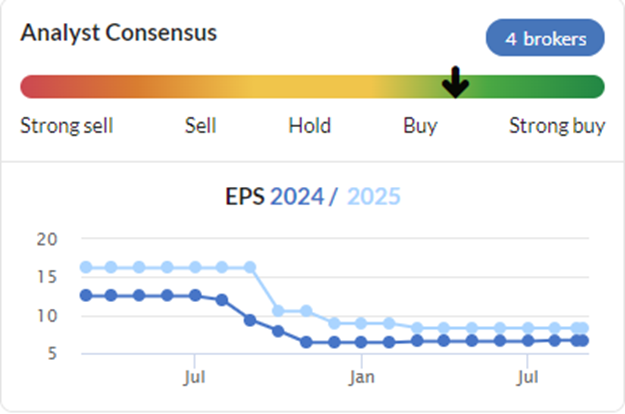
This gives the company a 96 Momentum Rank, but unlike many momentum stocks, it is not backed up by upgrades to forecasts:
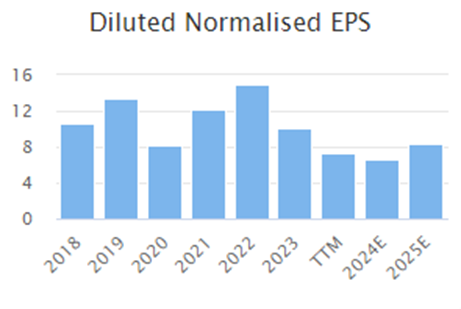
The EPS history is also less than impressive:
Given the re-rating that has already happened across the sector, it is hard to see much value remains here.
In conclusion, this screen has generated some interesting ideas, and perhaps equally importantly, not just the same list of stocks as other value investing screens. Card Factory (LON:CARD) Severfield (LON:SFR) Secure Trust Bank (LON:STB) Henry Boot (LON:BOOT) and Eurocell (LON:ECEL) all look worthy of further research to me.
[Disclosure: Mark owns shares in Severfield (LON:SFR) & Billington Holdings (LON:BILN) ]
Disclaimer
This is not financial advice. Our content is intended to be used and must be used for information and education purposes only. Please read our disclaimer and terms and conditions to understand our obligations.

4 comments
I have had Kirkpatrick model going since 2012. As you can see from the graph above, it has flatlined since the middle of 2021. The list below is the current 20 shares in the model.
Each buy is £2000 and a max of 20 companies, I usually check it each week and may sell some of the better performing companies. I haven't actually used this myself for some years, as I found it can pick up some poor performers.
Secure Trust Bank (LON:STB) …I wonder if it’s not covered much in this community as it’s not as exciting as a pawnbroker (as ? Graham said) .
I’ve held for a couple of years and it didn’t do anything til this year but the P/E I purchased it on was silly- something like 3. I’ve top sliced it twice (for Plus500 (LON:PLUS) and Gaming Realms (LON:GMR) ) and I’m still a third up…..
I’ve been an STB holder but became bored and took profit. I felt that the lack of free cash flow limited divis for the foreseeable future and prefer OSB which has the opposite dynamic - ie…growth forecasts are lower but there is a proven record of free cash flow funding strong divis and buybacks. Also feel that OSB is easier to understand as a mortgage lending business. I generally avoid financials due to balance sheet complexity but like both of these.
I agree. I think the OSB metrics are probably preferable to STB, although I have no idea why OSB reacted so negatively to recent results, so I am feeling that this may be better to stay away from an area where I don't fully understand the industry dymanics!