Hunting for compounders - Tremor and Reach

Attractive risk:return comes in many forms. Yes you have your safe, quality Unilevers but at the sharp end you have the dirt cheap ‘cigar butts’ that Benjamin Graham was so fond of.
It feels as though there are more than your average amount of interesting turnaround prospects at the minute. Perhaps it’s the COVID impact: bombed out share prices, emergency fundraises and transformed balance sheets, revitalised operational strategies…
We’re seeing Schumpeter’s Gale of creative destruction at speeds rarely witnessed, with many companies fitting years of evolution into a period of months.
There could be some once-in-a-generation opportunities out there (the same can be said about the risks, of course).
In Hemingway’s The Sun Also Rises, there is a snippet of dialogue that goes:
How did you go bankrupt?
Two ways. Gradually, then suddenly.
If you invert that you get something like:
How did you recover?
Two ways. Suddenly, then gradually.
Timing can be crucial. With turnarounds, the upside can be sudden and dramatic but sitting tight in the meantime requires a particular mindset.
With that caveat, I’ve started looking for turnarounds - but specifically those that are showing tangible signs of recovery and positive share price momentum.
Two such stocks on my radar are Tremor International (LON:TRMR) and Reach (LON:RCH) so I’ll look at them below - but it would be great to crowdsource some more candidates in the comments.
Tremor (LON:TRMR)
Revenue: £244.5m
Net debt (TTM): -£51.6m
Market cap: £292.8m
QV Rank: 73
Tremor was formerly Taptica, and before that, Blinkx.
It’s a digital video advertising specialist with operations in more than 60 countries.
There are three core divisions: Tremor Video, which helps advertisers deliver brand stories through innovative video technology and audience data; RhythmOne, its media division; and Unruly, a video marketplace directly integrated with publishers and relationships with global advertisers.
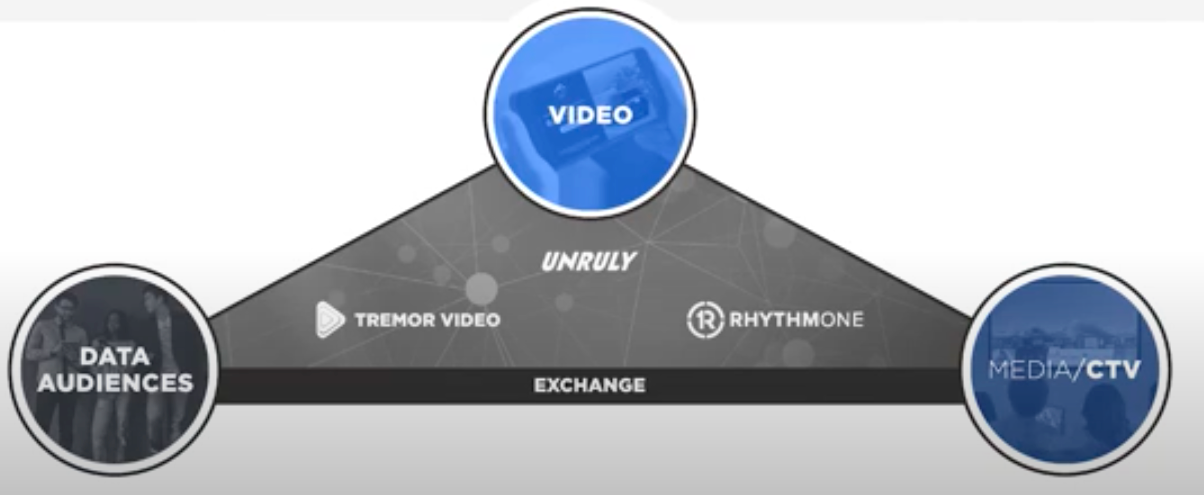
The company deals in programmatic advertising and the bull case says recent acquisitions of RyhthmOne and Unruly have shored up Tremor’s technology stack, turning it into a truly end-to-end video advertising platform.
Breaking it down
And so what does that mean, then?
Economically, it’s almost like a stock exchange, but instead of buyers, sellers, and stocks, it matches brands, customers, and brand content.
It adds value in the middle by optimising those matches, collecting data on otherwise anonymous online users, providing more targeted advertising to them, optimising bids for adverts, and giving its advertiser customers a better return on marketing spend.
What went wrong?
The share price tanked in 2018 due to concerns over new GDPR regulations, even though at the time Tremor was guiding towards ‘adjusted EBITDA for FY 2018 moderately ahead of market expectations.’
It then noted a slowdown in trading at its performance-based advertising division in the 2018 Annual Report.
Aside from that, patience has perhaps worn thin at the various name changes, acquisitions, and complexity of business model. Taptica's previous CEO also resigned in December 2018 over his role in a fraud case involving his previous company.
More than a few flags on the face of it, then.
What’s changed?
You might argue that the pieces of the puzzle are slowly coming together...
Blinkx changes its name to RyhthmOne in 2016. In 2017, Taptica acquires Tremor. Then, in 2019, Taptica acquires RythymOne. Later that year, this expanding entity renames itself Tremor. Then, in 2020, Tremor buys Unruly.
The argument is that now Tremor has finally reached an inflection point in terms of the scale of its digital video advertising platform. But it’s tricky to keep track of.
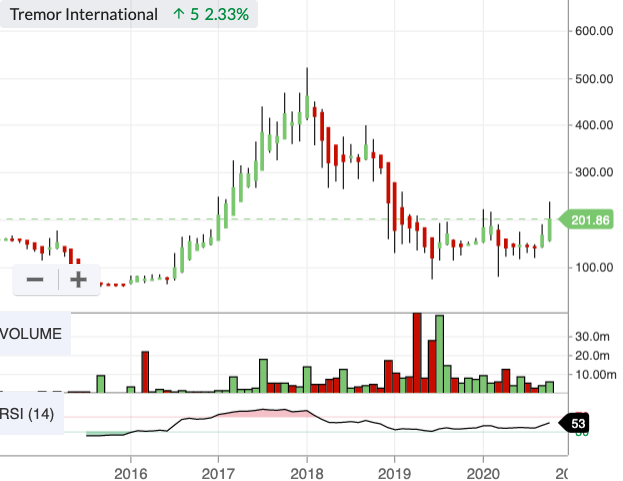
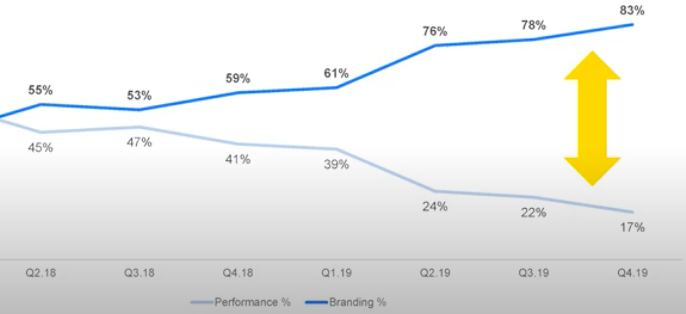
Having achieved that scale and specialisation, the company pivoted from a hybrid model of performance marketing into a more specialised branding video company in 2019.
The shift in revenue has been rapid.
Trading momentum sounds positive:
The Company experienced strong demand across its key growth engines in Q3 2020… this strong trading has continued to gather further momentum with the Company's key growth engines - Connected TV ('CTV'), Self-service and Private Marketplaces - attracting significant client interest. Therefore, the Company now expects trading for the full year ended 31 December 2020 to be ahead of market expectations, with revenues and Adjusted EBITDA now expected to be in the range of $340-360 million and $30-36 million respectively.
Conclusion
There’s a trust issue here, with a few too many unrelated flags popping up. It’s also not the simplest business model to understand.
That said, Tremor does back up its earnings with cash flow and there are hints that it might be able to generate solid underlying operating margins.
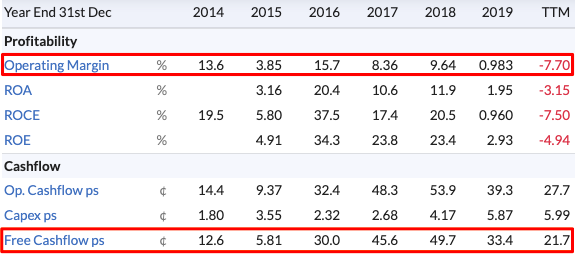
But there’s a lot of twists to this tale and I’d need a better handle on Tremor’s evolution if I’m to commit capital.
Activist investor Toscafund seems to see value and has built up a large stake (nearly 23%). See here. The company itself has also bought back stock in the past. That said, directors have been selling - see here. So the signals are, as ever, mixed with this one.
Reach (LON:RCH)
Revenue: £640.7m
Net debt (TTM): £2.9m
Market cap: £324.6m
QV Rank: 96
(I hold)
What went wrong?
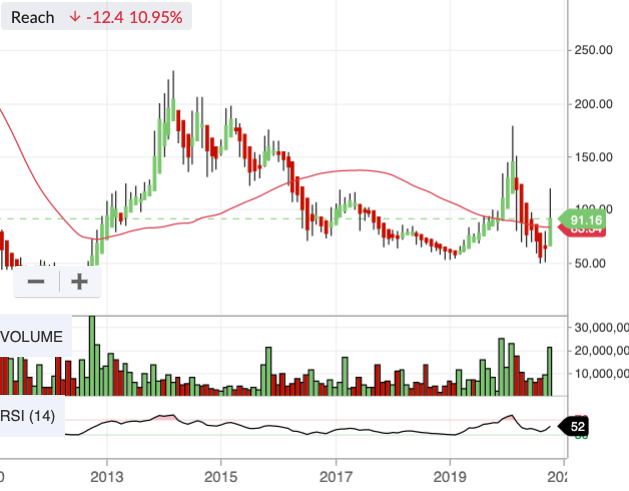
Reach (LON:RCH) is the fifth biggest online property in the UK, behind Google, Facebook, Microsoft and Amazon. Exalted company indeed for a £325m stock market minnow.
But the group is saddled with a declining Print business and a £2bn+ pension liability.
What’s changed?
A new management team is in and there’s a renewed strategic focus on capturing the data of its millions of engaged customers.
As above, Reach’s aggregated online properties are the fifth largest in the UK. It has nine national newspaper print brands, 110+ regional print brands, 40m online monthly unique users, and it continues to expand its web presence.
The group has some debt and that big pension liability, but it has remained resiliently cash generative despite the structurally challenged print business.
What is the potential upside? How much risk?
It’s not just the national newspapers that are important here - it’s the regional ones too, and their pivot to online.
Reach is catching up with the big shift from print to online advertising and hopes to realise a substantial data opportunity. Increased digital advertising would lead to a higher margin revenue mix.
It’s a vast market and Reach has plenty of low-hanging fruit to aim for. The big 4 have an estimated average customer consent or addressable signup ratio of over 90%. Reach had less than 2% of its audience signed up and giving consent as of FY19.
It’s a significant commercial opportunity and one that the refreshed board is keen to attack.
Revamped, heavyweight board?
Yes. Key new hires include:
Jim Mullen - CEO, appointed August 2019. Ex-CEO of Ladbrokes from 2013-2018. Mullen has spearheaded the Ladbrokes digital evolution and helped drive the expansion of its consumer database.
Simon Fuller - CFO, appointed March 2019. Previously CFO of McColl’s, having joined in 2015 after seven years at Tesco in a variety of divisional finance director roles.
Nick Prettejohn - Chairman, appointed in May 2018. Former CEO of Lloyd’s of London and Prudential UK & Europe.
Capital profile
Debt - Modest net debt of £2.9m.
Pension - The group has a grand total of six pension schemes… It all adds up to a big £2.4bn pension liability with a £250m deficit and committed cash contributions of around £50m per year. That’s material but is easily covered by Reach’s considerable cash flow from operations (which totalled £147.4m in FY19).
In FY19 the pension deficit was reduced by £52.7m to £295.9m before deferred tax. A triennial valuation is ongoing, so we should have more information on contributions going forward later this year. Certainly something to keep on top of.
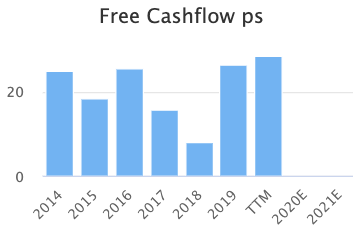
Cash generation - Free cash flow generative - over the past five years, the group has frequently generated more than 20p per share in annual free cash flow against today’s share price of around 100p.
Catalysts
Reach has a clear strategy going forwards. It’s aiming for:
- Increased customer engagement - via improved customer experience,
- A single view of the customer across the group’s substantial online real estate, and
- Revenue diversification and growth - the group can use its free cash flow to fund new opportunities.
With the above strategy, Reach aims to have 7m Registered Customers by the end of 2022 - these are customers that have provided an email address, have given consent, and are engaging with Reach.
The group has also given more concrete shorter term goals:
- Continue organic investment in the low single millions of pounds
- Continue with progressive dividend policy of at least 5% annual growth
- Continue with ten-year agreed deficit recovery plan
- Scan the market for new acquisition opportunities
H1 2020 results were ‘materially ahead of expectations’:
- Revenue down from £352.6m to £290.8m
- Adjusted operating profit down from £71.3m to £54.9m
- Adjusted profit before tax down from £69.9m to £53.5m
- Adjusted earnings per share down from 19.1p to 14.6p
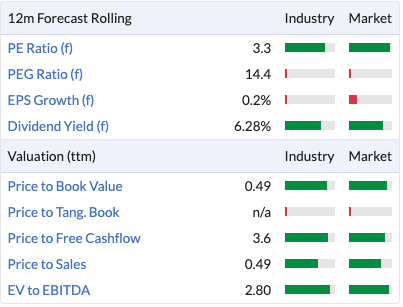
There are some big gaps between adjusted and statutory figures, which I’m wary of. And the direction of travel continues to be downwards… But this is reflected in the dirt cheap valuation.
Commenting on the interim results for 2020, Jim Mullen, Chief Executive Officer, Reach plc, said:
We have seen a strong recovery in the digital advertising market since the worst impacts of COVID-19 in April which has driven a return to healthy digital revenue growth since July, assisted by increased customer engagement and loyalty. This illustrates the significant potential of the customer value strategy as our websites, apps and newsletters attract increased page views from our scale audience, helping to drive forward digital revenues.
Conclusion
I hold a small position in Reach - there’s an experienced management team in place, resilient cash flows, and the potential scale of the opportunity paired with the valuation suggests possible upside.
That’s not to dismiss the risks here, though. There’s an ongoing triennial pension review and that pension liability is significant. Then there is the execution risk of the strategy.
But there’s potential to build a higher margin digital advertising business here, with low capital investment requirements. At the same time, the group is cutting millions of pounds in costs. So those two forces working in tandem could prove to be significant.
Disclaimer
This is not financial advice. Our content is intended to be used and must be used for information and education purposes only. Please read our disclaimer and terms and conditions to understand our obligations.

27 comments
I thought that there was a more recent thread on Reach (LON:RCH) than this (was it subject of a "stock pitch"?) but it did not show up via the StockReport, so I will post here.
I notice that Small Company Share Watch [SCSW] tweeted on Reach (LON:RCH) this afternoon :
I'm pretty sure most here will already be aware of the first point, but I wonder what the other "interesting" fact is?
I live in hope, if not expectation, that it is an upside that we do not already know about!
Yes there was a stock pitch: https://app.stockopedia.com/content/stock-pitch-reach-lon-rch-695128?order=createdAt&sort=desc&mode=unthreaded
I don't subscribe to the SCSW but I was thinking about trying it, how do you find it?
Thanks Herbie,
I was sure there was a later - but it didn't show up on the discussions tab of the Stockreport (have reported via the green smiley).
How did you find it?
As to SCSW - I don't subscribe either. From what I have been able to determine however, (from things the put in the public domain), the analysis is good but I'm not convinced subscribers can value from it.
The publish at the weekend and all of their best tips seem to open up 20%+ on the Monday morning. I tend to think that I would do best "selling the spike" whenever they tip something I own and buying back later, would be a profitable trade.
I believe though that they have been 'long' Reach for a while now, so their probably won't be a major reaction, but I'm interested if they know something new.
Thanks Gromley.
Yes there is a known problem, on the old site with recent discussions not showing up, I reported it a long time ago but as it’s only an old site issue, nothing has been done about it. I found it by using the new site, it’s about the only time I go there.
Re SCSW, I did notice they had tipped most of my most successful shares of 2020 but I had bought in later. So I thought it might be worth subscribing, not that I’m keen on tip sheets.
I did hold Reach (LON:RCH) for a few weeks but sold out on the day it went up about 50%, I thought it went too high, I may buyback again. I was very late getting int Reach (LON:RCH), it was their local news coverage that did it for me.
Both of these companies will be featured and analysed in detail on the MelloBASH this Monday at around 8pm through to 9.30pm. The BASH stands for Buy, Avoid, Sell or Hold.
It is part of the MelloMonday event which is going to be held every two weeks or so through the next year whilst Mello events and conferences cannot be run physically. The evening sessions start at 6pm and include interviews with fund managers and well known investors plus educational content provided across a series of presentations.
The whole event is by zoom invite and the whole programme can be found here...
https://melloevents.com/upcoming-event/mellomonday-9th-november/
Do come and join us for a very entertaining evening. Tickets are half price if you enter the code MMStocko21 and if you want an annual pass for 18 of these MelloMondays it will only cost you a fiver per evening event and you do not need to leave the comfort of your home....Incidentally the recordings are sent out to you about 36 hours after each one too..
At the next MelloMonday on 9th November both of these companies will be featured. In the MelloBASH companies to be covered on Monday include Peloton, Reach, Tremor, Tristel, Versarian
The whole event is by zoom invite and the whole programme can be found here...
https://melloevents.com/upcoming-event/mellomonday-9th-november/
Reach (LON:RCH) was tipped in the Small Company Share Watch at the weekend. I think that's why it's up 13%. It's not taking much for the price to move far at the moment. So much for efficient markets.
To be honest Ed, that's actually quite a modest increase for a SCSW tip, they are often up by more than 20% (and the price of course is normally marked up at open so no chance to buy at the "tipped" price.
Probably a more modest increase in this case as SCSW are somewhat behind the curve on this one, with the price already up 100% in the last 3 months.
I am a subscriber to SCSW and agree their tips do tend to spike up just post release. I have found though that a little patience rewards. In the case of Reach they were first tipped in Feb20, I liked what I saw and bought on 4th Feb. With the Covid sell-off starting on 24th Feb, I sold out everything (almost) including Reach (LON:RCH) on 26th for a small gain. Bought back in progressively through 2020 and am sitting on an annualised gain of 64% and rising.
I have a number of other good gains with SCSW tips which far outweigh the shockers, of which only a few. I do my own research and only go for the ones I like.
So SCSW not behind the curve on this one as subscribers will know, a very good value subscription as far as I'm concerned
I keep looking at SCSW as they send me emails with offers but I know about most of their tips in the recent samples they show.
Reach (LON:RCH) I used to hold but sold out a while ago at around 224p.
What's people's views regarding Google change in cookie policy, will this have much effect on Reach (LON:RCH) ?
I have recently started the news aggregator site https://www.newsnow.co.uk (which is excellent by the way) and quite often the stories are by Reach publications. And as a recent shareholder in Reach (LON:RCH) my main focus was on the local titles and their ability to deliver data driven revenue growth. I shall be watching for the successful execution of this strategy over the coming months.
The world of the Internet shows that the prize goes to the biggest and to claim that
you are the fifth largest if you add everything we do together - 70 Internet sites! - isnt that inspiring. Wouldn't it be more accurate to say we have the 10th, 12th, 111th, etc... What brand recognition do any of the individual titles have? Can they be consolidated into say 10 sites? Most of the sites like the Daily Express - 80% of the articles are still about Brexit - are awful.
What about the Daily Mail? Surely thats bigger?
Not to say that there isn't a value play here. But ... the printing press business is finished. It is completely uneconomic to replace these as the Capex is very large and the returns aren't there. Then there is the pension fund.
It's the local sites that count. That is what people are searching for. Local news. They are not searching for news about Brexit. Try searching for news in a particular location and see how often a site owned by Reach comes up. That is their brand recognition. I can't see that it matters that there are 70 sites rather than 1. That is a strength not a weakness. When people search for news in Macclesfield they want to be taken directly to that not to a conglomorate site that includes news from Portsmouth and everywhere else.
well that’s odd. Having to invest in 70 sites is more costly than 1. Did you know they had 70 sites? Have you been on the dreadful Daily Star and Express sites?
Yes, I thought they may have more than 100. Having set up an account for one area it is not too expensive to set it up for others. I agree that the websites are not that attractive but what they have of value is visitors. Plenty of better websites do not have any visitors. Each individual "newspaper" is well known in its area. These are incredible assets whose value may be very much in excess of the share price and they can always work on improving them if they have a mind to.
Agree with doubelutz about the 'marketing' side. The main thing is 70 sites with one set of common infrastructure behind it = economies of scale and a large data set that can target advertisers to individuals whether on the Daily Star or Huddersfield Flyer (if it exists) website.
Other hidden nasty turnarounds I'm looking at include Carclo (LON:CAR) and Connect (LON:CNCT) - haven't done enough research on either yet.
There's lots of PI interest in TED, DLAR, & REDD as mentioned before on this thread. There's an element of availability bias in the turnarounds that PIs look at... I mean - fashion, vans and banknotes - we see them everywhere.
Hi Ed,
That always the danger in turnarounds, they look more valuable than they are. You really have to ask the question if the underlining problem has really been resolved.
For De La Rue (LON:DLAR) it was the competition and perceived declining paper banknotes which saw declining margins, which it has now exited from. Note also the loss of the UK passport contract which was problematic at the time. It's now focused on the growing polymer banknotes market and recently picked up a new passport contract with Australia.
For Carclo (LON:CAR) the sale of loss-making automotive business looks transformative.
I've added the link for more detailed information on both Carclo (LON:CAR) and £DLAR.
https://www.stockopedia.com/co...
DYOR
BVS
Regarding Reach (LON:RCH) . I do have a position myself here although it's not a conviction one.
But I'm quite mindful that the ad revenues of the press are being hollowed out by the aggregators. I've read Ben Thomson's Stratechery blog for some time... he talks about the Smiling Curve with respect to publishers. With regards to value capture,:
Everyone compares Reach with Future (LON:FUTR) and says they can do the same turnaround job there, but Future has a lot of specialist/niche titles. It's at the left of the smiling curve but trying to do it at scale. Reach isn't.
On the other hand, according to Mullen & Co's current strategy - Reach is doubling down on local, rather than national news. I think this is a much more interesting battleground for them. The Aggregators are great at bringing friend groups together, but they are rubbish at local news.
Perhaps Reach (with the power of a better data platform and unified customer tracking model) can make this work - but only if they can find different ways of monetising. I found Mullen's presentation at the last results interesting (I watched a lot of it) as they are clearly going to be trying different monetisation routes, and trying to register a lot of users. Stratechery have this great piece on The Local News Business Model - they basically say that the only way to go is subscriptions.
"A sustainable local news publication will be fundamentally different: a minimal rundown of the news of the day, with a small number of in-depth articles a week featuring real in-depth reporting, with the occasional feature or investigative report. After all, it’s not like it is hard to find content to read on the Internet: what people will pay for is quality content about things they care about (and the fact that people care about their cities will be these publications’ greatest advantage)."
I think it's worth watching the Reach beast evolve... if they really can find different monetisation routes, and get rid of all the legacy bloat, then it could get interesting. It is a long road though.
Thanks for the links, Ed - I'll be sure to read them. Digital advertising and customer data is a fascinating area, but it's still developing and the question of where the value ultimately accrues is still unanswered. But there is substantial value.
Can Reach (LON:RCH) capture that value, or will it ultimately reside with aggregators? Instinctively I tend to back content - whoever creates the content creates the value... But that's more the starting hypothesis than the final judgement. I'm curious to see how the Local focus pans out.
And then there is the valuation to consider. RCH posts resilient cash flows of £100m+ year in, year out. The triennial pension review is upcoming - the company says it has committed pension contributions but negotiations behind the scenes are presumably ongoing, so that could free up more cash flow if talks go well.
It's also cutting tens of millions in costs, so there are some pretty big numbers flying around for a c£300m company.
Plenty to consider.
Good morning Jack
Thanks for the feedback on £REDD. We will have to wait and see how things evolve. Another national lockdown which is perhaps more likely than not will hit most share prices, including Redde Northgate (LON:REDD), but despite that concern there are more positives than negatives about the stock.
I agree with your views on content, thoughts of which invariably bring me back to Itv (LON:ITV), which I hold and added to early in the pandemic. I am biased and currently poorer for it. But Itv (LON:ITV) has an enormous back catalogue, which together with ITV Studios are in my view worth more than the current share price. The millstone remains the dependency on conventional advertising although this is slowly being reduced. There is also the nascent but evolving digital/streaming part of the business, ITV Hub and Britbox. I think that eventually something will 'give'. Either it will be acquired for its content and studios or perhaps a merger. Wishful thinking maybe, but given the attractive metrics, free cash flow, ROCE etc. is it really only worth just over 8 times earning falling to below 7 next year.
I am singing from my own song book, but to paraphrase the great Eric Morcambe, I hope that I am singing the right notes, but this time in the right order?
All the best
I think that the Stratechery piece makes a very good point when it says that what readers want in a local newspaper is substantive articles on local issues. My local weekly newspaper (the Western Telegraph) is owned by Newsquest rather than Reach, and a few months ago a large part of its content started to be glossy pages covering recipes, home decoration ideas and weekly offers at Aldi. These are not what I want from my local newspaper - I want information about my local area. After a few issues in the new format I stopped buying the paper. I don't know if the Reach titles have gone down a similar path, but if they have then I suspect a large proportion of readers will react as I did.
Hi Jonno,
I work for a major content producer and I can verify that there is a mad scramble for content right now.
New players and old are competing for market share, and making huge bets to attract it. The netflix yearly content budget alone is astounding.
Demand for content is at an unprecedented level, and becoming more scarce at the same time, as providers such as Disney and hbo gradually pull their IP from the market to put onto their own platforms.
It bodes well for itv studios and the back catalogue.
Bear points:
Are we at peak content demand? Surely some of these guys will go bust long term as there are just too many players in the market
Itv is kind of regulated being a terrestrial broadcaster, which may limit its pace of transition
The current advertising landscape is terrible and will hit short term cashflows
The traditional networks are in trouble medium term, so I expect some years of hardship
Titles that have been performing well, such as love Island, will need replacing with new ideas
They typically broadcast a lot of live events, especially sporting events, which are at risk of cancellation.
. Hold a small position, which I intend to build, due to the strength of the IP. But there will be plenty of opportunities to pick this up cheaply over the next 12 months, I think
Cheers
Pkr1988
Hi pkr 1988
It is good to get feedback from someone close to the 'coal face'. I have held Itv (LON:ITV) for longer than I care to remember. It bottomed out at about 50p in the 2008 meltdown. I think the share price will recover over time, but as to when is anyone's guess. While I can to see value in the company I will continue to hold and will add to what is a sizeable position if I am offered a really silly price.
It is one of the two leisure stocks I continue to hold, the other is Fuller Smith & Turner (LON:FSTA), for much the same reason in that I can see value in the business. It has a relatively ungeared balance sheet, thanks to the sale of the brewing assets at a great price, about 90% of the estate is freehold and their is the Fullers brand. Fullers has been about since 1845 and I fully expect it and the British pub to be still standing when the pandemic is over.
Keep well
Hi Jack
Reach (LON:RCH) does look interesting, although I am wary of being caught up in the recent excitement and share price rise in part I think created by the effusive nature of Richard Leonard's coverage in the recent PIWorld interview. Having said that I shall probably end up buying a small starter position.
As for potential turnarounds, I hold several, most fairly well know. Ted Baker (LON:TED), Sig (LON:SHI), Redde Northgate (LON:REDD) and De La Rue (LON:DLAR) to name a few. I was lucky enough to buy Ted Baker (LON:TED) and Sig (LON:SHI) below the price of the recent capital raisings/placings. I missed the boat on De La Rue (LON:DLAR), but bought when the price fell back recently. As for Redde Northgate (LON:REDD) it was the opportunistic acquisition of of assets of National Accident Repair Services from the administrators that convinced me to buy, although in fairness to Richard Leonard, it was his musings in an earlier PIWorld interview that sowed the seeds.
Keep up the good work.
Hi Jonno,
Thanks - and it looks like we share some stocks on the watchlist. I remember the Redde Northgate (LON:REDD) NARS announcement and opportunistic is the word. An awful lot has happened there since I last closely looked at pre-merger NTG a few years ago.
I'll keep looking but I suppose the Holy Grail right now is something like
Any additions to the checks above are welcome, or companies that fit the profile...
Best,
Jack
Reach (LON:RCH) IF those clever chaps in the Bond market are starting to demand a greater return than negative .?.% yield, then maybeee pension fund liabilities might not be such a big drag in the future and many companies with BIG deficits are not such a basket case after all..! Just a thought.