Part 1 - Richard Oldfield - Insights from London Value Investor Conference, 9 May 2013

I attended most of the London Value Investor Conference last week. It's very much the Rolls-Royce of the investor conference market, not least because the tickets are pricey at £658 (although the £30k profit went to a children's charity called Place2Be), but also because the speaker line-up is top-notch - e.g. Anthony Bolton, Howard Marks, James Montier, etc. So some serious & high-achieving names, most of whom have run £ multi-billion funds.
I took copious notes, but rather than regurgitating the speeches verbatim, which would take much too long, I've decided to skip through the speeches to give a general flavour, but to stop and highlight the key insights from each speech which really stuck in my mind as being useful.
I arrived, as planned, during the mid-morning coffee break, because my day started, as usual with me writing up my morning small cap report here. So I missed the speeches from Michael Price, Gary Channon, and David Harding.
This article is Part 1, and covers the speech from:
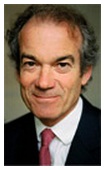
Richard Oldfield of Oldfield Partners
Their value investing ethos is nicely summarised here.
Oldfield wrote a value investing book called "Simple Not Easy" in 2007, and in a self-deprecating speech, joked that he had been rash to publish it just before the GFC (Great Financial Crisis). He also indicated that his funds had under-performed recently, so he had therefore decided to use this speech to focus on his mistakes.
A number of examples were given, including the market crash of 1987. Oldfield had been on holiday at the time, and when the market crashed 25% he felt it was a wonderful buying opportunity. However, his big mistake was going back into the office, where in barely a couple of hours he had become infected by the mood of panic amongst his colleagues. In that critical time when they should have held their nerve, and been buyers, they made the terrible mistake of going 40% liquid after the crash.
So the lessons he learned from this episode were;
1. To keep a cool detachment from day-to-day market movements & background noise (he doesn't have a Bloomberg terminal on his desk) in order to think clearly.
2. That large asset allocation changes are nearly always disastrously wrong, as they are too emotionally charged. So only ever make small asset allocation changes at a time.
He then spent the rest of the speech detailing why he believes Nokia is a good value share at the moment, as its valuation is fully supported by cash, and investments in MSN and Newtech. Their Patents add further considerable value, and their latest phone, the Lumia has received rave reviews. Nokia shares are currently E2.82 (HEL:FI:NOK1V) so let's revisit that and see if he was right in a year or two's time. The American ADS for Nokia is priced at $3.71 (NYSE:NOK) currently.
He then turned to the Japanese market, and gave Hitachi as an example of how Japanese corporate culture is changing for the better. Oldfield believes Hitachi shares are still very cheap, on 3 times cashflow and 0.3 times sales. He believes that other Japanese "sleeping dinosaurs could be prodded into life".
In my opinion, the most interesting insights came in the Q&A session at the end.
Oldfield was asked how you keep your motivation in a bad patch? He replied that for value investors, you should just keep doing the same thing - i.e. buying companies that are intrinsically under-valued. He illustrated this by saying that from 1998-2000 (the tech boom) his funds did badly, but that the bounceback was "huge for value investors", and more than recouped the previous years' under-performance.
In common with a number of other speakers, Oldfield favours a fairly focussed portfolio, he only holds around 20 stocks. However, he does believe in diversifying between countries, sectors, etc, within that 20.
When asked about dividends, Oldfield made a crucial point, which I think is a terrific insight - "We put more importance on the dividend-paying capability of a company, than on the actual dividends paid"
This is absolutely right in my view. All too often investors chase high dividend yields, only to be disappointed when the dividend is cut. It's just a policy decision, how much to pay out in dividends, so what's important is more how much scope the company has to pay dividends, not the specific amount they actually pay. This is taking a long term view, obviously.
When asked about shareholder activism, he said that "with just a few billion under management, we're tiny, irrelevant!" I nearly fell off my chair when he said this, but I suppose he's talking about their influence over large & mega cap companies.
Finally, he mentioned catalysts to "out" the value, which many value investors look for, e.g. a takeover bid. Interestingly, Oldfield said what I've also always believed, which is that, "If there is a big enough gap between price and value, then management or the market will do something about it. The catalyst produces itself!"
His closing remark for the value investor was: "Patience, patience, patience!"
Disclaimer
This is not financial advice. Our content is intended to be used and must be used for information and education purposes only. Please read our disclaimer and terms and conditions to understand our obligations.
7 comments
Just to say that Place2Be is a fantastic charity that works with the most marginalised and disadvantaged kids in some of the toughest areas. They offer them a space where they can talk and be listened to without prejudice. The founder of Place2Be and Kid Company (Camila Batmanghelidjh) is one of the most inspirational advocates for disadvantaged young people and I find her to be one of the most inspirational speakers I've encountered.
Hi Phil,
Indeed, there was an excellent short speech from a representative of Place2Be at the Value Investing conference, and I think the event raised about £35k (from memory) for the charity, so very worthwhile.
Cheers, Paul.
Hi,
I was rather tired by the time Montier did his speech, and remember being irritated that he was just regurgitating stuff from his book, "The Little Book of Behavioural Investing", so didn't really take many notes during his bit, hence no write-up on it from me unfortunately.
But basically if you read the above book, then you'll get the gist of what he has to say, and it's very interesting.
Cheers, Paul.
Cheers Ed
His books are essential reading to understand, or at least to try and understand, investor psychology/bias but nothing quiet beats the first "live" performance and seeing the collective lightbulb moment...
D
Montier was at his acerbic best, though I didn't feel he added anything beyond his excellent books. I have some slides somewhere - will share the best ones with you when I can.
Good post Paul. can't wait to hear your review of James Montier..
Hi,
As a post-script to this article, it turns out that Richard Oldfield was absolutely right to be bullish on Nokia.
A deal has just been announced for Microsoft to buy its mobile handset business, and Nokia shares are currently up to 420 in Finland, when they were 282 at the time of Oldfield recommending them in May 2013.
So he was right, and investors who followed his idea on this one are now 49% up in just 4 months. Who said elephants don't gallop? This one did!
Also, I started reading "Simple But Not Easy", Oldfield's book on investment, and it's excellent, very accessible to non-experts as well as useful for experts, so it comes highly recommended. Full of interesting experiences & anecdotes from his investing career.
Cheers, Paul.