Inspecs: a QM small cap IPO missed by the market

How many kinds of glasses frames are there, really? Surely only five or so: round, square, rectangle, those tortoise shell ones, and sunglasses.
I’ve been wearing and losing glasses for more than a decade now, but apparently there’s more to it than that.
That’s what Inspecs (LON:SPEC) would have us think anyway. It’s a recent IPO: a vertically-integrated eyewear frames specialist that licenses, designs, patents, manufactures and distributes globally from bases around the world.
Inspecs is one of only a few companies that can offer a one-stop-shop solution to global retail chains and is well positioned to continue to take market share in a booming global eyewear market. It is also looking to complement this organic growth with acquisitions as well.
This new recruit to the market figures well according to the StockRanks, supported by good quality characteristics and relative strength.

Some IPOs are disasters, but others (Avast, for example) are just good companies that are too cheap because nobody yet knows them well enough. Avast has doubled over two years or so - perhaps there is scope for SPEC to similarly rerate.
A $130bn+ global market opportunity...
Founded in 1988 and headquartered in Bath, Inspecs is a very international UK small cap with a global opportunity - in FY19, it generated 24.9% of its revenue in the UK and 75.1% internationally. The group has a market cap of c£100m and it says the global eyewear market is worth $131bn - so plenty of growth for years to come, assuming management can execute on the group’s strategy. There is the question of just how much of this c$130bn pie applies to SPEC though.
Data from the likes of Grand View Research, Mackenzie, and Bizwit suggests this market will expand at a CAGR exceeding 7% from 2019 to 2025 as a result of:
- Increased awareness regarding eye examinations – there is a global population of 7.7 billion people, of which approximately 4.5 billion are likely to require vision correction and fewer than half have been corrected.
- A growing number of ophthalmic disorders such as myopia (short-sightedness), presbyopia (long-sightedness), and hypermetropia among ageing populations.
- Continuing improved prosperity in emerging markets leading to increased consumption of fashionable eyewear.
- Increasing awareness of the benefits of protecting the eyes with sunglasses against sun, UV and blue light, and the high potential for prescription sunglasses.
- Increased digital marketing by the global retail chains attracting customers into their optical outlets.
This is all from the group’s admission doc, which also includes a handy table of SPEC’s competition:
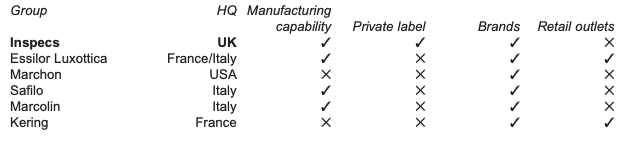
Of these competitors, Safilo is listed over in Italy. Its share price performance is hardly inspiring:
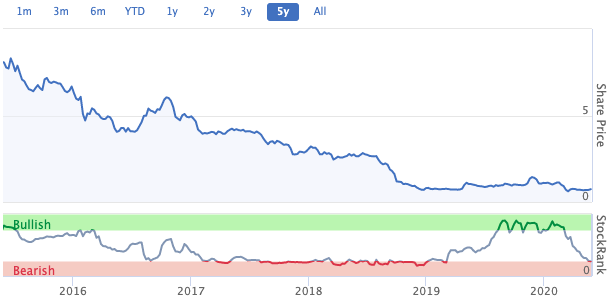
A potential warning sign to investigate in future. Kering in France has a much more robust share price but is also a much larger luxury company with more diverse operations, and so is perhaps less comparable.
And the strategy to capitalise
In 2017, the Group raised debt and equity finance to complete the major acquisition of Killine Group, a designer, manufacturer and distributor of OEM eyewear frames, “creating a truly vertically-integrated eyewear group”. This was a material acquisition.
The group’s Admission Doc offers more detail on this pre-IPO acquisition:
In February 2017, Inspecs completed the significant acquisition of Killine for an enterprise value of $44 million. Killine primarily designs, manufactures and distributes OEM products, with the manufacturing taking place from Killine’s two major manufacturing sites in Vietnam and China. This acquisition enabled the Group to significantly extend its manufacturing capabilities (and therefore pursue its vertical integration model), product offering and distribution network. In FY18, Killine generated $30 million of revenue, representing 52 per cent. of the Group’s revenue.
The scale of the Killine acquisition in proportion to the Inspecs we know today is clearly quite big. The company you would be buying into has not actually been around for very long at all...
Anyway, digging into SPEC's growth strategy going forward, it has three drivers:
- Grow organically;
- Grow acquisitively; and
- Vertical integration and manufacturing capacity.
1. Grow organically
SPEC produces mid-market and entry-level priced products to address the largest segments of the eyewear market, however the Group has recently developed a high-end offering. It is actively designing new ranges and is on the hunt for additional brand licenses.
Given management’s experience, I see no reason why it can’t grow in line with the market (c7% pa).
2. Grow acquisitively
The group cites multiple opportunities to add value through acquisitions in a fragmented eyewear market. In fact, SPEC is actively in discussions with a number of potential targets. The main acquisition criteria include:
- The acquisition is earnings accretive.
- The target has:
- its own proprietary brand, which can expand geographically; and/or
- sales in a territory where Inspecs is under-represented; and/or
- manufacturing capability that would be incremental to Inspecs’ capabilities.
3. Vertical integration
SPEC’s vertical integration is a key part of the strategy.
While it is not the biggest operator in its industry, Inspecs says that customers are drawn to this vertically integrated model and its ability to provide supply chain diversification (while much of the world’s glasses frames come from China, SPEC’s main manufacturing site is in Vietnam).
This Vietnam factory is expanding from 4,300 square metres to 8,800 square metres, doubling capacity to c7m frames a year in the future. Production should start around the end of Q2 of 2020.
It sounds like, while the glasses market is reasonably mature, there is also plenty of growth potential via vertical integration, geographic expansion, licensing deals, and acquisition opportunities.
Data is limited but SPEC is earning comfortably above its cost of capital and, given the size of the market, I can see this continuing as the group grows organically and generates M&A synergies through its vertical integration.
Placing details
- IPO date: 27 Feb 2020
- Placing price: 195p
- Market cap: £138m
- Gross proceeds of placing to the company: £23.5m
- Gross proceeds to selling shareholders: £70.53m
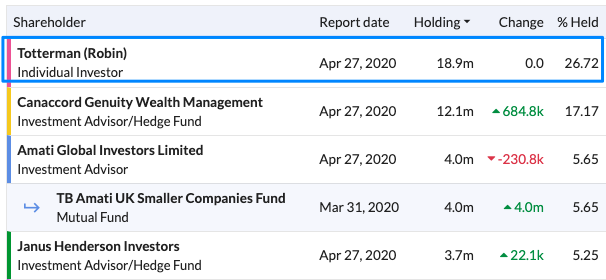
The majority of SPEC’s placing went to existing shareholders selling down. It’s good to see that, despite the large director sales, Robin Totterman remains Inspecs’ largest shareholder after the float though:
Financial statements
Income statement
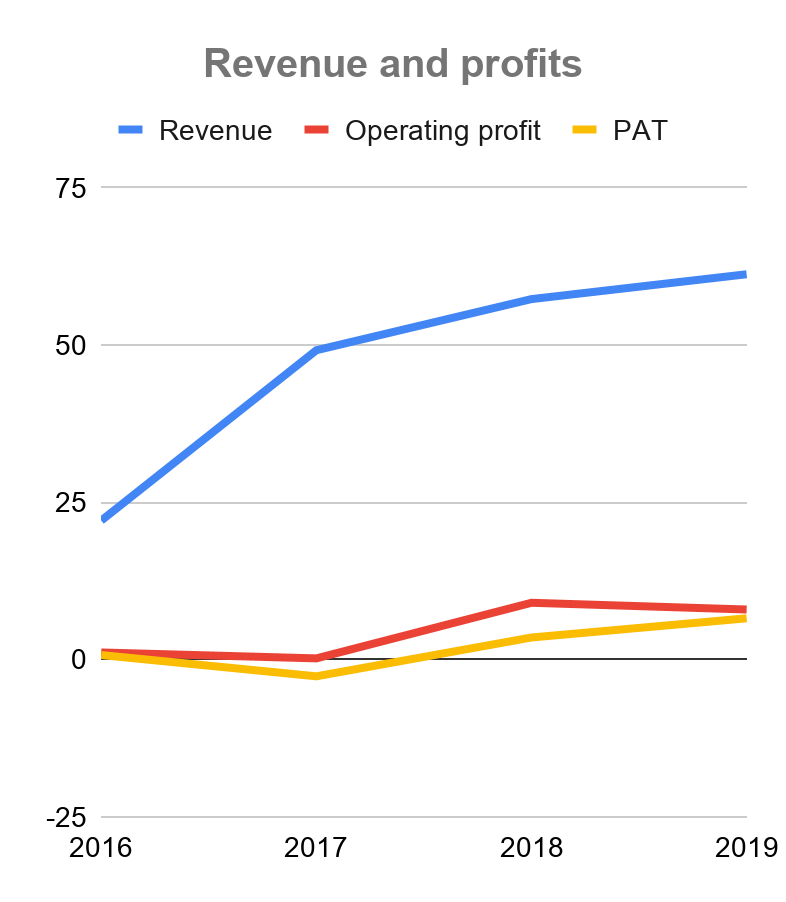
Inspecs is building up a track record of revenue growth although it is still early days. Profit has been more mixed but FY19 growth is encouraging.
Balance sheet
Cash is going up and debt is coming down. Meanwhile, Stockopedia’s Professor scores paint a positive picture:
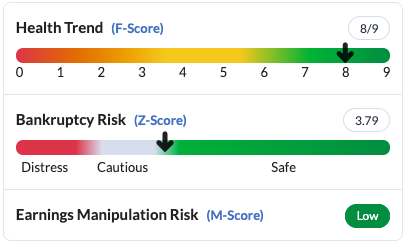
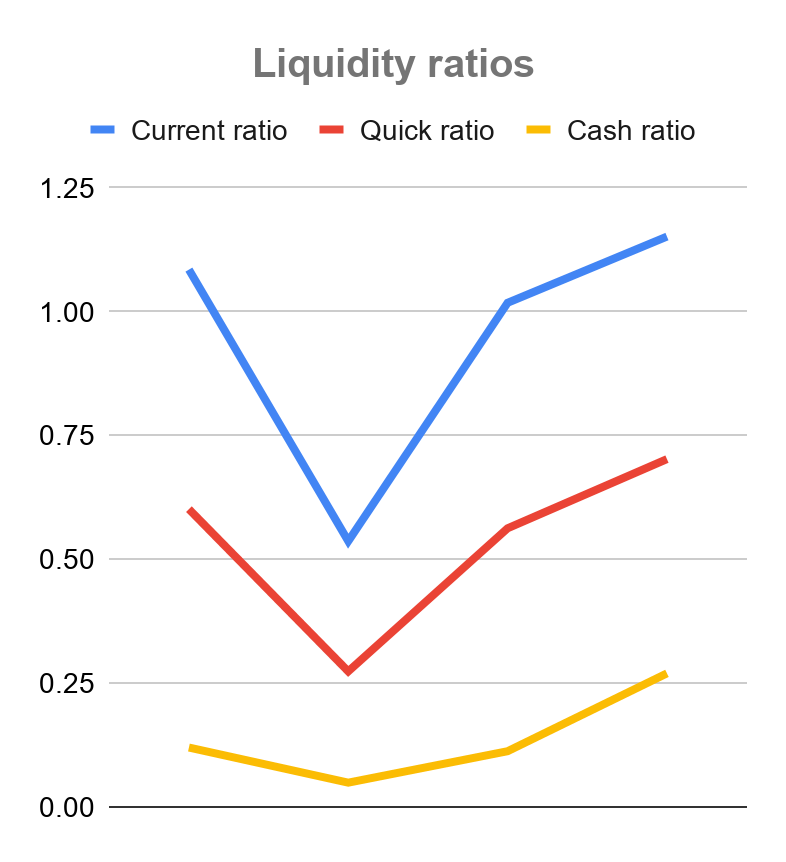
However it’s an amber light on liquidity, which is stable if a little on the low side. Norms here can vary by industry. The important thing here is stability, but I would hope to see liquidity buffers improve in future.
Cash flow statement
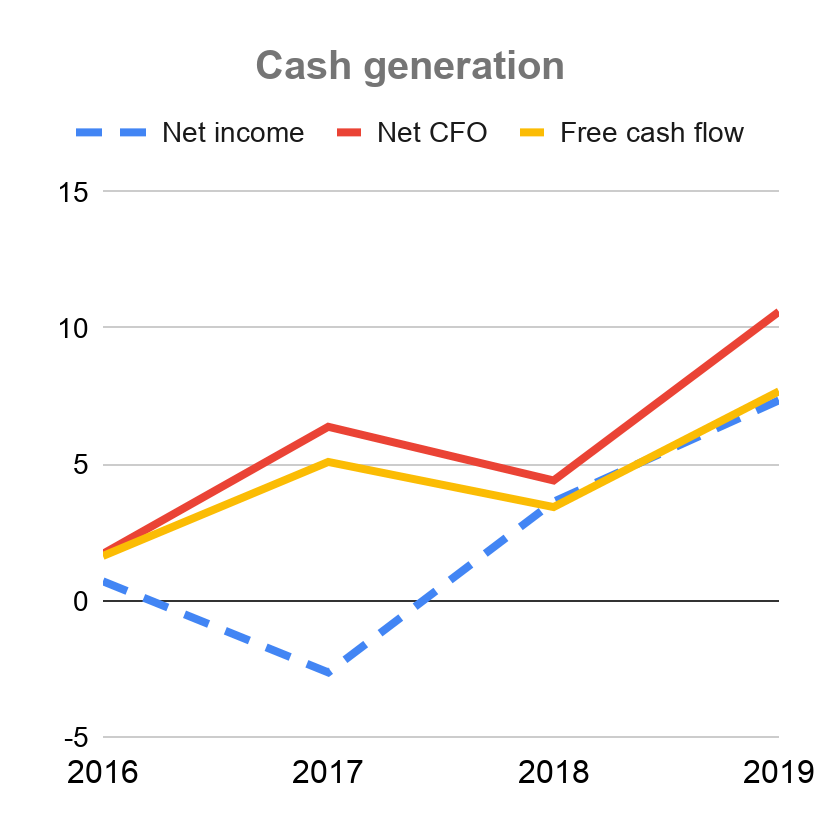
SPEC seems to be quite cash generative. Net CFO and free cash flow are also going up, although we don’t have a lot of data to work with. Still, there are signs of good cash generation here.
Segments
SPEC has seven operating segments but has decided to report in just two segments (wholesale OEM and manufacturing distribution, and branded product distribution), which obscures visibility a bit.
These are the FY19 figures. We can see Wholesale is a much higher margin business that generates a better return on assets, so growth here would expand group margins considerably.
Branded | Wholesale | |
Revenue | 29.91 | 36.77 |
Gross profit | 11.18 | 16.58 |
Gross margin | 37.38% | 45.09% |
Operating profit | 1.01 | 7.24 |
Operating margin | 3.38% | 19.69% |
Assets | 57 | 66.02 |
Operating ROA | 1.78% | 10.97% |
“OEM” frames include unbranded and private label frames produced on behalf of retail customers. From FY16 to FY18, OEM revenue grew from $0.6m to $30.8m, predominantly due to the Killine acquisition in February 2017. Since then, OEM revenue has continued to grow strongly.
“Branded” frames include branded frames produced under licence or under the Group’s own proprietary brands. From FY16 to FY18, Branded revenue grew 11.0% CAGR from $21.5m to $26.5m. Today approximately 45% of the Group’s turnover comes from branded eyewear and SPEC is searching for more deals.
When looking for brands to license, SPEC looks for:
- brands which have regional and / or global appeal;
- opportunities for Inspecs to add value;
- brands in the mid-market; and
- the ability to grow and develop the brand.
Recent results
The group released its Final results on 12 May. The highlights:
- Group revenue increased 6.9% to $61.25m (2018: $57.30m)
- Underlying EBITDA increased 9.4% to $12.99m (2018: $11.87m)
- Profit Before Tax increased 102.4% to $7.35m (2018: $3.63m)
- Basic EPS increased 84.0% to $16.38c (2018: $8.90c)
- Diluted EPS increased 81.8% to $14.80c (2018: $8.14c)
- Manufactured 4.55m eyewear frames, up 19.7% (2018: 3.80m)
- Expansion of Vietnam factory from 4,300 square metres to 8,800 square metres
COVID has thrown a spanner in the works but the CEO and founder puts a positive spin on the group’s maiden results. He says:
Over the long term, the structural growth drivers in the $131 billion global eyewear market remain unchanged and people will still require vision correction. Our resilient vertically integrated business model and manufacturing capabilities combined with the innovation of our design teams and the strength of our customer relationships, leaves us well positioned to benefit from the recovery as a leaner, more efficient business.
Outlook
The Executive Directors have taken a 60% cut to their salaries, which is an encouraging sign of solidarity.
SPEC’s factories in China and Vietnam are almost back to full production capacity, but most customers have been forced to close during the lockdown. Opticians were among the first to be closed due to the close proximity to their customers.
My guess is that COVID disruption will be temporary and that trade should recover. The need for vision correction is not about to go away.
Modelling
- Revenue: Directors expect organic revenue CAGR over the medium term to be approximately in line with the market growth rate (c7%). Subsequent trading suggests this is reasonable.
- Gross margin: The Directors believe the Group’s gross margin in FY18 will broadly align with its gross margin over the medium term, with improvements in procurement offset by changes in product mix.
- Operating and profit margins: Over the medium term, the Directors expect the Group’s central cost base to grow at a slower rate than revenue and therefore expect to continue to benefit from a certain level of operational gearing as the business grows. For now, based on limited info, I’ll just freeze operating and profit margins at FY19 levels.
FY19 | FY20 | FY21 | FY22 | FY23 | |
Revenue ($m) | 61.3 | 65.5 | 70.1 | 75.0 | 80.3 |
Gross profit | 27.5 | 29.5 | 31.5 | 33.7 | 36.1 |
Gross margin | 44.96% | 44.96% | 44.96% | 44.96% | 44.96% |
Operating profit | 8.0 | 8.5 | 9.1 | 9.7 | 10.4 |
Operating margin | 12.98% | 12.98% | 12.98% | 12.98% | 12.98% |
Profit after tax | 6.6 | 7.0 | 7.5 | 8.0 | 8.6 |
Profit margin | 10.69% | 10.69% | 10.69% | 10.69% | 10.69% |
Shares in issue | 71 | 71 | 71 | 71 | 71 |
EPS (c) | 9.2 | 9.9 | 10.6 | 11.3 | 12.1 |
$/£ exchange rate | 0.81 | 0.81 | 0.81 | 0.81 | 0.81 |
EPS (p) | 7.5 | 8.0 | 8.6 | 9.2 | 9.8 |
Share price (p) | 192 | 192 | 192 | 192 | 192 |
PE ratio | 25.7 | 24.0 | 22.4 | 21.0 | 19.6 |
In its results, the group guides to quite a different earnings per share figure (c.14.8c versus my 9.2c). There may be a good explanation for this but I haven’t been able to find it, which is frustrating as starting from 14 rather than 9 has obvious implications for the group’s PE ratio.
As the group releases more public updates I’ll get a better sense of why it is guiding to a higher earnings figure, but for now I’m admitting defeat. If anyone can see what I’m missing let me know.
In the meantime I’d rather just divide PAT by shares in issue as you do with every other company and this comes out at 9.2c, not 14.8c. A 25.7 PE ratio falling to 24x doesn’t scream value, but it also isn’t factoring in any acquisitions or operational gearing.
It seems likely over the next five years that growth rates will be higher than modelled if it can grow organically and find good businesses to buy.
Conclusion
There is enough here to warrant further investigation (possibly in a pair of new designer glasses).
SPEC is an interesting IPO with a strong founder-led Board, an experienced management team, and a big market opportunity.
However, it has also IPOd at just about the worst point in the past decade. Liquidity is borderline for me, and the group has a concentrated customer base. Competition might also increase. I also just cannot see where the company is getting its figure of 14.8c for diluted earnings per share. For now, I’ll put this down to its status as a recent IPO. DYOR and see if you can find what I couldn’t.
If 14.8c is a fair figure, then the shares look cheap. But if 9.2c is closer to economic reality then they are fairly priced to expensive to my mind. Acquisitions are another unknown variable, but they could be a material earnings per share propellant.
Either way, this is one IPO worth investigating in more detail.
Disclaimer
This is not financial advice. Our content is intended to be used and must be used for information and education purposes only. Please read our disclaimer and terms and conditions to understand our obligations.

9 comments
Is the cash balance on the stock report accurate? It says they have $6.6m in cash. They want to grow by acquisition but it appears they haven't used the IPO to give them the cash balance to make acquisitions, so we assume they'll be funded by debt or dilution. For that reason and with the PE at 20 and a likely recession/depression across the Western world looming I'm not sure I want to jump in just now - one to keep an eye on if it heads back towards a PE of 12 or so.
If my thoughts are wrong, please correct me, as I regularly state in my posts, I am an idiot so don't rely on my thoughts.
Hey IGPJ,
I think that's right. There are a couple of amber flags that mean I would like to see more from SPEC before making a decision... Off the top of my head:
The shares are up again today but on balance I've seen enough to make me hold off as an investor until I've seen some more trading updates. Navigating its way through COVID will be a baptism of fire, let's see how it does. Interesting IPO though.
Inspecs (LON:SPEC) thanks Jack, Definitely one to keep an eye on (excuse the pun). They have not yet provided much detail on how Covid has impacted their buiness, except saying that they are trying to preserve cash and have taken pay cuts. Also the statement from CEO saying they will be well positioned to benefit from the recovery as a leaner, more efficient business, is slightly concerning given they have only just floated. However their pre Covid performance was strong and suspect people have still been buying eyewear through this lock down especially in the UK with this great weather we have been having. So once more certain about their Covid trade levels, could be one to add.
Good article Jack - I didn't look at this any further when I heard that selling shareholders were cashing out their shares, but it does seem to be breaking out so maybe I should be long.
Very good analysis, Jack, thanks. It's an interesting company operating in an interesting space; I looked at Essilor Luxottica last year but did not pursue it further. It is a market that is growing due to health needs and population growth especially due to longevity.
In your conclusions you refer to diluted EPS being 14.8c. However, did you mean $14.80 as mentioned in the results section?
In addition, I agree that taking the Profit After Tax and dividing that by the bigger share count would give a more accurate EPS figure and this results in 9.2c. However, this needs to be converted into GBP which then results in a higher PE of 29.9.
If the company is partly growing via acquisitions, it's too early to rate management's ability to secure good deals. Paying a PE 29.9 requires placing a lot of faith in management's ability.
Whilst the timeliness of listing is rather unfortunate, it's interesting that directors have taken a 60% pay cut. However, lets not forget that selling shareholders have received £70.53m from the IPO, from which the CEO and CFO received c.£13.6m and c.£3.5m respectively. I always question IPOs with "why now?" and would have preferred to have seen how SPECS can grow into the market rather than grow through acquisition. For me, I need to see more history and demonstration of ability to make good deals in the interest of shareholders before the the valuation makes sense. However, it's going on the watchlist.
Great article, Jack. The catalysts for further growth look impressive/valid. My question would be; who are the competition and what how much of a threat could they be? Is there a USP/moat?
Cheers PJ, appreciate it... I'd agree that potential competition is a key risk to investigate further. The company does talk about licenses and patents, but the licenses are five years and the patents I haven't yet been able to look at. I'm not sure how valuable they are, or what they even refer to.
If the market opportunity is sufficiently large, maybe it will take a long time before it begins to feel crowded. There could be plenty of runway for growth even if there aren't any concrete barriers. In the long term though, I haven't found anything that really protects Inspec (for all its talk of barriers to entry).
In the short term, there's also the impact of COVID though. I imagine demand for glasses would be relatively robust, but I don't know that for a fact and the company's certainly guiding to disruption.
Superb article thank you Tim B
Many thanks Jack. Yet another really useful and thought provoking article in a great series of really useful articles.