JD Sports: when will it be back in fashion with investors?

Summary
- JD Sports Fashion (LON:JD.) is a FTSE100-listed retailer, primarily of sports fashion footwear, but also outdoor apparel and accessories, plus it runs JD branded gyms.
- The company has been highly acquisitive, first under the leadership of former Exec Chair Peter Cowgill and now with CEO Regis Schulz leading the growth strategy.
- Acquisitions have increasingly targeted businesses with US or European sales, which means that the business is balanced in terms of sales between the UK, US, and Europe. However, their revenue is still dominated by in-store sales of footwear.
- Recent broker downgrades, especially for FY26, have exacted their toll on the share price. With no EPS growth now forecast, the shares have more than halved since September. A momentum rank of just 19 will make the company unattractive to trend-followers.
- However, the company has a return on capital that is persistently higher than its cost of capital due to its brands, scale and relationships with suppliers, and trades on a P/E of around six, which means it will appeal to Quality-Value investors.
- The company is highly cash-generative but pays a small dividend, preferring to retain capital to grow both organically and by acquisition. This means that investors need to trust management are deploying capital to generate shareholder value rather than simply empire-building.
- Given that this is a multinational FTSE100 business with 17 brokers covering it, individual investors are unlikely to gain an informational or analytical edge. Instead, a behavioural advantage may be gained by looking through short-term trading weakness to see a quality business trading at a very cheap multiple of earnings and cash flow.
Profile
JD Sports Fashion (LON:JD.) is an FTSE100-listed retailer. It started as a single shop in Bury in 1981 and has grown to be an international retail giant. They now have 3,317 stores that focus on sports shoe retail, 243 stores focused on outdoor activities, and 1,027 other stores, mostly in the general sports merchandising space. In addition, they have over 230 JD Gyms in the UK.
For a long time, JD Sports was synonymous in investors' minds with its Executive Chair, Peter Cowgill, who was the driver behind its rapid growth strategy. He joined the company in 1996 as Finance Director and helped float the business on the stock exchange. He left in 2001, but when problems arose in 2004, he was asked to return. He said, "I'm only coming back if I'm the boss", and assumed the role of Executive Chair. However, it all ended rather ignominiously for Cowgill in 2022, who was forced to leave when he was fined £4.7m for discussing commercially sensitive information with the Footasylym CEO in a car park. Despite this, he still had a fearsome reputation as the company agreed to pay £3.5m to prevent him from working for a competitor for two years.
After Cowgill's departure, former Morrisons boss Andrew Higginson assumed the role of Non-exec Chair and Regis Schultz was appointed CEO. If anything, Schulz seems more committed to growth. Wikipedia lists at least 24 acquisitions that the company has made as a quoted company. The most recognisable to UK investors are Go Outdoors, Millets and Blacks, in the outdoor category.
The new team has made five acquisitions, all of which target growth in Europe or the US. The scale of the business that JD has been willing to swallow has also increased significantly. JD completed the acquisition of French sports shoe retailer Courir at the end of last year, paying €520m for the business. US-listed Hibbett Inc., also bought last year, has over a thousand stores in 36 states and costs over $1b to acquire. This has made the business a much more balanced one geographically:
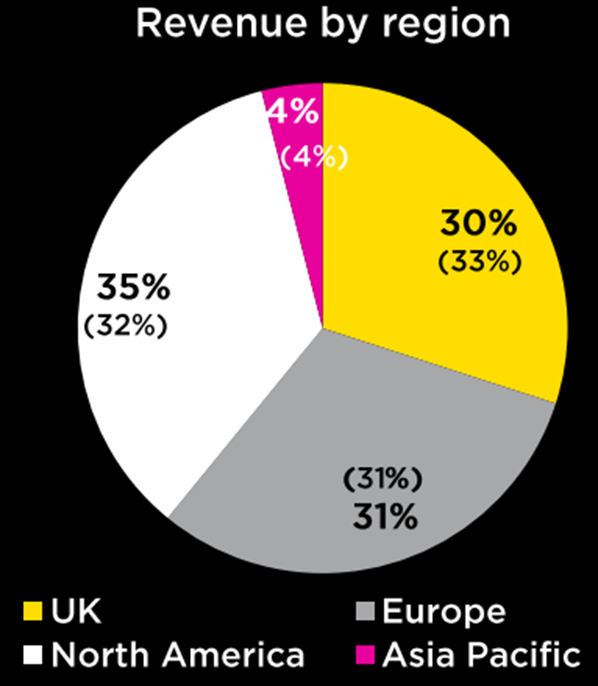
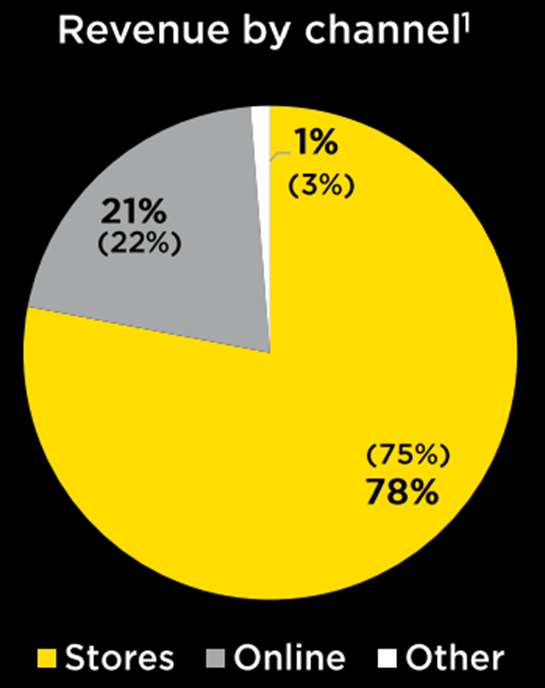
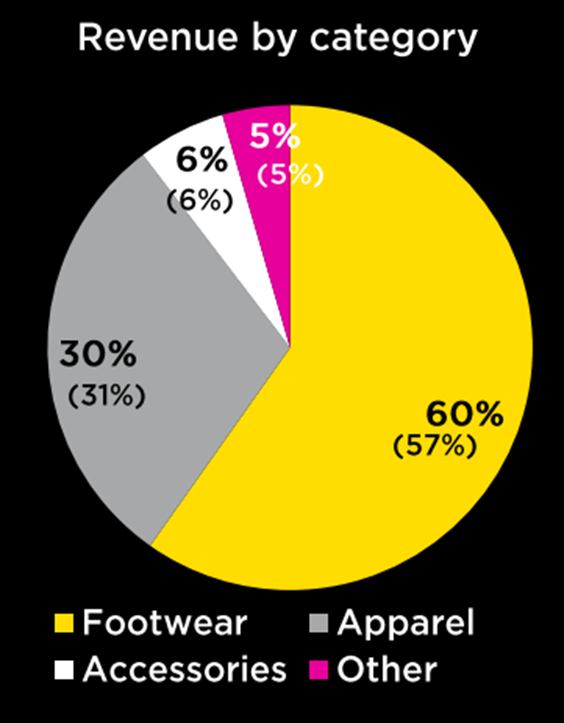
Although revenue is still dominated by in-store sales of footwear:
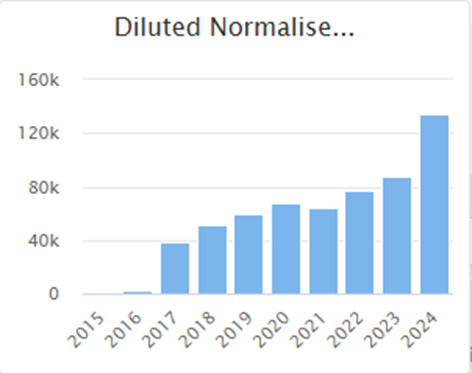
Despite being a very acquisitive company, these have all been made using internally generated cash flow, meaning the share count has stayed largely static, and this growth is reflected in EPS:
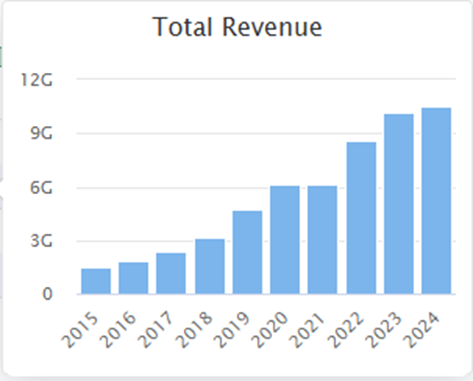
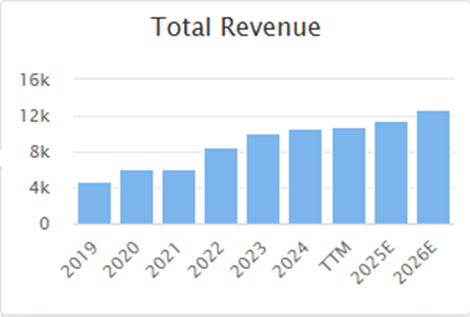
While the growth in revenue is forecast to continue…
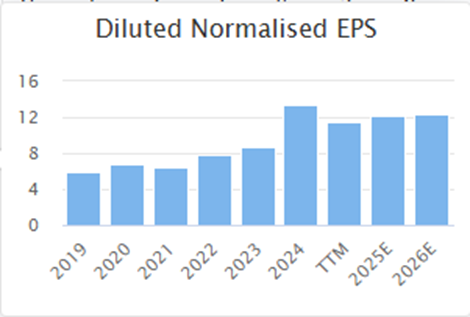
...the same cannot be said for EPS, which is suffering from similar cost inflation to other retail businesses:
It is this dynamic that means that the long-term share price chart looks like this:
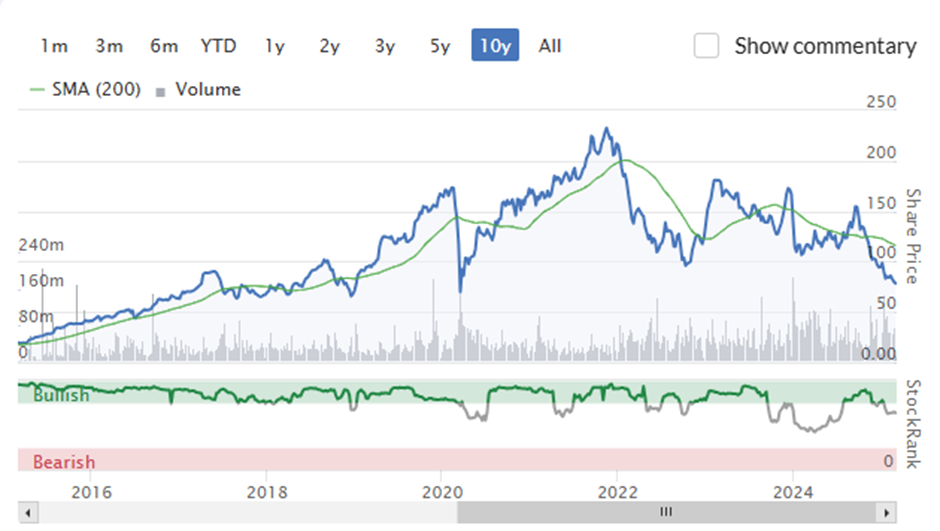
Between 2015 and 2021, the shares had more than 10 bagged, with the P/E moving from 13 to over 20. I actually remember the shares trading at a mid-single-digit P/E in the early 2010s, but I didn't invest as I didn't see growth opportunities. How wrong I was. With the shares back at a forward P/E of 6, this could be a good time to redeem that mistake!
With a market cap of around £4b, JD Sports is at the lower end of the FTSE 100. While the price has been weak recently, many UK shares are in the same boat, and the share price would need to drop by a further 25% before there is a risk of the company dropping out of the list of largest UK shares:
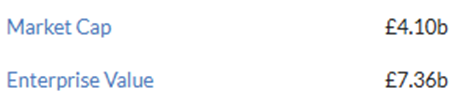
The enterprise value is much larger, but this is mainly lease liabilities. In their H1 results to the 3rd of August, the company reported having £40.8m net cash, excluding lease liabilities, following the completion of the Hibbett acquisition. Since that date, the company has finally received approval for the acquisition of Courir for €520m, which completed in November, so they are likely to currently have a modest net debt position compared to their market cap.
The StockRank is middling:
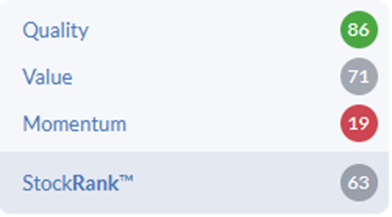
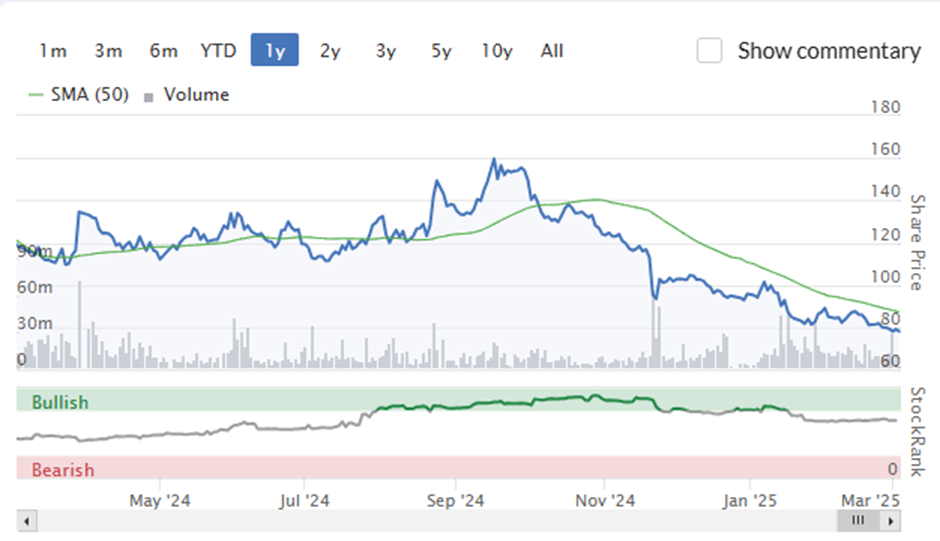
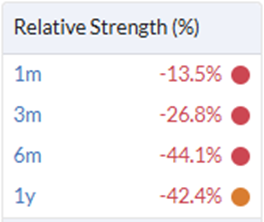
There is no escaping the fact that momentum is poor here and that this company will only attract contrarian investors at the moment. Most of the damage has been done in the last six months, with the shares almost halving in that time:
Business Model
This is what the company describes as their core activities:
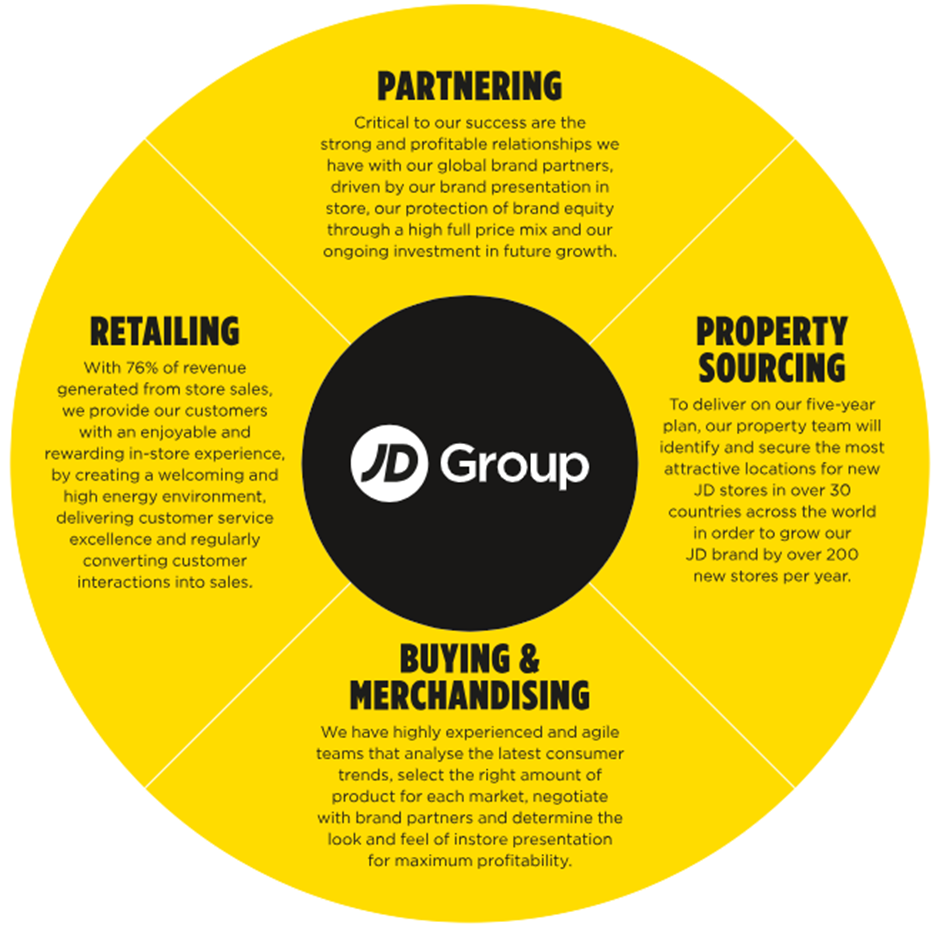
Essentially, their scale gives them the ability to partner with leisure wear brands to retail their products in high volumes through well-located and inviting stores backed up by a strong online presence.
Their core customer is 16-24 and is strongly connected to the brands and apparel that the company supplies. They tend to employ retail staff of a similar age to customers with shared interests. Their aim isn't to supply the cheapest product but the most desirable products at a fair price. This drives more sales without discounting, protecting their margins and brand partnerships.
They believe that the best way to create shareholder value is via long-term revenue and profit growth. This has led them to be a highly acquisitive group. Internally generated cash flow tends to be retained in order to grow both by acquisition and organically through further store rollouts.
Competitive Advantage
The Quality Rank is the strong point here:

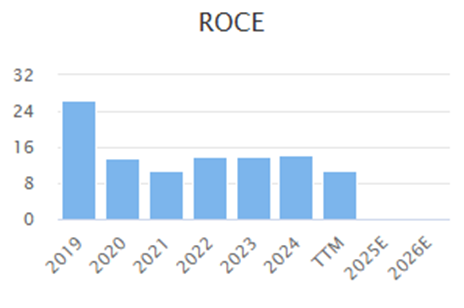
The Return on Capital is good, with a consistently mid-teens ROCE:
The Returns on Equity are even better, as they are enhanced by the net debt position, but also more variable:
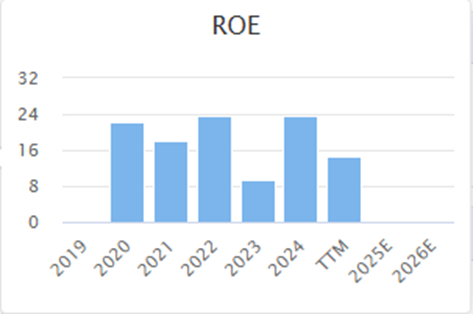
It is worth noting that both these figures are lower than before COVID. Partly, this is due to the acquisitions they have made, which have added to tangible and intangible assets and grown book value ahead of profitability:
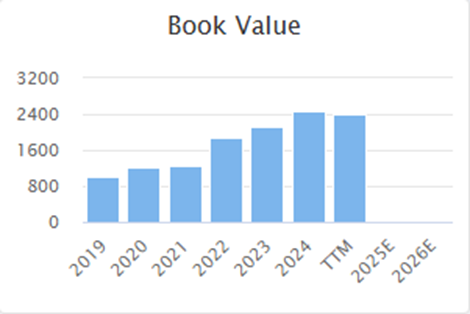
The acquisition of Hibbet Inc., a US-listed business, in the middle of last year may also have temporarily depressed the returns on capital, as these assets will be included as the deal was completed prior to their year-end. However, the full benefit of the profits from that part of the business is not yet fully reflected in the TTM numbers.
Things may appear worse before they get better, as the company completed another major acquisition in the current trading period- European shoe retailer, Courir. However, none of this alters the competitive position of the company in the long term. Indeed, in a business where buying scale matters, this may enhance it. Organic growth, of which the company still has opportunities, may be even better as they target a 3-yr payback on any new store capex. Overall, this suggests that the company possesses a reasonable moat which is protected by its brands and scale of operations.
The Quality Rank isn't higher because the Piotrsoki F-Score is only 6/9:
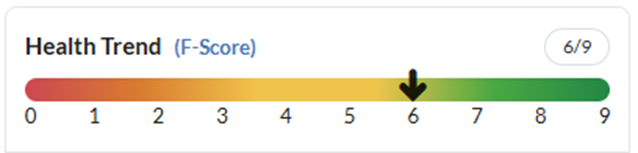
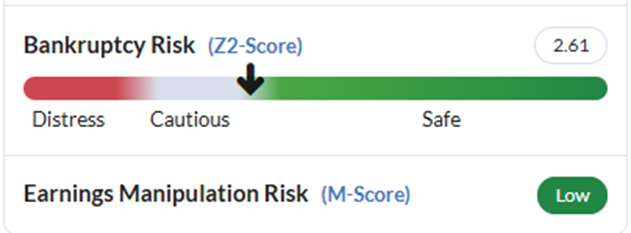
The failures on this metric are related to the short-term weakness in trading, which is understandable given the market backdrop. The good news is that the algorithms rate this as unlikely to be at risk of bankruptcy or earnings manipulation. An assessment I agree with:
Financials
Growth and Profitability
Stockopedia shows revenue CAGR as a very respectable 17%.
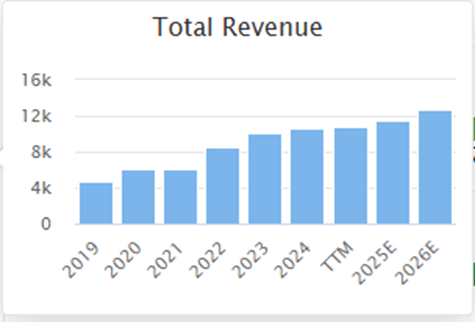
The medium-term EPS growth rates have matched this level. However, it is worth noting that this means that there is little sign of any operational gearing:
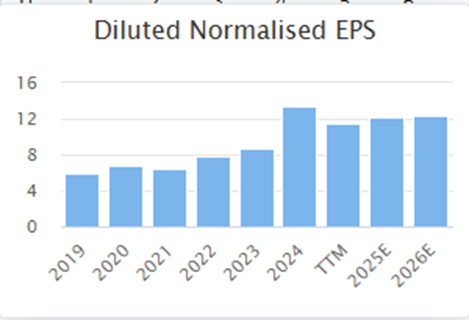
The Stockopedia CAGR figures include what looks to be an exceptional 2024 result, meaning it will be marginally lower once the FY25 results are published.
Balance Sheet
Although the current ratio is marked as amber, 1.42 is not bad for a retailer, where customer payments can often be received prior to a company paying their suppliers on standard commercial terms:
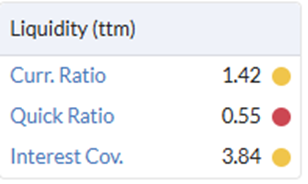
The quick ratio is low, representing the size of their payables. Again, I don't see this as a particular issue for this business, as these are more than balanced by inventories.
Gearing appears a little high, and investors would probably prefer that the debt taken on to acquire Hibbet and Courir is fully paid down before the company embarks on any further purchases:
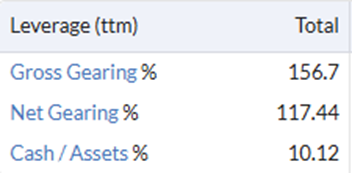
It is worth noting that this business has not much in the way of net tangible assets. So, if profitability plummets, there are few physical assets to protect the downside:

Cashflow
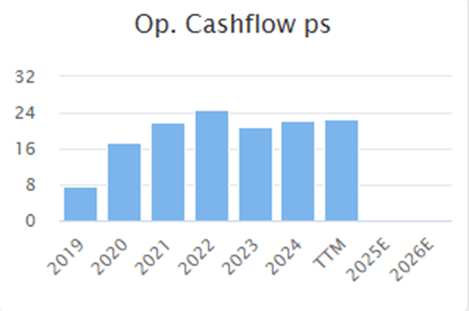
This is a high cash-generative business, with operating cash flow often exceeding normalised EPS:
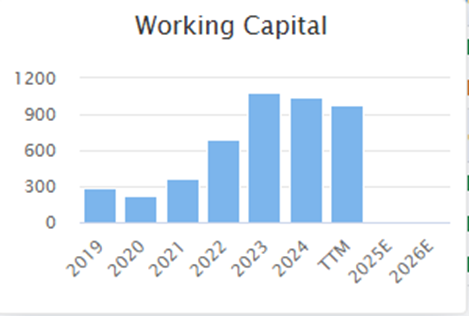
This is despite an increase in working capital requirements over the past few years:
The Capex has been elevated in the last few years, too:
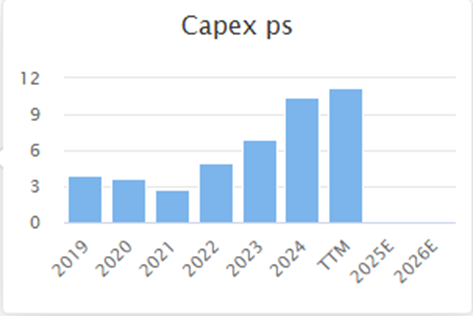
However, this is less than half of the operating cash flow, meaning that the majority of earnings turn into free cash flow:
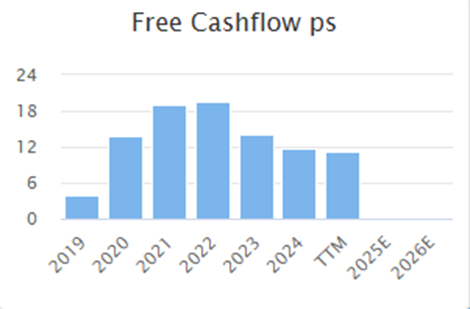
Stockopedia rates the P/FCF of 7 as amber. Objectively, this looks pretty cheap and reflects how cheap UK retail stocks are in the current environment:

Dividends/Buybacks
Although the company has been increasing its dividend recently, the overall payout is still low:
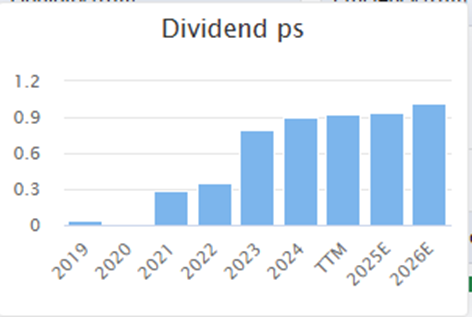
This means that, despite recent falls in the share price, the yield is still modest, and the shares will certainly not appeal to income investors:

Unsurprisingly, the dividend cover is huge, and the company could afford to pay many multiples of this dividend payout. So far, they have preferred to retain capital to grow the top line via store openings and acquisitions. However, unless they can show that their sales growth will soon generate EPS growth again, they are likely to come under increasing pressure from shareholders to pay out a higher dividend.
They have never done a buyback. With their shares languishing at 6 times earnings, the board will also be under pressure to show that any capital retained for acquisitions can generate a higher return than simply buying back their own shares.
Ownership Structure
The major shareholder in JD Sports is Pentland Group, which is owned by billionaire Stephen Rubin. Pentland owns brands such as Speedo and Berghaus, which makes them a supplier to JD, as well as part owner. Pentland acquired a 57.5% stake in JD from the founders, John Wardle and David Makin, in 2005. Pentland sold shares in 2019, but remain committed to holding over 50% of the equity:
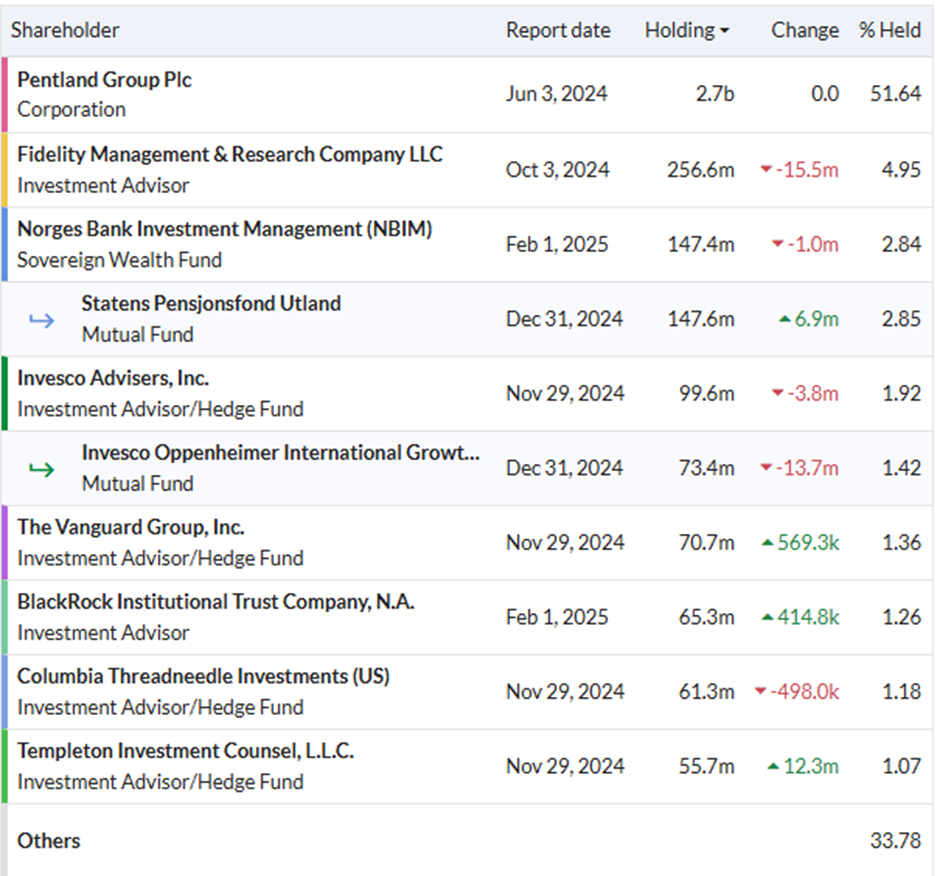
The rest of the register is a rather standard roll call of institutions, although perhaps less than the average FTSE100 company, due to the controlling stake.
Directors have been ready buyers of the shares over the last few years. The last significant sale was by the former Executive Chairman, Peter Cowgill, shortly before his departure:
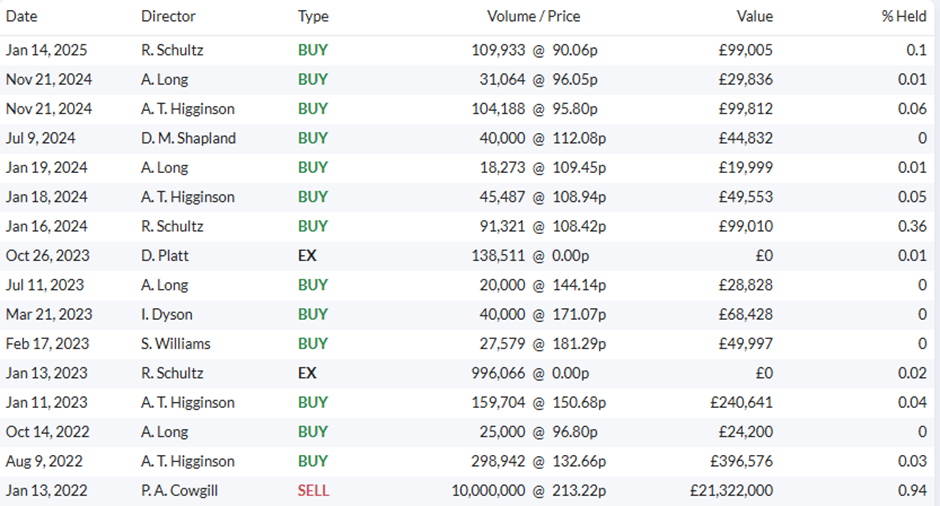
Directors don't own a significant proportion of the shares, but this has more to do with the size of the company and the fact that they are not founders of the business. The current CEO bought close to £100k of shares just after the recent trading update at 90p, so I think it is fair to conclude that the board believe the current mid-70s share price undervalues the business.
On the other side, there is a disclosable short position that has been increasing recently:

[Source: https://shorttracker.co.uk/ based on FCA data.]
However, AQR is a quant fund, which is almost certainly short because the company meets the requirements of their factor model – the shares are liquid, have poor momentum and have a high price to tangible book value. I am far less worried by the presence of quant shorts in the company that follow a model than discretionary hedge fund managers who may have discovered negative points I have missed. It is also worth noting that these same features led quant funds to be short Hargreaves Landsdown, and it didn't stop a takeover bid reversing the poor momentum there.
Valuation
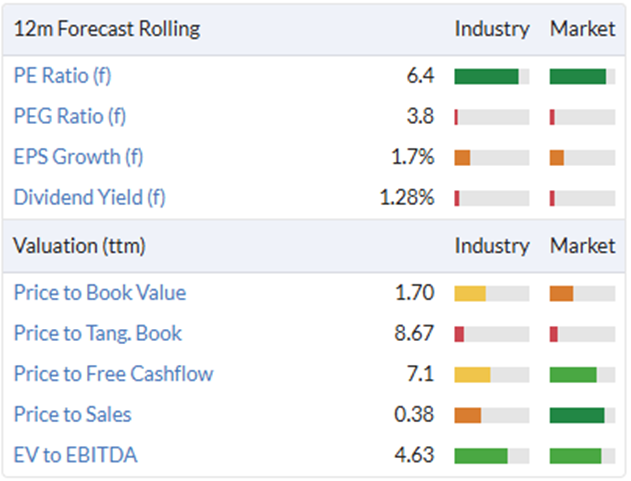
The value rank is reasonable but not outstanding:

While the company is very cheaply rated on earnings and cash flow metrics, the lack of asset protection and dividends let the side down:
One negative point about the recent results has been the scale of the adjusting items:
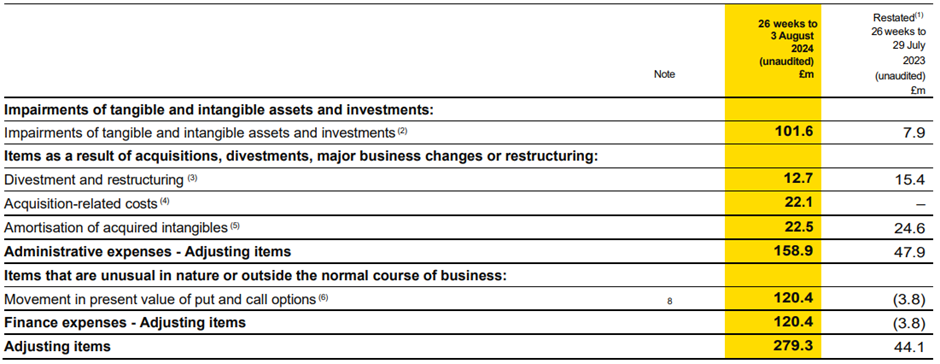
While many of these are normal for companies to exclude, it is worth noting that not all of these are one-offs. For example, restructuring seems to be an ongoing part of their business, and for a company that is this acquisitive, acquisition-related costs could be considered a normal part of their business. The movement in NPV of put and call options is non-cash and related to the non-controlling interests in the US business. However, not all of the large charges are non-cash. For example, impairments include £88.3m of fixed assets in relation to the closure of group distribution centres. This is likely to be the Derby distribution centre, which was closed last year, having been newly built three years ago with 17 years left on the lease. While none of these alone blows a hold in the investment case, it is worth watching for how these figures track in the future, especially the ones that impact cash flow.
Risks
Controlling Shareholder
Having more than 50% of the shares owned by a single entity can make being a minority holder a risky proposition. A controlling shareholder has a significant ability to force their will on the board. While a 50% holder can't delist the shares, they can do so with the support of other shareholders. However, I see little reason why Pentland would want this. They have been very long-term holders, and the listing gives them opportunities that they wouldn't have as owners of unlisted stock. If they wanted to exit, the cash flow the business generates would be attractive to Private Equity, and a sale of the whole business at a premium would seem more likely than selling in the market.
Nike Weakness
Although they sell many brands, there is no escaping that JD are highly reliant on the major sportswear brands, of which Nike is the biggest. Nike themselves have been in a downtrend for the last few years, including a profits warning in the middle of last year:
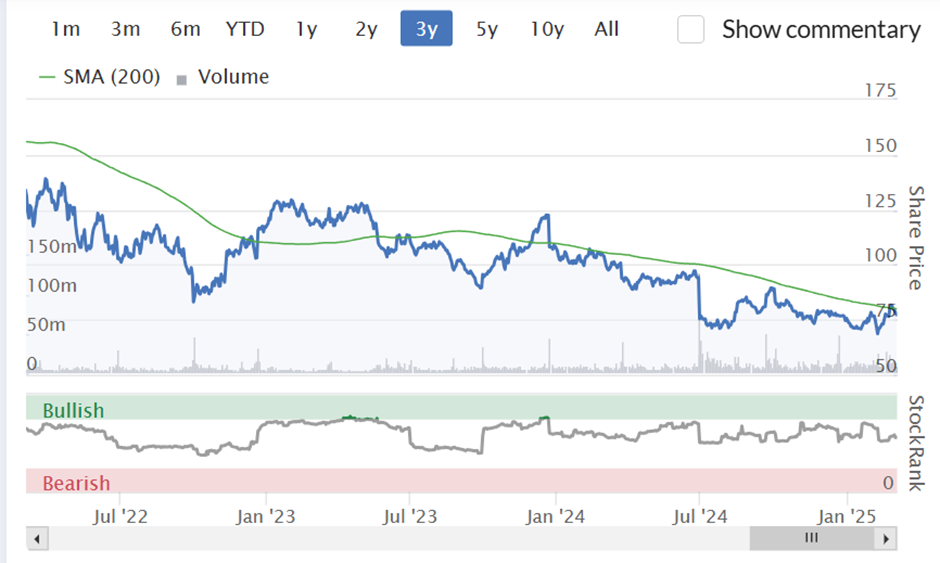
The broker trend doesn't give a lot of confidence that the worst is over here, either:
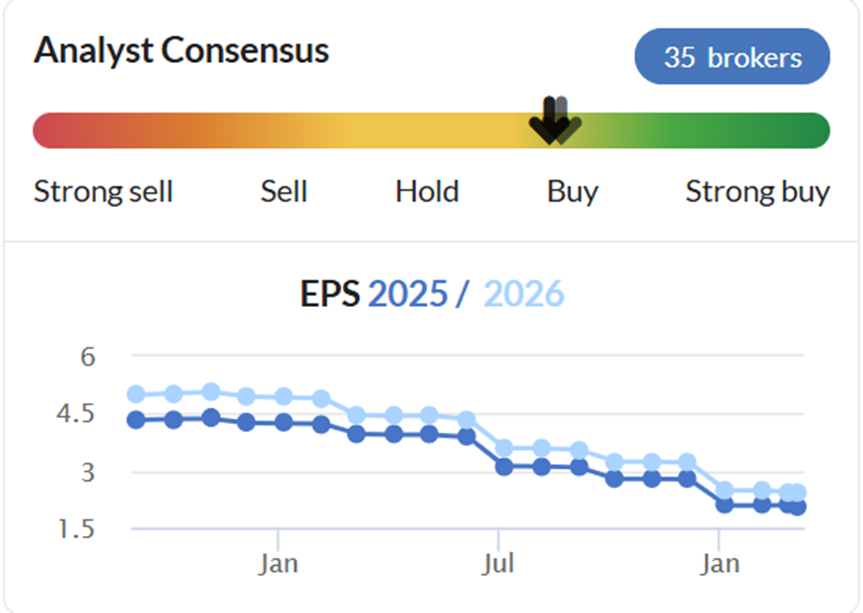
JD appear to be in a better position than Nike, as they can sell multiple brands. However, their scale means they can't escape overall market and fashion trends.
Controversies
As well as the events that led to Peter Cowgill leaving the business, the company has faced criticism for its business practices. Over the years, there have been claims of poor treatment of warehouse staff in the UK. They also don't seem shy about making drastic decisions, such as putting Go Outdoors into administration and buying it back from the administrators at the cost of creditors. While shareholders may be relatively sanguine about these as they tend to prefer shareholders to other stakeholders, it is possible such sharp practices may eventually come back to bite them. Given the change of management since all of these events, I am minded to give them the benefit of the doubt, but it remains a reputational risk that may be reflected in the share price in the future if similar accusations come to light.
Recent Trading
The latest trading update was released in January, covering the 9-week period to the 4th of January. They said that Like-for-Like revenue was down 1.5%, but organic revenue was up 3.4%, reflecting store openings during the year. It seems the company chose to protect margins rather than pursue sales growth in what they describe as "a more promotional environment in the period than we anticipated":
Gross margins remain robust on the back of our continued price and promotional discipline, across both stores and online. Gross margins in the period are ahead of last year with the full year gross margin expected to be around 48%, in line with last year.
The overall impact is given as:
Taking the above into account, we now expect the full year Profit before tax and adjusting items to be between £915m and £935m
The change in brokers' EPS forecasts suggests this was a small miss compared to the previous consensus. However, it seems cash flow remains strong as the loan to acquire Courir, now appears to have been largely paid off:
We have managed our inventory position well through the period and, due to our strong cash management during the year, we expect to end the year with a small net debt position on a pre-IFRS 16 basis.
Of course, like many retailers, JD pick their period end to reflect seasonal lows for working capital. However, this is still impressive and underlines that they remain conservatively financed despite their recent acquisitions.
Sentiment
The Momentum Rank is pretty poor:

A lot of this is down to the recent weakness in the share price:
However, the broker consensus has also been trending down, especially for FY26:
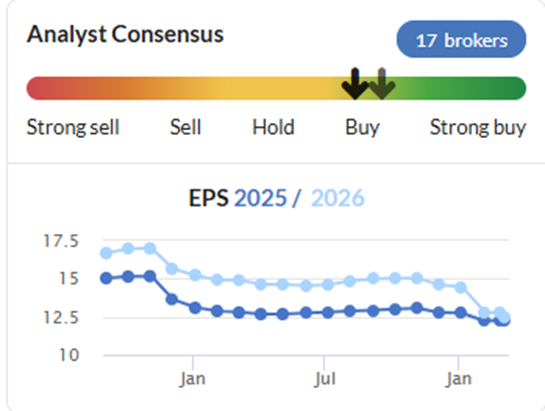
The shares have more than halved since September on a 5% downgrade to FY25 EPS consensus and a 15% reduction in FY26 EPS estimates, which suggests this weakness is more about weak sentiment for UK stocks and retail in particular.
Conclusion
While sentiment may be against it at the moment, it is hard to ignore a company with this history of growth languishing on a P/E of around 6. The company is highly cash-generative. However, almost all of that cash is retained by the business in order to drive organic and inorganic growth. Investors have to trust that management will be able to generate shareholder value by reinvesting that capital at rates similar to those of the past. Recent large acquisitions suggest the company's ambitions to use scale as a competitive advantage continue, although these add execution risk. Consumer markets are undoubtedly tough right now, and the company has had to choose to protect margins at the expense of sales growth. This means the recent share price and broker forecast trends will almost certainly put off Momentum investors. However, this quality business now trades on very cheap multiples of earnings and cash flow. Quality-Value investors will want to take note.
Disclaimer
This is not financial advice. Our content is intended to be used and must be used for information and education purposes only. Please read our disclaimer and terms and conditions to understand our obligations.

11 comments
It does make me wonder if jd will go the way of Boohoo. Getting out priced by Chinese companies while difficult economical times weigh down the company could see the margins squeezed. With so many stores they have to have a lot of stock to stock them.
it’s definitely cheap though if they can turn it back around again but MA is not always great when eps is falling. One to watch atm. Retail doesn’t look to be a great sector to be in atm. The uk part of JD, 30%, is saturated, so no real growth here. There are the obvious problems of NI and lack of cash by the people who would shop at JD.
Europe, 31%, doesn’t have the NI problem, but could well have similar as governments ramp up defence spending.
US, 33%, could well go into recession. Can the Trump tariffs affect the company?
The share price is obviously still in free fall. So what will halt it in the coming year? Probably better to wait for sign of a recovery or at least for the share price to stop dropping and go side ways. If the price drops to low 60p, which it is not far off now, then the company could be demoted to 250 which would likely cause a further drop.
Sorry for being a little negative here but retail really looks a sugar show atm.
Great article so detailed can we have more of these for fste100/250 companies a total review of the company.
Great article. I recently purchased and now feel more confident
The CEO bought £99,000 worth of shares at 90p.
In our local town centre, M&S is busy, JD, is empty normally
perhaps the continual downgrades to current and future earnings needs to stop fisrt - if every time they update things are worse than previously seems logical that shareprice would be trending downover - i dont have any handle on whether they are there yet with regard to getrting past that and back to things trending upwards. Therr has to be a danger here they are being squeezed from all sides - eg nike selling direct - shein competing online blah blah - costs of maintaining stores going up. So could it be the easy profits have departed the building.
I dont disagree that if the bottom (ref earnings trending downwards) is about now it looks mighty cheap - thats the easy bit of the equation though ! often p/e of 6 says tougher times are to coem even if that may not be obvious!
Excellent analysis Mark, thank you. I have been a long time holder of Jd. It made me a good profit a few years ago. I have been buying back in over the past year. It has been frustrating to say the least. I hope it is not a case of "too big to fail" syndrome. It certainly has not been good for my nerves...neither has Card and Renold. It has only been the sensible voices on Stockopedia, along with Paul Scott, that have prevented me from throwing in the towel. Thans again. My fingers are painfully crossed until the end of March.
Thanks for the excellent write up mark. I am a holder, and have been averaging down, currently at 91p. I do not believe JD are finished unlike some of the members here. JD's target audience are not scared of spending over the odds on clothes, and the group have diversified well in other countries and also with JD gyms and go outdoors which is huge in the UK. Its frustrating to watch the SP dwindle down, but when we see green shoots it will take off like it has done in the past.
Thanks Mark - a really useful article and a reminder of the abundance of opportunities out there for patient investors. This is a good example of where it would be useful if Stockopedia had some kind of data driven flag to indicate the turning of the tide. Usually, by the time the momentum score ticks up, the bottom has long been in. It's certainly on my watchlist but I fear that we may have a recession between now and any solid recovery.
Mark, thank you for this article - it covers more angles than I knew existed.
Will certainly have JD on my watch list and set some alerts for a change in share price sentiment.
great article. I like JD (which I own) and FRAS, as well, both seem very cheap at present, tempted to top up.